



A Guide to Furniture for Montessori Classroom Essentials
What really sets Montessori furniture apart is its philosophy: it’s built for the child, not the adult. The best furniture for a Montessori classroom is all about child-sized, accessible, and purposeful pieces that give kids the power to learn and do things for themselves. This simple shift turns the room itself into a silent, supportive teacher.
Why a Child-Sized World Matters
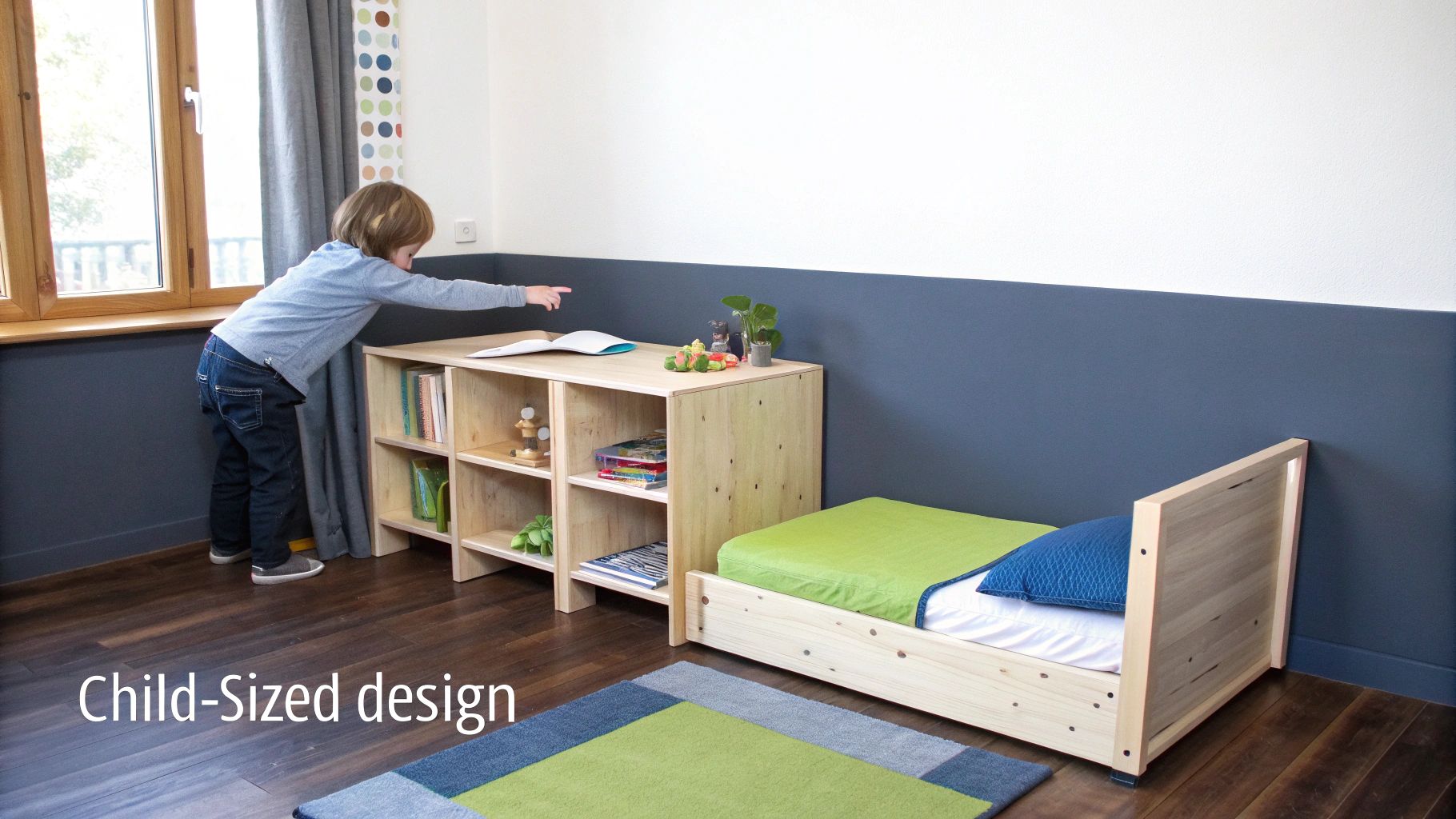
Think about it from a child's perspective. Most furniture makes them feel tiny and helpless in a grown-up world. Heavy chairs they can't move, shelves they can't reach, and drawers they can't open all send the same message: "You need an adult." Montessori furniture completely flips that script.
It’s all about creating what Dr. Maria Montessori called a “prepared environment”—a space intentionally designed to help a child thrive on their own.
Picture a master woodworker's shop. Every chisel, hammer, and saw has its own spot, is easy to grab, and is perfectly suited for its job. That’s exactly what a Montessori space aims to be. The furniture isn't just shrunken-down decor; it’s a collection of functional tools that lets a child engage with their world on their own terms.
The Prepared Environment Explained
The idea of a "prepared environment" is the heart and soul of the Montessori method. It’s a space where everything has a purpose and a place, letting kids move around freely, make their own choices, and use materials without constantly asking for help.
This thoughtful design has some pretty profound benefits:
- It Fosters Independence: When a child can grab their own book, hang up their own jacket, and sit at a table that fits them, they build a powerful sense of "I can do it."
- It Builds Confidence: Every time they successfully do something for themselves, their self-esteem gets a little boost. That confidence is what fuels them to try the next, bigger challenge.
- It Encourages Responsibility: Putting cleaning tools where they can reach them or having organized shelves naturally invites kids to help take care of their space. It’s a gentle way to teach respect for their surroundings.
- It Supports Concentration: A calm, orderly, and accessible room cuts down on distractions and frustrations. This makes it so much easier for a child to get lost in an activity and really focus.
Let's break down these core ideas into a simple table.
Core Principles of Montessori Furniture
| Principle | Description | Developmental Benefit |
|---|---|---|
| Child-Sized | Furniture is scaled to the child's proportions, making it easy to use without help. | Builds physical confidence, independence, and a sense of belonging in their own space. |
| Accessible | Low, open shelves and simple designs allow children to see and retrieve their own materials. | Promotes self-directed learning, decision-making, and organizational skills. |
| Purposeful | Each piece has a clear function that supports a specific activity or skill. | Reduces clutter and distraction, encouraging focused work and a sense of order. |
| Simple & Natural | Often made from natural materials like wood with a minimalist, clean aesthetic. | Creates a calm, peaceful environment that allows the learning materials to be the main attraction. |
As Dr. Montessori herself said:
"The environment must be rich in motives which lend interest to activity and invite the child to conduct his own experiences." - Dr. Maria Montessori
Ultimately, the right furniture does way more than just fill a room. It creates an entire ecosystem where children are seen and respected as the capable individuals they are. Those low shelves aren't just storage; they’re an open invitation to explore. That little table isn't just a surface; it's a personal workspace for discovery.
The Must-Have Furniture for Your Montessori Space
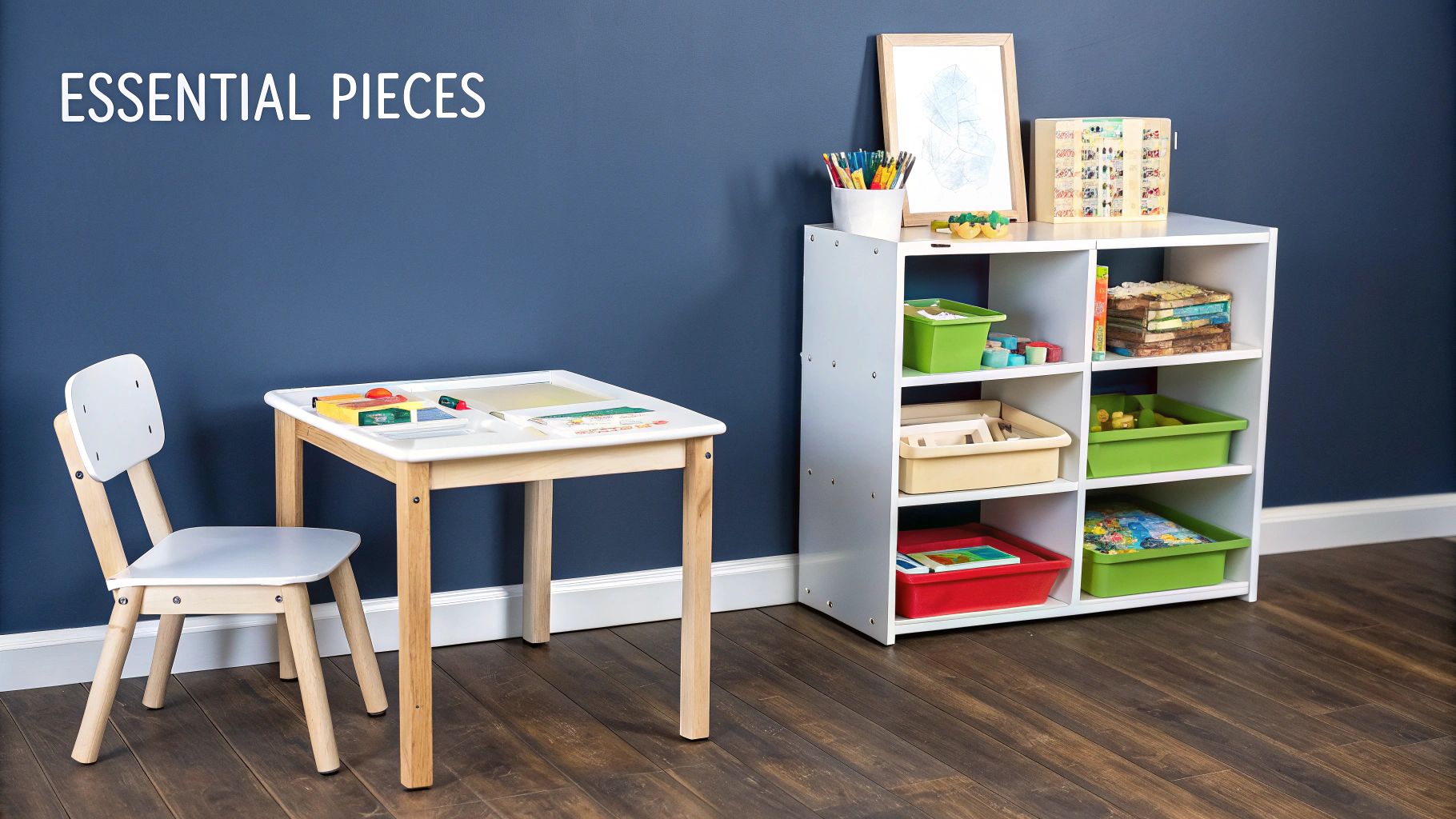
Putting together a Montessori space is less about a shopping list and more about choosing the right tools. In this world, the furniture itself is a fundamental part of learning. Think of each piece as a building block for your child’s independence.
These key items don't just sit in a room; they work together to create an environment where your child can grow. From how they select an activity to how they tidy up afterward, the right furniture makes self-guided learning feel completely natural.
Low Open Shelves
If there's one piece that defines a Montessori space, it's the low, open-front shelf. Forget the chaotic jumble of a traditional toy box. These shelves present a thoughtful selection of materials in a clean, inviting way.
The design is completely intentional. First off, it’s all about accessibility. When a child can see and reach everything on their own, they are empowered to follow their own interests. This builds a powerful sense of ownership over their learning journey.
These shelves also teach the basics of organization. We typically arrange materials from left to right, simple to complex, creating a logical flow that kids just get. It also makes cleanup a breeze, because every single item has a clear home to return to.
Child-Sized Tables and Chairs
A tiny table and chair set, built just for them, is another non-negotiable. It carves out a dedicated workspace that tells a child, "What you are doing is important." Imagine trying to cook in a giant's kitchen—that's what working at an adult table feels like to a small child. It's awkward and just plain frustrating.
A correctly sized set lets a child sit with their feet flat on the floor, with their elbows resting comfortably at table height. This isn't just good for their posture; it helps them focus for longer stretches. If you want to dive deeper, you can check out our complete guide on choosing the perfect Montessori table and chair set.
This focus on safety and good ergonomics is catching on everywhere. The global market for preschool furniture was recently valued at $0.21 billion and is expected to hit $0.38 billion in the next decade. Why the boom? A growing understanding of child development. Studies show 67% of preschools now put ergonomic design first, and 54% say safety is their number one concern when buying furniture.
The Versatile Kitchen Tower
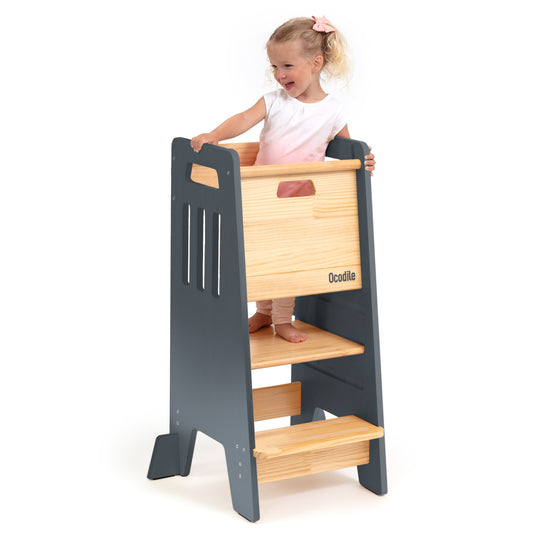
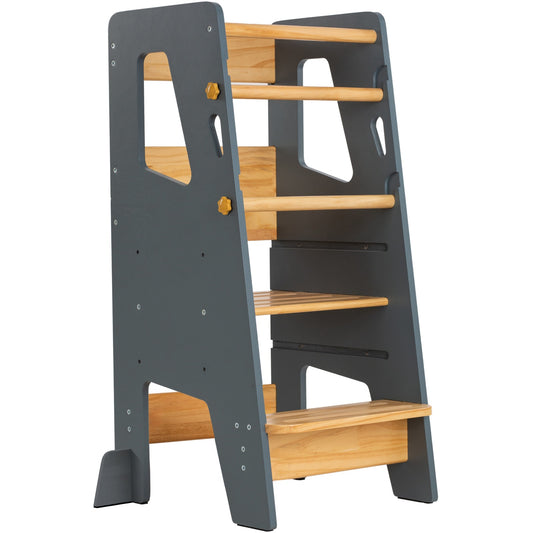
The kitchen tower—also called a learning tower—is a genius invention. It safely boosts your child up to counter height, transforming them from a passive observer into an active helper. Suddenly, your toddler can be right there with you, washing vegetables, stirring batter, or just watching the action from a secure platform.
Sturdy towers, like those from Ocodile, turn daily chores into priceless learning moments. A good kitchen tower promotes:
- Practical Life Skills: Kids learn about sequencing, measuring, and fine motor control by helping with real, everyday tasks.
- Family Bonding: It brings them up to eye level, letting them engage directly in family activities and strengthening connections.
- Confidence: Safely mastering new skills in the heart of the home builds an incredible sense of competence.
Floor Beds for Freedom of Movement
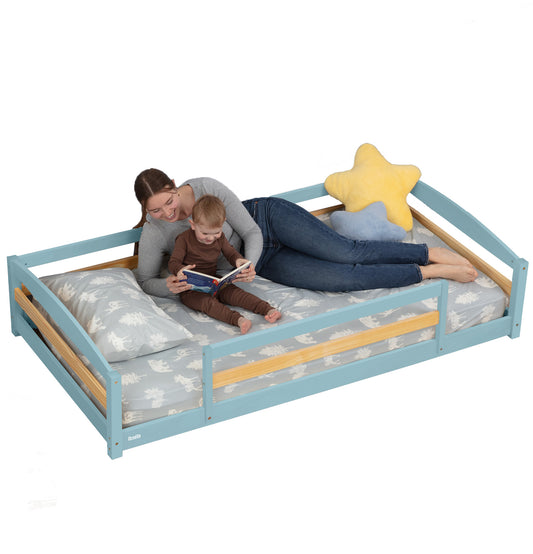
The Montessori floor bed is a beautifully simple idea. It’s just a mattress on the floor or a very low frame, which removes the bars and restrictions of a traditional crib. This simple switch respects a child's autonomy right from the start.
A floor bed empowers a child with freedom of movement, allowing them to get in and out of bed independently. This fosters a healthy relationship with sleep, viewing their bed as a peaceful space they can choose to enter when tired and leave when rested.
This one piece of furniture honors a child's natural rhythms and budding independence, turning their bedroom into a space of freedom, not containment.
Step Stools for Accessibility
Last but not least, a few simple step stools are essential for bridging the gap between their world and ours. Placed by a sink, a stool empowers a child to wash their own hands. Near a light switch, it gives them control over their environment.
These little tools are symbols of trust. Every time a child uses a step stool to do something for themselves, it reinforces the message that they are capable, competent, and a valued part of the home.
Choosing Safe and Sustainable Furniture Materials
When you're putting together a Montessori classroom, the design of the furniture is just the beginning. The material it's made from is every bit as important. Think of it like cooking: the quality of your ingredients directly impacts how safe and nourishing the final meal is. In a child's environment, where everything is explored by touch and even taste, the materials around them are a huge part of their well-being.
The Montessori philosophy has always leaned heavily on natural materials, and for good reason. Solid wood, for instance, offers a rich sensory experience that plastic or metal just can't match. A child can feel the unique grain, smell the subtle scent, and appreciate the satisfying weight of real wood. It’s a simple, tangible way to connect them to the natural world.
This focus on quality also happens to be a smart move for your budget in the long run. Sure, particleboard or plastic furniture might look like a deal upfront, but it rarely has the backbone to stand up to a room full of active children. Solid wood furniture, on the other hand, is an investment in longevity. It's built to last.
Prioritizing Natural and Non-Toxic Materials
The goal is to create a space that’s not just beautiful and functional, but fundamentally safe. This means you have to look past the surface and really understand what each piece of furniture is made of and, just as crucially, how it’s finished.
Here’s a quick rundown of the common materials you'll encounter:
- Solid Wood: This is the gold standard. Woods like birch, maple, or beech are strong, can be repaired if needed, and don't contain the nasty glues and formaldehyde often lurking in engineered woods.
- Plywood: Don't dismiss it outright. High-quality, multi-layered plywood can be a very durable and stable choice. The key is to make sure it's made with non-toxic, formaldehyde-free adhesives.
- Engineered Woods (MDF/Particleboard): It’s best to avoid these whenever possible. They are far less durable and can release volatile organic compounds (VOCs) from the resins holding the wood fibers together, which is bad news for your indoor air quality.
It’s clear that schools and parents are catching on. The global market for educational classroom furniture was recently valued at over $2.4 billion and is expected to climb past $3.1 billion. People are willing to invest more in creating quality learning environments.
Understanding Finishes and Safety Features
The finish on a piece of furniture is the final layer your child will touch, lean on, and interact with every single day. Even the highest-quality solid wood can be made unsafe by a toxic paint or varnish. This is one step you can't afford to skip.
Always look for furniture with clear certifications that it's safe for kids. This typically means the finishes are:
- Low-VOC or Zero-VOC: Volatile Organic Compounds are chemicals that can be released into the air. The fewer, the better for a healthy room.
- Water-Based: As a rule of thumb, water-based paints and sealants are much safer than their oil-based cousins, which often rely on harsh solvents.
- Natural Oils or Waxes: Finishes like beeswax or linseed oil are fantastic, non-toxic options. They protect the wood while keeping it perfectly safe for little hands. Our guide on selecting non-toxic kids' furniture dives deeper into this topic.
Beyond the chemical makeup, the physical design is paramount. Every piece of furniture for a Montessori classroom has to be built with a child’s adventurous spirit in mind. It's a huge part of creating a safe space in the classroom where kids feel confident enough to explore freely.
Key Safety Design Elements
Look for rounded corners and smooth, sanded edges—no sharp points or splinters. The furniture should also have a low center of gravity and a wide, sturdy base to make it tip-proof, even when a curious toddler decides to use it as a climbing frame.
This deep commitment to safety and quality is at the very heart of what we do at Ocodile. Every single piece, from our standing towers to our floor beds, is crafted from high-quality, durable materials and coated with child-safe, non-toxic finishes. We believe that by choosing the right materials, we’re not just building furniture; we’re helping you build a secure, healthy, and inspiring world for your child to grow in.
How to Arrange Your Montessori Classroom Layout
Choosing the right furniture is only half the battle; how you arrange it is where the magic really begins. The layout of a Montessori room isn't just about making it look nice—it's about creating a living, breathing environment that guides your child's learning journey. Think of it as choreographing curiosity, where every piece of furniture directs the flow of movement, focus, and discovery.
A well-designed layout transforms a simple room into a “prepared environment.” It becomes orderly, inviting, and easy for a child to navigate completely on their own. The goal is to build a space that feels intuitive, encouraging both deep concentration and positive social interactions without needing an adult to step in constantly.
Creating Defined Learning Zones
The heart of a good Montessori layout is the creation of distinct learning zones. Instead of one big, open play area, the room is thoughtfully divided into specific areas for different activities. This simple separation helps children understand what each space is for and allows them to focus on the task at hand.
Low, open shelves are your best friend here. They act as natural dividers, defining spaces without closing them off or making the room feel small. You maintain that open, airy feel while still giving the environment the structure kids need for focused work.
You'll typically see these key learning zones:
- Practical Life: This is for activities like pouring, using dressing frames, and preparing simple snacks. It's great to place this zone near a water source if you can.
- Sensorial: A space filled with materials made to sharpen the senses—think color tablets, sound cylinders, and geometric solids.
- Language: A quiet corner with comfy seating, picture books, and materials for writing and recognizing letters.
- Mathematics: A zone with concrete materials like number rods and beads that make abstract math concepts tangible and real.
- Cultural Studies: An area for geography, science, and art, often featuring maps, items from nature, and creative supplies.
When you group related materials together, you create a logical order that children pick up on and learn to navigate very quickly.
Designing for Flow and Focus
Once you’ve mapped out your zones, think about the flow of movement. Children need to be able to move freely and gracefully between areas without bumping into furniture or each other. Picture invisible pathways connecting the different zones. Are they wide, clear, and logical?
A successful Montessori layout respects a child’s need for both movement and stillness. Clear pathways encourage purposeful wandering and exploration, while quiet, protected nooks offer a sanctuary for deep concentration and uninterrupted work.
Position your furniture to support this balance. For example, reading nooks should go in the quieter corners, away from the hustle and bustle of the practical life area. Make sure there’s enough open floor space for a child to roll out a work mat without being in a major walkway. This kind of thoughtful arrangement cuts down on disruptions and helps kids achieve that deep focus that is so critical for learning.
Balancing Individual and Group Work
Your layout should also be flexible enough for different types of interaction. While a lot of Montessori work happens individually, the environment has to support collaboration and community, too. Arrange your child-sized tables so they're versatile. A single table can be a space for one child's focused project, but pushing a few together can instantly create a surface for a small group activity.
This concept map breaks down the key elements to consider when selecting furniture, all of which will influence your layout choices.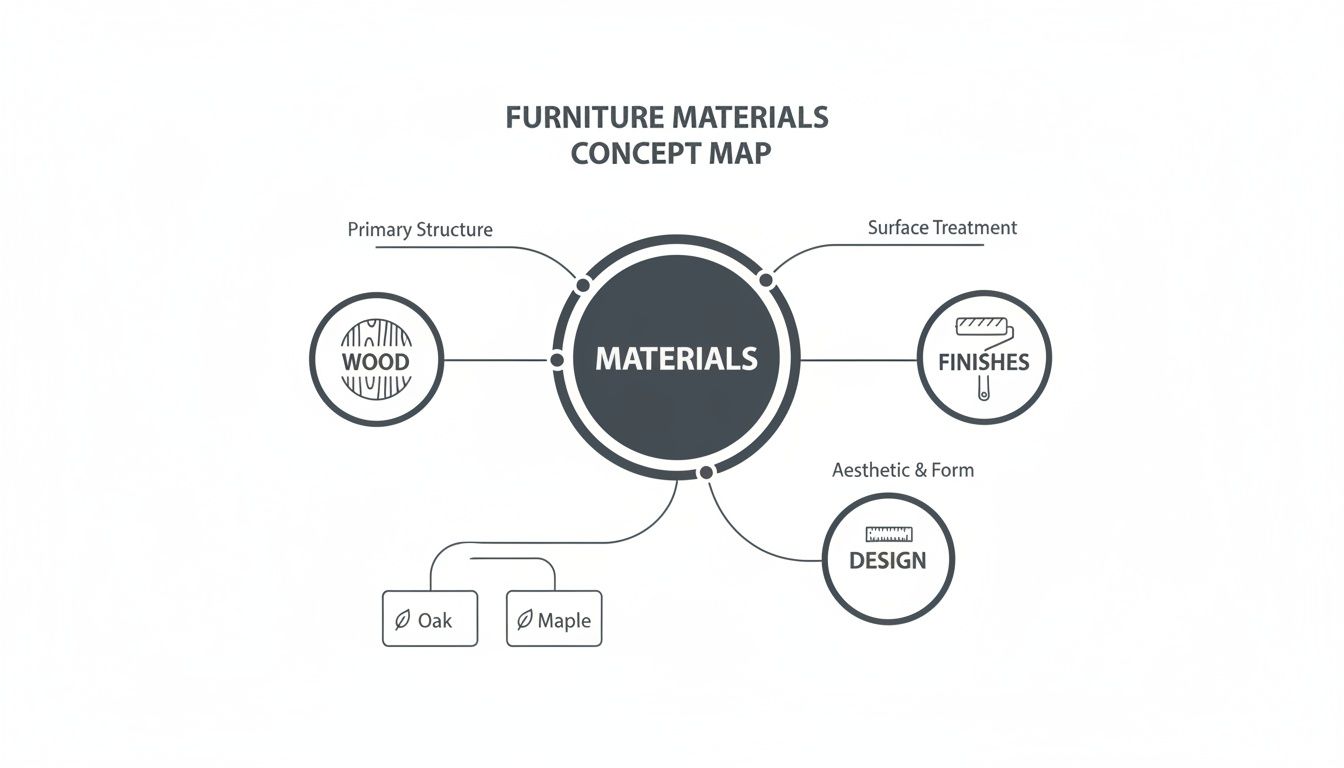
The visual shows how material choice (Wood), protective treatments (Finishes), and physical form (Design) all come together to create furniture that's safe, durable, and perfectly suited for a well-planned classroom.
Ultimately, the way you arrange your space sends a powerful message. It tells a child that their work matters, their focus is respected, and their independence is truly valued. For more inspiration, our guide on preschool room design ideas has even more practical tips. For a deeper dive into creating effective and harmonious spaces, you can also explore these expert tips for designing a room layout.
How Ocodile Furniture Supports Montessori Principles
Understanding the theory behind Montessori is one thing, but seeing it click into place with thoughtfully designed furniture? That’s something else entirely. It’s where the philosophy comes to life. The best furniture for a Montessori classroom isn't just about looking good—it’s about baking core values like independence, respect, and self-guided learning right into the design.
At Ocodile, this isn't just a philosophy; it's our blueprint. We believe furniture should be a child's silent partner in development, offering a steady hand without getting in the way. Every piece we make is designed from the ground up to empower kids, turning ordinary moments into opportunities to grow.
Fostering Independence Through Intentional Design
A huge part of the Montessori method is nurturing a child’s independence. Our furniture is engineered to make this happen every single day. Take our standing towers, for example. They're carefully designed to bring a child safely up to counter height, transforming them from a spectator into a hands-on participant in family life.
By helping wash vegetables or stir a bit of batter, a child isn’t just learning a life skill; they're building a powerful feeling of capability. The tower’s adjustable platform grows right along with them, sending a clear message that their contributions matter, no matter how small they are. It’s a tool that says, "You belong here, and you can help."
In the same way, our floor beds give toddlers real autonomy over one of their most basic needs: sleep. By taking away the bars of a traditional crib, the bed respects a child's innate ability to listen to their own body. They can get in when they feel tired and get out when they feel rested, building a healthy, self-regulated relationship with sleep from the start.
At its heart, Ocodile’s mission is to create a 'prepared environment' within the home. Each piece is designed not just for the child of today, but to support the capable, confident adult they are becoming.
And this way of thinking is catching on. The global Montessori furniture market was recently valued at around $1.5 billion and is expected to grow at a 7% compound annual rate to hit $2.7 billion. This boom is largely driven by parents who are intentionally investing in home environments that encourage self-directed learning. You can explore more about these market trends and what they mean for early childhood development.
Merging Safety, Practicality, and Beauty
Maria Montessori always said a child's environment should be beautiful and orderly to inspire a sense of calm and respect. We take that to heart. Ocodile furniture isn't just practical and safe; it’s designed to be aesthetically pleasing. We stick to natural materials and clean lines to create a peaceful backdrop where a child’s learning materials can be the real star of the show.
Our commitment to safety is non-negotiable. You’ll find these key features across our entire product line:
- Stable Construction: We use wide, sturdy bases to prevent any tipping, giving kids the confidence to explore on their own.
- Rounded Edges: Every corner is smoothed down to prevent bumps and scrapes during enthusiastic play.
- Non-Toxic Finishes: We only use child-safe, water-based finishes to ensure a healthy indoor environment for your family.
By weaving these principles into everything we make, Ocodile furniture does more than just fill a room. It actively supports a child's journey toward becoming an independent, confident, and capable person. That makes us a trusted partner for families who are all-in on the Montessori way of life.
Your Practical Montessori Furniture Buying Checklist
Trying to pick out children's furniture can make your head spin, but a solid checklist helps cut through the noise. Whether you’re looking at Ocodile’s collection or checking out other brands, this guide will help you make choices you can feel good about. Think of it as your filter for making sure every piece truly aligns with core Montessori principles.
This framework is built around five key questions. Answering them will help you invest in high-quality, supportive, and safe furniture for a Montessori classroom that will actually serve your child’s development for years to come.
Sizing and Proportions
Is this piece actually scaled for my child? This is the first and most important rule of Montessori furniture: it has to fit the child, not the adult. Look for tables where your kid can sit with their feet flat on the floor and low shelves they can reach without a boost.
Getting the size right isn't just about comfort; it's the very foundation of independence. When furniture fits, it sends a clear message to your child: "This space is yours. You belong here."
Materials and Finishes
Is it made from solid wood with non-toxic finishes? The materials you bring into your child’s space really matter. We always recommend prioritizing solid woods like birch or beech for their durability and natural, sensory feel.
Just as important are the finishes. You’ll want to confirm that any paints, stains, or sealants are water-based and certified as low-VOC or zero-VOC. This is a non-negotiable for ensuring healthy indoor air quality in your child's learning environment.
Safety and Construction
Are the corners rounded and is it built to be stable? A child’s world is full of movement and exploration, so their furniture has to be designed with safety as the top priority. Always check each piece for sharp edges or spots where little fingers could get pinched.
The most important safety feature, hands down, is stability. Furniture should have a low center of gravity and a wide base to be naturally tip-proof. This gives you peace of mind and gives your child the freedom to interact with their environment confidently.
Functionality and Purpose
Does it serve a clear purpose and help my child be more independent? In a Montessori space, every piece of furniture should have a job. A kitchen tower's job is to let them participate in the kitchen, while a floor bed’s job is to give them autonomy over when they rest.
Steer clear of items that are just for decoration. Instead, ask yourself if a piece of furniture solves a problem or removes a barrier for your child. The best items are simple, functional tools that help them do things for themselves.
Longevity and Durability
Is it durable enough to last for years? Let's be honest: children are hard on furniture. Investing in well-crafted pieces made from solid materials means you won't be replacing them every other season. Look for sturdy construction, quality hardware, and timeless designs that can grow with your child.
Before you make a final decision on any piece of furniture, running it through this simple checklist can save you a lot of guesswork. It helps you zoom in on what truly matters for your child's environment.
Montessori Furniture Buying Checklist
| Consideration | What to Look For | Why It Matters |
|---|---|---|
| Child-Sized | Can your child use it without help? Feet flat on the floor, shelves at reach. | Promotes independence and physical comfort; makes the space feel like it belongs to them. |
| Materials | Solid wood (like birch or beech); avoids MDF. | Natural, durable, and provides a rich sensory experience. Healthier than composite woods. |
| Finishes | Non-toxic, water-based, and low/zero-VOC certified. | Ensures safe indoor air quality, which is critical for developing bodies. |
| Safety | Rounded corners, smooth edges, wide and stable base. No pinch points. | Prevents injuries and creates a safe environment for exploration and movement. |
| Functionality | Serves a specific, practical purpose that supports a child's task. | Every item should empower the child to do something for themselves, not just look nice. |
| Durability | Sturdy joints, quality hardware, and timeless design. | A good investment that will withstand years of active use and adapt as your child grows. |
Using this checklist helps guarantee that you're not just buying furniture, but investing in tools that will actively support your child's confidence, independence, and love for learning.
Of course. Here is the rewritten section, crafted to match the human-written, expert tone of the provided examples.
Your Montessori Furniture Questions, Answered
Jumping into the world of Montessori can feel like learning a new language, especially when it comes to setting up the right environment at home. Let's tackle some of the most common questions parents and educators ask when choosing furniture.
When’s the Right Time to Introduce Montessori Furniture?
Honestly, you can start from day one. A simple floor bed gives even the tiniest infant freedom of movement. As they get a bit older and become toddlers, you can bring in things like a small weaning table or low, open shelves.
The real secret is to observe your child. When you see them pulling up to stand, that's your cue that a low shelf would give them the perfect support to explore. Once they can sit confidently on their own, a little table and chair set becomes their personal workstation. It’s less about hitting a specific age and more about meeting them right where they are in their development.
How Do I Know If Furniture Is the Right Size?
Getting the size right is everything—it’s the key to unlocking their independence. The whole point is for your child to be able to use the furniture without any help from you.
Here’s a quick mental checklist:
- Chairs: Can they sit with their feet flat on the floor and their knees at a nice, 90-degree angle? Perfect.
- Tables: When they're sitting, the tabletop should hit them right around elbow height. This lets them work on activities without hunching over or straining.
- Shelves: Can they easily reach the top shelf without a tippy-toe stretch or trying to climb? That’s the sweet spot for full access.
A good rule of thumb is this: if your child needs you to lift them up or help them use the furniture, it's probably not the right size yet. The furniture should empower them, not become another thing they need help with.
What’s the Most Important Piece to Start With?
If you can only get one thing to kick off your Montessori journey, make it the low, open shelf. Without a doubt, it’s the most impactful piece you can buy and the true foundation of a prepared environment.
Think about it—a low shelf completely changes the vibe of a room. It gets toys out of a jumbled toy box and puts them on display in a neat, orderly way. Your child can see their options, make a choice, and get what they want all by themselves. This one piece of furniture builds independence, teaches organization, and shows your child you respect their ability to choose. It’s the whole Montessori method in a nutshell.
Ready to create a space that nurtures your child’s independence? Explore the full collection of child-sized, safe, and beautifully crafted furniture at Ocodile. https://ocodile.com