



montessori classroom furniture: Essentials for an Inspiring Learning Space
Montessori classroom furniture is so much more than just kid-sized tables and chairs. Think of it as a collection of purposefully designed tools that give children the power to become independent, capable learners. Every single piece is made to be accessible and functional, letting a child lead their own activities without constantly needing an adult to step in.
What Is Montessori Furniture and Why It Matters
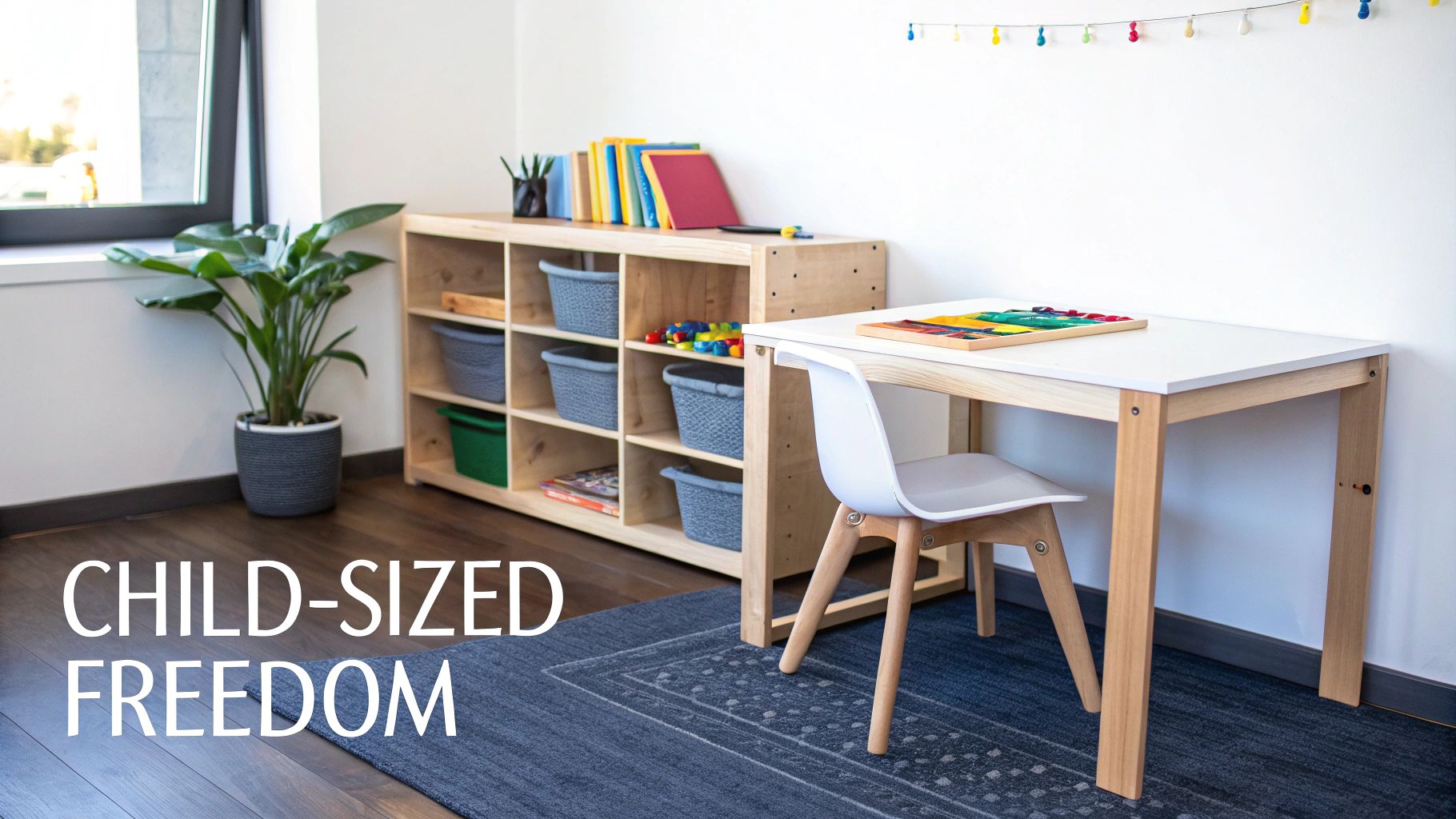
Picture a master woodworker in their shop. Every tool has its place, is easy to grab, and is perfectly suited for a specific job. That's the exact philosophy behind Montessori furniture. It creates a "workshop" for the child, and a child’s most important work is to learn and grow. This approach turns any room into a prepared environment, which is one of Maria Montessori’s cornerstone principles.
Unlike traditional furniture that often forces a child to ask for help, Montessori pieces are built to their scale. It sounds simple, but this one adjustment makes a world of difference.
- It Builds Independence: When a child can reach their own books, hang up their coat on their own hook, and sit at a table that fits them, they develop a powerful sense of, "I can do this myself."
- It Grows Confidence: Each time they successfully do something on their own, their self-esteem gets a little boost. They start to trust in their own abilities.
- It Promotes Freedom of Movement: Kids aren't stuck in oversized chairs or waiting for an adult to get something for them. This freedom is absolutely essential for self-directed learning.
The Philosophy Behind the Design
Every piece of Montessori furniture has a purpose that goes way beyond just being useful. A low, open shelf isn't just for storage; it’s an open invitation for a child to pick their own activity, which helps them build decision-making skills. A tiny weaning table lets a toddler feed themselves, helping them develop fine motor control and self-reliance. You can dive deeper into these ideas in our guide on Montessori education at home.
The whole point is to remove the physical barriers that get in the way of a child's natural urge to explore, learn, and be a part of their world. The furniture becomes a silent teacher, guiding them toward doing things for themselves.
To really see the difference, let’s compare the two approaches side-by-side.
Montessori Furniture Principles at a Glance
| Principle | Montessori Approach | Traditional Approach |
|---|---|---|
| Scale & Size | Sized for the child to promote independence and proper posture. | Sized for adults or one-size-fits-all, often requiring assistance. |
| Accessibility | Low, open shelves and hooks allow children to access and put away their own materials. | High shelves or closed cabinets that require adult help. |
| Functionality | Each piece serves a specific developmental purpose (e.g., weaning table for self-feeding). | Primarily focused on storage and accommodating groups, not individual development. |
| Material | Often made from natural, sturdy materials like wood that are safe and offer sensory input. | Commonly uses plastic or MDF, which may be less durable and contain chemicals. |
| Aesthetics | Simple, beautiful, and uncluttered designs that create a calm and orderly environment. | Often brightly colored and visually overstimulating, which can be distracting. |
This table shows it's not just about size; it's a completely different philosophy centered on respecting the child's developmental journey.
A Growing Global Movement
This child-first philosophy is really catching on. The global Montessori furniture market has grown into a major industry, valued at around $1.5 billion. That number shows a real shift in how parents and educators think about creating the right kind of environments for kids—ones that respect their abilities.
This isn't just about buying smaller furniture. It's an investment in an environment that sends a clear message to your child: you are respected. When we give them tools that fit their bodies and support their needs, we're paving the way for a lifetime of curiosity, confidence, and self-reliance. The right furniture doesn't just fill a room; it empowers the children in it.
Essential Furniture for a Prepared Montessori Space
Creating a “prepared environment” is really the heart of the Montessori philosophy, and the right furniture pieces are your foundational tools for building it. This isn't about just filling a room with toys. It’s about being deliberate and selecting items that truly empower a child to learn, explore, and eventually master their world.
You can think of each piece of Montessori classroom furniture as a silent guide, encouraging independence at every turn. The whole point is to arrange a space where a child can confidently say, "I can do it myself." From the moment they wake up to the activities they choose all day, the furniture should support their natural drive for autonomy. Let's break down the key pieces that make this happen.
Low Open Shelves for Independent Choice
If there's one piece of furniture that screams Montessori, it's the low, open shelf. It’s so much more than just storage. Unlike a deep toy box where things get lost in a chaotic jumble, these shelves present a limited, curated selection of activities in a simple, orderly way. And that design is incredibly powerful.
When materials are displayed right at a child’s eye level, the shelf itself communicates respect for their choices. It lets them see what's available, pick an activity, and—this is the crucial part—return it to its proper place when they're done. That simple act builds essential executive functioning skills like decision-making, organization, and responsibility, starting from a very young age.
Here’s how these shelves really help out:
- Promotes Order: A tidy, uncluttered shelf helps a child’s mind feel calm and focused. It just makes it easier to concentrate on one thing at a time.
- Encourages Responsibility: Learning to put materials back where they belong fosters a sense of ownership and respect for their space.
- Builds Confidence: Successfully choosing and completing an activity without any help is a massive confidence booster for a little one.
A well-organized shelf is basically an invitation to learn. To get the most out of yours, check out our detailed guide on the Montessori play shelf, which is packed with tips on rotation and setup.
Child-Sized Tables and Chairs for Proper Ergonomics
Honestly, child-sized tables and chairs are a non-negotiable in a Montessori space. When a child's feet can rest flat on the floor and their elbows are comfortably at table height, they can focus completely on their work. This proper posture isn't just about comfort; it's essential for developing concentration and fine motor skills.
Just imagine trying to write or draw while sitting in a chair so high your feet are dangling in the air—it would be distracting and awkward, right? Providing furniture that actually fits a child’s body gets rid of that struggle, letting them engage deeply with whatever they're doing, whether it's drawing, puzzles, or practical life skills.
A weaning table is a great example. It's a tiny table and chair set for toddlers just starting solid foods. It completely transforms mealtimes from a passive experience in a highchair to an active one where they learn to feed themselves, handle utensils, and even help clean up their own spills.
Practical Life Stations for Real-World Skills
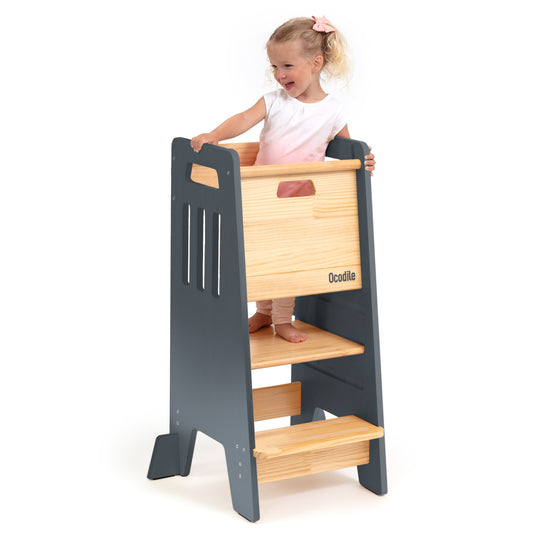
Practical life is the cornerstone of the Montessori curriculum, teaching children how to care for themselves and their environment. The right furniture is designed to support these real-world tasks. This might be a small kitchen helper tower that safely lifts a child to counter height so they can wash vegetables or mix ingredients right alongside you.
It could also be a low-slung sink or a basin on a small stand for handwashing, or even a dressing frame stand. These stations turn everyday chores into engaging, skill-building activities. They teach sequencing, coordination, and independence while giving the child a meaningful role in the family or classroom community.
Floor Beds for Freedom of Movement
While it might seem a bit unconventional at first, the floor bed is a key piece of Montessori furniture for the bedroom. Placed directly on the floor or on a very low frame, it allows a child to get in and out of bed independently from a young age. This respects their natural sleep-wake cycles and gives them autonomy over their own rest.
Instead of being penned in by crib bars, a child can wake up and move to a safe, prepared area with quiet activities until the rest of the house is stirring. This fosters a sense of independence and trust in their own abilities, right from the very start of their day.
Choosing the Right Size and Materials
Picking out Montessori classroom furniture goes way beyond just how it looks. It’s really about finding pieces that are perfectly scaled to a child’s body and crafted from materials that are safe, durable, and even beautiful.
Think of it like buying a bicycle for a kid. A bike that’s too big or too small isn't just awkward—it's unsafe and keeps them from really getting the hang of it. The very same idea applies to their learning space.
When furniture fits just right, it gets rid of physical struggles and lets a child dive deep into their activity. If their feet can rest flat on the floor while they sit and their work surface is at a comfy height, they’re set up to build concentration and master fine motor skills. This focus on scale is a fundamental way we show respect for the child, meeting their physical needs and empowering them to be independent.
Decoding Child-Sized Furniture
Getting the size right is your first mission. Good ergonomics are key to supporting a child's posture and making sure they’re comfortable during activities. A quick rule of thumb? A child should be able to sit with their feet planted firmly on the ground, with their knees bent at a 90-degree angle.
This is where the core pieces of a prepared Montessori environment come into play.
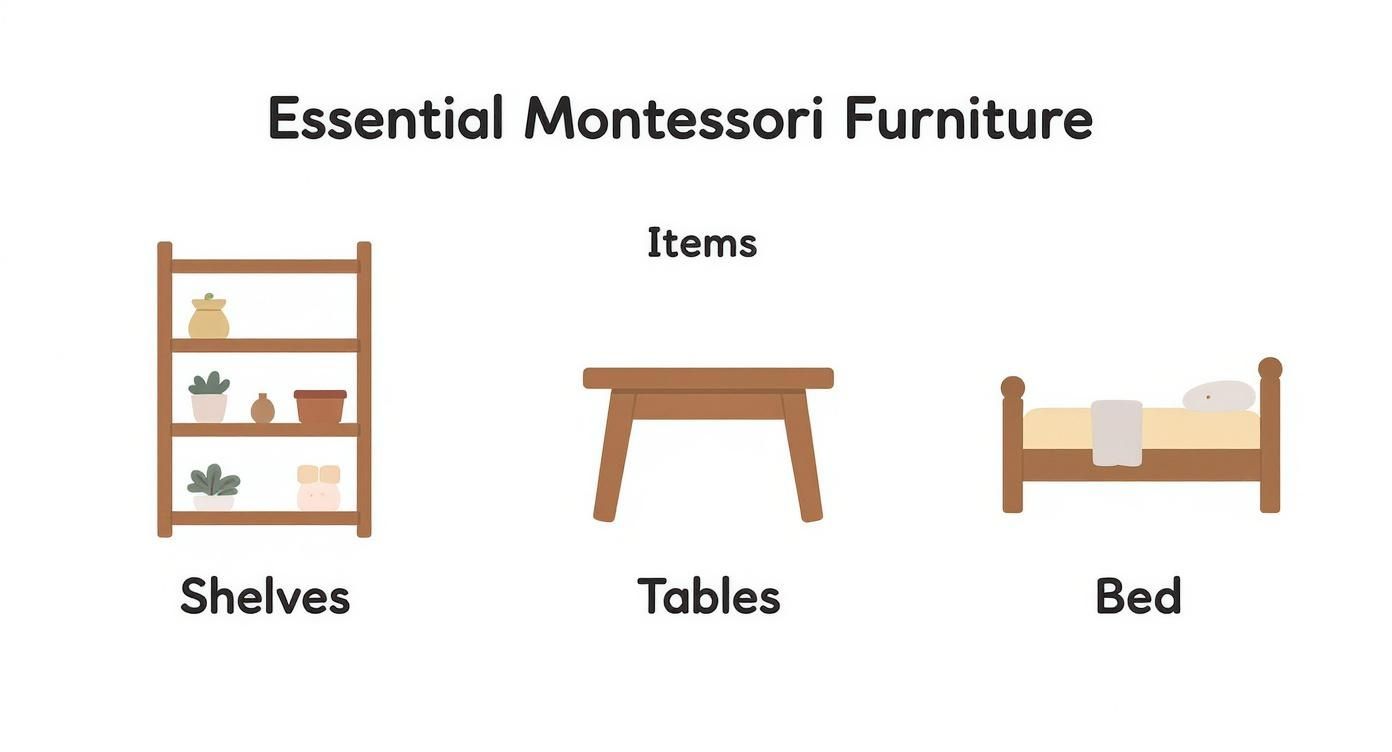
As you can see, low shelves, tables, and beds aren't just furniture—they're the building blocks of a child’s own independent space, each playing a special role in their development.
The market backs this up. In the preschool furniture world, seating products recently took the biggest slice of the pie at 42%, with tables at 27% and storage solutions at 31%. This tells us parents and educators are investing in a balanced way across these essential categories to build functional learning spaces. You can find more details on these classroom furniture market trends if you’re curious.
To give you a head start, here’s a quick reference guide for matching furniture dimensions to a child's age and height.
Child-Sized Furniture Sizing Chart by Age
| Age Group | Child's Height (Approx.) | Recommended Chair Height | Recommended Table Height |
|---|---|---|---|
| 1–2 Years | 29–35 inches | 6–8 inches | 12–14 inches |
| 3–4 Years | 35–41 inches | 8–10 inches | 16–18 inches |
| 4–6 Years | 41–47 inches | 10–12 inches | 18–20 inches |
Remember, these are just guidelines. The best approach is to always measure your own child and check the product dimensions before you buy. A table and chair set that fits perfectly is one of the best investments you can make for their comfort and focus.
Selecting Safe and Sustainable Materials
The materials in Montessori furniture matter just as much as the design. You want something natural, non-toxic, and tough enough to handle daily adventures with curious kids. The choice of material affects not just how long the furniture lasts, but also the child’s safety and sensory experience.
The ideal material is beautiful, strong, and safe. It should offer a tactile experience that connects the child to the natural world, reinforcing the Montessori principle of learning through the senses.
Solid wood is almost always the top choice for high-quality Montessori furniture. Woods like birch, maple, and beech are famous for their durability and have a lovely, neutral look that helps create a calm, focused atmosphere. They're sturdy enough to last for years and are often passed down through families or classrooms.
When you’re looking at materials, here’s what to keep in mind:
- Solid Wood: Incredibly durable, can be repaired, and has a natural aesthetic. It’s also heavier, which adds stability and prevents tipping.
- Engineered Wood (like Plywood or MDF): This is a more budget-friendly option, but durability can be a concern. If you go this route, make sure it's high-quality and CARB Phase 2 compliant for low formaldehyde emissions. Look for a durable, non-toxic finish.
- Finishes: The finish is critical. Look for water-based, non-toxic paints and lacquers that are certified child-safe (often meeting ASTM F963-17 standards). Steer clear of finishes with high VOCs (volatile organic compounds).
By thinking through both size and materials, you’re not just buying an object for a room. You’re choosing a functional tool that will actively support your child’s development, safety, and independence for years to come.
How to Design Your Montessori Classroom Layout
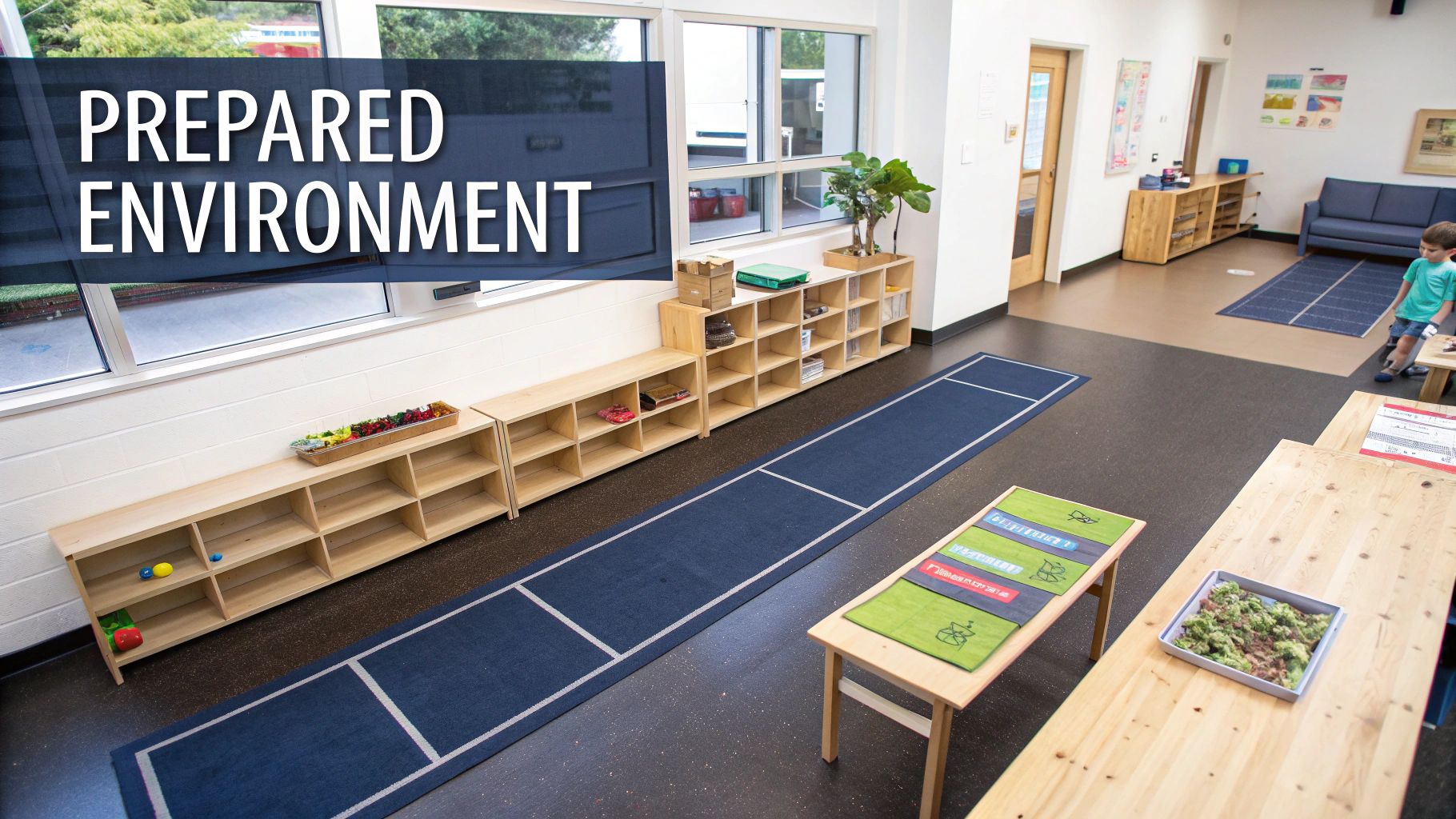
Arranging montessori classroom furniture isn't really about interior design. It's much more like choreography—carefully planning a space that guides movement, encourages deep focus, and lets learning happen organically. A thoughtful layout turns a simple room into a "prepared environment" where children can move freely, choose their own work, and learn to respect the space and each other.
The goal here is to create a sense of calm order. This isn’t about being rigid. It's about establishing a logical flow that just makes sense to a child. When their surroundings are predictable and easy to navigate, children feel more secure. That security allows them to pour all their mental energy into learning instead of wondering where things go or what they’re supposed to do next.
Creating Distinct Learning Zones
One of the best ways to approach a Montessori layout is to divide the room into distinct curriculum areas. Each zone, defined by its low shelves and child-sized furniture, becomes a little world dedicated to a specific kind of work. This organization helps children quickly understand the purpose of each area and the materials inside it.
Think of it like a well-organized library. You instinctively know where to find fiction, non-fiction, or reference books. A Montessori layout does the same thing, creating predictable zones for different activities, making it a breeze for a child to find and get lost in their chosen work.
Here are the primary areas you’ll want to set up:
- Practical Life: This is for hands-on activities like pouring, dressing, and preparing snacks. It’s best located near a water source, if possible, with durable, easy-to-clean surfaces.
- Sensorial: Home to materials that refine the senses, like color tablets and sound cylinders. This area works best in a quieter spot with good natural light to help with concentration.
- Language: Filled with books, sandpaper letters, and writing tools, this area should feel cozy and inviting. A small rug and comfy seating can create the perfect reading nook.
- Mathematics: This section holds materials for counting, numbers, and geometry. You’ll want to make sure there's plenty of floor space for activities like laying out long bead chains.
- Cultural Studies: Covering subjects like geography, science, and art, this zone might include maps, nature items, and an easel. It's often nice to place this area near a window.
Designing for Flow and Freedom
Once you've mapped out your zones, the next step is making sure children can move smoothly between them. The layout needs clear, wide pathways that allow for graceful movement. This is crucial for preventing kids from bumping into each other or accidentally disturbing someone else’s work—a subtle but powerful lesson in respecting others.
Imagine the pathways as gentle streams flowing through the classroom. The montessori classroom furniture should guide this flow, not block it. You'll want to avoid dead ends or tight squeezes at all costs. A child should be able to carry a tray or a mat from a shelf to a workspace without running an obstacle course. This freedom of movement is a cornerstone of building a child's autonomy.
When you're mapping things out, looking into fundamental cabinet layout considerations can actually offer some great insights. The core principles of flow and accessibility are universal, even if you aren't installing kitchen cabinets.
The environment itself should be the guide. A logical layout reduces the need for constant adult direction and empowers children to manage their own activities, from selection to cleanup.
Maintaining a Calm and Orderly Atmosphere
A core Montessori idea is "a place for everything, and everything in its place." The furniture is your greatest ally in achieving this. Low, open shelves clearly show where each material belongs, which naturally encourages children to put things back when they're done. This creates a self-sustaining cycle of order.
To keep distractions low and focus high, try these simple tips:
- Use Neutral Tones: Furniture made from natural materials like wood provides a calm, unassuming backdrop. This allows the colorful learning materials to pop, drawing the child’s attention to the work itself.
- Define Workspaces: Small rugs, often called "work mats," are used to give each child a personal workspace on the floor. Your furniture layout should leave plenty of open floor space to accommodate them.
- Rotate Materials: Keep the shelves looking neat and inviting, not cluttered. Displaying a curated selection of activities makes the choices feel more special and less overwhelming for a child.
By carefully placing furniture to create defined zones, clear pathways, and an overarching sense of order, you build an environment that truly works for the child. This thoughtful design is the foundation for a peaceful, productive, and independent learning experience.
Prioritizing Safety and Long-Term Maintenance
When you invest in Montessori classroom furniture, you're buying more than just a cute table or shelf. These pieces are active tools in your child’s development, and they need to be tough enough for daily adventures while keeping your little explorer safe.
Think of it this way: great Montessori furniture is a reliable foundation for learning. It gives you peace of mind, knowing the environment is built to support your child’s curiosity, not hinder it. Prioritizing safety means looking past the surface and inspecting the small details that make a big difference.
Understanding Key Safety Standards
It's easy to get lost in a sea of acronyms, but safety certifications are your best friend. When you see labels from groups like ASTM or JPMA, it’s a sign that the furniture has passed some serious tests to meet established safety rules.
Here's what really matters:
- Rounded Corners and Edges: Sharp corners and active kids are a bad mix. Quality Montessori furniture will always have smooth, rounded edges to prevent bumps and scrapes during playtime.
- Stability and Tip-Over Resistance: Shelves and tables should feel solid, with a low center of gravity that makes them hard to knock over. For any piece that’s even a little tall, anchoring it to the wall is a non-negotiable. We've got a whole guide on how to secure furniture to a wall if you need some pointers.
- Non-Toxic Materials and Finishes: Toddlers explore the world with their hands and, let’s be honest, their mouths. The finishes on their furniture should be water-based and free from nasty chemicals like lead or phthalates. It's also worth thinking about the bigger picture, like ensuring furniture is safe from toxins that can hide in cheaper materials.
These certifications aren't just for show. For instance, ASTM F963-17 is the go-to safety spec for toys, and it often applies to kids' furniture. A JPMA (Juvenile Products Manufacturers Association) seal is another great indicator that a product meets high safety standards.
The safest furniture is designed with a child’s perspective in mind. It anticipates their movements, supports their independence, and is built from materials that protect their health, creating an environment of trust and security.
A Simple Maintenance Checklist
A little bit of care goes a long way in keeping your Montessori furniture beautiful and safe for years. You don't need to spend hours on it; a simple, consistent routine can stop small issues from turning into big ones. Plus, it helps keep the learning space orderly and respectful, which is a core Montessori value.
Just follow this easy checklist to keep everything in top shape:
- Routine Cleaning: Regularly wipe down surfaces with a damp cloth and a mild, non-toxic cleaner. Steer clear of harsh chemicals that can strip the finish. A simple mix of vinegar and water usually does the trick perfectly.
- Inspect Hardware: Once a month or so, give all the screws, nuts, and bolts a quick check to make sure they're tight. All that climbing and playing can loosen things over time, and a quick tighten prevents wobbles.
- Address Wear and Tear: Scratches and dings are just signs of a well-loved piece of furniture. If you have solid wood, you can lightly sand any small imperfections and touch them up with a child-safe finish to keep the wood protected.
- Check for Splinters: Run your hand over the wooden surfaces every now and then, especially on high-traffic spots like chair seats and table edges. If you feel anything rough, just give it a light sanding until it's smooth again.
Your Practical Checklist for Selecting Furniture
Choosing the right Montessori classroom furniture can feel like a massive undertaking, but I've found that breaking it down into a simple checklist makes everything so much clearer. This little guide pulls together all the core principles we've talked about into four key areas to think about.
Use these questions as you're browsing. They'll help you confidently figure out if a piece really fits the Montessori philosophy and, more importantly, your child’s needs. Think of it as your final quality-check before you buy, ensuring every item you bring home is beautiful, functional, and perfectly suited for your little one's world.
Child-Centered Design
First things first: is this piece of furniture truly made for a child? The whole point is to empower them, not get in their way.
- Is it accessible? A child should be able to get to their shelves, sit down in a chair, and use a table without ever having to ask for help. Can they grab their own toys and, just as crucial, put them away all by themselves?
- Is it the right size? Take a good look at the height. When your child is sitting, their feet should be flat on the floor with their knees bent at a nice 90-degree angle. This isn't just about looks; it's a critical ergonomic fit for comfort and focus.
- Is the design simple? The furniture itself shouldn't be the main event. It needs to be uncluttered and neutral. Its job is to showcase the learning materials, not to be a distraction.
Material and Construction
The quality of what a piece is made of directly affects its safety, how long it will last, and the sensory experience your child has with it. I always tell parents that high-quality furniture is an investment in a lasting, healthy environment.
A well-chosen piece of furniture should feel as good as it looks. Natural materials provide a tactile connection to the world and are sturdy enough to withstand the joyful rigors of childhood exploration.
- Is it made from durable materials? You really can't go wrong with solid wood like birch or beech—they're the gold standard for longevity and stability. If you're looking at engineered wood, make sure it's high-grade and CARB Phase 2 compliant to avoid nasty chemicals.
- Are the finishes non-toxic? This is non-negotiable. Look for certifications that confirm the use of water-based, child-safe paints and lacquers. Kids will be touching, and maybe even chewing on, these items every single day.
Safety Features
Safety is everything. Every single piece of furniture has to be designed with a child's natural curiosity and constant movement in mind. We're trying to create a secure space where they can learn and play freely without you having to hover over them.
- Does it have rounded edges? All corners and edges should be smooth and rounded off. It's a simple detail that prevents a world of hurt from accidental bumps and tumbles.
- Is it stable and tip-proof? The furniture needs a low center of gravity so it won't topple easily. For anything tall, like shelves, make sure they come with anti-tip hardware so you can anchor them securely to the wall.
Functionality and Purpose
Last but not least, every piece needs to have a purpose that supports your child’s development. Montessori furniture isn't just decoration; it's a tool for learning.
- Does it support independence? From a low shelf that encourages your child to make their own choices to a kitchen tower that invites them to participate in family life, the furniture should actively help them do things for themselves.
- Is it multi-functional but specific? A great piece can be used for all sorts of activities—drawing, eating, puzzles—but it should still be perfectly designed for its main role within the prepared environment.
Got Questions? We’ve Got Answers.
Dipping your toes into the world of Montessori classroom furniture can feel like learning a new language. We get it. That’s why we’ve gathered some of the most common questions we hear from parents and educators just like you.
Let’s clear things up so you can feel confident creating a space where your little one can truly thrive.
Can I Mix Montessori Furniture with My Kid’s Existing Toys?
Of course! You don't have to do a massive toy purge to get started. The real magic is in how you present the toys your child already loves. Instead of a jumbled toy box, try placing just a few favorites on a low, open Montessori shelf.
This simple switch helps your child see their toys as invitations to play, not just a chaotic pile. By rotating a small selection of both Montessori-style materials and beloved classic toys, you keep their environment feeling fresh and organized, all while respecting their ability to make their own choices.
How Do I Even Begin Switching to a Montessori Setup?
Transitioning your home to a Montessori-inspired space is more of a gentle evolution than an overnight renovation. The secret is to start small and focus on one area at a time.
Here’s a simple way to ease into it:
- Make Things Accessible. The easiest first step is usually a low shelf for books and activities. It instantly gives your child more autonomy over their playtime.
- Create Their Own Zone. Next, think about adding a child-sized table and chair. This carves out a dedicated spot for art projects, puzzles, or snack time, reinforcing that sense of independence.
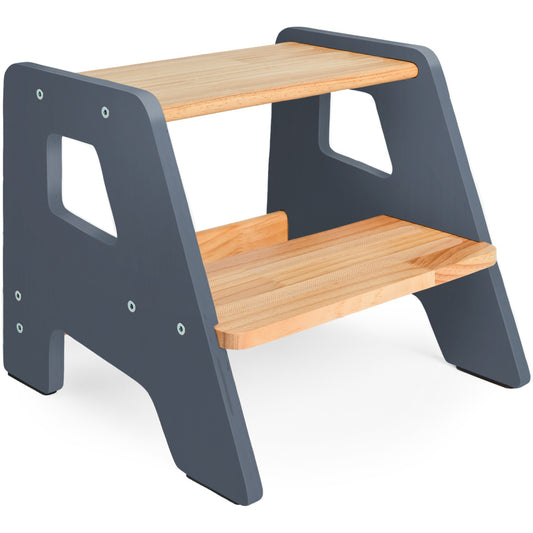
- Invite Them Into Your World. A learning tower or a sturdy step stool is a game-changer. It lets your child safely join in with everyday tasks, like helping in the kitchen or washing their hands at the sink.
Your best guide is always your child. Pay attention to what captures their interest and focus your energy there first. A successful transition is one that follows their lead.
Is Authentic Montessori Furniture Really Worth the Price Tag?
This is the big one, isn't it? While the upfront cost for high-quality, authentic Montessori classroom furniture can be more than for mass-produced items, it’s best to see it as an investment in your child’s environment, not just a purchase.
Authentic pieces are built to last. They’re typically made from solid wood with non-toxic finishes, so they can handle years of enthusiastic use. Unlike cheaper alternatives that might chip, break, or become wobbly, this furniture is designed with durability and safety as the top priorities.
But most importantly, the design itself provides developmental benefits that you just don't get with standard furniture. The precise, child-friendly scaling, the focus on accessibility, and the simple aesthetic all work together to build concentration, independence, and a sense of order. When you consider the years of use and the impact on your child's early growth, the value becomes crystal clear.
At Ocodile, we pour these principles into every piece we create. Our furniture is safe, beautiful, and designed to support your child’s journey toward independence. Explore our collection at https://ocodile.com to find the perfect tools for your prepared environment.