



The Ultimate Guide to the Montessori Pikler Triangle
A Montessori Pikler triangle is so much more than a simple climbing frame. It's a foundational tool for your child’s development, specifically designed to encourage independent play and build those crucial gross motor skills. Think of it as a personal 'developmental playground' that literally grows with them, letting them explore movement and build confidence all on their own schedule.
Unlocking a World of Child-Led Exploration
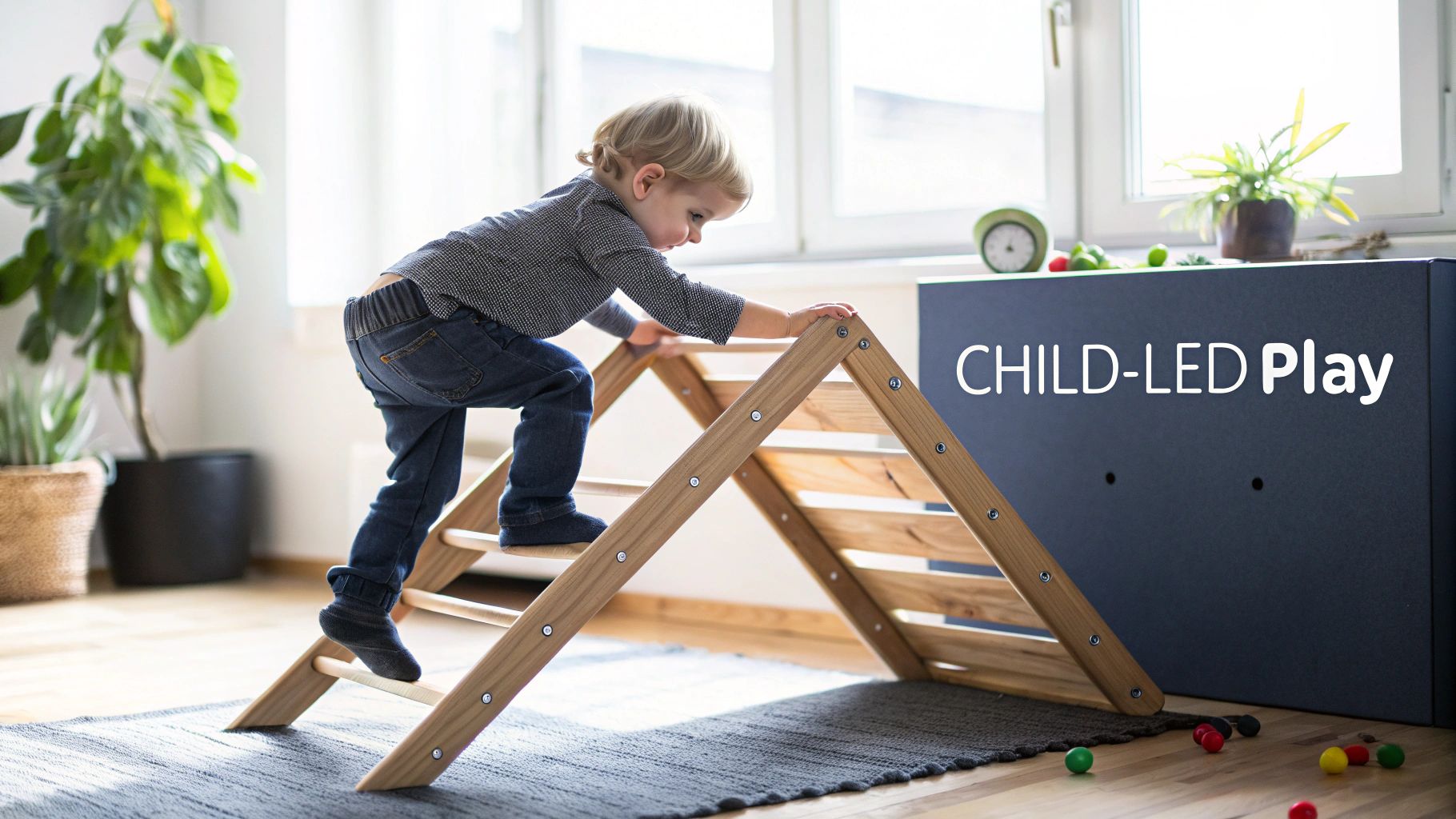
At its core, the Pikler triangle is a sturdy, straightforward climbing structure that empowers children to figure out their own physical capabilities—without a grown-up telling them how. It’s not about teaching a child how to climb; it’s about providing a safe space where they can master it themselves.
This approach respects a child's natural timeline. They'll master pulling up, then balancing, and eventually, scaling the rungs when they feel ready, not when we think they should be. It’s a staple in child-centered homes because it gives kids a safe outlet for that deep-seated urge to climb, redirecting them from the sofa or bookshelves.
Fostering Independence from an Early Age
The real magic of a Montessori Pikler triangle is the confidence it builds. Every time your little one reaches a new rung or navigates their way back down, they’re learning priceless lessons about their own strength, coordination, and judgment. This cycle of trial and discovery is key to developing physical literacy and genuine self-assurance.
The goal is to provide a tool that encourages independent problem-solving. A child who learns to assess their own limits on a Pikler triangle is building a foundation for making safe, considered decisions throughout their life.
This simple piece of equipment is basically an open invitation to move, explore, and learn through doing. It's a fantastic match for kids with a kinesthetic learning style, as it lets them process the world through touch and movement.
Ultimately, adding a Pikler triangle to your home helps create an environment where a child’s independence isn’t just tolerated, but actively encouraged. It sends a powerful message that you trust their abilities, which is a wonderful setup for a lifetime of confident exploration. If you're looking to create this kind of empowering space, understanding the principles of Montessori education at home is a great place to start.
This one piece of equipment can transform a simple play area into a dynamic space for growth, helping your child build:
- Gross Motor Skills: Climbing, balancing, and coordinating big movements.
- Self-Confidence: Nailing new physical milestones all by themselves.
- Risk Assessment: Learning to understand and manage physical challenges safely.
- Body Awareness: Developing a strong sense of where their body is in space.
The Pioneering Doctor Behind the Pikler Triangle
To really get what the Montessori Pikler triangle is all about, we need to travel back to the early 20th century and meet its inventor, Dr. Emmi Pikler. She was a forward-thinking Hungarian pediatrician who built her work on a simple but powerful idea: kids do best when they’re free to move and grow at their own speed.
Her philosophy wasn't cooked up in a lab; it came from years of real-world observation. Dr. Pikler noticed something interesting in her Budapest practice. Children from lower-income families, who often played freely outside—climbing and exploring without a parent hovering over them—seemed to be more physically capable and resilient. This led to her core belief in respecting a child's natural developmental schedule, letting them figure out sitting, crawling, and walking on their own, without being propped up or "taught."
A Philosophy of Respectful Movement
Dr. Pikler's whole approach was built on the ideas of uninterrupted play and freedom of movement. She was convinced that when children are allowed to discover what their bodies can do, they build more than just muscle and coordination. They also develop a deep-seated self-awareness and genuine confidence. The now-famous climbing frame was her brilliant, practical solution—a safe and predictable place where a child could test their own limits, on their own terms.
This child-led way of thinking was a natural partner to the work of another innovator, Maria Montessori. Both pioneers shared a profound respect for the child as an individual, fully capable of directing their own learning. While Montessori focused on preparing an environment for a child’s mind and practical life skills, Pikler focused on preparing the environment for their gross motor development.
Dr. Pikler’s work reminds us that a child's physical accomplishments are deeply personal. The confidence a toddler gains from figuring out how to climb down from a rung is a lesson in problem-solving that no amount of adult help can ever replace.
Timeless Wisdom for Modern Families
Dr. Pikler's insights from over a century ago feel more relevant today than ever. She observed that children who moved freely had 40-50% fewer broken bones than those who were constantly supervised and restricted indoors. Her philosophy, which she put into practice at the Lóczy orphanage in Budapest, showed that 90% of children learned to walk independently by 12-15 months without any forced help from things like baby walkers. You can learn more about how her principles changed the game by exploring insights on the Pikler triangle's history.
The Montessori Pikler triangle is so much more than a piece of wood. It’s the physical embodiment of this trust-based philosophy. It creates a "yes space" for that completely natural, universal urge to climb. For parents today looking for purposeful, long-lasting tools for growth, the triangle isn't just another toy. It's a direct connection to a century of wisdom that champions independence and trusts the incredible potential already inside every child.
Unlocking Key Developmental Benefits
A Montessori Pikler triangle is so much more than just a simple wooden frame; it's a launchpad for your child's holistic development. Its minimalist design unlocks a world of physical, cognitive, and emotional growth, all powered by your little one's natural curiosity. Every interaction, from a tentative first grip to a triumphant climb to the top, builds a foundation for lifelong skills.
This journey starts with the most obvious benefit: the development of gross motor skills. Climbing the rungs requires children to use their entire body, strengthening their arms, legs, and core. They learn to coordinate their movements, shifting their weight and finding their balance in a dynamic, three-dimensional space.
Think of it as a personal laboratory for movement. A toddler might spend weeks just pulling up on the lowest rung, mastering that tricky transition from sitting to standing. An older child will practice climbing up one side and carefully navigating their way down the other, a sequence that requires some serious coordination and motor planning.
This simple diagram perfectly captures the core philosophy, showing how respectful, self-directed movement builds physical capability and, in turn, fosters emotional confidence.
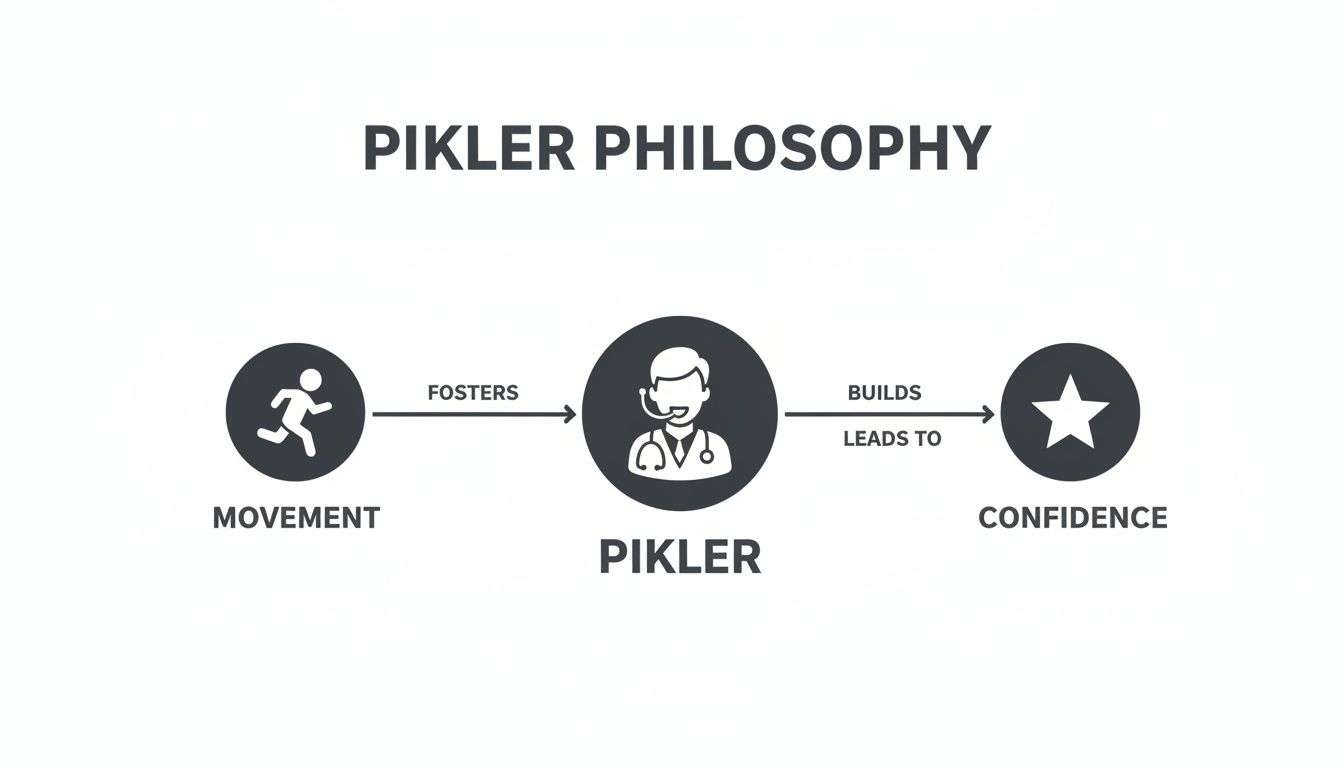
As you can see, Dr. Pikler's approach creates a powerful cycle where physical exploration directly fuels a child's growing sense of "I can do it!"
Building Body and Brain Connections
Beyond just muscle, the Pikler triangle is a masterclass in developing proprioception—what we commonly call body awareness. This is the brain's internal map of where the body is in space. Every time a child reaches for the next rung without looking down, they are sharpening this essential internal sense.
This heightened awareness is crucial for preventing tumbles and navigating the world safely. A child with strong proprioception moves with more confidence and control, whether they're on the playground or just walking down a crowded hallway.
Cognitive growth flourishes here, too. Each climb presents a series of small, solvable problems for their developing brain.
- Which rung should I grab next?
- Where should I place my foot for the best support?
- How do I turn my body to start climbing down?
This constant problem-solving and risk assessment happens in a safe, low-stakes environment. Children learn to evaluate their own abilities, make calculated decisions, and understand natural consequences. This is a foundational element of what experts call scaffolding, where a child is supported just enough to achieve the next step on their own. You can explore more about what scaffolding in child development is in our detailed guide.
Fostering Confidence and Independence
Perhaps the most profound benefits are emotional. When a child masters the Pikler triangle at their own pace, without an adult hovering or interfering, that sense of accomplishment is entirely their own. This internal validation is an incredible builder of self-esteem and resilience.
The Pikler triangle teaches a child to trust their own body and judgment. It says, "You are capable, you are strong, and you can figure this out." This message fosters deep-seated confidence that extends far beyond the playroom.
This isn't just a feeling; it's backed by observation. A recent international study linked regular Pikler triangle use to 35% higher self-esteem scores and 28% better emotional regulation in young children. The structure is remarkably versatile, too. It’s used for sensory play by infants in 30% of minimalist homes and for imaginative play during 95% of sessions with preschoolers. The design's widespread adoption, now found in 65% of U.S. toddler classrooms, really speaks to how effective it is at fostering the independence modern families value.
This journey from dependence to confident exploration is the true gift of the Montessori Pikler triangle. It doesn't just build strong bodies; it builds brave, capable, and independent children ready to take on the world, one steady step at a time.
An Age-by-Age Guide to Using the Pikler Triangle
One of the most incredible things about a Montessori Pikler triangle is how it evolves right alongside your child. It isn’t a one-and-done toy. Think of it as a dynamic developmental partner that meets your child exactly where they are, from one milestone to the next.
This guide breaks down that journey, showing you what to expect as your little one grows from a wobbly infant into a confident, climbing preschooler. It’s a beautiful thing to witness their physical skills and self-assurance blossom over time.
The First Year From Six to Twelve Months
In these early months, the Pikler triangle acts as a sturdy anchor for exploration. A baby who isn't mobile yet might just lie underneath, mesmerized by the view of the rungs above. You can even tie a soft toy to a rung to give them something to reach for.
Once they start moving, the frame becomes an invaluable tool for pulling up. The rungs are perfectly sized for tiny hands to get a solid grip, giving them the stability they need to hoist themselves from sitting to standing. It’s an amazing workout for their core and leg strength.
You’ll probably see them:
- Peering through the rungs during tummy time, encouraging head and neck control.
- Pulling to a stand using the lowest rungs for leverage.
- Cruising along the base, taking those first hesitant side-steps while holding on for dear life.
The Toddler Years From One to Two
This is when the real climbing adventure often kicks off. Now more confident on their feet, toddlers start to see the triangle as a challenge to be conquered, not just a support. They’ll begin experimenting, placing a foot on the first rung, testing their balance, and figuring out this whole new vertical world.
The first few attempts might look clumsy—a foot up, then right back down—but this is a crucial phase of motor planning. They're mapping out how their body moves and how much effort each action takes. Before you know it, they'll be scaling one or two rungs before carefully making their way back down.
During this stage, it’s all about the process, not the destination. A toddler might climb up and down the same two rungs over and over. They're perfecting the sequence and building the physical and mental pathways needed for more complex movements.
If you’re trying to figure out which toys best fit this stage, this guide to Montessori toys by age is a fantastic resource for aligning your playroom with your child’s developmental needs.
To help you visualize this journey, here’s a quick breakdown of the milestones you can expect.
Pikler Triangle Milestones By Age
| Age Range | Typical Interaction | Skills Being Developed |
|---|---|---|
| 6-12 Months | Pulling to stand, cruising along the base, peering through rungs. | Gross motor skills, balance, core strength, hand-eye coordination. |
| 1-2 Years | First attempts at climbing, ascending one or two rungs, exploring balance. | Motor planning, problem-solving, coordination, building confidence. |
| 2-3 Years | Climbing to the top, mastering the descent, increased speed and confidence. | Body awareness, risk assessment, sequencing complex movements. |
| 3-5 Years | Using the triangle for imaginative play (forts, mountains), creative movement. | Creativity, social skills (if playing with others), imaginative thinking. |
Remember, every child develops at their own unique pace, so use this table as a general guide, not a strict timeline.
The Confident Climber From Two to Three
By this age, many kids have the basics down and are ready for more adventure. They climb with purpose and skill, often making their way halfway up or even conquering the peak.
A huge milestone during this period is learning to climb over the top and down the other side. This is a complex sequence that requires serious problem-solving, body awareness, and coordination. The look of triumph on their face when they finally figure it out is priceless.
The Preschool Years From Three to Five
For preschoolers, the Montessori Pikler triangle often shifts from being a physical challenge to a prop for imaginative play. Now that they've mastered the climb, they integrate it into their incredible creative worlds.
It can become anything they dream up:
- A mountain to be scaled by brave explorers.
- A cozy tent or fort when draped with a blanket.
- A house for their dolls and stuffed animals.
- An obstacle in a living room agility course.
This shift from physical mastery to creative application really shows the long-term value of the triangle. It continues to support their growing imagination while still offering a great way to burn off gross motor energy on a rainy day. Our guide on the ideal Pikler triangle age range can give you more detailed insights into this progression.
How to Choose a Safe Pikler Triangle
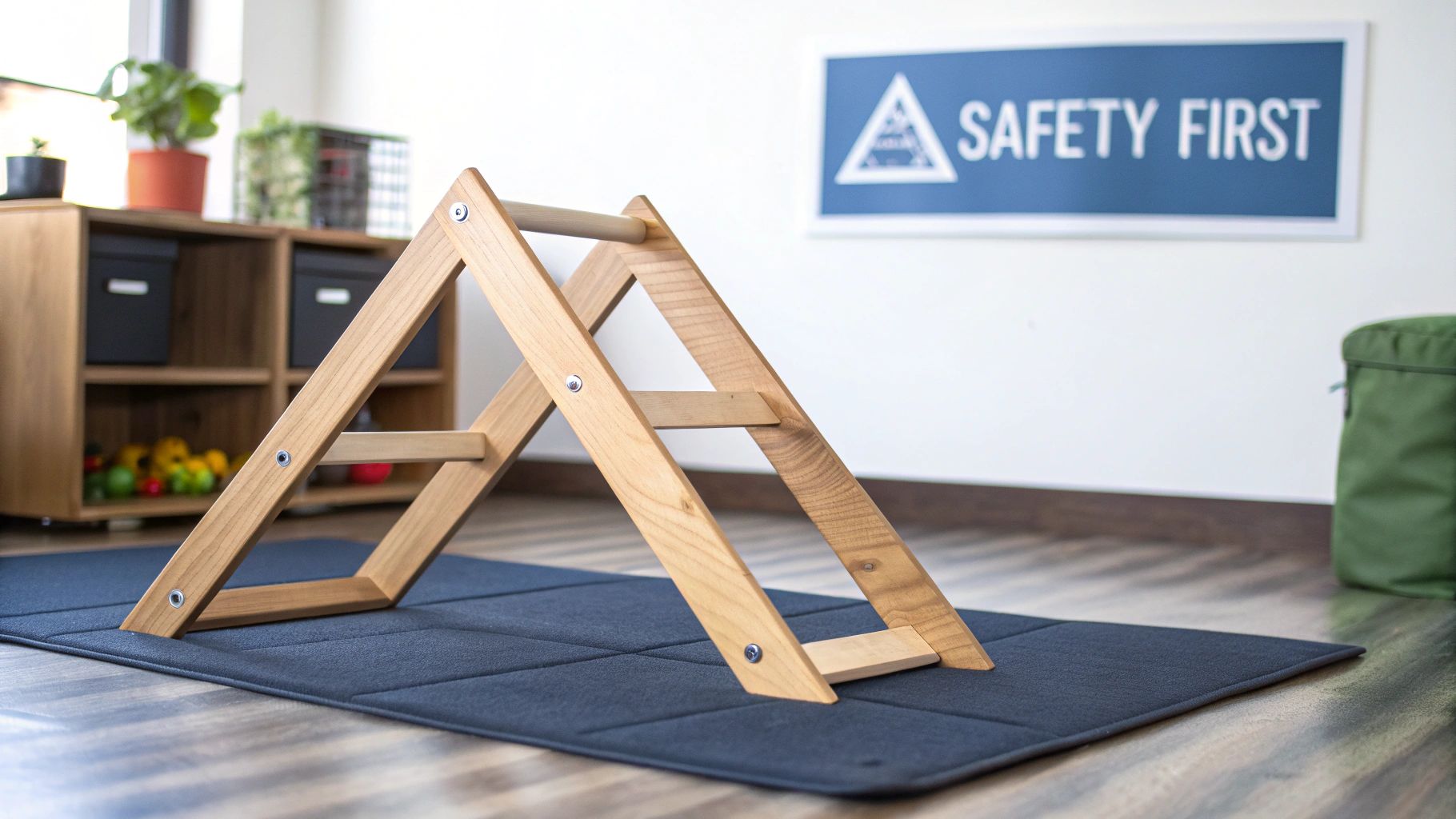
When you're bringing something like a Montessori Pikler triangle into your home, safety is everything. This isn't just another toy; it’s a tool for physical exploration and confidence-building. A well-made, secure frame is what makes that exploration possible.
But with so many options out there, how can you be sure you're picking a truly safe one? It really comes down to looking past the photos and digging into the details of its construction, materials, and stability. These are the things that separate a reliable developmental tool from a wobbly hazard.
A thoughtfully designed Pikler triangle has safety built into every part, from the type of wood used to how the rungs are attached. Making the right choice means you can create a space where your child can test their limits freely, and you can watch on with total peace of mind.
Material and Construction Quality
The very foundation of a safe Pikler triangle is the wood it's made from. You’ll want to look for frames made from solid hardwood, like birch or beech. These are tough, durable woods that can handle the stress of climbing without splintering or cracking, which can sometimes be an issue with softer woods like pine.
The finish is just as important. Seek out triangles that use non-toxic, water-based paints and sealants. Little hands and mouths explore everything, so keeping harmful chemicals like VOCs (volatile organic compounds) out of their play space is a must. A good finish also means the frame will be perfectly smooth, with no chance of splinters.
Next, it's time to check the construction quality. Here’s what to look for:
- Rounded Edges: Sharp corners have no place on a climbing frame. All edges and corners should be smoothly sanded down to soften any bumps or falls.
- Secure Rungs: The rungs should feel rock-solid. Ideally, they should pass all the way through the side rails rather than just being screwed on. Give them a good wiggle—there should be zero looseness.
- Proper Rung Spacing: The gaps between rungs are important. They need to be close enough for small legs to manage but not so close that a head could get stuck.
A well-built Pikler triangle feels solid right out of the box. If you apply pressure to it, there shouldn't be any creaking, wobbling, or shifting. That structural integrity is completely non-negotiable.
Stability and Safe Home Use
Once you’re happy with the quality of the triangle itself, the next piece of the puzzle is using it safely at home. A stable design is your best friend here. Look for a frame with a wide base and, critically, a locking mechanism to stop it from folding up during play. Many of the best models have secure knobs or pins that lock the legs firmly in place.
Where you place it matters, too. Always set up your Montessori Pikler triangle on a soft but firm surface. A low-pile rug or a dedicated play mat is perfect—it gives a bit of cushion for tumbles but isn't so plush that it makes the frame unstable. Try to avoid hard floors like tile or wood, and stay away from thick, shaggy carpets.
Here’s a quick checklist for setting up a safe climbing zone:
- Level Ground: Make sure the triangle is on a completely flat surface to prevent any chance of it tipping over.
- Clear Space: Keep a generous buffer zone around the triangle, clear of other furniture, hard toys, or anything else to bump into.
- Supervise Without Hovering: Your presence is important, but try to resist the urge to jump in and "help" with every little wobble. The idea is to be there to spot them if they truly need you, not to prevent them from problem-solving.
- Appropriate Clothing: Dress your child in comfy clothes that aren't baggy enough to get snagged. Bare feet are best for climbing! They give the best grip and sensory feedback.
By focusing on these key details—from the type of wood to its spot in your living room—you can choose a Montessori Pikler triangle that’s a safe, enriching, and well-loved part of your home.
Weaving the Triangle into Your Home
Bringing a Montessori Pikler triangle into your house isn't just about finding an empty corner for it. The real goal is to weave it so naturally into your daily life that it becomes a constant, open invitation for your child to move and play. It's about creating a space where they feel empowered to explore, climb, and test their limits safely.
Think of it as more than just a climber. When it’s part of a thoughtful setup, the triangle can be the heart of a dynamic play area—one that supports gross motor skills, creative thinking, and even quiet moments of focus. It's an incredibly versatile piece that adapts to your child’s ever-changing needs and your family’s space.
Creating an Inviting "Yes Space"
The best spot for your Pikler triangle is in a dedicated "yes space"—an area where your child is free to touch, move, and play without constantly hearing "no." This space should be safe, engaging, and designed with their independence in mind. Placing the triangle here sends a powerful message: your natural urge to climb is not only allowed but celebrated.
To make this area work, consider its surroundings. Place it on a soft, low-pile rug that offers a bit of cushion but won't compromise stability. Make sure there’s plenty of open space around it, clear of hard furniture or sharp corners, giving them room for safe tumbles and confident exploration.
A well-designed gross motor area doesn't need to be huge, but it does need to be intentional. It's a space that respects a child's deep developmental need for movement and provides the right tools to do it safely.
By setting up a designated zone, you’re creating a predictable environment. Your child learns the boundaries and feels secure enough to push their own physical limits, which is absolutely fundamental for building both motor skills and self-confidence.
Combining It with Other Open-Ended Materials
A Montessori Pikler triangle really comes alive when you pair it with other open-ended materials. Its simple A-frame design is the perfect anchor for all kinds of creative play. Just think of the triangle as the base and other items as the accessories that completely change the experience.
Here are a few simple ideas to get you started:
- Add a Ramp or Slide: Many Pikler triangles come with a reversible ramp—one side is smooth for sliding, the other has rungs for climbing. This simple piece instantly doubles the play value and creates new challenges for balance and coordination.
- Bring in Silks and Fabrics: Draping large play silks or even a simple blanket over the frame transforms it in seconds. This can turn the climber into a cozy reading nook, a secret fort, a dark tunnel, or a colorful backdrop for imaginative stories.
- Build an Obstacle Course: Use soft play blocks, cushions, or a crawling tunnel to build an exciting obstacle course with the triangle as the main event. This encourages sequencing, problem-solving, and gets them moving.
Keeping the Experience Fresh and Engaging
Like any toy, the Pikler triangle can lose its sparkle if it’s always out in the same way. The key to keeping your child engaged is rotation and reinvention. If you notice they aren't using it much, it might be time for a little change.
You could try folding it up and putting it away for a week or two. When you bring it back out, it will feel brand new again. Or, you could simply move it to a different room or pair it with a new accessory, like the ramp or a set of silks, to spark fresh interest. This simple act respects the natural ebb and flow of a child’s focus and ensures the triangle remains a cherished developmental tool, not just another piece of furniture.
A Few Common Questions
It’s only natural to have a few questions when you’re looking into a new piece of play equipment. We’ve put together some clear, simple answers to the most common things parents ask about the Montessori Pikler triangle, so you can feel totally confident.
Is the Pikler Triangle Actually Montessori?
That's a great question, and the answer isn't a simple yes or no. The Pikler triangle wasn't actually created by Maria Montessori. It was developed by Dr. Emmi Pikler, a Hungarian pediatrician who, like Dr. Montessori, was a pioneer in respecting a child's natural developmental path.
Even though it doesn’t share the Montessori name, its core principles are a perfect match. It’s all about encouraging independence, building gross motor skills, and letting a child gain self-confidence through free, self-directed movement. That's why it has become such a beloved staple in Montessori homes and classrooms all over the world.
Can I Leave My Child to Play on It Unsupervised?
The whole point is to foster independence, but adult supervision is still a must. The best way to think about it is "supervise without hovering." You want to be close enough to step in if there's a real emergency, but far enough away to give your child space to figure things out, test their limits, and even solve their own little problems.
Constantly saying "be careful!" can actually make a child second-guess their own abilities. It’s better to trust their process while making sure the environment around the triangle is safe. If you can't be nearby and focused, it's best to fold the triangle up and put it away.
A Montessori Pikler triangle gives children a safe place to learn their own physical limits. A little slip or a wobble is a valuable lesson; close supervision just makes sure those small learning moments don’t turn into a serious injury.
What if My Child Doesn't Seem Interested in Climbing?
Don't worry, that's completely normal. Some kids take a while to warm up to new things, and every child develops at their own unique pace. Some are just naturally more cautious. The most important thing is to never, ever push them, try to coax them, or place them on the rungs yourself.
Just have the triangle available in their play space. Think of it as a standing invitation. For a while, they might only use it to pull themselves up to a standing position, or maybe they’ll just peek through the rungs. They might even ignore it completely. Then one day, when their own internal clock says they're ready, their curiosity will kick in and they’ll start to explore it on their own terms. Respecting their personal timeline is what child-led play is all about.
At Ocodile, we believe in creating tools that support your child's natural journey of discovery. Our thoughtfully designed products are crafted to provide a safe, beautiful, and empowering environment for your little one's growth. Explore our collection at https://ocodile.com.