



Childrens Drafting Table: Spark Creativity for Young Artists
Let's be honest, watching a child hunched over a flat table can feel a little... uninspired. A childrens drafting table, on the other hand, isn't just a place to sit. It’s an active, engaging tool designed to help your child's artistic and cognitive skills blossom.
Think of it as a creative easel, ready to bring their biggest ideas to life.
Why a Drafting Table Is More Than Just Furniture
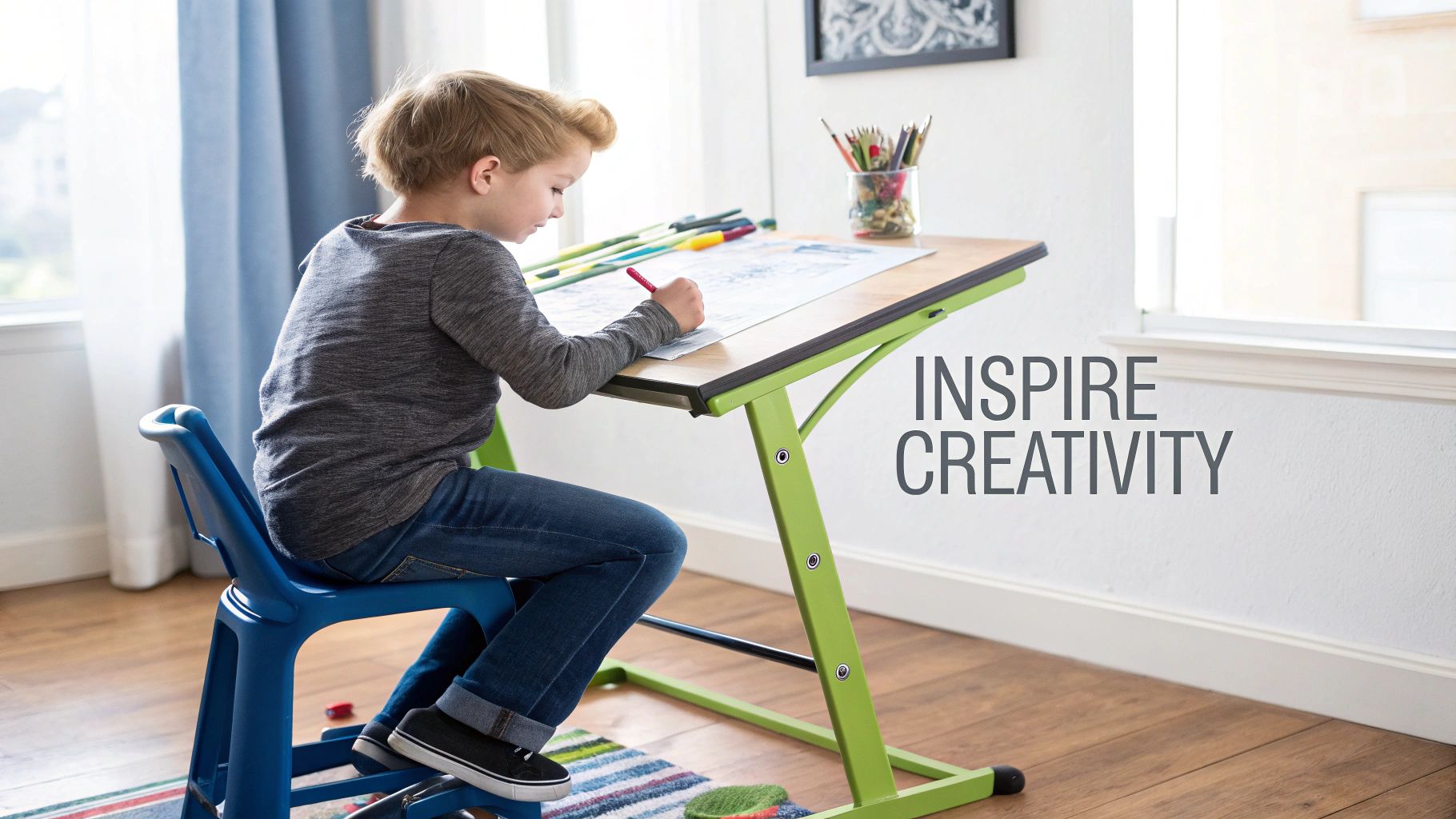
A standard kids' table is a passive canvas. Sure, it's a surface for activities, but it doesn’t do much to actively support the creative process. A drafting table, with its signature angled and adjustable surface, completely changes that dynamic.
It becomes an interactive partner in your child's development, not just another piece of furniture taking up space in the room. This guide will walk you through how this specialized table encourages better posture, sharpens focus, and carves out a dedicated space for drawing, building, and dreaming. It's a tool that adapts to your child, rather than forcing them to adapt to it.
Fostering Physical and Cognitive Growth
That simple act of tilting the work surface makes a world of difference. Hunching over a flat table often leads to neck and back strain, and that discomfort quickly turns into fidgeting and distraction. An angled surface brings the artwork right up to your child's eyes, encouraging a much more natural, upright posture.
This ergonomic edge isn't just about comfort—it's about concentration. When a child is physically comfortable, they can sink into an activity for longer, allowing for deeper engagement and a much richer learning experience.
A well-designed workspace is a silent partner in a child's development. By removing physical barriers to comfort, a childrens drafting table allows their focus and creativity to flourish without interruption.
A Dedicated Space for Imagination
Beyond the ergonomics, a drafting table carves out a special zone that’s all about creation. This isn't the same table where snacks are eaten or homework gets done. It’s a 'creation station,' a personal studio that validates your child's artistic side. This sense of ownership can be incredibly empowering, boosting their confidence and encouraging them to take their own ideas seriously.
Throughout this guide, we'll unpack the specific developmental leaps this single piece of furniture can support, including:
- Enhanced Fine Motor Skills: The angled surface provides better wrist support and control, which is fantastic for drawing, writing, and handling small objects.
- Improved Spatial Awareness: Working on a tilted plane helps children get a better grasp of perspective and dimension in their artwork.
- Boosted Hand-Eye Coordination: Bringing the work closer and into a clearer line of sight makes it much easier for little hands and eyes to work together seamlessly.
Ultimately, choosing a childrens drafting table is about more than just buying furniture. It's an investment in your child's creative journey and their overall well-being.
How an Angled Surface Boosts Development and Focus
Ever wonder why a simple tilt on a childrens drafting table makes such a huge difference? It all comes down to simple, commonsense ergonomics.
When a child works on a typical flat table, they instinctively hunch forward, curling their spine and craning their neck to get a better view. This posture isn't just uncomfortable; it’s a fast track to physical strain and a wandering mind.
Think about it: if you were trying to read a book lying flat on a desk, you’d automatically pick it up and angle it toward you. A drafting table does the exact same thing for your child’s art projects, puzzles, and homework. It lifts the workspace into their line of sight, encouraging a natural, upright posture that keeps their back straight and shoulders relaxed.
This simple ergonomic shift means kids can stay happily engaged for much longer, without the distraction of being uncomfortable. You'll likely see a lot less of the fidgeting and constant breaks that happen when a child’s body isn't properly supported.
Strengthening Visual Skills and Coordination
It's not just about comfort—the angled surface brings the work into a child's optimal field of vision. This one adjustment is a game-changer for developing two key skills that are the bedrock of academic success.
- Hand-Eye Coordination: With the paper brought closer and at a better angle, a child’s eyes and hands can work together much more smoothly. This makes it easier to control a pencil, guide a paintbrush, or precisely place small building blocks.
- Visual Tracking: The ability to follow a line of text or scan a picture is called visual tracking. Working on a tilted plane strengthens the eye muscles needed for this, giving them a real, tangible head start for learning to read and write.
A childrens drafting table acts like a visual and physical bridge. It closes the gap between your child's eyes and their hands, making complex tasks feel more intuitive and achievable, which in turn builds confidence.
This improved visual access also cuts down on eye strain, helping a child focus on the finer details of their work. Whether they're tracing letters or sketching a masterpiece, the tilted surface makes the whole process clearer and way less frustrating.
The Psychology of a Dedicated Creative Space
A childrens drafting table is more than just a smart piece of furniture; it’s a powerful psychological signal. It carves out a designated spot in your home that clearly says, "This is your space to create." This 'creation station' validates a child's artistic passions and empowers them to take ownership of their imaginative world.
When a child has their own special place for drawing or inventing, it builds a sense of independence and purpose. They learn to organize their supplies, start projects on their own, and take real pride in their workspace. Giving them a dedicated, functional area can have a huge impact on their self-esteem and internal motivation.
We're seeing this appreciation for specialized, development-focused furniture reflected in the market. The global drafting-table desk market is projected to grow from around USD 0.68 billion in 2024 to USD 1.05 billion by 2033. This is part of a much bigger trend of parents recognizing the value of furniture designed specifically to support a child's well-being. You can dig into more of these market insights on Business Research Insights.
At the end of the day, a drafting table’s angled surface offers a perfect blend of physical support and psychological encouragement. It removes physical roadblocks to focus while building up a child's confidence—the ideal environment for creativity to really take off.
How to Choose the Right Drafting Table for Your Child
Picking out the right childrens drafting table can feel like a pretty big deal, but it’s actually more straightforward than you might think. If you zero in on a few key areas, you'll find a piece that your child will love using and that will be a smart investment in their creative growth for years to come.
It’s a lot like choosing a good pair of shoes for a growing kid. You need something that fits them right now, gives them solid support, is made from stuff that will last, and—ideally—has a bit of room to grow. A great drafting table is no different, with safety, quality, and adaptability at the top of the list.
Safety First, Always
When you’re talking about furniture for kids, safety is the one thing you can’t compromise on. First, look for tables with smooth, rounded corners to prevent the inevitable bumps and bruises that come with enthusiastic playtime. The design itself needs to be rock-solid, with a wide base or sturdy legs that won't wobble or tip over, even when a child leans on it for a better look.
You’ll also want to pay close attention to the materials and finishes. A high-quality childrens drafting table will always use non-toxic, child-safe paints and lacquers. This is your peace of mind that even if a curious toddler decides a table leg looks tasty, they won't be exposed to any harmful chemicals.
This little graphic really breaks down the difference between a flat surface and an angled one, showing how ergonomics can directly shape a child's posture and focus.
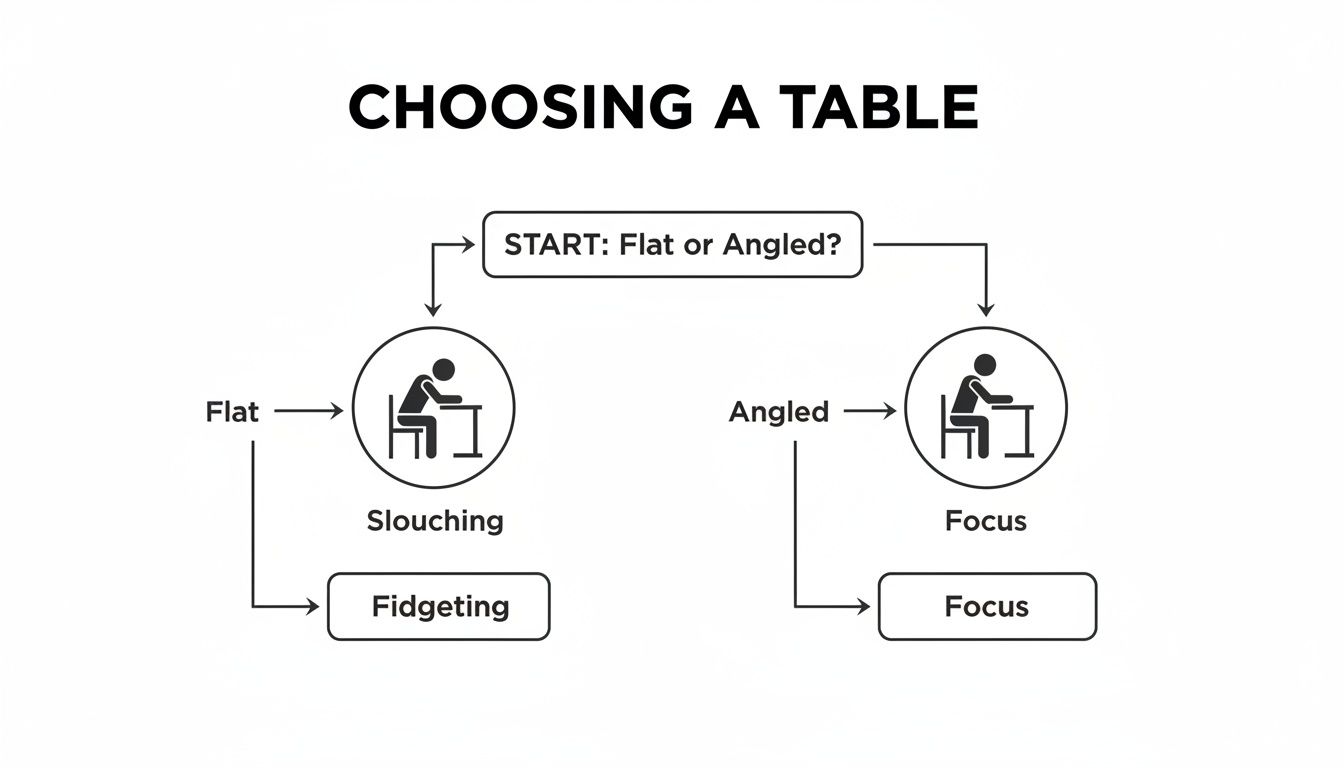
As you can see, the tilted surface isn't just a gimmick—it's a simple, effective way to encourage better posture and help your child stay engaged in what they're doing.
Material Matters: Durability and Feel
The material of a drafting table really defines its character and how long it's going to last. Each option has its own pros and cons, which helps families choose based on what's most important to them.
Let’s take a look at the most common materials to see how they stack up.
Drafting Table Material Comparison
| Material | Pros | Cons | Best For |
|---|---|---|---|
| Solid Wood | Extremely durable, stable, warm natural feel, can be refinished. | Heavier, typically the most expensive option. | Families looking for a long-lasting, heirloom-quality piece that can be passed down. |
| MDF/Plywood | Budget-friendly, smooth surface for drawing, strong and stable. | Susceptible to water damage if not well-sealed, can contain formaldehyde. | Parents seeking a sturdy, cost-effective option for everyday creative play. |
| Plastic | Lightweight, very easy to clean, often comes in bright colors. | Less stable, can feel flimsy, not as durable or eco-friendly. | A first, entry-level table for very young toddlers or for occasional use. |
Ultimately, choosing a table made from high-quality, sustainable materials isn't just about safety. It also subtly teaches a child to appreciate good craftsmanship and take care of their belongings. It becomes more than just furniture; it becomes a cherished part of their childhood.
Smart Adjustability: A Table That Grows with Them
Kids grow like weeds, and their furniture should be able to keep up. A truly great childrens drafting table has smart features for adjusting both its height and tilt angle. This is what ensures the table stays ergonomically correct as your little one shoots up in height.
Look for adjustment mechanisms that are simple for an adult to use but secure enough that a curious child can’t change them by accident. This adaptability is what turns the table from a short-term buy into a long-term creative companion, sticking with them from toddler scribbles all the way to pre-teen sketching. It’s the key feature for getting the most out of your investment.
The Perfect Size for Their Space and Age
Finally, think about the table’s actual footprint. How will it fit in your home, and how will it fit your child? Measure the spot where you plan to put it, leaving enough room for a chair and for your child to move around easily. The work surface should be big enough for their projects—whether that’s a giant sheet of paper or a complex LEGO build—without feeling overwhelming.
For more ideas on setting up the perfect creative zone, take a look at our guide on children's homework desks, which can be a great complement to a drafting setup.
Also, keep an eye out for bonus features that can make the table even more functional:
- Integrated Paper Roll: A built-in holder for a paper roll is fantastic. It provides a seemingly endless canvas for creativity and makes setting up for art time a total breeze.
- Storage Solutions: Models with built-in drawers, shelves, or cubbies are a huge plus. Keeping art supplies organized and within easy reach helps kids become more independent and encourages them to keep their workspace tidy.
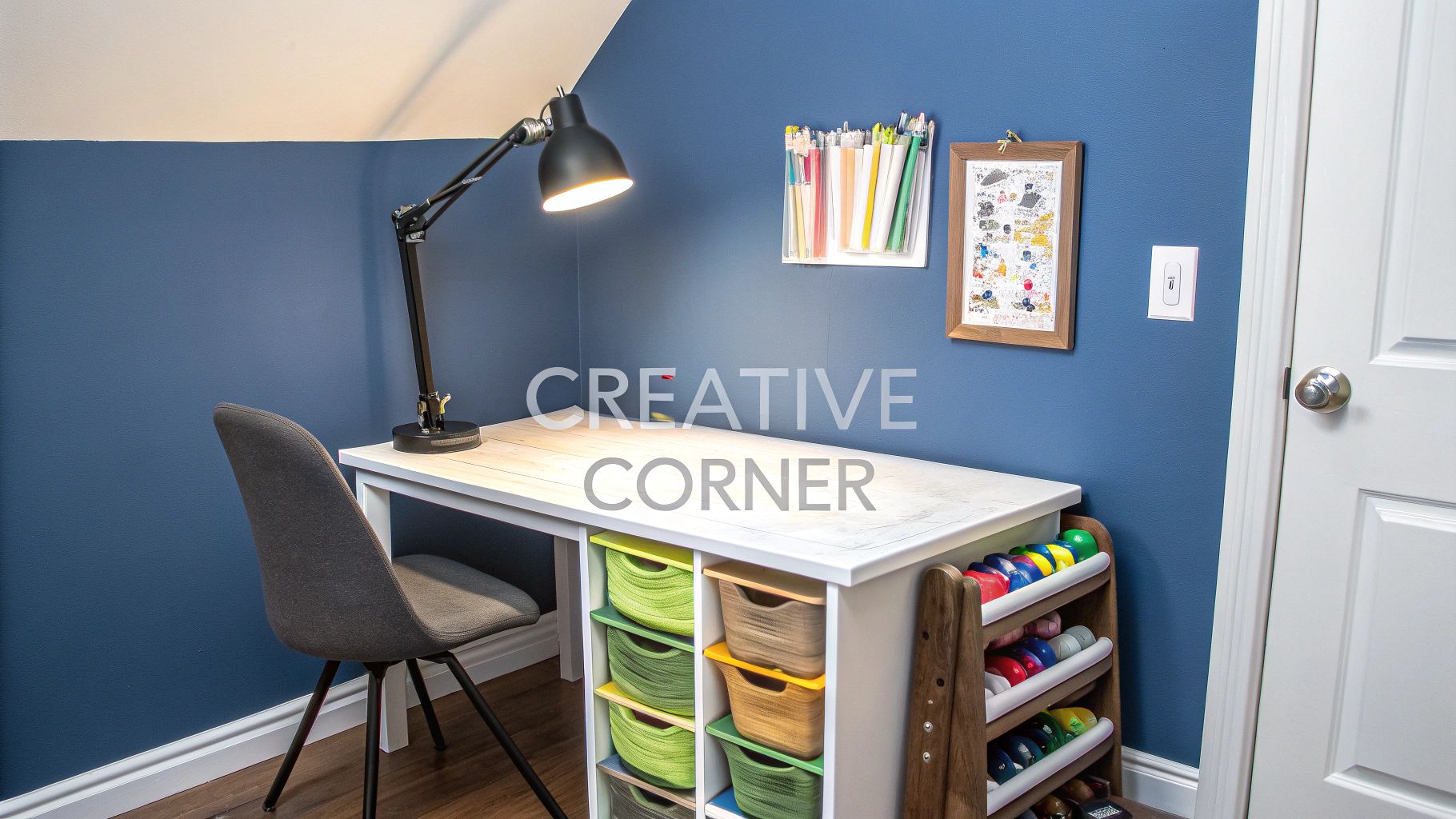
Creating the Ultimate Creative Corner
Bringing a childrens drafting table home is a fantastic first step. But the real magic happens when you turn that corner of the room into a genuine creative hub. This isn't just about placing furniture; it's about building an environment that sparks curiosity, supports healthy habits, and makes creativity feel like second nature.
A thoughtfully designed space can be the difference between a table that collects dust and one that becomes the heart of your child's imaginative world. The goal is simple: create a seamless experience where your child can sit down and let their ideas flow without fighting an awkward posture or hunting for a missing crayon.
Setting Up for Success The Ergonomic Way
Good ergonomics are the foundation of any great workspace, and a child’s creative corner is no exception. It’s all about making sure they’re comfortable and well-supported, which is crucial for protecting their developing bodies and keeping their focus sharp. The key is a neutral, relaxed position.
Start with the chair and table height. Adjust them so your child's feet rest flat on the floor—no dangling!—with their knees bent at a comfortable 90-degree angle. This simple setup provides a stable base that actually reduces fidgeting and helps them concentrate. Their elbows should also form a similar 90-degree angle when resting on the tabletop.
Now for the fun part: the tilt. A drafting table’s adjustable surface is its superpower, but different activities call for different angles.
- For Writing and Reading: A gentle slope of about 10-15 degrees is perfect. It brings the page closer to their eyes, which helps reduce neck strain.
- For Drawing and Sketching: An angle between 30-45 degrees is usually the sweet spot. This gives them a great perspective for detailed work without making them hunch over.
- For Painting and Sensory Play: A steeper angle, around 60 degrees or more, mimics a classic artist's easel. This is ideal for activities that involve big, broad arm movements.
Think of the adjustable tilt as a custom comfort setting for creativity. Just as you adjust a car seat for a long drive, tuning the table's angle ensures your child's creative journey is a comfortable and supportive one.
The Importance of Good Lighting and Organization
Once the ergonomics are dialed in, it's time to think about lighting and organization. Good lighting is non-negotiable for protecting young eyes from strain. Natural light is always best, so try to set up the table near a window if you can.
If you need to add artificial light, go for a desk lamp with a soft, diffused glow. You want to illuminate the whole workspace without creating harsh shadows or glare. This is especially important for detailed tasks that require close focus, as it can help prevent fatigue and headaches.
A smart organization system for supplies is just as critical. A cluttered space can feel overwhelming and shut down creativity before it even starts. The goal is to make supplies visible, accessible, and easy to put away. After all, once you have the perfect table, knowing how to organize craft supplies effectively is the next logical step to keep the space functional.
A well-organized system does more than just keep the room tidy; it fosters independence. When a child knows exactly where their colored pencils or glitter glue belongs, they feel empowered to start projects on their own and clean up afterward. For more ideas, check out our guide on art supply storage for kids. It’s a small effort that can transform their corner into a truly inspiring hub.
Inspiring Activities Beyond Just Drawing
A childrens drafting table isn't just for drawing—not by a long shot. Its versatile, angled surface is a launchpad for a huge range of activities that support different stages of development.
Think of it less as a simple drawing desk and more as a multi-purpose hub for learning, creating, and playing for years to come. This adaptability is what turns a piece of furniture into a long-term partner in your child's growth.
By exploring all the creative avenues it opens up, you can maximize its value and keep the inspiration flowing, no matter their age.
Fun and Learning for Toddlers and Preschoolers
For the youngest creators, a drafting table is an amazing sensory playground. The angled surface brings everything a little closer, making it easier for tiny hands to explore textures and materials without having to hunch over.
This simple shift creates a comfortable and engaging setup for all sorts of foundational play.
Try these simple yet powerful activities to get started:
- Sensory Play with Dough: Kneading, rolling, and shaping play dough is a classic for a reason. Doing it on an angled surface gives them better leverage and wrist support, helping build crucial hand strength and fine motor skills.
- Mess-Free Finger Painting: Squeeze a dollop of paint inside a sealed plastic bag and tape it to the table. Toddlers can safely squish and spread the paint with their fingers, exploring cause-and-effect and color mixing without any cleanup.
- Sticker and Collage Art: Peeling and placing stickers is a fantastic workout for their pincer grasp. For preschoolers, making collages with scraps of paper, fabric, and glue helps them practice composition and decision-making skills.
These activities are about more than just fun; they're the building blocks for coordination and creativity. For even more great ideas, check out these creative art projects for preschoolers that are perfectly suited for a drafting table.
Engaging Projects for School-Aged Kids
As children grow, their drafting table grows right along with them. It becomes a workstation for more complex, structured projects where the ergonomic benefits are even more important.
Tasks that require sustained focus can cause physical strain on a flat desk. The tilted surface of a drafting table helps them maintain good posture during those longer creative sessions.
This is the perfect age to introduce projects that blend artistic expression with technical skill. They can start to see their table as a real tool for bringing detailed ideas to life.
A childrens drafting table evolves from a play space into a project station. It supports the transition from broad, sensory exploration to focused, skill-based creation, meeting your child exactly where they are developmentally.
Here are a few ideas for older kids:
- Architectural Sketching: Encourage them to design their dream house or a fantasy castle. It's a fun way to teach basic concepts of scale, perspective, and planning, turning a simple drawing session into a lesson in spatial reasoning.
- Comic Book Design: The angled surface is ideal for storyboarding and illustrating their own comic strips. This activity is a fantastic combination of storytelling, character development, and drawing.
- Stop-Motion Animation: The stable surface makes a perfect stage for creating simple stop-motion videos with clay figures or small toys. Each frame requires precision, making this a great exercise in patience and detailed planning.
Once their masterpieces are complete, you can find some wonderful ideas for preserving children's artwork and displaying it around your home. This shows your child that their creative work is valued, completing the artistic cycle from creation to display. A childrens drafting table is truly a versatile tool for every stage of their imaginative journey.
Common Questions About Childrens Drafting Tables
Shopping for kids' furniture can feel like navigating a maze. When you're looking at something as unique as a childrens drafting table, it’s only natural to have a few questions. Is it just for serious little artists? When’s the best time to bring one into your home?
Let's clear things up. This section gives you straightforward answers to the questions we hear most often from parents. We'll cover everything from practical concerns to the developmental perks, so you can feel totally confident about this wonderfully versatile piece of furniture.
At What Age Should My Child Get a Drafting Table?
The great thing about a childrens drafting table is how it adapts as your child grows. It can be a fantastic addition starting around age three and will easily see them through their pre-teen years. It all comes down to its adjustability.
For the little ones (ages 3-5), the table offers an angled surface that’s perfect for those big, sweeping scribbles and finger painting sessions. It brings their work closer, encouraging them to get fully involved without having to hunch over.
Once they hit their early school years (ages 6-9), it becomes the ideal spot for honing fine motor skills. The ergonomic support is a game-changer for drawing, practicing letters, and learning to write with a good pencil grip and posture.
For older kids (ages 10 and up), the drafting table levels up into a serious workstation for more detailed hobbies. Whether they're into sketching buildings, assembling models, or designing their own comic books, the adjustable surface gives them the professional-level support they need. The trick is to find a model that grows with them, ensuring it stays useful and comfortable through every creative stage.
Is a Drafting Table Really Better Than a Regular Kids Table?
Sure, any flat surface works for a bit of coloring, but a childrens drafting table brings unique developmental benefits to the table—literally. A standard flat table just can't compete. The adjustable, angled top is the real star of the show here.
This ergonomic setup actively promotes better posture. Kids naturally slump forward over a flat table, which can strain their neck and back. An angled surface gently corrects this, encouraging a healthier, upright position that cuts down on physical fatigue.
A regular table is a passive surface. A drafting table is an active tool. It works with your child's body to enhance comfort, which in turn boosts focus and extends the duration of creative play.
Plus, the tilt brings their project into a better field of vision. This simple tweak makes a huge difference in reducing eye strain and helps little hands and eyes coordinate on detailed tasks. For any activity that demands focus—drawing, writing, or crafting—a drafting table is hands-down a better choice for a child’s comfort and development. It’s not just a different table; it’s a more supportive creative environment.
How Does a Drafting Table Fit with Montessori Principles?
A childrens drafting table lines up perfectly with several core Montessori ideas, making it a natural choice for families who embrace this educational philosophy. At its heart, Montessori is all about creating a "prepared environment" that encourages independence and self-led learning.
Here’s exactly how a drafting table fits in:
- It Fosters Independence: Giving a child a workspace that’s their size and designed just for them is incredibly empowering. They can grab their own supplies, set up projects, and get to work without always needing a grown-up to help.
- It Promotes Concentration: The ergonomic comfort of the angled surface gets rid of physical distractions. When a child isn't fidgeting or fighting with a sore back, they can sink into that deep state of concentration and become totally absorbed in their activity.
- It Supports Purposeful Activity: The table becomes a dedicated spot for what Maria Montessori called "the work of the child." It directly supports the growth of fine motor skills through hands-on activities like drawing, writing, and building.
Essentially, a drafting table creates a special place that respects a child's natural desire to learn by doing. It’s a perfect tool for self-guided exploration.
What Is the Best Way to Clean a Wooden Drafting Table?
Keeping a wooden childrens drafting table in great shape is easier than you might think. With just a little regular care, it can look beautiful for years. For daily wipe-downs, a soft, damp cloth is all you need to handle dust and light smudges.
For the aftermath of a creative explosion—think crayon, marker, or dried paint—a little mild soap and water will do the trick. Just gently scrub the spot with a soft cloth, and make sure to wipe the surface completely dry afterward. This prevents any moisture from seeping into the wood.
It’s really important to avoid harsh chemical cleaners or abrasive sponges. These can easily strip the finish and damage the wood itself. A gentle touch is always the best approach.
Beyond cleaning, it's a good idea to periodically check and tighten any screws or bolts, especially on the moving parts of the table. This quick maintenance check keeps the table safe, stable, and ready for years of enthusiastic creativity. If your table has a natural wood finish, applying a child-safe wood oil or polish once a year will nourish the wood and keep it looking its best.
At Ocodile, we design every piece of furniture with your child's safety, independence, and creative spirit in mind. Our commitment is to create beautiful, functional pieces that seamlessly integrate into your home while supporting your child's developmental journey.
Discover how our thoughtfully crafted furniture can transform your child’s creative corner by visiting us at https://ocodile.com.