

 - Monica
 - Lindsay

Childrens Kitchen Helper: The childrens kitchen helper for safe, fun learning
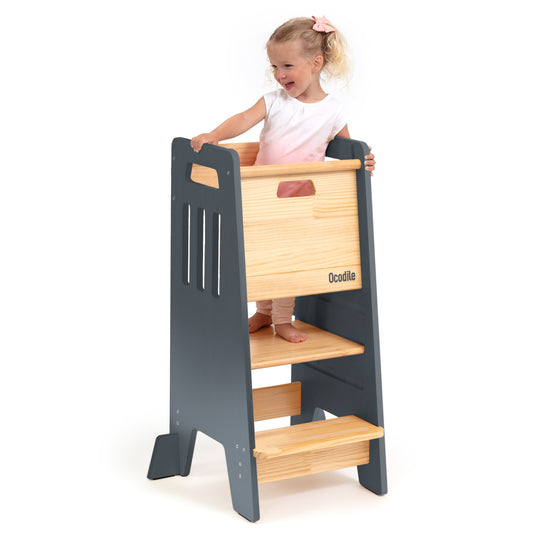
A children's kitchen helper is, at its heart, a safe way to bring your toddler up to counter height. Think of it as a secure tower that turns the kitchen from a mysterious, out-of-reach place into a shared space for discovery. It’s so much more than a simple stool; it's a purpose-built piece of furniture with safety railings on all four sides to prevent tumbles, letting your little one join in on the action right beside you.
Beyond a Stool: The True Purpose of a Kitchen Helper
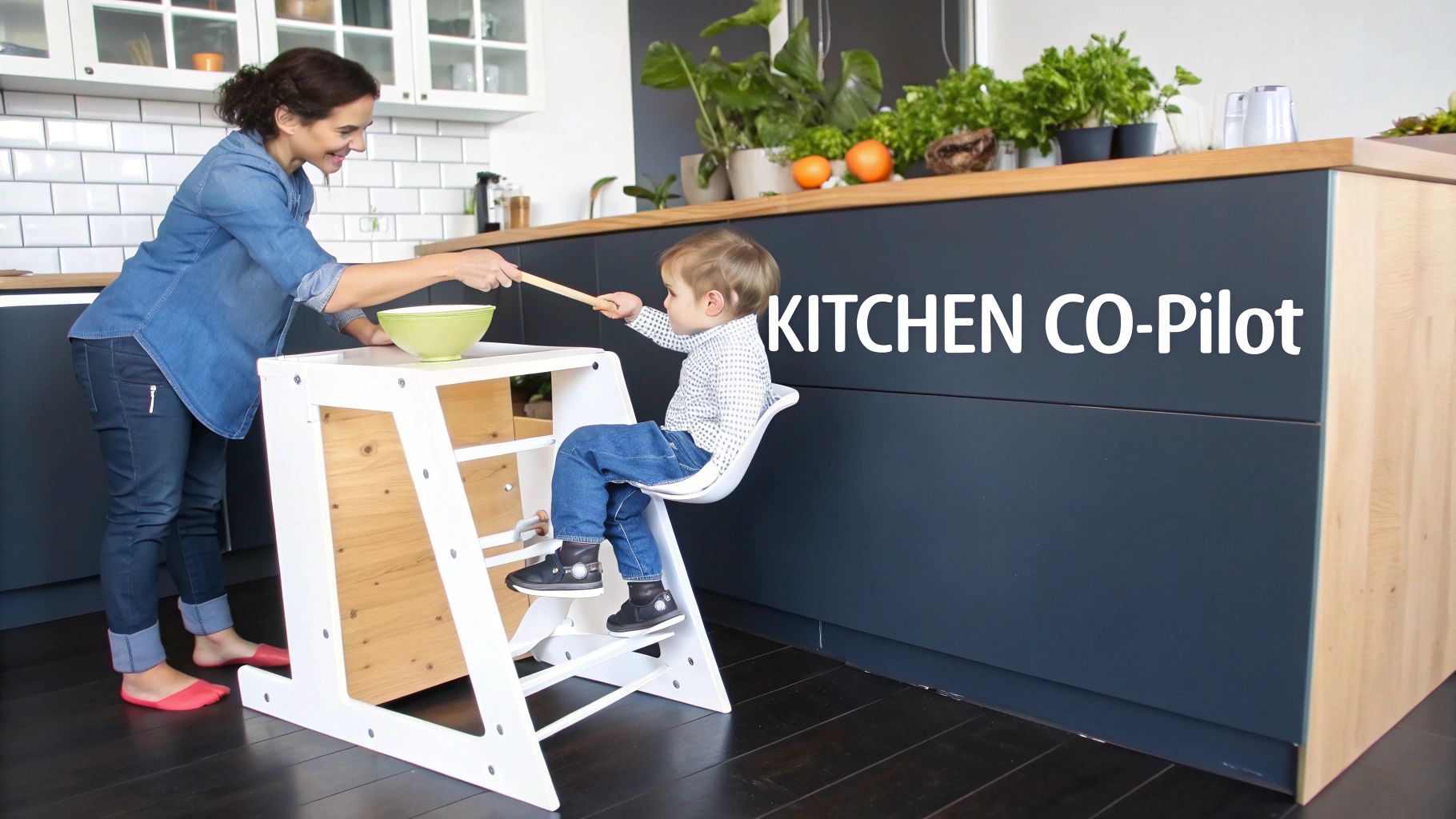
We've all been there: your toddler is clinging to your leg, desperate to see what magic is happening on the kitchen counter. A regular chair is just too wobbly, and a step stool feels like an open invitation for a backward fall. The kitchen helper solves this problem by creating a safe, contained space for your child to stand securely.
This simple boost does more than just offer a better view—it welcomes your child into your world. They get to be an active participant instead of just a spectator, and this hands-on involvement is a game-changer for building their independence and confidence from a young age.
Fostering Connection and Learning
A kitchen helper isn't just a piece of gear; it's a tool that builds connection. When you're working side-by-side, you're doing more than just prepping dinner—you're making memories and strengthening your family bond. Those moments of stirring, washing veggies, and taste-testing are powerful learning opportunities disguised as fun.
Parents are catching on, and the market shows it. The global market for models with safety nets has soared to USD 1.14 billion, a clear sign that families are eager to safely involve their kids in the kitchen.
Kitchen Helper vs. Standard Stool: A Quick Comparison
To really see the value, let’s put a kitchen helper up against a regular chair or stool. While both give your child a lift, only one is truly designed with a toddler's safety and developmental needs at the forefront. It’s a smart addition to your home, just like other smart space-saving kitchen accessories that make your kitchen work better for everyone. If you want to dive even deeper, you can explore our full guide that asks, "what is a learning tower?".
Here's a quick breakdown of the key differences:
| Feature | Childrens Kitchen Helper | Standard Chair or Stool |
|---|---|---|
| Safety Design | Enclosed on all four sides with railings | Open on most sides, high fall risk |
| Stability | Wide, anti-tip base for stability | Narrow base, easily tipped by a wiggling child |
| Independence | Allows child to climb in and out safely | Requires lifting; promotes dependency |
| Adjustability | Features an adjustable platform for growth | Fixed height, quickly outgrown |
| Purpose | Designed for interactive, counter-height tasks | Designed for sitting or a quick boost |
The choice becomes pretty clear when you see it laid out like this. A kitchen helper is an investment in your child's safety, learning, and sense of belonging in the heart of your home.
Unlocking Developmental Benefits in the Kitchen
A children's kitchen helper is so much more than just a piece of furniture—it’s a launchpad for your child's development. Every single time your toddler steps up to the counter, they aren't just getting a better view; they're stepping into a hands-on learning laboratory where everyday kitchen tasks become priceless lessons.
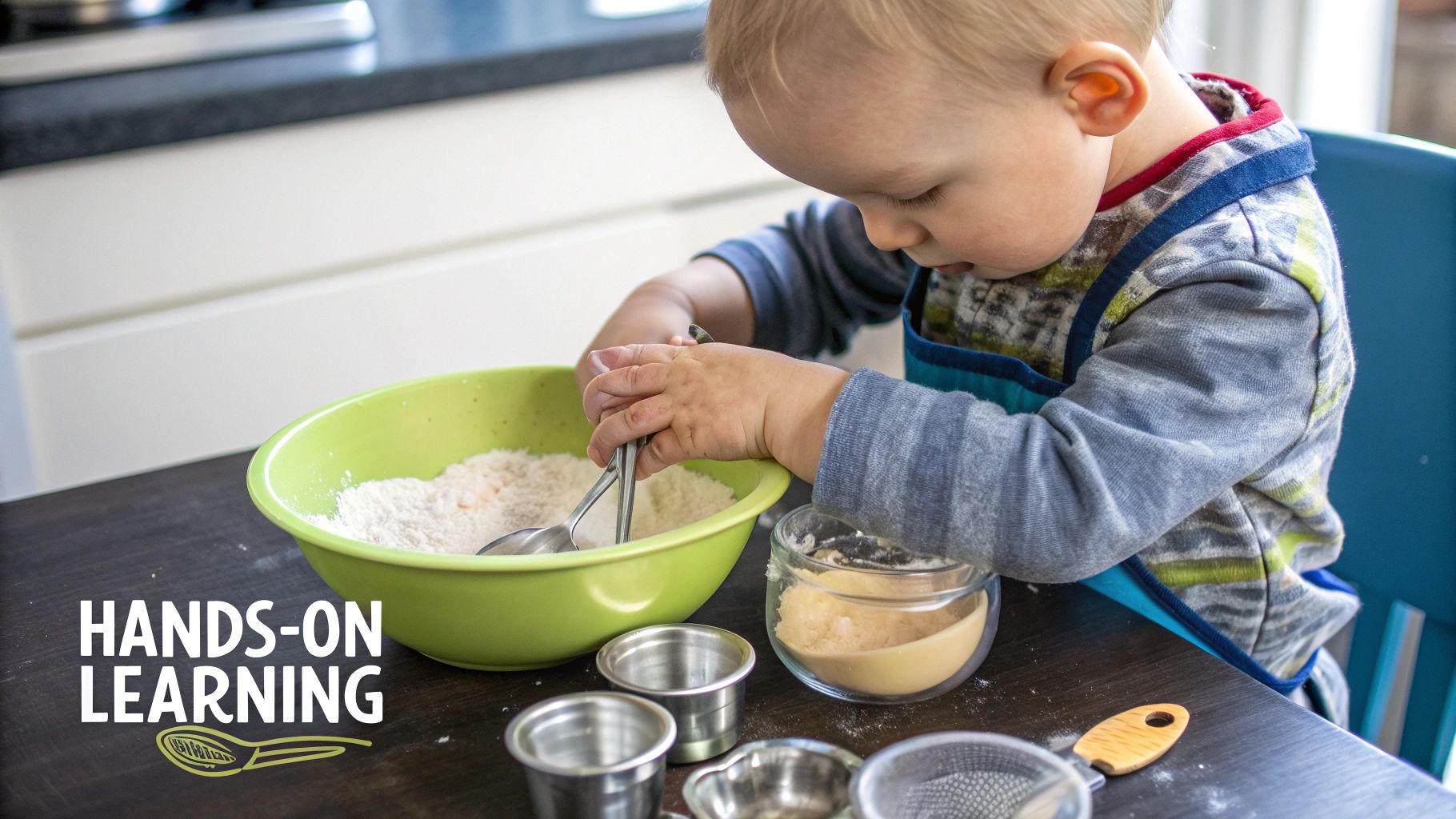
This simple boost transforms them from a passive observer into an active participant. All of a sudden, the kitchen becomes a rich environment for building foundational skills in a way that feels natural and fun.
Building Brains One Recipe at a Time
Cognitive development just blossoms in the kitchen. When your child counts scoops of flour or follows a simple instruction like, "first pour the milk, then stir," they're practicing early math and sequencing skills without even realizing it’s "learning."
Their vocabulary explodes as they pick up the names of new foods, tools, and actions. Learning the difference between a "whisk" and a "spatula" or what "salty" and "sweet" mean builds a solid linguistic foundation. This hands-on context makes new words stick in a way flashcards never could.
These experiences also nurture problem-solving. If the dough is too sticky, what should we add? If we spill some flour, what's our next move? The kitchen provides endless, low-stakes opportunities to think on their feet and find solutions.
Nurturing Fine Motor and Sensory Skills
For a developing child, the kitchen is a sensory wonderland. The feeling of cool, smooth dough, the smell of baking cinnamon, and the bright colors of fresh vegetables all provide crucial sensory input that helps their brain forge new connections. This kind of exposure is vital for sensory processing.
Plus, so many kitchen tasks are fantastic for developing fine motor skills—those small, precise movements of the hands and fingers.
- Stirring Batter: This simple action strengthens wrist control and hand-eye coordination.
- Sprinkling Cheese: Pinching and releasing little shreds of cheese develops the pincer grasp, a key skill for writing later on.
- Washing Produce: The act of scrubbing a carrot under running water refines manual dexterity and sensory awareness.
These seemingly small movements are the building blocks for more complex skills they'll need as they grow, from buttoning a shirt to holding a pencil correctly.
Aligning with Montessori Principles
The whole idea behind a children's kitchen helper aligns perfectly with the Montessori method. At its core, this approach is all about child-led learning, practical life skills, and creating a prepared environment where children can safely explore and learn on their own terms.
By inviting a child to participate in real-world tasks, we send a powerful message: "You are capable, you are helpful, and you belong." A kitchen helper is a physical tool that makes this message a daily reality, building a profound sense of self-worth.
A kitchen helper is one of the best tools for bringing these principles into your home. It fosters independence by giving your child safe access to a workspace and letting them take part in meaningful family routines. This involvement in "practical life" activities does more than just teach them to cook; it builds confidence, instills a sense of responsibility, and strengthens their feeling of being a valued part of the family.
By turning meal prep into a shared activity, you're not just making food. You're nurturing your child's cognitive, motor, and emotional development—building a foundation for a lifetime of learning and connection, one recipe at a time.
Your Safety Checklist for Choosing a Kitchen Helper
Bringing anything new into the house for your child means putting on your safety inspector hat. A children's kitchen helper is no exception. You’d meticulously check out a car seat or a crib, and this piece of furniture deserves that same critical eye to make sure it’s a truly secure space for your little one.
The right tower can turn your kitchen into an amazing, safe learning lab. The wrong one? It can bring in risks you just don’t need.
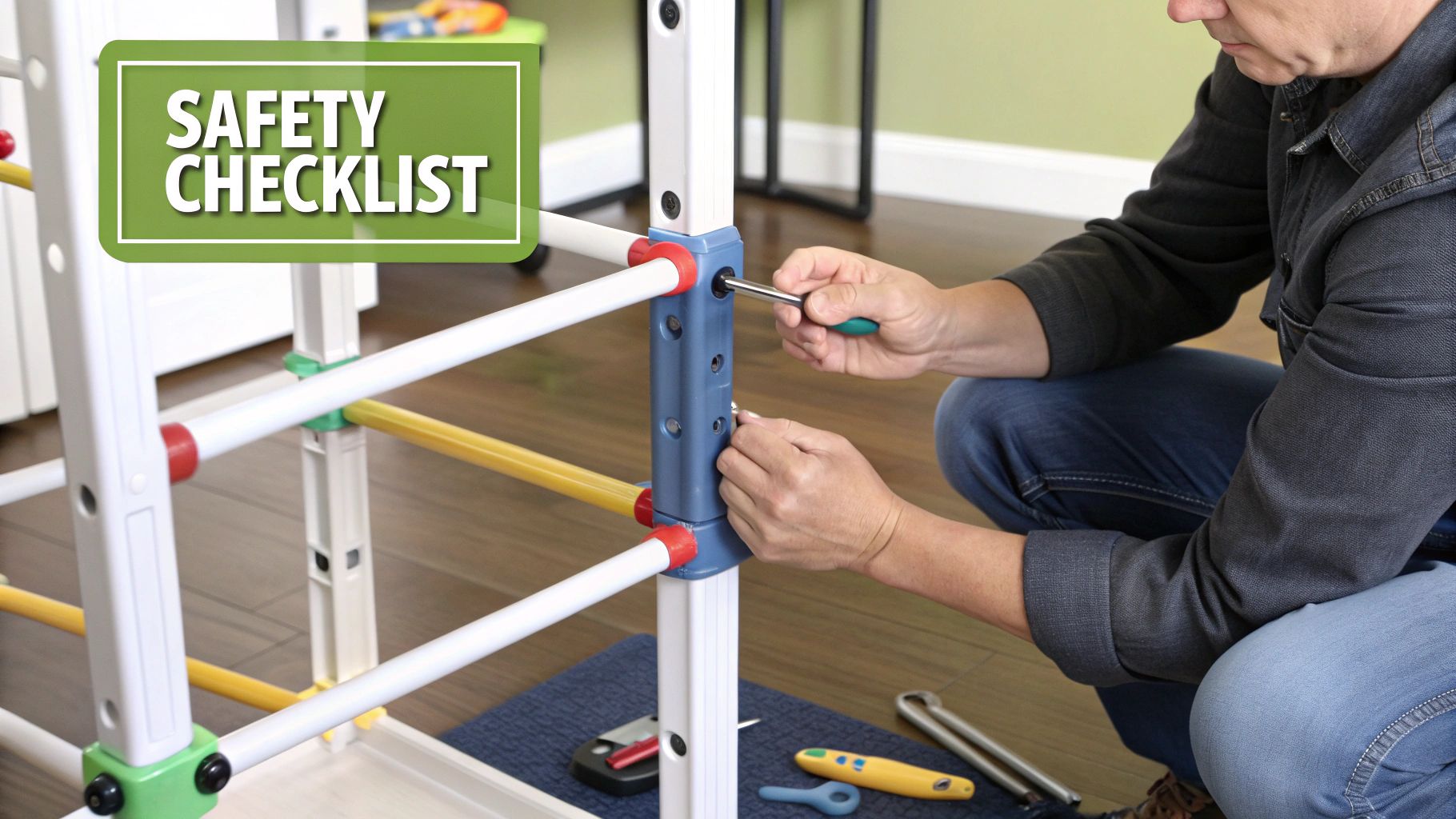
The market can feel a bit crowded, but knowing what non-negotiable features to look for makes the choice a whole lot easier. Let's walk through exactly what you need on your checklist to keep your little sous chef safe while they explore alongside you.
Stability: The Unshakeable Foundation
If there’s one thing you need to be sure about, it’s stability. A toddler is a wiggling, leaning, surprisingly strong bundle of energy. The tower absolutely must stand firm against all that movement without a single wobble.
This isn't just a hypothetical concern. Safety became a huge topic after the Cosco Kitchen Stepper recall, which happened after multiple incidents, including broken arms and concussions. Underscoring the issue, a Consumer Reports study found that 13 out of 16 towers they tested were unstable under a pretty modest 35-pound load. You can get a deeper look at market trends and safety in this detailed industry report.
So, how do you judge stability? Look for these key things:
- A Wide, Sturdy Base: The bottom of the tower should be noticeably wider than the top. This creates a low center of gravity that’s much harder to tip.
- Anti-Tip Feet: You’ll see premium models with splayed legs or little "outriggers" that extend from the base. These make it almost impossible to tip, even if your kid decides to lean way over to one side.
- Solid Construction: It should feel heavy and substantial. Lightweight materials might seem convenient, but they often just don't have the structural integrity you need.
Essential Design and Material Features
Beyond the base, a few other design details make a huge difference in keeping things safe day-to-day. It’s often the little things that matter most.
A truly safe kitchen helper is designed with a child's curious and sometimes clumsy nature in mind. It anticipates potential hazards and builds in protections, from enclosed railings that prevent falls to smooth, splinter-free finishes that protect little hands.
Here's what else to add to your checklist:
- Four-Sided Safety Railing: This is a must-have, plain and simple. The tower needs to fully enclose your child to prevent any backward or sideways tumbles, which is a common risk with regular step stools. The top of that rail should sit comfortably above your child's waist.
- Adjustable Platform Height: Kids grow like weeds. A platform you can move up or down ensures the safety railing is always at the right height relative to your child's waist. It makes the tower useful for longer and, more importantly, keeps it safe as they get taller.
- Non-Toxic Materials and Finishes: Your child is going to touch, lean on, and probably try to taste the tower. Make sure it’s made from solid wood or high-quality plywood with a non-toxic, lead-free finish. Look for certifications like GREENGUARD GOLD, which means it has low chemical emissions.
- Smooth, Rounded Edges: Run your hand over the whole thing. Are there any sharp corners or rough spots that could cause a scrape or splinter? Quality craftsmanship is obvious in those smooth, carefully sanded finishes that are kind to little hands.
- Weight Capacity: Check what the manufacturer recommends. A high weight limit—often 125 pounds or more—is usually a good sign that it’s built to last with durable materials.
Using this checklist, you can confidently pick a kitchen helper that gives you total peace of mind. The goal is to create a space for connection and fun, and that all starts with a foundation of unshakeable safety.
Age Appropriate Kitchen Activities for Your Toddler
Once your childrens kitchen helper is all set up, the real fun can finally begin. This little tower is more than just a boost; it’s an open invitation for your child to dive into a world of sensory exploration and real-life skills. The secret is to start small with simple, age-appropriate activities that build their confidence and keep things fun, not frustrating.
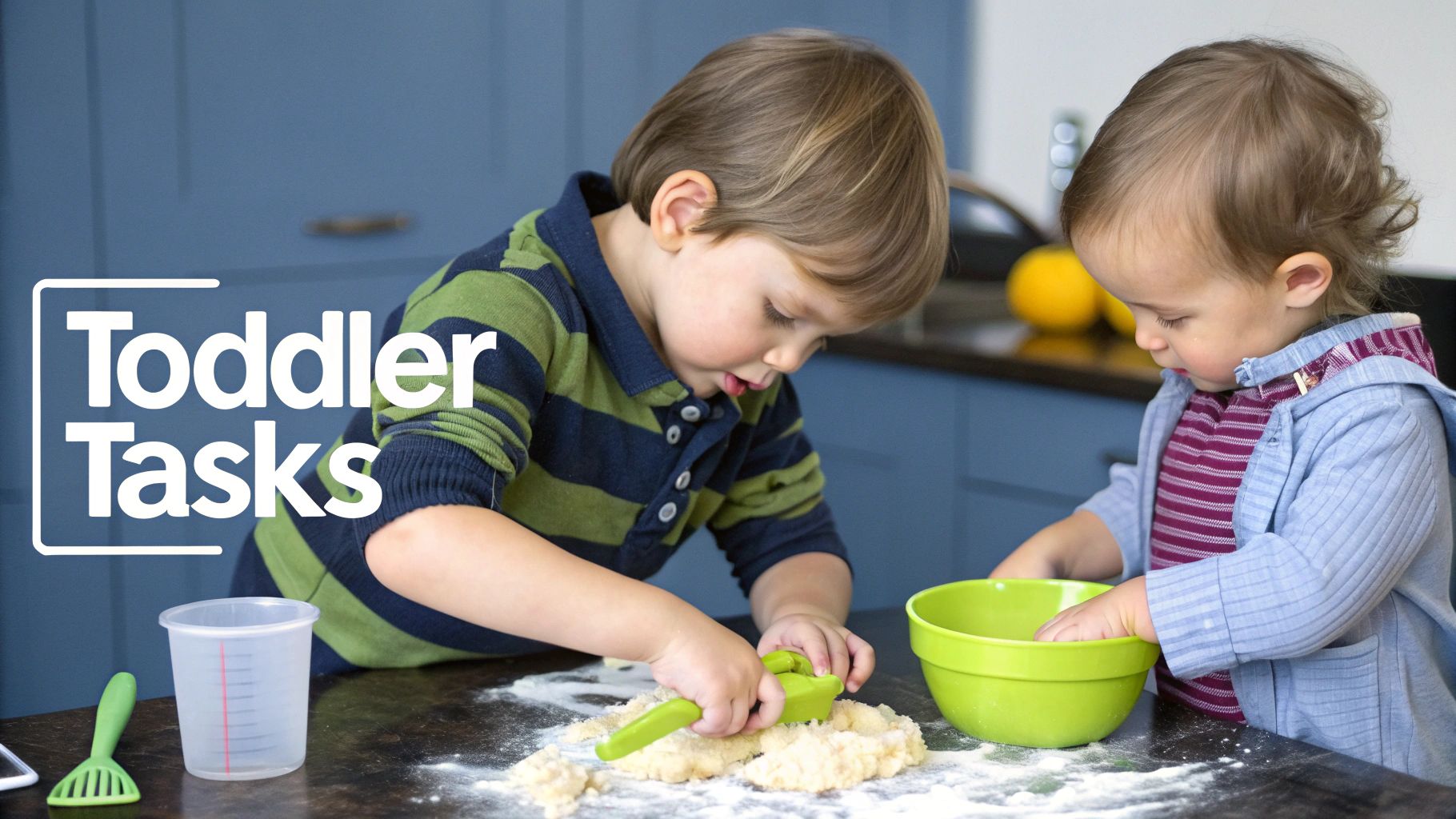
Think of it like a developmental ladder. Each new task builds on the last, helping your little one grow from a curious bystander into a capable little sous chef. Your job is simply to be their guide, offering just enough help to make sure they feel successful and stay excited about helping.
Starting with the Basics: 18 Months to 2 Years
At this early stage, it’s all about sensory input. Toddlers are learning about the world through touch, smell, and taste, making the kitchen the perfect laboratory. The goal here is participation, not perfection.
- Washing Produce: Set them up at the sink with a bowl of water and some sturdy veggies like potatoes or carrots. They’ll love splashing, scrubbing, and feeling all the different textures.
- Simple Stirring: Hand them a bowl with some dry oats or even just a splash of water and a child-safe whisk. The simple motion of stirring is fantastic for developing those important gross motor skills.
- Mashing Soft Foods: Mashing a banana or a soft avocado with a fork is a great way to build hand strength and coordination. Plus, they get to enjoy the delicious results right away!
These first experiences are foundational. They teach your child that the kitchen is a welcoming place where they’re invited to explore.
Growing Skills: 2 to 3 Years
As your toddler's coordination and attention span improve, you can start introducing tasks that require a bit more focus. This is where you'll really see their confidence start to blossom as they move from simple exploration to purposeful action.
There's a reason the market for kid-friendly kitchen tools is booming. Children's kitchenware, especially tools designed with chunky grips for toddlers, now makes up a significant 42% of the market. It shows just how much parents want to equip their little ones for real, meaningful tasks.
At this age, a child’s desire for independence is powerful. By giving them real responsibilities in the kitchen, you are nurturing their self-esteem and showing them that their contributions are valuable to the family.
Here are some great activities for this age group:
- Pouring Ingredients: Use a small pitcher and let them pour pre-measured liquids (like milk or water) into a big bowl. Spills are going to happen, and that’s just part of the learning process!
- Sprinkling and Spreading: Let them sprinkle cheese on pasta or spread soft butter on toast with a dull knife. These actions help refine their pincer grasp, a crucial pre-writing skill.
- Kneading Dough: Whether it’s bread dough or play-doh, the act of pushing, pulling, and squishing is a wonderful sensory and muscle-building activity.
Becoming a Confident Helper: 3 to 4 Years and Beyond
By this age, many kids are ready for more complex, multi-step tasks. They can follow simple directions and take a huge amount of pride in their work. Now, their kitchen helper truly becomes their own personal workstation.
Many of these tasks align perfectly with Montessori principles, which focus on practical life skills. You can learn more about how to incorporate these ideas in our guide to Montessori practical life activities. Beyond simple stirring, a kitchen helper opens up a whole world of culinary fun. To spark your next kitchen adventure, here are some fun and healthy snack ideas specifically for toddlers.
Your little chef is now ready for bigger jobs:
- Measuring Dry Ingredients: Guide them in scooping and leveling flour or sugar. This introduces early math concepts in a very real, tangible way.
- Using a Child-Safe Knife: With you right there beside them, they can use a nylon or wooden knife to cut soft foods like bananas, strawberries, or cucumbers.
- Cracking Eggs: This is a huge milestone for many little cooks! Have a separate bowl ready for them to crack the egg into—it makes fishing out any stray shells much easier.
By introducing these activities step-by-step, you transform the kitchen from a "don't touch" zone into a space of joyful learning and connection.
Connecting Real Kitchen Skills with Imaginative Play
The learning and fun don’t just stop when you put the mixing bowls away. A children's kitchen helper does more than teach practical skills; it builds a bridge between real-life kitchen experiences and the vibrant world of imaginative play.
These two worlds are deeply connected, each one feeding into the other to create a powerful cycle of learning and discovery.
Think about it: when your child helps you wash real carrots at the counter, they’re creating a concrete memory of that action. Later, when they're playing with their toy kitchen, they won't just be banging pots and pans around. They’ll be re-enacting the very same steps they practiced with you, which helps them make sense of routines, family roles, and even basic nutrition.
This connection gives their pretend play real meaning. It’s not just imitation anymore—it's a way for them to process and truly understand what they've learned.
From Real Tasks to Richer Pretend Play
The skills learned in a real kitchen essentially provide the script for your child's imaginative scenarios. A child who has helped crack an egg knows the careful concentration it takes. A toddler who has stirred pancake batter understands the circular motion and the feel of the whisk in their hand.
This firsthand experience makes their imaginative play far more detailed and complex. Suddenly, their toy kitchen becomes a stage where they can process and master the concepts they’ve observed with you. They're no longer just playing; they're practicing for life.
This dynamic has a massive impact on cognitive development. The global market for toy kitchens and play food—a key part of this ecosystem—has hit a value of USD 3.2 billion. Studies backing this trend show that kids engaging in this type of play demonstrate a 35% improvement in their imaginative scenarios and a 22% better recognition of food groups. It’s a clear sign of how these toys translate real-world learning into developmental gains. You can dive deeper into the data on how play kitchens support cognitive growth on markwideresearch.com.
Deepening Understanding Through Re-enactment
When a child uses their kitchen helper to take part in real meal prep and then re-enacts those scenes in their play kitchen, they are doing something incredibly powerful. They are cementing their understanding of the world in a way that just watching from the sidelines never could.
Pretend play is the rehearsal for real life. By providing children with authentic experiences in the kitchen, we give them a richer script to practice with, helping them build confidence, creativity, and a deep understanding of their role in the family.
This process helps them grasp important concepts:
- Sequencing: They learn that you wash vegetables before you chop them and that you mix ingredients before you bake the cake.
- Family Roles: They act out being the "mommy" or "daddy" who cooks for the family, helping them understand what it means to care for others.
- Problem-Solving: In their play, they might pretend to "spill" something and then "clean it up," practicing solutions to everyday challenges in a totally safe space.
Ultimately, the kitchen helper is the catalyst. It’s what gives them access to those real-world tasks in the first place, which then fuels the imaginative play that is so critical for their cognitive and emotional growth.
How to Maintain Your Kitchen Helper for Lasting Safety
A well-made children's kitchen helper is an investment in your little one's development, but just like any piece of furniture that gets daily use, it needs a little TLC to stay in top shape. A few minutes of simple, consistent maintenance will keep your tower secure and ready for all the kitchen adventures ahead.
Think of it like checking your car seat before a drive. A quick, routine inspection gives you peace of mind that every part is solid and safe. This small habit protects both your child and the tower you invested in.
Your Routine Inspection Checklist
Getting into a maintenance groove is easy. I'd suggest setting a reminder on your phone for once a month to run through a quick safety check. It honestly takes just a few minutes but makes a huge difference.
Here’s a simple checklist to keep things safe and solid:
- Check All Hardware: Go over every single screw and bolt. Give each one a gentle tighten with the right tool to make sure it's snug. With all the wiggling and climbing, it's normal for things to loosen slightly over time.
- Inspect the Wood: Run your hands over the surfaces, paying close attention to the platform edges and railings where little hands grab on. You're looking for any potential splinters, cracks, or rough spots that might have shown up.
- Test for Stability: Put the tower on a flat floor and give it a firm but gentle push from a few different angles. It should feel completely solid, with zero wobble or rocking. If you feel any unsteadiness, go back and double-check the hardware.
A well-maintained kitchen helper is a safe kitchen helper. Regular checks transform safety from a one-time thought during assembly into an ongoing commitment, ensuring your tower is always ready for your little sous chef.
Smart Placement and Cleaning
Beyond tightening screws, where you put the tower and how you clean it are just as important for safety and keeping it looking great. Good placement steers your child clear of kitchen hazards, while proper cleaning protects the wood's integrity.
For a deeper dive, check out our article on toddler tower materials and cleaning practices.
Always set the helper up away from obvious dangers like the stove, knife blocks, or dangling cords. The perfect spot is a clear bit of countertop where your child can get involved with safe tasks, like mixing or washing veggies.
When it's time to clean up (which is often!), just use a damp cloth with a mild cleaner. Harsh, abrasive chemicals can damage the wood finish over time, which could compromise the structure. Following these simple steps will ensure your children's kitchen helper remains a safe and cherished part of your family's daily routine.
Got Questions About Kitchen Helpers? We’ve Got Answers.
Bringing any new piece of gear into your home for your toddler comes with a lot of questions. When it’s something like a kitchen helper, you want to be sure about the timing, the safety, and whether it’s really going to be worth it. We get it. Let's walk through some of the most common questions we hear from parents.
At What Age Can My Child Start Using a Kitchen Helper?
Most toddlers are ready to climb aboard their kitchen helper once they can stand steadily on their own two feet, which usually happens around 18 months. But don't get too hung up on the age. The real green light is physical stability—if your little one can confidently pull themselves up and stand without wobbling, they're likely ready.
This is exactly why the best kitchen helper towers have an adjustable platform. It’s a game-changer. This feature lets you set the standing height perfectly, so the top safety rail is always comfortably above their waist. That way, the tower grows right along with them, keeping them secure at every stage.
How Do I Keep My Child Safe from Stoves and Knives?
This one is all about smart placement and active supervision. Think of the kitchen helper as a designated safe zone. It should always be parked at a workstation—like a kitchen island or a stretch of counter—far away from anything that could be a hazard.
- Create No-Go Zones: Keep the tower well away from the stovetop, toaster, kettle, or any knife blocks. Out of sight, out of mind (and out of reach).
- Supervision is Everything: This is non-negotiable. Never leave your child unattended in their kitchen helper. Stay engaged with them, making sure they’re focused on safe, fun tasks like stirring a bowl, washing veggies, or squishing dough.
The whole point is to create a secure bubble for them to participate in, not to give them access to the entire kitchen. This simple mindset turns a piece of furniture into a safe, interactive learning station.
A children's kitchen helper is designed to bring your child into safe activities, not closer to dangerous ones. Its correct use depends on a partnership between a secure design and a parent's watchful eye.
Is a Kitchen Helper Really Better Than a Step Stool?
Without a doubt, and the key difference is security. A simple step stool just gives your child height. That's it. It leaves them completely exposed to backward or sideways tumbles, which are incredibly common for toddlers still mastering their balance.
A childrens kitchen helper, on the other hand, is like a mini fortress. Its enclosed design with four-sided railings creates a contained, safe space, preventing the exact kind of falls that happen on an open stool. Plus, its wide, sturdy base is engineered to resist tipping, giving your child a stable foundation to explore from.
Does a Kitchen Helper Fit with a Montessori Approach?
It fits like a glove. In fact, you could say a kitchen helper is a cornerstone of a Montessori-inspired home. The whole philosophy champions "practical life" activities, encouraging kids to take part in real, meaningful, everyday tasks.
A kitchen helper makes this possible. It allows your child to stand shoulder-to-shoulder with you to wash vegetables, stir batter, or help set the table. It builds their independence, boosts their self-confidence, and gives them a real sense of belonging and responsibility in the family. It’s the tool that helps them proudly say, "I can do it myself."
At Ocodile, we design our kitchen helpers with these exact concerns in mind—blending uncompromising safety with a design that fosters independence and family connection. Explore our collection to find the perfect, secure addition to your kitchen today.