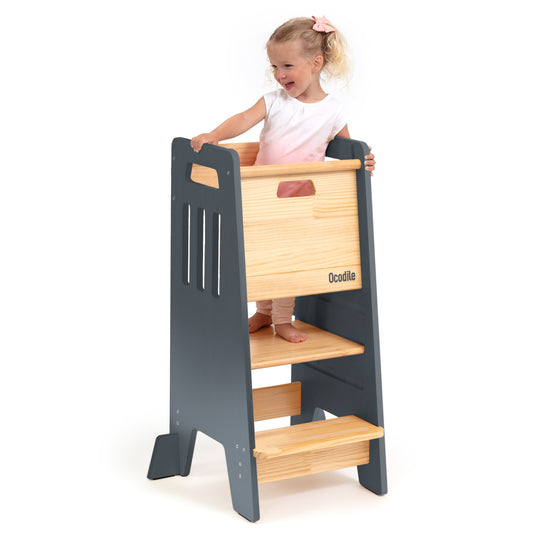


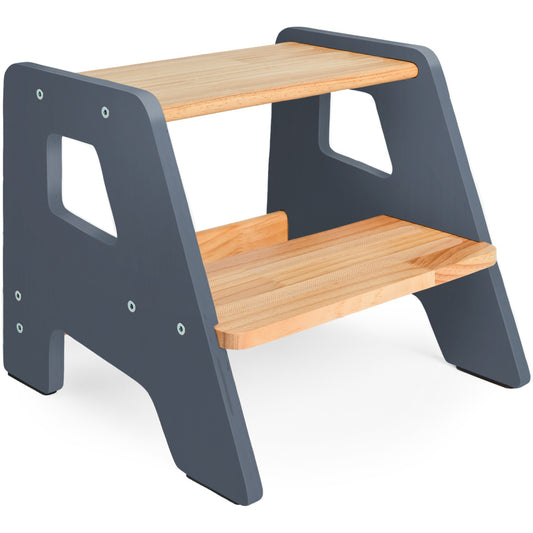


The Ultimate Guide to a Childs Kitchen Helper
You know that moment—your toddler is clinging to your leg, desperate to see what’s happening up on the kitchen counter. A child's kitchen helper, often called a learning tower, is the perfect answer. Think of it as a secure "command center" where they can safely stand and engage with the world at your level.
What Is a Childs Kitchen Helper
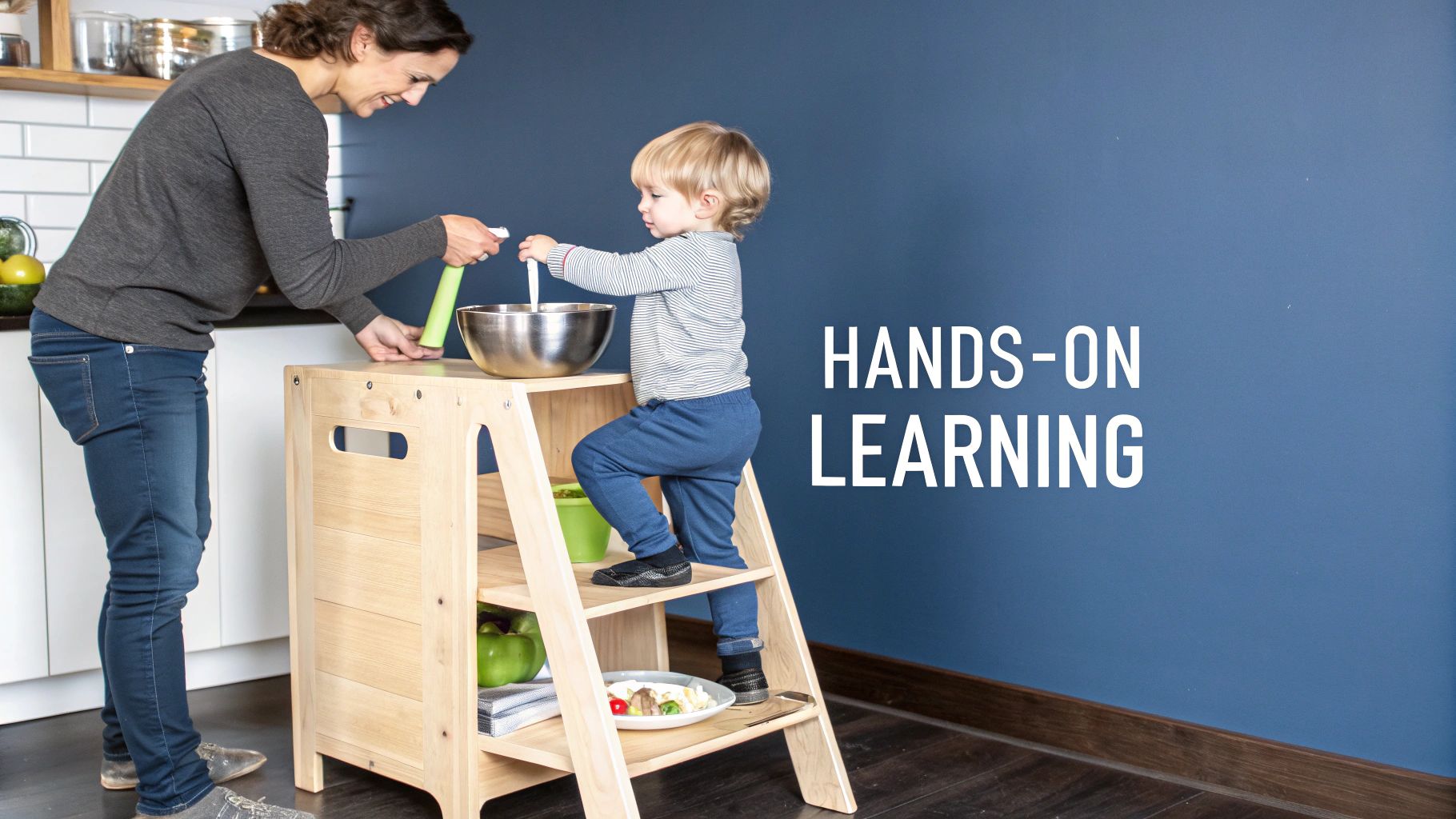
Unlike a wobbly chair or a tippy step stool, a learning tower is built with safety as its top priority. It typically features four enclosed sides that act like a safety rail, which is a lifesaver for preventing accidental slips and falls.
This clever design frees up your child’s hands to explore, touch, and learn without having to clutch the sides for balance. Honestly, this simple piece of furniture is a total game-changer for fostering a little one’s independence and confidence.
From Observer to Active Participant
By bringing your child right up to the action, a learning tower turns everyday routines into genuine learning opportunities. This shift from spectator to doer is huge for early development and supports them in so many ways:
- Motor Skill Development: All that stirring, pouring, and kneading is fantastic practice for their fine and gross motor skills.
- Cognitive Growth: Following simple recipe steps or measuring ingredients introduces them to basic math and science concepts in a fun, hands-on way.
- Sensory Exploration: Getting to touch different food textures, smell new spices, and taste ingredients broadens their sensory awareness.
- Family Bonding: Working together in the kitchen is about more than just making a meal; it’s about creating lasting memories and strengthening that family connection.
A kitchen helper doesn’t just give your child a boost in height; it gives them a boost in confidence, independence, and skill-building, turning the kitchen into their very first classroom.
The demand for this kind of functional, child-focused furniture is growing like crazy. The global kids' furniture market, valued at USD 49.3 billion in 2024, is projected to soar to USD 231.0 billion by 2034. It’s a trend that really shows how much parents want safe, practical items that encourage child independence—a core principle behind Ocodile's standing towers for young explorers. You can check out more insights on this growing market over at market.us.
To better understand the specific advantages, you might be interested in our detailed comparison of the best learning towers available.
Unlocking Key Developmental Benefits
A child's kitchen helper is so much more than a piece of furniture—it’s a launchpad for growth, fitting perfectly with Montessori principles of practical, hands-on life skills. By bringing your child up to counter height, you’re not just giving them a better view. You’re opening up a whole new world of opportunities that will shape their mind, motor skills, and senses.
This simple boost transforms them from a passive observer on the floor to an active participant in the heart of the home. Suddenly, they’re right there with you, stirring, pouring, and measuring. This is where the magic happens, turning everyday kitchen chores into incredible learning experiences.
Fostering Cognitive Growth
When your toddler helps you bake, they’re doing more than just making a glorious mess—they're building critical connections in their brain. Following a simple two-step instruction, like "first, pour the flour, then add the sugar," helps strengthen their working memory and sequencing skills.
Just identifying ingredients ("Can you find the banana?") or counting scoops of flour introduces early math and language concepts in a way that’s tangible and real. A huge part of why a kitchen helper works so well is its ability to create these moments of hands-on learning, which research shows massively improves memory and critical thinking. You can learn more about the benefits of hands-on learning and see just how effective it is for young minds.
A learning tower transforms the kitchen into your child’s first laboratory. It’s a place where they can experiment with cause and effect, practice problem-solving, and build a foundation for scientific thinking—all while making cookies.
These shared activities also teach patience and focus. They learn to wait for dough to rise or for cookies to bake, understanding that a little effort and time can lead to a seriously rewarding outcome. That’s a powerful life lesson learned right at the kitchen counter.
Enhancing Motor Skills and Sensory Input
The kitchen is a vibrant sensory playground, and a learning tower gives your child a safe, front-row ticket to explore it all. The experience is packed with opportunities to develop both fine and gross motor skills.
Motor Skill Milestones:
- Gross Motor Skills: Climbing in and out of the tower is a mini workout! It strengthens their legs, improves balance, and builds coordination. Even just standing for an extended period helps build their physical stamina.
- Fine Motor Skills: Tasks like whisking eggs, pinching salt, or spreading butter require precise hand-eye coordination. These motions strengthen the small muscles in their hands and fingers, which is fantastic prep for future skills like learning to write.
At the same time, all of their senses are firing. They can feel the sticky texture of dough, smell the warm aroma of cinnamon, and taste the zesty tang of a lemon. This rich, multi-sensory exposure not only grows their vocabulary but also helps build a positive and adventurous relationship with food right from the start.
How to Choose the Right Childs Kitchen Helper
Picking the perfect kitchen helper for your child can feel like a huge decision, but it gets a lot simpler when you know exactly what to look for. The goal isn't just to give your toddler a boost; it's about creating a safe, stable space where they can explore and learn right beside you. If you put safety and smart design first, you'll find the right fit for your family.
More than anything, you want to focus on stability and safe materials. A wide, sturdy base is an absolute must—it keeps the tower from tipping over when your little one inevitably starts to wiggle and dance. Fully enclosed sides are just as critical, acting as a secure barrier that helps them focus on the fun at hand, not on trying to balance.
Core Features to Evaluate
When you start comparing different models, a few features really stand out as essential for safety and long-term use. Think of it like buying a car seat—you wouldn't dream of skipping the safety ratings. The same logic applies here. A well-designed kitchen helper is one that grows with your child and gives you total peace of mind.
Here are the non-negotiables to look for:
- Adjustable Platform Height: This is a game-changer. A tower with multiple height settings can be lowered as your child gets taller, making it a fixture in your kitchen for years, not just a few months.
- Material and Finish: Solid wood or high-quality birch plywood are your best bets for durability. Just as important, make sure any paints or finishes are non-toxic and certified child-safe.
- Safety Certifications: Look for proof that the tower meets established child safety standards. This third-party validation is an extra layer of confidence that you're making a safe choice.
When it comes to materials, understanding what makes a product safe is key. Knowing the difference between materials like solid wood and plastics, including why you'd want a BPA-free plastic if plastic is used, is a great first step for any parent.
Stability The Ultimate Safety Check
Stability is where so many towers unfortunately fall short. This isn't just a small concern—it's everything. A 2023 study that tested 16 different toddler towers found that an alarming 13 failed stability tests under a 35-pound load. This is precisely why brands like Ocodile, founded in 2021, are so committed to meeting rigorous safety standards.
A well-built kitchen helper should feel completely solid and grounded, with zero wobble. Some of the best models even include anti-tip feet for extra security, which is a fantastic feature to have, especially if you have a particularly energetic toddler.
The chart below helps visualize how everyday kitchen activities directly link to developmental milestones, showing you the incredible value these towers offer beyond just a simple height boost.
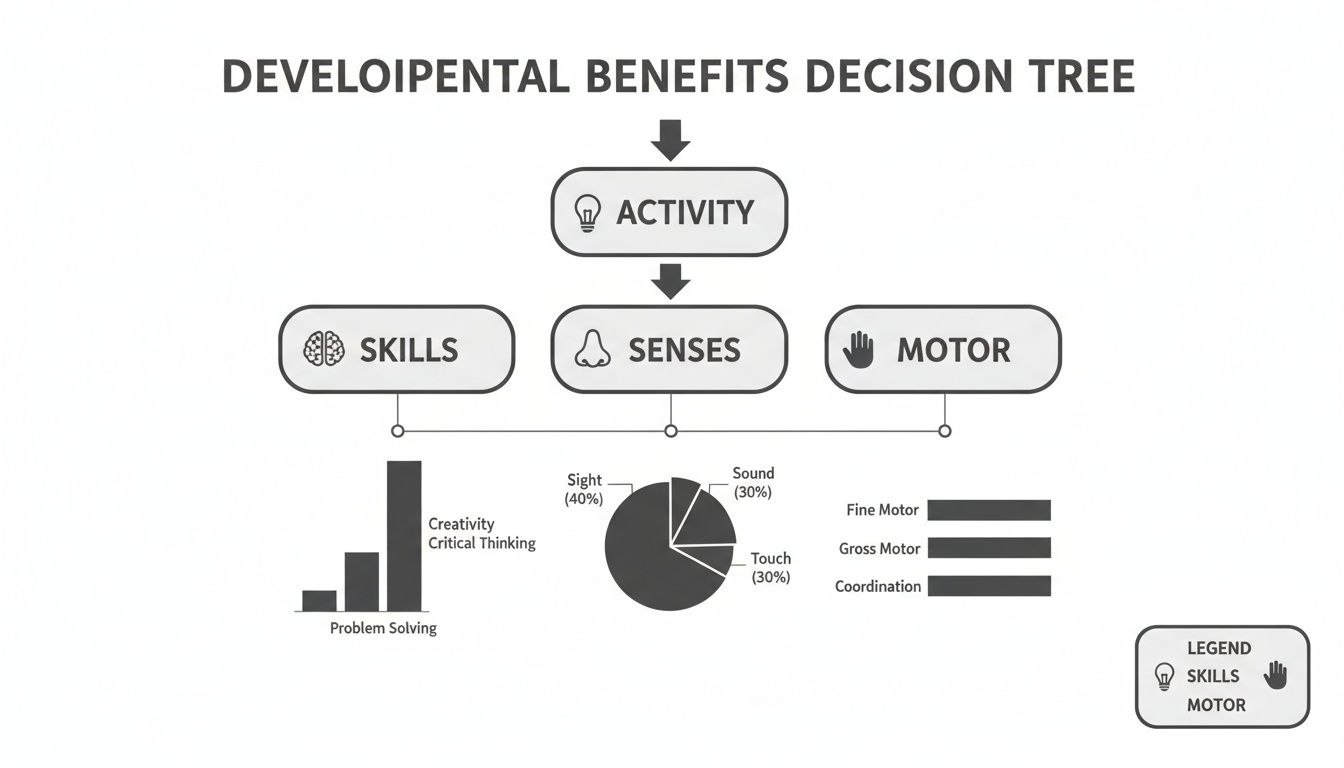
As you can see, something as simple as stirring batter isn't just stirring—it's building fine motor skills, engaging sensory processing, and strengthening cognitive abilities all at once.
To help you sort through the options, we've put together a quick comparison table highlighting the most important features to consider.
Feature Comparison For Choosing A Kitchen Helper
| Feature | What to Look For | Why It Matters |
|---|---|---|
| Stability | A wide, sturdy base and anti-tip feet. The tower should feel solid with no wobbling. | This is the #1 safety feature. It prevents the tower from tipping over as your child moves around. |
| Adjustability | An easily adjustable platform with 2-4 height settings. | The tower can "grow" with your child, ensuring a safe and ergonomic height from toddlerhood through their early years. |
| Materials | Solid wood (like birch) or high-quality plywood. All finishes should be non-toxic and child-safe. | Durable, safe materials ensure the tower lasts and won't expose your child to harmful chemicals. |
| Safety Rails | Enclosed on all four sides. The top rail should be at or above your child's waist. | Provides a secure enclosure, preventing falls and allowing the child to focus on the activity without needing to balance. |
Using this checklist will help you confidently choose a kitchen helper that is not only fun but, most importantly, safe for your little one.
Ultimately, the best child's kitchen helper is one that fits your space, works with your budget, and provides a secure platform for countless hours of shared fun and learning. For a closer look at our top picks, check out our guide on the best learning tower options available.
Inspiring Activities Beyond the Kitchen
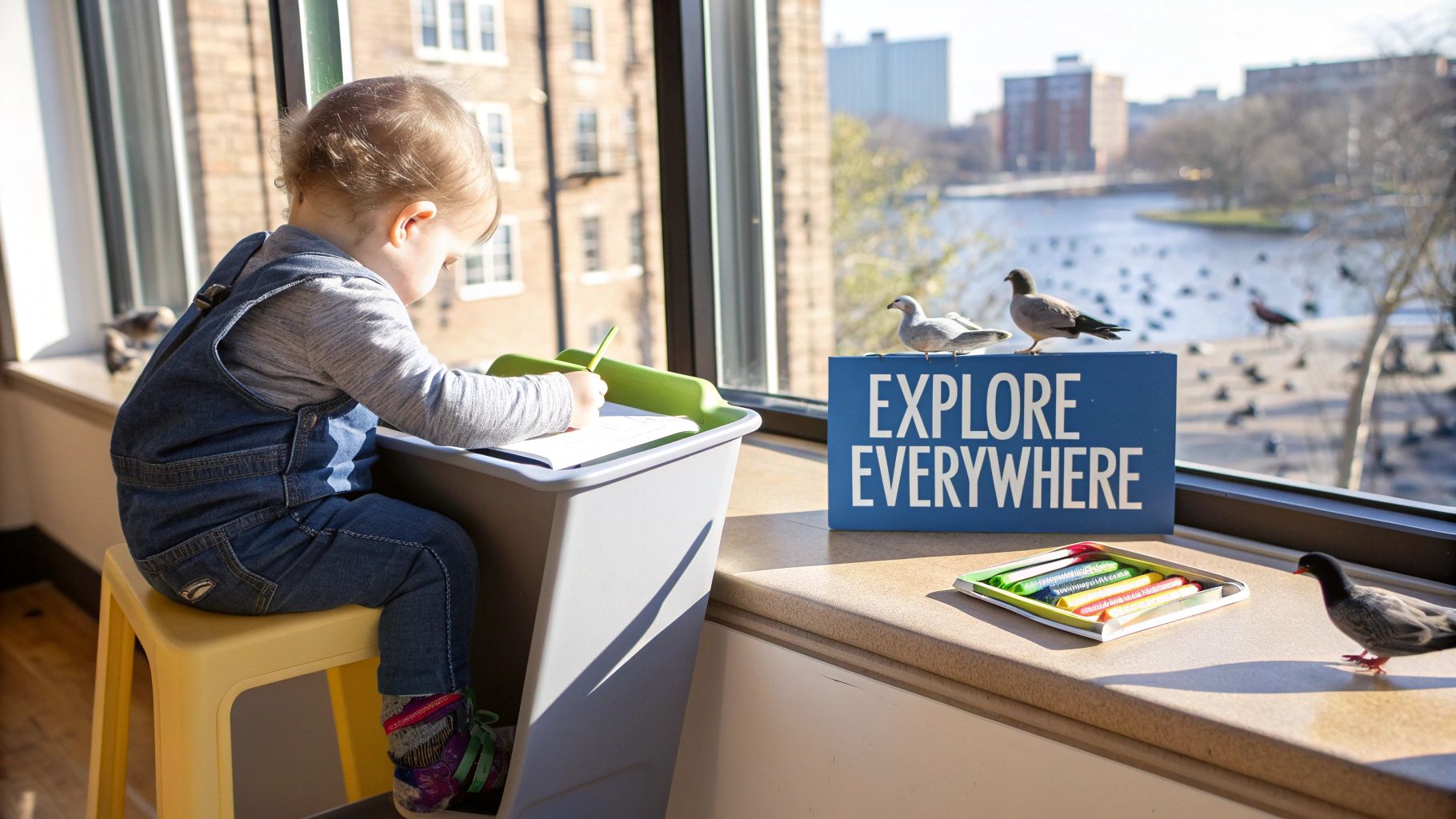
While the name suggests it belongs in one room, a childs kitchen helper is secretly one of the most versatile pieces of kid-friendly furniture you can own. Its real magic is revealed when you stop thinking of it as just a kitchen tool and see it for what it truly is: a portable platform for curiosity.
Moving the tower out of the kitchen unlocks a whole new world of hands-on activities. It becomes a tool that empowers your little one, giving them access to spaces that were previously out of reach and nurturing that all-important sense of "I can do it myself."
Creative Stations for Learning and Play
Just imagine your child's delight when their familiar tower pops up in a new spot, ready for a completely different adventure. Every new location is a fresh opportunity for development, turning ordinary parts of your home into exciting learning labs. The simple act of providing safe, elevated access can spark hours of creative, independent play.
Here are a few Montessori-inspired ideas to get you started:
- The Bathroom Sink Station: Pull the tower up to the bathroom sink to create a personal hygiene hub. Your toddler can now comfortably practice brushing their teeth, washing their hands properly, or even enjoying some supervised water play. It’s a fantastic way to build self-care habits and fine motor control.
- The Window-Side Nature Observatory: Position the tower by a window with a good view. Instantly, it’s a science station for bird watching, tracking weather changes, or just seeing what the neighborhood squirrels are up to. This simple setup encourages patience and sharpens their observation skills.
- The Craft Table Art Easel: Next to a craft table, the kitchen helper gives your child the perfect height for painting, drawing, or squishing play-doh without being stuck in a small chair. This freedom of movement is a huge boost for their creativity and hand-eye coordination.
Your child's kitchen helper is like a master key, unlocking new rooms and experiences throughout your home. It elevates their perspective, empowering them to become an active participant in every aspect of family life, not just in the kitchen.
This broader view of educational play furniture is catching on. The market for toy kitchens—a close cousin to the learning tower—is expected to grow from USD 3,468.7 million in 2025 to USD 4,661.6 million by 2035. This trend is all about parents looking for tools that teach real-life skills and encourage independence. You can discover more insights about the growth of educational play tools.
Ultimately, when you reimagine how it can be used, your childs kitchen helper proves its long-term value as a powerful investment in their creativity and lifelong love of learning.
A Practical Guide to Safe Introduction and Use
Bringing a **childs kitchen helper** into your home is such an exciting milestone. Getting the introduction right from day one helps build confidence for both you and your little one. Think of it like teaching any new skill—it takes a bit of patience, a few clear rules, and a safe space to practice. The real goal is to make the tower a positive, secure spot where your child feels empowered to explore.First things first, let’s talk about placement. Always set up the kitchen helper on a completely flat, stable surface. Any wobble is a no-go. You’ll also want to keep it a safe distance from immediate dangers like the hot stove, knife blocks, or drawers with sharp tools. The perfect spot is usually near the sink or a clear bit of counter where they can jump into low-risk activities.
Establishing Safe Habits Early
With the tower in its new home, it’s time for the first lesson: how to get in and out safely. Take your time modeling the process. Show your toddler how to climb the step, turn around, and face the counter. Encourage them to hold the sides for support and shower them with praise. That positive reinforcement works wonders.
Next up, you need a few simple, non-negotiable ground rules. This framework is what makes the tower a safe tool for the long haul.
- Always Supervise: A kitchen helper is a tool for togetherness, not a babysitter. Never, ever leave your child unattended in the tower.
- Feet Stay on the Platform: Teach them that the tower is for standing, not for climbing onto the counters or leaning way over the sides.
- One Child at a Time: Unless you have a tower built for two, it’s designed for a single user to keep it stable and safe.
A childs kitchen helper is a partnership built on trust. You trust them to follow the rules, and they trust you to keep them safe. This simple agreement turns the kitchen into a zone of collaborative learning.
The safety stats are pretty eye-opening. Improper tools contribute to around 40% of minor kitchen injuries in toddlers. Even more shocking, a recent test showed only 3 out of 16 popular towers passed a basic 35-pound stability test. This really drives home how vital it is to choose a stable, well-designed platform for your peace of mind.
By creating a safe setup and clear expectations, you turn a simple piece of furniture into a secure launchpad for countless kitchen memories. If you're wondering what to look for when buying one, check out our guide on choosing the best toddler tower for your kitchen.
Simple Care and Maintenance Tips
A well-cared-for childs kitchen helper is a safe one, and thankfully, keeping it in great shape is easier than you might think. A little regular attention not only protects your investment but also makes sure it stays a secure and clean spot for your little sous chef's kitchen adventures.
Most messes from cooking escapades or craft time are no big deal. For wooden towers, just grab a soft cloth, dampen it with a bit of mild, non-toxic soap and water, and you're good to go. A quick wipe-down of any spills and a thorough dry to protect the finish is all it takes. For those stubborn, dried-on bits of food, a gentle scrub will lift them right off.
Performing Regular Safety Checks
Beyond wiping up daily splatters, it's a good idea to do a quick safety inspection every now and then. Think of it as a quick two-minute check-up each month to make sure the tower is still structurally sound and ready for action.
A consistent maintenance routine transforms your kitchen helper from just a piece of furniture into a lasting, reliable tool for your child's developmental journey.
When you do your check, focus on these two key areas:
- Hardware Tightness: Give all the screws, bolts, and joints a little jiggle. If anything feels loose, just grab the right tool and tighten them until they're snug again. This is the best way to prevent any wobbling and keep the tower as stable as the day you built it.
- Structural Integrity: Do a quick visual scan of the legs, platform, and safety rails. You're just looking for any signs of wear, cracks, or damage. Catching small issues early is the secret to ensuring your tower stays safe and durable for years to come.
Frequently Asked Questions
Even after seeing all the ways a kitchen helper can enrich your family's life, it's totally normal to have a few questions before bringing one home. We get it. So, we’ve put together answers to some of the most common things parents ask. This should clear up any lingering doubts and help you feel confident in your choice.
At What Age Can My Child Start Using a Kitchen Helper?
Most little ones are ready for a kitchen helper once they can stand confidently and steadily on their own. This usually happens somewhere between 18 months and 2 years old. The best signs are stable footing and a genuine curiosity about what’s happening up on the counter.
Of course, always check the specific age and weight recommendations from the manufacturer. It's also super important to make sure the tower’s safety rail sits at the right height—around their chest—to keep them from trying to climb or tumble out. And remember, especially in the beginning, close supervision is everything.
Is a Learning Tower Safer Than a Regular Stool?
Absolutely, and it’s not even close. While a chair or a simple stool gives them a boost, it’s missing all the critical safety features a curious, wobbly toddler needs. A child's kitchen helper is built from the ground up specifically for them.
A learning tower is to a step stool what a car seat is to a booster cushion—it's not just about height, but about comprehensive, age-appropriate safety.
Here’s why it’s a safer bet:
- A four-sided enclosure prevents those scary backward or sideways falls.
- A wide, sturdy base is designed to stop it from tipping over.
- A non-slip standing platform gives them secure footing.
This thoughtful design frees up your child’s hands to mix, mash, and explore. They can focus on the fun without you having to worry about them losing their balance, which is a constant risk with an open-sided stool.
How Do I Clean My Child's Kitchen Helper?
Good news—cleaning is usually a breeze. For most wooden towers, all you need is a damp cloth with a bit of mild, non-toxic soap. It’s best to skip the harsh chemical cleaners, as they can damage the wood’s finish and aren’t great for little ones to be around.
Just be sure to wipe the tower dry afterward to protect the wood from any moisture. If you’re dealing with some really stuck-on goop, a gentle mix of white vinegar and water usually does the trick.
Won't My Toddler Make a Huge Mess?
Oh, absolutely! And that’s a good thing. Messes are an inevitable—and honestly, an important—part of learning and exploring. A kitchen helper gives them a safe, contained space for all that messy fun to happen. Instead of seeing it as a problem, try to see it as a teaching moment.
You can always place a splash mat underneath the tower for an easy cleanup. Even better, get your little one involved in wiping down their station when they're done. This simple task teaches responsibility and real-life skills, turning "cleanup time" into just another part of the activity you do together.
Ready to transform your kitchen into a hub of safe, hands-on learning? The Ocodile standing tower is designed with your child's safety and independence at its core, addressing every parent's concern with thoughtful, sturdy construction.
Discover the perfect child's kitchen helper for your family at https://ocodile.com.