



A Parent’s Guide to Kids Modern Furniture That Grows With Them
When you hear "modern furniture," it's easy to picture sterile, all-white rooms. But when we're talking about kids' spaces, modern design is warm, practical, and completely centered around a child's developmental needs.
Think of it less as a style and more as a philosophy. It’s a direct response to those overly decorated, themed rooms that can feel chaotic and become outdated in the blink of an eye. Instead, kids' modern furniture acts as a calm, functional foundation for play and learning.
A Philosophy of Growth and Independence
This approach isn't just about looks; it's a practical choice that supports your child's journey toward independence. It's about creating a "prepared environment" where children can interact with their surroundings confidently and safely.
The goal is to design a space that respects the child as a capable individual. Furniture is scaled to their size, encouraging them to dress themselves, access their own toys, and participate in daily routines without constantly needing adult help.
Essentially, we're talking about purpose-built learning tools rather than just miniature adult furniture. Each piece is designed to empower children by making their environment accessible, safe, and intuitive.
Core Principles of Modern Design for Children
Understanding this philosophy is the first step in creating a space that truly works for your child. The design principles are simple but incredibly powerful. For a deeper dive into picking the perfect pieces, check out this comprehensive ultimate buying guide for kids' bedroom furniture.
Here’s what it boils down to:
- Simplicity: Uncluttered designs with clean lines cut down on visual noise, which helps kids focus. This creates a serene atmosphere perfect for both restful sleep and imaginative play.
- Functionality: Every piece should serve a clear purpose, often in more than one way. A low shelf isn't just for storage; it’s an open invitation for a child to choose their own books and toys, which helps build their decision-making skills.
- Child-Centric Scale: The furniture is literally built for little bodies. Low beds, toddler-sized tables, and reachable shelving empower kids to navigate their own world without waiting for a grown-up.
This focus on safety and smart, child-friendly design is catching on. The global kids' furniture market, valued at USD 36.9 billion in 2025, is projected to hit USD 55.1 billion by 2035. That's a huge jump, and it shows that more parents are recognizing how important it is to invest in furniture that truly supports their child's well-being.
Decoding Safety Certifications And Materials
When you're picking out furniture for your kids, it’s easy to get caught up in how it looks. But let's be real—the most important thing is safety. It has to be the foundation of every choice.
Diving into the world of safety labels and materials can feel a bit like learning a new language. Don't worry, it's simpler than it looks. Understanding a few key ideas will turn you from a nervous shopper into a confident buyer, making sure every piece you bring home is a safe space for your little one.
Think of safety certifications as a seal of approval from a trusted expert. Instead of you having to become a materials scientist overnight, these organizations have already done all the tough testing. They check that products meet strict standards for everything from chemical emissions to whether a bookshelf will tip over.
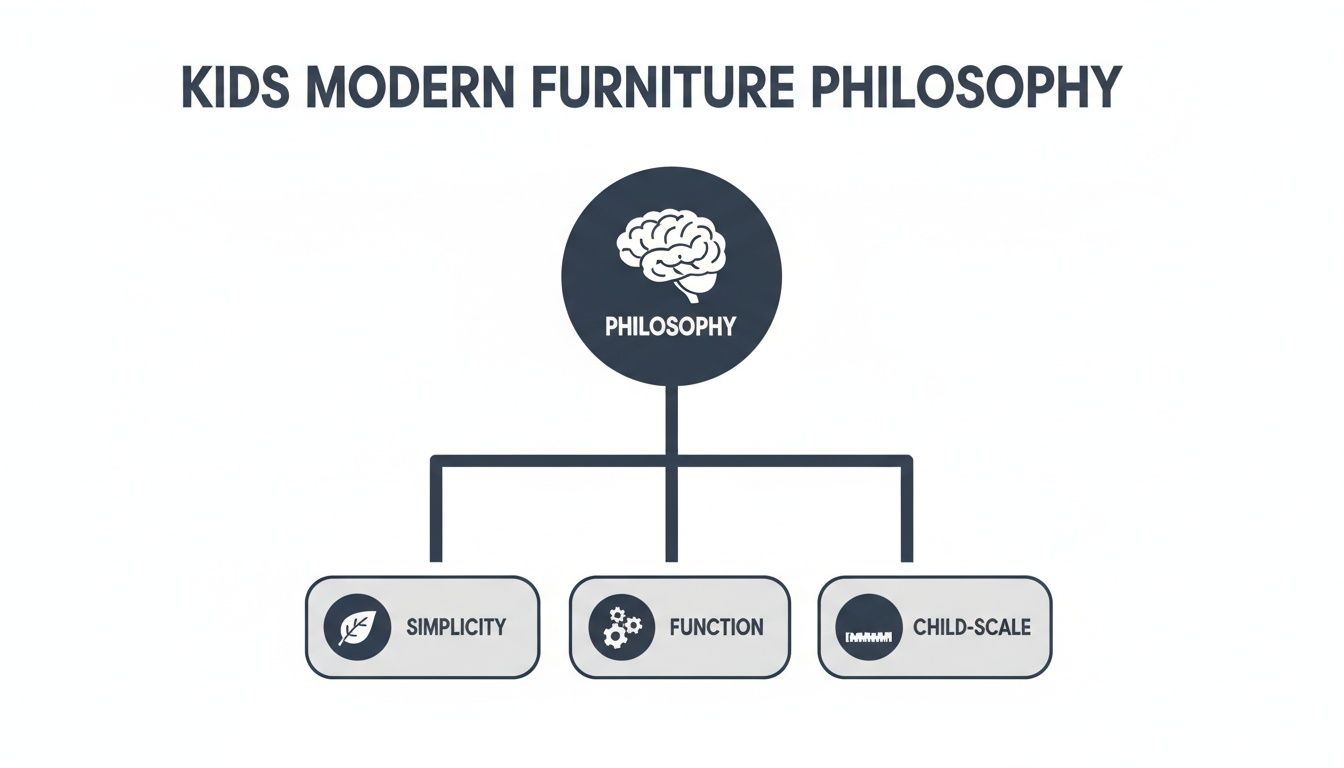
This diagram shows you exactly what we mean. Modern kids' furniture isn't just a look; it's a whole philosophy built around making your child's environment work for them. Simplicity, function, and child-scale design come together to create a space that encourages independence.
Key Safety Certifications To Look For
You’ll probably see a lot of different labels, but there are two big ones you should really know: GREENGUARD Gold and JPMA. They sound technical, but their goal is simple: keeping your kid healthy and safe.
-
GREENGUARD Gold: This one is all about the air your child breathes. It tests for over 10,000 nasty chemicals called volatile organic compounds (VOCs) that can be released from paints, glues, and finishes. If a product has this certification, it means those emissions are super low, leading to much cleaner indoor air.
-
JPMA (Juvenile Products Manufacturers Association): This certification takes a wider view, focusing on physical safety. A JPMA-certified piece has been rigorously tested to make sure it's stable, durable, and free of hazards like sharp corners or small parts that could be a choking risk. It’s a solid guarantee that the furniture can handle the reality of life with kids.
Choosing The Right Materials
The material doesn't just define the look of a piece of furniture; it dictates its safety, durability, and how easy it is to clean. It’s no surprise that parents are prioritizing quality, with the global kids' furniture market hitting USD 49.31 billion in 2024 and projected to climb to USD 99.40 billion by 2033. Wood continues to be the go-to for families who want something natural that’s built to last.
To help you decide, here’s a quick look at the most common materials you'll find.
Material Comparison For Kids Modern Furniture
This table breaks down the good, the bad, and the best uses for popular furniture materials.
| Material | Pros | Cons | Best For |
|---|---|---|---|
| Solid Wood | Super durable, lasts forever, can be refinished, and has a natural beauty. | Heavier on the wallet, can be heavy to move, and might show dings over time. | Investment pieces you want to last for years, like beds, cribs, and dressers. |
| Plywood | Really strong and stable because of its layers; it won't warp easily. | Cheaper versions might use glues with formaldehyde. Look for quality grades. | Things that get a lot of use, like learning towers, step stools, and shelving. |
| MDF | Has a perfectly smooth surface for paint and is usually more affordable. | Can be heavy, gets damaged by water, and might off-gas VOCs if not sealed well. | Painted furniture where you want that flawless, smooth finish. |
No matter what material you lean towards, always, always check the finish. You want to see phrases like "low-VOC," "zero-VOC," or "water-based finish." These choices make a huge difference in cutting down the chemicals in your child’s room.
Your Essential Safety Checklist
Beyond the official labels and materials, there are a few simple physical checks you can do yourself. Keep this checklist in mind when you’re shopping.
-
Rounded Edges and Corners: Sharp corners are just asking for bumps and bruises. Look for smooth, rounded edges on everything from tables to bed frames. It’s a small detail that makes a big difference.
-
Anti-Tip Hardware: This is non-negotiable for tall furniture like bookshelves or dressers. These pieces absolutely must come with anti-tip kits to anchor them securely to the wall.
-
Stable and Sturdy Construction: Just give it a little shake. Does it wobble? Does it feel flimsy? A well-made piece of furniture should feel solid. Strong joints and a sturdy build are clear signs of quality and safety.
By keeping these points in mind, you can create a space that’s not just beautiful and modern but, most importantly, a safe place for your child to grow and play. For an even deeper dive into this topic, check out our guide on non-toxic kids' furniture.
Choosing Furniture That Adapts As Your Child Grows
Kids grow up in the blink of an eye. The furniture that was perfect for your curious toddler suddenly doesn’t work for the school-aged kid who needs a spot for homework. This is where smart, adaptable design really proves its worth, turning what seems like a simple purchase into a lasting investment.
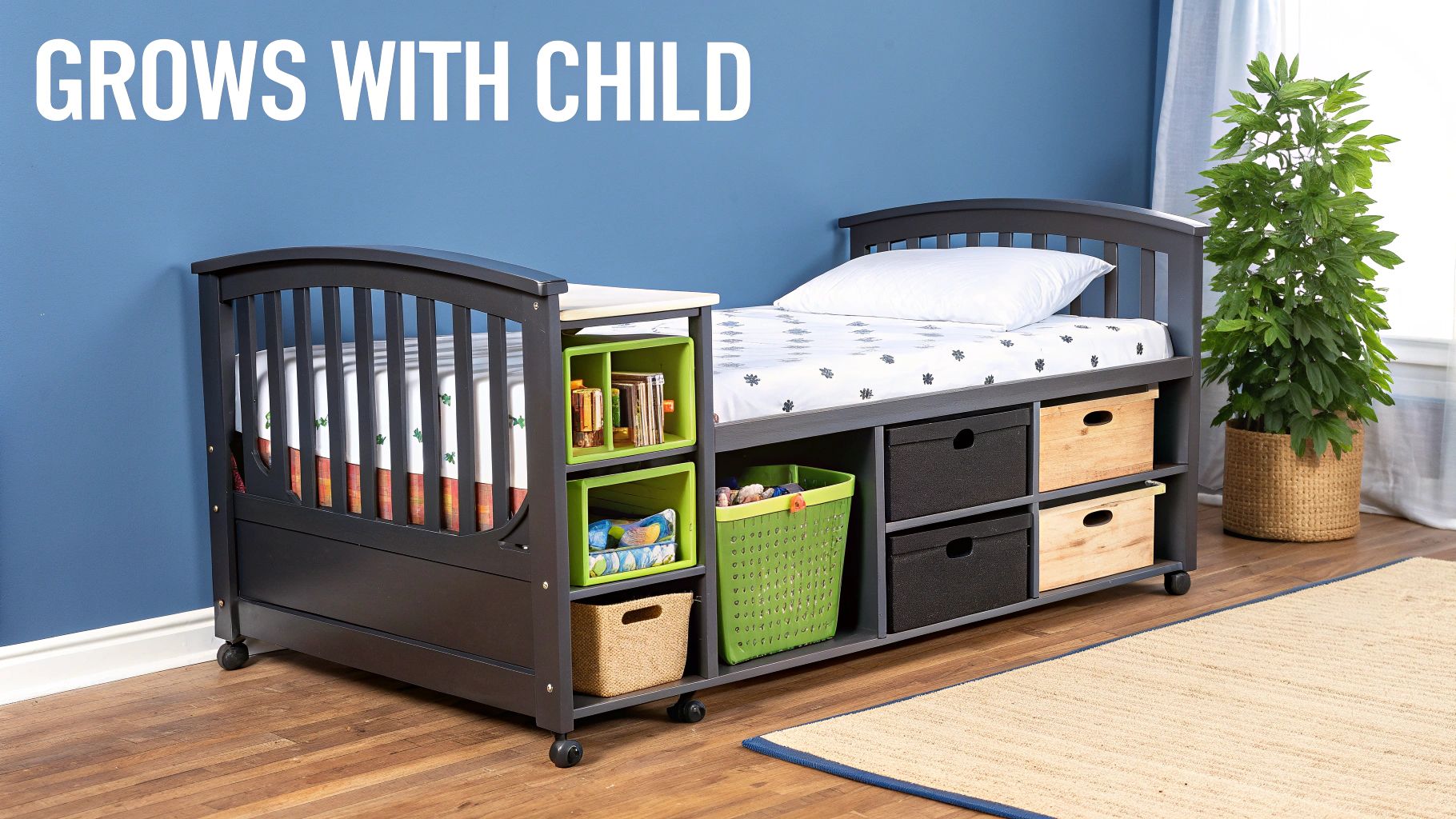
Picking pieces that can evolve isn't just a budget-friendly move; it's about giving your child a consistent, stable environment. Instead of a revolving door of furniture, you select a few foundational pieces that can be modified or adjusted as they hit new milestones. It's an approach that's both sustainable and incredibly practical.
The Power Of Child-Scale Furniture
Before furniture can adapt, it has to fit right now. Child-scale furniture is designed from the ground up for a child's current size and abilities. Think of a low, open shelf where they can actually reach their favorite toys, or a little table and chair set that lets their feet touch the floor.
These pieces are more than just cute, miniature versions of adult furniture—they’re tools for empowerment. When kids can interact with their own space without constantly asking for help, it builds a powerful sense of competence and independence. A study on early childhood environments even found that 70% of adults who had organized rooms as kids prefer structured living spaces today. That habit often starts with accessible, right-sized furniture.
By providing furniture that fits their small bodies, you are sending a clear message: "This space is yours. You are capable, and you belong here." This foundational confidence is crucial for a child's developing self-esteem.
This idea is a cornerstone of kids modern furniture, which is all about creating a "prepared environment" where a child can thrive. To see how the right setup can foster independence, you can learn more about choosing the perfect child table and chair set in our detailed guide.
Investing In Adaptable And Convertible Designs
Once you've got the child-centric foundation down, it's time to think long-term. Adaptable furniture is designed with the future in mind, using clever mechanisms that let it grow right alongside your child. It's a "forever furniture" mindset that pushes back against the throwaway culture common with kids' products.
Here are some of the most effective types of adaptable furniture to look for:
- Convertible Cribs: This is the classic example. A good crib can transform into a toddler bed, a daybed, and sometimes even a full-sized headboard. It can literally serve your child from infancy all the way through their teenage years.
- Adjustable-Height Desks and Chairs: As your child goes from scribbling with crayons to writing essays, a desk that adjusts in height ensures they always have a comfortable, ergonomic workspace. It's a game-changer for good posture and focus.
- Modular Storage Systems: Look for shelving units and storage cubes that you can stack, rearrange, or add to over time. What starts as low, accessible toy storage can be built upwards to become a bookshelf for a growing reader.
This forward-thinking approach means you buy fewer items over the years, which cuts down on waste and saves a surprising amount of money. A well-made convertible piece might cost more upfront, but its multi-stage functionality delivers incredible value down the road.
Sustainability Through Longevity
Opting for adaptable kids modern furniture is also a naturally sustainable choice. When you invest in durable, versatile pieces, you’re actively stepping away from the "buy and discard" cycle. High-quality materials like solid wood or Baltic birch plywood are built to withstand years of play and multiple transformations.
This longevity doesn't just help the planet; it creates a sense of continuity and comfort for your child. The bed they’ve known since they were a baby can remain a familiar presence in their room, simply changing its form as they grow up. It’s a smart, thoughtful way to furnish a space that honors both your child's journey and your family's values.
How Modern Design Aligns With Montessori Principles
At first glance, modern design and the Montessori method might seem to come from two different worlds. One is all about aesthetics, the other is a philosophy of education. But when you look closer, you see they’re actually a perfect match, both built on simplicity, function, and a real respect for a child’s growing independence.
It’s this natural partnership that can turn a kid's room from just a place to sleep into a space intentionally designed for growth. This connection isn't just a happy accident—the clean lines and uncluttered vibe of kids modern furniture directly support the core Montessori concept of a "prepared environment." This is all about creating a space where kids have the freedom to explore, learn, and grow at their own pace.
Creating A Prepared Environment
The "prepared environment" is really the heart of the whole Montessori philosophy. It’s about creating a world that’s scaled to your child, where they can interact with their surroundings safely and confidently, without needing an adult to step in all the time. Modern furniture, with its kid-friendly size and no-fuss design, is the perfect tool for the job.
Think about it this way: a tall, heavy dresser is a roadblock for a toddler who wants to pick out their own shirt. But a low, open shelf? That’s an invitation. It empowers them to make a choice, building that sense of capability that’s so important for their development. This is exactly where the principles of modern design and Montessori education shake hands.
"The environment must be rich in motives which lend interest to activity and invite the child to conduct his own experiences." - Maria Montessori
Maria Montessori’s famous insight really captures it all. Modern furniture isn't just stuff you put in a room; it’s designed to actively invite your child to engage, discover, and learn.
Key Montessori Concepts In Modern Furniture
Some pieces of kids modern furniture are almost like physical blueprints of Montessori principles. They’re designed not just to look good, but to help kids hit specific developmental milestones.
Here are a few of the clearest examples:
- Floor Beds: A bed placed right on the floor gives a child the freedom to get in and out whenever they want. This simple change respects their natural sleep cycles and promotes bodily autonomy from a super young age. It shifts the focus from being "contained" in a crib to being in charge of their own space.
- Low, Open Shelving: When toys and books are kept at your child’s eye level, you’re encouraging them to choose what they want to play with. This builds decision-making skills and even teaches them to put things back where they belong, creating a natural sense of order.
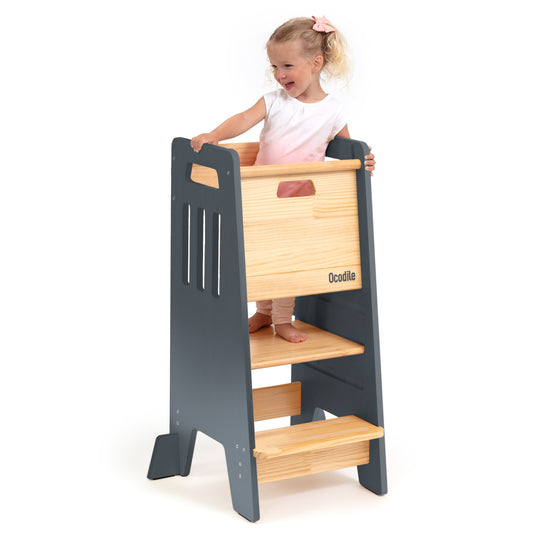
- Learning Towers: These are safe, enclosed step stools that bring a child right up to counter height to join in on real-life activities. Whether they’re "helping" you make a snack or just washing their hands at the big sink, they’re learning practical life skills and feeling like a valued part of the family.
Each of these items removes a barrier between your child and their world, which is the ultimate goal. For parents wanting to pull the whole look together, digging into ideas for Montessori bedroom furniture can offer a ton of inspiration.
Simplicity Fosters Focus
Another powerful link is the shared love of simplicity. A key idea in modern design is to get rid of all the extra fluff and ornamentation, creating a calm, uncluttered space. This directly supports the Montessori goal of helping children develop deep concentration.
A room packed with loud patterns, bright, clashing colors, and a mountain of toys can be incredibly overstimulating for a little one's brain. It creates a kind of visual noise that makes it tough for a child to focus on any single thing.
A modern room, on the other hand, with its neutral colors and minimalist furniture, acts like a quiet, calm backdrop. It allows the child's activity—whether it’s stacking blocks or flipping through a picture book—to become the center of attention. That intentional lack of distraction is absolutely vital for building the focus skills they’ll need for learning later on.
By choosing kids modern furniture, you’re doing more than just picking out a style. You’re adopting a philosophy that honors your child's natural desire to learn, explore, and become their own person. It’s a thoughtful way to blend beautiful design with powerful educational ideas, creating a home that truly helps them grow.
Styling A Modern Kids Room That Feels Like Home
Think of a modern kids' room as a blank canvas. The clean lines and simple shapes of kids modern furniture create the perfect, calm backdrop. Now for the fun part: layering in the personality, warmth, and joy that turns a simple room into your child's personal sanctuary.

It’s all about striking a beautiful balance. You want a space that looks great and stays organized but also feels cozy, inviting, and ready for any adventure your child can dream up. With a few simple strategies, you can transform that minimalist space into a vibrant home base for your little one.
Create Smart Zones For Daily Life
Even in a tiny room, creating distinct "zones" can bring a surprising amount of order. Think of the layout as different neighborhoods, each designed for a specific activity. This not only keeps things tidy but also helps your child naturally understand the rhythm of their day.
Here's how you might break it down:
- Sleep Zone: This should be the calmest corner of the room. Keep it simple with a floor bed or a minimalist frame, soft lighting, and a cozy rug. The goal is to send a clear signal that this area is for rest.
- Play Zone: Carve out some open floor space with low, accessible shelving for toys. A soft play mat can define the area and give them a comfy spot for everything from building block cities to tea parties.
- Learn Zone: A small, child-sized desk and chair create a dedicated spot for drawing, crafts, or homework. Try to position it near a window to get plenty of natural light, which is great for focus.
When you visually separate these activities, you're helping your child build routines. They learn that the bed is for sleeping and the rug is for playing, which fosters a natural sense of order without you having to say a word.
This approach isn't just a styling trick; it reflects a major shift in how parents think about kids' spaces. The global kids' furniture market, valued at USD 52.8 billion in 2024, is expected to jump to USD 187.4 billion by 2033. This growth is all about parents looking for smart, multifunctional pieces that actively support their child's development.
The table below breaks down how to apply this zoning strategy in your own home.
Modern Kids Room Zoning Guide
| Zone | Key Furniture Pieces | Design Goal |
|---|---|---|
| Sleep Zone | Floor bed, minimalist bed frame, soft rug, nightstand with a dim lamp. | Create a tranquil, clutter-free environment that signals rest and calm. |
| Play Zone | Low open shelving, toy baskets, soft play mat, accessible cubbies. | Encourage independent play and easy cleanup by keeping toys visible and within reach. |
| Learn/Creative Zone | Child-sized desk and chair, art supply caddy, bookshelf, good lighting. | Foster focus and creativity with a dedicated, well-lit space for projects and reading. |
By thinking in zones, you give every part of the room a clear purpose, making it more intuitive and functional for your child.
Build On A Neutral Base
The secret to a modern room that doesn't feel cold is starting with a calm, neutral foundation. Think soft whites, warm grays, or even earthy beige tones for the walls and bigger furniture items. This creates a serene backdrop that can easily grow with your child as their favorite colors and interests change over the years.
Once that neutral base is in place, you can start layering in their personality. This is where you can really have fun and get your child involved.
- Textiles: Bring in color and texture with bedding, curtains, a plush rug, or fun throw pillows. These are super easy and affordable to swap out when it's time for a refresh.
- Art and Decor: Nothing makes a room feel more personal than your child's own artwork. Frame their masterpieces or use wall decals for a non-permanent splash of fun.
- Lighting: A cool ceiling light or a whimsical table lamp can add a ton of character. Dimmable lights are also a parent's best friend for shifting the mood from bright playtime to a calm bedtime.
If you want to go beyond a single look, you can explore various styles for your kids' room to find the perfect blend of modern and personal.
Make Storage Smart And Accessible
Finally, let’s talk about the secret weapon of any well-organized kids' room: smart storage. The goal is to find solutions that work for you and are accessible to your child.
Low, open shelving units and cubbies are fantastic because they allow kids to see their toys and—more importantly—put them away on their own.
Use woven baskets or fabric bins to group smaller items together. This keeps the space looking tidy while making cleanup a breeze. When putting things away is an intuitive part of the room's design, you empower your child to take ownership of their space. That’s how you create a room that is beautiful, functional, and truly full of life.
Care And Maintenance To Protect Your Investment
Think of high-quality kids modern furniture as a long-term investment in your home and your child's daily life. And like any good investment, it pays to protect it. A little routine maintenance goes a long way in preserving its good looks, safety, and function through years of use.
Let's be real: daily life with a kid means spills, scuffs, and the occasional rogue crayon masterpiece. But those moments don't have to spell disaster for your furniture.
The best strategy is simple and consistent. For most modern finishes, a soft, damp cloth is your best friend for daily dust and grime. For stickier messes, a mild soap and water solution does the trick. The key is to steer clear of harsh chemical cleaners, as they can strip the protective finish and damage the wood over time. And always, always wipe up spills right away to stop them from soaking in.
A Simple Guide To Common Repairs
Even with the best care, life happens. Here’s a quick guide to tackling the most common signs of a well-loved piece of furniture.
- Minor Scratches: For finished wood, you can find a touch-up marker or a wax repair stick in a matching color. A quick application can make small scratches practically vanish while sealing the wood underneath.
- Stubborn Marks: Got crayon or scuff marks on a painted surface? Try a non-abrasive cleaner or even a simple pencil eraser. It often lifts the mark right off without hurting the paint. Just remember to test any cleaner on a small, hidden spot first.
- Dents and Dings: This one is for solid wood only. You can sometimes use a steam iron and a damp cloth to gently swell the wood fibers in a small dent, making it much less noticeable.
The goal isn't to keep the furniture in a pristine, museum-like state. It's about maintaining its strength and beauty so it can gracefully wear the happy marks of a childhood well lived.
The Importance Of Regular Safety Checks
Beyond keeping things looking nice, regular safety checks are absolutely essential. With daily use, furniture can loosen over time, so it's a great idea to build a quick check-up into your routine. Every few months, just take a couple of minutes to run through these steps.
- Tighten All Hardware: Give every bolt, screw, and joint a quick once-over to make sure it's snug. This is especially critical for items like cribs, beds, and our Ocodile learning towers, where stability is everything.
- Inspect for Damage: Look for any splintering wood, cracked parts, or peeling paint that could become a hazard for little hands.
- Confirm Anchors Are Secure: If you have bookshelves or dressers anchored to the wall, give them a gentle tug to make sure the anti-tip hardware is still holding firm.
These simple habits will ensure your kids modern furniture not only looks great but remains a safe, reliable part of your child’s world for years to come.
Common Questions About Kids Modern Furniture
Thinking about bringing modern furniture into your kid's space often sparks a few questions. That's completely normal. Let's walk through some of the most common things parents ask so you can feel confident you're making a great choice for your family.
Is Modern Furniture Durable Enough For Active Kids
Absolutely, as long as you're choosing a quality piece. Good modern furniture isn't just about looks; it's designed with the reality of family life in mind. Its toughness really comes down to two things: great materials and smart construction.
You'll want to look for furniture made from solid wood or a premium plywood like Baltic birch. These materials are famous for their strength and can handle years of jumping, climbing, and general kid chaos. Plus, the minimalist design usually means fewer frilly, ornamental parts that can snap off, making the whole piece inherently more sturdy.
How Do I Make A Minimalist Room Feel Cozy
This is a big one, but don't worry—making a minimalist room feel warm and inviting is simpler than you'd think. The trick is to use the clean lines of the furniture as a calm canvas and then start layering in texture and personality.
Think of it as dressing a simple mannequin; the clean form makes all the accessories pop. Here’s how you can bring in that cozy, lived-in vibe:
- Soften with Textiles: A plush, high-pile rug underfoot, fun patterned bedding, and a couple of colorful throw pillows can instantly transform the feel of the room.
- Showcase Their Personality: Use low, open shelves to display their favorite books, most-loved toys, and little art projects. It makes the space feel completely theirs.
- Add Playful Accents: A whimsical lamp, fun wall decals, or a simple play canopy can add a dash of magic without creating a cluttered mess.
Is Kids Modern Furniture More Expensive
The initial price tag on a well-made modern piece can sometimes be higher, but it’s really important to think about the long game. This kind of furniture often ends up being the more budget-friendly choice over time.
Investing in adaptable, high-quality furniture means you buy fewer pieces over your child's lifetime. It's a shift from disposable items to durable, long-term solutions that grow with your family, ultimately saving you money.
So many modern pieces are designed to be convertible or adjustable. A crib might turn into a toddler bed, or a desk can grow in height. When you combine that adaptability with top-notch durability, you realize you won't be buying replacement furniture every couple of years.
At What Age Should I Introduce A Floor Bed
A floor bed is a fantastic, Montessori-inspired idea. You can typically introduce one once your baby is mobile—usually when they can roll over confidently or are ready to move out of the crib, often around 15-24 months. Because it's so low to the ground, it empowers them with a bit of independence, letting them get in and out of bed all on their own.
Of course, safety has to be the top priority here. When you set up a floor bed, you have to commit to thoroughly childproofing the entire bedroom. You’re essentially turning the whole room into one big, safe crib.
At Ocodile, we build our furniture—from learning towers to floor beds—on these very principles of safety, durability, and fostering independence. Feel free to explore our collection to find pieces that will grow right alongside your family for years to come at https://ocodile.com.