



Choosing The Best kids step stool for kitchen: A Buyer's Guide for Parents
A kids step stool for kitchen is so much more than a piece of furniture—it’s a bridge connecting your child’s world to yours. It single-handedly transforms meal prep from something they watch from afar into a real, interactive family activity. It safely brings them right up to counter height, ready to learn, help, and make memories beside you.
Bringing Your Child To The Counter Safely
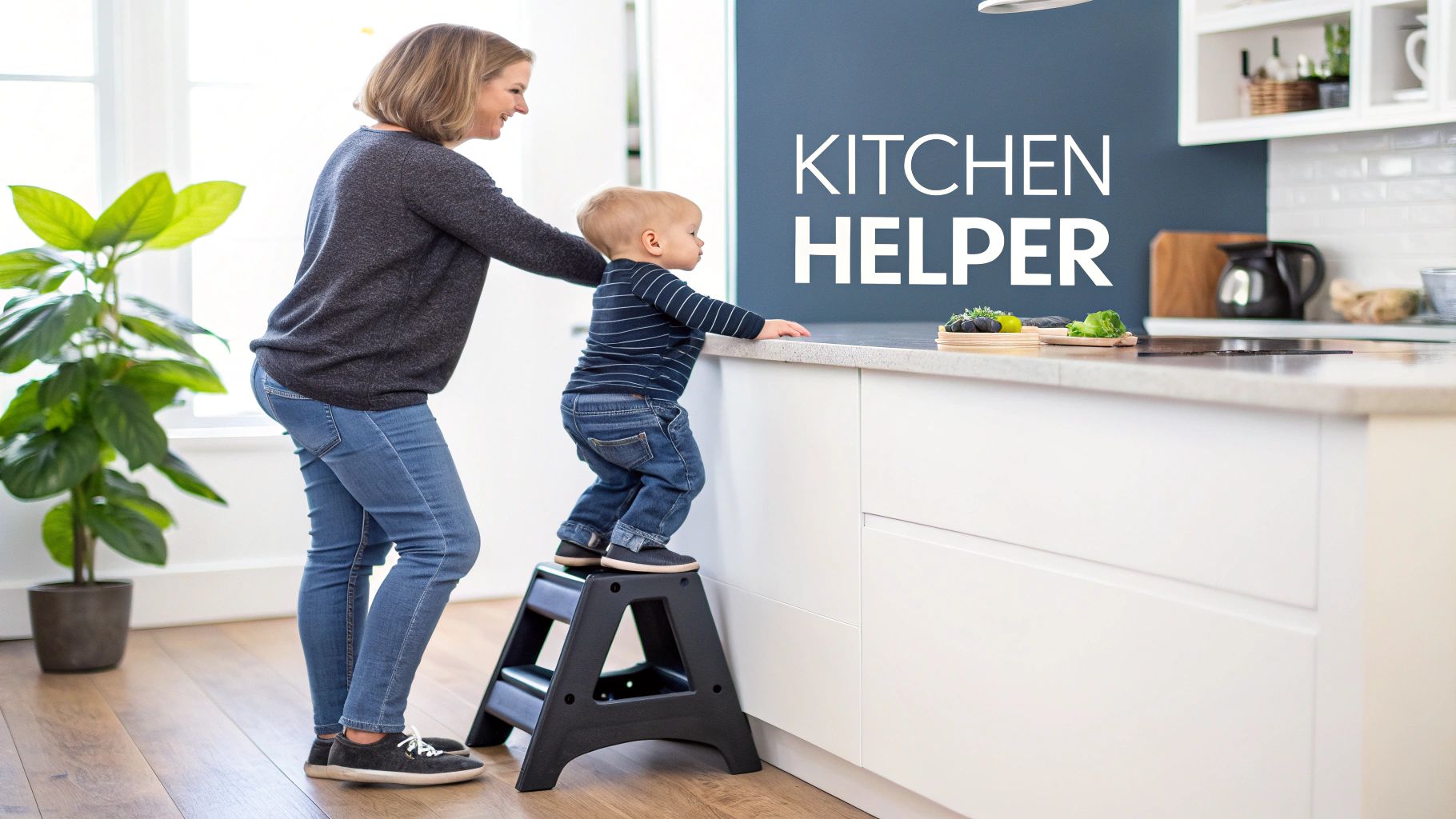
From down on the floor, the kitchen counter looks like a universe of exciting activity they desperately want to join. A well-designed kitchen helper stool is their ticket into this world, turning what was once an adult-only space into an inclusive learning lab for your little one.
When you give them a secure platform, you're not just helping them reach—you're nurturing their confidence and independence. Suddenly, simple tasks like mixing batter, washing vegetables, or even just watching you cook become incredible learning experiences.
Fostering Growth Through Participation
Every moment at the counter is a chance to grow. When children get to participate in real household tasks, they develop crucial skills and a true sense of belonging. It's this kind of hands-on involvement that sits at the very heart of so many child development philosophies.
A kitchen helper stool makes this journey possible by supporting:
- Motor Skill Refinement: Stirring, pouring, and arranging ingredients helps fine-tune their coordination.
- Cognitive Development: Following simple steps in a recipe builds early comprehension and sequencing skills.
- Emotional Connection: Working together side-by-side creates cherished memories and strengthens your family bond.
You can see the growing emphasis on these benefits in the market itself. The global kids step stool market has already hit USD 1.48 billion, a number driven by a rising focus from parents on child independence and kitchen safety. This trend makes sense when you see that over 70% of parents encourage their kids to help in the kitchen from as early as age two.
A kitchen stool is less about height and more about opportunity. It offers your child a front-row seat to family life, empowering them to contribute in meaningful ways and build a foundation of confidence that extends far beyond the kitchen.
A Tool For Independence And Connection
Ultimately, the right stool is an invitation. It says, "You are a valued member of this family, and your help matters." This sense of purpose is incredibly powerful for a young child. As they gain confidence at the counter, you can introduce them to more complex tasks and even let them help pick out some easy kid-friendly dinner recipes to make together.
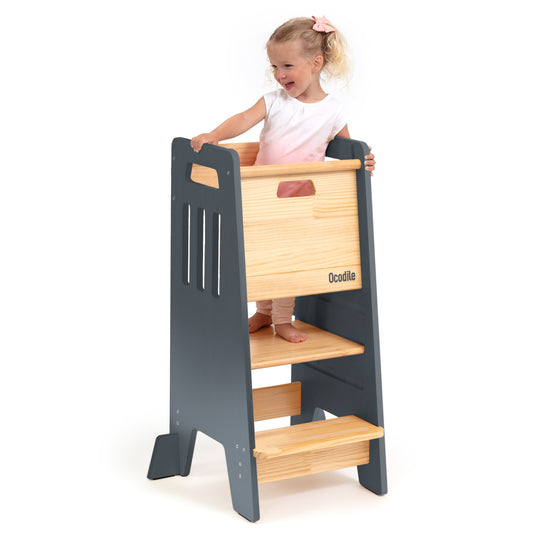
Models like a https://ocodile.com/blogs/the-little-space/toddler-tower-for-kitchen are specifically designed with enclosed sides for maximum safety, giving you peace of mind while they explore their newfound capabilities. This simple tool doesn't just elevate them physically; it elevates their role in the family.
Understanding The Critical Safety Features
When you're looking for a kids step stool for the kitchen, safety isn't just another feature to check off a list—it's everything. A stool can look solid at first glance, but looks can be deceiving. Knowing what makes a stool truly safe helps you see past the marketing fluff and focus on the design details that actually keep your child steady on their feet.
Think of a safe step stool like a pyramid. Its strength comes from a wide, solid base that won’t budge. A narrow, top-heavy stool is more like a tower of blocks, ready to tumble over with the slightest nudge from an excited toddler. This is why the most important safety conversation has to start from the ground up.
Building Stability From The Base Up
The single most critical safety feature is the stool's base. You want to see a wide footprint, ideally with splayed legs that angle outward, extending beyond the frame. This simple design trick lowers the center of gravity and makes the whole structure incredibly difficult to tip over, even when your little one is leaning and reaching.
Those angled legs, sometimes called anti-tip feet, aren't just a design choice; they’re a fundamental piece of engineering. They actively work against the forces that cause accidents. When your child reaches for something on the counter, a well-designed base distributes their weight and keeps the stool firmly planted.
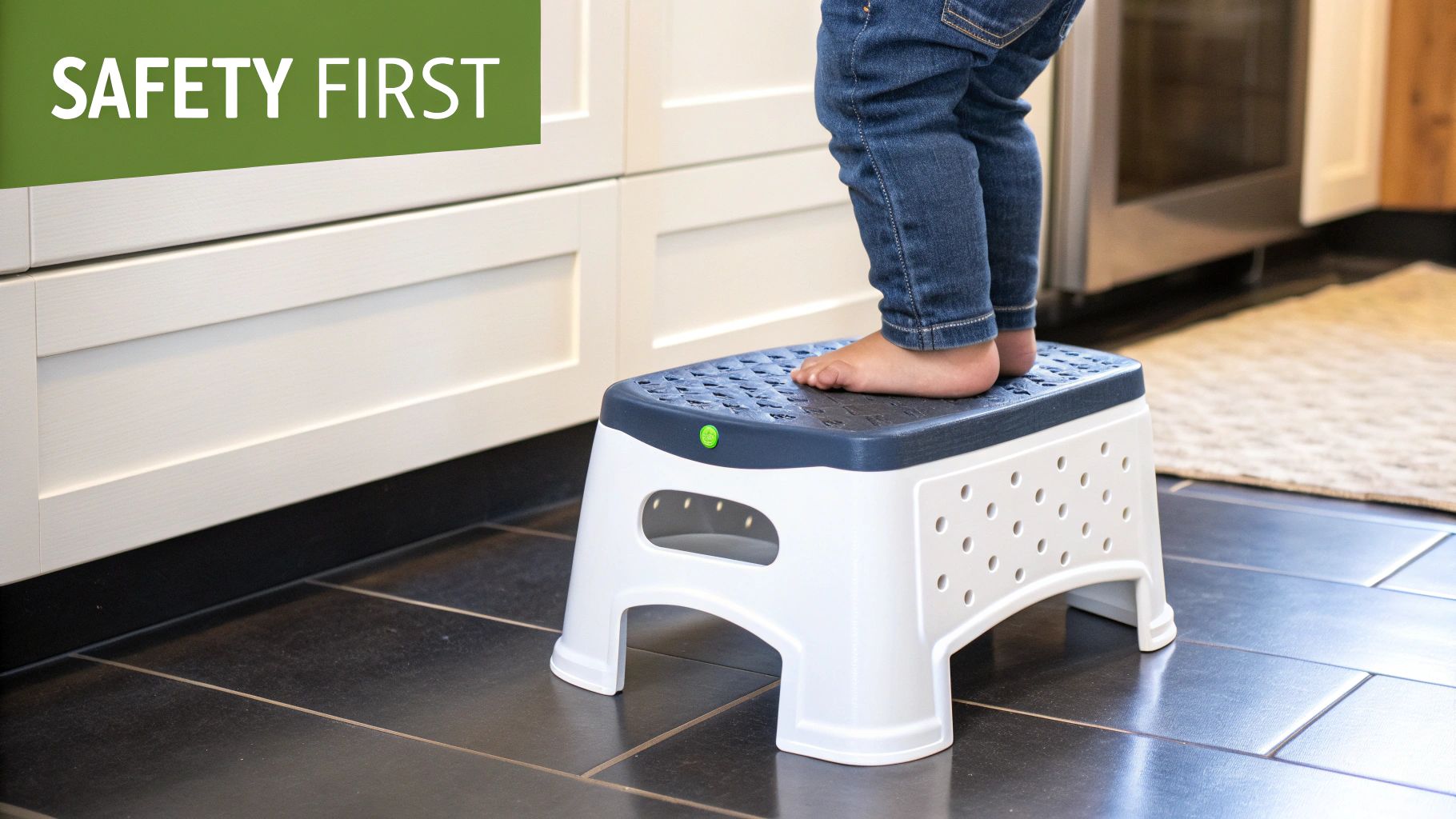
What's on the bottom of those feet is just as important. Look for tough, non-slip grips or pads on every point that touches the floor. Kitchen floors—tile, wood, laminate—are often slick. Without good grips, even a stable stool can slide out from under a child.
Guarding Against Slips And Falls
Once your child is up on the stool, the next safety layer is the surface they're standing on. The platform itself should have a non-slip texture or a special finish. This gives their little feet crucial traction, especially if they're wearing socks or there's a small spill nearby.
For younger toddlers, a fully enclosed design—often called a "learning tower" or "kitchen helper"—provides the best security. These models wrap around your child like a little safety cocoon.
A few features are non-negotiable:
- Safety Railings: A rail at your child's waist or chest height creates a secure boundary, preventing them from accidentally stepping or falling off the back or sides.
- Enclosed Sides: Solid or slatted sides close off any large gaps a child could slip through. Be wary of designs with horizontal bars that can be used like a ladder for climbing out.
- Rounded Edges: All corners and edges should be smooth and rounded off. This simple detail prevents nasty bumps and scrapes if they do take a tumble.
Peace of mind comes from knowing a stool is built to handle a child's wobbly, unpredictable movements. A wide base and secure railings aren’t just nice-to-haves; they are what turn a simple booster into a safe space for them to explore.
The Unseen Dangers In Unsafe Designs
The difference between a safe and an unsafe stool can be subtle, but the consequences are serious. Independent safety tests have found shocking problems in many popular models. In one well-known evaluation, a staggering 13 out of 16 toddler towers failed basic stability tests with just 35 pounds of force applied. This really shows the gap between how a product looks and how it actually performs.
Sadly, some of these design failures have led to product recalls after children suffered broken arms and concussions. As you can see in reports from trusted sources like Consumer Reports, these risks are very real.
This all comes back to scrutinizing how a stool is built. Whether it's solid wood or high-quality, BPA-free plastic, the materials must be durable. Check that all the hardware is sturdy and tightly fastened. A well-built kids step stool is an investment—in your child's kitchen adventures, and in your peace of mind.
To help you on your search, here's a quick checklist you can use to evaluate any stool you're considering.
| Essential Safety Feature Checklist | ||
|---|---|---|
| Safety Feature | Why It Matters | What to Look For |
| Wide, Splayed Base | Prevents tipping when a child leans or reaches. This is the #1 defense against falls. | Legs that extend outward beyond the standing platform, creating a low center of gravity. |
| Non-Slip Feet | Stops the stool from sliding on smooth kitchen floors like tile, wood, or vinyl. | Durable rubber or silicone pads on the bottom of every leg. |
| Non-Slip Platform | Gives little feet crucial traction to prevent slips, especially when wearing socks or near spills. | A textured surface, adhesive grip strips, or a specially treated non-slip finish. |
| Safety Railings/Enclosure | Creates a protective barrier to keep toddlers from stepping or falling off the sides or back. | A surrounding rail at the child's chest or waist height. For toddlers, four enclosed sides are best. |
| Rounded Edges & Corners | Prevents cuts, scrapes, and bruises from accidental bumps against the stool. | Smooth, sanded, and rounded edges everywhere, with no sharp corners. |
| Sturdy, Quality Materials | Ensures the stool is durable and won't crack, break, or collapse under a child's weight. | Solid wood, high-grade plywood (not MDF), or thick, BPA-free plastic. |
Using this checklist can give you the confidence that you're choosing a stool that is genuinely designed for a child's safety, not just one that looks the part.
Alright, you've nailed down the absolute must-have safety features. Now for the fun part: picking the material and design that fits your family's life. This is where you decide if your stool will be a sturdy kitchen anchor or a lightweight sidekick, how easy it is to clean up after a flour explosion, and how it looks in your home.
Think of it like this: the material is the foundation. It determines the stool's durability and feel. Solid wood is the timeless, super-sturdy option. High-grade plastic is all about lightweight convenience. And bamboo? That's the strong, eco-friendly choice. Each one has its own personality, and the best fit really depends on your kitchen and your daily rhythm.
Comparing Popular Stool Materials
The material you choose will directly affect the stool's weight, how you care for it, and how stable it feels. There's no single "best" material—it's all about what matters most to you, whether that's a certain look or the ability to withstand a storm of toddler-led chaos.
- Solid Wood (like Birch or Beech): The classic for a reason. Wooden stools are heavy and exceptionally sturdy, which is exactly what you want for stability. A toddler isn't going to be able to shove one of these around. They look beautiful, but they might need a little extra care to protect them from spills.
- Bamboo: A fantastic, eco-friendly contender. Bamboo is surprisingly strong yet lighter than traditional woods. It’s also naturally resistant to water and bacteria, which is a huge plus in the kitchen. You get the sturdiness of wood without all the heft.
- High-Grade Plastic: Don't write off plastic just yet. We're talking about modern, high-quality, BPA-free plastic that's incredibly lightweight and ridiculously easy to wipe down. They're often more budget-friendly, too. The trick is to find one with a wide, stable base to make up for its lighter weight.
Your choice of material sets the tone for the stool's entire life in your home. A heavy wooden stool becomes a permanent fixture, while a light plastic one can easily move from the kitchen counter to the bathroom sink.
The Importance Of Child-Safe Finishes
No matter what material you land on, the finish is just as critical. Little hands will be touching every surface, and let's be honest, mouths probably will be too. It’s absolutely essential that any paint, varnish, or sealant is non-toxic and child-safe.
That means it needs to be free from lead, phthalates, and nasty volatile organic compounds (VOCs). Reputable brands will always be upfront about using child-safe finishes, giving you peace of mind that your little helper isn't being exposed to anything harmful. Always double-check the product description for this info.
Exploring Different Design Styles
Beyond the raw materials, the actual design of the stool dictates how it works. The best style for your family depends on your child's age, your kitchen setup, and what you imagine you'll be doing together.
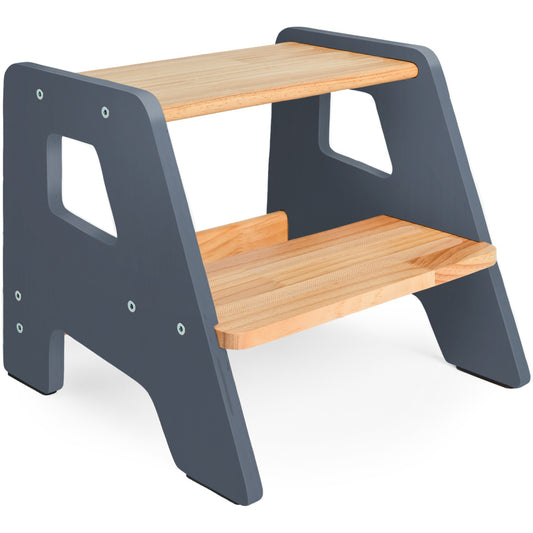
- Simple Step-Up Stools: These are the basic, open designs you probably picture first. They’re great for older, more confident kids (think 3+ years old) but don't have the safety enclosures that toddlers need.
- Enclosed Learning Towers: Often called kitchen helpers, these are the gold standard for toddlers. With four walls and safety rails, they create a secure little cockpit for your child to stand in. No tumbles off the back or sides.
- Convertible and Multi-Functional Stools: Some clever designs can transform into a little desk and chair or even come with a slide attachment. These are brilliant for getting more use out of one piece of furniture, especially if you're tight on space.
Choosing the right design is about planning for today and tomorrow. An adjustable platform is a game-changing feature, allowing the tower to "grow" with your child and giving you years of safe, comfortable use. When you match the material and design to your real life, you end up with a stool that becomes a truly loved part of the family.
Finding The Perfect Fit For Your Child And Kitchen
Getting a kids step stool that’s too tall or too short can be frustrating for everyone and, more importantly, unsafe. It’s a bit like buying a bicycle—if the seat isn’t at the right height, the ride is awkward and wobbly. The same idea applies here. The goal is to find that sweet spot where your child can stand comfortably and securely at the counter.
Finding the right dimensions is a huge part of safety. A stool that’s too low will have your child stretching on their tiptoes, which is a recipe for a fall. On the other hand, one that’s too high could put them dangerously close to hot pans or knives on the countertop. You want their elbows to be comfortably above the counter, giving them the freedom to mix, stir, and play without leaning precariously.
How To Measure For The Perfect Height
First things first: grab a tape measure and check the height of your kitchen counter, measuring from the floor to the top. Most standard kitchen counters are 36 inches high. Bathroom counters are often a bit lower, usually between 32-34 inches.
Once you have that number, you can figure out the best platform height. A good rule of thumb is to pick a stool that puts the top of your child’s hips roughly level with the counter. For a standard 36-inch counter, this usually means a platform height somewhere between 15 and 20 inches.
To make it even simpler, here's a quick guide to help you find the right stool height based on your child's age and a standard 36" kitchen counter.
Stool Height Guide For Standard Kitchens
| Child's Approximate Age | Recommended Platform Height (for 36" Counter) | Key Feature to Look For |
|---|---|---|
| 18 months - 2.5 years | 18" - 20" | Higher platform settings, full safety rails |
| 2.5 years - 4 years | 15" - 18" | Middle platform settings on an adjustable model |
| 4+ years | 12" - 15" | Lower platform settings or a simple, fixed-height stool |
This table gives you a great starting point, but remember every child grows at their own pace. That’s where adjustability really shines.
The Power Of Adjustable Platforms
Kids grow so fast. A stool that’s perfect for your toddler today might be too short in just six months. This is exactly why adjustable platforms are such a game-changer. A stool with two or three height settings offers incredible long-term value because it adapts as your child shoots up from a wobbly toddler into a confident little helper.
An adjustable stool means you’ll get years of use from a single purchase, all while keeping your child at that perfect, safe height.
Considering Weight Capacity And Footprint
Your toddler may be tiny now, but the stool's weight capacity is a great clue about its overall quality. A higher weight limit, often 150 pounds or more, usually means it's a solid piece of furniture made with durable materials. It’s built to handle years of daily use without getting rickety.
The stool's footprint—how much floor space it takes up—is another key detail. You need a base wide enough to be completely stable, but not so big that it becomes a tripping hazard in a busy kitchen. A tidy kitchen is a safer kitchen, so while you’re thinking about space, you might get some ideas on how to organize your kitchen pantry for better flow.
This little decision tree can help you think through whether a classic wood or a modern plastic stool is the right fit for your family.
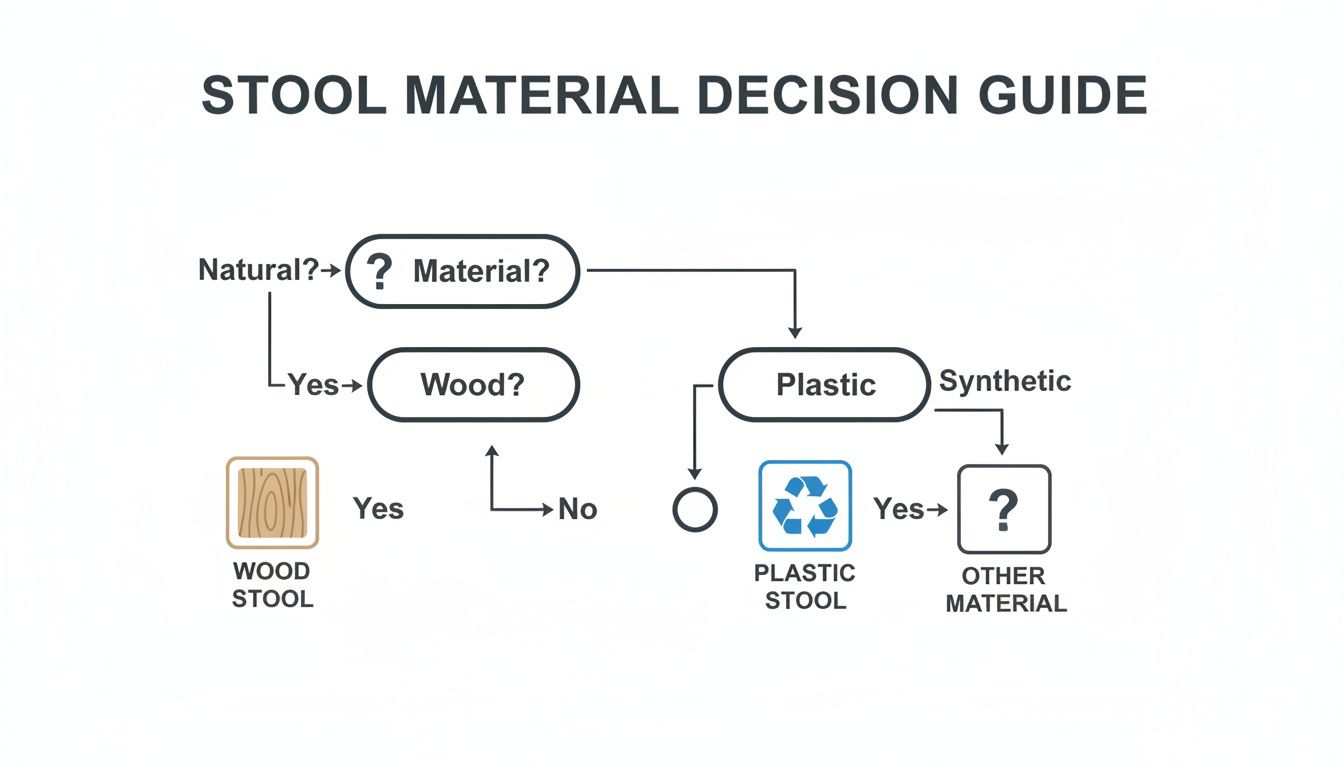
As you can see, factors like durability, how easy it is to clean, and aesthetics all play a part. It often comes down to balancing the timeless stability of wood with the lightweight convenience of plastic. Finding the perfect fit is all about balancing your child's needs, your kitchen's layout, and your family’s lifestyle.
How Kitchen Helpers Align With Montessori Principles
A kitchen helper does so much more than just solve the height problem. It’s a tool that actively supports a philosophy of child-led learning and independence, which is the heart of the Montessori method.
The whole idea is that children thrive when they have the right tools to do things for themselves. A learning tower is a perfect, real-world example of this principle in action. It transforms your kitchen from a "watch-only" zone into a hands-on learning lab for your little one.
By giving your child safe access to the counter, you’re empowering them to jump into what Maria Montessori called "practical life" activities. These are the simple, everyday tasks that help kids develop coordination, build confidence, and find their place in the family.
Practical Life In The Kitchen
When your toddler is standing securely in their kitchen helper, they're no longer just watching from the sidelines. They become an active participant, ready to take on simple, age-appropriate tasks that build real skills.
This is where the magic happens. Every little task becomes a valuable lesson.
- Washing Vegetables: This simple job teaches cause and effect (water cleans off dirt!) and helps develop fine motor skills as they handle the produce.
- Stirring Batter: Following a gentle rhythm with a spoon improves hand-eye coordination and introduces early science concepts, like how ingredients mix together.
- Arranging Snacks: Placing crackers or fruit on a plate helps them understand spatial awareness and patterns, fostering an early sense of order.
These aren't just chores; they are foundational experiences. They give a child a chance to truly contribute to the family's daily routine, which builds an incredible sense of competence and self-worth.
The Montessori approach is all about creating a "prepared environment" where children can safely explore and learn. A kitchen helper is a key piece in preparing your kitchen, making it an accessible and enriching space for your child.
Fostering Independence And Concentration
One of the big goals of a Montessori education is to help children develop deep concentration. When a child is fully absorbed in a task like pouring flour or spreading jam, they're building their ability to focus.
A secure kids step stool for kitchen provides the stable platform they need to lose themselves in their work, free from the distraction of wobbling or the fear of falling. This dedicated space allows them to take ownership of their tasks from start to finish.
Over time, this daily participation cultivates a natural sense of responsibility and independence. They learn, firsthand, that they are capable and important members of the household. If you’re interested in creating this kind of learning space, you can learn more about how a Montessori learning tower can become a cornerstone of your kitchen.
By aligning with these respected principles, a kitchen helper becomes so much more than a piece of furniture. It’s a powerful tool that nurtures your child’s natural desire to learn, contribute, and grow.
Maintenance Tips For Long-Term Safety And Use
A good kitchen step stool is built to survive years of enthusiastic "help," from messy baking projects to countless trips to the sink. But just like any well-loved piece of furniture, a little TLC goes a long way.
Think of it as a quick safety audit you do every few months. It only takes a few minutes, but that tiny bit of prevention ensures your stool is a safe and sturdy platform for every new adventure, keeping small issues from turning into big problems.
Simple Cleaning For Different Materials
Kitchen messes are just part of the deal, but cleaning your stool shouldn't be a chore. The best way to tackle spills and smudges really depends on the material.
- For Wooden Stools: A soft, damp cloth with a bit of mild soap and water is all you need. Harsh chemicals can damage the finish, so stick to the basics and wipe it dry right away to protect the wood.
- For Plastic Stools: These are the easiest of all. A quick wipe-down with a gentle, all-purpose cleaner or even a simple vinegar-and-water solution will get the job done perfectly.
Staying on top of cleaning also prevents that sticky buildup that can make surfaces surprisingly slick. For a deeper look at caring for different materials, our guide on toddler tower cleaning and stability has more detailed tips.
Performing A Regular Safety Audit
Beyond wiping it down, a quick physical check-up is the most important thing you can do. I recommend setting a reminder to inspect your stool every couple of months, paying extra attention to the parts that get the most use.
A consistent safety check transforms your step stool from a simple piece of furniture into a reliable safety device. It's the five minutes of prevention that protects your child during countless hours of use.
Your inspection should be a simple, three-point check to make sure the kids step stool for kitchen stays in great shape.
- Check All Hardware: Give the legs and railings a good wiggle. Do all the screws and bolts feel tight? All that toddler movement can slowly loosen things over time, so grab a screwdriver and tighten anything that feels even a little loose.
- Inspect for Damage: Run your hand over every surface, especially if you have a wooden model. You're feeling for any splinters, cracks, or chips that might have popped up from daily bumps and dings.
- Verify Anti-Slip Pads: Flip the stool over and look at the non-slip feet. Make sure they are clean, securely attached, and not worn down. These little pads are critical for preventing slides on slick kitchen floors.
A Few Common Questions
Diving into the world of toddler gear can feel like navigating a maze. When it comes to something like a kitchen step stool, you want to be sure you're getting something safe, practical, and truly useful for your family. We get it. Here are some of the questions we hear most often, with straight-up answers to help you out.
At What Age Can My Child Start Using A Kitchen Step Stool?
Most little ones are ready for a learning tower-style stool (the kind with safety rails) right around 18 months. The big clue is when they're steady on their feet and super curious about what you're doing on the kitchen counter. If they can stand confidently on their own, they're likely ready.
For the simpler, open-step stools without the full enclosure, it's usually best to wait until they're about 2.5 or 3 years old. By then, their balance and coordination are much more developed for that kind of open design. But here's the golden rule: no matter the age or the stool, nothing replaces constant adult supervision.
Are Wooden Or Plastic Step Stools Better?
Honestly, both have their perks. The best one for you really depends on what you value most in your home.
-
Wooden Stools: A solid wood stool, maybe made from birch or even eco-friendly bamboo, is a classic for a reason. They're heavier, which adds a ton of stability, and they can usually hold more weight. Plus, they just look great in a kitchen. They're built to last, but you'll want to be quick about wiping up big spills to keep the wood in top shape.
-
Plastic Stools: A good, BPA-free plastic stool is a champion of convenience. They're lightweight, an absolute breeze to clean, and often a bit easier on the wallet. Being able to easily move it from the kitchen to the bathroom is a huge win for many families. The trick is to find one with a really wide base and solid construction to make up for it being so light.
How Do I Ensure The Stool Won't Tip Over?
This is the big one, isn't it? Tip-overs are the number one concern, and preventing them starts with the stool's design. Your first line of defense is a wide, splayed base—look for feet that angle out wider than the tower itself. This creates a low center of gravity that's much harder to topple.
Next, flip it over and check for beefy, non-slip grips on every single foot. When it's time to use it, make sure it's on a flat, dry floor and pushed right up against the counter. It's also a good idea to teach your little helper early on not to lean way out to the side or try to rock it like a boat.
A "learning tower" design, with its four enclosed sides, gives you the most stability and peace of mind. It’s like a little cocoon that protects against both tipping and accidental tumbles.
Can A Kitchen Step Stool Be Used In The Bathroom Too?
Absolutely, a lot of them can pull double duty! But you'll want to be a bit strategic about it. Bathrooms are wet, slippery, and usually a lot more cramped than kitchens.
A smaller, lightweight plastic stool is often a fantastic choice for the bathroom. It’s not bothered by water and is easy to tuck out of the way. If you do bring your wooden learning tower in for toothbrushing time, just be mindful of puddles. Water can make the wood slippery and cause it to wear down over time. Before they climb up, always give the floor a quick wipe-down and make sure the stool's anti-slip feet have a good grip on your tile.
At Ocodile, we believe every "I want to help!" moment is a chance to connect and learn together. Our helpers are thoughtfully designed to give your child a secure and beautiful spot right beside you in the heart of your home.
Explore our collection of safe and stylish kitchen helpers at Ocodile