



A Guide to Preschool Classrooms Set Up for Success
Setting up a successful preschool classroom is about so much more than just arranging furniture. Think of the space itself as a 'third teacher'—an intentional environment that guides discovery, encourages independence, and makes every child feel safe and secure. The way you design the room directly shapes how children behave, engage, and learn.
Building Your Foundation for a Nurturing Classroom
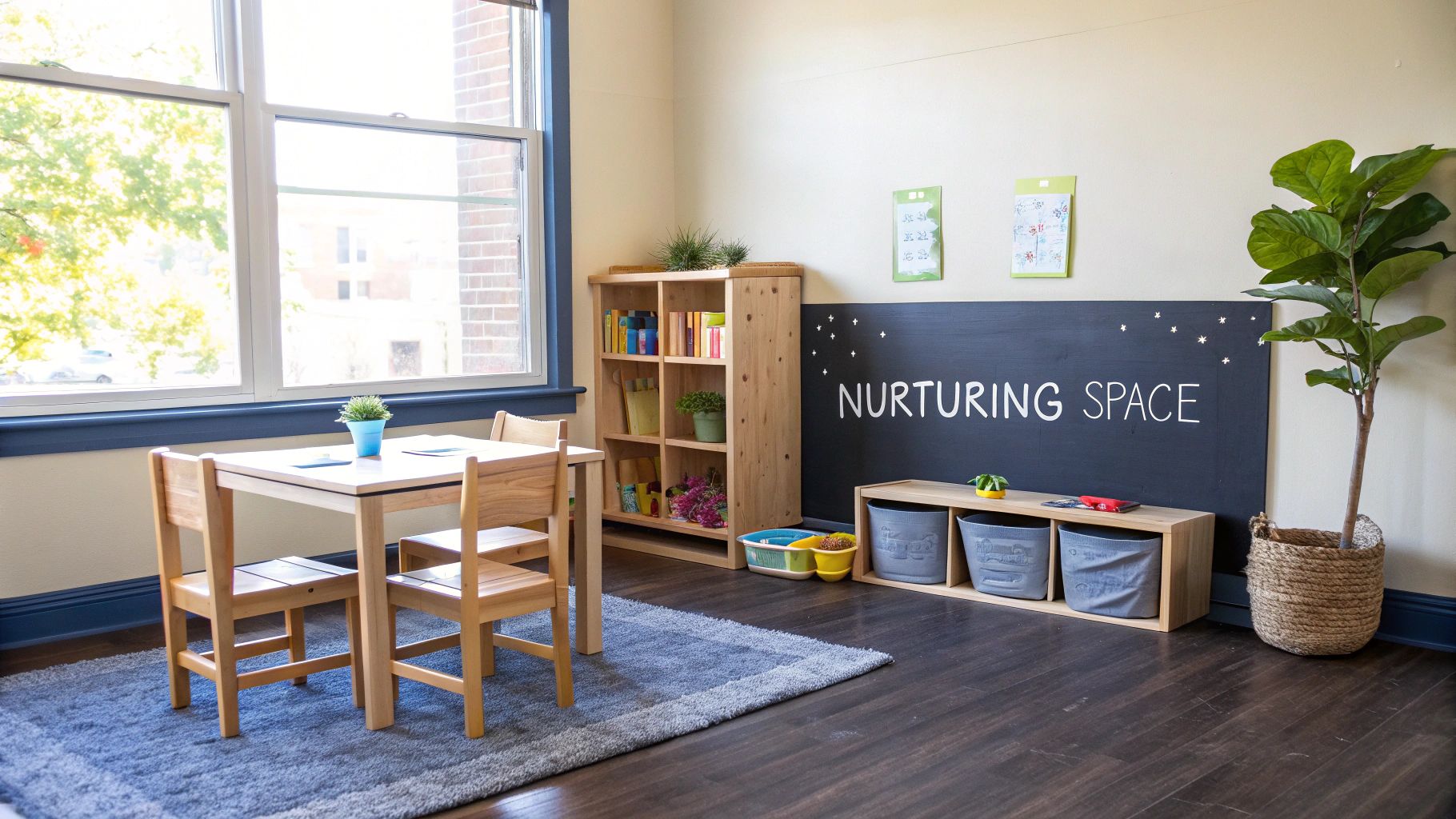
Before you even think about moving a single table or opening a box of toys, take a step back. The first move is to build a clear philosophy for your space. Your classroom isn't just a room; it's a dynamic, living tool that supports each child's unique journey. An effective setup is built on the simple truth that the environment itself can teach, guide, and nurture.
When children walk into a well-designed space, they instinctively get it. They understand how to interact with the different areas, which empowers them to make their own choices and builds their confidence from day one.
The Power of Intentional Design
Intentional design simply means every decision is made with a purpose. It’s all in the details—from the color you paint the walls to where you place the block center. It's about striking that perfect, harmonious balance between structured activities and free, child-led exploration.
The goal is to create a space that feels both exciting and predictable. This encourages curiosity while giving children the strong sense of security they need to thrive.
A thoughtfully planned environment can work wonders:
- Reduce challenging behaviors by minimizing long, open "runways" and creating clear pathways.
- Encourage teamwork by designing zones that naturally bring children together.
- Support diverse learning styles by offering a mix of active, noisy areas and quiet, focused nooks.
- Foster a real sense of belonging by proudly displaying the children's own artwork and photos of their families.
The demand for these kinds of thoughtful spaces is growing fast. In the United States, state-funded preschool enrollment hit a new peak in the 2022-2023 school year, with over 1.6 million children attending—a 7 percent jump from the year before. This growth means there's a bigger need than ever for high-quality classroom furnishings and tools that truly support learning. You can dig into the full report about these preschool enrollment trends on NIEER.org.
A classroom should be a place where children feel safe enough to explore, comfortable enough to take risks, and inspired enough to create. It’s their first community outside the home, and the physical space sets the tone for that entire experience.
Before we dive into the nitty-gritty of layouts and learning centers, it's helpful to ground our thinking in a few core principles. These ideas are the foundation of any great preschool classroom.
Core Principles of Preschool Classroom Design
| Principle | Why It Matters | Example in Practice |
|---|---|---|
| Child-Centered | The room should be designed from a child's perspective, not an adult's. | Low shelving, child-sized furniture, and materials displayed at their eye level. |
| Safety & Security | Children can't learn or explore if they don't feel physically and emotionally safe. | Clear walkways, rounded furniture corners, and cozy, quiet nooks for retreat. |
| Flexibility | A classroom's needs change daily and over the year. The space should adapt easily. | Lightweight furniture, movable storage bins, and multi-use areas. |
| Independence | The environment should empower children to do things for themselves. | Labeled bins with pictures, accessible art supplies, and low hooks for coats. |
| Inspiration | The space should spark curiosity and invite children to play, create, and discover. | Rotating materials, natural elements (plants, shells), and displays of beautiful art. |
Keeping these principles in mind will help you make purposeful decisions as you start arranging your space, ensuring it truly serves the children who will call it their own.
Laying the Groundwork for Learning
The physical layout of your room has a huge impact on how children engage with materials and with each other. A cluttered, chaotic space can easily lead to overstimulation and distraction. On the flip side, an organized and accessible room promotes focus and purpose.
The key is to try and see the room through a child's eyes.
Are the shelves low enough for them to reach their favorite puzzle without asking for help? Are the learning centers clearly defined so they know where to build with blocks versus where to paint? These small details make a world of difference in a child's ability to navigate their day successfully. By prioritizing safety, accessibility, and organization, you’re laying the groundwork for a thriving learning community where every child can flourish.
Mapping Out Your Classroom Layout and Flow
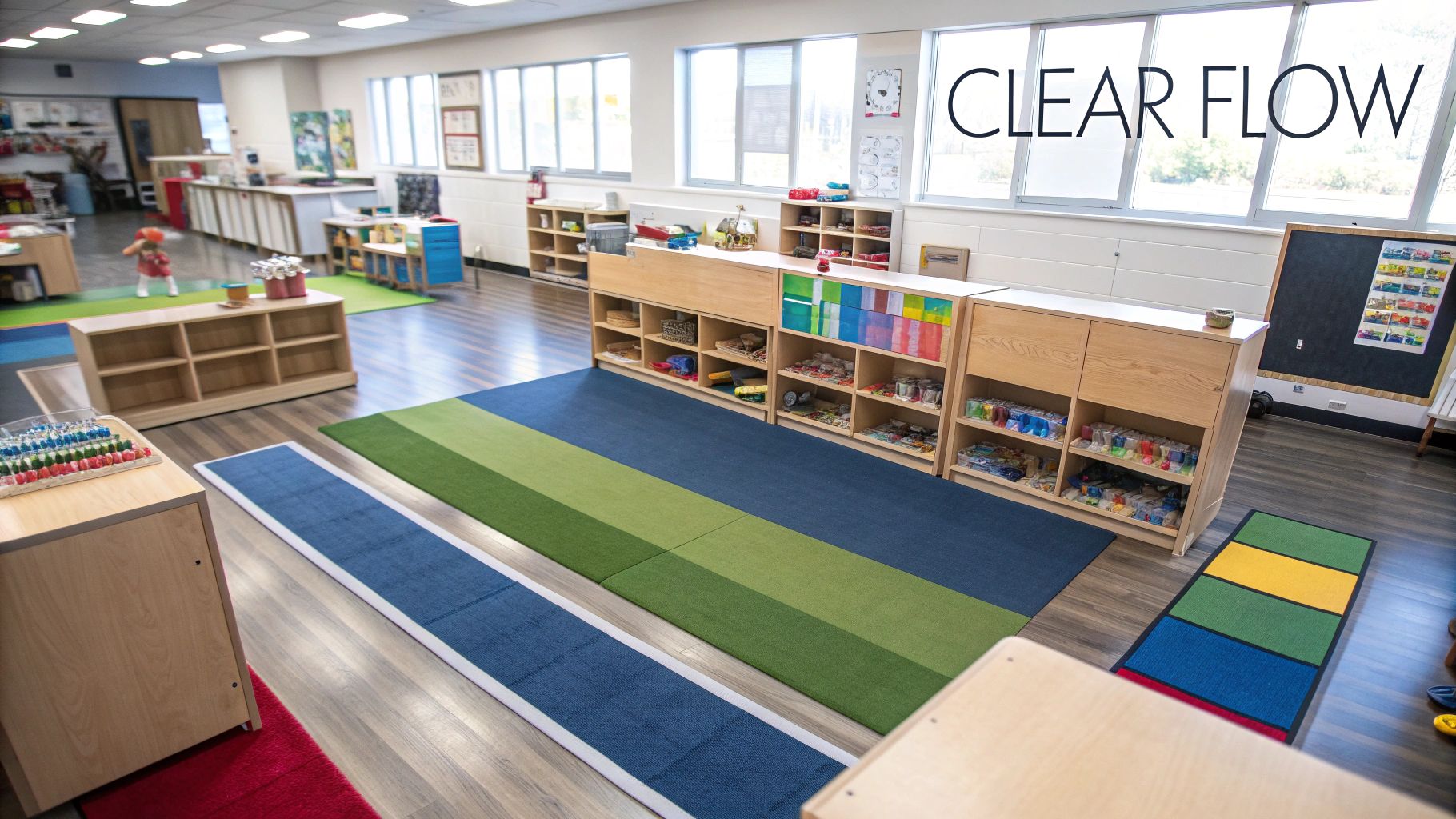
A great preschool classroom just feels right. Children move naturally from one activity to the next, the energy is purposeful, and the chaos is kept to a minimum. Before you even think about bringing in furniture, your most powerful tool is a simple piece of paper and a pencil.
Sketching out your room is the first real step in your preschool classrooms set up. This isn't about architectural perfection—it's about creating a functional map for learning.
Start by drawing the basic shape of the room and mark all the things you absolutely can't change:
- Doors and Windows: Pay attention to which way the doors swing open so you don't accidentally block them.
- Sinks and Water Sources: These are natural magnets for messy art projects or sensory tables.
- Electrical Outlets: You'll need these for listening centers, tablets, or any tech you use.
- Built-in Shelving or Cabinets: These are permanent fixtures you’ll have to work around.
Once you have these non-negotiables down, you can start thinking about the most critical element of your design: the flow.
Creating Clear and Safe Pathways
The "flow" is just how everyone, kids and adults, moves through the space. A well-planned flow prevents those frustrating "traffic jams," especially during cleanup or circle time. It also helps curb running by breaking up long, open runways.
Think of these pathways as the hallways of your classroom. They should be wide enough for at least two kids to pass each other without bumping into furniture or friends. Using low shelves or even the edge of a rug to define these paths helps guide children without making the room feel boxed in.
A classroom with good flow feels calm, even when it’s buzzing with energy. Kids know where to go and how to get there, which builds their independence and means you spend less time redirecting traffic.
This kind of thoughtful planning is more important than ever. As global preschool enrollment grows—with about three out of five children worldwide attending as of 2020—so does the need for high-quality, child-centered spaces. This shift is a huge opportunity to create truly amazing educational environments.
Strategically Zoning for Quiet and Active Play
One of the best tricks for managing classroom energy is to separate the quiet activities from the loud, active ones. It’s a simple concept, but it can dramatically improve focus and cut down on distractions for everyone.
Think about which centers naturally generate the most noise and movement. The block area, dramatic play corner, and music station are usually high-energy zones. The reading nook, puzzle table, and writing center, on the other hand, need a calmer atmosphere.
Zoning Best Practices
- Place quiet zones away from the door. This minimizes disruptions from people coming and going.
- Use furniture as a buffer. A sturdy, low bookshelf creates a fantastic sound and visual barrier between a boisterous block city and a peaceful library corner.
- Group similar activities. For instance, putting the art easel near the sink just makes sense for cleanup. The sensory table can live in this "messy" zone, too.
This intentional separation lets different kinds of learning happen at the same time without getting in each other's way. A child can be completely absorbed in building a magnificent tower while another is peacefully flipping through a book just a few feet away. For more on this, explore our detailed guide on preschool room design ideas.
Using Visual Cues to Define Spaces
Kids thrive on predictability, and visual cues are their best friends. You don’t need tall walls to create distinct learning centers. In fact, an open layout with clear visual dividers is often much better because you can easily supervise the whole room.
Here are a few simple ways to define your zones without closing them off:
- Use Area Rugs: A colorful rug can instantly anchor a space, like your circle time area or a cozy reading nook.
- Arrange Low Shelving: Position bookshelves and cubbies to form gentle "corners" or boundaries for different centers. This keeps things feeling open while still signaling that you're entering a new zone.
- Color-Code: You could use blue bins and a blue rug for the reading area, and yellow accents for the construction zone. It's a simple, non-verbal way to organize.
- Hang Mobiles or Fabric: Draping some light fabric from the ceiling or hanging a mobile can visually lower the ceiling, creating a cozier, more enclosed feeling for a quiet area.
By mapping your layout, creating smart pathways, and zoning your activities, you turn an empty room into a launchpad for learning that supports every child's journey.
Designing Engaging Learning and Play Zones

Alright, you've got the basic classroom layout mapped out. Now for the really fun part: breathing life into your learning centers. These dedicated zones are the absolute heart of a successful preschool classrooms set up. This is where curiosity sparks and the real magic of learning through play happens.
Think of each center as an invitation. It's a carefully arranged space that whispers to a child, "Come over here and explore, build, create, or imagine." Your job is to make those invitations impossible to resist.
The Essential Block and Construction Zone
The block area is so much more than a pile of wood. It's a miniature lab for physics, engineering, problem-solving, and teamwork. When children build together, they're negotiating, figuring things out, and getting a very real lesson in balance and gravity.
To make this zone truly dynamic, you need to go beyond the standard set.
- Mix up your blocks: Of course, have the classic wooden unit blocks. But also bring in some big foam blocks for ambitious structures and interesting shapes like arches or cylinders.
- Add storytelling props: A few small wooden people, animals, cars, and road signs can transform a simple tower into a bustling city or a hidden castle in an instant.
- Bring in natural elements: Baskets filled with smooth stones, "tree cookies" (wood slices), or seashells add a wonderful textural element to their creations.
Keep everything organized on low, open shelves with picture labels. This empowers kids to find what they need and—just as important—to clean up on their own.
Fueling Imagination in Dramatic Play
This is the zone where children make sense of their world. By role-playing as chefs, doctors, or parents, they process social cues, build empathy, and grow their vocabulary. The key here is flexibility; let this area evolve with the children's interests.
One month it might be a veterinarian's office, the next a buzzing pizza shop.
- Start with a core set: A child-sized kitchen, dolls, a variety of dress-up clothes, and play food are the perfect foundation.
- Rotate themed props: For a vet clinic, add stuffed animals, toy stethoscopes, and clipboards. For a grocery store, gather some empty food boxes, a toy cash register, and reusable shopping bags.
You'll get an amazing view into their social-emotional development here. You'll see them practicing sharing, taking turns, and figuring out conflicts as they navigate their little worlds. For more fantastic ideas, check out these daycare room setup ideas that you can easily adapt for any play zone.
The Creative Arts and Sensory Station
Art and sensory play are absolutely critical for developing fine motor skills and encouraging self-expression. A well-stocked art station gives children the freedom to create without needing to ask for help every five minutes.
If you can, try to place your art easel and sensory table near a sink. Trust me, it makes cleanup a whole lot easier!
Art Station Must-Haves
- Accessible Supplies: Keep paper, crayons, markers, and paintbrushes in low, open containers they can reach themselves.
- Recycled Materials: A bin of cardboard tubes, yarn bits, and fabric scraps encourages creativity far beyond just drawing.
- A Drying Space: Set up a designated rack or a simple clothesline with clips to proudly display their masterpieces.
The sensory table is a true powerhouse for both learning and self-regulation. Filling it with sand, water, or even dry pasta provides tactile experiences that can be incredibly calming for young children.
The goal of learning centers is not to keep children busy, but to provide rich, open-ended environments that provoke thinking, wonder, and joy. The materials themselves should do most of the teaching.
Creating a Cozy Reading and Quiet Corner
Every classroom needs a peaceful retreat. A quiet corner offers that much-needed space for a child who feels overwhelmed or simply wants a moment alone. It’s also the perfect home for your classroom library.
Make it cozy with soft pillows, a small rug, and maybe a comfy, child-sized chair. Use a forward-facing bookshelf to display a diverse selection of high-quality picture books, and be sure to rotate them regularly to keep things fresh. As you design these spaces, think about including special areas to help children with their big feelings, like these wonderful calm down corner ideas.
A well-designed quiet corner is more than a spot for reading; it's a safe haven that supports emotional well-being. By thoughtfully setting up these essential zones, you create a classroom that meets the diverse needs of every child and makes learning an adventure they can't wait to begin.
Choosing Safe and Child-Friendly Classroom Furniture
The furniture in your classroom is the hardworking foundation for every single activity, from messy art projects to quiet story time. It’s so much more than just tables and chairs; it’s the structure that supports safe exploration and helps little ones become more independent. Getting this part right is a huge step in a successful preschool classrooms set up.
When you're picking out furniture, safety has to be the number one priority. This is not the place to cut corners. Look for pieces with smooth, rounded edges to keep bumps and scrapes to a minimum. Finishes should always be non-toxic and lead-free, and every item needs to be incredibly sturdy to prevent tipping, even when a curious toddler decides to test its limits.
Prioritizing Size and Ergonomics
Furniture that fits is furniture that actually works. Child-sized tables and chairs are non-negotiable. They allow children to sit with their feet flat on the floor and their elbows resting comfortably at table height. This kind of ergonomic support is surprisingly crucial for everything from developing fine motor skills during drawing to simply eating a snack without frustration.
Open, low shelving is another absolute must-have. When kids can see and reach toys, books, and art supplies on their own, it sends a powerful message: "This space belongs to you." This simple act of making materials accessible empowers them to make choices, take initiative, and, just as importantly, learn to put things away when they're done.
The best classroom furniture doesn't just fill a space; it actively helps children become more capable and self-reliant. It’s a silent partner in teaching responsibility and building confidence.
Don't forget to think about the overall scale of your classroom. International data shows that classroom setups can vary wildly based on regional standards. Across OECD countries, the average pre-primary classroom has about 14 children per teacher, which is a good number to keep in mind when figuring out how many tables, chairs, and shelves you'll need. You can find more insights about global early childhood education systems on OECD.org.
Essential Preschool Furniture Checklist
To help you get started, here's a quick guide to the essential furniture you'll want to consider for each of your key learning zones. Think of this as your starting point for building a functional and inviting space.
| Learning Zone | Essential Furniture | Key Features to Look For |
|---|---|---|
| Art & Creativity | Child-sized tables, easels, open shelving for supplies | Easy-to-clean surfaces (laminate or sealed wood), sturdy construction |
| Reading Nook | Low bookshelves, comfy seating (cushions, bean bags, small sofa) | Soft textures, forward-facing book displays to entice readers |
| Dramatic Play | Play kitchen, small table & chairs, doll furniture, storage bins | Durable wood or high-quality plastic, realistic details to inspire imagination |
| Blocks & Building | Low, wide shelves, a durable rug or building mat | Shelves with deep compartments, sturdy enough to hold heavy block sets |
| Whole Group Area | Large area rug, teacher's rocking chair, circle time seating | Clearly defined space, comfortable for both children and adults |
Remember, this list isn't exhaustive, but it covers the foundational pieces that will support a wide range of developmental activities in your classroom.
Functionality Meets Durability
Let's be honest, preschool furniture takes a beating. Durability is a huge factor. Solid wood pieces or high-quality, sustainably sourced wood composites are often a smart, long-term investment. They can handle years of building, climbing, and daily wipe-downs.
Think about versatility, too. Can a small table be used for puzzles one day and a sensory bin the next? Can lightweight stools be easily moved for a spontaneous group activity? Multi-functional pieces not only stretch your budget but also let you adapt the classroom environment as your students' interests change.
Exploring alternative classroom seating strategies can also be a game-changer. Options like wobble stools or floor cushions can provide valuable sensory input for kids who need it and help create a more dynamic learning space.
Smart Storage as a Classroom Tool
Effective storage is the secret weapon for a calm, organized classroom. Too much clutter can be really overstimulating for young children, so your storage solutions should be just as intentional as your learning centers.
Here are a few tips I've learned over the years:
- Use clear bins. This lets children see what's inside without having to dump everything on the floor. It makes choosing materials and cleaning up so much easier.
- Label everything with pictures and words. This is fantastic for pre-readers. It helps them find what they're looking for and reinforces early literacy skills every time they put something away.
- Choose shelves with backs. This simple feature is a lifesaver. It prevents toys and supplies from getting lost behind the unit, keeping your classroom tidier and safer.
By selecting furniture with these ideas in mind, you’re creating an environment that is not only safe and functional but also deeply respectful of a child's developmental needs. Many of these concepts align with specific educational philosophies. If you're interested in a particular approach, you can learn more about choosing furniture for a Montessori classroom and see how these principles are put into practice.
Bringing Your Classroom Vision to Life
Okay, you’ve got the basics down—layouts, learning zones, and child-safe furniture. Now for the fun part: putting all those pieces together. This is where your plans on paper transform into a real, functional space where kids can learn and discover.
Let's shift from theory to practice and see how a well-designed preschool classroom setup actually supports the rhythm of a busy day. We’ll walk through a couple of sample floor plans to see exactly how thoughtful placement creates a calm, engaging, and intuitive space for children.
Sample Floor Plan A: Small Classroom
Even if you’re working with limited square footage, you can create an incredibly effective learning environment. The trick in a smaller room is to rely on multi-functional furniture and clear visual dividers that define spaces without making things feel cramped.
Here’s how a smaller classroom can really shine:
- Entrance and Cubby Area: Placing this right by the door makes for smooth morning drop-offs and afternoon pick-ups. Low benches for putting on shoes and clearly labeled cubbies help kids feel independent from the moment they walk in.
- Quiet and Active Zone Separation: A large, low bookshelf is your best friend here. It can act as a strategic buffer. On one side, tuck a cozy reading nook into a quiet corner with soft pillows and a forward-facing book display. On the other, the block and dramatic play centers have room to breathe.
- Central Group Area: A big, circular rug right in the middle of the room anchors the space. This flexible spot is perfect for morning meetings, story time, or music and movement, bringing everyone together before they break out into smaller groups.
- Integrated Art and Sensory Zone: Position the art easel and sensory table near the classroom sink. Trust me, this practical placement contains the inevitable messes and makes cleanup a seamless part of the activity itself.
This handy visual breaks down the decision-making process for choosing furniture that is both safe and functional for any classroom.
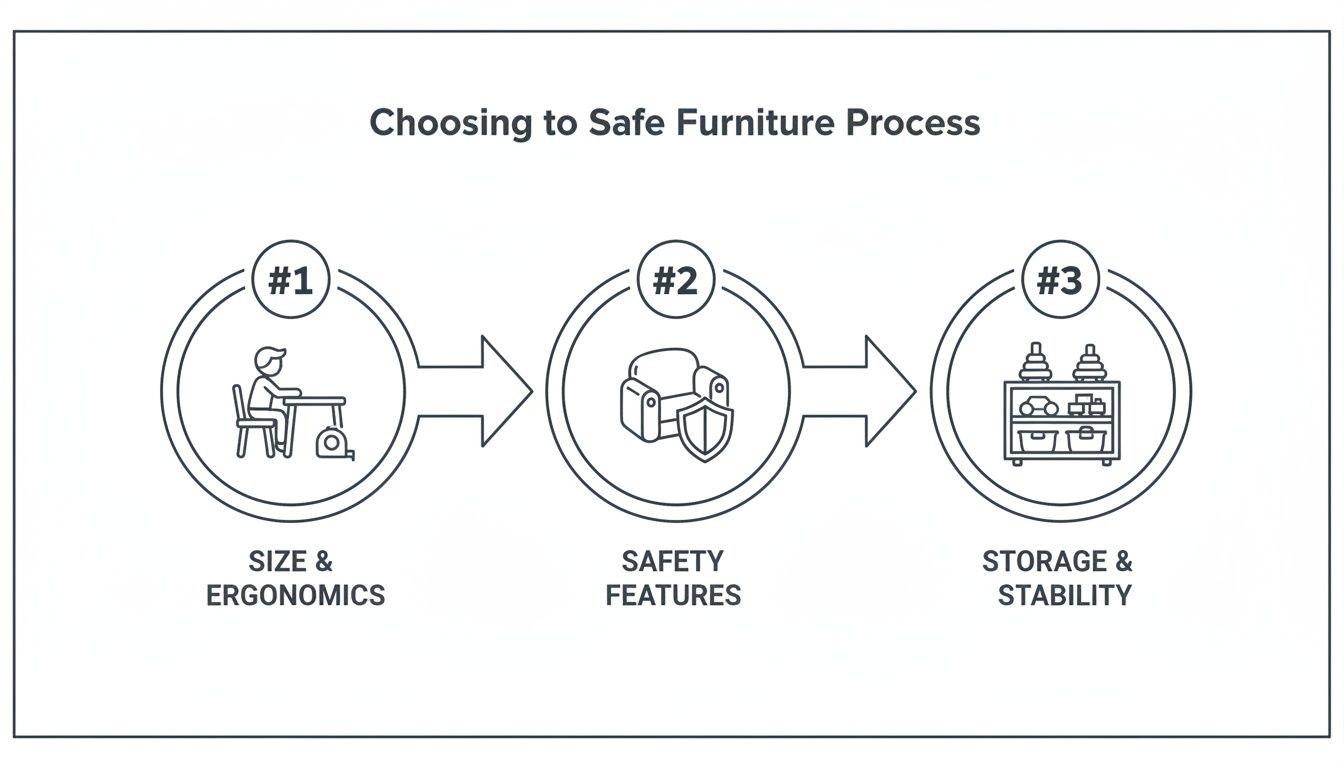
As you can see, it all starts with making sure furniture is the right size for little bodies, then moves to non-negotiable safety features like rounded corners, and finishes with practical things like storage and stability.
Sample Floor Plan B: Large Classroom
A bigger room offers more flexibility, but it also comes with the challenge of preventing it from feeling like a wide-open gymnasium. The goal is to carve out intimate, well-defined learning pockets within the larger space.
With more room to play with, we can expand on the core ideas:
- Dedicated Welcome Area: The entrance can become a true welcoming hub, with a parent information board and displays of the children’s latest projects.
- Expanded Learning Centers: Your block area can be much larger, with dedicated shelves for different types of building materials. The dramatic play zone might even include a small loft to add a vertical dimension to play.
- Quiet Zone Cluster: Group the library, puzzle table, and a designated calm-down corner together, far from the main traffic flow. This creates a genuine "quiet wing" of the classroom where children can focus without constant disruption.
- Science and Discovery Center: A dedicated table near a window is the perfect spot for science and nature. It allows for growing plants and observing objects with natural light, sparking curiosity about the world outside.
A classroom's design should tell a story about what is valued within its walls. When a space is organized, beautiful, and filled with engaging materials, it communicates to children that their work—their play—is important.
A Day in the Life of the Classroom
Picture this: the morning starts on the circle time rug, where children greet each other and hear about the day's plans. Afterwards, they move easily into "free choice" time. Because the pathways are clear and the shelves are visibly labeled, they can choose an activity without needing to ask for help.
One child might head to the art easel, while another joins two friends building a castle in the block corner. A fourth might be curled up with a book in the quiet nook. The thoughtful separation of zones means the focused reader isn't disturbed by the enthusiastic builders.
When it's time for cleanup, the organized storage system makes it easy for children to put things away themselves. Lunch happens at tables that are easy to wipe down, and for naptime, cots can be brought into the open central space. The classroom fluidly transitions through each part of the day, with the physical environment supporting routines instead of getting in the way. This is how a simple blueprint helps you create a space that truly works.
Got Questions About Setting Up Your Preschool Classroom?
Jumping into setting up a preschool classroom for the first time can feel like a huge puzzle. Even for veteran teachers, a new room or a fresh group of little ones brings its own set of challenges. Let's walk through some of the most common questions that pop up, with real, practical answers.
Think of this as your cheat sheet for making smart, confident choices that will make life easier for you and your students. A little bit of thoughtful planning now saves a whole lot of chaos later.
How Can I Set Up a Preschool Classroom on a Tight Budget?
A warm, inviting, and effective classroom absolutely does not need a giant budget. The real secret is getting resourceful and being smart about where your money goes. Honestly, your creativity is your best friend here.
First, invest in a few high-quality, core items that are non-negotiable for safety and daily function, like sturdy, child-sized tables and chairs. After that, it’s time to get creative.
- Make it multi-functional: Low, solid bookshelves are perfect for naturally dividing your learning centers. A simple plastic bin can become an amazing sensory table in minutes.
- Hunt for second-hand treasures: Thrift stores and online community marketplaces are goldmines for durable wooden toys, wicker storage baskets, and even kid-sized furniture.
- DIY your materials: You can create your own fantastic collection of loose parts with natural items like pinecones, smooth stones, and wood slices. And never underestimate the power of cardboard boxes—they can become a rocket ship, a castle, or anything else kids can dream up in the dramatic play area.
When you focus on versatile pieces and pre-loved finds, you can build a rich, engaging environment without breaking the bank.
What Is the Best Way to Organize Toys to Avoid Clutter?
Clutter is the enemy of a calm, focused classroom. The trick to keeping things organized is to create a simple system that actually empowers the children to help with cleanup. The golden rule is simple: a place for everything, and everything in its place.
Use low, open shelving so the kids can clearly see their choices. This does two things: it encourages them to make independent decisions and makes it way easier for them to put things back where they belong when they're done.
An organized classroom sends a powerful, non-verbal message to children: their materials are valuable and deserve to be cared for. It also cuts down on overstimulation, helping them focus more intentionally on their play and learning.
Another game-changing strategy is to start a toy rotation. Don't put everything out at once. Keep a limited number of items on the shelves and store the rest. Every few weeks, swap them out. This simple move keeps kids excited and engaged with "new" materials, drastically reduces the daily mess, and makes cleanup manageable for everyone.
How Often Should I Change My Classroom Layout?
Consistency is so important for young children. Your main layout—the placement of your core quiet and active zones—should stay relatively stable for the school year. This predictability gives them a structure they can count on, which helps them feel secure. Making big, constant changes can be really confusing and disruptive for them.
But that doesn't mean your room should feel static! While the foundational layout stays the same, you should be regularly refreshing the materials inside those zones. A good rhythm is to update your learning centers every 2 to 4 weeks, guided by the children's new interests or a new theme you're exploring.
You might make a minor tweak to the layout once or twice a year to fix a nagging traffic flow problem or to fit in a new piece of equipment. The goal is to keep the environment responsive and stimulating without taking away the stability they need.
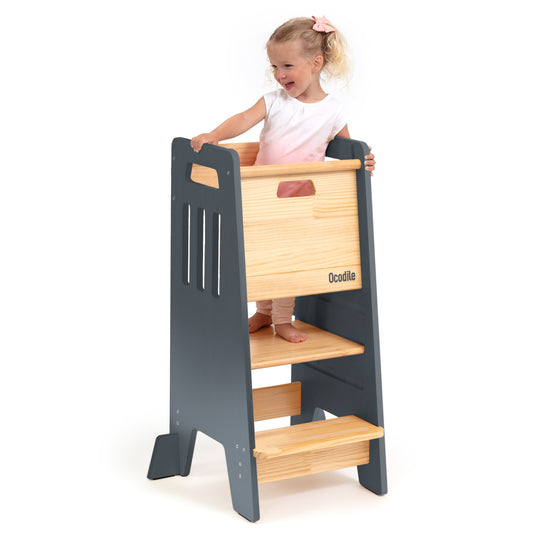
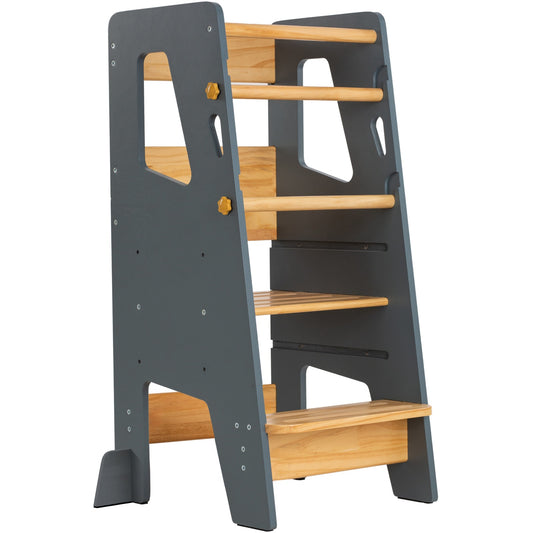
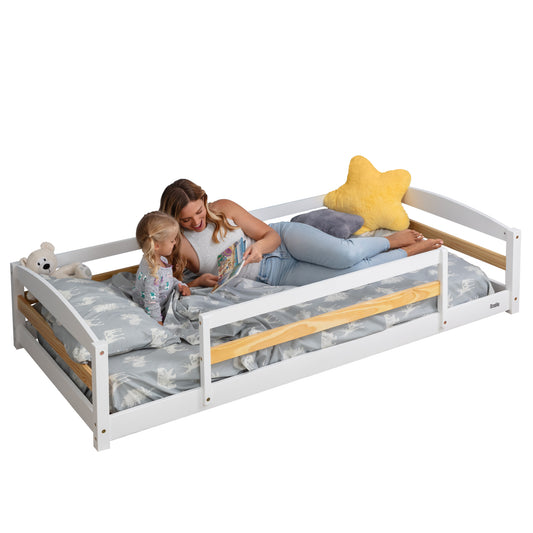
At Ocodile, we believe the right furniture is the foundation of a safe, inspiring learning space. Our child-friendly standing towers, floor beds, and step stools are designed to build independence and encourage safe exploration, turning everyday moments into learning opportunities. Discover how our thoughtfully crafted pieces can help bring your classroom vision to life at https://ocodile.com.