



8 Fun and Engaging Tummy Time Activities for Your Baby in 2025
Tummy time is a cornerstone of your baby's early physical development, strengthening their neck, shoulders, and back muscles while setting the stage for major milestones like rolling, crawling, and eventually walking. Yet, many parents find it challenging when their little one fusses or resists. The secret to successful tummy time isn't about forcing longer sessions; it's about making them engaging, safe, and fun. To truly transform tummy time into a cherished routine, it's essential to understand the optimal timing; explore our comprehensive guide on when to start tummy time for new parents.
This guide moves beyond the basics, offering a curated roundup of eight diverse and stimulating tummy time activities designed to capture your baby's curiosity and support their developmental journey. We'll explore age-appropriate variations, essential safety practices, and ways to integrate beautifully designed, child-friendly furniture to create a secure and enriching environment for exploration and growth. You'll find practical, actionable ideas from mirror play and textured surfaces to interactive games that make every session a valuable opportunity for bonding and building strength. Get ready to turn a potentially tricky task into one of the most rewarding parts of your day.
1. Mirror Play and Self-Discovery
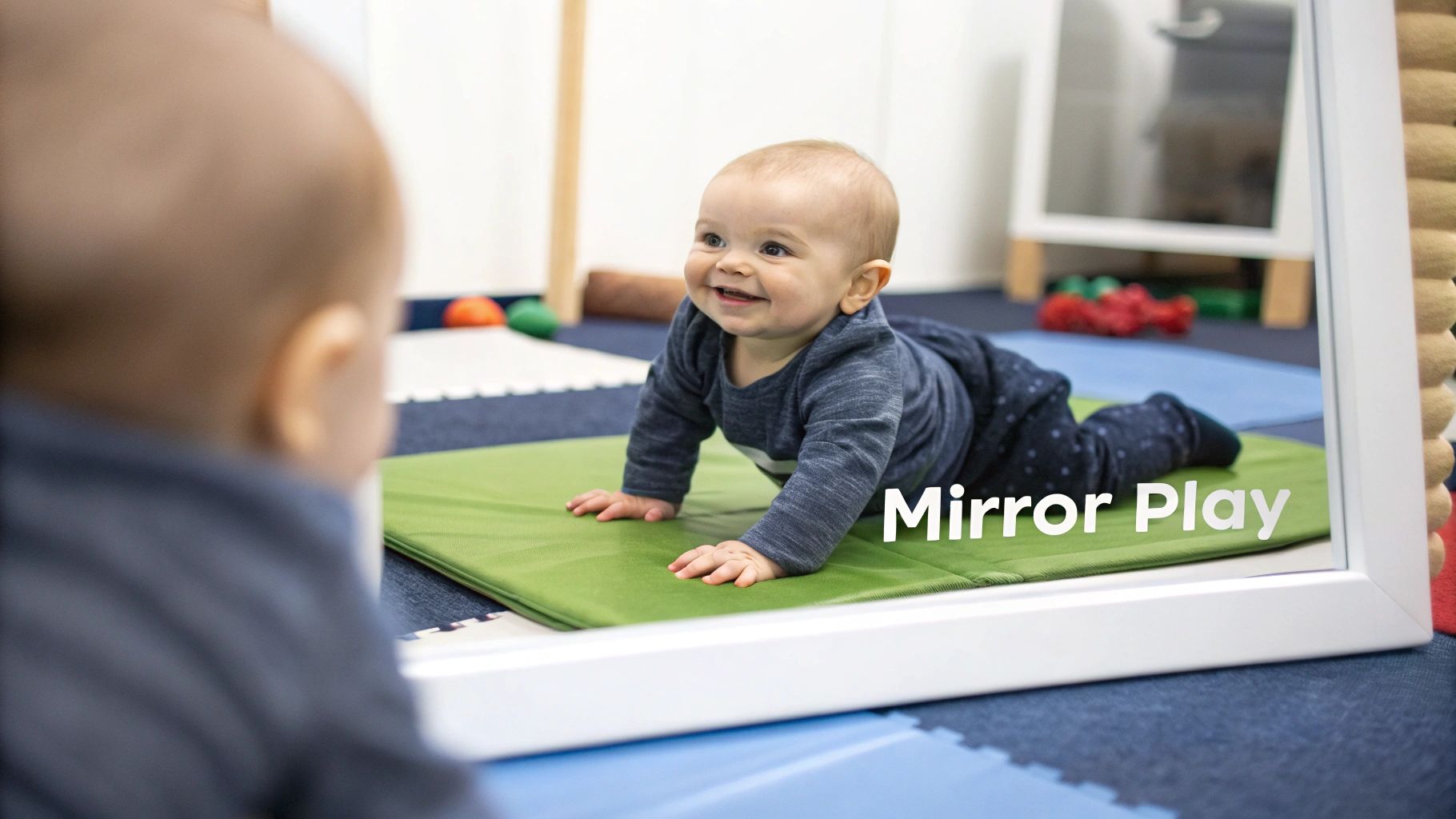
Mirror play is a fantastic tummy time activity that transforms a simple exercise into an interactive session of self-discovery. By placing a baby-safe mirror at your infant's eye level, you create a captivating focal point. Babies are naturally drawn to faces, and their own reflection provides endless fascination, encouraging them to lift and turn their heads to get a better look.
This simple yet effective technique supports crucial developmental milestones. As your baby gazes at their reflection, they are actively strengthening their neck, shoulder, and upper back muscles. This visual engagement also stimulates cognitive development, laying the groundwork for self-awareness. The "other baby" in the mirror becomes a delightful playmate, often extending the duration of tummy time sessions.
Why It Works
The effectiveness of mirror play is rooted in a baby's innate curiosity and social nature. Initially, your baby won't recognize the reflection as their own, but they will be intrigued by the movement and facial expressions. This interaction builds foundational skills for social and emotional development. Montessori-inspired environments often incorporate low-level mirrors to foster independence and self-observation from an early age, a principle easily applied at home. This activity is a simple way to make tummy time more engaging and less of a chore. If you're interested in tracking these advancements, you can find more information about key infant achievements. Learn more about childhood development milestones on ocodile.com.
How to Implement Mirror Play
To get started with this tummy time activity, follow these simple steps for a safe and effective setup:
- Choose a Safe Mirror: Always use a shatterproof, baby-safe acrylic mirror. These are lightweight and specifically designed to withstand bumps without breaking.
- Position for Success: Place the mirror on the floor, propped securely against a wall or a sturdy object, about 12-18 inches from your baby's face. Ensure it's at their direct eye level when they are on their tummy.
- Create a Safe Zone: Set up on a padded play mat and clear the surrounding area of any potential hazards. Make sure the mirror is on a non-slip surface so it doesn’t slide during the session.
- Start Small: Begin with short sessions of 3-5 minutes, a couple of times a day. As your baby's strength and interest grow, you can gradually increase the duration.
2. Textured Surface Exploration
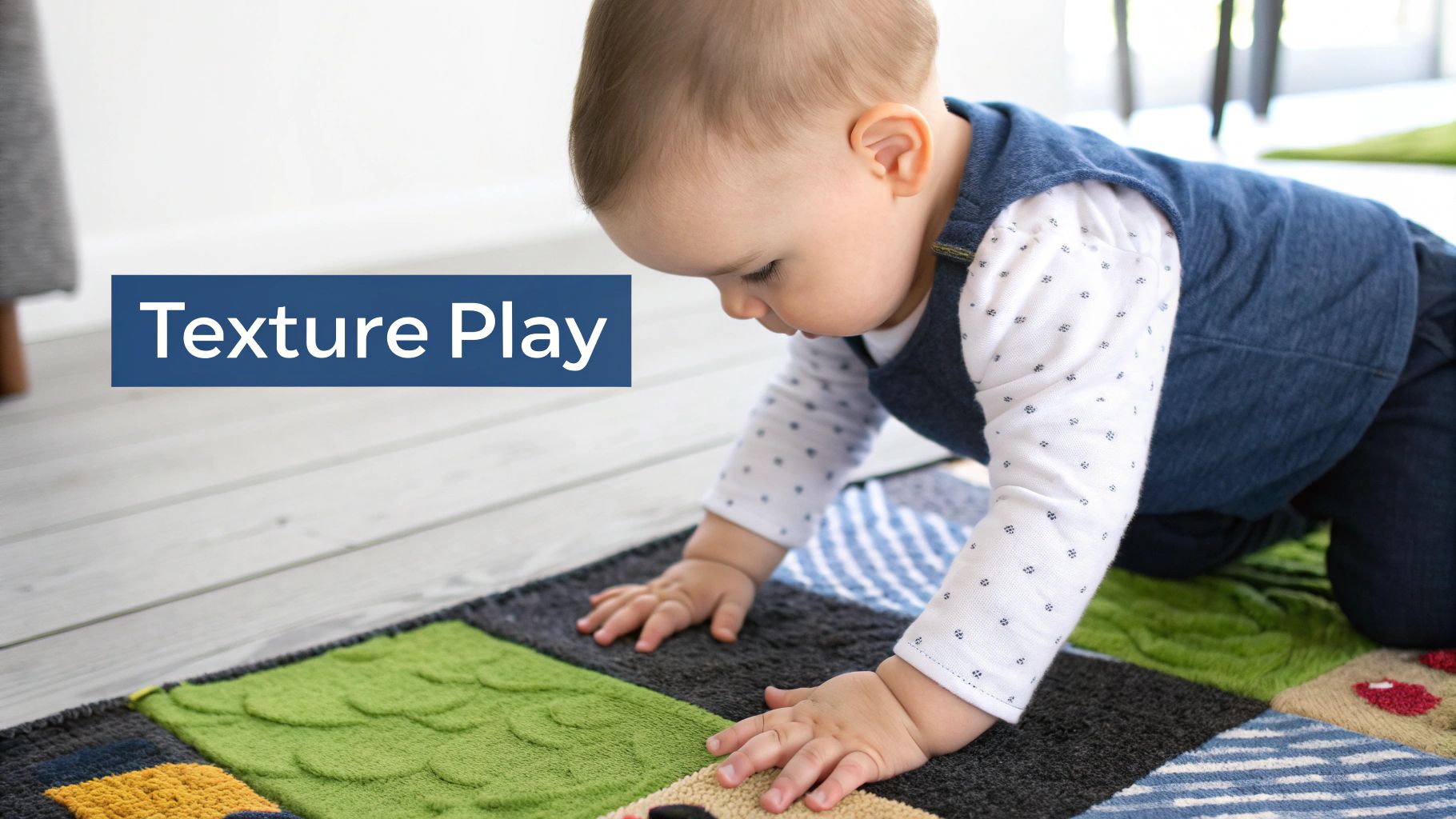
Creating a diverse sensory landscape for your baby transforms tummy time from a simple physical exercise into a rich tactile adventure. By introducing various safe textures, you encourage your infant to explore with their hands, mouth, and body, stimulating nerve endings and promoting crucial sensory processing skills. This activity allows them to engage with their environment in a meaningful way.
This method is one of the most effective tummy time activities for cognitive growth, as it builds neural pathways related to touch and texture discrimination. As your baby pushes up and shifts their weight to feel different materials like soft cotton, bumpy corduroy, or smooth silk, they are simultaneously strengthening their neck, arms, and core muscles while making important sensory discoveries.
Why It Works
Textured surface exploration leverages a baby's natural curiosity to touch and feel the world around them. This hands-on learning is a core principle of Montessori methodology, which emphasizes child-led exploration and sensory engagement. Providing a variety of textures helps your baby understand different properties of objects, which is a foundational concept for later learning. This sensory input is not just engaging; it is vital for brain development, helping to organize and interpret information from their surroundings. Brands like Lovevery and Wee Gallery have popularized sensory play products, but a DIY approach is just as effective.
How to Implement Textured Surface Exploration
Setting up a sensory-rich tummy time area is simple and can be customized to your baby’s preferences. Follow these tips to get started:
- Use a Sensory Mat: Invest in a multi-textured play mat or create your own by securely stitching swatches of baby-safe fabrics (like silk, corduroy, and soft fleece) onto a blanket.
- Introduce Natural Materials: Offer safe, natural elements like a large, smooth, untreated wooden ring or a soft, organic cotton cloth for your baby to feel.
- Prioritize Safety: Ensure all items are free of small parts, loose threads, or sharp edges. All materials should be non-toxic and large enough that they cannot be swallowed.
- Rotate Textures: Keep the experience new and exciting by rotating the available textures every week or two. This maintains your baby's interest and extends the duration of tummy time sessions.
3. Tummy Time with Music and Sound Stimulation
Introducing soft music and gentle sounds during tummy time creates a rich, multisensory experience that pairs auditory development with physical strengthening. This approach uses sound to engage your baby’s senses, transforming a standard exercise into an immersive and calming activity. The right auditory stimulation can capture their attention, encouraging them to stay on their tummy longer and explore their surroundings.
This method supports key developmental areas beyond just muscle building. As your baby listens to different sounds, they begin to develop listening skills and sound discrimination. When musical toys are placed just within reach, it motivates them to reach, grasp, and interact, which strengthens fine motor skills and hand-eye coordination. This makes it one of the most versatile tummy time activities for holistic development.
Why It Works
The effectiveness of using music and sound lies in its ability to stimulate multiple parts of the brain simultaneously. Calming genres like classical music or gentle nature sounds can create a serene atmosphere, making tummy time a more positive and less stressful experience for a fussy baby. Conversely, soft, interactive musical toys provide direct cause-and-effect learning; when your baby bats at the toy, it makes a sound, teaching them about their ability to influence their environment. This auditory feedback keeps them engaged and curious.
How to Implement Music and Sound Stimulation
To incorporate this tummy time activity safely and effectively, follow these simple guidelines:
- Choose Appropriate Sounds: Opt for calming genres like classical, lullabies, or ambient nature sounds. Avoid loud, overstimulating, or jarring music.
- Maintain a Safe Volume: Keep the sound level low, around a conversational volume (50-60 decibels), to protect your baby's sensitive hearing. The music should be in the background, not overwhelming.
- Use Interactive Toys: Place soft, infant-safe musical toys, like those from Manhattan Toy Company, just within your baby's reach to encourage interaction. High-contrast musical toys can also provide valuable visual stimulation.
- Keep Sessions Focused: Limit dedicated sessions with music to about 10-15 minutes to prevent overstimulation. Rotate different sounds and songs to keep the experience fresh and engaging.
4. High-Contrast Visual Cards and Objects
Using high-contrast visual cards is one of the most effective tummy time activities for newborns and young infants. At this stage, a baby's vision is still developing, making it difficult to distinguish subtle shades and colors. Bold black-and-white patterns and brightly colored objects provide the strong visual stimulation needed to capture their attention, encouraging them to lift their heads and focus.
This scientifically-backed approach supports crucial aspects of early development. Engaging with high-contrast images helps strengthen the eye muscles, improve visual tracking abilities, and enhance focus. By positioning cards or toys within their field of vision, you motivate your baby to work their neck, shoulder, and back muscles while their brain builds important neural connections for visual processing. This turns tummy time into a powerful developmental exercise for both their body and mind.
Why It Works
The power of high-contrast visuals lies in how a newborn's eyes and brain are wired. The rods and cones in a baby's retinas are not yet fully mature, so sharp, contrasting edges are easier for them to perceive. This method, popularized by early childhood development pioneers like Glenn Doman, leverages this biological reality to make learning and engagement more accessible. Brands such as Wee Gallery have built on this research to create products that support early visual development. This activity gives your baby a clear and engaging focal point, helping to extend the duration of tummy time sessions by keeping them happily occupied.
How to Implement High-Contrast Visuals
To incorporate this stimulating activity into your tummy time routine, follow these simple guidelines for an engaging experience:
- Select Appropriate Materials: Use black and white flash cards, books, or toys specifically designed for newborn vision. Start with simple geometric patterns and gradually introduce more complex images as your baby grows.
- Position for Optimal Viewing: Place the cards or objects approximately 8-12 inches from your baby's face. This is the ideal distance for a newborn’s developing vision. Prop them up against a pillow or use a card holder so they are at eye level.
- Rotate and Refresh: To maintain your baby's interest, switch out the cards or images every few minutes. Observe their gaze to see which patterns they find most captivating and adjust accordingly.
- Create a Conducive Environment: Ensure the room has good lighting to maximize the visibility of the contrasts. Setting up on a comfortable play mat in a quiet area will help your baby concentrate on the visual stimuli.
5. Tummy Time on Different Safe Surfaces
Varying the surfaces for tummy time is an excellent way to add sensory stimulation and new physical challenges to your baby’s routine. By rotating between firm mats, soft blankets, or even gentle inclines, you provide different proprioceptive feedback that helps your infant understand their body's position in space. This variation keeps sessions interesting and prevents your baby from becoming too accustomed to a single texture or level of support.
This approach directly supports balanced physical development. A firm surface encourages pushing up with the arms, while a softer surface might challenge core stability muscles in a different way. This environmental diversity aligns with Montessori principles of providing a rich, varied space for exploration, and is a key strategy used by pediatric physical therapists to strengthen a wider range of muscle groups and enhance motor planning skills.
Why It Works
The effectiveness of this tummy time activity lies in its ability to provide novel sensory and motor experiences. Each new surface requires your baby to make subtle adjustments in their posture and movement, which strengthens neural connections and builds muscle memory. This constant, gentle adaptation is crucial for developing robust gross motor skills, such as rolling, crawling, and eventually walking. It moves tummy time from a static exercise to a dynamic, exploratory adventure.
How to Implement Surface Variation
To safely introduce different textures and levels, follow these guidelines to create an engaging environment:
- Start Firm: Begin with a firm, flat surface like a high-quality play mat. This provides a stable foundation for your baby to learn the basics of lifting their head and pushing up.
- Introduce Softness: Once comfortable, introduce a plush blanket on the floor. When selecting surfaces for tummy time, safety and comfort are paramount. For insights on choosing optimal and secure materials, consult this guide to a personalized blanket for baby: cozy & safe.
- Try a Gentle Incline: Use a tummy time pillow or a wedge to create a slight incline (15-30 degrees). This can make it easier for babies who are struggling to lift their heads, as gravity provides less resistance.
- Rotate and Observe: Switch between 2-3 different safe surfaces throughout the week. Always monitor your baby for signs of fatigue or frustration, as different textures can be more challenging. For a comprehensive guide on selecting the best base for these activities, learn more about infant foam floor mats on ocodile.com.
6. Parent-Baby Interactive Tummy Time Games
Transforming tummy time into interactive play is a powerful way to deepen your bond with your baby while encouraging their physical development. Instead of just placing your baby on a mat, you become their primary playmate. Games like peek-a-boo, gentle tickles, and synchronized movements keep your infant engaged and motivated to stay on their tummy longer, making the experience a joyful shared activity.
This approach emphasizes emotional connection and responsive care alongside developmental benefits. When you get down on the floor and interact face-to-face, you provide the encouragement and security your baby needs to push up, lift their head, and explore. This quality one-on-one time strengthens their neck, back, and shoulder muscles while building crucial social and emotional skills.
Why It Works
The effectiveness of interactive games is rooted in a baby’s deep need for connection and communication. Your baby is hardwired to respond to your face, voice, and touch. By mirroring their movements or responding to their coos, you validate their efforts and make them feel seen and heard. This responsive parenting technique turns a potentially challenging exercise into a loving conversation.
Advocates of attachment parenting and responsive care have long championed this method. It leverages the parent-child bond as the ultimate motivator, making these tummy time activities feel less like a workout and more like quality family time. The focus is on following your baby's cues and celebrating their small achievements together.
How to Implement Interactive Games
To get started with these engaging tummy time activities, follow these simple steps for a fun and effective session:
- Get to Their Level: Lie on your stomach face-to-face with your baby. This allows for direct eye contact and makes them feel more secure and connected.
- Use Animated Expressions: Exaggerate your smiles, coos, and speech. Play a game of peek-a-boo by hiding your face with your hands. Your animated presence is their best toy.
- Narrate and Sing: Talk to your baby about what they are doing. Gently sing songs or narrate their efforts, saying things like, "Wow, you are lifting your head so high!"
- Follow Their Lead: Pay close attention to your baby’s cues. If they turn their head, follow their gaze. If they make a sound, respond as if you're having a conversation. Stop when they show signs of fatigue or fussiness.
7. Tummy Time with Reaching and Grasping Toys
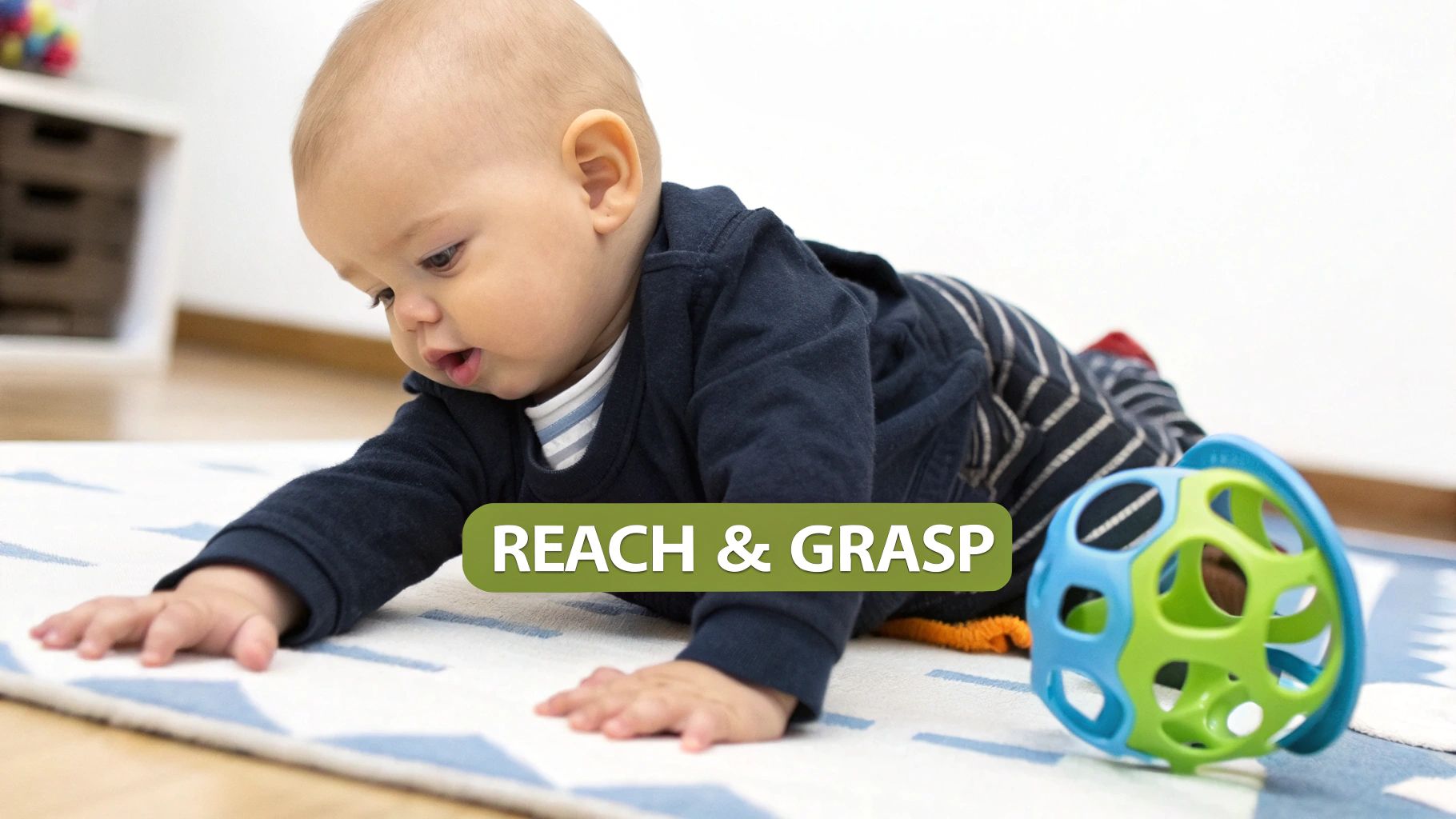
Introducing toys just beyond your baby's reach transforms tummy time into a goal-oriented activity that builds both physical and cognitive skills. By strategically placing an engaging toy slightly out of reach, you motivate your baby to push up, pivot, and stretch. This intentional challenge encourages active movement, turning a simple exercise into a powerful developmental game.
This method directly targets key milestones by encouraging your infant to strengthen their arms, shoulders, and core muscles as they strive to grasp the desired object. This purposeful effort enhances hand-eye coordination and fine motor skills. As they work to reach their goal, they are also developing problem-solving abilities and persistence, which are foundational for independent play and learning.
Why It Works
The success of this tummy time activity lies in its ability to tap into a baby's natural drive to explore and interact with their environment. The toy provides a clear, tangible objective, making the physical exertion of tummy time feel more like play than work. This approach is strongly supported by Montessori principles, which emphasize fostering a child's intrinsic motivation. By creating a setup where a baby can achieve a goal through their own efforts, you build their confidence and sense of mastery. It makes tummy time an empowering experience rather than a passive one. You can discover more about creating a supportive play environment with our guides on Ocodile.com.
How to Implement Reaching and Grasping Play
To set up this engaging activity, you can follow these simple guidelines to create a safe and motivating play space:
- Select Appropriate Toys: Choose lightweight, infant-safe toys that are easy to grasp, such as soft rattles, high-contrast rings, or natural wood toys. Ensure they have no small parts and feature smooth edges.
- Strategic Placement: Position a toy about 6-8 inches from your baby's hands, just beyond their easy reach. Place it in their line of sight to capture their attention.
- Adjust the Challenge: As your baby’s strength and coordination improve, gradually increase the distance of the toy to encourage further stretching and movement.
- Keep it Fresh: Rotate the toys you use every few days to maintain your baby's interest and curiosity during these crucial tummy time activities.
- Celebrate the Effort: Offer verbal encouragement and praise for their attempts, whether they reach the toy or not. This positive reinforcement motivates them to keep trying.
8. Structured Tummy Time Progression and Tracking
Implementing a gradual, tracked progression of tummy time transforms it from a simple daily task into a structured developmental exercise. This approach supports both physical milestones and parental confidence. By systematically increasing the duration, varying the activities, and documenting progress, you gain valuable insight into your child's development while ensuring consistent, safe practice.
This evidence-based method combines a clear structure with the flexibility to adapt to your baby's unique timeline and daily mood. It moves beyond just getting through tummy time and turns it into a purposeful part of your routine. Tracking small achievements, like lifting their head higher or reaching for a toy, helps you recognize and celebrate every step forward. This is one of the most effective tummy time activities for parents who appreciate a methodical approach.
Why It Works
The effectiveness of a structured progression lies in its alignment with established pediatric guidelines, such as those from the American Academy of Pediatrics (AAP). It ensures that your baby is gradually building strength without being overwhelmed. Documenting sessions in a journal or app creates a tangible record of growth, which can be incredibly motivating for parents and useful for discussions with pediatricians. This observational practice, similar to Montessori principles, fosters a deeper connection and understanding of your baby's individual developmental curve. As your baby gets stronger, they will build the foundational skills needed for mobility. For more details on this transition, explore how to encourage crawling on ocodile.com.
How to Implement Structured Progression
To start tracking tummy time effectively, follow these steps to create a supportive and motivating routine:
- Start Small and Build: Begin with sessions of just 1-2 minutes for newborns, 3-5 times per day. Gradually increase the duration as your baby gets stronger, aiming for a cumulative total of 15-30 minutes daily by three months.
- Use a Simple Tracking System: A simple notebook, a chart on the fridge, or a baby tracking app can work. Log the date, duration of each session, and any new skills or reactions you observe.
- Document with Photos: Take weekly photos of your baby during tummy time from the same angle. This visual diary provides powerful evidence of their progress in posture and strength.
- Be Flexible: Always adjust based on your baby’s cues. If they are tired or fussy, keep the session short. The goal is consistency over marathon sessions. Celebrate small wins rather than comparing to external timelines.
8-Point Tummy Time Activity Comparison
| Activity | 🔄 Implementation Complexity | ⚡ Resource Requirements | ⭐📊 Expected Outcomes | 💡 Ideal Use Cases | Key Advantages |
|---|---|---|---|---|---|
| Mirror Play and Self-Discovery | Low — simple setup, occasional repositioning | Minimal — baby-safe acrylic mirror, padded mat, supervision | ⭐⭐⭐⭐ · improved neck/shoulder strength, self-recognition, longer engagement | 3–12 months; early tummy-time to boost visual interest | Keeps baby engaged; low cost; combines cognitive + motor benefits |
| Textured Surface Exploration | Moderate — assemble/rotate textures, clean regularly | Moderate — sensory mats, fabric samples, inspection/cleaning supplies | ⭐⭐⭐⭐ · enhanced tactile discrimination, sensory processing, hand-eye coordination | 2–9 months; Montessori or sensory-focused sessions | Rich sensory input; supports independent exploration; affordable DIY options |
| Tummy Time with Music and Sound Stimulation | Low–Moderate — select appropriate sounds, monitor volume | Minimal — audio device, soft musical toys/instruments | ⭐⭐⭐ · auditory processing, early rhythm/language skills, calming association | 2–12 months; soothing sessions or language stimulation | Multisensory engagement; customizable to baby’s preference; calming |
| High-Contrast Visual Cards and Objects | Low — place and periodically change cards | Minimal — printed/laminated cards or high-contrast toys | ⭐⭐⭐⭐ · improved visual tracking, focus, early eye-muscle development | 0–5 months; newborn visual stimulation and early tracking practice | Evidence-backed; inexpensive; highly effective for early visual engagement |
| Tummy Time on Different Safe Surfaces | Moderate — obtain/rotate surfaces, increased supervision | Moderate — firm mats, wedges, padded areas, safety checks | ⭐⭐⭐⭐ · balanced muscle and proprioceptive development; reduces flattening risk | 2–12 months; progressive motor development and PT-recommended plans | Comprehensive physical benefits; prevents positional issues; varied challenge |
| Parent-Baby Interactive Tummy Time Games | Moderate — requires consistent parental time and engagement | Minimal — caregiver time, optionally simple toys | ⭐⭐⭐⭐⭐ · stronger bonding, increased motivation, longer tummy-time sessions | 2–12 months; when prioritizing attachment and motivation | Strengthens parent-child bond; highly engaging; no extra purchases required |
| Tummy Time with Reaching and Grasping Toys | Low — place toys and adjust distance frequently | Minimal — age-appropriate grasping toys, rotation, supervision | ⭐⭐⭐⭐ · improved reach/grasp, fine motor skills, hand-eye coordination | 3–12 months; promoting reaching, grasping, and independent play | Encourages independent skill-building; immediate sensory feedback; Montessori-aligned |
| Structured Tummy Time Progression and Tracking | Moderate–High — plan schedule, record progress, adjust plans | Moderate — charts/apps, time, consistency, optional clinician input | ⭐⭐⭐⭐ · measurable progression, parental confidence, early issue detection | 0–12 months; parents wanting goals, clinicians, or therapy follow-up | Provides clear structure and documentation; supports pediatric communication and early detection |
Creating a Foundation of Strength and Confidence
As we've explored, the journey through tummy time is far more than a simple developmental exercise; it's a dynamic and multifaceted adventure in growth, connection, and discovery. Moving beyond a one-size-fits-all approach, you are now equipped with a diverse toolkit of tummy time activities designed to engage your baby's senses, spark their curiosity, and build foundational strength. From the simple joy of mirror play to the sensory richness of textured surfaces, each activity offers a unique opportunity to support your child’s journey toward major motor milestones.
The key to unlocking the full potential of these sessions lies not in duration, but in quality and consistency. Remember that every baby is unique. Their tolerance, interests, and developmental pace will dictate which activities resonate most. The goal is to cultivate a positive and encouraging association with being on their tummy, transforming what can be a challenging task into a rewarding period of interactive play.
Key Takeaways for Successful Tummy Time
To consolidate the insights from this guide, let's highlight the most crucial takeaways for you to implement:
- Variety is Your Best Tool: Regularly rotate through different activities, like using high-contrast cards one day and musical toys the next. This prevents boredom and stimulates different areas of your baby’s brain and body.
- Observation Guides Progression: Pay close attention to your baby’s cues. Are they pushing up higher, turning their head with more control, or starting to reach? These observations are your roadmap for introducing more advanced challenges, like placing toys just out of reach.
- The Environment Matters: A safe, comfortable, and stimulating environment is non-negotiable. Using a dedicated, firm play mat and ensuring the space is free of hazards allows your baby to focus on the important work of building strength and coordination.
- You Are Their Favorite Toy: Never underestimate the power of your presence. Your voice, your touch, and your face-to-face engagement are the most powerful motivators. Interactive games and simply lying down with your baby make tummy time a bonding experience.
Your Actionable Next Steps
With this knowledge, your next step is to create a flexible tummy time plan. Start by selecting two or three activities from our list that you think your baby will enjoy. Integrate them into your daily routine in short, frequent bursts, perhaps after a nap or diaper change when your baby is content. Track their progress, celebrate the small victories like a sustained head lift, and don't be afraid to adapt. If one activity isn't working, simply pivot to another.
By thoughtfully curating these tummy time activities, you are doing more than just strengthening neck and shoulder muscles. You are laying the groundwork for rolling, sitting, crawling, and eventually, walking. You are fostering sensory integration, visual tracking, and cognitive development. Most importantly, you are building a secure, responsive relationship with your child, teaching them that challenges can be met with support, encouragement, and joy. Embrace this foundational stage with confidence, knowing you have the strategies to make it a profoundly positive and impactful part of your baby’s early development.
Ready to create the perfect, safe, and child-centric environment for play and development? Explore the thoughtfully designed floor beds and play mats from Ocodile that support your baby’s independence and make tummy time comfortable and engaging. Visit Ocodile to discover furniture that grows with your child.