



A Guide to the Wooden Floor Bed for Safer Toddler Sleep
At its heart, a wooden floor bed is a beautifully simple concept: a low-profile bed frame, usually crafted from solid wood, that brings the mattress down close to ground level. Inspired by Montessori principles, this design is all about empowering your toddler with the freedom to get in and out of bed all on their own.
It's the perfect bridge for that big transition from a crib to a "big kid" bed.
Why Parents Are Choosing the Wooden Floor Bed
That leap from a crib to a traditional bed is a huge milestone, and let's be honest, it often comes with a side of parental anxiety. We’ve all had that nagging worry about our little one tumbling out in the middle of the night.
The wooden floor bed tackles this fear head-on. By placing the mattress just inches off the floor, it practically eliminates the risk of a fall causing any real injury.
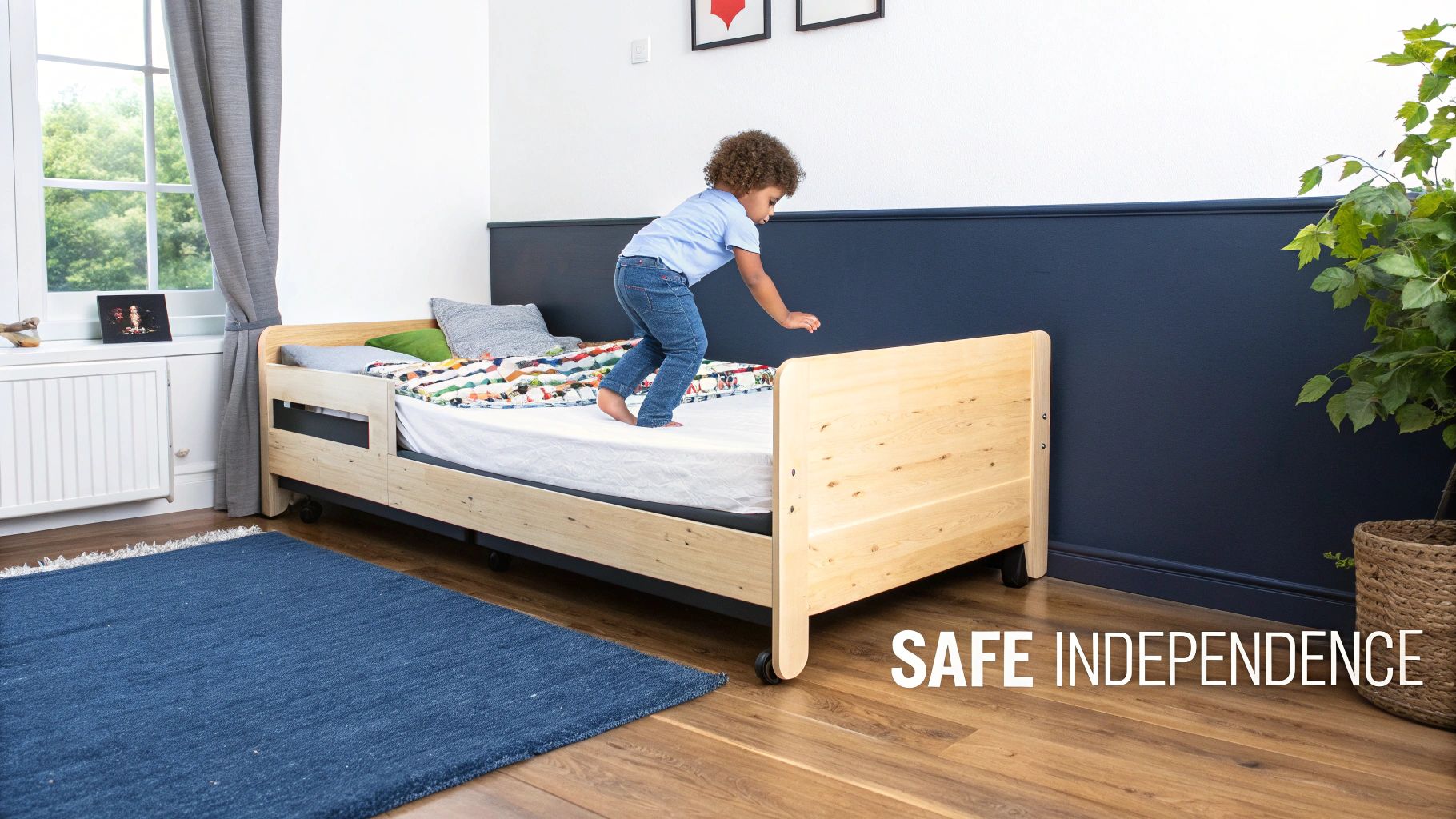
But this design is about so much more than just physical safety. It’s about building a foundation for emotional and developmental growth. When you give a child control over their own movement, you nurture a powerful sense of independence that will stick with them.
For a quick overview, here are the key benefits parents love:
Wooden Floor Bed Benefits at a Glance
| Benefit Category | Key Advantage |
|---|---|
| Safety First | The low-to-the-ground design significantly reduces the risk of injury from falls. |
| Fosters Independence | Children can safely get in and out of bed on their own, promoting autonomy. |
| Montessori Aligned | Supports a child-led environment that respects their natural development. |
| Durable & Natural | Made from solid wood, it’s a sturdy, long-lasting, and non-toxic choice. |
| Timeless Style | The simple, minimalist aesthetic fits beautifully into any modern nursery or bedroom. |
| Better Sleep Habits | Reduces bedtime battles by making the bed an accessible, non-restrictive space. |
These advantages work together to create a supportive and empowering sleep environment for your child from the very beginning.
A Foundation for Independence
Think about a traditional crib for a moment. It’s essentially a contained space, a bit like a playpen. Your child is placed in and taken out by an adult, their freedom of movement entirely in your hands. A wooden floor bed flips that script completely, turning their bed into a cozy home base inside an accessible world.
When a child can get out of bed on their own to play quietly with a book or toy upon waking, they learn to listen to their body's natural rhythms and engage in self-directed activity. This simple shift builds autonomy from a very young age.
This newfound freedom often leads to a much healthier relationship with sleep. Their bed becomes a peaceful sanctuary they can approach and leave on their own terms, which can work wonders for reducing those classic bedtime battles and creating a calmer atmosphere for the whole family.
Durability Meets Thoughtful Design
The choice of wood is no accident. Today's parents are actively looking for furniture made from natural, sturdy, and non-toxic materials. A well-crafted wooden floor bed isn't just a purchase; it's an investment in both safety and longevity, built to withstand years of sleepy nights and playful mornings.
This shift in consumer preference is clearly visible in the market. The wooden bed frames market was valued at USD 5.2 billion in 2023 and is on track to hit USD 8.1 billion by 2033. That's a huge indicator of a global move towards durable, safe wooden furniture in our kids' rooms. You can learn more about the growth of the wooden bed frame market at DataHorizzon Research.
Beyond all the practical perks, the simple, clean look of a wooden floor bed just works. It complements any decor style, from minimalist to modern, creating an uncluttered, child-centric space that feels both inviting and secure. It’s this winning combination of safety, developmental benefits, and timeless style that has so many families making the switch.
The Montessori Philosophy of Freedom and Movement
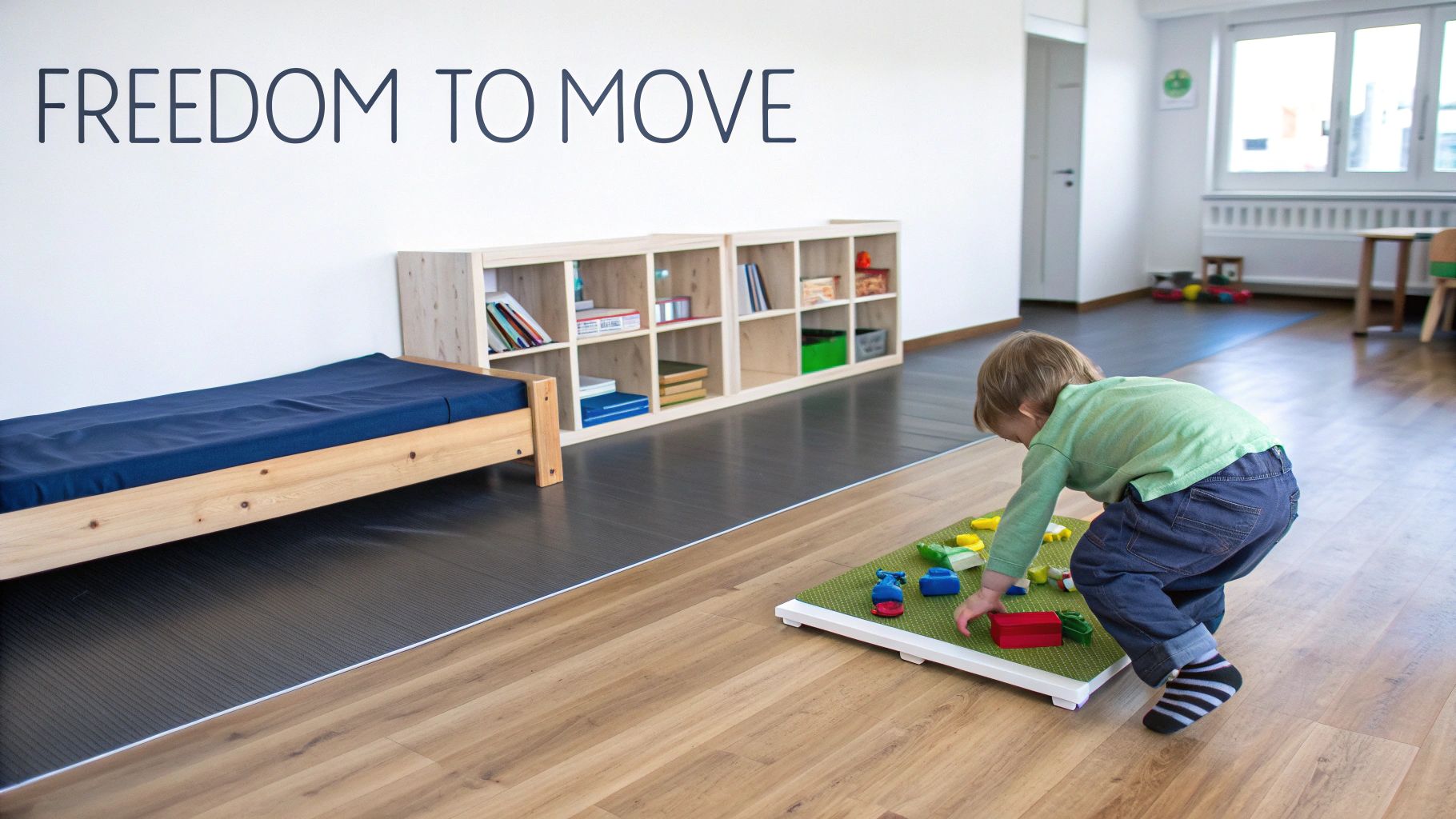
To really get why a wooden floor bed is so special, we have to look past the furniture and understand the beautiful idea behind it. The concept comes from Dr. Maria Montessori, a physician and educator who believed a child's environment should be their greatest teacher. She was a huge advocate for spaces that respect a child's natural drive for independence and their need to move freely.
This philosophy sees children not as empty little buckets we need to fill with information, but as capable people on their own journey of discovery. Their surroundings can either help or hinder that journey. The goal is to create a "prepared environment" where everything is just the right size and in the right place to empower them to explore their world safely and confidently.
From a Cage to a Home Base
Think about a traditional crib for a second. With its high, confining bars, it basically decides when a child can get in and out of bed. From a Montessori point of view, this can feel like an unnecessary restriction—a cage that limits a child's ability to listen to their own body. It sends a quiet message that they need an adult for even the most basic movements.
A wooden floor bed completely flips that script. It’s not a restrictive box; it’s a cozy, accessible home base.
"Let us leave the life free to develop within the limits of the good, and let us observe this inner life developing. This is the whole of our mission." - Dr. Maria Montessori
This simple change places trust in your child. It respects their ability to know when they're tired and need sleep, and when they're rested and ready to explore. By taking away physical barriers, we let them develop crucial self-regulation skills from a very early age.
Building Confidence One Movement at a Time
Picture a toddler waking up. In a crib, they have to cry out and wait for a parent to come get them. But on a floor bed, they can simply slide off their mattress onto a soft rug and quietly pick a book from a low shelf or play with a toy.
This small act of independence is incredibly powerful. It builds a foundation of self-confidence and autonomy that they'll carry into all other parts of their development. This philosophy isn't just about sleep; it’s about creating a whole environment that nurtures a capable, self-assured child. You can learn more about bringing these ideas into your home by reading our Montessori education at home in our detailed guide.
A Nest Versus a Box
A great way to think about the difference is to compare a nest to a box.
-
A Box (The Crib): A box has hard, high walls you can't get out of on your own. It contains and limits, creating a clear line between what's inside and the world outside. Someone else is in control of your movement.
-
A Nest (The Floor Bed): A nest is a safe, soft, and comforting home base. It has low, gentle edges that make it easy to come and go, encouraging exploration while always offering a secure spot to return to.
The wooden floor bed is that nest. It offers security without confinement, helping your child build a healthy relationship with sleep and their own personal space. This freedom of movement isn't just good for them physically; it supports their psychological growth, teaching them that they are trusted and competent. By choosing a wooden floor bed, you’re doing more than just picking out furniture—you’re embracing a philosophy that celebrates your child’s amazing potential.
A Parent's Checklist for a Safe Wooden Floor Bed
The freedom a wooden floor bed gives your child is an incredible thing to watch, but it absolutely has to be paired with a meticulously safe environment. I get it—as a parent, your child's well-being is priority number one, and choosing the right bed is a huge part of creating that secure space.
This checklist will walk you through the non-negotiable safety features to look for. It’s all about helping you tell the difference between a truly safe bed and one that just looks the part.
Your child's bed isn't just another piece of furniture; it's the heart of their sleep sanctuary. The quality of its construction has a direct line to its safety and how long it'll last, which is why the material should be the very first thing you check.
Prioritize Solid Wood Construction
When it comes to durability and a rock-solid feel, nothing beats solid wood. Unlike engineered woods like MDF or particleboard, solid wood frames are far less likely to warp, break, or get wobbly over time, especially with a toddler's boundless energy. A sturdy frame is your guarantee of a safe, reliable bed for years to come.
And we’re not the only ones who think so. The market for solid wood beds, floor beds included, reached USD 7,850.75 million and is expected to climb to USD 12,730.40 million by 2032. North American parents are really leading this charge, actively seeking out premium, safe furniture for their little ones' rooms. This trend makes one thing clear: parents value the safety and durability that only solid wood can provide.
A well-built wooden floor bed should feel substantial and solid. When you're looking at one, give it a little shake—it shouldn't wobble or creak. This simple test is often the best first indicator of quality craftsmanship and secure joints.
Insist on Non-Toxic Finishes
Let’s be real: toddlers explore the world with their hands and, yes, their mouths. This makes the finish on their furniture just as important as what it's made of. You have to be certain the bed is finished with non-toxic, child-safe paints or stains.
Here’s the lingo to look for in product descriptions:
- Zero-VOC or Low-VOC: Volatile Organic Compounds (VOCs) are chemicals that can be released into the air from paints, messing with your home's air quality. A zero or low-VOC finish is a must-have for a healthy nursery.
- Water-Based Finishes: These are generally much safer and give off fewer harmful chemicals than their oil-based cousins.
- Third-Party Certifications: Keep an eye out for labels like GREENGUARD Gold. This certification means a product has met some of the world's toughest standards for low chemical emissions.
Scrutinize the Design Details
Beyond the big stuff like materials and finishes, the physical design of the bed plays a huge role in preventing accidents. The tiniest details can make all the difference.
Rounded Corners and Smooth Edges
Sharp corners are a disaster waiting to happen for a wobbly, newly mobile toddler. Always look for designs with smoothly sanded, rounded edges. It’s a simple feature that dramatically cuts down the risk of bumps and bruises during playtime.
Sturdy and Properly Spaced Slats
The slats that hold up the mattress are a critical safety feature. They need to be strong enough to support your child and the mattress without any sign of cracking. Even more important, the space between each slat should be no more than 2 3/8 inches. This specific gap prevents a child’s head or limbs from accidentally getting trapped.
A Secure Environment Beyond the Bed
Putting your child on a floor bed means they suddenly have access to the whole room. It’s crucial to think about safety beyond the bed itself, especially when it comes to windows. A quick read-up on how to childproof windows effectively is a great place to start. This includes securing blind cords and making sure windows have proper locks or guards. A safe bed is just one piece of a fully childproofed room where your little one can explore with confidence.
To make it even easier, here’s a quick-reference checklist you can use when you're shopping.
Safety Checklist for Your Child's Floor Bed
This table breaks down the most important safety features to look for in a wooden floor bed. Use it as your guide to make sure you're choosing a bed that is genuinely designed with your child's safety in mind.
| Safety Feature | What to Look For | Why It Matters |
|---|---|---|
| Material Quality | 100% solid wood (like pine, beech, or oak). Avoid MDF or particleboard. | Provides superior strength, stability, and longevity, preventing wobbling or breaking. |
| Finishes & Paints | "Non-toxic," "Zero-VOC," or "Low-VOC" labels. Water-based finishes are best. | Protects your child from inhaling harmful chemicals or ingesting toxins. |
| Corners & Edges | Smoothly sanded and rounded corners on all parts of the frame. | Minimizes the risk of injuries, bumps, and bruises from accidental falls. |
| Slat Spacing | Gaps between mattress support slats should be no wider than 2 3/8 inches. | Prevents a child's head, arms, or legs from getting trapped between the slats. |
| Frame Stability | The bed should feel heavy and solid. It shouldn't shake, wobble, or creak. | A stable frame indicates high-quality construction and secure joints, ensuring safety. |
| Certifications | Look for GREENGUARD Gold or other recognized third-party safety certifications. | Offers independent verification that the product meets strict chemical emission standards. |
By keeping these points in mind, you can feel confident that you’re not just buying a piece of furniture, but a safe and nurturing foundation for your child’s independence.
How to Select the Right Bed and Mattress
Picking out the right wooden floor bed and mattress isn't just about what looks good—it's about finding that sweet spot between beautiful design and rock-solid safety. Once you've got your heart set on a frame, the next big step is choosing the mattress. This is what turns a simple bed into a truly supportive and secure little nest for your child.
Just think of the bed frame and mattress as a team. They have to work together. The frame gives you that sturdy, low-to-the-ground base, while the mattress brings the comfort and support. If they're not a good match, you could end up with safety issues or an uncomfortable bed, which pretty much defeats the whole purpose of a floor bed.
Finding the Perfect Wooden Frame
First things first, let's talk about the frame. You need a wooden floor bed that fits your space, sure, but also one that sparks a little joy for your child. The great news is, there are so many charming options out there, so you can really find something that fits your family's style.
- Simple Platform Frames: These are the minimalists of the floor bed world. They’re sleek, practical, and go with just about anything. You get a clean, uncluttered look that really lets the natural wood grain shine through—a timeless choice that will grow right alongside your child.
- House and Canopy Frames: If you're looking for a touch of magic, these are it. These delightful designs can turn a regular bed into a secret fort or a cozy hideaway. They create a den-like feel that can make bedtime feel less like a chore and more like an adventure, which is a huge win for everyone.
This handy little decision tree can help you walk through the key safety checks when you're looking at different wooden frames. It all comes down to the materials, the finish, and the design of the edges.
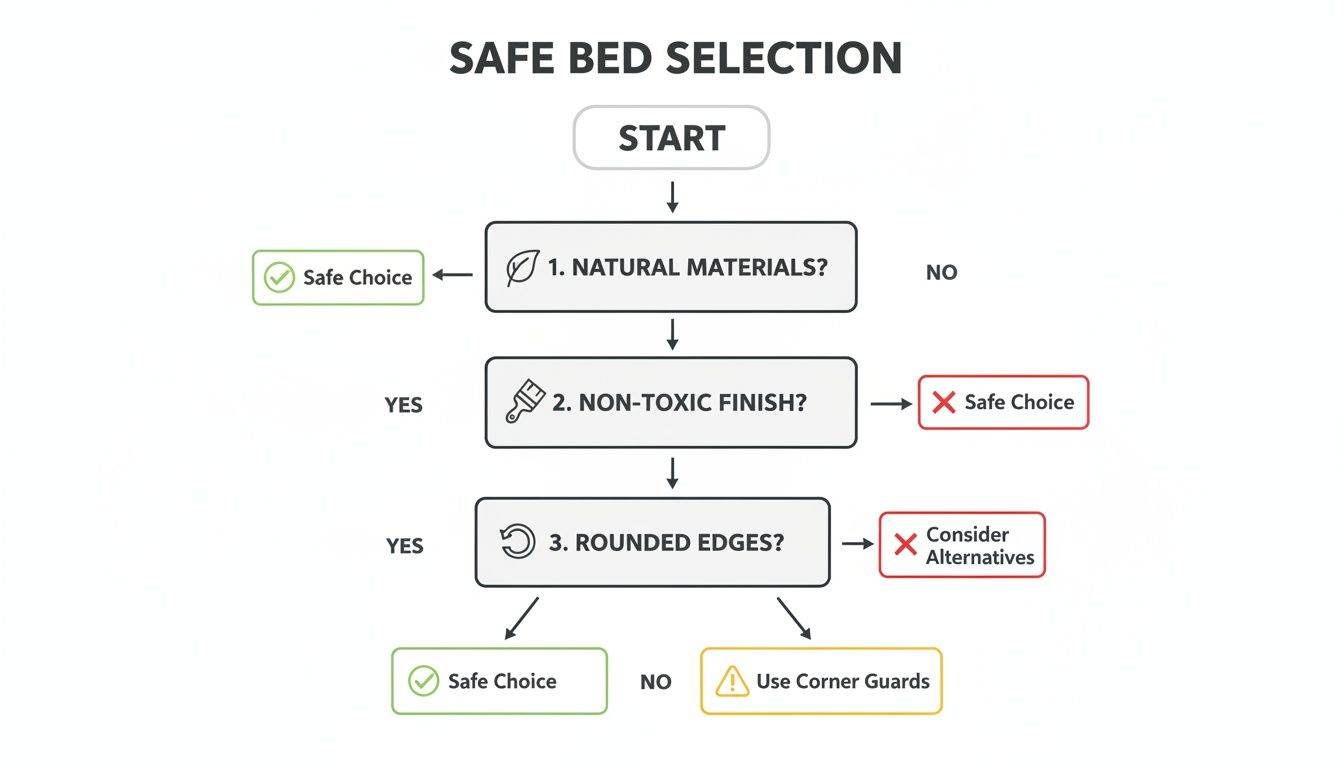
As you can see, a safe choice always, always comes back to natural, non-toxic materials and a kid-friendly construction with smooth, rounded edges.
Choosing a Safe and Supportive Mattress
Okay, frame chosen. Now, let's shift our focus to the mattress. This is where safety gets really serious. For babies and toddlers, a firm sleep surface isn't just a nice-to-have; it's a critical safety measure to help reduce the risk of suffocation.
A child’s mattress should be firm enough that it doesn't noticeably dip or sink when they're lying on it. A super soft, plush mattress might seem cozier to us, but it can actually mold to a child's face and create a serious safety hazard. For your little one, always put firmness before softness.
Breathability is another huge factor. Keep an eye out for mattresses made with materials like natural latex or foams with good airflow. These help keep your child from overheating and add another layer of safety. If you want to dive deeper, we have a complete guide on picking out a safe Montessori floor bed mattress.
Last but not least, the fit of the mattress inside the frame is completely non-negotiable. There should be no gaps at all between the mattress and the sides of the bed frame. A snug fit means there are no little spaces where a child could get stuck. The rule of thumb is that you shouldn’t be able to fit more than two fingers between the mattress and the frame. For a really thorough breakdown on this important choice, check out an expert guide on how to choose a mattress.
By taking the time to carefully consider both the frame and the mattress, you're creating a complete sleep system. This thoughtful approach ensures your child's wooden floor bed is more than just a beautiful piece of furniture—it’s a true sanctuary for safe and restful sleep.
Creating a Safe and Inviting Sleep Sanctuary
Choosing a wooden floor bed isn't just about swapping out a crib; it’s about rethinking your child's entire room. This one change can transform their space into an accessible world ripe for exploration. That means the whole room needs to be just as safe as their new bed.
This is your chance to create a true sanctuary—a space that encourages both peaceful sleep and confident, independent play.
The best way to start is by seeing the room from their perspective. Seriously, get down on your hands and knees and crawl around. What can you reach? This simple shift in viewpoint is a game-changer for spotting hazards you'd otherwise miss, like dangling cords or wobbly furniture.
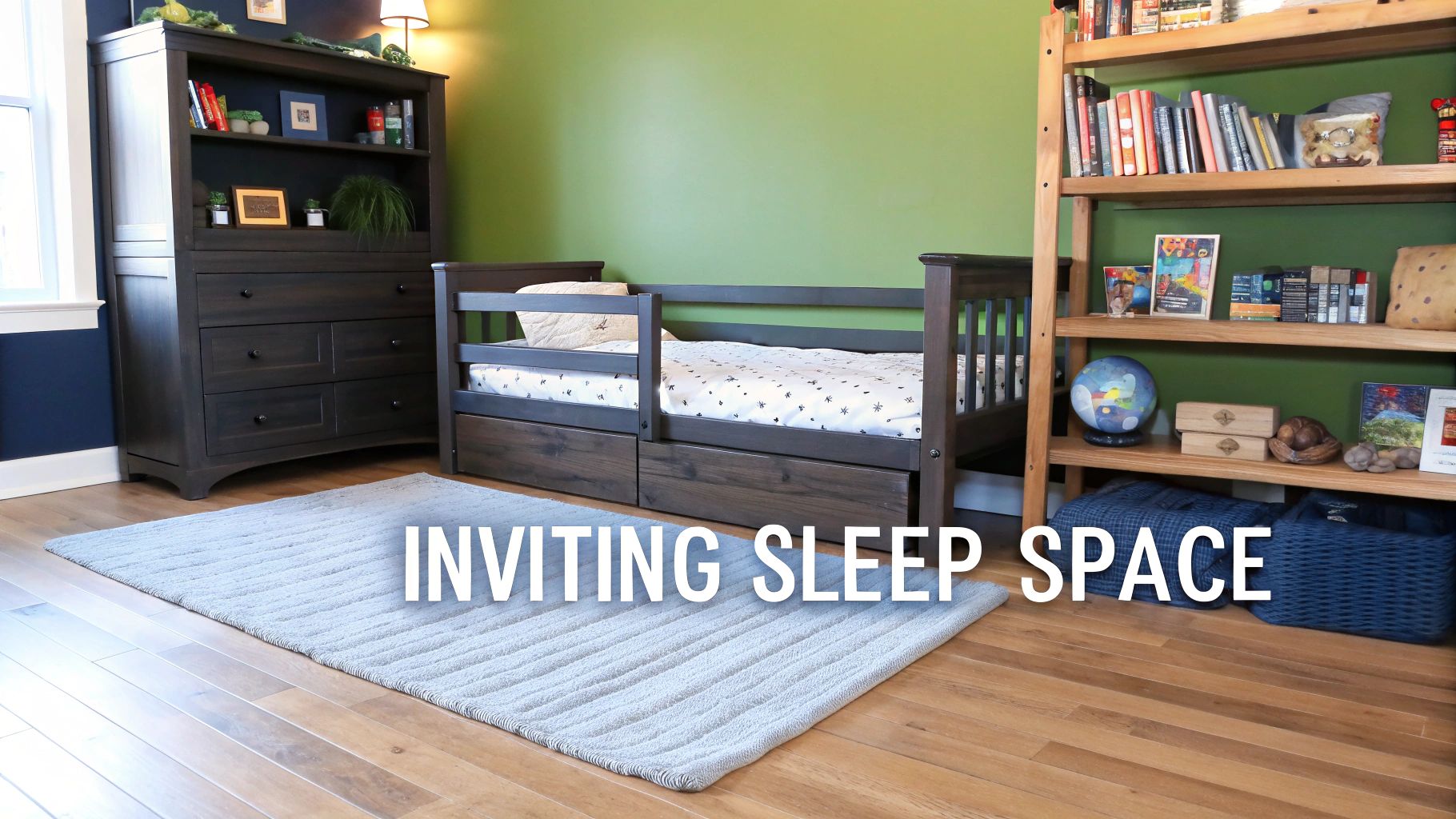
Foundational Safety Measures
Before you even think about décor, it's time to lock down the non-negotiables of childproofing. This framework is what allows your child to explore their newfound freedom without you having to worry.
- Anchor All Furniture: This is a big one. Bookshelves, dressers, and even toy chests must be securely anchored to the wall. A floor bed gives little ones a perfect launchpad for climbing, making this step absolutely critical.
- Secure Cords and Outlets: Make sure the wooden floor bed is positioned away from windows with blind cords. All electrical cords should be tucked away and secured, and every unused outlet needs a child-safe cover.
- Clear the Area: Position the bed away from walls, radiators, or other furniture to prevent any chance of entrapment. A soft rug placed next to the bed can provide a gentle landing spot for little feet in the morning.
A truly safe room anticipates a child's curiosity. The goal isn't to restrict exploration but to make that exploration inherently safe, allowing them to learn and grow with confidence.
Designing a Cozy and Nurturing Space
Once the room is secure, you can get to the fun part: making it feel like a warm, inviting haven. The atmosphere you create is just as important as the physical safety measures. This is where you can inject some personality and comfort, turning a simple bedroom into their own cherished space.
Think about textures and making things accessible. A plush, low-pile rug not only cushions the occasional tumble but also adds warmth and a soft spot for playtime. The key is picking materials that are both comforting and safe. As you choose furniture and textiles, it's a great time to learn more about selecting beautiful and non-toxic kids furniture.
Elements of an Inviting Sanctuary
A calming atmosphere encourages your child to see their room as a place for rest and happy, quiet time. You don't need much; a few simple additions can make a huge difference.
- Accessible Storage: Put up some low shelves that your child can easily reach. Keep a small, curated selection of board books and quiet toys there to encourage a little self-directed play when they wake up.
- Soft, Calming Lighting: A dimmable lamp or a warm nightlight is much better than harsh overhead lighting. It’s a subtle visual cue that helps signal it's time to wind down.
- Personal Touches: Hang some of their artwork at their eye level. A few beloved stuffed animals or a special soft blanket can make their new bed feel extra secure and truly their own.
By blending rigorous safety with thoughtful, child-focused design, you’re creating more than just a bedroom. You're building a sanctuary that supports their development, respects their growing independence, and offers a peaceful backdrop for both sleep and play.
Common Questions About Wooden Floor Beds
Deciding to bring a wooden floor bed into your home is an exciting move toward nurturing your child's independence. But let's be real—any change to your little one's sleep setup is a big deal, and it's totally normal to have a few questions bubble up.
We've been there. So, we've gathered some of the most common concerns parents have right here. Our goal is to give you clear, practical answers so you can feel confident and make this transition a happy, successful one for the whole family.
At What Age Can My Child Start Using a Floor Bed
This is probably the first question that comes to mind, and the answer has more to do with your child's development than a specific date on the calendar. Most kids are ready for a floor bed when they start trying to climb out of their crib, which usually happens somewhere between 15 and 24 months.
The real key is to watch your child, not the clock. If your toddler is getting mobile and you spot them attempting to hoist a leg over the crib rail, a wooden floor bed suddenly becomes a much safer choice. It completely removes the risk of a dangerous fall from a high crib. The most important thing to remember is that the entire bedroom needs to be 100% childproofed from their new, lower point of view.
Will My Child Get Cold Being So Close to the Floor
It’s a natural worry—will my little one get chilly sleeping so close to the ground? The good news is that in most modern, well-insulated homes, the temperature difference between the floor and the rest of the room is pretty small.
A quality mattress does a great job of insulating all by itself. But if you want some extra peace of mind, a few simple steps can make all the difference:
- Use appropriate sleepwear: A cozy sleep sack or a pair of warm pajamas is often all it takes to keep your child comfortable all night.
- Add a soft rug: Placing a rug under and around the wooden floor bed adds another layer of insulation and gives them a soft, warm spot to land when they wake up.
Think of the mattress and rug as a cozy buffer zone. Together, they create a warm little nest that effectively separates your child from the cooler floor, ensuring they stay snug all night long.
How Do I Encourage My Child to Stay in Bed
The newfound freedom of a floor bed is a thrill for a toddler, and sometimes that means they'll want to test out their new ability to get up. This is a totally normal part of the process! Your best friends here are consistency and a solid routine.
Start by creating a calm, predictable bedtime routine that sends a clear signal: it's time for sleep. This could involve a bath, reading a book, and a final cuddle in their bed. This helps them connect their wooden floor bed with rest, not with playtime.
If they do get out of bed, the trick is to be gentle but firm. Quietly and calmly guide them back to their bed with as little fuss or interaction as possible. It’s a learning curve, but with time, this consistent response teaches them the boundaries that come with their new independence.
At Ocodile, we design our wooden floor beds to support every step of this journey, creating a safe and inviting space for your child to grow. Explore our collection to find the perfect foundation for your little one's independence. https://ocodile.com