

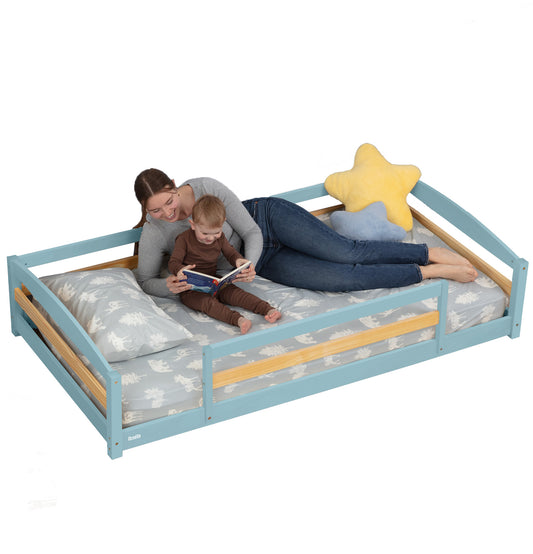


Montessori Floor Bed Mattress: A Guide to Safety, Comfort, and Sizing
A Montessori floor bed mattress is more than just a place for your child to sleep. It’s a firm, low-profile sleeping surface designed specifically to give a child complete freedom of movement. Unlike a traditional crib mattress that keeps a child contained, its main job is to support a child’s growing independence by letting them safely get in and out of bed all on their own.
The Heart of the Montessori Sleep Space
Think of a Montessori mattress as the foundation for your child's autonomy and confidence. The whole idea revolves around creating a space that respects the child as a capable individual who can make their own choices. Instead of being surrounded by crib bars, a child has the freedom to explore their room when they wake up and crawl into bed when they feel tired.
This approach comes directly from Maria Montessori’s educational principles from the early 20th century, which highlighted a child’s natural drive for independence. While the philosophy has been around for over a hundred years, it’s only recently that purpose-built floor beds and certified-safe mattresses have become widely available, making it much easier for parents to adopt this method. You can find more on the growth of these sleep systems at datainsightsmarket.com.
Why Firmness Is Non-Negotiable
Imagine the difference between a gymnast’s floor and a plush, sinking sofa. A gymnast needs a firm, stable surface to move with control. In the same way, a developing baby or toddler needs a firm mattress to support their growing bones and muscles.
A soft mattress can actually get in the way of movement and, more importantly, poses a serious safety risk. If it’s too soft, it can conform to a child’s face and create a suffocation hazard.
A Montessori mattress prioritizes safety and function over plushness. Its firm, flat surface is specifically designed to provide a safe foundation for sleep and independent movement, aligning perfectly with developmental needs.
To help clarify the differences, let's look at how a Montessori mattress stacks up against a standard crib mattress.
Key Features of a Montessori Mattress vs a Traditional Crib Mattress
This table breaks down the core distinctions, showing why each is suited for a very different purpose.
| Feature | Montessori Floor Bed Mattress | Traditional Crib Mattress |
|---|---|---|
| Primary Goal | To foster independence and freedom of movement. | To contain a child safely within a confined space. |
| Height/Accessibility | Placed on the floor or a very low frame, making it easy for a child to get in and out alone. | Elevated within a crib with high railings, requiring adult assistance. |
| Firmness | Very firm to support safe movement and prevent suffocation risks on an open surface. | Firm, but designed for a contained environment where movement is limited. |
| Developmental Focus | Supports autonomy, body awareness, and self-regulation (e.g., going to bed when tired). | Prioritizes containment and safety within the crib structure. |
| Child's Role | Empowers the child to be an active participant in their sleep routine. | Positions the child as a passive recipient of the sleep routine (placed in/lifted out). |
Ultimately, the choice reflects a philosophical difference in approaching a child's early years.
Accessibility and Independence
The low height is what truly defines a Montessori setup. Placing the mattress directly on the floor or inside a low-profile frame—like the ones we cover in our guide to Montessori floor bed frames—is incredibly empowering for a child. It sends a powerful message of trust and respect, allowing them to take ownership of their sleep space. This one simple change can turn bedtime from a nightly battle into a peaceful, child-led routine.
In the end, the right mattress nails three critical goals:
- Safety First: It offers a firm, breathable surface that dramatically cuts down on the risks tied to overly soft bedding.
- Easy Accessibility: It allows a child to get in and out of bed without help, which builds physical confidence.
- Healthy Materials: It’s almost always made from non-toxic materials, ensuring a clean and safe space for both rest and play.
What Goes Into a Safe Montessori Mattress?
Stepping into the world of mattresses can feel like a maze of jargon and confusing claims. But when you’re choosing one for a Montessori floor bed, it really boils down to three core pillars: firmness, materials, and certifications. Getting these right is the key to creating a sleep space that’s not just comfortable, but genuinely safe and healthy for your little one.
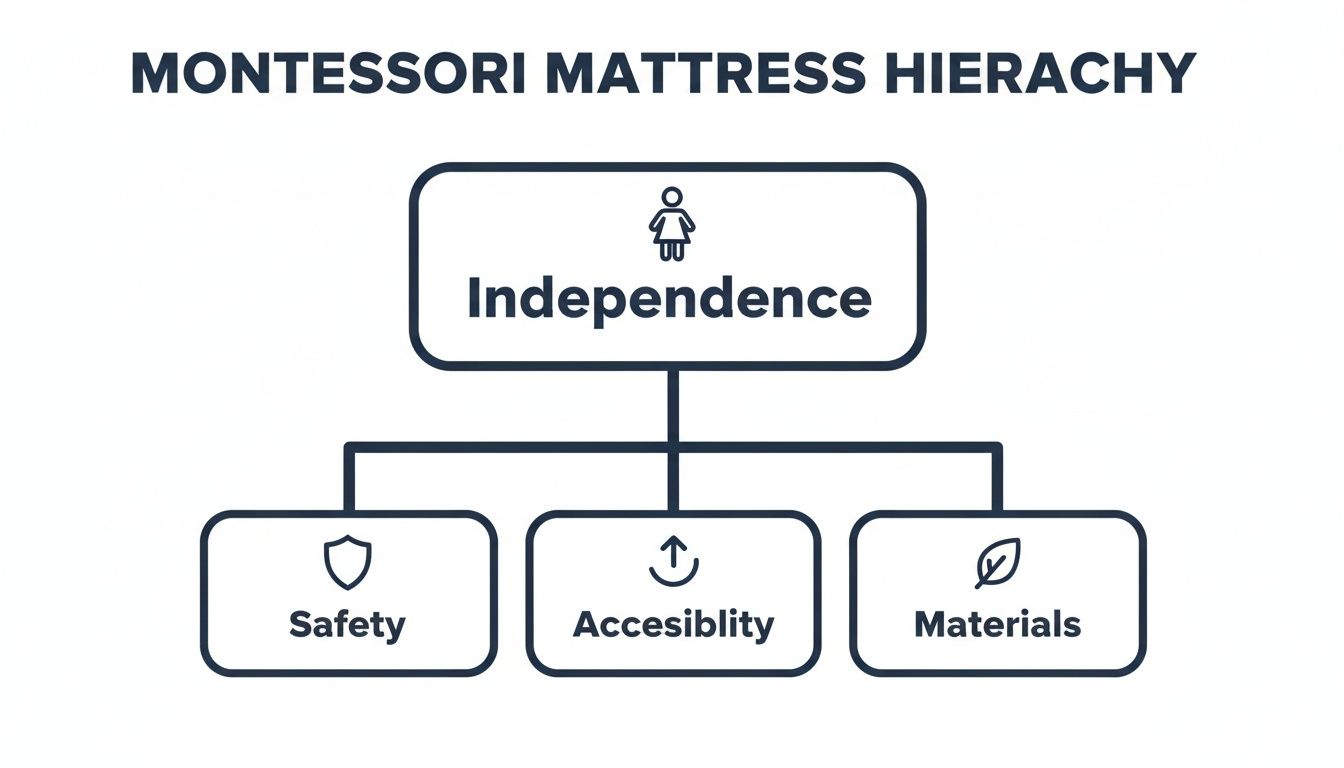
Think of it like building a house. Independence is the roof—the ultimate goal—but you can't put it up without a solid foundation of safety, accessibility, and healthy materials.
Why Firmness is Non-Negotiable
Let’s be clear: firmness isn’t just a matter of preference; it’s the single most important safety feature for any infant or toddler mattress. A plush, soft surface might seem cozy to us, but it poses a serious suffocation risk for a small child.
A firm mattress gives your child a flat, stable base that won’t conform to their face if they roll over in their sleep. It supports their developing body and allows for safe movement, all while promoting proper spinal alignment. To put your mind further at ease, you can find a complete baby proofing checklist to ensure the entire room is a safe zone.
A Look at Materials and Breathability
Once you've got firmness covered, the next thing to look at is what’s inside the mattress. The materials used have a huge impact on your child's health and comfort. You’ll hear words like "breathable" and "hypoallergenic" thrown around, and they’re directly linked to the mattress's construction.
Here are a few high-quality materials you’ll often find:
- High-Density Foam: A very popular choice, and for good reason. It offers excellent firm support and holds its shape well over time, providing that essential flat surface.
- Natural Latex: This comes from rubber trees, making it a fantastic natural option. It’s inherently breathable, hypoallergenic, and resistant to nasty things like dust mites and mold.
- Organic Cotton: Often used for the mattress cover, organic cotton is soft on the skin, breathes well, and is grown without synthetic pesticides.
The idea of a breathable crib mattress is also a game-changer. It helps regulate your child’s temperature by allowing air to circulate, which reduces the risk of overheating and just makes for a more comfortable night's sleep.
A truly safe mattress is one that is firm by design, constructed with non-toxic materials, and validated by independent third-party certifications. Never compromise on these three essentials.
Making Sense of Safety Certifications
So, how do you know if a company's claims are legitimate? That's where certifications come in. Think of them as a report card from an unbiased third party, proving that a mattress meets strict safety standards. They verify that a product is free from harmful chemicals, toxins, and volatile organic compounds (VOCs) that can pollute your indoor air.
It helps to know what you're looking for on the label. Here’s a quick rundown of the most common certifications and what they actually mean.
Common Mattress Certifications and What They Mean
| Certification | What It Guarantees | Best For |
|---|---|---|
| Greenguard Gold | Tests for over 10,000 chemicals and VOCs to ensure the product contributes to cleaner indoor air. It's one of the most rigorous standards out there. | Parents prioritizing low chemical emissions and excellent air quality in the nursery. |
| CertiPUR-US® | Applies specifically to foam mattresses. It guarantees the foam is made without ozone depleters, heavy metals, formaldehyde, and certain phthalates. | Ensuring the foam in your mattress is made without a long list of harmful chemicals. |
| GOTS (Global Organic Textile Standard) | Certifies that textiles (like an organic cotton cover) meet strict organic and socially responsible criteria from harvesting to manufacturing. | Families looking for verifiably organic materials, like cotton or wool, in their mattress. |
These little logos give you peace of mind, confirming you’re bringing a truly safe product into your home.
How to Find the Perfect Mattress Fit
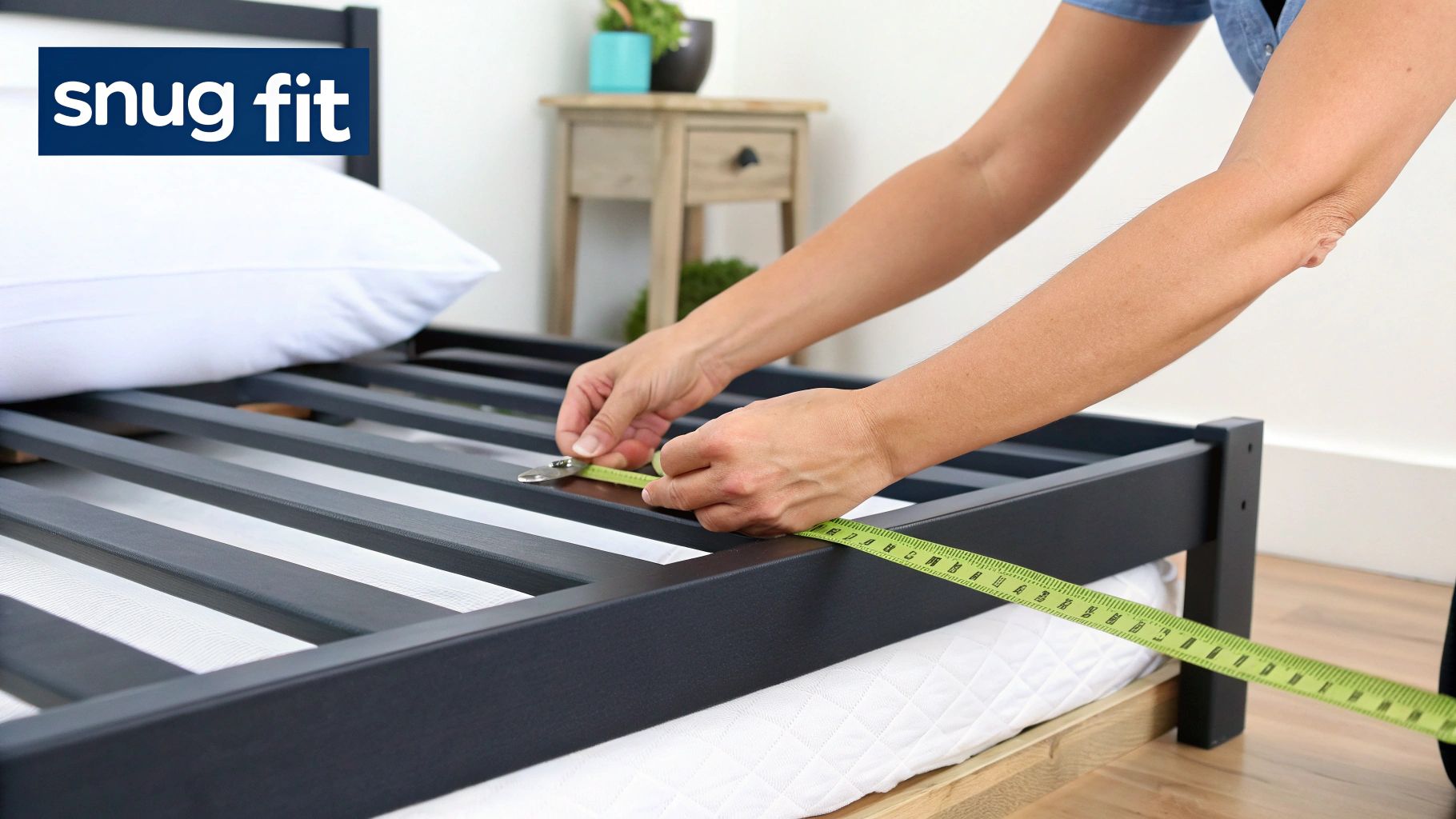
Getting the right mattress fit for a Montessori floor bed isn't just about looks—it’s a huge safety issue. If a mattress is too small for the frame, it can create dangerous gaps where a small child could get stuck. What you're aiming for is a really snug, secure fit that leaves no wiggle room for little arms or legs.
Think of it like a puzzle piece. It has to slot in perfectly, with no noticeable space around the edges. This precision is what makes the bed frame and mattress work together as a single, safe unit for your child. It's probably the most important step in creating a secure sleep space.
Measuring for a Gap-Free Fit
Before you even think about buying a mattress, you need to measure the inside of your bed frame. Don't just go by the manufacturer's description. Grab a tape measure and get the real numbers yourself.
- Measure the Length: Run your tape measure from the inside of the headboard to the inside of the footboard.
- Measure the Width: Do the same thing side-to-side, measuring from the inside of one rail to the other.
- Write It Down: Jot these two numbers down. This is the absolute maximum size your mattress can be.
With these measurements in hand, you can start comparing them to standard mattress sizes. If you need a bit more guidance, our post on choosing a twin floor mattress breaks down the most popular option. It can also be helpful to understand the nuances of standard bed sizes in New Zealand to get a general feel for dimensions.
Applying the One-Finger Rule
Once your mattress arrives, it's time for the final check. The best and easiest way to do this is with the one-finger rule.
Pop the mattress inside the frame. Now, try to slide your fingers into the space between the mattress and the frame. If you can fit more than one finger in that gap, the mattress is too small and isn't safe.
A mattress that fits correctly will leave almost no space at all, eliminating any risk of entrapment. This quick test is your final confirmation that you've set up a perfectly safe and cozy bed for your little one.
Essential Tips for Mattress Placement and Care
Alright, you’ve picked out the perfect Montessori mattress. But the job isn’t quite finished. How you place and care for that mattress is just as important as the one you chose, ensuring it stays safe, clean, and comfortable for years. Think of it less like a one-time setup and more like a simple, ongoing routine.
The biggest worry with any mattress on the floor is the risk of mold and mildew. This happens when moisture gets trapped underneath with no way to escape. Humid weather, nighttime accidents, and even your child's own body heat can create the perfect storm for fungus if there's zero airflow.
Promoting Proper Ventilation
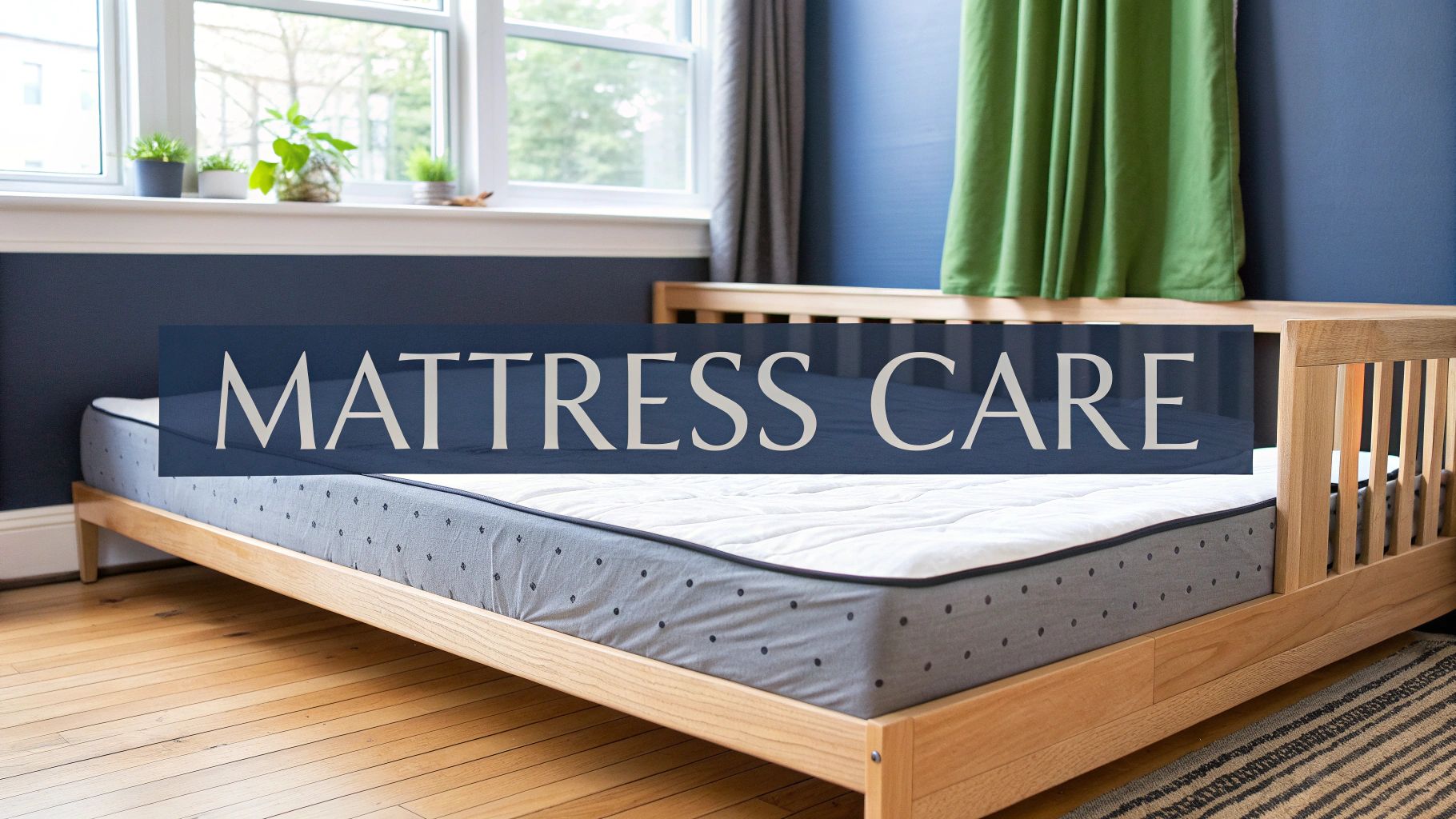
Luckily, the solution is surprisingly simple: ventilation. You have to let air circulate underneath the mattress to dry out any moisture. Tossing a mattress directly onto a solid floor, especially in a damp room, is just asking for trouble.
A low-profile, slatted bed frame is the best way to go. The slats create little channels for air to flow freely, stopping moisture in its tracks. If you're not using a frame, make it a habit to prop the mattress up against a wall for a few hours every day to let the bottom side breathe.
Creating consistent airflow is non-negotiable for a floor bed. A slatted base or a daily airing routine is the best defense against mold and mildew, safeguarding both your child's health and your mattress investment.
A Practical Cleaning and Maintenance Routine
Life with kids means spills and accidents are just part of the deal. Having a game plan makes cleanup way less stressful and helps keep common allergens like dust mites at bay. A waterproof mattress protector is your best friend here, but a consistent cleaning schedule is just as vital.
Here’s a simple checklist to keep your montessori floor bed mattress in great shape:
- For Spills: The moment it happens, blot the spot with a dry cloth to soak up as much liquid as you can. Use a mild mix of gentle soap and water to dab the stain, then blot it again with a clean, damp cloth. Let it air dry completely before putting sheets back on.
- For Routine Cleaning: Once a week, vacuum the mattress surface with an upholstery attachment. This simple step sucks up dust, crumbs, and other allergens.
- For Deep Cleaning: Every few months, give it a refresh by sprinkling baking soda all over the mattress. Let it sit for about an hour to absorb odors, and then vacuum it all up.
Your Weekly and Monthly Maintenance Checklist
Staying on top of mattress care is easy when you break it down into small, manageable tasks.
Weekly Tasks:
- Change the Bedding: Wash all sheets, pillowcases, and the mattress protector in hot water to kill off dust mites.
- Vacuum the Mattress: Use the upholstery tool on your vacuum for a quick clean of the surface.
- Check for Dampness: Do a quick touch-test on the underside of the mattress to make sure it's totally dry.
Monthly Tasks:
- Rotate the Mattress: Turn it 180 degrees (head-to-toe) to make sure it wears evenly and doesn't get dips.
- Air It Out: If you can, lean the mattress against a wall for a few hours to let it breathe all the way through.
- Inspect the Frame: Take a peek at the slats to make sure they're secure and give the frame a quick wipe-down to get rid of any dust.
How Ocodile Beds Elevate Your Mattress Choice
Pat yourself on the back—choosing the right montessori floor bed mattress is a huge win. But it’s only half the equation. To create that perfect little sleep sanctuary, your mattress needs an equally thoughtful partner: the bed frame.
A quality frame does more than just hold the mattress off the floor. It completes the safety system and even enhances the mattress's best features. Think of it like a professional camera lens. A brilliant lens brings out the full, stunning potential of a powerful camera. In the same way, an Ocodile floor bed is engineered to bring out the very best in your carefully selected mattress.
Designed for Safety and Longevity
Ocodile beds are built from the ground up with core Montessori principles in mind. We use non-toxic, child-safe finishes and materials, which means the frame is just as healthy as the certified-organic mattress you place on it. You never have to wonder if you're compromising on a pure, chemical-free environment for your child.
Our frames are also precision-engineered to fit standard mattress dimensions snugly. This isn't just for looks; this meticulous fit eliminates dangerous gaps between the mattress and the frame, giving you peace of mind and protecting your little one from entrapment risks.
The Critical Role of Airflow
One of the biggest worries parents have about floor beds is the potential for mold and mildew. When moisture from humidity or nighttime accidents gets trapped, it can become a serious health hazard. This is where the frame's design becomes absolutely crucial.
A bed frame isn't just a piece of furniture; it's an active part of your child's sleep hygiene. Its ability to promote airflow is just as important as the mattress's breathability.
Ocodile floor beds feature a sturdy slatted base designed for essential ventilation. This slatted system allows air to circulate freely underneath the entire mattress, wicking away moisture and stopping mold before it can start. It’s a simple but powerful feature that protects your mattress investment and, more importantly, your child’s health.
It's clear more parents are prioritizing these kinds of thoughtful designs. The global market for Montessori-style beds was valued at over USD 500 million in 2025 and continues to grow. If you're interested in the numbers, you can read more about these market trends in floor beds.
Your Montessori Mattress Shopping Checklist
Shopping for a Montessori floor bed mattress can feel like you're drowning in options, but a simple checklist can really help keep you focused. Think of this as your scannable guide to make sure you hit all the essentials, whether you're clicking through websites or walking the aisles of a store.
We’re boiling everything down into a few non-negotiable points. This way, you can reinforce what you’ve learned and make a purchase you feel genuinely good about for your little one's sleep space.
Core Safety Checks
- Confirm Firmness First: This is the big one. The mattress has to be firm, flat, and supportive. Give it a good press in the center and along the edges—it should pop right back up without leaving a deep handprint.
- Verify Exact Dimensions: Before you do anything else, measure the inside of your bed frame. Then, double-check the mattress dimensions. You're aiming for a super snug fit, with no more than a one-finger gap between the mattress and the frame.
- Check for Key Certifications: Keep an eye out for important labels. Greenguard Gold tells you it has low chemical emissions, CertiPUR-US means the foam is made without a list of harmful chemicals, and GOTS is the gold standard for organic textiles.
If you remember nothing else, remember this mantra: Firm, Snug, and Certified. Getting these three things right covers the most critical parts of mattress safety.
Material and Usability Points
- Prioritize Breathable Materials: Good airflow is key. Look for mattresses made from naturally breathable stuff like latex, high-density foam, or organic cotton to keep things from getting too stuffy.
- Look for a Washable Cover: Life with a child is messy. A waterproof, removable, and machine-washable cover isn't just a nice-to-have; it's a lifesaver for cleanups and long-term hygiene.
Answering Your Top Montessori Mattress Questions
Even after you've nailed down the essentials, a few questions are probably still swirling around your head about making the switch to a Montessori floor bed mattress. It's totally normal. Let's walk through some of the most common ones so you can feel confident and ready for this exciting new step.
When Can My Baby Start Using a Floor Bed?
Technically, you can use a floor bed from day one, provided the entire room is baby-proofed and treated as one big, safe sleep space.
In practice, though, most parents find the transition feels most natural when their baby starts outgrowing the bassinet or showing those first wiggles of mobility. This often happens somewhere between 5 to 10 months. There’s no magic number here—it's all about your baby's developmental readiness and what feels right for your family.
How Do I Prevent Mold Under the Mattress?
This is a huge—and very valid—concern. The key to preventing mold is simple: airflow.
When a mattress sits directly on a solid floor, it can't breathe. Moisture gets trapped underneath, creating a perfect environment for mold and mildew. The best fix is a slatted bed frame that allows air to circulate freely. If you’re set on placing the mattress right on the floor, you’ll need to make it a daily habit to prop the mattress up against a wall for a few hours to let it air out completely.
A good rule of thumb for floor beds is that the entire room becomes the "crib." Every piece of furniture must be anchored, outlets covered, and choking hazards removed to create a completely safe environment for independent exploration.
Should I Choose a Twin or Full Mattress?
A Twin mattress is a super popular choice. It gives a toddler plenty of room to stretch out and grow without taking over a smaller bedroom.
On the other hand, a Full mattress is a fantastic long-term investment. It offers even more space and is a lifesaver if you plan to snuggle up with your child for bedtime stories or comfort during the night. The right choice really comes down to your room size and how long you envision them using the bed.
Can I Just Use a Regular Mattress on the Floor?
While you can, it isn't always the safest bet. A dedicated Montessori floor bed mattress or a firm crib mattress is designed specifically with little ones in mind.
They are typically lower profile and guaranteed to have the firmness needed to prevent suffocation risks. A standard adult mattress might be too soft or too thick, which not only creates a higher fall risk but could also pose other safety hazards.
Ready to create the perfect Montessori sleep space? The Ocodile floor bed is engineered with a sturdy slatted base to provide the essential airflow your mattress needs, ensuring a safe, healthy, and beautiful environment for your child. Explore our collection at https://ocodile.com.