



Your Guide to the Perfect Twin Floor Mattress
At its heart, a twin floor mattress is just a standard twin-sized mattress that sits either directly on the floor or on a very low-profile frame. The goal is simple: give young children the freedom to get in and out of bed all by themselves. This approach is a big deal in Montessori-inspired spaces, helping build autonomy and confidence right from the start.
What Makes a Twin Floor Mattress a Smart Choice?
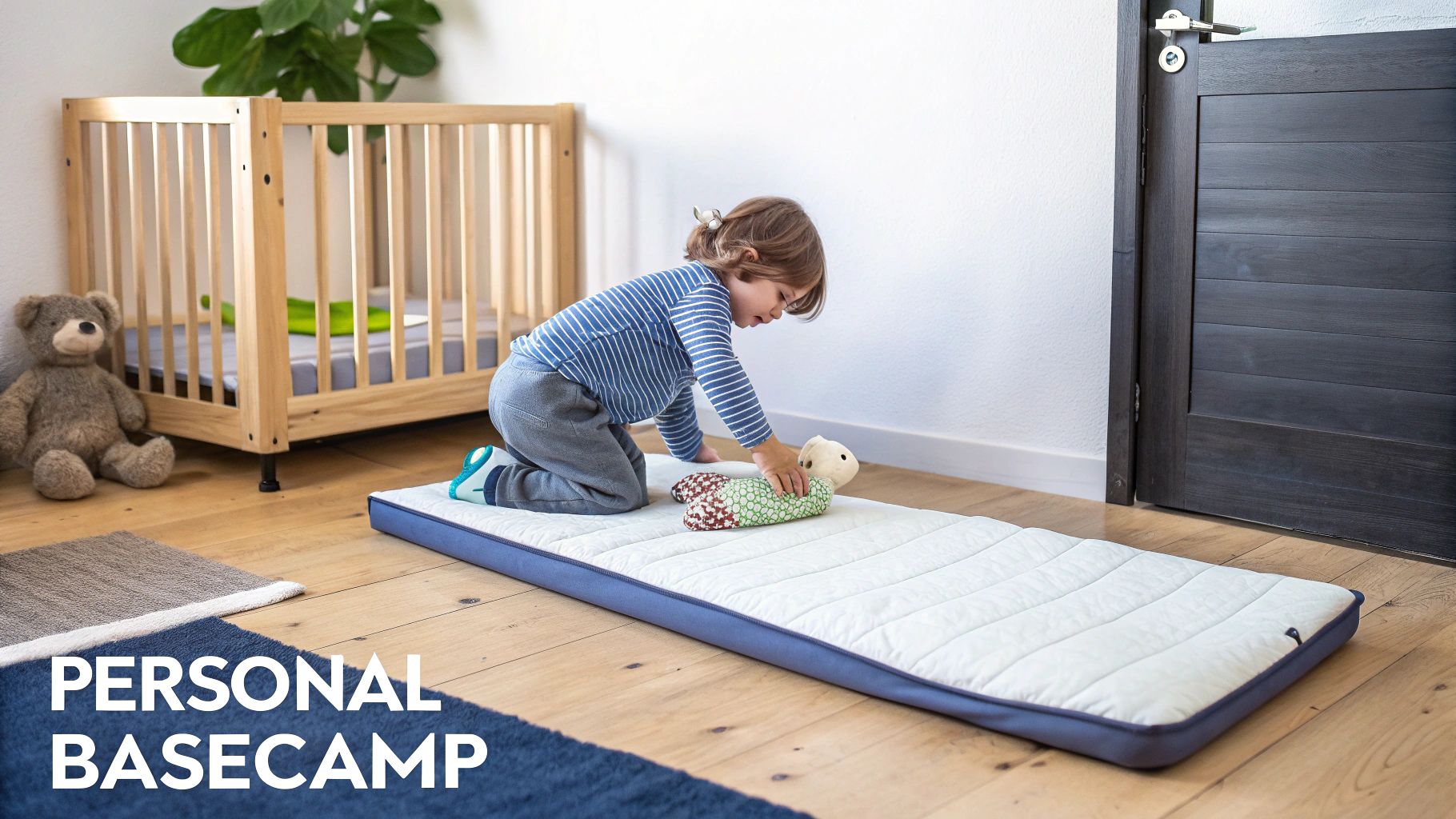
Switching from the high rails of a traditional crib to a bed on the floor can feel like a huge leap for parents. But a twin floor mattress isn't just a piece of furniture—it’s a philosophy centered on your child's natural development. Think of it as their first personal home base, a safe and accessible space where they are in complete control.
This setup is actually a cornerstone of the Montessori method, which puts a big emphasis on independence and freedom of movement. When a child can leave their bed without needing help, they start to see their room as their own little world. This simple act of empowerment has a massive ripple effect on their growth.
Fostering Independence and Confidence
The biggest win with a floor bed is the autonomy it gives a toddler. Instead of waiting for you to lift them out of a crib, they can wake up and decide to play with toys or grab a book on their own. This freedom nurtures self-reliance and decision-making skills from a very young age.
By providing a sleeping area that children can access on their own, we send a powerful message of trust and respect for their capabilities. It’s a foundational step in building a confident, self-directed individual.
Suddenly, their bedroom isn't a place of confinement anymore; it becomes a space for exploration. A child learns to listen to their body's cues for rest and play, setting the stage for healthy sleep habits for life.
Enhancing Spatial Awareness and Safety
A twin floor mattress naturally teaches kids about their physical environment. Safely getting on and off their low bed helps them develop crucial spatial awareness and motor skills. Plus, unlike a crib that can become a climbing hazard for adventurous toddlers, a floor bed pretty much eliminates the risk of a dangerous fall.
The growing popularity of this idea lines up with bigger market trends, too. The global mattress market is expanding fast, with an expected growth of USD 43.37 billion between 2025 and 2029. This boom is driven by a new focus on sleep quality and lifestyle needs, where space-saving options like a floor bed are a perfect fit for modern homes. You can find more insights on the mattress market's growth over at Technavio.com.
Ultimately, choosing a twin floor mattress is about creating a child-led environment. It’s a practical, modern solution that supports key developmental milestones while providing a safe and comfy spot for both rest and play.
Finding the Right Dimensions and Thickness
At first glance, picking the right size for a twin floor mattress seems easy. But it's about so much more than just fitting it into the room. The dimensions, and especially the thickness, are the foundation for a sleep space that’s both cozy and safe for your little one. Nail these details, and you're setting the stage for a great floor bed experience.
A standard twin mattress measures 38 inches wide by 75 inches long. This is often the perfect size for a child graduating from a crib. It gives a growing toddler plenty of room to stretch out without feeling like they’re lost in a giant bed, and it fits neatly into most bedrooms, leaving lots of floor space for play.
This familiar size helps make the move to a "big kid bed" feel exciting instead of scary. Plus, it's large enough to last for years, making it a smart, long-term choice.
The Goldilocks Zone for Mattress Thickness
While the length and width are pretty much set, the mattress thickness—or height—is where you really need to pay attention. For a floor bed, the ideal thickness is between 5 and 8 inches. This range is the sweet spot, perfectly balancing comfort with the number one rule of a floor bed: keeping your child low to the ground.
Think of it like a step. A tiny, one-inch step is no big deal. But a three-foot ledge? That’s a serious falling risk. A mattress that’s too thick, like a plush 12-inch or 14-inch model, essentially becomes its own platform, defeating the whole purpose of a floor bed and bringing back the very hazard you’re trying to avoid.
On the flip side, a mattress that’s too thin (under 5 inches) won't give enough cushioning for a good night's sleep. It can feel like camping on a flimsy mat every night, which isn't great for supporting a child's growing body.
The goal is to find a mattress that’s plush enough to be inviting but low enough that any accidental tumbles are gentle and harmless. The 5-to-8-inch range gets this job done perfectly.
Why the Standard Twin Is a Market Leader
There’s a reason the twin mattress is a superstar in the bedding world. It’s incredibly versatile, making it a go-to for kids' rooms, guest rooms, and dorms. This popularity is reflected in the market, which is projected to grow to USD 93.6 billion by 2035. You can dive deeper into mattress market trends and forecasts over at FutureMarketInsights.com.
This data just goes to show how practical and popular twin-sized options are, which means you’ll have plenty of great choices when hunting for the perfect mattress for your child's floor bed.
To make things even easier, here’s a quick guide to help you choose the right thickness.
Twin Floor Mattress Thickness Guide
This table is a simple reference to help you decide on the best mattress thickness for your child, keeping safety and comfort as the top priorities.
| Thickness | Ideal For | Key Considerations |
|---|---|---|
| 4 Inches or Less | Temporary use, travel mats. | Too thin for everyday sleep; it likely won't provide the spinal support and comfort a growing child needs. |
| 5-6 Inches | Toddlers and younger children. | This is the safest height for a floor bed, keeping the fall risk to a minimum while still being comfy and supportive. |
| 7-8 Inches | Older children or for a plusher feel. | Still safely within the recommended range, this thickness offers more cushioning without creating a dangerous height. |
| 9 Inches or More | Not recommended for floor beds. | This creates a significant falling hazard, which completely undermines the safety benefit of a floor bed. |
Ultimately, choosing a mattress between 5 and 8 inches thick means you're staying true to the safety-first philosophy of the floor bed. You’re creating a supportive, secure, and comfortable "basecamp" where your child can confidently grow their independence.
Comparing Materials and Firmness Levels
Picking out the right twin floor mattress feels a bit like choosing the perfect playground surface. Some materials have a soft, cradling give, while others offer a springy, responsive bounce. Getting to know these differences is the key to creating a sleep space that’s not just cozy, but also supportive and safe for your little one’s growing body.
The material of a mattress really dictates its breathability, how long it will last, and the overall feel. Let's break down the most common types you'll run into.
Decoding Mattress Materials
Each mattress type brings something unique to the table. Once you know the pros and cons, you can easily match a material to your child's needs and your family’s priorities—whether that's going all-organic or finding a great budget-friendly option.
Here’s a look at the top contenders:
- Memory Foam: Famous for its body-hugging feel, memory foam molds to your child's shape for fantastic pressure relief. But for a floor mattress, it’s absolutely essential to make sure it has good airflow to keep moisture from building up underneath.
- Latex: Often celebrated for its natural origins, latex is both bouncy and breathable. It gives you a supportive feel without that deep "sinking" sensation you get from memory foam, and it’s naturally resistant to pesky dust mites and mold.
- Innerspring: This is the traditional choice, using a network of steel coils for that classic bouncy support. Innerspring mattresses have excellent airflow, which is a huge plus when the mattress is directly on the floor.
- Hybrid: These mattresses try to give you the best of both worlds, usually layering foam or latex on top of an innerspring coil system. You get the solid, responsive support of coils paired with the contouring comfort of foam.
For a deeper dive into these options, check out our guide on finding the best mattress for a floor bed, which has some really helpful, detailed comparisons.

This visual is a great cheat sheet, reinforcing the standard 38" x 75" dimensions and the ideal 5-8" thickness for a safe, comfortable setup.
The Non-Negotiable Rule of Firmness
When you’re buying a mattress for a toddler, firmness isn’t just a preference—it's a critical safety feature. A super-soft, plush mattress might seem cozy, but it can actually pose a serious suffocation risk for young children. Their small, light bodies can sink right into a soft surface, which could obstruct their breathing.
On top of that, a child's spine is still developing, and a firm surface is what they need for proper alignment. A mattress that’s too soft can cause their back to curve in an unnatural way while they sleep.
For toddlers and young children, always choose a firm or medium-firm mattress. This provides the stable, flat surface they need for safe sleep and healthy spinal development, preventing dangerous sinking and promoting proper posture.
Think of it this way: you want a mattress that supports them, not one that swallows them up. When you press down on the surface, it should pop back up quickly without leaving a deep, lasting handprint.
Understanding Health and Safety Certifications
So, how can you be sure the mattress you choose is free from nasty chemicals? This is where third-party certifications become your best friend. They act as a trusted seal of approval, verifying that the materials are non-toxic and safe for your little one.
Keep an eye out for these key labels when you’re shopping:
- CertiPUR-US®: This is for polyurethane foams (like memory foam). It guarantees the foam is made without ozone depleters, heavy metals like mercury and lead, and certain harmful flame retardants. It also ensures low VOC (Volatile Organic Compound) emissions for better indoor air quality.
- GOTS (Global Organic Textile Standard): This is the gold standard for anything organic. If a mattress has GOTS-certified latex or cotton, it means at least 95% of the materials are certified organic and have been processed under strict environmental and social rules.
- GREENGUARD Gold: This certification is even tougher than the standard GREENGUARD label, as it’s designed specifically for products used by sensitive individuals like children. It tests for over 10,000 chemicals and VOCs, making sure the mattress contributes to a healthier room.
By choosing a mattress with trusted certifications, you're investing in a clean, healthy sleep environment for your child. It's the kind of peace of mind that helps everyone sleep a little better at night.
Creating a Safe and Healthy Sleep Space
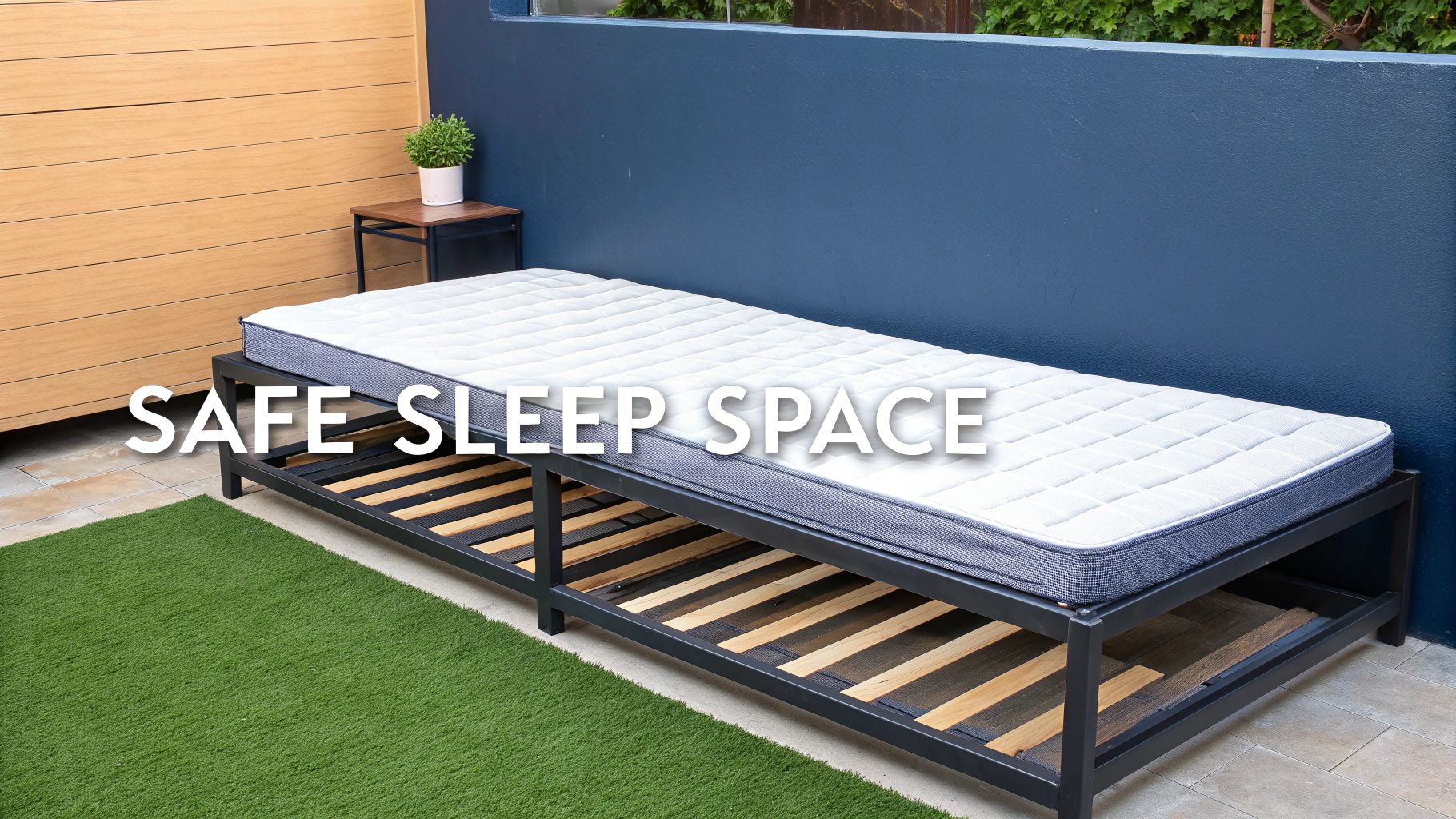
Making the switch to a twin floor mattress is a big, exciting step. But the most important part isn't just the bed itself—it's creating a totally secure environment around it. Think of the entire room as an extension of the bed. It needs to be a safe zone for both sleep and independent play. This takes a bit of prep work, but it’s what makes your child’s new sleep space truly empowering.
The main idea is simple: get rid of any potential hazards. To do this right, you have to get down on your hands and knees and see the world from your child's perspective. What looks perfectly fine from your height can be a big risk for a curious little one.
Your Essential Room Safety Checklist
Before you even bring the mattress in, do a complete safety sweep of the room. This isn't just about checking boxes; it's about transforming a regular bedroom into a secure sanctuary where you can have total peace of mind.
Here are the absolute non-negotiables:
- Secure All Furniture: Heavy items like dressers, bookshelves, and toy chests must be anchored to the walls. A climbing toddler can easily topple unsecured furniture, which is a serious danger.
- Cover Electrical Outlets: Use childproof covers on every single accessible outlet. This is a simple fix that prevents any chance of electrical shock.
- Manage Cords and Wires: Make sure there are absolutely no loose cords from blinds, curtains, or electronics within reach. These are a major strangulation hazard and need to be tied up high or removed entirely.
- Clear the Area: The space right around the mattress should be a buffer zone—free of hard furniture, sharp corners, or any small toys that could become choking hazards.
For a deeper dive into prepping the room, our guide on Montessori floor bed safety has even more tips and insights.
Preventing Mold and Mildew Buildup
One of the biggest worries with a mattress on the floor is the potential for mold and mildew. As we sleep, our bodies release heat and moisture. Without proper airflow, that moisture gets trapped between the mattress and the floor, creating the perfect dark, damp spot for mold to grow.
The good news? Preventing this is actually pretty straightforward. It all comes down to one thing: constant ventilation. A mattress needs to breathe on all sides, especially underneath.
A common mistake is just dropping a twin floor mattress directly onto a solid floor or a plastic mat. This basically seals off the bottom, trapping every bit of moisture and practically inviting mold to set up shop.
To fight this, you have a few great options. The goal is just to lift the mattress slightly so air can move freely underneath.
Here’s how to keep that mattress dry and healthy:
- Use a Slatted Base: A low-profile slatted bed frame, like the ones from Ocodile, is the perfect solution. The gaps between the slats let air flow continuously, wicking away moisture before it can cause any issues.
- Choose a Breathable Protector: A waterproof but breathable mattress protector is a must. It protects the mattress from accidents and spills but still lets air pass through, preventing that stuffy, damp feeling.
- Aerate the Mattress Regularly: Get into the habit of lifting the mattress and leaning it against a wall for a few hours at least once a week. This simple trick airs out the bottom and makes sure it stays completely dry.
- Maintain Good Room Ventilation: Keep the air in the room moving. Open the windows daily or use a fan to boost circulation. For more advanced ways to keep your bedroom air fresh, you might want to look into air purification systems.
By following these simple but crucial steps, you can confidently create a clean, healthy, and totally safe sleep space for your child to enjoy for years.
How to Care for and Maintain Your Mattress
https://www.youtube.com/embed/ihnocJ8f_58
A twin floor mattress is a real investment in your child's comfort and growing independence. With just a little bit of regular care, you can make sure it stays clean, healthy, and cozy for years to come.
Think of it like tending a little garden—a small amount of attention goes a long way. A simple routine is all it takes to protect the mattress from the inevitable spills, dust, and general wear-and-tear of life with a toddler. This small effort not only preserves the mattress but also gives you peace of mind.
Your Weekly and Monthly Care Routine
The easiest way to stay on top of mattress care is to create a simple schedule. These aren't big, time-consuming chores; they're small habits you can fold right into your existing cleaning routine until they feel like second nature.
Your first line of defense? A high-quality, waterproof mattress protector. This is non-negotiable. It acts as a shield, stopping spills and accidents before they can soak into the mattress core, which is a real headache to clean. For other messy play areas, our tips on foam play mat care might come in handy, too.
Here’s a simple checklist to get you started:
- Weekly: Toss all the bedding—sheets, blankets, and especially the mattress protector—in the wash. Use hot water to get rid of germs and allergens. It’s a good idea to know how often to wash bedding to keep the whole sleep space fresh.
- Monthly: Grab your vacuum and use the upholstery attachment to go over the entire mattress surface. This quick step sucks up all the dust, skin cells, and other invisible gunk that builds up.
- Quarterly: Give the mattress a 180-degree rotation, swapping the head and foot. This simple turn ensures it wears evenly and prevents dips from forming where your child sleeps every night.
To make things even easier, here’s a quick-glance schedule for keeping that mattress in top shape.
Twin Floor Mattress Care Schedule
| Frequency | Task | Purpose |
|---|---|---|
| Weekly | Wash all bedding and protector | Eliminates germs, allergens, and dust mites. |
| Monthly | Vacuum the mattress surface | Removes accumulated dust and debris. |
| Quarterly | Rotate the mattress 180° | Promotes even wear and prevents sagging. |
Sticking to a simple plan like this is the secret to a longer-lasting and more hygienic mattress for your little one.
Handling Spills and Stains
Let’s be real: accidents are going to happen. The key is to act fast so a small spill doesn't become a permanent stain. Step away from the harsh chemical cleaners, as they can damage the mattress fabric and leave behind nasty fumes.
A simple, homemade solution is all you need.
- Blot, Don't Rub: The second a spill happens, grab a clean, dry cloth and blot the area. Your goal is to soak up as much liquid as you can. Rubbing will only push the stain deeper into the mattress.
- Use a Gentle Cleaner: Mix a little bit of mild detergent or white vinegar with water in a spray bottle. Lightly mist the stain—you don't want to completely saturate the spot.
- Blot It Out: With a fresh, clean cloth, gently blot the stain again to lift it out of the fabric.
- Air It Out: Let the spot air dry completely before you even think about putting sheets back on. A fan can help speed things up if you're in a hurry.
Your Final Twin Floor Mattress Checklist
Let’s be honest, wading through all the options for kids’ furniture can make your head spin. But picking the right twin floor mattress doesn't have to be complicated.
Think of this as your final, scannable guide. We’ve pulled together all the most important points we've covered so you can quickly compare mattresses and feel great about your choice—knowing it’s the best one for your child's well-being.
Before you click "buy," just run through these key points. It’s a quick sanity check to make sure you're investing in a mattress that will truly support your little one's growth and sleep.
Safety First
This is the big one. It's the absolute foundation of your decision, and there’s no room for compromise. A safe mattress means a healthy sleep environment, free from unnecessary risks.
- Firmness is Crucial: Always, always go for a firm or medium-firm mattress. Anything too soft can create a suffocation hazard and won’t give a growing child the proper spinal support they need.
- Ensure a Snug Fit: If you’re using a low frame like the ones from Ocodile, double-check that there are zero gaps between the mattress and the frame. You want it to be perfectly snug to prevent any chance of a child getting trapped.
A firm, flat surface is the cornerstone of safe sleep for young children. It prevents dangerous sinking and promotes proper spinal alignment, giving you complete peace of mind.
Material Matters
What’s on the inside counts—big time. The materials in the mattress directly affect your child's health and how long the mattress will last.
- Prioritize Non-Toxic Materials: Keep an eye out for trusted certifications. CertiPUR-US® for foams, GOTS for organic textiles, or GREENGUARD Gold for low chemical emissions are the gold standard. These labels are your proof that the mattress is free from nasty substances.
- Choose Breathable Fabrics: A mattress that’s low to the ground needs good airflow. Materials like natural latex or a simple cotton cover do wonders for breathability, keeping things fresh and comfortable.
Size and Thickness
Getting the dimensions just right is the key to making the whole floor bed setup work safely and practically.
- Stick to the Sweet Spot: A mattress thickness between 5 and 8 inches is perfect. It’s low enough to make any tumbles completely harmless but still thick enough to be comfortable and supportive.
- Confirm Standard Twin Size: Make sure you're getting a standard twin (38" x 75"). This ensures it will fit all your standard twin bedding and any low-profile frames you might be eyeing.
A Few Common Questions
Diving into the world of toddler sleep can feel like navigating a maze. As you think about switching to a twin floor mattress, it’s completely normal to have a list of questions. You want to be sure you're making the safest, most comfortable choice for your little one.
This section tackles the most common things parents worry about, giving you direct, helpful advice so you can feel confident in your decision. Let's get into the details.
When Is the Right Age for a Floor Bed?
There really isn't a single "magic age" to start with a floor bed, because every child hits their milestones at a different pace. However, most families find the sweet spot is when their toddler starts trying to climb out of their crib, which usually happens somewhere between 18 and 24 months. This is a huge sign they're ready for a little more independence—and that the crib is becoming a safety risk.
Technically, you can start even earlier, as soon as your baby has outgrown their bassinet, but only if the entire room is completely and thoroughly childproofed. The real key is to watch for signs of readiness, like being able to move around well on their own and having a good awareness of their surroundings.
How Can I Prevent Mold Under a Floor Mattress?
Keeping mold away is probably one of the most important jobs when you have a floor bed, and it all comes down to one simple thing: ventilation. Moisture from our bodies and even the air can get trapped between the mattress and the floor, creating the perfect spot for mold to grow.
The easiest and most effective way to stop mold before it starts is to make sure air can always circulate underneath the mattress. Putting it directly on a solid floor is just asking for trapped moisture.
Here are three simple ways to keep things dry and fresh:
- Use a Slatted Base: A low-profile slatted frame is the best option. It lifts the mattress just enough to let air flow underneath constantly.
- Pick a Breathable Protector: A mattress cover that's waterproof but still breathable is perfect. It stops spills from soaking in without trapping humidity.
- Air It Out Weekly: If you decide against a frame, make it a habit to lean the mattress against a wall for a few hours every week. This gives the underside a chance to dry out completely.
Is a Floor Bed Truly Safe for My Toddler?
Yes, a floor bed is incredibly safe—as long as you treat the entire room as the crib. Since the mattress is so low to the ground, the risk of getting hurt from a fall is practically zero. But, that freedom of movement means the rest of the room has to be a totally secure space.
Before you make the switch, double-check that you've:
- Anchored all heavy furniture (like dressers and bookshelves) to the walls.
- Covered all electrical outlets and tucked away any loose cords.
- Removed any small toys or other potential choking hazards from the room.
Can I Use a Regular Twin Mattress on the Floor?
You can absolutely use a regular twin mattress, but you have to be a little picky about which one you choose. The right twin floor mattress should be firm or medium-firm to give them the support they need and reduce any suffocation risks. It should also be between 5 and 8 inches thick—cushy enough to be comfortable but low enough to stay safe.
Steer clear of those super plush, thick mattresses (anything over 9 inches), since they kind of defeat the purpose of having a low-to-the-ground bed. It's also a good idea to check the mattress warranty; some companies might void it if the mattress isn't on a proper supportive base.
Ready to build a safe and empowering sleep space for your little one? Take a look at the thoughtfully designed floor beds at Ocodile, crafted to support your child’s independence right from the start.
Find the perfect foundation for your twin floor mattress at https://ocodile.com.