



A Parent's Guide to Montessori Floor Bed Safety
A Montessori floor bed is so much more than a mattress on the floor. It’s a total shift in how we view a child's independence and autonomy. With this simple change, a child's room transforms from just a nursery into an empowering little world where they can safely explore and get to their own rest space, on their own terms. Real montessori floor bed safety isn’t just a feature—it's the very foundation that makes all this wonderful freedom possible.
Why a Floor Bed Is More Than Just a Mattress on the Floor

Let’s reframe how we think about a child’s bed for a moment. Instead of a 'container' like a traditional crib, picture a 'home base' inside a safe, explorable playground. That’s the core idea behind a Montessori floor bed, and it’s a simple change that has a profound impact on a child’s natural development.
This whole philosophy is built on nurturing independence and freedom of movement right from the start. By placing the bed at the child's level, we empower them to listen to their own bodies. When they feel sleepy, they can climb into bed without waiting for an adult to lift them in. When they wake up, they can safely get out and play with their toys.
Building Confidence and Body Awareness
This simple act of being in charge of their own rest space builds incredible confidence and body awareness. Every time a toddler successfully wiggles in or out of their floor bed, they’re mastering a small physical challenge. It’s a gentle way for them to learn what their body can do in a completely safe setting.
The main benefits really boil down to this:
- Fostering Independence: Kids learn to make choices about their own sleep, respecting their body’s cues from a young age.
- Encouraging Movement: It’s great for motor skill development as they practice crawling or walking to and from their bed.
- Building Trust: It sends a clear message to your child: "I trust you to manage your own space," which does wonders for your bond.
A floor bed respects the child as a capable individual, allowing them to participate actively in their daily routines rather than being a passive recipient of care. This respect is a cornerstone of the entire Montessori method.
Contrasting with Traditional Sleep Setups
If you think about it, traditional cribs are designed primarily for containment. While they absolutely serve an important safety purpose, especially for infants, they do limit a child’s freedom. A child in a crib has to wait for a caregiver to decide when it’s time to get up or lie down. You can get a better sense of the key differences in our guide comparing the floor bed vs crib.
Making the switch to a floor bed means your safety focus shifts from just the bed to the entire room. The bedroom becomes the new boundary—a fully childproofed "yes-space" where exploration is encouraged. Getting this foundational concept right—that safety enables freedom—is the key to creating a sleep environment that is both secure and empowering. To see how this philosophy extends beyond just sleep, you can find great info on age-appropriate Montessori toys by age.
Assessing Your Child's Readiness for a Floor Bed
So you’re thinking about a floor bed. It’s a great step! But the first question that pops into every parent’s mind is, "When is the right time?" It’s easy to get caught up looking for a magic number, but the best—and safest—transitions aren’t tied to a birthday.
Think of it less like a date on the calendar and more like a series of green lights your child gives you. Readiness is all about physical milestones, not age.
A child is truly ready for a floor bed when they can move with purpose and safely get around on their own. This is about more than just wiggling; it’s about having real control and awareness of their body and their space. Watching for these specific skills is the key to solid Montessori floor bed safety and making sure your little one can handle all that new freedom.
Key Physical Milestones to Watch For
Before you make the switch, keep an eye out for these crucial physical skills. A child who has these down is much better prepared to handle their sleep space and avoid common bumps in the road (or tumbles out of bed).
- Independent Rolling: Can your child easily roll from their back to their tummy and—just as important—back again? This is a non-negotiable. It means they can get themselves out of an awkward or unsafe position while sleeping.
- Purposeful Crawling or Scooting: Is your child moving from point A to point B on purpose? This shows they have the motor skills to get out of bed and explore their room without getting stuck or frustrated.
- Pulling to a Stand: If your child can pull themselves up on furniture, they have the strength and coordination to get up from a low mattress. It’s a clear sign they’re physically ready to get in and out of bed all by themselves.
These skills are so important because they show a child has enough body control to prevent getting into a tricky spot, like being wedged between the mattress and a wall.
Why Infants Under 12 Months Are an Exception
The Montessori philosophy is wonderfully adaptable, but a floor bed for an infant is one area where we have to follow strict safety rules. This isn't just a preference; it's a critical safety guideline backed by pediatric experts.
No matter how popular they seem, Montessori floor beds come with real risks for babies under 12 months. The American Academy of Pediatrics (AAP) strongly advises against them for this age group, recommending that babies sleep in cribs, travel cribs, or bassinets that meet federal safety standards. A mattress on the floor can be a suffocation hazard if it’s too soft or if a baby’s face gets pressed into bedding not designed for infants. For more detail on this, check out these helpful Montessori bed safety guidelines.
The biggest issue for infants is that they can't reliably move themselves out of an unsafe position. A crib creates a controlled environment, removing the many risks that a floor bed can introduce to the room.
At the end of the day, checking for readiness is all about careful observation. When you wait for your child to show you they have the physical skills to navigate their world, you’re setting them up for a successful transition. This patient, child-led approach is how you build a foundation of safety and make a choice you can feel truly confident about.
How to Create a Completely Childproof Sleep Space
When you decide on a Montessori floor bed, you’re making a big shift in how you think about sleep safety. The bed itself is no longer the main boundary—instead, the whole room becomes the safe zone. It’s a lot like a pilot’s pre-flight checklist; you need a systematic way to make sure every single part of the environment is secure before your little one is free to explore.
This means you have to start seeing the room through your child's eyes. The ultimate goal is to create a "yes space," an environment where their curiosity can thrive because every potential danger has been rooted out. By methodically checking the room, you turn those abstract safety worries into a real, secure space for your child.
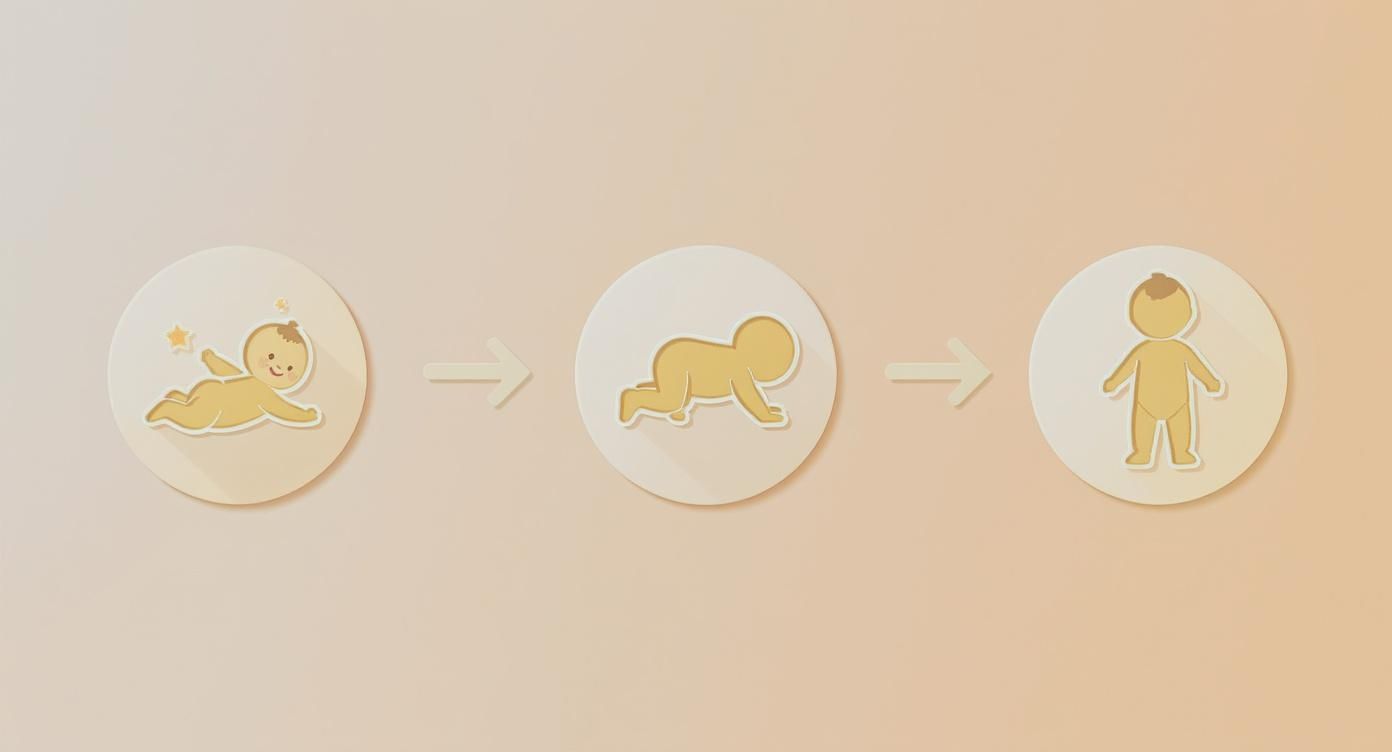
These key developmental stages—rolling over, crawling, and pulling up to stand—are your cues. They show your child is gaining the physical control they need to safely handle the freedom of a floor bed, helping you time the transition just right.
The Essential Bedroom Safety Checklist
To help you get started, we've put together a checklist that breaks down the most common hazards in a toddler's room. Think of this as your roadmap to a perfectly safe "yes space."
| Hazard Category | Specific Risk | Mitigation Strategy |
|---|---|---|
| Furniture Stability | Tip-over accidents | Anchor all heavy or tall furniture (dressers, bookshelves) to wall studs using anti-tip kits. |
| Electrical Safety | Shocks or electrocution | Cover all unused outlets with sliding or box-style childproof covers. Avoid simple plug-in caps. |
| Cord Management | Strangulation or tripping | Use cord concealers for wires, tie up blind cords, and keep monitors and their cords 3+ feet from the bed. |
| Choking Hazards | Swallowing small items | Get on the floor and remove any small objects. Ensure all toys are age-appropriate with no loose parts. |
| Injury Prevention | Bumps, bruises, or falls | Install soft corner guards on low furniture. Remove heavy items from walls or shelves above the bed. |
| Window Safety | Falls from windows | Install window guards or stops that prevent windows from opening more than four inches. |
| Room Access | Unsupervised wandering | Use a baby gate at the doorway or a childproof knob cover on the inside of the door. |
Going through this list point-by-point will give you the confidence that you've covered all your bases.
Anchor All Heavy Furniture
First things first: tackle any furniture that could tip over. Toddlers are natural-born climbers, and that dresser or bookshelf can look like a fun challenge to them. Even furniture that seems heavy and stable can become a hazard when drawers are pulled out.
This is why you absolutely must use anti-tip straps or furniture anchors to fasten every tall or heavy piece to the studs in your wall. This is a non-negotiable step for montessori floor bed safety. It’s a cheap and easy fix that prevents serious injuries.
Once everything is anchored, give each piece a good, firm tug. You want to be sure nothing can topple, no matter what your little explorer dreams up.
Secure Outlets and Manage Cords
Electrical outlets are fascinating to tiny fingers. To head off any potential shocks, make sure every unused outlet is securely covered. Sliding covers or outlet boxes are much better choices than the simple plastic plugs, which can be pulled out and become a choking hazard themselves.
Cords are another big one to watch out for. Whether they’re from blinds, lamps, or a baby monitor, dangling cords are a serious strangulation risk.
- Window Coverings: The safest bet is to go cordless. If you have cords, make sure they are tied up short and kept completely out of reach.
- Electrical Cords: Use cord concealers to run wires flush against the baseboards. You can also strategically place furniture to block off access to outlets.
- Monitors and Sound Machines: Make sure these devices, and their cords, are placed at least three feet away from the bed or any other surface your child can reach.
Eliminate Choking and Other Hazards
Get down on your hands and knees and crawl around the room. Seeing the world from your child’s perspective is the best way to spot hazards you’d otherwise miss. Do a full sweep for anything that could pose a choking, entrapment, or injury risk.
This means clearing out all small items—loose change, buttons, tiny toy parts, or anything else that could fit through a toilet paper tube. Check that any toy baskets on the floor only contain age-appropriate toys without small, detachable pieces.
When a child has the freedom to move, the entire room must be as safe as a crib. This means every object within reach has been assessed for potential danger, leaving only safe choices for exploration.
While you're down there, check for sharp corners on low furniture and add soft corner guards where needed. Also, make sure no heavy picture frames or shelves are hanging directly over the bed where they could fall. For a more exhaustive list, check out our complete guide on how to childproof your home.
Ensure Window and Door Safety
Windows can be a double threat, posing a risk for both falls and entanglement from cords. Install window guards or stops that prevent the window from opening more than four inches. You'll still get fresh air, but it won't be enough for a child to climb through.
Finally, think about the door. To keep your child from wandering around the house alone at night, you can either put a baby gate in the bedroom doorway or install a childproof knob cover on the inside of their door. This keeps them safely contained in their fully childproofed room until you get them in the morning.
Selecting the Right Bed Frame and Mattress

Once you’ve childproofed the room, the next step is picking out the bed itself. But not all floor beds are created equal, and it’s the small details in the frame and mattress that truly define Montessori floor bed safety.
Think of the frame as the skeleton and the mattress as the foundation—both have to be solid and secure to safely support your child’s budding independence. Choosing the right components isn't just about looks; it's about getting rid of hidden risks before they become a problem. Let’s break down what to look for.
What to Look for in a Bed Frame
The bed frame is so much more than a platform for the mattress. It’s a piece of furniture your child will climb on, lean against, and interact with every single day. The right frame minimizes risks, but a poorly designed one can introduce brand-new hazards into the room.
Here's your non-negotiable safety checklist for a bed frame:
- Non-Toxic Materials: Stick with frames made from solid wood with non-toxic, low-VOC or zero-VOC finishes. This is crucial since toddlers have a tendency to mouth or chew on everything.
- Smooth, Rounded Edges: Sharp corners are an obvious enemy for a wobbly toddler. A quality frame will have every edge sanded smooth and rounded off to prevent injuries from inevitable bumps and tumbles.
- Sturdy Construction: Give it a good shake. The frame should feel solid and stable, with zero wobbling. Double-check that all the hardware is secure and there are no small parts that could come loose and turn into a choking hazard.
The Dangers of Improper Spindle Spacing
If you’re leaning towards a frame with guardrails or a cute "house" design, the spacing between the spindles is one of the most critical safety features to inspect. If the slats are too far apart, they can create a serious entrapment and strangulation hazard.
This risk became tragically real when, in 2023, certain Montessori floor beds were recalled because the spindle spacing was wide enough for a child’s body to slip through but could trap their head. It’s a terrifying thought and a powerful reminder of why sticking to strict safety standards is so important.
You can learn more about the specifics of this product safety recall and its hazards.
Choosing the Safest Mattress
The mattress is where your child will spend most of their time, making its safety non-negotiable. A firm, breathable surface is the gold standard, as it dramatically reduces the risk of suffocation, especially for younger toddlers.
Here’s what to prioritize:
- Firmness is Key: The mattress needs to be firm and flat. A soft, squishy mattress can conform to a child’s face if they roll over, creating a pocket of trapped air. When you press on the mattress, it should snap back quickly and not hold the shape of your hand.
- A Snug Fit: There should be absolutely no gaps between the mattress and the sides of the frame. The rule of thumb is if you can fit more than two fingers into a gap, it’s too big and poses a serious entrapment risk.
- Breathable Materials: Look for mattresses made with breathable materials, like organic cotton or wool. These not only improve airflow but also help regulate your little one's temperature for a more comfortable sleep.
Finding the perfect mattress can feel like a huge task, so we’ve put together a detailed resource to walk you through finding the best mattress for a floor bed that ticks every safety box.
Frame vs. Floor: Airflow and Mold Prevention
A common question we hear is whether it’s okay to just place the mattress directly on the floor. While it’s the simplest option, it comes with one major drawback: a total lack of airflow.
Without any circulation, moisture from sweat and humidity gets trapped underneath the mattress. This creates the perfect breeding ground for mold and mildew to grow. Yuck.
A low-profile frame with slats is a much better choice for both safety and hygiene. The slats lift the mattress just enough to let air move freely underneath, preventing moisture buildup, keeping the mattress fresh, and protecting your child from breathing in harmful mold spores.
Making Sense of Global Safety Certifications
Trying to understand all the different product safety labels can feel like deciphering a secret code. You see acronyms like CPSC, CE, and ASTM on a bed frame and can’t help but wonder, "What does that actually mean for my child?"
Think of these certifications as a safety report card, but one issued by an impartial, expert third party. They’re your proof that a product isn't just marketed as safe—it has been put through the wringer and tested to meet specific, non-negotiable standards.
Making sense of these labels is a huge part of ensuring Montessori floor bed safety. It empowers you to cut through the marketing fluff and focus on what really matters. Instead of just taking a brand's word for it, you're putting your trust in a standardized system designed to prevent accidents.
What Key Certifications Mean for You
When you're shopping for a floor bed, you’ll mainly run into two big names: the CPSC in the United States and the CE mark in Europe. While their testing methods might be different, their core mission is exactly the same: keeping unsafe products away from families.
These organizations don't just glance at a product; they dig into the nitty-gritty details that protect kids:
- Toxic Materials: They check paints and finishes for things like lead and phthalates. This is a big deal for toddlers who, as you know, love to explore the world with their mouths.
- Structural Integrity: They make sure the bed frame is tough enough to handle real toddler life—jumping, climbing, and all—preventing collapses or breaks that could cause an injury.
- Entrapment Hazards: Most importantly, they have strict rules about the spacing between slats and spindles to make sure a child can't get trapped.
A safety certification is so much more than a sticker. It’s an assurance that the bed has been evaluated against known risks—risks that have unfortunately led to real injuries with unregulated products. It is the gold standard for peace of mind.
The popularity of Montessori floor beds is skyrocketing, with the market expected to hit $550 million by 2025. A lot of this growth is coming from European markets, where strong regulations make compliance with these safety standards mandatory. You can get more details on the trends shaping the Montessori floor bed market if you're curious.
Why This Matters for Your Floor Bed Choice
At the end of the day, a certification means an independent body has confirmed the bed's design helps prevent specific dangers. It’s their stamp of approval that the wood is strong, the paint is non-toxic, and the guardrails won't accidentally create a new hazard.
Here at Ocodile, we don’t see these certifications as a box to tick, but as our starting point. Every single one of our floor beds is designed and built to meet these tough global standards. We firmly believe that a child’s freedom to explore can only happen in a space that has been made completely safe. That starts with a foundation of proven, certified materials and design—your child's safety is built-in, not an afterthought.
Answering Your Top Floor Bed Safety Questions
Making the switch to a floor bed naturally brings up a whole new set of questions. As your little one starts to gain more independence, how you think about their sleep environment has to shift, too.
This section tackles the most common and pressing concerns we hear from parents. We'll give you clear, actionable advice to help you solve these new challenges and feel confident in your choice.
How Do I Keep My Toddler from Leaving Their Room at Night?
This is the big one—usually the number one concern for parents. The key is to shift your mindset: with a floor bed, the entire room becomes the new "crib." Your main goal is to make sure your child is safely contained within their fully childproofed space.
A baby gate at the doorway is a fantastic solution. You could also use a childproof knob cover on the inside of the door. This creates a secure boundary, making their bedroom a safe zone for them to explore if they do happen to wake up.
To encourage them to actually stay in bed, a consistent and calming bedtime routine is your best friend. This helps signal to their brain and body that it's time to wind down. If they do get up, gently and quietly guide them back to bed with as little interaction as possible. Calm, steady repetition teaches them that nighttime is for sleeping, even with all their new freedom.
Where Is the Safest Place to Put a Floor Bed in a Room?
Where you place the bed is a huge piece of the Montessori floor bed safety puzzle. You want to create a little sleep sanctuary that is totally free from potential hazards.
Follow these simple placement rules for the best setup:
- Against a Solid Wall: Place the bed snugly against a solid interior wall. This avoids windows and the temperature swings that can come with exterior walls.
- Away from Hazards: Make sure the bed is far from windows, blind cords, curtains, heaters, and radiators to prevent any risk of entanglement or burns.
- Create a Soft Landing Zone: Have a clear, soft area around the bed, like a plush rug. Avoid placing it right next to hard furniture with sharp corners.
- Check What's Above: Never put the bed directly under heavy shelves, picture frames, or any other wall decor that could possibly fall.
When Can My Child Safely Use a Pillow and Blanket?
This is where you want to stick closely to established safe sleep guidelines. The American Academy of Pediatrics (AAP) is clear that pillows, blankets, and other soft bedding should be kept out of the sleep space until a child is at least 12-18 months old. Many experts even suggest waiting until age two.
Until your child is old enough for bedding, a wearable blanket or sleep sack is the safest way to keep them warm. This gives them comfort without the suffocation risk that comes with a loose blanket.
When you finally do introduce a pillow, choose one that is small, firm, and made specifically for toddlers. A big, fluffy adult pillow is not a safe choice.
Should I Worry About Mold if the Mattress Is on the Floor?
Yes, this is a very real and important thing to consider. When a mattress sits directly on the floor, it can trap moisture and cut off airflow. This creates the perfect environment for mold and mildew to grow—which is not just gross, but a potential health risk for your child.
The absolute best way to prevent this is by using a low-profile bed frame with slats. This simple addition lifts the mattress just enough to let air circulate underneath, which helps wick away moisture and keep the mattress fresh and dry.
If a slatted frame isn't an option for you, you’ll just have to be extra diligent. This means propping the mattress up against a wall to air out completely at least once a week. You can also place a breathable, moisture-wicking mat underneath the mattress to add a protective barrier.
At Ocodile, we believe in empowering children by creating environments that are as safe as they are beautiful. Our thoughtfully designed floor beds are crafted to meet rigorous safety standards, giving you peace of mind while your child explores their independence.
Discover the Ocodile difference and build the perfect foundation for your child’s growth. Explore our collection of safe and stylish children's furniture today.