



The Parent's Guide to Wooden Floor Bed Frames
A wooden floor bed frame is a simple, low-to-the-ground bed base made from natural wood. Its defining feature is its height—or lack thereof—which lets even the smallest toddlers get in and out of bed all on their own, safely and independently.
What Exactly Is a Wooden Floor Bed Frame?
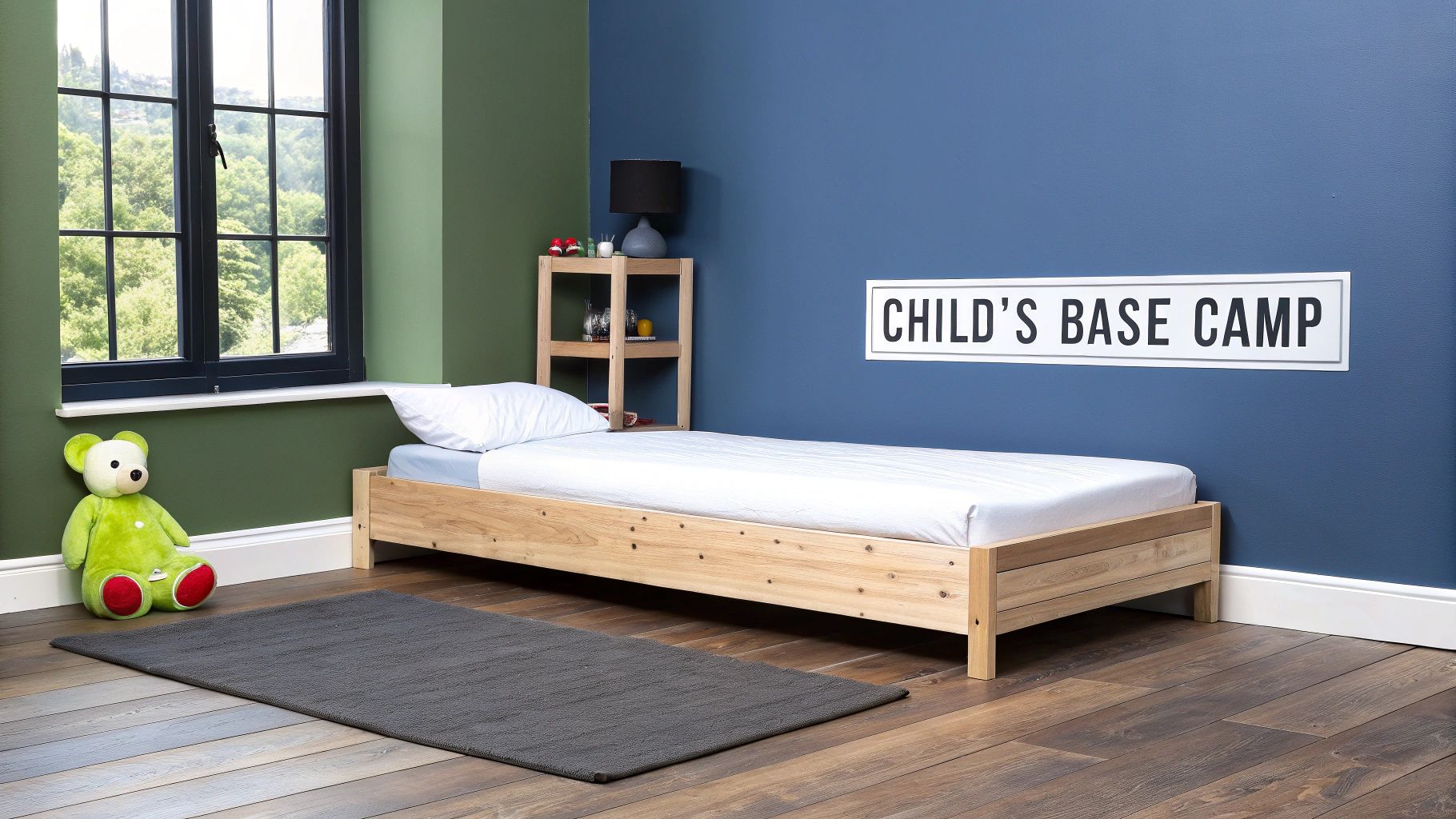
It helps to think of a wooden floor bed frame not just as another piece of furniture, but as your child's very first "base camp" for exploration and rest.
The whole concept is deeply rooted in the Montessori philosophy, which is all about nurturing a child's natural drive for independence. By placing the mattress just inches off the floor, this type of bed gets rid of the physical barriers that come with a traditional crib or a high bed frame.
This simple design empowers your child and gives them true ownership of their space. When they wake up, they aren't stuck waiting to be "rescued." They can just slide out of bed and grab their toys, peek out the window, or find a favourite book. That little bit of freedom is a huge confidence booster, helping them build self-reliance from a very young age.
More Than Just a Bed
Beyond the developmental perks, choosing a wooden floor bed frame brings a certain warmth and aesthetic to a child's room. Wood feels durable, natural, and connected to the outdoors in a way other materials just don't. This preference for natural, long-lasting furniture is a big reason why these frames are so popular.
A wooden floor bed frame is more than just a place to sleep; it’s an intentional choice to create an environment that respects and supports a child's growing autonomy. It turns the bedroom into a safe, accessible world built just for them.
The popularity of this natural look is backed by bigger market trends. Globally, the wooden bed frame market was valued between USD 12.5 and 25.5 billion in the early 2020s, with steady growth expected. It’s a clear sign that parents really want the durability and organic appeal that wood offers. For a closer look, you can explore the full wooden bed frames market analysis.
To help summarise, here's a quick look at the main benefits of a floor bed.
Floor Bed Benefits at a Glance
| Benefit | Impact on Child Development |
|---|---|
| Accessibility and Freedom | Fosters independence and self-reliance as they can get in and out of bed without help. |
| Safety by Design | Minimises the risk of injury from falls, giving parents greater peace of mind. |
| Child-Centric Environment | Makes the room feel like it's built for them, increasing comfort and a sense of ownership. |
| Natural and Timeless | Creates a calm, organic atmosphere that easily adapts as their room's style changes. |
Ultimately, a wooden floor bed is built around a few core ideas that really benefit both you and your child.
Fostering Independence with the Montessori Method
A wooden floor bed frame is so much more than a piece of furniture. Think of it as a tool that actively shapes your child’s sense of self and what they’re capable of. At its heart, the floor bed is a physical expression of the Montessori philosophy, which is all about championing a child's natural drive for independence.
It’s a shift from containing a child to empowering them.
Imagine a typical morning. A toddler wakes up in a traditional crib, surrounded by bars. Their first instinct is probably to cry out, waiting for a grown-up to come and "rescue" them. They are completely dependent on someone else to start their day.
Now, picture that same child waking up in a low wooden floor bed. Instead of crying for help, they can simply and safely slide off the mattress. Their room is their own to explore. They might crawl over to a basket of toys or find a favorite book on a low shelf. That simple act of freedom is huge.
Building Confidence from the Ground Up
This freedom isn't just about convenience; it’s about respecting a child’s developmental journey. Dr. Maria Montessori observed that children have an innate drive to do things for themselves. When we provide a "prepared environment" that lets them act on this drive, we help them build incredible life skills.
A floor bed is a cornerstone of this environment. It sends a powerful message to your child: "We trust you. This is your space, and you are capable of navigating it." This trust fosters a deep sense of security and confidence that becomes a core part of who they are.
A floor bed transforms a child's bedroom from a place of confinement into a space of opportunity. It honors their need for autonomy and turns everyday routines, like waking up and going to sleep, into moments of independent achievement.
This approach fits perfectly with creating a home that revolves around your child's needs. You can dive deeper into these principles in our guide on implementing Montessori education at home.
How a Floor Bed Cultivates Self-Reliance
The benefits of this early independence reach far beyond the bedroom. When children feel a sense of ownership over their environment, they're more likely to become self-reliant. A wooden floor bed frame is a practical first step.
Here’s how it plays out in real life:
- Respecting Natural Rhythms: A child can go to bed when they feel tired and get up when they're rested, helping them listen to their body's own cues.
- Developing Body Awareness: Figuring out how to get in and out of a low bed improves their gross motor skills and spatial awareness in a safe, low-risk setting.
- Reducing Bedtime Battles: When a child sees their bed as their own safe space rather than a cage, bedtime often becomes a much more peaceful experience for everyone.
- Encouraging Independent Play: Being able to access their room encourages quiet, self-directed play when they wake up, giving them a gentle start to the day (and parents a few extra moments of peace).
Ultimately, choosing a floor bed is an intentional parenting decision. It’s a commitment to seeing your child as a capable little person right from the start. By removing physical barriers, you open the door to a world of self-discovery and confidence that will serve them for a lifetime.
Choosing Safe and Durable Wood Materials
When you're picking out a wooden floor bed frame, it's about so much more than how it looks. You're choosing a piece of furniture that needs to be tough enough for playtime adventures and, most importantly, safe enough for your little one to sleep in every night. The type of wood and its finish are the two biggest factors here, directly affecting how long the bed lasts and how healthy your child's environment is.
Think of it this way: the wood is the bed's skeleton, and the finish is its skin. You need a strong, resilient skeleton and a protective, gentle skin. Getting to know the different wood options is the first step in building that perfect foundation.
If you're still weighing your options, this little flowchart can help you figure out if a floor bed is the right move for your family.
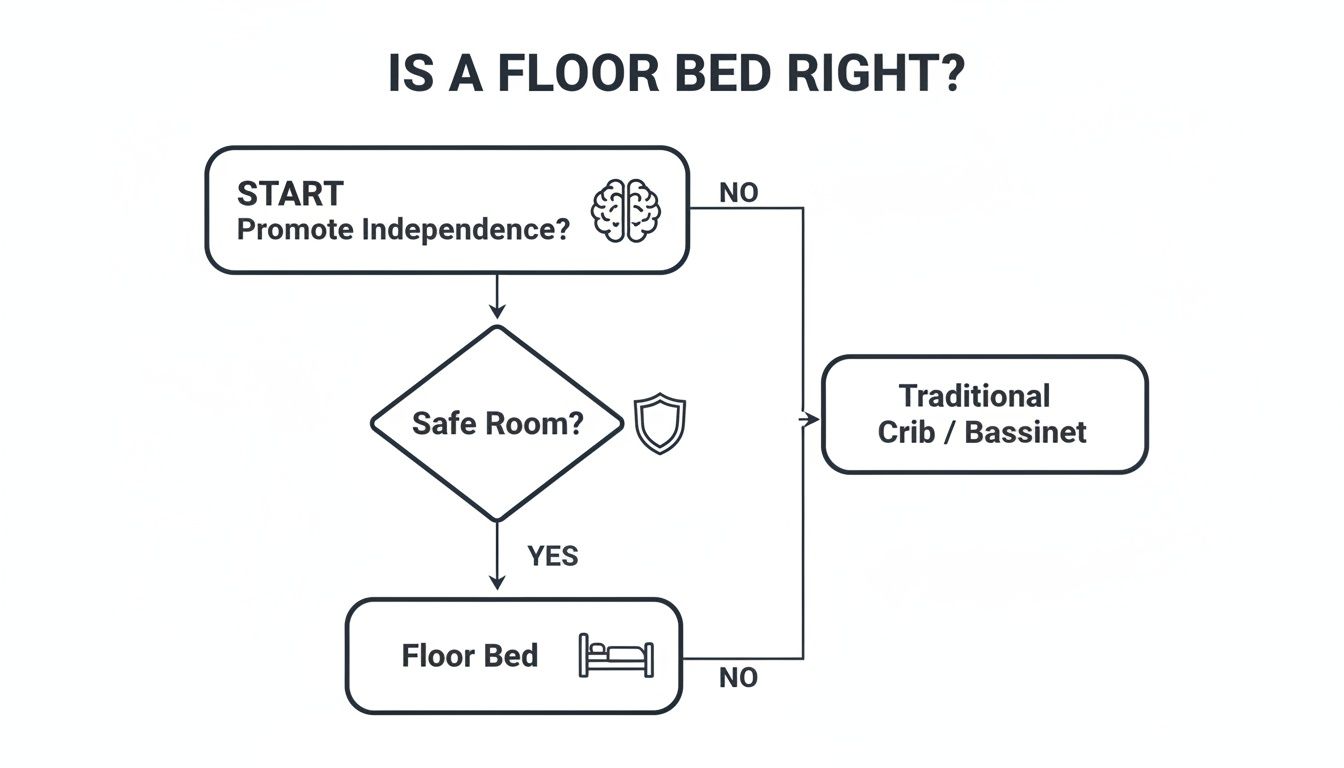
As you can see, if you want to nurture your child's independence and you're ready to childproof the room, a floor bed is a fantastic choice.
Solid Hardwoods: The Gold Standard
There’s a reason solid hardwoods like oak, maple, and birch are considered the best choice for kids' furniture. These woods are dense, tough, and stand up well to the inevitable bumps and scratches that come with having a toddler.
- Oak: Famous for its beautiful grain and serious strength, making it a classic that will last for years.
- Maple: Incredibly durable with a smooth, fine grain. It’s a champ at resisting dings and dents.
- Birch: A great hardwood that’s often a bit more affordable. It offers excellent durability with a clean, modern vibe.
Yes, hardwoods usually cost a bit more upfront, but their ability to withstand years of use makes them a smart investment in the long run.
Softwoods: A Practical Alternative
Softwoods, like pine and fir, are a more budget-friendly option. They have a lovely rustic charm and are much lighter, which definitely helps when it comes to assembly or rearranging the room.
The main trade-off, however, is durability. Pine, for instance, is much softer than maple, so it will show dents and scratches a lot more easily. This is a big deal when you remember that a child's bed often doubles as a trampoline, a fort, or a pirate ship. A wooden floor bed frame made from pine can still be a good choice, just be prepared for it to show a little more "character" over time.
It's clear that parents are leaning towards high-quality, sustainable materials. Wooden frames already make up about 45% of the bed frame market, with solid hardwoods leading the charge. This part of the market was valued at USD 7.85 billion and is expected to hit USD 12.73 billion by 2032—a sure sign that durability and quality are top priorities for families.
The Finish: The Protective Skin
The finish is just as crucial as the wood itself. This is the protective layer that seals the wood from moisture and daily wear. More importantly, it has to be completely safe for a child who might decide to chew or lick the frame (it happens!).
This is where you need to pay close attention to chemical safety. Look for terms like "low-VOC" or "zero-VOC." VOCs, or Volatile Organic Compounds, are chemicals that can be released into the air from paints and finishes, hurting your indoor air quality. A non-toxic finish is one of the most critical safety features.
Here are some common safe finishes to look for:
- Water-based paints and lacquers: They contain far fewer VOCs than their oil-based cousins.
- Natural oils and waxes: Finishes like linseed oil, beeswax, or carnauba wax are food-safe and totally non-toxic.
Always dig into the product description for details on the finish. A trustworthy brand will be completely open about the materials they use. For a deeper dive, check out our guide on choosing non-toxic kids' furniture. By choosing the right wood and a safe finish, you're making sure your child's bed is a healthy, durable, and loved part of their room for a long, long time.
Your Essential Floor Bed Safety Checklist
Moving your child to a wooden floor bed frame is a huge milestone. It’s an exciting step toward building their independence, but this new freedom really shines when it’s set up inside a completely safe space. This checklist will walk you through creating that secure sleep environment, covering both the bed itself and the whole room, so you can have total peace of mind.
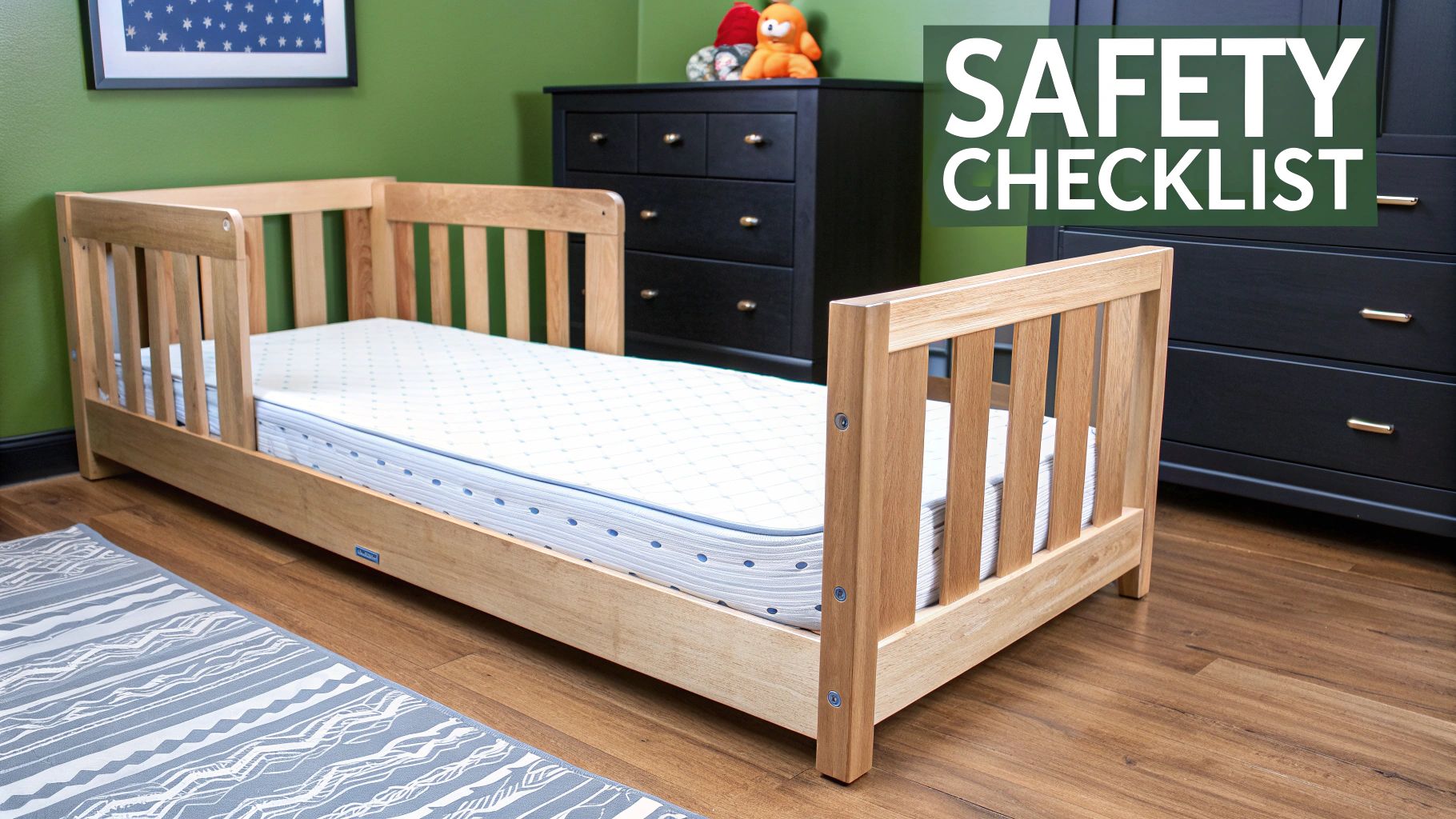
Think of this as building a "yes" space. It's not about limiting your child; it's about creating a safe zone where they can confidently explore their newfound autonomy. A well-prepared room is the foundation for their independence to flourish.
The Frame and Mattress Check
First things first, let’s look at the bed. A quality wooden floor bed is already designed with safety at its core, but a few quick checks will make sure everything is just right.
- Snug Mattress Fit: The mattress has to fit tightly inside the frame. You shouldn't be able to squeeze more than two fingers between the mattress and the frame's edge. This eliminates any gaps where a little one could potentially get trapped.
- Smooth, Splinter-Free Surfaces: Run your hands all over the wood. The entire frame should feel perfectly smooth, with no rough spots or splinter risks, paying close attention to corners and edges.
- Secure and Solid Construction: Give the assembled frame a gentle shake. It shouldn't wobble. All the joints need to be tight and secure. It's also a good habit to periodically check that all the screws and bolts are still tight, as they can loosen a bit over time.
- No Entrapment Hazards: Look over the bed's design for any gaps or openings—especially in fancy headboards or side rails—where a small hand, foot, or even their head could get stuck.
These simple checks make sure the centerpiece of their room is a truly safe zone.
The Toddler's-Eye View Room Scan
Now, it's time to childproof the rest of the room. The absolute best way to do this is to get down on your hands and knees and see the world from their perspective. This "toddler's-eye view" will show you all the potential hazards you’d miss from standing height.
Once you’re down on their level, you can start your room-wide safety audit. Look closely at everything they can reach.
A safe sleep environment is paramount. The freedom a floor bed provides must be balanced with a meticulously childproofed room, turning potential hazards into a secure space for exploration.
This change in perspective is a game-changer for creating a genuinely safe space.
The Complete Room Safety Checklist
With your new viewpoint, it’s time to go through this list and secure every corner of the room. This process transforms a simple bedroom into a safe haven for independent discovery.
-
Anchor All Heavy Furniture: This one is non-negotiable. Bookshelves, dressers, and toy chests must be securely anchored to the wall with anti-tip straps. A curious toddler sees open drawers as a ladder, and that’s a serious tipping hazard.
-
Cover Every Electrical Outlet: Use sliding outlet covers or safety plugs on all outlets they can get to. Kids are naturally drawn to little holes, and this simple fix prevents a major electrical risk.
-
Manage Cords and Wires: Cords from lamps, baby monitors, or white noise machines need to be fastened securely. Bundle them up and hide them behind furniture or use cord concealers to get them completely out of reach. Don't forget about blind cords—cordless blinds are the safest choice, but if you have cords, make sure they're tied up high where your child can't reach them.
-
Clear the Immediate Sleep Area: The space right around the wooden floor bed frame should be soft and clear. Put a plush rug or a play mat next to the bed to cushion any tumbles. Make sure there are no hard toys, sharp-cornered furniture, or other objects nearby that they could roll into.
By working through each point on this checklist, you create an environment where your child’s freedom and safety go hand-in-hand. This thoughtful preparation is what makes a floor bed such an empowering and worry-free choice for your family.
Finding the Right Mattress and Frame Size
Choosing a wooden floor bed frame is such an exciting step, but getting the size right is really what makes it work for your family long-term. This isn't just about whether it fits in the room; it's a careful balance between your child's needs right now and their growth down the road.
Think of it as picking out their first "real" bed—the one that will host countless bedtime stories, sleepovers, and lazy Sunday mornings. You're aiming for that sweet spot: a size that feels cozy and secure today but won't be outgrown in a couple of years.
Comparing Common Bed Sizes
For a child's first floor bed, the two most popular choices are almost always the Twin and the Full. Each one has its own perks that fit different family needs and room layouts.
-
Twin Size (38" x 75"): This is the classic "first bed" size for a reason. It’s compact, making it a fantastic choice for smaller rooms or for siblings who are sharing a space. A twin-sized wooden floor bed frame leaves plenty of precious floor real estate open for play.
-
Full Size (54" x 75"): A full-size frame is a significant upgrade in space. That extra width is a game-changer for bedtime routines, giving a parent enough room to comfortably lie down for cuddles or to read a book. It also gives a growing child more room to stretch out, easily extending the bed's lifespan into their pre-teen years.
If you're thinking about even larger options for a shared space or just want a more luxurious feel, this guide to choosing a king bed frame has some valuable insights that can help.
Choosing the Right Mattress
The mattress you pair with a wooden floor bed is just as important as the frame itself. Because the bed is so low to the ground, the mattress plays a huge role in both safety and comfort. The ideal mattress for a floor bed is firm, breathable, and relatively thin.
The sweet spot for mattress thickness is between 5 to 8 inches. This height is comfy enough for a good night's sleep but low enough to maintain the key safety benefit of a floor bed—keeping the distance to the ground small and manageable.
A firm surface is critical for supporting a young child's developing spine. It stops them from sinking too deep into the mattress, which is a key safety recommendation for reducing sleep-related risks. To help you sort through the options, we put together a detailed resource on finding the best mattress for a floor bed.
The Unsung Hero: A Slatted Base
Here’s one feature you should never overlook: the base of the frame. A solid platform might seem sturdy, but a slatted base is absolutely essential for a healthy sleep environment.
Wood slats allow air to circulate freely underneath the mattress. This ventilation is vital. It wicks away moisture and prevents the buildup of mold or mildew, which can easily thrive in damp, stagnant conditions. This simple design element keeps the mattress fresh and protects your investment in both the bed and your child’s health.
The demand for well-designed furniture like this is strong, reflecting a broader trend; the global bed-frame market was valued at USD 20.39 billion in 2021, with North America making up a significant portion of that demand. You can discover more insights about the bed frame market and see how consumer preferences are shaping these trends.
Keeping Your Wooden Floor Bed Looking Its Best
A solid wood floor bed is built for years of fun and sweet dreams, but a little TLC now and then will keep it looking brand new. Taking care of it is simple and ensures it remains a safe, beautiful centerpiece in your child's room for the long haul.
Think of it just like any other piece of quality wooden furniture you own. A few minutes of simple, consistent care can stop small scuffs or spills from turning into bigger issues, protecting both its look and its sturdy build.
Gentle Cleaning and Spill Patrol
Keeping the bed frame clean is a breeze. For day-to-day dust, a quick wipe with a soft, dry microfiber cloth is all you need. If you spot sticky fingerprints or a bit of grime, just dampen the cloth with a little water, gently wipe the area, and then dry it off completely.
Of course, spills and creative masterpieces are just part of life with a little one. When they happen, don't panic:
- Act Fast: Grab a dry cloth and blot up any spills right away. The key is to stop moisture from soaking into the wood.
- Crayon and Sticker Duty: For surprise crayon art, a tiny bit of non-abrasive cleaner on a cloth usually does the trick. If you’re dealing with a stubborn sticker, a quick blast from a hairdryer on a low setting will often loosen the adhesive enough to peel it right off.
When cleaning your wooden bed frame, you want to stick with products that are tough on messes but gentle on the wood and safe for your family. For some great, kid-safe ideas, check out this guide on non-toxic hardwood floor cleaners.
Regular Safety and Structural Check-Ups
Beyond wiping it down, a quick safety check every so often is key. This is what keeps the bed secure as your child grows, jumps, and plays on it day after day. It only takes a few minutes and gives you total peace of mind.
Just like you’d check the tires on a bike, a child's bed frame needs a quick look-over. It handles a lot of movement, and a simple check every few months makes sure it's as solid as the day you assembled it.
Set a reminder on your phone to run through these simple checks every three to six months:
- Tighten the Hardware: Go around the bed and give every bolt and screw a gentle check with the right tool. Everyday wiggles and movement can cause things to loosen slightly over time. A quick tighten keeps the whole frame perfectly rigid.
- Inspect for Wear and Tear: Run your hands along the frame, especially the edges and corners. You're feeling for any new splinters, cracks, or rough spots. If you find anything, a light buff with fine-grit sandpaper will smooth it right out.
- Check the Airflow: Make sure toys and clothes aren't piling up under the bed. Good air circulation is a must for preventing moisture from getting trapped, which protects both the frame and the mattress from mold or mildew. It’s a simple step that helps keep their sleep space fresh and healthy.
Common Questions About Wooden Floor Beds
Even with all the benefits laid out, taking the leap to a wooden floor bed can feel like a big step. It's totally normal to have a few questions spinning around in your head. Let's tackle the big ones so you can feel confident this is the right move for your family.
Switching to a floor bed isn't just about new furniture; it’s a whole new way of looking at your child's sleep and independence. Let's clear up any of those lingering doubts.
Is a Floor Bed Safe for My Baby?
This is usually the first question on every parent's mind, and for good reason. The short answer is yes, as long as it's set up correctly. Floor beds are a safe option for babies who are ready to move on from a bassinet—typically once they can roll over and have good head control.
The real key here is creating a completely childproofed room. Since the bed's biggest safety win is how low it is to the ground, you have to make sure the entire space around it is hazard-free. And, of course, always stick to safe sleep guidelines: use a firm mattress and keep the bed clear of soft pillows, loose blankets, and stuffed animals for infants.
Will My Child Actually Stay in Bed?
Honestly, at first? Probably not. And that’s okay—it's actually part of the design! That newfound freedom is a huge thrill, and you can bet most toddlers will test it out by getting up and exploring. This is a totally normal phase and a big part of them learning self-regulation.
With a consistent, calming bedtime routine, they'll eventually learn that their bed is a cozy spot for rest. The novelty of being able to hop out whenever they want will fade, and they'll start to understand the difference between sleep time and playtime. Just remember to pack your patience for this adjustment period.
The point of a floor bed isn't to keep a child contained, but to empower them. That initial wandering phase is a great sign—it shows they're engaging with their world and learning to make their own choices, which is a core part of the Montessori philosophy.
Seeing it this way helps reframe those midnight floor explorations as a positive step, not a problem.
Will My Child Be Cold on the Floor?
It’s a fair question, since we all know cool air sinks. But a well-designed wooden floor bed frame has this covered. Most frames, especially ones with a slatted base, actually lift the mattress a few inches off the floor.
That small gap is a game-changer. It allows for airflow, which stops the mattress from getting cold and damp from the floor. It also prevents it from soaking up the chill from surfaces like hardwood or tile. Pair that with the right PJs and bedding for the season, and your little one will be perfectly cozy.
At What Age Can a Child Start Using a Floor Bed?
There’s no single "right" age, because it's more about your child's development than their birthday. Many families make the switch when their baby starts getting mobile—think crawling or pulling up—which is usually around 5 to 10 months old. At that point, a crib can start to feel pretty limiting.
Other parents prefer to wait until the toddler years, somewhere between 1.5 to 3 years old, to transition out of a crib and avoid any climbing mishaps. The most important thing is to make sure their room is a safe space for them to move around in. Just watch your child for signs of readiness and prep the room accordingly.
At Ocodile, we keep all these questions in mind when we design our wooden floor bed frames. Every detail is there to boost safety, encourage independence, and give your family peace of mind.
Explore Ocodile's collection of child-centric floor beds today.