



5 Kitchen Tower Rules to Teach Before Cooking
You lift your toddler to see the mixing bowl, set them down to grab a spoon and hear, “Up again!” A kitchen tower can give them a place to stand beside you, but reaching the counter also puts more things within reach. Before you start making pancakes together, your child needs practice with a few simple boundaries.
Teach these five rules first: wait for a grown-up, keep feet on the platform, use only your work area, ask before moving and pause when asked. Start with a cold kitchen and an easy activity, such as stirring water in a bowl.
These are skills to practice together, not a safety test your toddler must pass. Your supervision, the tower’s instructions and a carefully prepared workspace remain essential, even when your child can repeat every rule.
Before using a kitchen stool helper, prepare the space
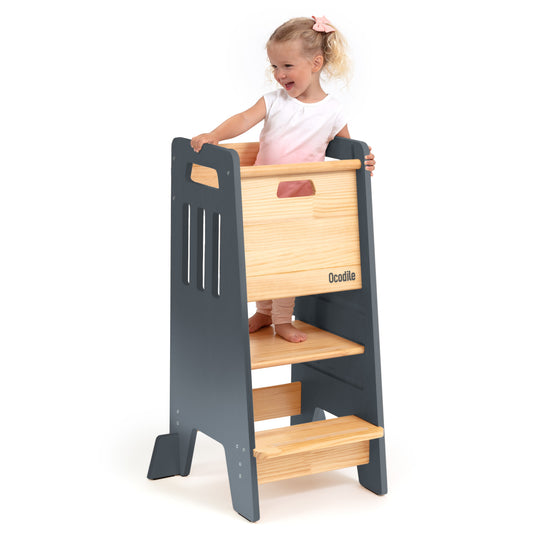
A kitchen stool is a raised standing platform with surrounding supports that lets a child participate at counter height. Those supports do not make it a place to leave a toddler unattended.
First, check the manufacturer’s age, size and use requirements. Make sure the tower is correctly assembled, its hardware is secure and any adjustment or folding mechanisms are secured as instructed. Choose a level, dry location away from cooking heat, cords, sharp tools and anything your child could pull down.
For help choosing the spot, follow this guide to positioning a children’s kitchen tower at the counter.
Stay close enough to intervene immediately. If a task requires you to turn away, leave the room or focus on hot cookware, help your child down first. Following rules is not a substitute for adult supervision.
1. “Wait for me before you climb”
An excited toddler may start climbing as soon as they see a banana or mixing bowl. Make entry something you do together rather than something that happens while you are still setting up.
Use the same short cue each time: “Wait beside me. I’ll tell you when it’s ready.” Prepare the activity, check the tower and then invite your child to climb according to the manufacturer’s instructions, helping as needed.
During kitchen helper tower practice, keep your child’s hands empty while they climb. Put the bowl and tools on the counter yourself so they do not have to balance a spoon, snack or toy on the way up.
If they start before you are ready, calmly interrupt the climb and help them return to the floor. Say, “The tower isn’t ready yet. We climb together.” Avoid turning it into a chase or asking them to wait halfway up.
Between activities, manage access so your child cannot use the tower unsupervised. A verbal rule alone will not reliably stop an impulsive toddler.
2. “Feet on the platform, body inside”
Once your child is standing in position, demonstrate what staying inside looks like. Keep the explanation concrete: “Your feet stay here. Your body stays inside.” Point to the standing platform and the surrounding supports.
This rule means no standing on rails, sitting on top edges, jumping or leaning out to reach something. If the task is too far away, the adult brings it closer rather than encouraging a bigger stretch.
Practice with an empty bowl directly in front of your child. Let them stir, then name the behavior you want repeated: “Your feet stayed on the platform while you mixed.” That gives them more useful information than “Be careful.”
If your child starts climbing the sides of the kitchen helper tower, move close, stop the activity and help them down. Try again another time with a shorter task. They may be tired, seeking movement or not ready to use it within these boundaries yet.
Avoid expecting a toddler to stand perfectly still. The goal is to keep their body within the intended standing area, not eliminate every wiggle.
3. “Use what’s in your work area”
“Don’t touch anything” is a confusing instruction when the whole point is to help. Give your child a small, clearly defined workspace with objects they are allowed to handle.
A washable mat, a bowl and one spoon can make that boundary easy to see. Say, “This bowl and spoon are yours to use. Ask me for anything else.” Keep the activity comfortably within reach, without requiring leaning or stretching.
For an early practice session, offer a cold task such as tearing lettuce or transferring premeasured oats. Keep knives, raw animal foods, hot liquids and breakable containers out of reach. Check the wider counter too, including cords and objects farther back that a child might reach by climbing.
Your kitchen helper tower rules should describe what your child can do, while you control access to hazards. Saying “hot” does not make a nearby stove or freshly boiled kettle safe.
If a hand reaches outside the work area, block access calmly and redirect: “That stays with me. You can stir this.” Repeated reaching is a reason to simplify the setup or finish the session.
4. “Ask me before we move”
Toddlers notice that useful things can be pushed toward whatever they want. Teach early that the tower is different from a toy cart: “Tell me where you want to go. I move the tower when you’re down.”
Do not move it with your child aboard. Help them down first, move it yourself and check the new location before they climb again. The same boundary applies to folding it or changing the platform position: your child is down and clear of the equipment before you begin.
Practice the words they can use, such as “Move, please” or “I want the sink.” A child who cannot say those words can point or use a familiar gesture.
Keep the response consistent rather than adding lots of new warnings.

5. “Pause when I say pause, and tell me when you’re done”
You need a familiar cue for stopping an activity without a long explanation. Choose a simple phrase such as “Pause. Put the spoon down.” Practice it during a calm moment, not for the first time when something spills.
Model the action yourself: stop stirring and place your spoon in the bowl. Invite your child to copy you, then resume. Keep your voice calm so the cue becomes recognizable rather than startling.
Also teach an exit signal: “All done” or “Help me down.” When your child uses it, respond promptly and assist them according to the tower’s instructions. They should not need to climb over a side or scramble down to get your attention.
If your child cannot pause yet, do not build an activity around expecting an immediate response. Keep hazards inaccessible and choose a simpler task. A kitchen helper tower session can end after one small job; there is no need to finish the recipe together.
Rehearse once before adding food preparation
Keep the first rehearsal short enough that you can give your child your full attention. Set out an empty bowl and spoon, invite them up, practice stirring and pausing, then help them down when they signal they are finished.
Repeat the same language during later sessions. If “feet on the platform” is your cue, other caregivers should use it too. Consistent wording saves your toddler from having to work out whether several different instructions mean the same thing.
Introduce one manageable food task once that routine feels familiar. You might measure an ingredient yourself and let your child pour it into a large bowl. Spills are part of learning; leaning, climbing and reaching toward hazards call for immediate intervention.
Notice useful actions specifically: “You asked me to bring the bowl closer.” That connects the rule to something your child actually did and gives them a way to solve the same problem next time.
Frequently asked questions
What age can a child start using a kitchen tower? Follow the requirements for the specific model rather than relying on age alone. Consider whether your child can stand steadily, use the tower as instructed with appropriate help and participate without repeatedly climbing the sides. Adult supervision is still necessary.
What if my toddler ignores the rules? Stop the activity, help them down and try again another time. Shorten the next session or simplify the task. Repeated unsafe use may mean the setup or timing is not suitable right now, rather than that your child needs more warnings.
Can my toddler stand beside me while I cook at the stove? Do not position the tower where your child can reach burners, hot cookware, handles or splashes. Start with cold preparation at a separate counter. If supervising your child would divide your attention from active cooking, have them participate at another time.
How do I check whether a tower has been recalled? Search the U.S. Consumer Product Safety Commission recall database using the brand and product name. Compare model details and follow any recall instructions. Check secondhand towers too, since they may be missing labels, hardware or instructions.
Choose equipment that fits your routine
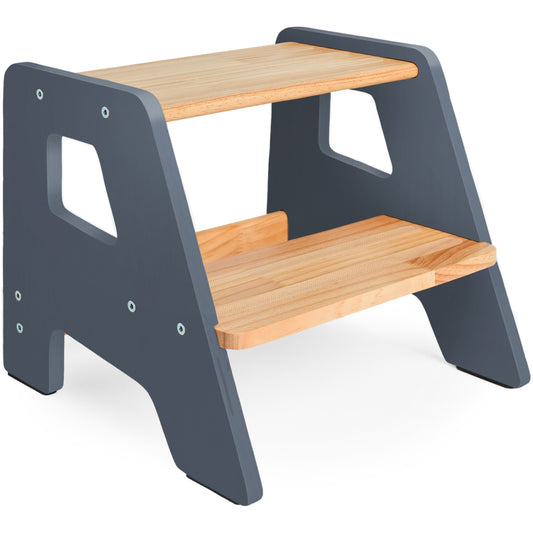
Clear boundaries are easier to practice when your setup suits your child and your space. If you are comparing adjustable, foldable options, review Ocodile’s Adjustable Foldable Kitchen Tower alongside its use instructions and requirements.
Adjustability lets you change the standing position as directed for your child, while a folding design can make storage more practical between activities. Neither replaces supervision or careful setup. Choose the equipment first, prepare a cold workspace and make that first shared task small enough to enjoy together.