



Adjustable Height Kitchen Stool: Ultimate Guide 2026
Your child wants to stir pancake batter, wash berries, or line up cookie cutters next to you. You want to say yes. Then you look at the kitchen setup and realize the options aren't great. A dining chair is too low. A regular bar stool may be too tall. And the one modern adjustable stool you liked online suddenly looks a lot less appealing when you picture a toddler climbing onto it alone.
That's why so many families start looking at an adjustable height kitchen stool. On paper, it sounds ideal. One seat, multiple users, flexible enough for an island today and a different setup later. But family use changes the buying checklist. A stool that works nicely for an adult having coffee can be a poor fit for a child who squirms, climbs, and lepositions every few minutes.
I've done the research from the parent side, not just the decor side. If you're also thinking about island layout and traffic flow, DreamKitchen.ai's design guide is useful for seeing how stool style interacts with the shape and use of a busy kitchen. And if your bigger goal is getting kids involved in everyday kitchen routines, this guide to kiddos in the kitchen is a thoughtful companion read.
Bringing Your Little Helper to Counter Height
The most common reason parents look for adjustable seating is simple. They want a child close enough to participate without balancing them on something that was never meant for climbing.
A child rarely uses a stool the way an adult does. Adults sit down carefully, plant their feet, and stay more or less in one place. Kids twist, kneel, push off, stand halfway up, lean to see what's in a bowl, and slide off the side when their attention shifts. That difference matters more than color, finish, or whether the stool matches your pendant lights.
Why the idea is so appealing
An adjustable stool promises a lot:
- Shared use: one seat can work for a parent, an older sibling, and a guest
- Room flexibility: it can move from counter-height use to bar-height use
- Longer lifespan: in theory, it adapts as your child grows
Those are real advantages. But they only matter if the stool is also stable, easy to use, and safe under family conditions.
A family kitchen is not a showroom. The right stool has to handle climbing, spills, rushed breakfasts, and constant movement.
Where parents often get misled
Many stool guides are written for adult entertaining spaces. They focus on style, swivel comfort, and matching seat height to the countertop. Those things matter, but they don't answer the questions parents ask at home.
Questions like:
- Will this tip if my child climbs up from the side?
- Can small feet rest securely?
- Is the adjustment mechanism something little fingers can reach?
- Will this still feel like a good purchase after years of heavy use?
Those are the questions worth asking before you buy, because once the stool is in your kitchen, your child won't use it carefully just because the product photos looked calm and minimal.
How Adjustable Kitchen Stools Actually Work
An adjustable stool usually changes height in one of two ways. It uses a gas lift mechanism or a screw-based mechanism. If you've ever raised an office chair with a lever, you already understand the basic idea behind the first type.

Gas lift stools
A gas lift stool has a cylinder inside the support column. You pull a lever, the seat rises or lowers, and you stop when the height feels right. This is the style many parents notice first because it looks modern and adjusts quickly.
According to this reference on adjustable stool mechanics, adjustable height kitchen stools are engineered with hydraulic gas lift or screw-based mechanisms that allow seat heights to shift dynamically between 24 inches (61 cm) and 33 inches (84 cm), accommodating both standard kitchen counters at 35 to 39 inches and bar-height surfaces at 40 to 43 inches.
That range is what makes them appealing for mixed-use kitchens. One stool can cover spaces that would otherwise need separate fixed-height seating.
Screw-based stools
A screw-based stool works more like an old piano stool. You rotate the seat to raise or lower it. It usually takes longer to adjust, but the mechanism is easy to understand because you can see what's happening. Turn one way, it goes up. Turn the other, it goes down.
Some families prefer this style because it feels more deliberate. It isn't as tempting for children to treat it like a novelty button or lever.
What the mechanism changes in real life
The adjustment method affects more than convenience.
Here's how to think about it:
- If adults change heights often: a gas lift is faster and easier
- If you want slower, more intentional adjustment: a screw mechanism may feel simpler
- If multiple people use one stool daily: the moving parts deserve close attention
- If a child is using it regularly: the safest design is the one that reduces wobble, confusion, and finger access to moving points
Practical rule: Fast adjustment is helpful. Predictable behavior is better.
A final detail matters a lot for comfort. Many adjustable models include a footrest that moves with the seat. That can help maintain leg support as the height changes, especially when a user isn't tall enough to place feet comfortably on the floor. For family kitchens, that isn't just a comfort bonus. It often shapes whether a child can sit steadily at all.
Finding the Perfect Fit for Every Family Member
The right stool height isn't a style decision. It's a body-position decision. When the fit is off, kids dangle their legs, brace their knees against the counter, or lean too far forward to reach. Adults do a version of the same thing, just with less visible wriggling.

Start with the counter, not the stool
Many parents shop by looking at stool dimensions first. Flip that process. Measure the surface where the stool will be used.
A widely used ergonomic rule is that the seat should sit 10 to 12 inches below the counter or table surface, as explained in The Home Depot's measuring guide. That spacing helps create comfortable working posture instead of forcing the shoulders upward or the knees into the underside of the counter.
If you also use the stool near a dining table, this dining table heights guide is handy because table and counter seating often get confused when families shop quickly.
The child-specific part most guides skip
Adult fit and child fit are not the same thing. A child needs support in more places.
Look for these signs of a good fit:
- Feet supported: a child should be able to rest feet on the floor or on a properly placed footrest
- No knee crowding: there should be room under the counter so the child isn't wedged in
- Easy reach: the child can participate without hunching shoulders or leaning from the waist
- Calm posture: they can sit without constantly repositioning to find balance
For visual learners, this short clip helps show the measuring process in a practical way:
Space around the stool matters too
Fit isn't only vertical. Side-to-side spacing changes safety, especially when siblings sit together.
According to Edward Martin's guide to adjustable versus fixed stools, a minimum 10-inch overhang on the counter is needed for knee room, and 26 to 30 inches between stool centers helps prevent people from bumping into each other.
That matters in family kitchens because children don't sit still in neat little rectangles. They swivel, lean, and reach across each other.
A simple measuring routine
Use this quick check before buying:
- Measure the counter height.
- Subtract the seat-to-surface gap you want.
- Check whether the stool's adjustment range covers that height.
- Make sure the child can support their feet.
- Check counter overhang and spacing if more than one stool will be used.
If your child's feet are dangling and their knees are pressing forward, the stool may be technically adjustable, but it still isn't the right fit.
Unseen Dangers and Critical Child Safety Features
The biggest mistake parents make is assuming that “adjustable” automatically means “family-friendly.” It doesn't. In some cases, the very features that make a stool flexible for adults create new risks for children.

The tipping problem
A sleek stool can look sturdy and still be a poor choice for a child. One of the most overlooked issues is base weight.
As noted in this bar stool buying guide, adjustable stools with gas lifts are often under 10 lbs, which creates a tipping hazard for children climbing up. The same guide states that 12 to 15 lbs is the recommended stool weight for child use to help prevent tipping.
That's a big deal because children often mount a stool from the side, pull on the seat as they climb, or use the footrest as a step. A lightweight stool may react badly to all three.
What to prioritize before style
If a child will use the stool regularly, inspect these features first:
- A wider base: this helps resist side tipping
- Enough overall weight: heavier isn't automatically perfect, but a very light stool should raise concern
- A secure footrest: children often use it to stabilize themselves before they sit
- Low exposure to moving parts: visible pinch points deserve caution
- A seat surface with grip: slippery seats make small movements bigger than they need to be
If you're comparing child-height access options more broadly, this adjustable height step stool guide gives a useful lens for thinking about climbing behavior and steady footing.
Backless isn't always best
Backless stools look neat and tuck away easily. For older kids who already understand how to sit safely, that can be fine. For younger children, especially those still learning body awareness at the counter, a low back can add a little more security and reduce side-sliding.
This doesn't mean every stool needs a tall chair-style back. It means the less stable the user, the more the design should help them organize their body.
The safest stool for a child is often the one that looks slightly less minimal and performs much better in real life.
Small details that matter more than parents expect
Parents often focus on whether the stool matches the kitchen. I'd put these checks ahead of finish and silhouette:
- Surface finish: choose materials that feel durable and easy to wipe clean
- Edge shape: rounded edges are kinder in busy kitchens
- Finger zones: check where a child's hands naturally land when climbing
- Seat behavior: if the seat spins too freely, some children treat it like a toy
A stool doesn't need to be ugly to be safe. It just needs to be judged by family use first and adult aesthetics second.
Materials Maintenance and Making Your Stool Last
The best stool material depends less on trend and more on what your kitchen is like at 7:15 on a weekday morning. Sticky hands, spilled milk, tomato sauce, markers, and wet sleeves all change what “practical” means.
Wood, metal, and upholstered seats
Wood often feels warm and homey. It tends to fit family kitchens visually, and many parents like that it doesn't feel cold to the touch. The tradeoff is that some finishes show scratches or moisture rings more easily, especially if children drag bowls or metal cups across the seat.
Metal usually handles hard use well and wipes down fast. It can feel more industrial, and depending on the design, the seat or frame may feel less inviting for long sits. If the stool has many exposed joints or narrow bars, cleaning can also become more annoying than expected.
Upholstered stools are comfortable and can soften the look of a kitchen. They're usually the hardest option for family messes. Even when the fabric is marketed as easy-care, crumbs, yogurt, and juice don't always stay politely on the surface.
What lasts best in a family kitchen
For many households, the most forgiving choice is a stool with:
- A wipeable seat surface: easier after snacks and baking projects
- A frame with few crevices: less grime buildup
- A finish that hides normal wear: small scuffs are part of family life
- Simple geometry: fewer awkward spots to clean around the mechanism
Basic care that makes a difference
An adjustable stool lasts longer when families treat it like a moving tool, not just a decorative seat.
A simple routine helps:
- Wipe spills early: especially around seams, adjustment levers, and footrests
- Check for looseness: if the stool starts wobbling, stop using it until you inspect the joints
- Keep the mechanism clean: dirt and crumbs around moving parts can make adjustment rougher
- Watch how kids climb: repeated side-pulling stresses a stool differently than normal seated use
A stool that survives family life is usually the one that's easy to clean, easy to inspect, and boringly dependable.
If you want a stool to still feel like a good purchase years from now, maintenance should be part of the buying decision from day one.
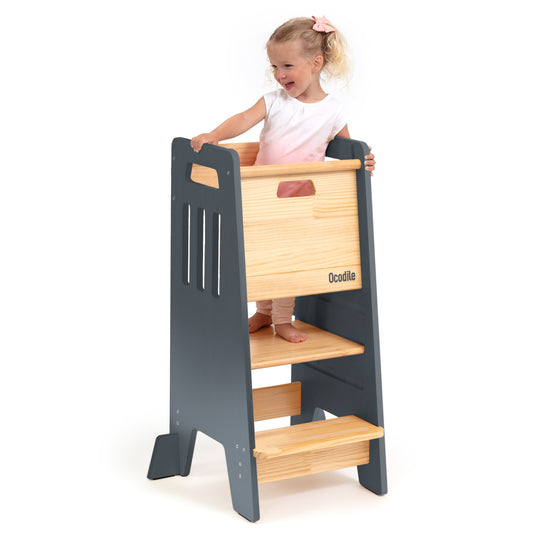
Adjustable Stools vs Learning Towers A Parent's Choice
For toddlers, the decision often isn't which stool to buy. It's whether a stool is the right category at all.
A learning tower and an adjustable stool solve different problems. One is designed around contained participation. The other is designed around flexible seating. Both can have a place in family life, but they aren't interchangeable for every age or stage.
Where each option shines
A learning tower works best when your child wants to stand, watch, wash, mix, or “help” in short bursts. It usually offers more enclosure and a clearer climbing path. That makes it especially helpful for younger children who are still working on balance and impulse control.
An adjustable stool works better when the child is older, can sit steadily, follow directions, and use the kitchen in a more controlled way. It also has the obvious family advantage that adults can use it too.
Here's a side-by-side view:
| Feature | Adjustable Height Stool | Child's Learning Tower |
|---|---|---|
| Safety and enclosure | Lower unless specifically designed for child use | Higher, with more built-in boundaries |
| Best use posture | Sitting, sometimes perch-style use | Standing participation |
| Family versatility | High, since adults and older kids can use it | Lower, since it's child-specific |
| Tuck-under convenience | Usually easier | Usually bulkier |
| Toddler suitability | Often limited | Usually better suited |
| Long-term household use | Strong for mixed-age families | Strong for early-childhood years |
The age and independence question
If your child is still climbing everything, backing off chairs without looking, or losing focus mid-task, a stool may ask too much of them. In that stage, structure matters more than flexibility.
If your child can already climb safely, stay seated, and handle short kitchen routines with supervision, an adjustable stool may start making sense, especially if space is tight and you don't want a child-only piece of furniture taking up room full-time.
Parents often find this learning tower kitchen helper guide helpful when they're trying to match furniture choice to their child's current stage rather than buying for an imagined future.
My practical take
For very young children, I'd lean toward a learning tower first. It matches how toddlers use the kitchen. For older children and mixed-age households, an adjustable stool can become the better long-term tool, but only if it meets the stability and fit standards covered earlier.
The smart choice isn't the more versatile product on paper. It's the one your child can use safely and successfully today.
Frequently Asked Questions From Parents
Can a regular adult-market adjustable stool be safe for a toddler
Sometimes, but I wouldn't assume so. A toddler needs more than height adjustment. They need stability, a predictable way to climb, support for their feet, and fewer opportunities to tip or slip. If the stool is lightweight, backless, narrow at the base, or easy to spin and shift, it may be a poor match even if the seat height is technically correct.
Are backless stools okay for kids
For older children, they can be. For younger children, a backless design often asks for more body control than they reliably have. If your child still wiggles, leans heavily, or shifts sideways while reaching, a bit of back support is often the safer choice.
Do adjustable stools cost more over time than they seem to
They can. According to this guide on whether adjustable bar stools are worth it, adjustable gas cylinders require replacement every 5 to 8 years, and that replacement can cost $150 to $200 per cycle. For families planning long-term daily use, that hidden maintenance cost is worth factoring in before choosing a gas-lift design.
What matters most if one stool will be shared by adults and children
Focus on three things. First, make sure the height range matches your counter. Second, make sure the child can use the stool with supported feet and calm posture. Third, put stability ahead of style. Shared use only works when the stool serves the smallest user safely, not just the tallest user comfortably.
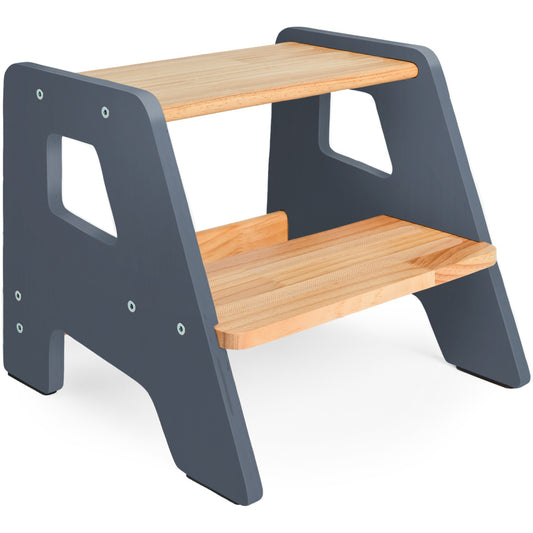
If you're looking for child-centered furniture that supports independence without treating safety as an afterthought, Ocodile is worth exploring. Their approach is built around practical family life, with designs that help children join everyday routines more safely and confidently.