



The Ultimate Arts and Crafts Table with Storage Guide
An arts and crafts table isn't just another piece of furniture. Think of it more as a command center for creativity, a dedicated spot designed to keep all those kid supplies organized and within easy reach. This one piece can transform a hobby that often feels chaotic into a structured, joyful experience, giving every crayon, paintbrush, and glitter bottle a home.
Why a Dedicated Craft Space Matters
Picture a corner of your home where creativity can blossom without leaving a trail of destruction in its wake. An arts and crafts table with built-in storage is the launchpad for your child's imagination, creating the perfect environment to explore new ideas. It's the difference between a spontaneous, messy project spread all over the kitchen floor and a focused activity a child can manage all on their own.
But this dedicated hub does more than just contain the mess; it actually helps build foundational life skills. When children know exactly where their supplies belong, they start to learn about responsibility and organization. The simple act of putting away their markers or tidying their paper stash fosters a sense of ownership and respect for their tools.
Fostering Independence and Focus
A child-sized table with storage they can easily access empowers kids to take charge of their own creative projects. Instead of always having to ask a parent for help, they can grab their own materials, work on their masterpiece, and even clean up afterward. That kind of autonomy is a huge boost for their self-confidence and ability to concentrate.
A designated creative station is what's known as a "prepared environment," and it sends a clear message of trust in a child's abilities. It lets their natural curiosity and desire to learn flourish without constant adult hovering, turning playtime into a real learning opportunity.
This approach fits right in with the growing number of families looking for more hands-on, screen-free activities. The global arts and crafts market is actually projected to grow by over $42 billion, all thanks to a renewed appreciation for DIY culture. As this market gets bigger, the demand for well-designed, child-friendly furniture like an arts and crafts table with storage naturally goes up, making it a cornerstone of the modern family home. You can dig into more data on this growing market over at ResearchAndMarkets.com.
Ultimately, this piece of furniture isn't just about managing glitter explosions—it’s about carving out a special space where your child feels capable, inspired, and ready to create.
How to Choose the Perfect Craft Table
Picking out the right arts and crafts table can feel like a huge decision, but it doesn’t have to be overwhelming. If you just focus on a few key things—what it’s made of, how safe it is, and its size—you can find a piece of furniture that will be the backdrop for your child's creative adventures for years. Think of it as building the perfect little nest for their imagination to flourish.
Sometimes you're not even sure if you need a dedicated creative hub. This little decision path can help you figure out if it's the right move for your family.
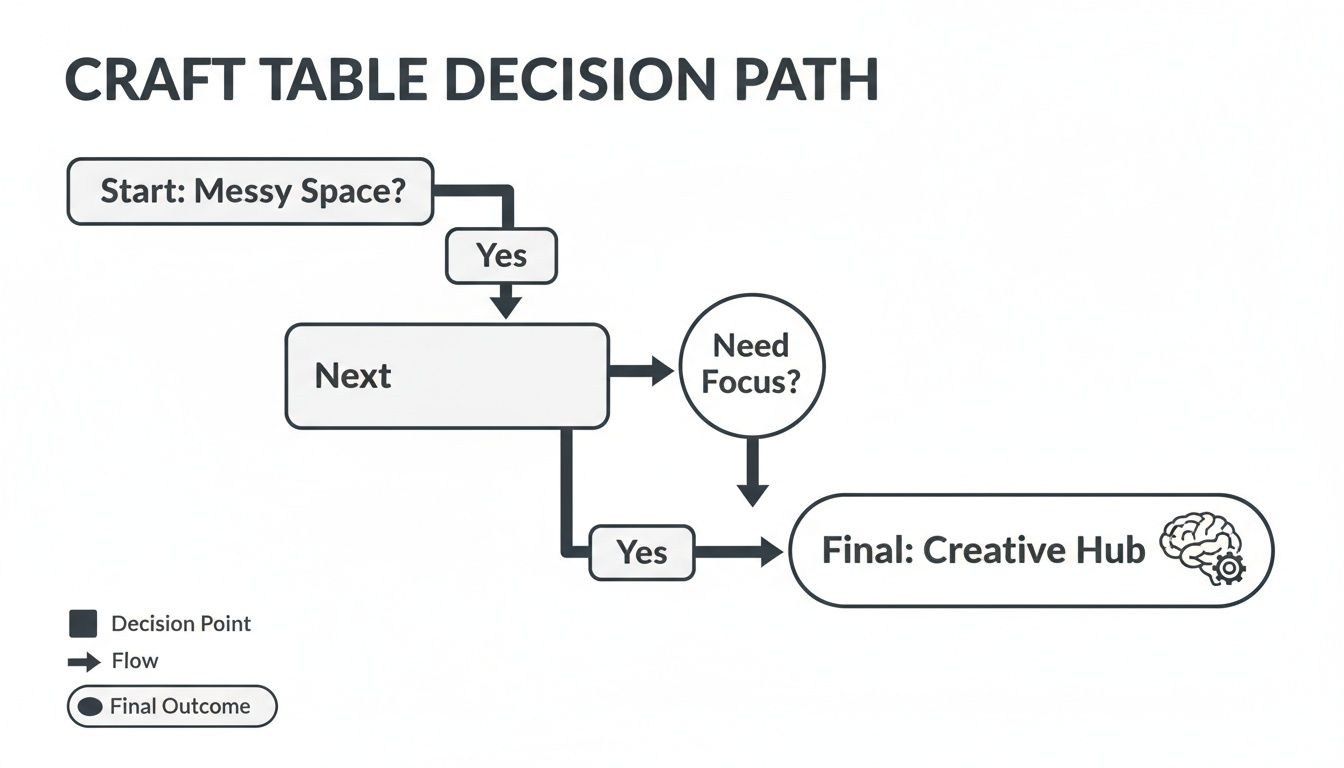
As the flowchart shows, a messy, disorganized space can be totally transformed into an intentional zone for creativity, turning that chaos into a happy, productive hum.
Evaluating Materials and Finishes
The material your craft table is made from really sets the tone for its durability and how easy it is to clean up after a particularly "enthusiastic" glitter session. Each option has its own pros and cons for a busy family.
- Solid Wood: You really can't beat solid wood for its sturdiness and longevity. These tables can take a beating and last for years. Just look for one with a non-toxic, water-based finish to keep it safe for little hands and mouths.
- Engineered Wood (MDF): This is a great budget-friendly option that gives you a perfectly smooth surface for drawing. The key is to make sure it's sealed well to handle spills and meets low-VOC (volatile organic compound) standards for healthy air quality.
- Plastic: Lightweight, colorful, and a breeze to wipe down. Plastic tables are fantastic for younger kids, especially when you're breaking out the paint, slime, or clay.
No matter which material you go with, a smooth, easy-to-clean surface is an absolute must.
To make it easier to see how these features stack up, here's a quick comparison.
Arts and Crafts Table Feature Comparison
| Feature | What to Look For | Why It Matters for Kids |
|---|---|---|
| Material | Solid wood for durability, easy-clean plastic for messy play, or sealed MDF for a budget-friendly smooth top. | The right surface can handle everything from crayon scribbles to paint spills, making cleanup less of a headache for you and more fun for them. |
| Safety | Rounded corners, a wide, stable base, and certified non-toxic finishes. | Prevents bumps, bruises, and tipping, creating a worry-free space where kids can focus on being creative. |
| Integrated Storage | Built-in bins, drawers, or shelves. | Teaches kids to tidy up their own supplies and keeps everything they need right at their fingertips, fostering independence. |
| Adjustable Height | Tables and chairs with multiple height settings. | The table can grow with your child, ensuring an ergonomic and comfortable fit from their toddler years through elementary school. |
Ultimately, the best choice depends on what you value most—be it heirloom quality, easy maintenance, or a specific price point.
Prioritizing Safety and Stability
A safe craft table is just as important as a fun one. I like to think of it like a strong tree—it needs solid roots to stay standing, even when a little one inevitably tries to climb it or leans heavily on the edge.
A table's stability is its most critical safety feature. A wide base and solid construction prevent tipping, which is a primary concern for furniture intended for young children.
Here are the non-negotiables to look for:
- Rounded Corners: Sharp edges and toddlers are a terrible mix. Soft, rounded corners are an absolute must for any furniture in a kid's space to avoid unnecessary bumps and tears.
- Sturdy Legs: The legs should be bolted on tight, and it's even better if they splay outward just a bit. This creates a wider, more stable footprint. Don't be shy—give it a little shake in the store to check for any wobbles.
- Non-Toxic Finishes: Kids touch their faces and mouths all the time while they're concentrating. Make sure any paints, stains, or sealants are certified as child-safe and free from harmful chemicals.
As you start your search, it can be helpful to check out some inspiring workshop bench ideas for your creative space. Seeing how others have set up their areas can give you some great ideas for balancing practicality with a look you love.
Smart Storage Solutions That Conquer Clutter
The real secret to a great arts and crafts table isn't the table itself—it's the storage. Good storage is the line between a creative zone that actually invites kids to play and one that just feels like a chaotic mess to manage. A well-thought-out system isn't just a sanity-saver for parents; it's a way to empower kids to find what they need and, believe it or not, put it away themselves.
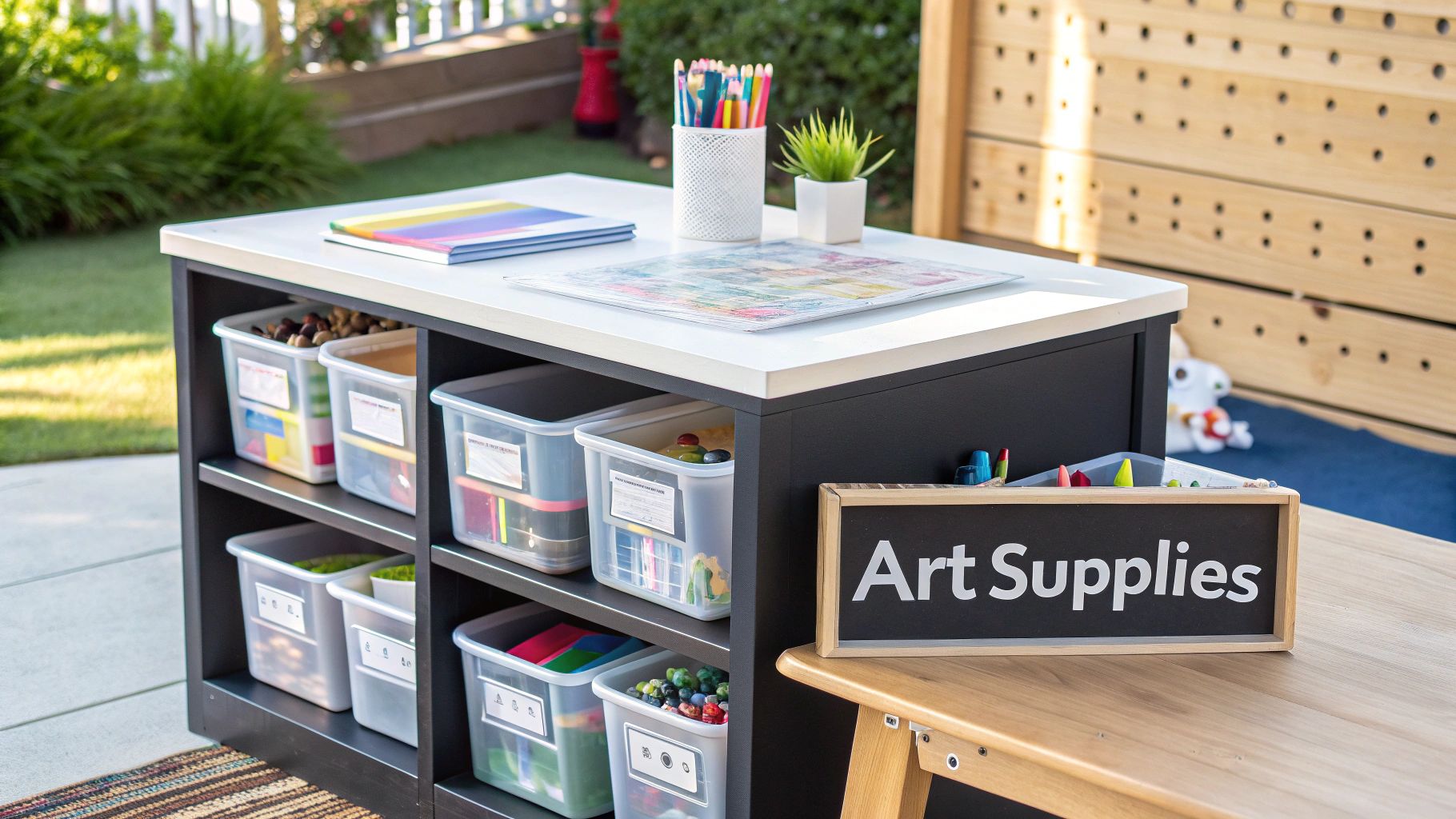
Think of it as creating a mini library for art supplies, and your child is the head librarian. When everything has a clear, logical home, cleanup becomes a natural part of the process instead of an epic battle. This approach is what turns any arts and crafts table with storage into a space that truly works.
Matching Storage to Supplies
Not all storage solutions are created equal. The best systems use a mix-and-match approach because different supplies have different needs. It's all about finding the right home for each type of material.
- Open Cubbies: These are perfect for things you want your child to see and grab easily. Think bins of colorful yarn, stacks of construction paper, or jars of fluffy pom-poms. Just seeing the supplies can spark a new idea.
- Deep Drawers: Ideal for hiding away the messier or more cluttered items. This is where you can stash the oddly shaped pipe cleaners, bags of glitter that you really don't want spilled, and those half-finished projects that need a safe spot.
- Shallow Trays: A lifesaver for all the tiny bits and pieces that would get totally lost in a deep drawer. Use them for googly eyes, beads, buttons, and stamps so your child can see all their options at a glance.
When you organize supplies this way, the whole system becomes intuitive for a young child. They quickly learn that "fluffy things" live in the clear bin and "drawing things" are in the top drawer.
Implementing a Child-Friendly System
For any storage to be truly effective, it has to be designed from a child's point of view. This is where a few Montessori-inspired ideas can make a huge difference, focusing on independence and order.
A child-friendly organizational system fosters respect for materials and builds confidence. When kids can successfully manage their own tools, they develop a sense of responsibility that extends beyond the craft table.
A great place to start is with clear bins. For a child, out of sight often means out of mind, so transparent containers let them see exactly what’s inside without having to dump everything onto the floor. For any bins or drawers that aren't see-through, use simple picture labels. A photo of crayons on the outside of a box is far more helpful to a pre-reader than a written word.
This whole philosophy is at the heart of well-designed craft furniture and storage, which works to make organization a seamless part of play. If you really want to get a handle on the clutter, learning a few tips for organizing craft supplies like a pro can transform a simple table into a frustration-free creative zone for the whole family.
Designing a Montessori-Inspired Creative Zone
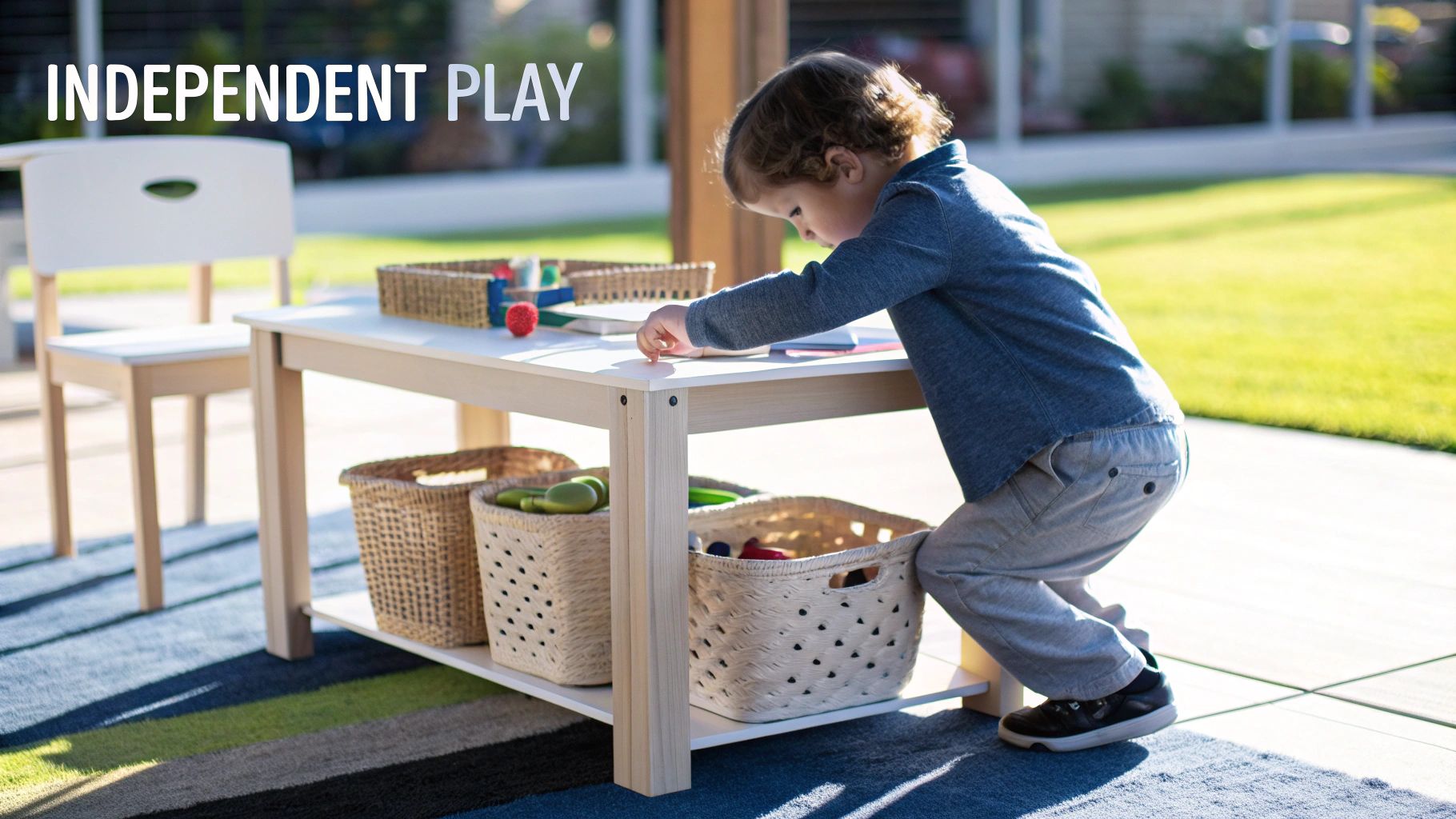
An arts and crafts table with storage is so much more than a piece of furniture—it’s the heart of a creative zone built on Montessori principles. This whole philosophy is about nurturing independence, and the right table is one of the best tools for the job. It's all about creating a "prepared environment" that shows you trust your child's abilities.
Think of it like a professional artist's studio, just perfectly scaled for a child. An artist needs their tools organized and within easy reach to keep their workflow smooth. It's the same for a child. A kid-sized table with accessible storage gives them complete ownership over their creative process.
The Power of a Prepared Environment
When art supplies are visible and easy to grab, kids learn to make their own choices and manage projects from beginning to end. They can decide to paint, gather their supplies, make their masterpiece, and—this is the important part—put everything back where it belongs.
This simple cycle builds real concentration, problem-solving skills, and a genuine respect for their tools and workspace.
Reports on craft tables show that designs packed with compartments and cubbies are a major trend, especially for families trying to make the most of a smaller home. But for those of us following Montessori ideas, this isn't just about being tidy. Clearly defined, child-height storage is crucial for helping kids between three and six years old manage their own creative time.
A setup like this means you don't have to constantly step in. Instead of being the gatekeeper of the glitter and glue, you get to be an observer, watching their natural curiosity take flight.
Building Confidence Through Accessibility
Every single time a child successfully gets their own paper or puts crayons away without asking for help, it sends a powerful message: "I can do this myself." This builds incredible self-confidence. The design of an arts and crafts table with storage is a direct line to that feeling of competence.
By making tools accessible, we communicate our belief in a child's capability. This trust is the foundation upon which they build independence, creativity, and a lifelong love of learning.
This approach turns a simple craft corner into a rich learning environment. To dive deeper into creating this kind of space, you can explore more about choosing the right Montessori activity table and see how it can truly benefit your child's development.
Ultimately, the goal is to create a space where your child feels capable, respected, and totally free to explore their own amazing imagination.
Setting Up Your Craft Space for Long-Term Success
Where you decide to put your new arts and crafts table is just as important as the table itself. The right spot can transform a simple piece of furniture into a buzzing hub of creativity that your child genuinely wants to use every day. Think of it as finding the perfect little habitat for their imagination to flourish.
The trick is to make the creative zone feel like a natural part of your family’s daily life. A quiet corner in a playroom is a classic choice, but a little nook in the living room or kitchen can work wonders, too. When the table is near where everyone gathers, it gets used more often, and you can easily keep an eye on things while you’re busy with other tasks. Just make sure there's enough "elbow room" for those big, sprawling projects and for little legs to move around comfortably.
Let There Be Light and Space
Good lighting is a total must-have for any art space. If you can, set up near a window. Natural light is best, as it helps kids see colors accurately and cuts down on eye strain. If a window spot isn't an option, a bright, warm lamp will create an inviting and functional corner for everything from detailed drawings to fiddly beadwork.
A well-lit, uncluttered craft area sends a clear message to a child: their creative work is important. It elevates the space from just another play spot into a true workshop where their ideas can really take shape.
You’ll also want to think about the floor. A hard surface like wood, tile, or laminate is so much easier to clean up after the inevitable paint drips and glitter explosions. If your perfect spot happens to be carpeted, don't sweat it. A simple, low-cost plastic floor mat can be a real lifesaver and spare you a lot of future cleanup headaches. For more great ideas on taming the creative chaos, check out our guide to practical art supply storage for kids.
Keeping Your Craft Table in Top Shape
A little bit of routine care will keep your table safe and looking great for years to come. Think of it as a quick "health checkup" for your little one's creative station.
- Regular Wipe-Downs: Give the surface a quick wipe with a damp cloth after each creative session. For stubborn stuff like dried paint or marker, a little mild soap and water usually does the trick. Always peek at the manufacturer's cleaning instructions first, just in case.
- Weekly Safety Check: Once a week, take a moment to inspect the table and chairs. Give the legs a little wiggle to make sure everything is stable and tighten any screws that may have worked their way loose over time.
- Deep Clean as Needed: Every few months, it's a good idea to completely empty out the storage bins and drawers. Wipe them down to get rid of all the crayon bits and stray glitter, keeping everything fresh and ready for the next wave of masterpieces.
Personalizing the Space to Spark More Joy
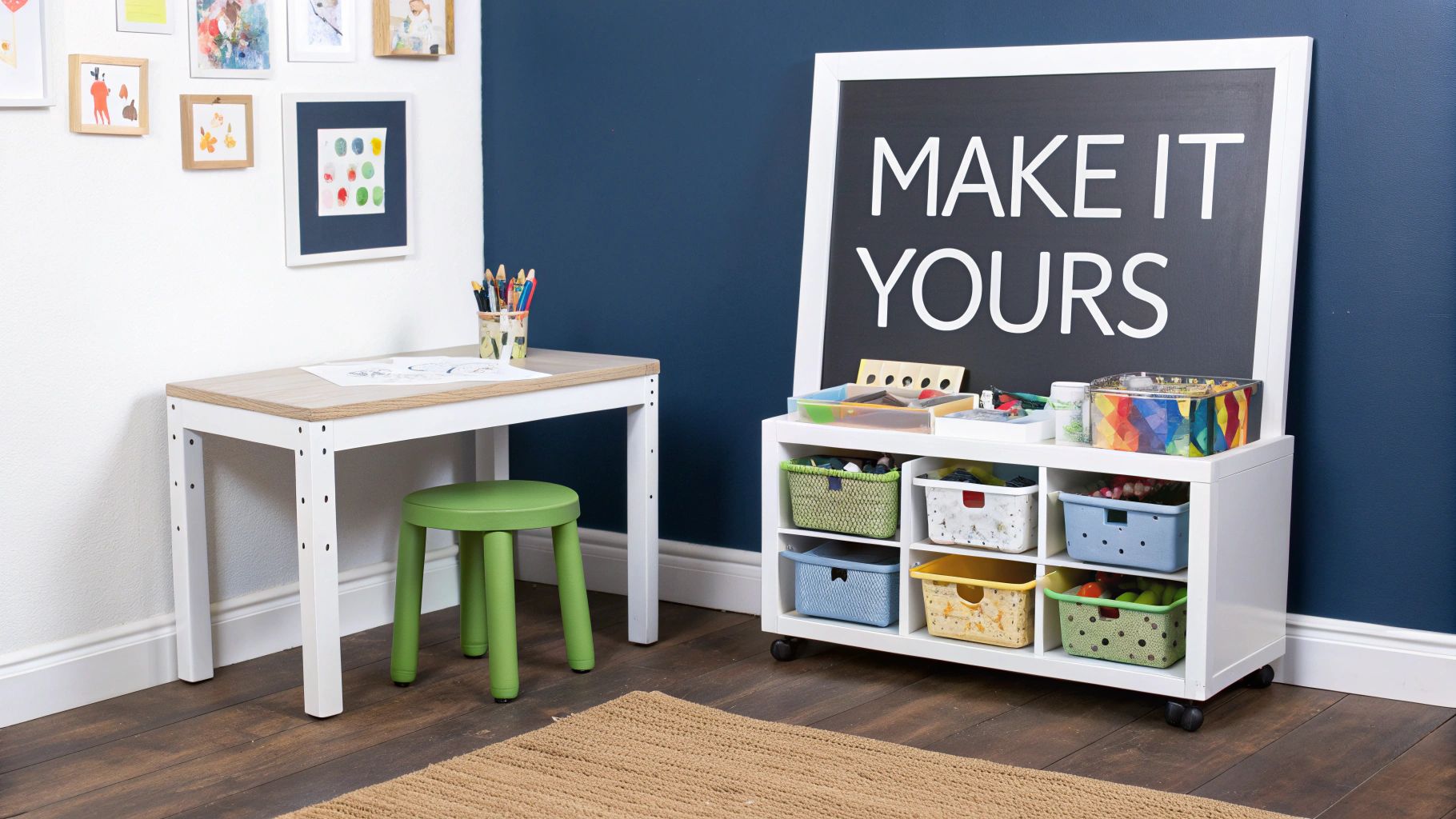
An arts and crafts table with storage is a fantastic starting point, but the real magic happens when you make it a space that’s uniquely your child's. With a few personal touches, you can turn this functional piece of furniture into their very own creative studio—a corner of your home they can’t wait to get back to.
Think about what makes your child’s eyes light up. It’s those small, thoughtful additions that make the biggest difference, transforming a simple table into a true destination for creativity.
Simple DIY Ideas for a Custom Feel
You don't need a huge budget or complex projects to give the space a custom feel. In fact, some of the best ideas are simple activities you can do together, making the process itself a sweet memory.
Here are a few easy ways to add a splash of personality:
- Create a Gallery Wall: This one’s a must. Set aside some wall space near the table to proudly show off your child's latest masterpieces. A simple string with clothespins, a cork board, or even magnetic paint creates an easy-to-update gallery that really celebrates their effort and boosts their confidence.
- Upgrade the Hardware: This tiny detail makes a world of difference. Swap out the standard drawer pulls or bin handles for something more playful. You can find child-safe options shaped like animals, flowers, or stars that give the furniture a custom look and are way more fun for little hands to grab.
- Add a Splash of Color: Grab some non-toxic, child-safe paint and add a fun pattern to the chair legs or the edges of the table. You could even stick a chalkboard or whiteboard decal onto a section of the tabletop for quick, spontaneous doodling.
When a child sees their own creations and choices reflected in their environment, it deepens their sense of belonging and ownership. This personalization is not just decorative; it’s a powerful way to show them that their creativity is valued.
These little tweaks do more than just decorate. They turn the arts and crafts table with storage into a landmark of their childhood—a place where their imagination is celebrated every single day.
Here are the answers to the questions that pop up most often when parents start looking for the perfect arts and crafts table with storage.
What Is the Best Age for a Craft Table?
You'll probably find your little one is ready for their own creative corner right around age two or three. This is that magic window when they can sit up confidently by themselves and have started getting the hang of holding a crayon or a chunky paintbrush.
The most important thing is getting a table that’s scaled to their little body. You’ll want to look for models made specifically for toddlers or, even better, one with an adjustable height. This ensures it’s a comfy, ergonomic fit that invites them to dive into creative play from the get-go.
How Do I Keep the Craft Area Organized?
The real secret to a tidy craft space isn't just about cleaning up—it's about creating a system that your child can actually use. A table with built-in, low-to-the-ground storage like cubbies or drawers is a game-changer. It empowers them to grab what they need and, just as importantly, put it back themselves. Clear bins with simple picture labels are also a huge help for pre-readers.
Try to make cleanup a natural, fun part of the whole activity. When putting things away is just what you do when you're done, it becomes a routine. It teaches them that taking care of their space is part of the creative process, too.
By setting up an intuitive system, you’re doing more than just organizing glitter and glue sticks. You’re handing your child the building blocks for responsibility and order. A little effort here turns tidying from a dreaded chore into a proud habit of independence.
What Are the Most Important Safety Features?
When you’re looking at any arts and crafts table with storage, safety has to be at the top of your list. There are three features that are simply non-negotiable.
- Stability: The table needs a wide, sturdy base. The last thing you want is for it to wobble or tip if your child leans on it a little too hard or tries to climb it.
- Rounded Corners: Sharp edges are a parent’s worst enemy. Make sure both the table and chairs have smooth, rounded corners to prevent injuries from those inevitable bumps and tumbles.
- Non-Toxic Finishes: Check that any paint, stain, or sealant is certified child-safe. It should be completely free of nasty chemicals like lead or phthalates.
Ready to build the perfect creative hub for your little artist? At Ocodile, we design beautiful, safe, and functional furniture that’s built to grow with your family. Explore our collection of child-focused solutions and find the perfect piece to inspire years of imaginative play.