



Floor Bed Frame Montessori Guide to Safe Independent Sleep
One sunlit morning, a toddler climbed into a low-slung bed with the confidence of a young explorer. A simple tweak—a floor bed frame montessori—turns waking up into a child’s first act of independence.
Embracing Child-Centered Sleep Spaces
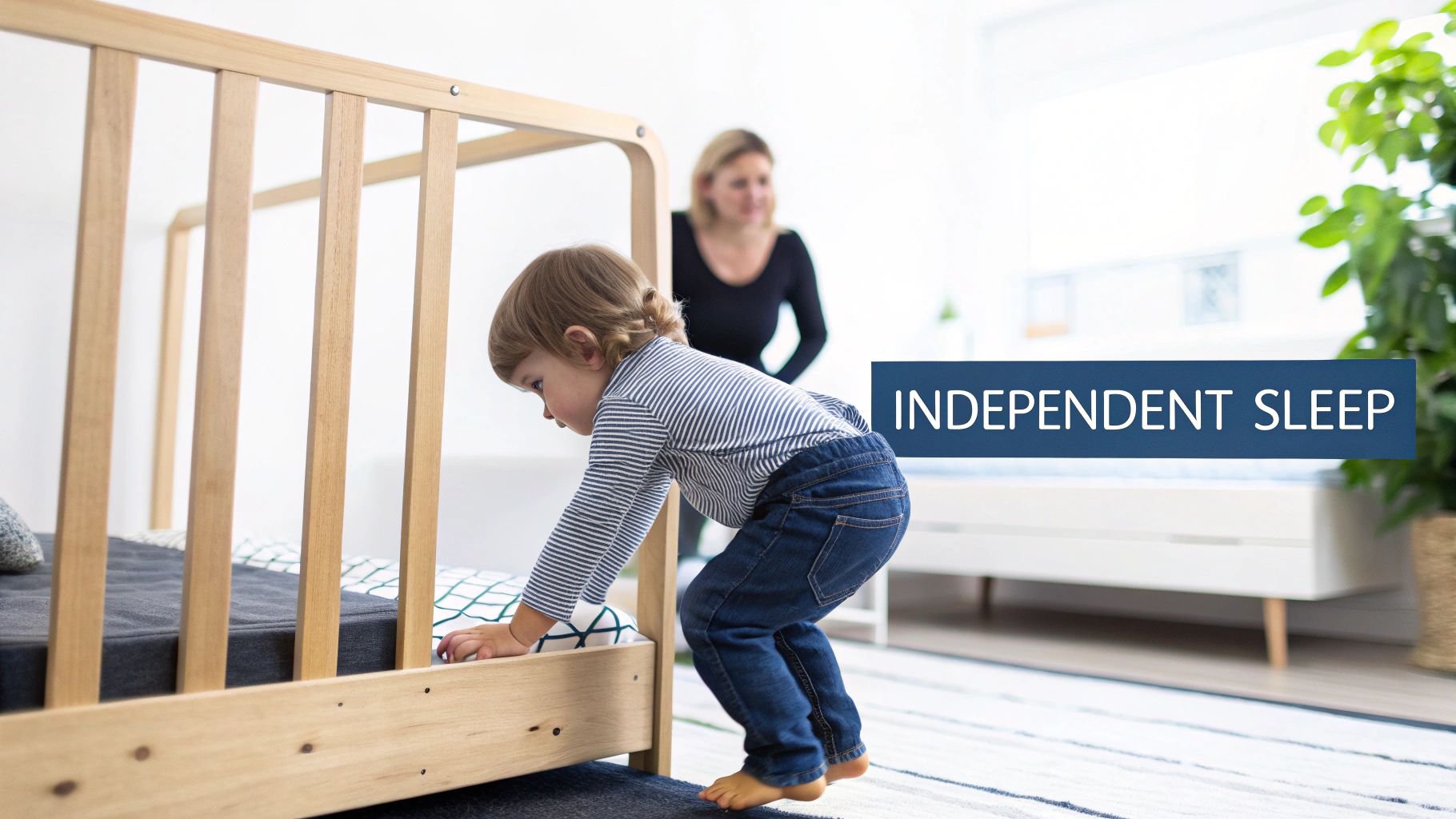
Montessori floor beds sit just inches off the ground. This gentle design shift cuts fall risk and invites little ones to move in and out on their own terms.
Here’s what this setup delivers:
- Boosted freedom as children safely climb in and out
- Stronger gross motor skills through everyday movement
- Better self-regulation when they decide it’s time to rest
In this guide, we’ll build your understanding step by step, covering:
- Fundamental Montessori concepts
- Developmental and safety advantages
- Age and mattress-size recommendations
- Room layout and smooth transition strategies
- Why Ocodile’s sustainable designs stand out
More parents are opting for floor beds crafted from eco-friendly wood and finished with non-toxic stains. This thoughtful approach has fueled a surge in popularity.
Read the full research on the growing Montessori floor bed market, which was valued around $500 million in 2025 with projections to reach $1.5 billion by 2033 at a 12% CAGR. Discover more insights about Montessori floor bed market trends here.
Key Principles Of Montessori Design
Imagine training wheels for independence. By placing the mattress low, children practice balance and spatial awareness on their own terms.
“Allowing movement within boundaries nurtures both confidence and coordination,” notes a Montessori educator.
Why Low Height Matters
A low platform removes barriers—think of it as a playground with open gates. Toddlers learn to manage fear and curiosity at their own pace, building trust in their abilities.
Preview Of Section Layout
- Understanding Core Concepts Of Montessori Floor Beds
- Benefits For Child Development And Independence
- Safety Guidelines And Regulatory Standards
- Age Recommendations And Mattress Size Guide
- Setting Up The Room And Transition Strategies
- Why Ocodile Floor Beds Meet Your Needs
By the end, you’ll confidently select a floor bed frame montessori that supports your child’s natural drive to explore.
Understanding Core Concepts Of Montessori Floor Beds
Picture a fledgling bird testing its wing span on a low branch. This simple image captures the heart of a floor bed frame montessori.
Instead of tall guard rails, the mattress sits just inches off the ground. Toddlers can climb in and out whenever they’re ready.
That tiny shift sparks big lessons in balance, spatial awareness, and self-reliance.
- Child-Scaled Proportions let little hands and feet explore safely.
- Gravity & Proprioception partner up to refine motor skills.
- Low Barriers create a gentle, risk-managed zone for budding adventurers.
Child-Scaled Design And Movement
A Montessori floor bed mirrors a child’s own height. When the top of the mattress aligns with their stride, youngsters learn distance and depth instinctively.
Here’s a visual snapshot illustrating a traditional toddler bed versus a Montessori floor bed design.
- Traditional Toddler Bed sits 12–18 inches above the floor with guard rails that block self-entry.
- Montessori Floor Bed rests 2–4 inches off the ground, allowing toddlers to get in and out freely.
- Traditional models offer containment at the cost of autonomy.
- Floor beds remove barriers, inviting exploration within a secure footprint.
Key takeaway: Low-height platforms act like an open gate, nurturing both confidence and coordination.
When kids decide to climb up or down, they’re also practicing decision-making. That autonomy builds problem-solving skills and paves the way to independent sleep.
Role Of Proprioception And Confidence
With a floor bed, a child’s body awareness grows through touch and movement. Feeling the edge of a firm mattress under tiny toes becomes real-time feedback—much like training wheels for balance.
It’s similar to learning to ride a bike without stabilizers: each wobble and righting motion strengthens self-trust.
To create a safe launchpad for these explorations, keep these guidelines in mind:
- Platform Height Under 5 Inches to keep any tumbles short.
- Firm, Breathable Mattress for proper spinal alignment.
- Soft Padding Around the perimeter to cushion quick descents.
With these simple tweaks, a corner of your home transforms into a hands-on learning lab. A Montessori floor bed doesn’t just cradle your child to sleep; it lets them rise each morning brimming with confidence.
Benefits For Child Development And Independence
A floor-level bed encourages toddlers to practice gross motor skills every time they climb in or out. It’s simple: no rails or ladders to slow them down. They learn balance and coordination just by making that tiny leap.
This newfound freedom also sparks decision-making. Kids choose their own rest time and learn to settle themselves without needing a parent to tuck them in.
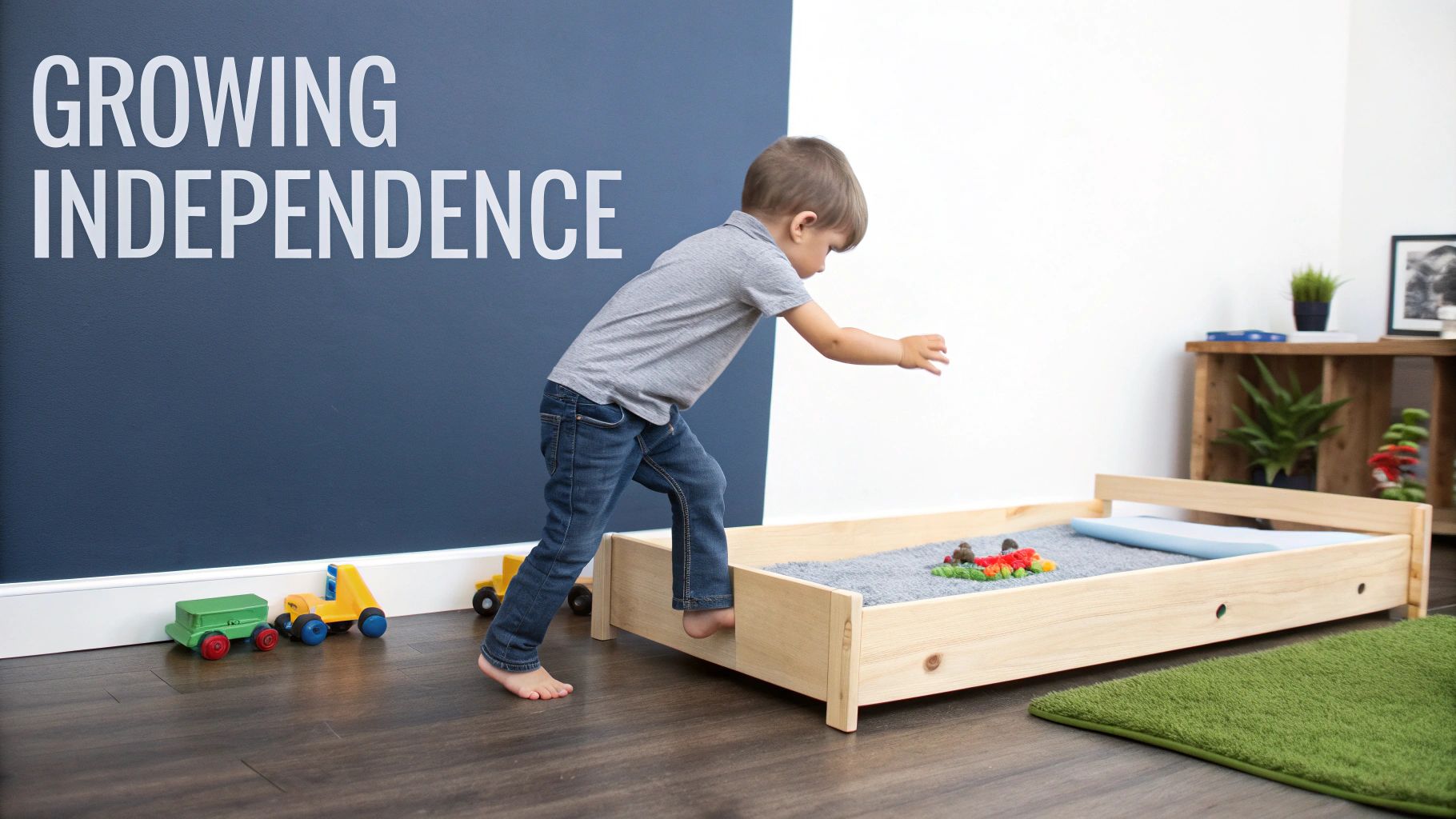
A mom I’ve spoken with saw tantrums vanish once her two-year-old felt in control of bedtime. Moreover, after switching to a low platform, one family reported 35% fewer wake-ups—strong evidence that self-direction can improve sleep quality.
“We saw her confidence soar when she climbed up alone,” recalls a mother of a two-year-old.
Real Examples From Parents
In Austin, a case study noted that after a few months on a floor bed, a toddler tackled stairs with new confidence. Nearby in Toronto, a little one began crawling back to bed solo at the first hint of daylight, mastering self-soothing all on her own.
These stories aren’t just sweet—they highlight real gains in spatial awareness and emotional regulation.
Key Improvements
- Spatial Awareness: Navigating a low edge teaches depth perception naturally.
- Self-Soothing: Choosing to rest or fetch a toy boosts emotional control.
- Decision-Making: Picking blankets and settling in fosters autonomy.
Practical Takeaways
- Observe your child’s bedtime choices and celebrate each small win.
- Use simple cues like “time to rest” to reinforce their routine.
- Notice improvements in spatial skills—like when they step confidently on and off.
By recognizing developmental milestones—whether it’s a solo climb or that first uninterrupted nap—you’re helping your child build independent sleep habits.
Final Insights
Blending motor-skill practice with self-directed choices turns bedtime into a mini learning lab. What’s more, a softly glowing night light and a child-height book shelf nearby encourage peaceful exploration after lights-out.
- Night Light Placement: Aim it at the bed’s edge for safe navigation.
- Book Shelf Access: Keep a few favorite titles within arm’s reach.
Celebrate every step. Confidence—and pride—will grow steadily from there.
Safety Guidelines And Regulatory Standards
Every Montessori floor bed starts with a few simple precautions. Lay a cushioned pad underneath the frame and add:
- Non-slip mats to prevent sliding
- Rounded corners on all edges
- A soft padding layer under the mattress
Maintain a 3–5 inch gap between the bed and the walls to prevent pinched fingers and encourage airflow. Pair that with a breathable mattress to lower any risk of suffocation.
Choose only low-VOC finishes and paints marked non-toxic. Ditch bulky guard rails in favor of soft but sturdy bumpers—this combo keeps toddlers safe without taking away their freedom.
Extend your floor padding 6 inches beyond each side of the mattress. This extra cushion catches falls and eases the transition as they climb in and out.
Before you seal any wood, scan paint labels for ASTM, EN71, and GS certifications.
Both the U.S. Consumer Product Safety Commission and European furniture standards have strict testing routines. CPSC rules cover crash resistance and material safety, while Europe’s guidelines cap formaldehyde and demand durability. Merging these standards creates a universally high-quality product.
“Align spacing and materials to recognized safety standards to reduce hazards,” advises a child-safety expert.
Industry data reveals that single and low-profile designs lead the Montessori bed market, with parents valuing easy mobility for babies and toddlers. Premium sustainable materials and customizable options are fueling double-digit growth among high-end collections. This trend reflects regulatory input from both Europe’s toy safety directives and U.S. CPSC mandates. Read full research on design adaptations and safety context
Quick Compliance Checklist
- Anchor the bed frame to walls every 2 feet.
- Ensure all mattress-to-frame gaps are under 1 inch.
- Confirm sealants and paints are certified non-toxic.
- Keep the bed at least 12 inches away from heaters or vents.
Check out our guide on Montessori floor bed safety for deeper tips, tricks, and best practices.
Age Recommendations And Mattress Size Guide
Every stage of your little one’s growth calls for a tailored sleep setup. Matching mattress dimensions with safety features ensures both comfort and confidence.
Infants under 12 months need a firm sleep surface that leaves less than 1 inch of gap between the mattress and frame. This snug fit supports healthy spinal alignment.
When children turn 1–3 years, they’re ready for a low-profile setup—around 2 inches off the floor. It gives them the freedom to climb in and out safely.
By preschool age (3–5 years), you can step up to a 50×80 inch mattress on the floor, offering extra space without losing that Montessori independence.
- Infants (0–12 months): 28×52 inches, firm mattress
- Toddlers (1–3 years): 40×60 inches, low-frame design
- Preschoolers (3–5 years): 50×80 inches, more legroom for growth
Mattress Thickness And Hypoallergenic Covers
Keep your mattress under 4 inches thick to reduce any suffocation risk.
Opt for covers and fabrics certified OEKO-TEX or GOTS, ensuring breathability and allergy protection.
Limit extra padding—no more than 1.5 inches of topper—so your toddler can hop in and out without slipping.
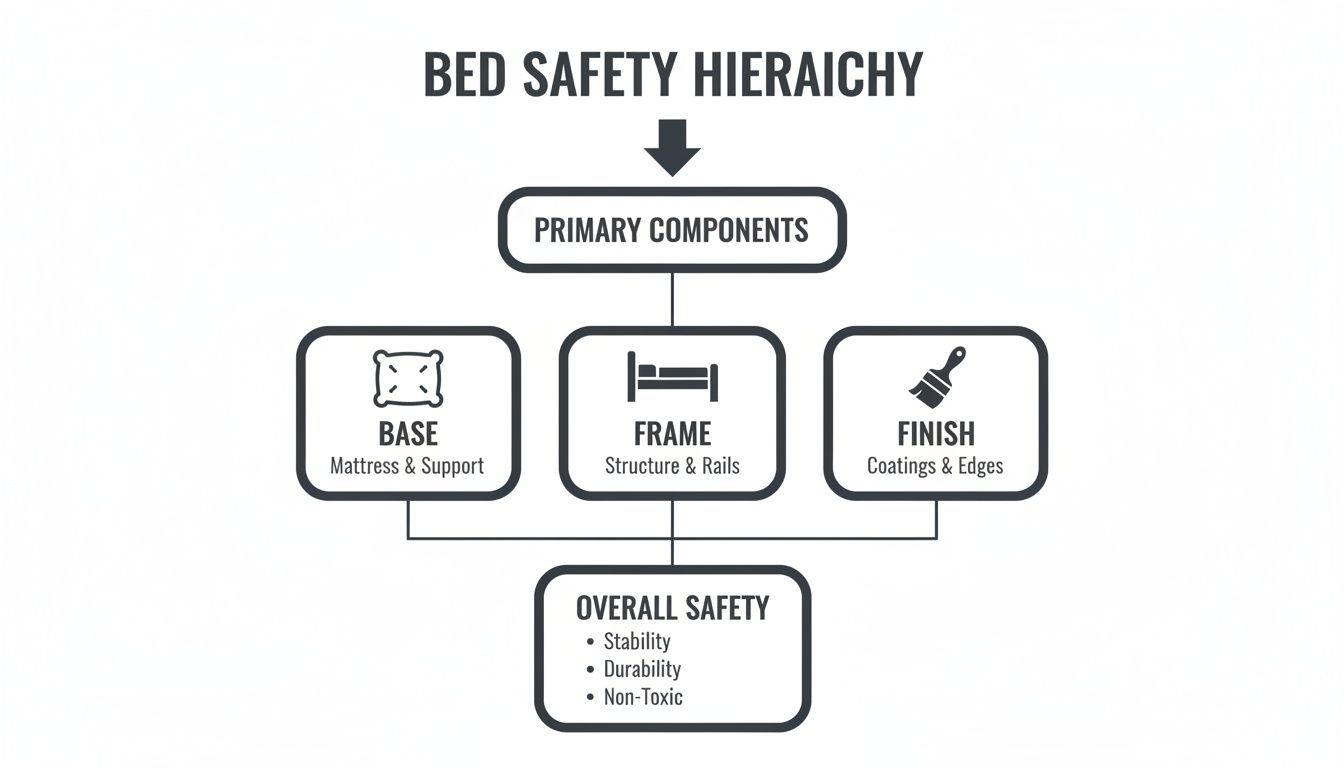
This diagram lays out each layer—from firm base to smooth finish—so you can see how safety and stability come together.
Age And Mattress Size Recommendations
Below is a quick-reference table to help caregivers match their child’s age to the perfect mattress size and crucial safety notes.
| Age Range | Mattress Dimensions | Benefits | Safety Notes |
|---|---|---|---|
| 0–12 months | 28×52 in | Firm support, spinal alignment | Gap under 1 in |
| 1–3 years | 40×60 in | Easy self-entry and exit | Frame height ~2 in |
| 3–5 years | 50×80 in | Extra room for growing bodies | Low-profile platform |
Checking these guidelines as your toddler grows keeps their sleep space both safe and supportive.
For a deeper dive into choosing the right mattress, see our best mattress for floor beds guide.
Setting Up The Room And Transition Strategies
Position the floor bed against a wall to give your child a sense of safety and plenty of open room to explore. Low shelves at toddler height, filled with favorite books and soft toys, invite curiosity just before lights-out. Clear walkways help tiny feet move confidently between play and rest.
- Floor-level night light for gentle illumination during midnight wanderings
- Child-sized hangers to boost dressing independence
- Soft mats arranged in playful circles for safe roaming
Think of the Johnsons, whose daughter Emma slid out of her crib and into this simple setup—her routine shifted, but her joy stayed the same.
Supervised Naps And Rituals
Begin with supervised naps on the new bed during daylight hours. Lay out Emma’s favorite blanket each time so she connects its soft weight to her new sleep spot. Then, echo familiar bedtime steps—story time, a soft song—to signal that rest is near.
- Offer short, supervised naps on the floor bed.
- Introduce a beloved blanket at each rest period.
- Follow the same winding-down rituals each night.
This rhythm links new surroundings to feelings of comfort and trust.
"Consistency and comfort made our switch seamless," says one happy parent.
For more ideas, see our detailed guide on Transitioning From Crib to Bed.
Room Setup Checklist
- Place the mattress within 2-foot buffer of a wall for extra support.
- Keep décor minimal to reduce visual clutter and promote calm.
- Add non-slip mats in open areas for soft landings.
- Preserve a bedtime routine of books, cuddles, and a warm lamp glow.
The Smiths tested this layout and now wake up to peaceful mornings and eager smiles. Tackle one corner today—and watch your little one’s confidence take flight overnight.
Why Ocodile Floor Beds Meet Your Needs
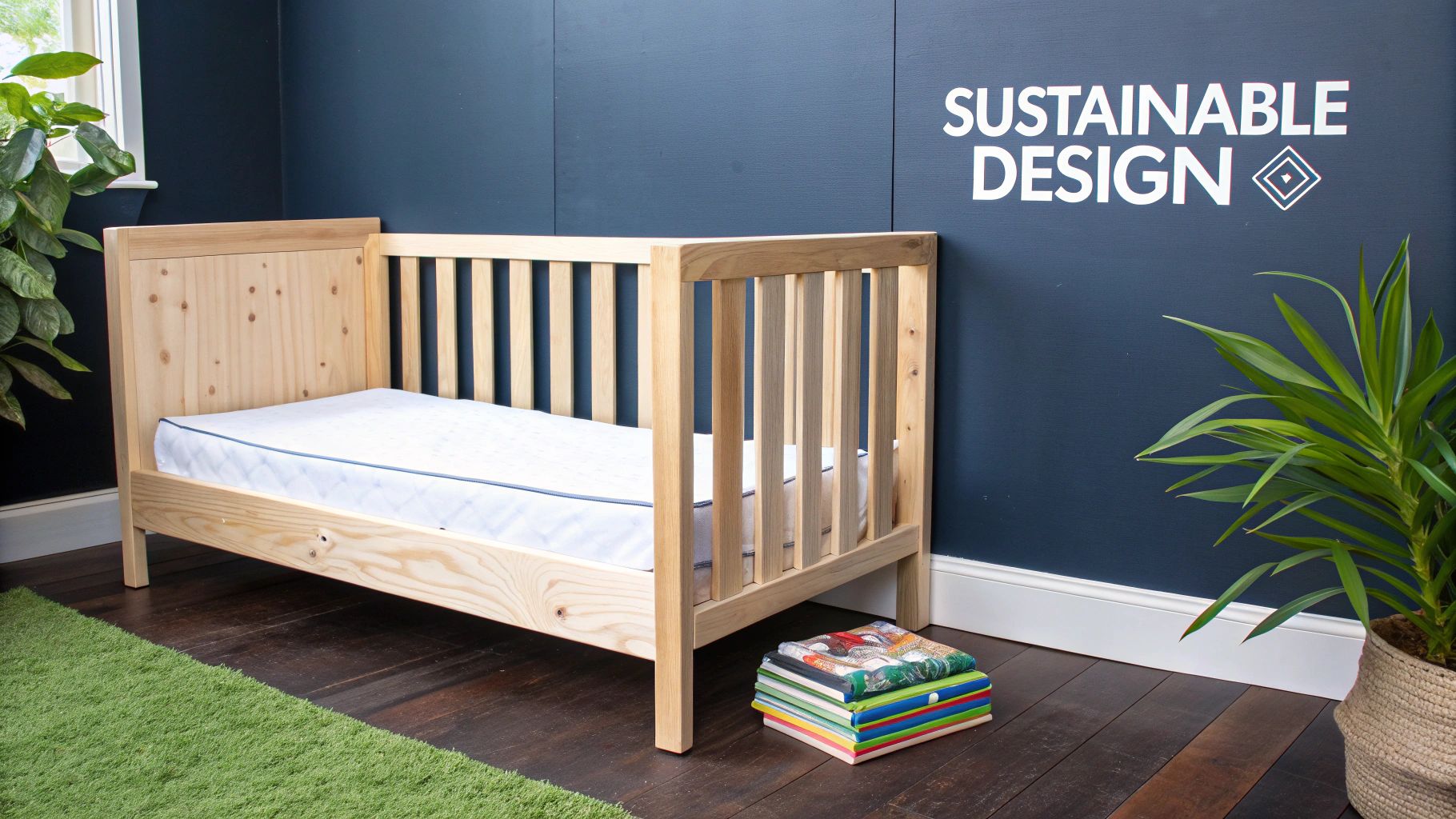
You want a sleep space that’s as thoughtful as the rest of your child’s world. Ocodile frames blend FSC-certified wood with non-toxic finishes, creating a warm, natural foundation that grows alongside your little one.
Ordering is refreshingly transparent: you pick your size, place your order, and track your shipment—no surprises. When the box arrives, a clear, step-by-step guide and clearly labeled hardware turn assembly into a quick weekend project rather than a weekend takeover.
Premium Safety And Design
Safety isn’t an afterthought—it’s woven into every joint and curve. Ocodile beds meet CPSC and EN71 compliance, so you know they’ve passed rigorous tests before they ever reach your home.
- Precision Craftsmanship for seamless connections and velvety-smooth edges
- Child-Sized Proportions that invite confident, independent climbing in and out
- Custom Sizes stretching from toddler beds all the way to tween frames
What’s more, the minimalist silhouette slides effortlessly into modern décor, letting you showcase that perfect balance of function and style.
Market research shows North America and Europe currently lead Montessori floor bed demand, while Asia-Pacific is on track for roughly $300–450 million in online sales by the early 2030s. Learn more about regional trends
Global Shipping And Assembly
Ocodile ships to over 30 countries, with shipping rates spelled out up front—no hidden fees to worry about.
Inside the box, you’ll find:
- A concise instruction booklet
- Numbered hardware packets
- Tools where needed
Many parents report finishing setup in under 20 minutes—just enough time to grab a coffee before nap time.
Direct To Consumer Value
Cutting out middlemen means Ocodile can offer premium wood construction at 20–30% lower cost than traditional retailers. Pricing is crystal clear, giving you confidence that every dollar goes into craftsmanship, not padded markups.
“We love the ease of ordering and the eco-friendly design,” says one happy parent.
Real stories like this underscore the peace of mind that comes from knowing your toddler can safely explore and rest. A simple corner of your room transforms into a secure, stylish haven where imagination takes flight.
Ready to empower your child’s independence and style? Explore Ocodile floor beds today at ocodile.com.