



Height of a chair seat: The Essential Guide for Your Child's Ergonomics
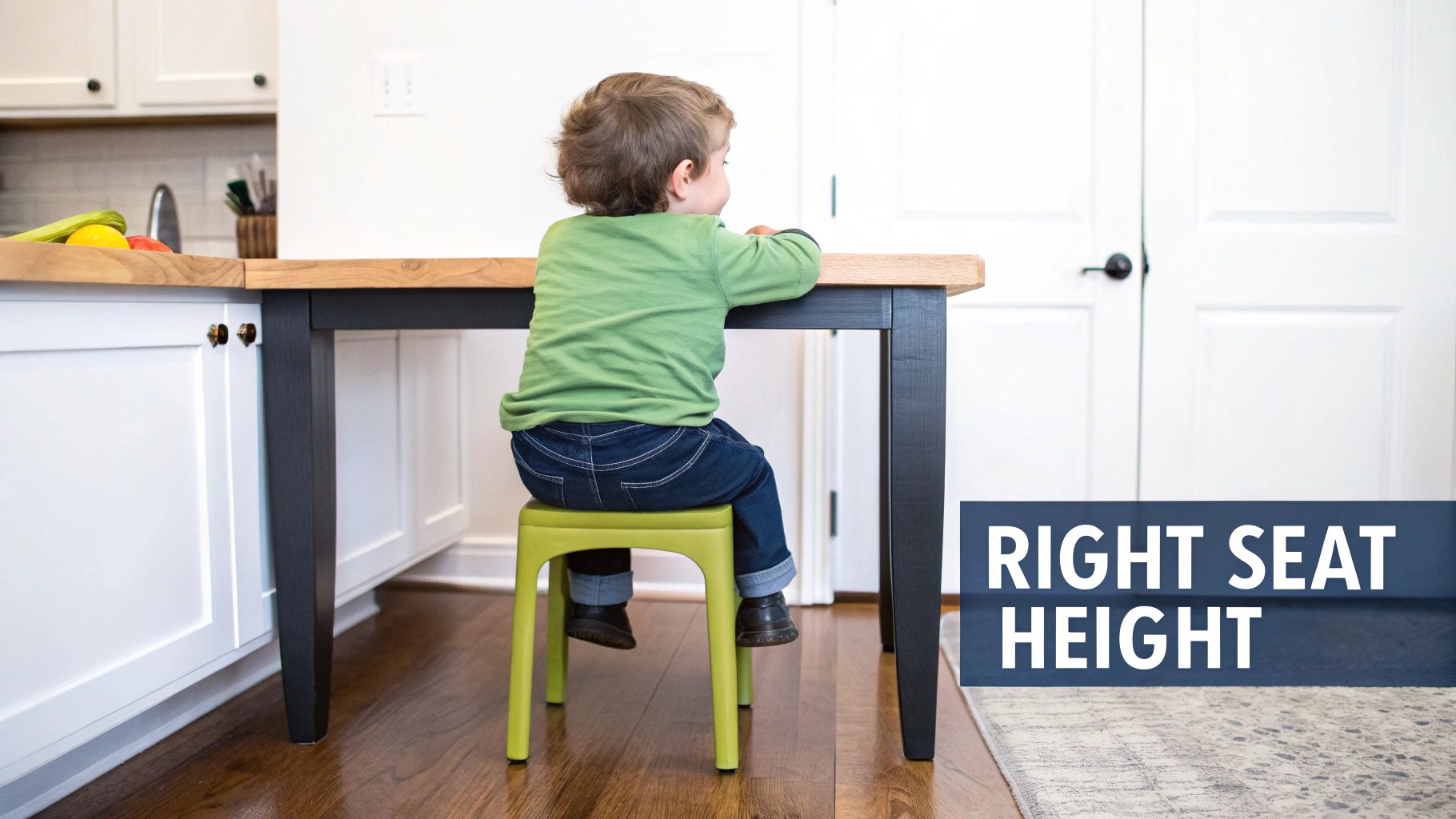
The height of a chair seat is a surprisingly big deal for a child's ergonomic setup, and it directly shapes their posture, focus, and even how they develop physically. For little ones, the sweet spot is a seat height that lets their feet rest flat on the floor, with their knees and hips comfortably bent at a 90-degree angle.
Why Your Child's Chair Seat Height Matters More Than You Think
Choosing furniture for a child might seem straightforward, but getting the height of a chair seat right is about so much more than just comfort. It’s a foundational piece that affects their daily life, from mealtimes to playtime. An ill-fitting chair can create subtle but persistent roadblocks to their development.
Think of it like this: imagine asking your child to write their name while wearing bulky mittens. They could probably do it, but it would be frustrating and inefficient. That’s exactly what it feels like for a child in a chair that’s too tall or too short. Their body is so busy trying to find balance that their mind can't fully lock in on the task at hand.
The Ripple Effect of a Proper Fit
A chair that’s just the right size does more than support good posture; it actually unlocks your child's potential. When their feet are planted firmly on the floor, they have a stable base that lets them channel their energy into developing other important skills.
This stability has a direct impact on:
- Concentration: Without the distraction of dangling feet or an wobbly core, a child can focus for longer on activities like drawing, reading, or just finishing a meal.
- Fine Motor Skills: A stable posture frees up their hands for the precise movements needed to learn to write, use a fork, or build with blocks.
- Independence: A chair they can get into and out of by themselves builds a powerful sense of autonomy and confidence—a core principle in Montessori-inspired learning.
Understanding how chair height affects a child’s ability to move, like easily getting up from a sitting position, is key for their development. This is a principle often measured using tools like the Sit to Stand Test norms.
At the end of the day, providing a chair with the correct seat height is one of the simplest yet most powerful ways you can create a supportive environment where your child can truly thrive.
Getting Ergonomics Right for Growing Kids
When you hear “ergonomics,” you probably think of fancy office chairs and complicated desk setups for adults. But the idea is actually much simpler, and it's absolutely vital for kids: ergonomics is all about making the environment fit the person, not forcing the person to fit the environment. For a child whose body is constantly changing, this is a really big deal.
The gold standard in children's ergonomics is the 90-90-90 rule. It’s a simple guide for the ideal way to sit. Imagine your child sitting down: their hips, knees, and ankles should all be at a comfy 90-degree angle. Most importantly, their feet need to be resting flat and firm on the floor or a footrest.
Getting this posture right isn't just about good habits—it prevents strain and helps them focus. When a child's body is properly supported, they aren't wasting energy just trying to stay balanced or stop wiggling. All that extra energy can go straight into learning, eating, and playing.
The Secret to the Perfect Fit
So, how do you find the perfect height of a chair seat for your little one? You just need one simple measurement: their popliteal height. It sounds technical, but it’s just the distance from the floor to the crease behind their knee when they’re sitting with their thighs parallel to the ground. That number is exactly how high their chair seat should be. Simple as that.
Think about what happens when a small child tries to sit in an adult-sized chair. Their feet dangle in the air, which puts pressure on the back of their thighs and can even cut off circulation. Their little core muscles have to work overtime just to keep them from sliding off. The result? Endless fidgeting and a total loss of focus.
This all happens because standard furniture just wasn't made for them. The average dining chair has a seat height of 18 to 22 inches, designed to match an adult's popliteal height. But even this standard has its flaws. Studies show that a typical office chair, which adjusts from 16 to 20.5 inches, is still too high for about 35% of women. If it doesn't even work for a huge chunk of the adult population, you can see how wildly unsuitable it is for a toddler.
From Unsafe to Unstoppable
Putting a child in an adult chair isn't just an ergonomic problem—it's a genuine safety hazard. A child perched on the edge of a chair that's too tall for them is at a much higher risk of falling. They also can't get on or off by themselves, which gets in the way of developing their independence.
Giving a child furniture that actually fits their body is one of the best things you can do to create a safe, supportive, and kid-friendly home. It turns their world from a series of obstacles into a space where they can truly thrive.
When you invest in child-sized furniture, you're doing so much more than just buying a small chair. You're giving them a tool to build their own confidence and independence. Our guide on choosing an adjustable children's chair can help you find a great long-term solution that grows right alongside them. It's a simple choice that supports their physical well-being and nurtures a powerful sense of "I can do it myself!"
A Step-By-Step Guide to Measuring for the Right Chair
Knowing what good posture looks like is the first step, but putting it into practice is what really makes a difference. Thankfully, measuring your child for the right height of a chair seat is a simple process. All you need is a tape measure and a bit of patience to create an environment that’s built for their comfort, focus, and safety.
To get the most accurate number, have your child sit on a flat, firm surface—the floor or a low stool works perfectly. The key is to find a spot where their knees can easily bend at a 90-degree angle with their thighs parallel to the ground. This posture is crucial for getting the measurement just right.
The Two-Step Measurement Process
Once your little one is sitting comfortably, you’re just two quick steps away from finding their ideal seat height:
- Position Their Feet: Make sure their feet are resting flat on the floor, planted right below their knees. This creates that perfect right angle we're looking for.
- Measure the Popliteal Height: Grab your tape measure and measure the vertical distance from the floor up to the crease directly behind their knee. That number is your child's ideal seat height.
Why this specific measurement? The goal is to match the chair's seat height to this popliteal measurement as closely as you can. When you get it right, you ensure healthy blood flow, prevent uncomfortable pressure behind the thighs, and give them a stable foundation for sitting.
It all boils down to a simple, repeatable process: measure their popliteal height, analyze their posture in the chair, and adjust as needed.
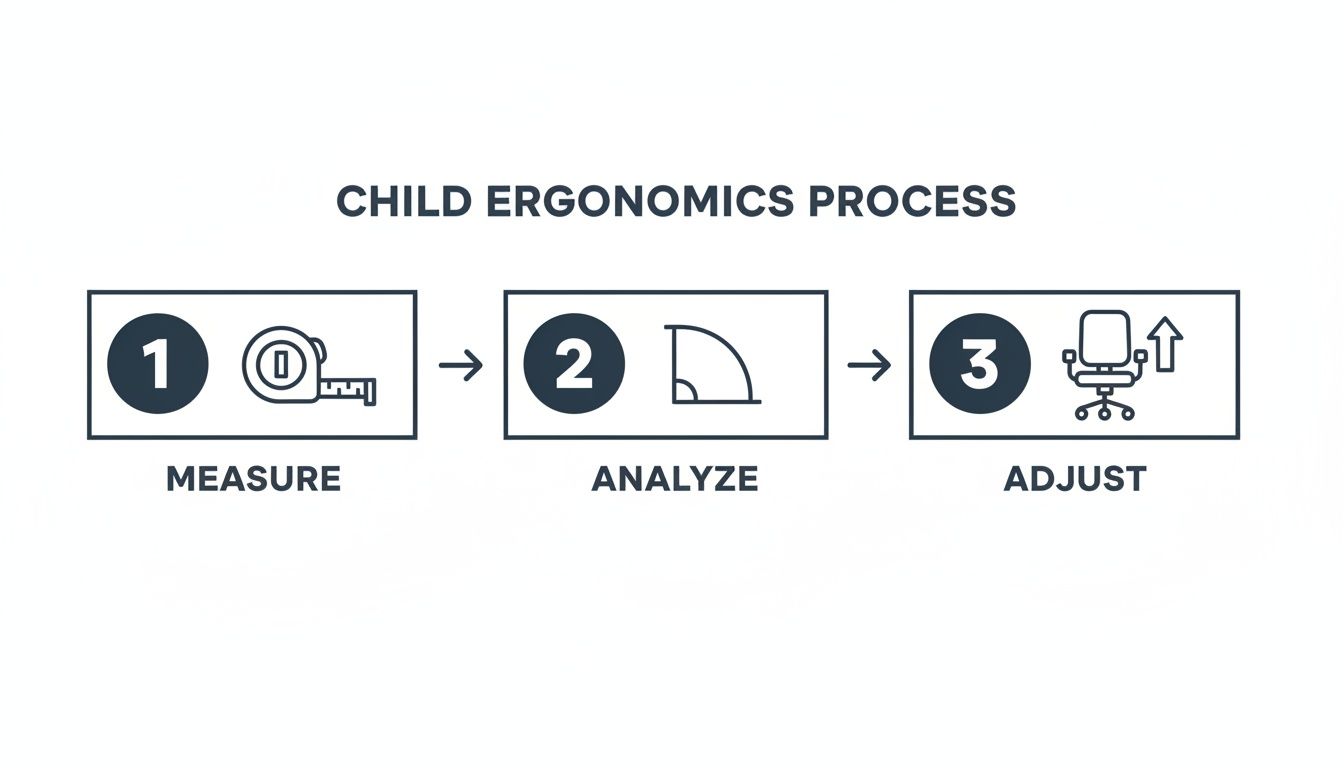
This visual is a great reminder of the three core actions—Measure, Analyze, and Adjust—that lead to the best possible ergonomic setup.
Translating Measurements into the Right Fit
This hands-on approach will almost always be more reliable than just going by age-based charts. Kids all grow at their own pace, right? Research has even started to push for furniture dimensions to be linked directly to a user's height, moving away from outdated, one-size-fits-all standards.
For little ones, this means focusing on smaller, more precise ranges that match their specific popliteal heights. For kids between two and five, you’re often looking at a range around 20-25 cm. These updated anthropometric insights are helping create safer, more suitable environments for everyone. If you’re curious about how these calculations are modernizing furniture standards, you can learn more about research on furniturehub.techinfus.com.
Once you have your measurement, you can shop with confidence for a chair that fits just right or make simple adjustments to the furniture you already have. It’s a small step that makes a huge difference in your child's daily comfort and their ability to engage with the world around them.
The Relationship Between Chair and Table Height
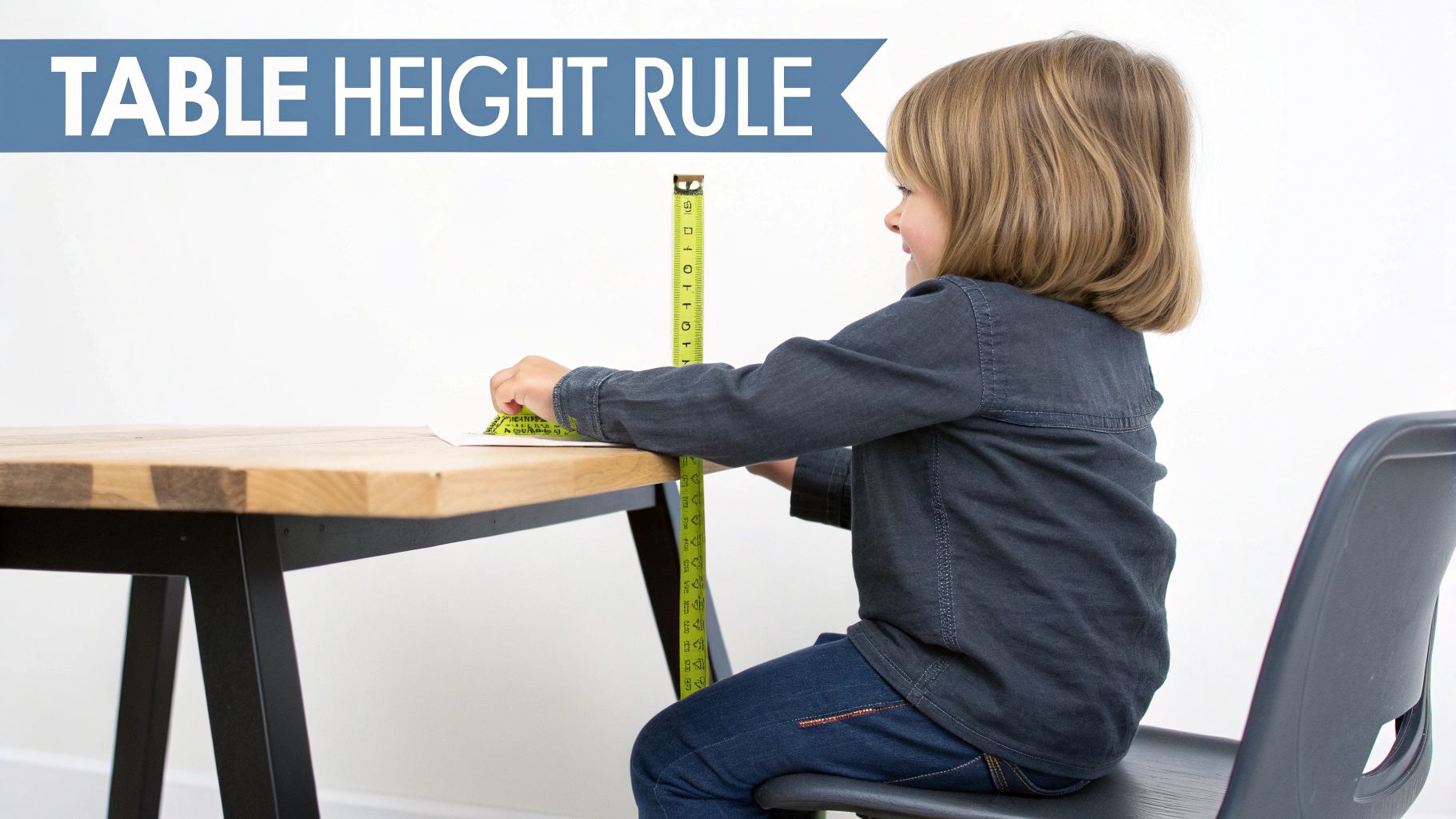
Finding a chair with the perfect seat height is a major victory, but it's only half of the ergonomic equation. For a truly functional and comfortable space for your child, the chair and table have to work together as a team. If one isn't pulling its weight, the whole setup can feel awkward and uncomfortable.
The relationship between the height of a chair seat and the table's surface is what really determines whether your child can eat, draw, and play with ease. Get it wrong, and you'll quickly notice them hunching their shoulders up to their ears or straining their neck just to see what they're doing.
The Golden Rule of Spacing
Luckily, there’s a simple rule of thumb for creating the perfect setup. The surface of the table should be about 20 to 30 cm (roughly 8 to 12 inches) higher than the chair seat.
This gap is the sweet spot. It gives your child’s legs just enough room to fit comfortably underneath while letting their arms rest on the tabletop with their elbows at a natural 90-degree angle.
This spacing is so important for preventing physical strain. It encourages a healthy, upright posture and lets a child focus on their activity without their body getting in the way. This principle holds true everywhere, whether it’s the dining table, a little art station, or their playroom activity center.
Our guide on selecting the perfect Montessori table and chair set can show you options that already have this ideal relationship built-in.
Applying This to Different Furniture Types
This idea isn’t just for kids; it’s a universal design concept that applies to adult furniture, too. Think about it: standard dining chairs with a 17-19 inch seat height are made to pair with tables that are 28-32 inches tall, which maintains that essential 10 to 12-inch gap. This tiered system extends to other furniture, with counter stools jumping to 24-27 inches to match taller surfaces. To really get a feel for how this works across the board, check out the ultimate guide to dining table heights.
For parents, seeing these established adult ergonomic standards really highlights why a child-sized set is so important. By ensuring the proper distance between the chair seat and the table, you create a holistic, functional, and truly supportive space that nurtures your child’s development and independence.
How the Right Furniture Fosters Montessori Independence
In the Montessori world, we often talk about the environment being the "third teacher." It's a space that's been thoughtfully put together to feed a child's natural curiosity. The right furniture—especially something as simple as the height of a chair seat—isn't just a minor detail here. It’s a cornerstone. It can turn a basic chair and table into powerful tools for a child’s growth.
The whole idea is to create a 'prepared environment' where everything is perfectly scaled to the child. When their furniture actually fits them, it removes the physical hurdles that make them rely on adults for everything. A chair they can get into and out of all by themselves is a huge first step toward self-reliance. It sends a powerful message: "You've got this."
This newfound physical freedom creates a ripple effect, boosting their sense of autonomy in all sorts of ways. Suddenly, practical things like feeding themselves, pouring a drink, or picking out an activity feel totally achievable instead of like frustrating challenges that require a grown-up's help.
Building Confidence from the Ground Up
Every single time a child successfully navigates their own space, their self-confidence gets a little boost. This is where the simple act of using furniture that fits connects directly to their psychological well-being. A child who can sit comfortably at their own table to draw or have a snack feels a real sense of ownership and competence.
This independence also helps them focus. When they aren't struggling with a wobbly, oversized chair, their mental energy is free to zero in on the task at hand—be it a puzzle, a craft, or just enjoying their meal.
The goal of a prepared environment is to make the child independent of the adult. The child who can do things for themselves is a child who is happy, confident, and eager to learn. This is where furniture stops being just furniture and becomes an essential tool for development.
Practical Tools for a Prepared Environment
Creating this kind of space goes beyond just a chair and table. Tools like learning towers are also fantastic for safely bringing kids up to adult-height surfaces, letting them get involved in kitchen activities right alongside you. You can dive deeper into how a Montessori learning tower can be a great addition to your child-friendly home.
Ultimately, getting the chair seat height right is a fundamental piece of the puzzle. It gives children the stability and access they need to explore their world on their own terms, nurturing an "I can do it" spirit that will stick with them for life.
Making Your Current Home Work for Your Child
Not every family is ready or able to invest in a full set of new child-sized furniture, and that’s perfectly okay. You can absolutely create a supportive and comfortable space for your child by creatively adapting what you already own. The goal is simply to bridge the gap between their smaller frame and our adult-sized world.
Temporary fixes like booster seats, firm cushions, and footstools can be incredibly effective. A securely strapped booster seat or even a dense cushion can instantly raise the height of a chair seat to where it needs to be. Add in a sturdy footstool, and you’ve provided the non-negotiable foot support your child needs for stability and focus.
Remember, the most critical element in any setup is ensuring your child's feet are flat on a solid surface. This provides the stable base of support they need to stop fidgeting and maintain good posture.
Choosing the Right Temporary Fix
Each solution has its own personality, with a unique set of pros and cons. The best choice really depends on your child's age, the specific chair you're trying to adapt, and what you’ll be using it for.
- Booster Seats: These are fantastic for bringing a toddler up to the dining table. Just make sure to look for models with secure straps that attach firmly to the chair for maximum safety.
- Firm Cushions: A simple and super portable option, a dense cushion can provide a quick lift when you need it. The downside is they might not be as stable as a dedicated booster.
- Footstools: This is an essential piece of the puzzle for any setup where a child's feet don't reach the floor. A stable footstool completes the ergonomic picture, making the 90-90-90 rule possible.
To help you decide, here’s a quick look at the pros and cons of these common solutions.
Comparing Chair Height Solutions for Children
A look at the pros and cons of different options for adapting adult-sized chairs for your child.
| Solution | Pros | Cons | Best For |
|---|---|---|---|
| Booster Seat | Securely straps to chair; easy to clean; raises height significantly. | Can be bulky; may not fit all chair styles. | Younger children at the main dining table. |
| Firm Cushion | Highly portable; inexpensive; versatile for different chairs. | Less stable than a booster; may slip easily. | Older children who just need a small lift. |
| Footstool | Provides crucial foot support; promotes good posture. | Can be a trip hazard; needs to be the correct height. | Any setup where a child's feet dangle. |
These quick fixes are great for getting by, but it’s helpful to think about the long game, too.
The Value of Long-Term Adjustability
While temporary fixes are excellent, it’s also worth considering the long-term value of adjustable furniture. Chairs designed to grow with your child offer a much more sustainable and practical solution.
They completely eliminate the need for temporary add-ons and ensure a perfect ergonomic fit through every single growth spurt. This makes them a wise investment for many families, saving you hassle and ensuring your child is always comfortable and well-supported.
Still Have Questions About Kids' Chair Height?
Picking out children's furniture can feel surprisingly complicated. You're trying to create the perfect, supportive space for your little one, and it's totally normal to get stuck on the details. Let's tackle some of the most common questions we hear from parents about getting the height of a chair seat just right.
Think of this as your quick-reference guide. We’ve put together clear, straightforward answers to help you solve your most pressing concerns and feel confident in your choices.
When Should My Child Move From a High Chair?
Most kids are ready to graduate from their high chair sometime between 18 months and 3 years old. But it's less about a specific age and more about developmental readiness. You'll know it's time when you see them sitting up straight and stable through a whole meal, and especially when they start making attempts to climb out.
Once you make the switch to a booster or a pint-sized chair, just remember the golden rule: their feet need to be flat on a solid surface. Whether it’s the floor or a little footstool, this is non-negotiable for good ergonomic support and helps keep the fidgeting at bay.
Is It Really a Problem If My Child’s Feet Dangle?
Yes, it's a bigger deal than you might think. When a child's feet are just dangling in the air, they don't have a stable base. This forces their core muscles to work overtime just to keep them balanced. It's one of the main reasons for all that wiggling, squirming, and trouble focusing at the table.
Unsupported legs also put a lot of pressure on the back of their thighs, which isn't great for circulation. Giving them a stable footrest is one of the most important things you can do to boost your child’s focus and posture during meals, crafts, or any other seated activity.
Should I Get an Adjustable or Fixed-Height Chair?
This really comes down to what you're trying to achieve. There’s no single right answer.
- A fixed-height, child-sized set is absolutely perfect for a dedicated play or craft corner. It fully embraces the Montessori ideal of letting your child be independent in their own space.
- An adjustable chair is a fantastic long-term investment. It allows your child to sit with the rest of the family at the main dining table, all while getting the right ergonomic support as they shoot up through growth spurts.
A lot of families actually find a hybrid approach works best. They might have a small kids' table for independent play and an adjustable chair that pulls up to the "big table" for inclusive family meals.
At Ocodile, we believe in creating furniture that grows right along with your family. Explore our collection of beautifully designed, child-safe solutions that foster independence and make everyday moments special. Discover the perfect fit for your home at https://ocodile.com.