



How to Childproof the Area Around a Montessori Bed Frame
If your toddler can now climb in and out of a montessori bed frame, the question changes from “Is the bed low enough?” to “Is the whole area safe when my child is awake before I am?” The short answer is to treat the bed and the surrounding room as one sleep space. A low bed can make bedtime feel calmer and more child-friendly, but only when the nearby floor, walls, furniture, cords and toys are set up with toddler movement in mind.
That matters because the crib used to contain the sleep area. Once your child can get out of bed, they may wander to the bookshelf, tug a curtain, reach for a lamp cord, step on a toy or curl up beside the mattress. Childproofing is what turns that new freedom into a safer, more predictable routine.
Childproofing Around a Montessori Bed Frame Means Childproofing the Room
A Montessori bed frame is usually a low bed frame that helps a child get in and out without being lifted. For parents, the biggest safety shift is not the bed itself. It is the fact that your child has access to the room during nap time, bedtime and early morning wakeups.
A practical way to start is to get down to your child’s level and look at the room from the bed outward. What can they reach while sitting on the mattress? What can they grab if they stand beside the bed? What would be tempting if they woke up bored or curious?
If you are still deciding on the bed itself, it can help to review what makes a frame safe before you arrange the rest of the room. Ocodile’s guide on how to choose a Montessori floor bed frame safely covers frame height, guardrails, mattress fit and materials in more detail.
Start With the Landing Zone Around the Bed
The “landing zone” is the floor space immediately around the mattress and frame. This is where your toddler’s feet hit the floor, where they may kneel to climb in and where they might roll or scoot during sleep. Around a montessori bed frame, this area should be simple, clear and forgiving.
Keep hard furniture out of the immediate bedside zone when possible. A heavy nightstand, sharp-cornered storage cube or toy bin with rigid edges can turn a small stumble into a bigger problem. If your child uses a bedside basket, choose something lightweight and soft-sided, then place it far enough away that it does not create a tripping point.
Rugs can help a room feel cozier, but they should lie flat and stay in place. A rug that bunches near the mattress can catch little feet during sleepy trips to the door or potty. If the floor is slippery, use a rug pad designed to reduce movement and check it regularly.
Secure Furniture, Shelves and Anything Climbable
Once your child can move freely at night, bedroom furniture needs a second look. Dressers, bookcases and storage units should be anchored according to the manufacturer’s instructions. The U.S. Consumer Product Safety Commission has long warned parents about tip-over risks from unsecured furniture and TVs, and toddler bedrooms deserve special attention because children climb when adults are not watching.
The safest room around a montessori bed frame is not packed with tempting climbing steps. A low shelf can be useful for books or a few calm bedtime items, but tall shelves, stacked bins and furniture placed beside windows can create avoidable risk.
A quick parent test is to ask: “If my child used this like a ladder, what would happen?” If the answer worries you, move it, anchor it or remove it from the sleep space.
What to move or secure first
- Dressers, bookcases and cabinets that could tip
- Lamps with reachable cords or unstable bases
- Toy storage that encourages climbing
- Wall shelves installed above or beside the bed
- Heavy decor that could fall if pulled
- Any furniture that gives access to a window
This does not mean the room has to feel empty. It means the room should be calm and predictable, with the most tempting items placed where they will not invite nighttime climbing.
Check Wall, Window and Cord Hazards From Bed Height
Parents often childproof from adult standing height, but toddlers live closer to the floor. Sit on the mattress, then lie down on it. From there, check what your child can reach from the bed and from the floor beside it.
Look at outlets, charging cords, baby monitor cords, curtain pulls and blind cords. Cords should be kept out of reach, secured against the wall or moved behind furniture that your child cannot access. Avoid running cords near the mattress, even if they seem tucked away, because toddlers are good at finding what adults assume is hidden.
Windows need the same attention. A Montessori bed frame should not be placed where a child can easily climb from the bed to a windowsill. If the room layout gives you no choice, use window safety measures appropriate for your home and keep climbable furniture away from that area.
Wall decor should be lightweight, secure and not placed directly above the bed where it could fall. Framed art, mirrors and shelves may look sweet in photos, but bedtime safety comes first.
Keep Bedding Simple and Check the Mattress Fit
A floor bed can feel cozy without being crowded. Thick piles of pillows, oversized stuffed animals, loose blankets and decorative cushions can make it harder for a toddler to move safely in and out. For younger toddlers, a simpler setup is easier to manage and easier for parents to inspect.
The mattress should fit the frame as intended, without large gaps that could trap a hand, foot or toy. If you are using a guardrail, check the fit between the guardrail, mattress and frame regularly, especially after changing sheets. A well-fitting setup matters because your child will use the bed many times a day, not just at bedtime.
For a broader safety walkthrough, Ocodile’s parent’s guide to Montessori floor bed safety explains readiness, room setup and safe sleep considerations for families making the crib transition.
| Area to check | What to look for | Parent test |
|---|---|---|
| Floor beside the bed | Clear path, flat rug, no hard toys | Can your child step down half-asleep without tripping? |
| Walls near the bed | Secure decor, no reachable shelves overhead | Would anything fall if tugged? |
| Furniture | Anchored, stable, not climb-inviting | Could your child use it like a ladder? |
| Cords and outlets | Cords hidden or secured, outlets protected | Can your child reach it from the mattress? |
| Bedding | Simple layers, mattress fits the frame | Are there gaps, loose piles or trapped corners? |

Create a Clear Path to the Door or Potty
The area around the bed is only part of the childproofing job. If your child gets up to find you, use the potty or look for a favorite stuffed animal, they need a predictable path. That path should be free of baskets, toys, laundry piles and small furniture.
A soft night light can help some toddlers orient themselves without turning the room into playtime. Place it where it does not create a cord hazard. If the room connects to a hallway or bathroom, think through what your child can access once the bedroom door opens.
Some families use a baby gate at the bedroom door or hallway, especially during the early crib-to-bed transition. Others keep the door closed with a child-safe setup inside the room. The right choice depends on your child’s age, temperament, home layout and fire safety plan. If you use any gate, install it exactly as directed and check it often.
Separate Sleep Items From Active Play Items
A toddler’s room can hold both sleep and play, but the zones should be clear. Around a montessori bed frame, keep the immediate area calm: a few books, one comfort item and maybe a small basket are usually easier to manage than a pile of blocks, trucks or climbing toys.
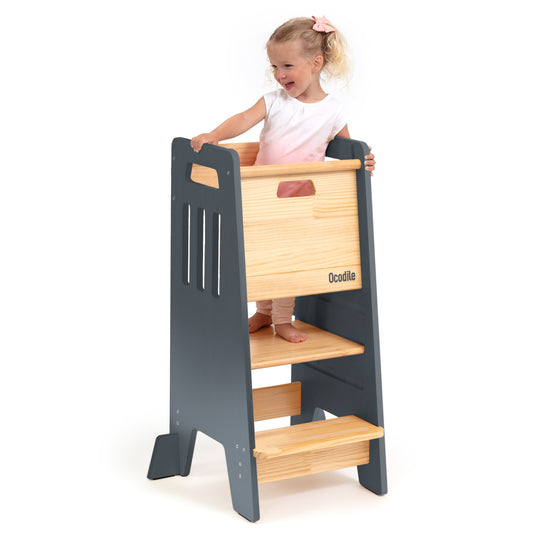
Active play items are better stored away from the mattress, especially before bedtime. If your child uses a balance board, climbing cushion or pretend-play prop during the day, put it somewhere that does not invite jumping, sliding or climbing near the bed at night. For example, a multi-use Kinderboard can be a fun gross motor toy during supervised play, but it should not become an unsupervised launch point beside a sleep space.
This is not about taking away play. It is about making the room match the moment. Daytime can include movement, practice and exploring. Nighttime should make the safest choice the easiest choice.
Think Through Real Bedtime Behavior
Childproofing works best when it matches what your child actually does. Some toddlers roll out and sleep half on the rug. Some pop up and head straight to the door. Some pull every book off the shelf before calling for a parent. Watch a few nights, then adjust the room based on patterns rather than guesses.
The goal is not to make the montessori bed frame feel like a crib. The goal is to give your child a sleep area they can use more independently without relying on improvised solutions, like climbing out of a crib, standing on a chair or pulling furniture toward the bed.
Before lights out, do a quick reset that takes less than a minute. Clear the floor, move active toys away, check that cords are out of reach and make sure the bedding is not bunched in gaps. That tiny routine can make the room safer and calmer before everyone is tired.
Avoid These Common Childproofing Mistakes
The most common mistake is focusing only on bed height. A low bed helps reduce the distance your child has to climb, but it does not automatically make the whole room safe. The surrounding setup matters just as much.
Another mistake is placing the bed where it looks best instead of where it works safest. Centering the bed under a window or styling shelves above it may look nice in a nursery photo, but toddlers touch, pull and climb. Safety may require a less “perfect” layout.
Parents also sometimes leave too many toys within reach because they want the room to feel inviting. A child-friendly room does not need to be overstimulating. In many homes, fewer visible choices lead to a smoother bedtime and less nighttime exploring.
When to Recheck the Setup
A room that was safe last month may need an update once your child gets taller, stronger or more curious. Recheck the area around the bed after every growth spurt, room rearrangement, mattress change or new furniture purchase.
You should also reassess after new behaviors appear. If your child starts jumping on the mattress, dragging stools into the room, opening drawers or reaching window coverings, treat that as useful information. The room is telling you what needs to change.
A Montessori bed frame is part of a changing stage, not a one-time setup. What feels right for a newly walking toddler may not work for a preschooler who can climb, unzip, stack, drag and negotiate with surprising confidence.
How Ocodile Fits Into a Safer Sleep Space
If you are still choosing furniture, look for pieces that are sturdy, stable, well made and designed for everyday use by small children. Ocodile offers Montessori-inspired children’s furniture, including floor beds with safety guardrails, solid wood construction and child-safe coating, along with practical policies like free U.S. shipping, 60-day returns and a 5-year warranty.
Those details matter because the bed becomes part of your child’s daily routine. They climb in for sleep, climb out in the morning, bring books to it, sit on it and use it again the next night. A well-chosen bed does not replace childproofing, but it gives you a stronger foundation for the room around it.
You can also learn more about the basic design and purpose of this sleep style in Ocodile’s guide to what a Montessori bed frame is and how it supports independent sleep.
Frequently Asked Questions
How much space should I leave around a Montessori bed? Leave enough clear floor space for your child to climb in and out without stepping directly onto toys, baskets or hard furniture. The exact amount depends on the room, but the area beside the mattress should be easy to walk through when your child is sleepy.
Should a Montessori floor bed go against the wall? It can, but you need to check for gaps between the mattress, frame and wall. The bed should not create a narrow space where a child could get stuck, and nearby outlets, cords, curtains and window coverings should be out of reach.
Is it safe to keep toys near a floor bed? A few calm bedtime items can be fine for many toddlers, but active toys, hard toys, climbing toys and small pieces are better stored away from the sleep zone at night. The goal is to make the bed area restful, not tempting for unsupervised play.
Do I still need to anchor furniture if the bed is low? Yes. A low bed does not remove furniture tip-over risks. Dressers, bookcases and similar furniture should be anchored according to their instructions, especially once a child can move around the room independently.
When should I childproof the room for a Montessori bed frame? Childproof before the first night your child uses the bed. It is easier to set up the room safely from the start than to react after your toddler discovers cords, drawers, windows or climbable furniture.
A Simple Next Step for Parents
Tonight, sit on your child’s mattress and scan the room from their height. Clear the landing zone, secure the furniture, move cords out of reach and simplify the toys near the bed. That small reset can make the transition feel less chaotic for you and more manageable for your child.
If you are comparing bed options or planning a safer toddler room, explore Ocodile’s Montessori-inspired furniture at Ocodile.com and choose pieces that fit your home, your child’s stage and your bedtime routine.