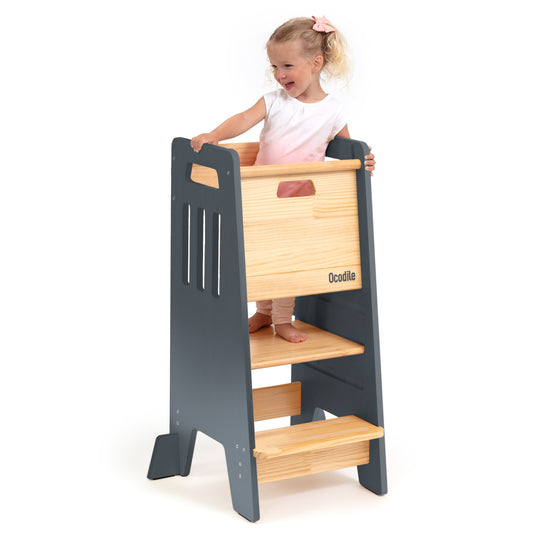




How to Store a Foldable Learning Tower Between Uses
If your toddler loves helping at the counter but your kitchen walkway disappears the second the tower comes out, you are exactly the parent a foldable learning tower was made for. The trick is not only folding it, but choosing a storage spot that keeps it out of the way, dry, stable and easy enough to pull back out when your child wants to wash hands, stir pancake batter or watch you pack lunch.
The best storage setup does three things at once: it keeps the tower from becoming a tripping hazard, protects the wood or finish from everyday wear and makes your next routine easier, not harder. A tower that is buried behind boxes will not get used. A tower leaning across a doorway will annoy everyone by lunchtime.
The short answer: store it clean, dry and upright
For most families, the safest between-use storage spot is a flat, dry area near the room where the tower is used most, usually the kitchen. Fold it fully according to the product instructions, check that any latch or closure is secure if your model has one and place it upright against a wall or inside a closet where it will not slide into a walkway.
A simple storage checklist helps:
- Wipe off food, water or soap before folding it.
- Let damp surfaces dry before putting it away.
- Store it on a level floor, not balanced on top of other items.
- Keep it away from stairs, heat sources and exterior doors.
- Make sure your toddler cannot pull it over while playing nearby.
If you use the tower daily, aim for a spot that takes less than ten seconds to access. If it takes too much effort, you may end up lifting your child again or letting them climb on a dining chair, which defeats the point of having a steadier setup for counter routines.
Why the storage spot matters between uses
A foldable learning tower should not live in a random spot just because it can fold. Toddlers move quickly, kitchens get busy and parents are often carrying plates, laundry baskets or younger siblings. A poorly placed folded tower can become one more thing to bump into or step around.
Good storage also protects the tower itself. Food residue can get sticky, wet spots can make surfaces slippery and constant leaning in a high-traffic hallway can add unnecessary wear. Storing it well helps keep the tower ready for the everyday tasks parents actually bought it for, like handwashing, snack prep, brushing teeth at the sink or helping pour ingredients into a mixing bowl.
There is also a routine benefit. When the tower has a clear home, your toddler learns where it belongs. Over time, putting it away becomes part of the rhythm: use it, clean up, fold it, park it. The adult still handles the folding and placement, but the child can participate by wiping crumbs or pointing to the storage spot.
Best places to store a foldable learning tower at home
The best storage spot depends on how often you use the tower and how much open space your home has. For most homes, the best place for a foldable learning tower is close to the kitchen but outside the main walking path.
| Storage spot | Works well when | Watch out for |
|---|---|---|
| Kitchen corner | You use the tower several times a day | Keep it away from oven doors, drawers and busy walkways |
| Pantry side wall | You want it nearby but not visible | Make sure it does not block shelves or fall when the door opens |
| Mudroom or entry nook | Your kitchen is tight | Avoid storing near shoes, wet floors or exterior doors |
| Hall closet | You use it for cooking projects or weekends | Do not stack heavy items against it |
| Dining room wall | Your child helps at the table more than the counter | Choose a wall where chairs will not knock into it |
If you use it several times a day
Daily-use families usually do best with a nearby, low-effort spot. A slim kitchen wall, the side of an island or a protected pantry area can work well if the folded tower sits flat and does not block drawers. The goal is to make the good choice the easy choice.
Think about your normal traffic pattern. If you walk from the stove to the sink twenty times during dinner, do not store the folded tower along that route. If your toddler often helps at the same counter section, you may also want to review how to place the tower during use. Ocodile has a practical guide on positioning a children’s kitchen tower at the counter that pairs well with storage planning.
If you use it only for cooking or weekend projects
If the tower comes out mostly for baking, holiday prep or weekend breakfasts, a closet or mudroom may be more practical than kitchen storage. In that case, borrow a basic storage rule used for special items: keep it clean, dry, protected and easy to retrieve. The same idea applies to delicate occasion pieces from a bridal shop such as Le Michel Bruidsmode, where careful storage helps keep items ready for the moment they are needed.
Just avoid turning the closet into a pile. If the folded tower is wedged behind vacuum attachments, gift wrap and winter coats, it may be harder to remove safely. Leave a dedicated vertical slot when possible.
How to fold, move and put it away safely
A foldable learning tower is easiest to store when the cleanup process is the same every time. The steps do not need to be complicated, but they should happen before your toddler runs off to the next activity.
- Move your child away first: Have your toddler step down and stand clear before you fold anything. Folding should be an adult job unless the product instructions say otherwise.
- Wipe the standing platform and rails: Sticky banana, yogurt, flour and water can make the next use messier or slicker.
- Check the floor under your feet before moving it: Crumbs, wet spots and toys can make you lose your footing while carrying or sliding the tower.
- Fold it according to the manufacturer’s instructions: Do not force hinges or panels. If something does not move easily, stop and check what is caught.
- Secure any built-in closure if your model has one: A folded tower should stay folded while you move it.
- Place it flat and stable in its storage spot: Avoid balancing it at an angle where a bump from a child, pet or cabinet door could shift it.
If the tower feels awkward to carry, slow down. Parents often try to fold and move things one-handed while holding a cup, snack bowl or phone. With toddler furniture, two hands are usually worth the extra few seconds.
Places that look convenient but usually are not
Some spots seem smart for saving space, but they create new problems. Before you choose a permanent home for the folded tower, walk through your day and notice where people turn corners, open doors and carry things.
| Avoid storing it here | Why it can be a problem |
|---|---|
| Behind a frequently used door | The door can push the tower or pinch fingers if a child reaches behind it |
| At the top or bottom of stairs | A shifted tower can create a fall risk in an already risky area |
| In front of the dishwasher or oven | Heat, steam and door clearance can become issues |
| On a damp bathroom floor | Water can make surfaces slick and may not be ideal for long-term storage |
| Leaning across a hallway | It can become a tripping hazard, especially during busy mornings |

When a step stool can be easier than unfolding the tower
If a foldable learning tower feels like too much for a quick routine, such as brushing teeth, potty training or reaching the bathroom sink, a smaller stool may be the better between-use tool. The tower can stay stored for longer counter tasks, while the stool handles fast moments when your child only needs a little extra height.
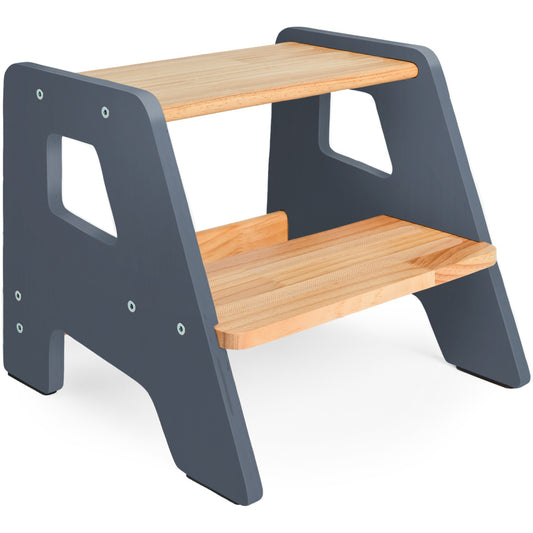
For example, Ocodile’s 1-Step Wooden Stool for Kids is designed for everyday uses such as potty training, reaching the sink, reaching the counter, getting to higher kitchen cabinets with adult supervision, serving as an under-desk foot rest or acting as a bedside step. Its no-slip surface includes 3 clear anti-slip strips, which matters because bathroom tile, socks and wet feet can make quick routines less predictable.
If your child needs more height, the 2-Step Wooden Stool for Toddlers can be useful for bathroom routines, cooking with a child or helping kids get onto a bed. It is described with a tip-proof and sturdy design, plus 5 clear anti-slip strips on the step and platform. That combination can make sense when you want a compact helper item without bringing the full tower out every time.
| Use case | Folded tower stored away | Smaller stool nearby |
|---|---|---|
| Helping mix ingredients at the counter | Better for longer participation with more surrounding structure | Usually less ideal for long counter tasks |
| Quick handwashing | Can feel like extra setup | Often easier to grab and put back |
| Potty training | Usually not the first choice | Often practical beside the toilet or sink |
| Tight bathroom | May take too much floor space | Easier to fit in a corner |
| Family cooking project | Worth unfolding and positioning carefully | May work only for brief reaching tasks |
This is not an either-or decision for every home. Many parents use a tower in the kitchen and a stool in the bathroom because the jobs are different.
Small-home storage ideas that still keep routines easy
In a tight kitchen, a foldable learning tower should have a predictable home that does not steal your only clear walking path. Start by looking for vertical space rather than floor space in the middle of the room.
Use the side of a cabinet run
The side panel of an island or cabinet run can be a good parking zone if it is away from heat and drawer swings. Before committing, open every nearby cabinet and appliance door. If anything hits the folded tower, choose another spot.
Create a pantry slot
If you have a pantry, reserve one narrow side area for the folded tower. This works best when the tower can stand on the floor rather than on a shelf. Do not place heavy items where they can fall onto it or make it hard to remove.
Pair storage with the routine
Store the tower closest to the task it supports most. If your toddler mainly helps rinse fruit, keep it near the sink area but away from wet floors. If your child helps bake at the island, a dining room wall close to the kitchen may be more useful than a distant closet.
Avoid hiding it too well
A folding design is helpful only if the tower remains easy to use. If it disappears into the garage or a crowded storage room, you may stop reaching for it during everyday moments. Keep it accessible enough that helping with breakfast or washing hands does not become a production.
Build a simple end-of-use routine
The easiest storage system is one you can repeat when everyone is tired. After the activity, ask your toddler to help with one safe cleanup job, such as putting the spoon in the sink or wiping the platform with a cloth. Then have them step away while you fold and store the tower.
Use the same short phrase each time: tower is done, tower goes home. Simple language helps toddlers understand that the tower is for helping, not for climbing whenever they feel like it. It also reduces the chance that the folded tower becomes a toy in the corner.
If you are still deciding whether a tower fits your space, Ocodile’s guide to finding the best learning tower for your toddler can help you compare stability, size, materials and daily-use needs before you choose.
Frequently Asked Questions
Can I store a foldable learning tower on its side? Usually, upright storage on a flat floor is more practical because it takes up less floor space and is easier to see. If your product instructions allow side storage, make sure it cannot slide, block a walkway or become something your toddler tries to climb over.
Should I keep the learning tower in the kitchen all the time? If you use it daily, nearby kitchen storage often makes sense. Just keep it away from oven doors, wet areas and main traffic paths. If you use it only occasionally, a closet, pantry or mudroom may work better.
How do I stop my toddler from playing with the folded tower? Store it in a spot that is visible to adults but not inviting as a toy. Use consistent language, have your child step away before folding and avoid leaving it in the middle of a play area.
Is a step stool safer than a learning tower for quick tasks? It depends on the task, the child and the setup. A stool can be easier for quick sink or potty routines, while a tower is often better for longer counter activities where a child needs a more defined standing space. Either way, adult supervision still matters.
What should I do if my tower does not stay folded? Stop using the folding feature until you check the product instructions and inspect for anything caught, loose or damaged. Do not force it into storage. If something seems wrong, contact the manufacturer for guidance.
A practical next step
The right storage plan should make your home feel calmer, not more crowded. Pick one dry, flat, easy-to-reach spot today and test it during a normal routine, such as breakfast or handwashing before dinner. If the tower is simple to take out, simple to put away and not in anyone’s path, you have probably found the right place.
If your current setup still feels clunky, think about whether you need the tower for every task or whether a small stool can handle quick bathroom and bedside moments. The best solution is the one your family can use safely and consistently in real life.