



Learning Tower Montessori: Safe Kitchen Independence
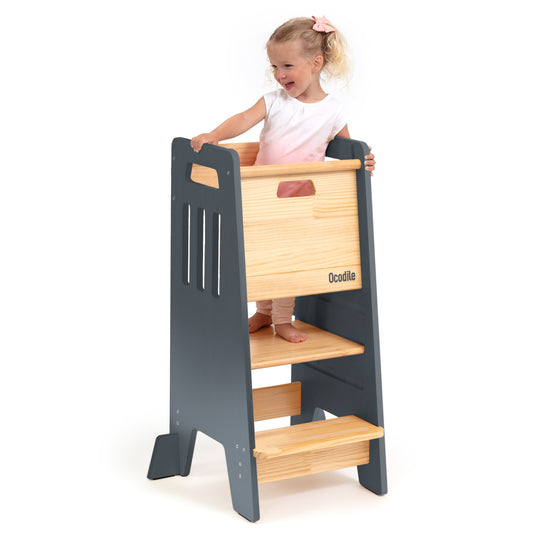
Ever notice how your toddler is fascinated by everything you do in the kitchen, constantly pulling on your leg to see what's happening up on the counter? A Montessori learning tower is the simple, brilliant solution to this exact scenario. It’s a sturdy, enclosed structure that safely raises your child to counter height, letting them join in on the action.
Think of it less like a piece of furniture and more like a tool for connection. Unlike a wobbly chair or an open-sided step stool, a learning tower has safety rails on all sides. This secure space allows your little one to move from being a spectator to an active participant in everyday family life.
What Is a Montessori Learning Tower?
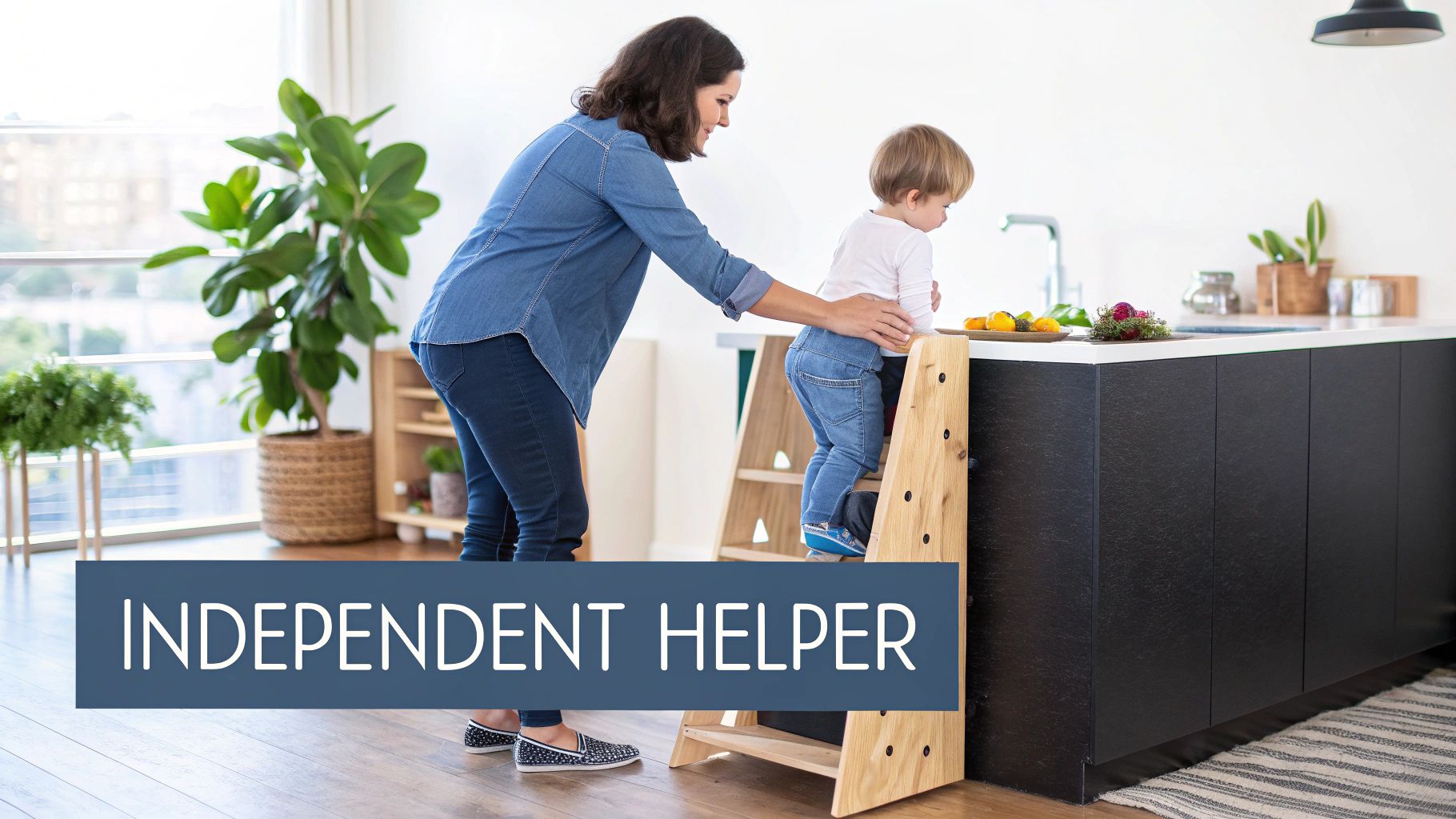
Picture this: instead of trying to cook with a toddler wrapped around your ankles, they’re standing right beside you at the sink, happily washing a carrot. That’s the magic of a learning tower. It’s a dedicated spot where your child can safely explore the world from your perspective.
At its heart, the learning tower is a physical expression of the Montessori philosophy. It honors a child’s innate curiosity and their desire to be involved. By giving them a secure boost, you’re inviting them to take part in practical life activities—a true cornerstone of Montessori education.
From Observer to Participant
From down on the floor, a toddler's view of the kitchen is mostly kneecaps and cabinet doors. They can hear the sizzling and smell the food, but they're cut off from the actual process. A learning tower breaks down that physical barrier, transforming them from a passive observer into a hands-on helper.
This shift from watching to doing is a game-changer for their development. It gives them a front-row seat to the world they’re so eager to understand.
More Than Just a Stool
You might be thinking, "Can't I just use a chair?" The key difference is safety by design. A chair can easily tip, and a standard step stool leaves a child vulnerable to backward or sideways falls. A learning tower, however, creates a secure little pod. The four-sided enclosure provides total stability, so your child can focus on stirring, mixing, or washing without you having to worry about tumbles.
A learning tower acts as a 'scaffolding for independence,' providing just enough support to let a child safely reach new heights—both literally and developmentally. It’s a tool for inclusion, making the family kitchen a child’s first classroom.
The idea of using dedicated tools to support this kind of learning is catching on. The global educational toys market, which includes many Montessori-inspired products, was valued at $54 billion in 2023 and is expected to hit $118.79 billion by 2030. This boom shows just how many parents are seeing the benefits of hands-on, child-led learning. You can discover more insights about the educational toys market and its impressive growth.
Ultimately, a learning tower montessori approach is about so much more than just keeping your toddler busy. It’s about building confidence and connection. It allows your child to:
- Engage Directly: They can finally stir the pancake batter, pour the ingredients, and knead the dough right beside you.
- Learn Practical Skills: Everyday tasks like washing their hands at the big sink, helping with meal prep, or brushing their teeth become moments of independence.
- Build Self-Esteem: When a child can truly contribute to household activities, it gives them an incredible sense of purpose and capability.
It seamlessly turns daily routines into rich learning opportunities, laying a foundation of curiosity and competence that will stick with them for years to come.
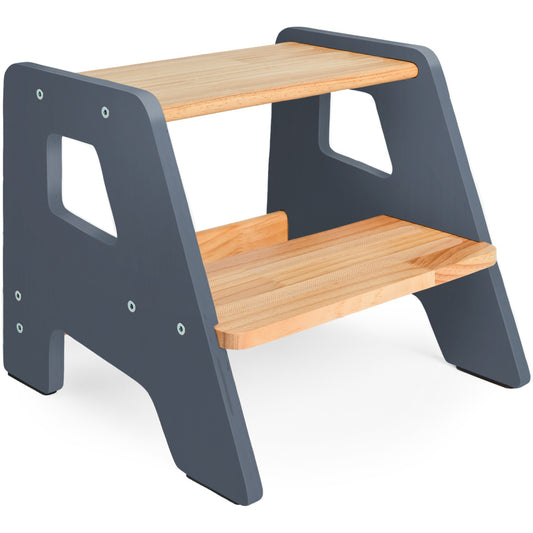
Learning Tower vs Standard Step Stool
It's easy to see a learning tower as just a fancy stool, but they serve fundamentally different purposes, especially when it comes to a young child's safety and development. Here’s a quick breakdown of how they compare.
| Feature | Montessori Learning Tower | Standard Step Stool |
|---|---|---|
| Safety Design | Four-sided enclosure with safety rails to prevent falls from any direction. | Open on at least three sides, offering minimal fall protection. |
| Primary Function | Designed for prolonged, active participation at counter height. | Designed for quick, momentary use to reach something high. |
| Stability | Wide, sturdy base designed to prevent tipping, even with an active toddler. | Can be narrow and less stable; easily tipped by a wiggling child. |
| Child's Role | Encourages active engagement, learning, and independence. | A passive tool for simply reaching; no focus on developmental activity. |
| Material/Build | Typically made from durable wood (birch, pine) built to last for years. | Often made of lightweight plastic, not intended for heavy, regular use. |
| Age Appropriateness | Ideal for toddlers (around 18 months) who can stand independently. | Better suited for older children with developed balance and coordination. |
While a step stool has its place for a quick boost, a learning tower is a dedicated developmental tool. It's built from the ground up to create a safe and empowering environment where your child can learn, explore, and truly be a part of the family's daily life.
Unpacking the Developmental Benefits for Your Toddler
A learning tower does so much more than just solve the "curious toddler in the kitchen" problem. Think of it as a powerful tool for your child's all-around development. When you lift your little one up to counter height, you're not just giving them a better view—you're opening up a whole world of cognitive, motor, and emotional growth. Suddenly, every shared activity becomes a lesson in disguise.
This simple piece of furniture transforms daily routines, like making dinner, into rich, hands-on learning moments. It takes the abstract idea of "cooking" and makes it real by letting them wash vegetables, stir batter, and see ingredients up close.
Fueling Cognitive Growth
When your toddler stands right there beside you, they’re immersed in a sensory and intellectual playground. You might just see it as making cookies, but they're engaging with early math and science in a way they can actually touch, see, and understand.
It's all about real-world context.
- Math Concepts: Counting eggs, measuring flour (one cup, half a cup), and looking at quantities are all practical math lessons. They start to get a feel for volume and sequence in a way a worksheet could never teach.
- Scientific Discovery: What happens when you mix wet and dry ingredients? How does dough change when it bakes? These are their very first science experiments, driven by pure, natural curiosity.
- Language Development: As you work together, you're constantly talking. Words like "stir," "pour," "whisk," "soft," and "sticky" expand their vocabulary far beyond what they see in picture books.
This direct involvement makes learning stick. It's meaningful and memorable, building a solid foundation for skills they'll need later in school.
Refining Motor Skills
The kitchen counter basically becomes a training ground for both fine and gross motor skills. These are the physical skills they'll need for everything from writing their name to riding a bike, and a learning tower montessori setup is the perfect place to practice.
By providing a secure, elevated space, a learning tower lets a child focus all their energy on the task at hand. They build physical confidence and coordination through purposeful, real-life movements.
Activities that seem simple to us are actually complex workouts for their little hands and bodies:
- Fine Motor Skills: Actions like picking up tiny blueberries, pinching herbs, or using a little spreader for butter refine the small muscles in their hands and fingers. This is the exact same dexterity they'll need to hold a pencil.
- Gross Motor Skills: Stirring a thick batter builds arm strength and core stability. Pouring from a small pitcher requires balance and coordination. Even learning to safely climb in and out of the tower builds their physical confidence.
These tasks help them build strength and precision, and the best part is, it all just feels like play.
Nurturing Emotional Intelligence
Maybe the most profound benefits are the ones you can't see. Working side-by-side with you, a person they trust completely, builds a deep sense of connection, confidence, and belonging.
When your toddler successfully washes a potato or adds the flour to the bowl, their face just lights up with pride. That feeling of being a capable, valued contributor to the family is incredibly powerful for their self-esteem. They learn that what they do matters.
This shared workspace also becomes a natural hub for communication. They learn to ask for help, follow simple directions, and express their ideas—it's the perfect setting to learn about teamwork. While a learning tower is fantastic for physical and practical skills, it's just as important to foster their emotional growth, which can be supported by things like reading books about feelings for toddlers.
Learning towers have become so popular because they align perfectly with the Montessori philosophy of hands-on learning and independence. You can even discover more about this market trend to see why so many families are bringing them into their homes. By including your child in this way, you’re nurturing a confident, communicative, and emotionally secure little person.
How to Choose the Right Learning Tower
Picking out the right learning tower can feel like a huge decision, but it really doesn't have to be. Instead of drowning in endless options, just focus on a few key things to find the perfect fit for your family. Think of this as your go-to checklist for choosing a safe, long-lasting, and truly useful learning tower montessori families will actually use.
The real goal here is to find a tower that not only keeps your child secure but also grows right along with them, fitting easily into your daily life. Let’s break down what actually matters.
Prioritize Non-Negotiable Safety Features
Safety is everything. It's the whole point. A learning tower’s main job is to provide a secure space for your child to stand, which is what separates it from just pulling a chair up to the counter. When you're looking at any model, start with its core safety design.
Look for a wide, sturdy base that won’t tip over. Toddlers are wiggly and will absolutely lean, push, and rock the tower. Anti-tip "feet" or an extended base are fantastic features that add that extra layer of stability, making sure the tower stays put, even with an energetic kid inside.
Next, check out the enclosure. A good learning tower should have rails on all four sides to stop falls in any direction. Some designs have an open back, which means you’ll need to supervise more closely, while fully enclosed models offer more peace of mind.
The best learning towers are engineered with a low center of gravity. This is a crucial design principle because it ensures that as your child moves and shifts their weight, the tower remains stable and firmly planted on the floor.
Also, take a close look at the materials and what they're coated with. You want a tower made from durable stuff like solid wood, finished with non-toxic, child-safe paints or sealants. Little ones have a habit of chewing on everything, so this detail is incredibly important for their health.
Evaluate Adjustability and Longevity
Your child is growing at lightning speed, and their learning tower should be able to keep up. An adjustable platform is probably one of the most important features for getting real long-term value out of your purchase.
A tower with several height settings lets you lower the standing platform as your child gets taller. This keeps them at the right, comfortable height for your counters and, more importantly, keeps them safe by making sure they can't climb over the top rail.
- For young toddlers (18-24 months): The highest platform setting is usually perfect, bringing them right up to counter level.
- For older toddlers (2-3 years): You can lower the platform to maintain a safe gap between their waist and the top rail.
- For preschoolers (3+ years): The lowest setting squeezes a few more years of use out of the tower, letting them stay involved.
Putting your money into an adjustable model means you're buying a piece of furniture that will last through all those different growth spurts, not just for a few months.
Consider Materials and Design Aesthetics
While safety and function are top priority, you also have to live with this thing. The tower's material and design will affect how long it lasts and how well it fits into your home. Most high-quality learning towers are made from solid wood, like birch or pine, which are known for being strong and durable.
Wooden towers aren't just sturdy; they also tend to look great and blend in with your existing decor. Many come in different finishes to match your kitchen cabinets or personal style. While you might see plastic options out there, they usually don't have the same weight and stability as their wooden counterparts.
Another key design element is the footprint. If you’re working with a smaller kitchen, a foldable learning tower could be a lifesaver. These models collapse down for easy storage in a pantry or closet, freeing up precious floor space when you're not using it. Just make sure you double-check the stability of the locking mechanism on any foldable design.
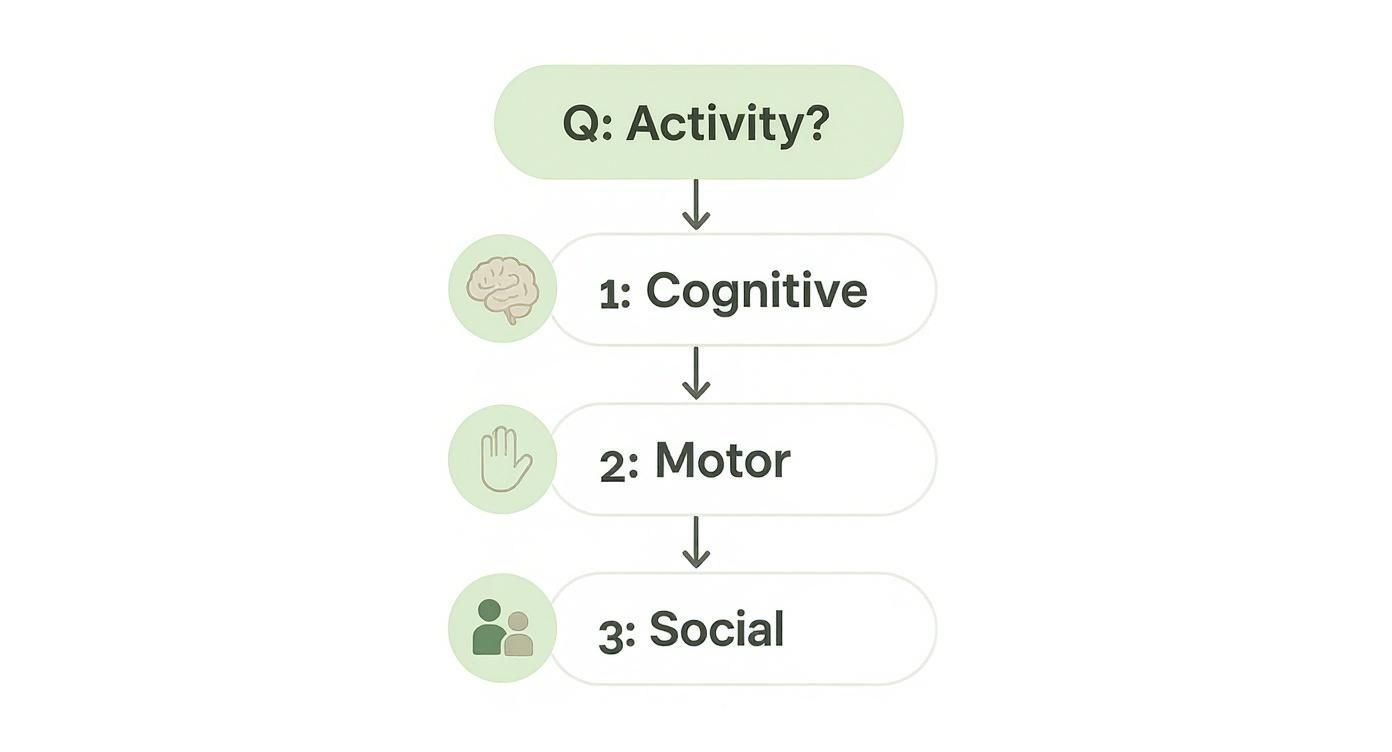
This simple visual shows how a learning tower supports all kinds of developmental activities, from thinking and problem-solving to practicing fine motor skills. Every shared activity, whether it's cognitive or physical, also strengthens those priceless social and emotional bonds.
By keeping these points in mind, you can confidently choose a tower that will become a much-loved and beneficial part of your home. For a detailed comparison of some of the top models, check out our guide on finding the best learning tower for your family’s specific needs.
Mastering Safe Use of Your Learning Tower
Bringing a learning tower montessori families love into your home is exciting! It opens up a whole new world of shared activities, but making sure it’s used safely is the real key to unlocking all that wonderful, worry-free participation. Think of safety not as a list of rules, but as the strong foundation that makes all the independent learning possible.
It all starts the moment you open the box. Proper assembly is your first line of defense. Take your time and follow the manufacturer's instructions to the letter, ensuring every single screw is tight and all the parts fit together securely. A wobbly tower is an unsafe tower, so give it a good, firm shake to test its stability before your child’s first adventure.
Setting Up a Safe Zone
Once it’s built, the next step is finding the perfect spot. Where you place the learning tower is just as important as how you put it together. The goal is to create a "yes space" where your child is free to explore without you having to constantly say "no, don't touch that!"
Position the tower right up against a sturdy counter, far away from any immediate dangers. This means keeping it a safe distance from:
- The stovetop and oven doors
- Knife blocks or drawers with sharp utensils
- Small appliances with cords they could grab and pull, like toasters or blenders
By creating this little buffer zone, you get rid of the most obvious risks. This frees you up to focus on the fun activity you're doing together instead of constantly managing the environment. While the tower itself is designed for stability, it’s always a good idea to ensure all heavy furniture in your home is secure. You can find helpful advice on how to secure furniture to the wall, which is a fantastic safety measure for any home with curious little ones.
Establishing Clear Safety Guidelines
Just like any helpful tool, a learning tower has its own set of rules. Teaching your child these guidelines from the very start helps build safe habits that will quickly become second nature. Keep the rules simple, positive, and be consistent.
Active supervision is the most critical safety feature of all. A learning tower is designed to facilitate interaction, not to serve as a stand-alone playpen. Always remain within arm's reach when your child is using it.
Here are a few essential ground rules to teach:
- Feet Stay on the Floor: Gently emphasize that only their feet belong on the standing platform. Sitting or kneeling on the platform can make them wobbly and unstable.
- Climb In, Climb Out: Show them how to safely climb in and out of the tower all by themselves. This not only empowers them but also prevents risky attempts to be lifted over the top safety rail.
- No Rocking or Pushing: Teach them that the tower is for standing still while they work at the counter. Pushing away from the counter can create a serious tipping hazard.
- One Child at a Time: Unless the tower is specifically designed for two, it should only be used by one child. This ensures it stays stable and prevents crowding.
By consistently reinforcing these simple boundaries, you make sure every experience in the learning tower montessori setup is both educational and totally secure. This transforms any potential anxiety into pure confidence, letting you and your child fully enjoy your new time together at the counter.
Bringing Your Learning Tower into Daily Routines
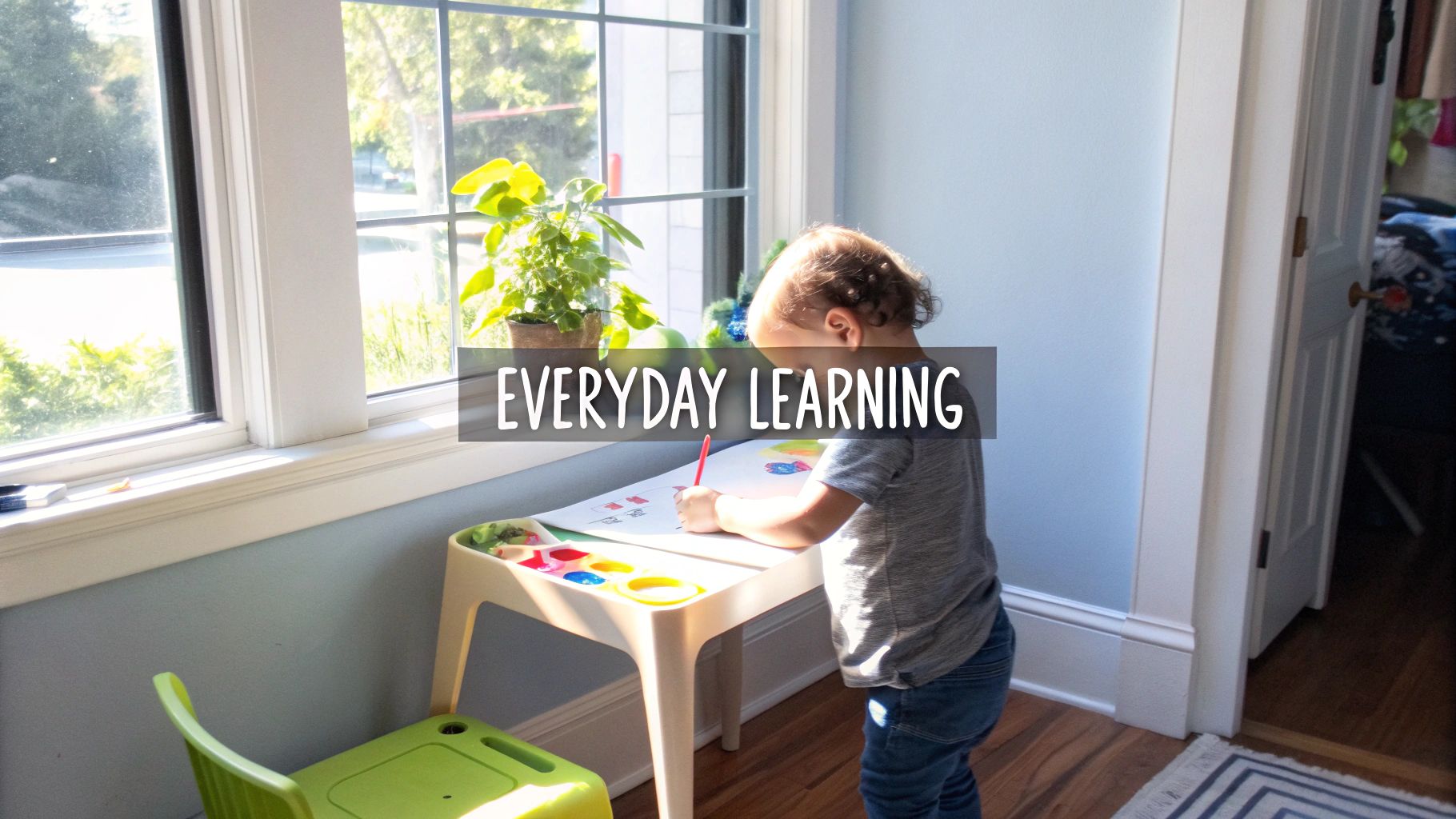
A learning tower is so much more than a piece of kitchen furniture—it’s a ticket for your little one to join in on everyday life. Think of it less as a stool and more as a bridge that connects them to the real, hands-on world of practical tasks.
By moving this simple tool from room to room, you open up a world of opportunities for your child to learn, help out, and grow their confidence. A learning tower montessori setup isn't just about keeping them occupied; it's about turning mundane chores into moments of connection and skill-building. Every little task reinforces their sense of belonging and shows them they’re a capable part of the family.
The Kitchen: The Heart of Hands-On Learning
The kitchen is where a learning tower really comes into its own. It's a sensory playground where your toddler can finally stop watching and start doing. This is the core of Montessori practical life: becoming a genuine helper in preparing the family's meals.
Start with simple, low-stakes jobs that set them up for success. Have them wash soft veggies in the sink, tear lettuce for a salad, or stir ingredients in a big bowl with a wooden spoon. These aren’t just busy-work; they’re powerful lessons in following steps, developing fine motor skills, and learning patience.
When a child helps prepare a meal, they learn more than just how to cook. They build an appreciation for food and the work that goes into it. You might even find your picky eater is more willing to try something new just because they had a hand in making it.
As they get more comfortable and coordinated, you can introduce slightly more complex tasks:
- Pouring liquids: A small, light pitcher is perfect for pouring water or milk.
- Spreading: Give them a child-safe spreader for buttering toast or putting cream cheese on crackers.
- Mashing: Mashing a soft banana or avocado with a fork is fantastic for building hand strength.
These activities are the building blocks for real kitchen skills. For more ideas, check out our guide on Montessori practical life activities that you can easily weave into your day.
Beyond the Kitchen: Expanding the Possibilities
The real magic happens when you realize the learning tower isn't just for the kitchen. It can easily become a key part of self-care routines and creative fun all over the house.
In the bathroom, the tower gives your child the perfect boost to reach the sink on their own. This simple step empowers them to take charge of washing their hands before meals or brushing their teeth before bed. That feeling of "I did it myself!" is a huge confidence-builder.
You can also turn the tower into a mobile art or science station. Set it up by a window with a tray of watercolors for painting the backyard scene. It can be an observation deck for birdwatching or a sturdy platform for getting a closer look at leaves and flowers from a nature walk.
This shift toward investing in items that support hands-on learning isn't just a small trend. The global Montessori toys market, which includes developmental tools like learning towers, was valued at around $2 billion in 2025 and is expected to keep growing. It shows how many parents are seeing the value in tools that foster independence.
Age-Appropriate Learning Tower Activities
To make sure your tower is a hit, it helps to match the activities to your child's developmental stage. A task that’s too easy is boring, but one that’s too hard leads to frustration. This little table is a quick guide to get you started.
Age-Appropriate Learning Tower Activities
| Age Range | Kitchen Activities | Other Household Activities |
|---|---|---|
| 18-24 Months | Washing soft fruits and veggies. Stirring ingredients in a large bowl. Tearing lettuce or herbs. | Washing hands independently at the bathroom sink. Placing items into a low drawer. “Painting” with water on a chalkboard. |
| 2-3 Years | Pouring pre-measured liquids. Spreading soft foods with a child-safe knife. Mashing bananas or avocados. | Brushing teeth (with supervision). Watering indoor plants with a small watering can. Sorting craft supplies like pom-poms. |
| 3+ Years | Using a wavy chopper for soft vegetables. Kneading dough. Cracking an egg into a separate bowl. Using a small egg beater. | Helping fold small laundry items like washcloths. Arranging flowers in a vase. Participating in more complex art projects. |
By thoughtfully bringing the learning tower into these daily moments, you’re doing more than just giving your child a lift. You’re sending a clear message: your help is valued, your curiosity matters, and you are an important, capable member of our family.
Common Questions About Montessori Learning Towers
Bringing a learning tower montessori families love into your home is an exciting step, but it's totally normal to have a few questions before you commit. After all, this isn't just a piece of furniture—it's an investment in your child's budding independence, and you want to get it just right.
We've pulled together the most common questions we hear from parents and answered them in a clear, straightforward way. Think of this as your final checklist to address any lingering doubts and help you feel 100% confident in your choice.
When Is the Right Age to Start Using a Learning Tower?
This is easily the most-asked question, and the answer isn't a specific number but a series of developmental cues. Instead of getting hung up on an age like 18 months, it's much more helpful to watch for signs of physical readiness in your child.
The biggest green light is stable, independent standing. Can your toddler pull themselves up to stand and stay there without wobbling or needing to hold on for dear life? This usually happens somewhere between 12 and 18 months, but every child hits these milestones on their own timeline.
The best time to introduce a learning tower is when your child is both curious about what’s happening on the counters and physically steady enough to stand on their own. Readiness trumps age every time.
Once they can stand securely, they’re generally ready to start using the tower—with you right there beside them, of course. This close supervision ensures they can safely get lost in the fun of participating without you worrying about them losing their balance.
Is It Really Worth It Compared to a Simple Stool?
It's a fair question. You might be looking at a basic step stool and thinking it could do the same job for a lot less money. While a stool does give a height boost, a learning tower offers a completely different experience built around safety and developmental support.
A stool is open on all four sides, which is a recipe for disaster with a wobbly toddler who could easily topple backward or sideways. A learning tower, on the other hand, creates a secure, four-sided enclosure. This little safety rail "cage" frees your child up to focus on the task at hand—whether it's stirring batter or washing veggies—without the constant threat of a fall.
Here’s why it’s a worthwhile investment:
- Unmatched Safety: The enclosed design is a game-changer. It prevents falls, giving you peace of mind and letting you genuinely connect with your child instead of having one hand on them at all times.
- Promotes Independence: A secure tower empowers your child to climb in and out by themselves, building autonomy and that "I can do it!" confidence.
- Designed for Participation: It’s built for kids to hang out in for longer stretches of time. A stool is for a quick up-and-down, but a tower is for getting involved.
Think of it like this: a stool is just a tool for reaching. A learning tower is a platform for learning. The extra safety and stability are what make it a true developmental tool.
How Do I Keep the Learning Tower Clean?
Between all the cooking projects, play-doh sessions, and sensory bin fun, your learning tower is going to see its fair share of messes. The good news? Any well-made tower is designed with easy cleanup in mind.
For wooden towers with a smooth, non-toxic finish, a simple wipe-down with a damp cloth and a mild cleaner usually does the trick. If you're dealing with dried-on food or sticky spots, a bit of warm, soapy water is all you need. Just be sure to avoid harsh chemical sprays or abrasive scrubbers that could wear down the wood's protective finish.
Quick Cleaning Tips
- Wipe Down After Each Use: A quick wipe with a damp cloth after messy activities goes a long way. It stops food from drying and turning into cement.
- Weekly Deeper Clean: Once a week, give the whole thing a once-over with a gentle soap and water mix. Pay extra attention to the platform and corners where crumbs love to hide.
- Dry Thoroughly: Always wipe the tower completely dry after cleaning. This protects the wood and prevents any water damage from setting in.
A little bit of regular maintenance will keep your tower looking great and ensure it’s a clean, hygienic space for your child to explore for years to come.
Can More Than One Child Use the Tower at Once?
This is a really important safety question, especially if you have siblings close in age. The answer is almost always a firm no—unless the tower is specifically designed and marketed for two children.
Standard learning towers are built and stability-tested for the weight and movement of a single child. Trying to squeeze two kids into a space made for one is just asking for trouble:
- It can throw off the tower's balance, making it much more likely to tip over.
- Kids might start pushing or crowding each other, which could lead to one of them falling inside the enclosure.
- The combined weight of two children could easily go over the manufacturer's recommended limit.
If you’ve got two little helpers eager to join in, the safest bet is to have them take turns. This gives each child a secure space to participate and avoids the risks of overcrowding. For families who know they'll consistently have two kids at the counter, it’s worth investing in a second tower or seeking out a model specifically designed for two.
Investing in a high-quality learning tower is an investment in countless moments of connection, learning, and independence. Ocodile is dedicated to creating safe, beautiful, and practical furniture that helps families turn everyday routines into cherished memories.