



A Parent's Guide to Low to Ground Beds for Toddlers
Low to ground beds are a fantastic choice for toddler bedrooms. They are specifically designed to be close to the floor, allowing little ones to get in and out of bed all by themselves. This simple design shift is a big deal—it moves away from the restrictive nature of a crib and embraces Montessori principles, which focus on creating a child-centric and empowering environment.
Why Parents Are Choosing Low to Ground Beds
Choosing your child’s first "big kid" bed is a huge milestone. For generations, traditional high-framed beds were the default. But lately, more and more parents are deliberately choosing low to ground beds. This isn’t just a style choice; it represents a real shift in parenting philosophy, moving from containment to empowerment.
Think of a traditional crib like a playpen—its main job is to keep a child safely inside. But what happens when that little one is ready for more freedom? A low to ground bed completely redefines the bedroom. It turns it from a place of restriction into a safe, accessible space for them to wake up gently, play independently, and explore their own room on their own terms.
A Move Toward Independence and Safety
The real magic of a low to ground bed is how it nurtures a child's natural desire for independence. When a toddler can safely climb in and out of their own bed, they start to listen to their body's cues for sleep and waking. This simple bit of freedom is a massive confidence booster and can help reduce the anxiety that sometimes comes with bedtime.
Instead of crying for a parent to "free" them from a crib, a child can wake up, get out of bed, and quietly find a book or a favorite stuffed animal. This small act of self-reliance is a powerful step in their development.
A low bed respects where a child is at developmentally by giving them freedom within safe limits. It sends a clear message of trust and capability, encouraging them to become active participants in their own daily routines—starting with sleep.
This trend is picking up steam for a reason, backed by some pretty compelling data on both its popularity and safety benefits.
The infographic below shows just how much this idea is catching on and making a difference.
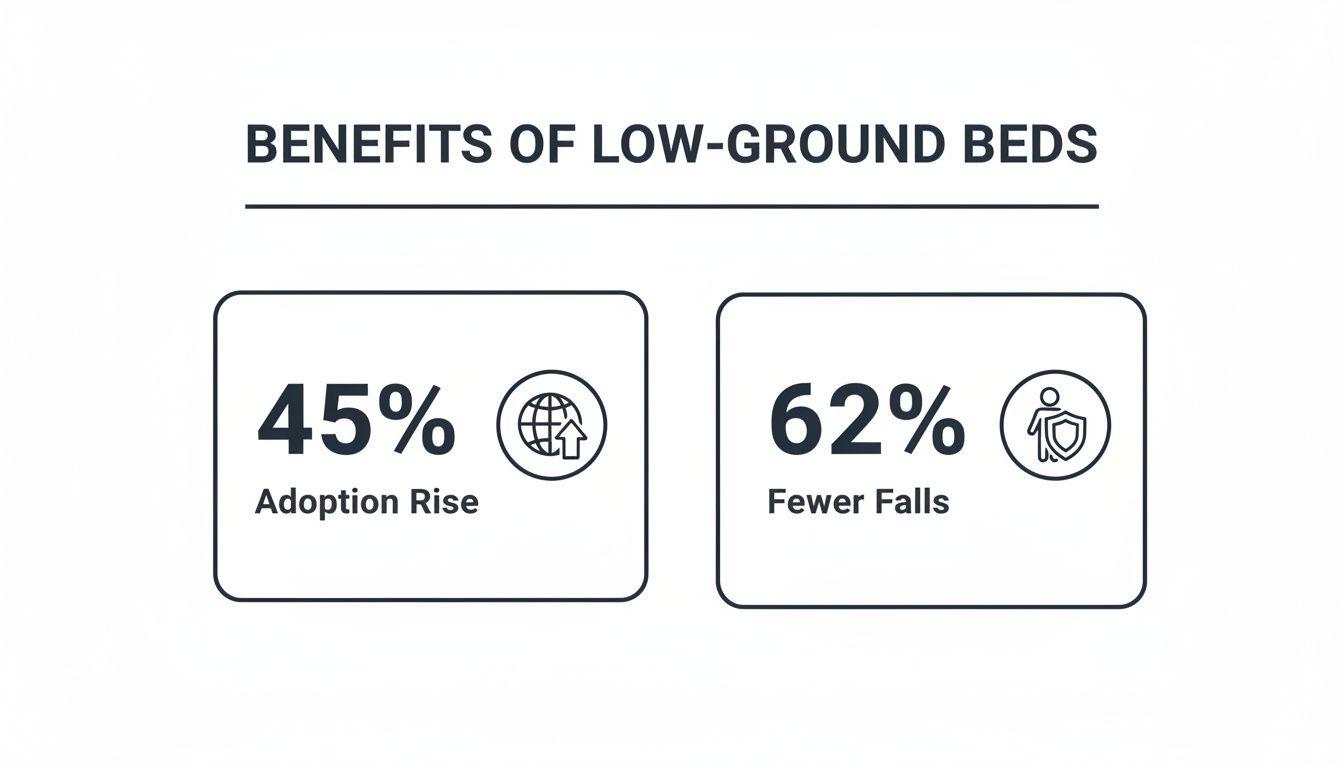
These stats make it clear that floor beds are more than just a passing fad. They're a practical choice with real, proven safety advantages.
To put this into perspective, let’s do a quick side-by-side comparison.
Traditional Crib vs Low to Ground Bed at a Glance
| Feature | Traditional Crib | Low to Ground Bed |
|---|---|---|
| Safety | High rails prevent falls, but can pose a climbing risk for toddlers. | Minimal fall risk due to low height. Encourages safe movement. |
| Independence | Restricts movement; child must call for help to get out. | Promotes autonomy; child can get in and out on their own. |
| Transition | Can be a difficult, abrupt transition to a "big kid" bed. | Eases the transition by removing the fear of falling and confinement. |
| Long-Term Use | Limited use; quickly outgrown once a child can climb. | Can be used for a longer period, from toddlerhood into early childhood. |
This table highlights the fundamental differences, showing how a low bed is built around a child’s growing capabilities.
Easing the Crib-to-Bed Transition
Moving from a crib to a bed can be a bumpy road for parents and toddlers alike. High beds introduce a new fear—falling out—which can quickly lead to sleep regressions and bedtime battles. Low to ground beds pretty much eliminate this worry, making the whole process way smoother and more positive.
Floor beds, as they're often called, have seen their popularity surge, with global adoption rates climbing 45% in places like the US, UK, and Europe. Even more telling, parenting surveys show that 62% of parents who use floor beds report fewer falls and injuries compared to traditional cribs. After all, kids can safely get on and off without risking a big drop. You can discover more insights about bed frame market trends if you're curious.
By taking away the physical barrier of a tall frame, you’re creating a much more inviting place to sleep. This approach supports a gentle transition by:
- Minimizing Fall Risks: The low profile means that if a child does roll out, the drop is tiny, which drastically reduces the chance of injury.
- Building Positive Associations: The bed becomes a comfy, accessible spot rather than a cage, helping kids develop a healthier relationship with sleep.
- Empowering the Child: Giving them control over their own movement fosters a sense of ownership and security in their personal space.
The Montessori Philosophy Behind Floor Beds
To really get why low-to-the-ground beds are so special, we need to look past the furniture itself and dive into the philosophy that sparked the idea. These beds aren't just a minimalist design trend; they're a direct result of the principles created by Dr. Maria Montessori. As a physician and educator, she believed in nurturing a child's natural drive to learn and explore. Her entire approach is built on respecting the child as a capable little person and setting up a space that helps them thrive.
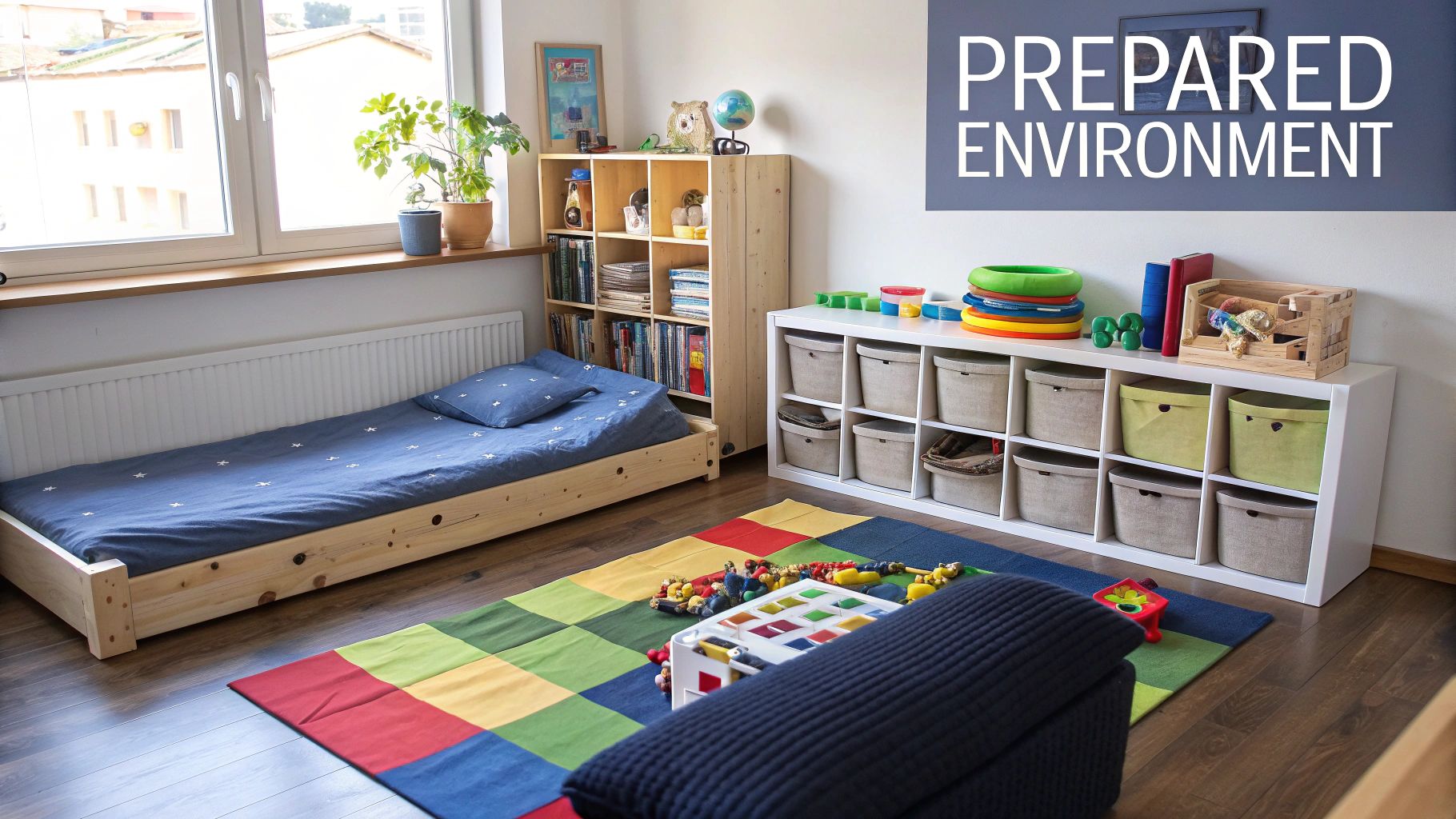
The core of her philosophy is something called the prepared environment. The best way to think about it is creating a world that's perfectly sized for your child. Just like you wouldn't feel comfortable in a house with giant chairs and tables, the Montessori method says a child's space should be tailored to them. A low bed is a huge piece of that puzzle.
Cultivating Independence from Day One
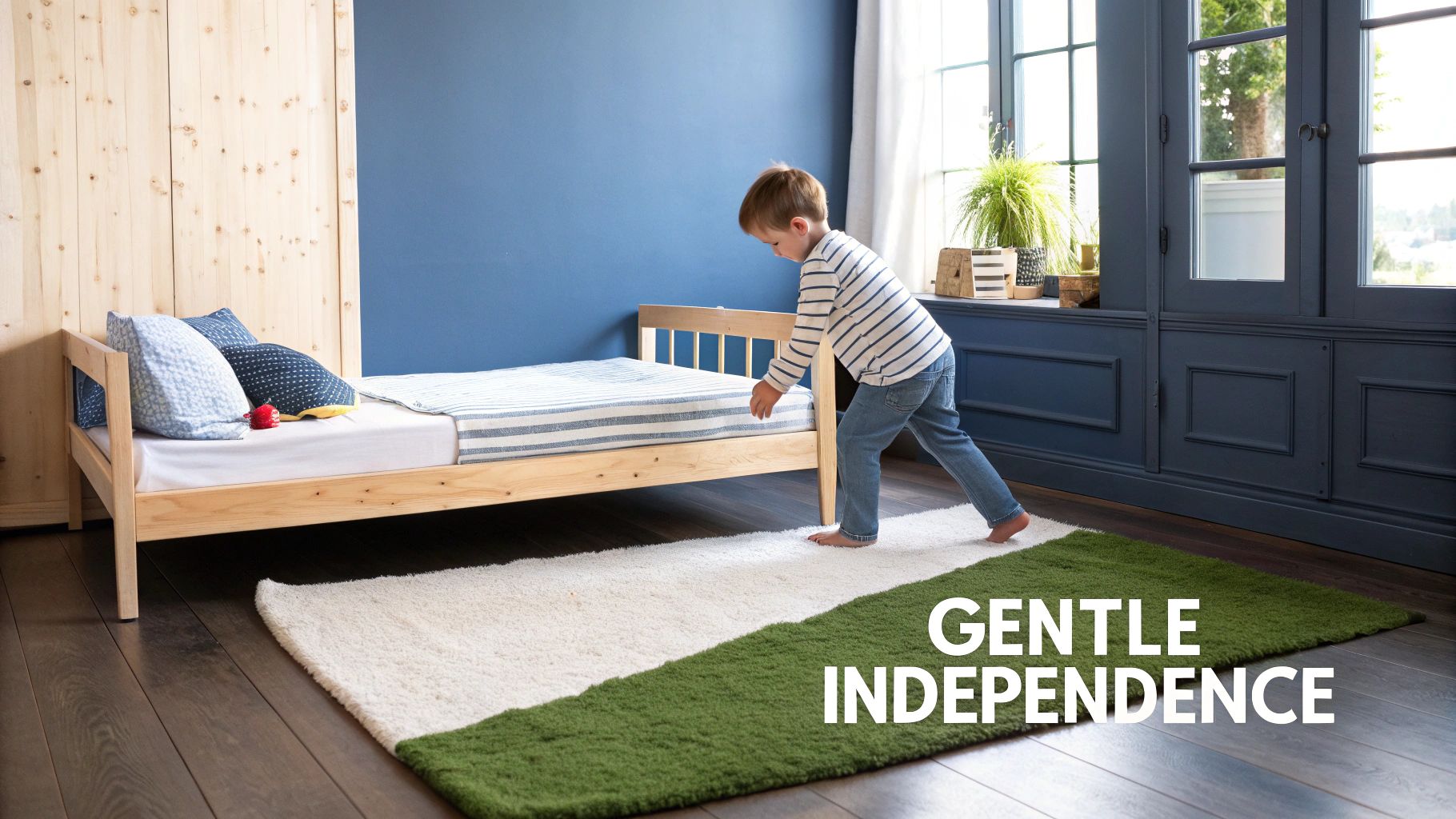
A traditional crib, with its high bars, is essentially a cage—a safe one, yes, but a cage nonetheless. When a child wakes up, they are completely dependent on an adult to get them out. This teaches them to rely on others. A floor bed, on the other hand, teaches independence. By simply removing that physical barrier, you empower your child to listen to their own body's rhythms for sleeping and waking.
Think about this: a toddler wakes up in their crib. They're done sleeping, but they're trapped. Their only choice is to cry for a parent to come "rescue" them. Now, picture that same toddler waking up in a low bed. They can just roll out, stand up, and wander over to a low shelf to grab a book or a quiet toy. It seems like a small difference, but for their development, it's massive.
This freedom gives them a profound sense of confidence and self-trust. It sends a clear message: "I trust you to manage your own space."
Respecting the Child's Natural Development
The Montessori philosophy is all about respecting a child’s natural pace. A floor bed does exactly that by allowing for unrestricted movement, which is so important for developing motor skills, coordination, and body awareness. Instead of being confined, a child can practice sitting up, crawling, and eventually walking, all within the safety of their room.
This freedom of movement isn't just about physical skills; it’s also about growing their mind.
"The environment must be rich in motives which lend interest to activity and invite the child to conduct his own experiences." - Maria Montessori
A low bed turns the entire bedroom into an accessible learning space. Your child isn't just in their room; they are a part of their room. This shift in perspective sparks curiosity and exploration on their own terms, which are the building blocks of learning. You can learn more about the core ideas in our guide that explains what the Montessori method of teaching is in more detail.
Building a Foundation of Confidence and Autonomy
Ultimately, a Montessori-inspired bedroom is about nurturing a capable, confident, and independent person. The low-to-the-ground bed is a cornerstone of this approach, with benefits that go way beyond a good night's sleep.
Here are a few key outcomes you can expect:
- Enhanced Self-Reliance: Kids learn to move between resting and quiet playtime without needing an adult to step in constantly.
- Improved Body Awareness: The freedom to get in and out of bed helps them safely understand their physical abilities and limits.
- Positive Sleep Associations: The bed becomes a peaceful space they choose to be in, which can reduce the bedtime battles that often come with feeling confined.
- Increased Confidence: Every time a child successfully navigates their environment on their own, their sense of self-worth gets a little boost.
By choosing a low-to-the-ground bed, you're doing more than just picking out furniture. You're investing in a tool that supports your child's natural drive for independence and builds a strong foundation for a lifetime of confident exploring.
So, you’re sold on the idea of a low-to-ground bed for your little one. Fantastic! Now comes the fun part: picking out the perfect setup. This isn't just about what looks cute in the room; it’s about creating a safe, comfy, and empowering sleep space that’s just right for your child’s age and stage.
Choosing the right pieces can feel like a big decision, but it really boils down to two things: the bed frame itself and the mattress that goes on it. Let's walk through what really matters for both, so you can make a choice you feel great about.
Finding the Perfect Low Bed Frame
The frame of a floor bed does more than just hold the mattress. It’s the foundation for safety and independence. You'll find all sorts of styles out there, from simple slatted platforms that are only an inch or two off the floor to adorable house-shaped frames that turn bedtime into an adventure.
No matter which style catches your eye, here are the absolute must-haves:
- Non-Toxic Materials: Always, always go for frames made from solid wood with a non-toxic, low-VOC (volatile organic compound) finish. Little bodies are more sensitive to chemicals, so keeping their sleep environment clean is a top priority.
- Sturdy Construction: Toddlerhood involves a bit of climbing, bouncing, and general chaos. You need a frame with solid joinery that can handle it all without wobbling.
- Safety Edges: Look for rounded or carefully sanded edges. Sharp corners are a no-go in a toddler’s room and can lead to unnecessary bumps and tears.
- Subtle Guardrails: Some floor beds include very low, partial guardrails. These aren't meant to trap your child like a crib's bars do. Instead, they offer a gentle reminder of the edge, providing a little extra security as your toddler gets used to their newfound freedom.
Selecting a Safe and Supportive Mattress
The mattress is, without a doubt, the most important part of this whole setup. The right one ensures your child sleeps safely and soundly. The wrong one can introduce risks and completely defeat the purpose of an accessible bed.
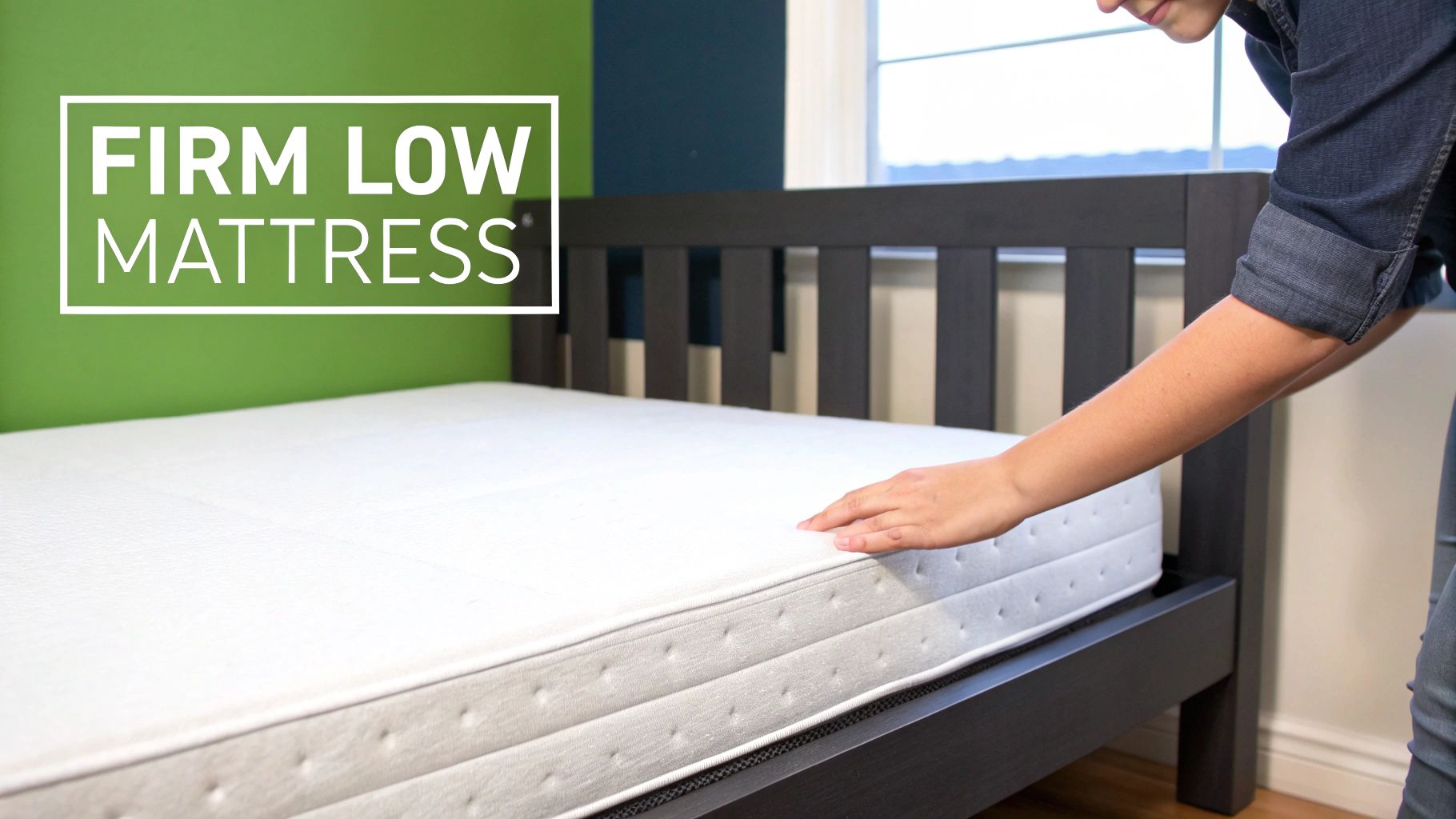
The number one rule for any toddler mattress is that it must be firm. A firm, flat surface is non-negotiable for safe sleep, as it dramatically reduces the suffocation risk that soft, plushy mattresses can pose. This is just as critical for a floor bed as it is for a crib.
It's clear that parents are catching on. The global mattress market has swelled to USD 48.6 billion as more families prioritize safety-first designs. In the US, low bed frames now make up 22% of mattress sales—a huge jump from just 12% a few years back. And it's not just a trend; a European consumer safety survey found that 55% of families with kids under five choose beds lower than 10 inches high, a choice linked to a 40% reduction in toddler fall injuries. You can read more about the growing mattress market on Mordor Intelligence.
For a deeper look at our top picks and what makes them great, be sure to check out our complete guide on selecting the best mattress for a floor bed.
Mattress Selection Checklist for Low to Ground Beds
To make shopping a little easier, we've put together a quick checklist. Keep these points in mind, and you'll be well on your way to finding the perfect mattress for your child's first "big kid" bed.
| Consideration | Why It Matters | Recommendation |
|---|---|---|
| Firmness | A firm surface is crucial for safe sleep and proper spinal alignment. | Must be firm and flat. Avoid memory foam toppers or plush, soft surfaces. |
| Low Profile | A thinner mattress keeps the bed accessible and safe for a toddler to climb in and out of. | Aim for a thickness between 4 to 6 inches. |
| Breathability | Good airflow helps regulate body temperature and prevents moisture buildup. | Look for materials like natural latex, cotton, or wool. |
| Safety Certifications | These guarantee the mattress is free from harmful chemicals and emissions. | Check for labels like CertiPUR-US® (for foam) or GREENGUARD Gold. |
Choosing the right mattress isn't about finding the most expensive or feature-packed option. It’s about prioritizing these core safety and developmental needs to create the best possible sleep environment for your child.
Creating a Safe and Inviting Montessori Bedroom
A low-to-ground bed is a fantastic first step toward independence, but its real power is unlocked when the entire bedroom is a safe, prepared space. Think of it like this: the low bed gives your child the key to their own little kingdom. Your job is to make sure that kingdom is completely safe for them to explore, day or night. This means shifting your mindset from containing your child in a crib to childproofing their whole world.
When you hand a toddler this much freedom, a serious safety check isn't just a good idea—it's non-negotiable. Every corner, outlet, and piece of furniture needs to be looked at from the perspective of a curious, newly mobile child. This is how you transform a simple room into a true Montessori-inspired haven where they can learn, play, and rest with total confidence.
The Essentials of Childproofing for Floor Beds
First thing's first: get down on your hands and knees. Seeing the room from your child’s eye level is a game-changer and will instantly show you potential hazards you’d otherwise miss. From down there, you can start building your childproofing plan.
Here are the absolute must-dos for your safety checklist:
- Anchor All Heavy Furniture: To a toddler, dressers, bookshelves, and toy chests are basically Mount Everest. Use anti-tip straps to securely anchor every single piece of furniture to the wall. This is probably the most critical safety step you can take.
- Cover Every Electrical Outlet: Curious little fingers will find every socket. Make them completely inaccessible with sliding outlet covers or secure plug-in protectors.
- Manage Cords and Wires: Window blind cords, lamp wires, and baby monitor cables are serious strangulation hazards. Tie up all cords high and out of reach, or better yet, switch to cordless blinds and battery-operated devices where you can.
Safety isn't just about preventing the worst-case scenario; it's about creating an environment where a child feels secure enough to explore freely. A fully childproofed room is the ultimate expression of trust and respect for their growing autonomy.
Getting these core safety points sorted creates the secure foundation that allows the freedom of low to ground beds to really work its magic.
Designing a Child-Centric Space
Once the room is safe, it's time for the fun part: making it inviting and functional for a little person. The goal is a space that encourages independence and makes them feel capable. This simply means arranging things so that everything they need is within their easy reach.
Think about adding these elements to build a truly child-centric room:
- Low, Accessible Shelving: Put up some sturdy shelves at your child’s height for their books and a few favorite toys. This lets them choose their own activities and, just as importantly, helps them learn to put things away.
- A Small Table and Chair: A child-sized table gives them their very own spot for drawing, puzzles, and other quiet activities. It’s amazing how this encourages focus.
- Accessible Storage: Use low bins or baskets for toys. This makes cleanup so much easier and empowers your child to actually help tidy up their own space.
Many parents also want to personalize the room to create a stimulating yet calm atmosphere. You can explore nursery wall decor ideas to add some character and visual interest that speaks to your child.
Ultimately, you’re creating a harmonious environment where safety and independence go hand-in-hand. The low bed might be the centerpiece, but it’s the thoughtfully prepared room that makes the whole philosophy click.
Managing a Smooth Transition from Crib to Floor Bed
Moving your child from their familiar crib to a new low-to-the-ground bed is a huge developmental leap—and an exciting one! But like any big change in a toddler's life, the switch goes best when you handle it with a lot of patience, consistency, and a little bit of planning. The goal is to make this feel like a positive new adventure, not a sudden, confusing disruption.
The journey really starts with knowing when your child is ready. While there’s no magic age, most toddlers start showing they're ready for this step sometime between 18 months and 3 years old. The secret is to watch your child’s behavior, not just the calendar.
Spotting the Signs of Readiness
Is your little one trying to scale their crib walls like a tiny mountaineer? That’s probably the clearest sign it's time for a change. Once they can attempt to climb out, a crib is no longer the safest option.
Here are a few other clues that your child might be prepared for more freedom:
- They ask for independence: You might hear them asking for a "big kid bed" or see them getting frustrated with being confined in the crib.
- They understand simple instructions: Can they follow basic directions like "please lie down"? This is a huge help when you start setting new bedtime boundaries.
- They're curious about their room: A natural desire to explore their space when they wake up is a perfect fit for the freedom a floor bed offers.
For a deeper dive, our article on when to transition to a floor bed has much more detail on these milestones.
Handling the Novelty of Freedom
The first few nights (and let's be honest, maybe even weeks) come with a fun new challenge: your child can get out of bed all by themselves! It's completely normal for them to test out this newfound power. How you respond is everything. Just stay calm, consistent, and gentle.
When they pop out of bed, quietly and calmly guide them back with as little fuss as possible. Try to avoid turning it into a game or a big conversation. A simple, firm, "It's time for sleep," is all you need. This boring, predictable response teaches them that nighttime is for resting, not for playing.
A consistent bedtime routine is your most powerful tool during this transition. It acts as an anchor, creating a predictable sequence of events—like a bath, story, and cuddles—that signals to your child's brain that sleep is coming.
This consistency helps build secure sleep habits for the long haul. In fact, one study found that parents report 52% fewer sleep disruptions with low beds, since the easy access helps kids feel more in control and secure. For families and educators following Montessori principles, low beds also help boost motor skills development by 28%, making them a top choice.
A Gentle Step-by-Step Approach
To make the change feel less jarring, you can introduce the new bed gradually. A great way to start is by setting up the floor bed in their room while the crib is still there. Let your child use it for naps or quiet playtime to build a happy, positive connection with it.
When you're ready to make the full switch, these steps can help smooth the way:
- Talk It Up: Frame the new bed as an exciting milestone. Let them help pick out some new bedding to give them a sense of ownership and pride.
- Stick to the Routine: Go through your entire bedtime ritual in and around the new bed to keep things feeling familiar and safe.
- Offer Positive Reinforcement: Praise them for staying in their bed. A simple "Great job staying in your cozy bed all night!" can go a long way.
- Be Patient: Every child adapts at their own pace. Some will get it in a night; others might take a few weeks. Your calm, steady presence is the most important part of a successful transition.
Answering Your Questions About Low to Ground Beds
Making the move to a low-to-ground bed is an exciting step, one that puts your child on the path to independence. Still, it’s completely natural for parents to have a few questions. We’ve been there.
This section is here to tackle the most common concerns, offering clear, practical advice to help you feel confident as you and your child start this new chapter together. Let's get into the details so this change is a smooth and positive one for the whole family.
What Is the Best Age to Introduce a Low to Ground Bed?
There’s no magic number here, but most parents find the sweet spot is somewhere between 18 months and 3 years old. The most important thing isn't their age, but their developmental readiness.
Keep an eye out for a few classic signs. Is your little one trying to climb out of their crib? That's a big one, as the crib instantly becomes a safety hazard. Other signals include a growing desire to do things "by myself!" or being able to understand and follow simple directions.
Honestly, a low-to-ground bed can be introduced as soon as your toddler is walking confidently. Its design minimizes the risk of a fall while giving them the freedom to get into their own sleep space—a huge step in their development.
How Do I Keep My Child from Constantly Getting Out of Bed?
This is probably the number one question we hear, and it's a completely normal part of the process. This newfound freedom is exciting, and you can bet your child will test the boundaries. Success here all comes down to consistency and a calm, predictable bedtime routine.
First things first: make sure the room is completely childproofed. Only quiet, age-appropriate toys should be within reach. This removes the temptation to start a party after lights out.
When your child gets out of bed, the key is to be calm and consistent. Gently and silently guide them back to bed with as little interaction as possible. Try not to turn it into a game or a long conversation. A solid bedtime routine—like a warm bath, stories, and snuggles in their new bed—is a powerful signal that it's time for sleep, not play. To really nail this transition, a consistent routine is everything. You can learn more great strategies in this guide on how to make bedtime easier.
Over time, this gentle guidance helps children develop self-regulation skills much more effectively than being confined. They learn the boundary themselves, which is a lesson that sticks.
Trust us, this phase will pass. Your calm and steady response teaches them that nighttime is for resting, helping them adapt to their new independence responsibly.
Are Low to Ground Beds Cold Since They Are on the Floor?
This is a very practical concern, especially for families in colder climates. The good news is that it’s an easy problem to solve with a thoughtful setup.
Modern low to ground beds are designed with this in mind. The frame itself, even if it’s just a few inches high, creates a crucial barrier between the mattress and the floor. This allows air to circulate, which is essential for preventing moisture buildup and keeping the temperature comfortable.
Here are a few simple ways to keep your child warm and cozy:
- Use an Area Rug: Placing a soft, non-slip rug under the bed adds a great layer of insulation and gives them a warm surface to step onto in the morning.
- Choose the Right Bedding: Use bedding that fits the season. Cozy flannel sheets and a wearable blanket are perfect for winter, while light, breathable cotton is great for summer.
- Look for a Slatted Base: Many floor bed frames have a slatted base. This design lifts the mattress slightly off the ground, promoting better airflow and stopping the mattress from feeling damp or cold.
With these simple tips, you can create a comfortable sleep environment all year round.
What Kind of Bedding Is Best for a Floor Bed?
When it comes to bedding for a toddler's floor bed, simple is best. The goal is a sleep space that is safe, comfortable, and easy for your child to manage all by themselves.
For younger toddlers, the safest setup is a well-fitting fitted sheet and a wearable blanket (often called a sleep sack). This combo provides warmth without the risks that come with loose blankets.
As your child gets older and is ready for a blanket, go for one that is lightweight and sized just for them. It's still best to avoid heavy quilts, duvets, and a pile of pillows, as these can be a suffocation risk for little ones.
The best bedding for a low-to-ground bed is bedding that empowers your child. Since they can get in and out on their own, you want bedding they can handle without getting tangled up. This simple setup also makes it easier for them to learn to make their own bed—another wonderful step toward independence.
Always try to choose bedding made from breathable, natural fabrics like 100% cotton or bamboo. These materials are gentle on sensitive skin and help regulate body temperature, preventing them from getting too hot during the night.
At Ocodile, we believe in creating furniture that grows with your child, fostering independence from the very beginning. Our beautifully crafted low to ground beds are designed with safety, durability, and Montessori principles at their core. Transform your child's room into a haven of exploration and confidence.