



The Montessori High Chair A Guide to Independent Mealtimes
A Montessori high chair is so much more than a place to sit; it’s your child’s first real step toward independence at the dinner table. Traditional high chairs often feel like restrictive 'thrones,' but a Montessori high chair is designed as a 'welcome seat' that empowers your child to join the family on their own terms.
What Is a Montessori High Chair and Why Is It Different
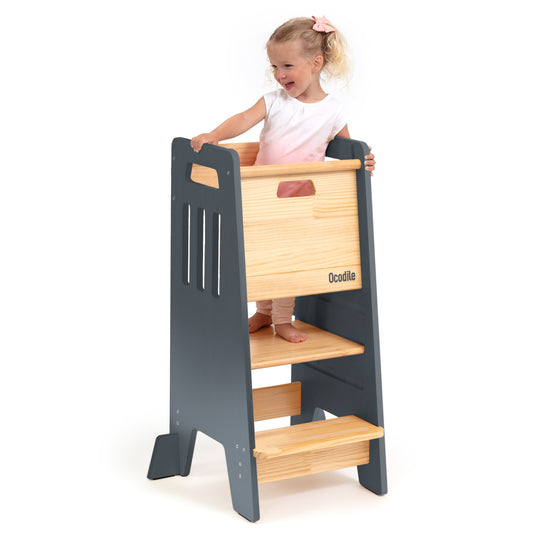
Picture a high chair that doesn't just hold your child but actively invites them to participate. That’s the entire idea behind a Montessori-inspired chair. Instead of being lifted up and strapped into an isolated seat, a child can climb in and out all by themselves, sparking a sense of autonomy from their very first meals.
This simple shift completely transforms the dining experience. The chair is built for a child's scale, with features like an adjustable footrest and seat, making sure they are properly supported and can sit at the family table as an equal. The focus isn't on parental convenience; it's about respecting the child’s developmental journey. You can learn more about these foundational ideas in our guide on the Montessori method of teaching.
A Welcome Seat, Not a Throne
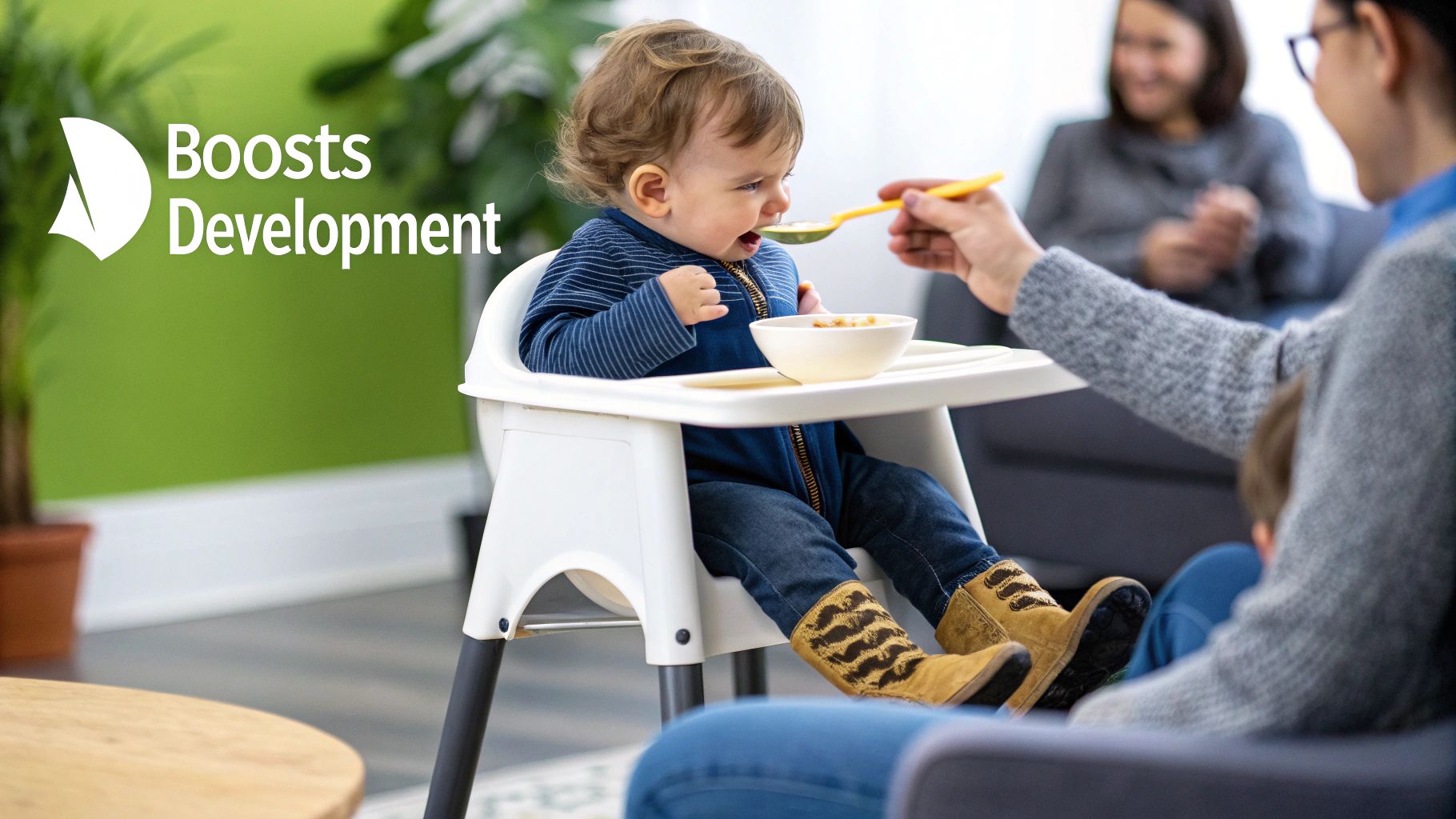
The difference in philosophy is huge. A typical high chair often separates the child, putting them in their own bubble with a personal tray. A Montessori chair, on the other hand, is all about inclusion.
- Fosters Independence: It lets children practice real-life skills, like getting ready for dinner, without needing an adult to do it for them.
- Builds Confidence: Every time a child successfully climbs into their chair, their self-esteem and body awareness get a little boost.
- Encourages Belonging: Sitting at the same table, at the same height as everyone else, makes a child feel like a true part of the family unit.
More and more families are embracing this child-led approach, and you can see it in the market. The Montessori high chair is a central piece of the growing Montessori furniture market, which is projected to grow at a compound annual growth rate (CAGR) of 7% through 2033 as families look for furniture that encourages safe, independent exploration.
To help you see the difference at a glance, here’s a quick comparison.
| Feature | Traditional High Chair | Montessori High Chair |
|---|---|---|
| Design Goal | Containment and ease of cleaning for the parent. | Independence and inclusion for the child. |
| Child's Role | Passive; waits to be lifted in and out. | Active; climbs in and out independently. |
| Positioning | Often separated with its own tray. | Pulled up to the family table as an equal member. |
| Core Principle | Manages the child during mealtimes. | Empowers the child to participate in mealtimes. |
| Feeling | Can feel isolating, like being in a "baby cage." | Creates a sense of belonging and confidence. |
| Footrest | Often absent or not properly adjustable, leading to dangling feet. | Always includes an adjustable footrest for stability. |
This table shows it’s not just about a chair—it’s about two completely different ways of thinking about your child’s place at the family table.
A Montessori chair isn't just about eating—it's about building confidence, respect, and practical life skills from the very first meal.
This concept map helps visualize how the 'Welcome Seat' philosophy connects directly to these core developmental benefits.
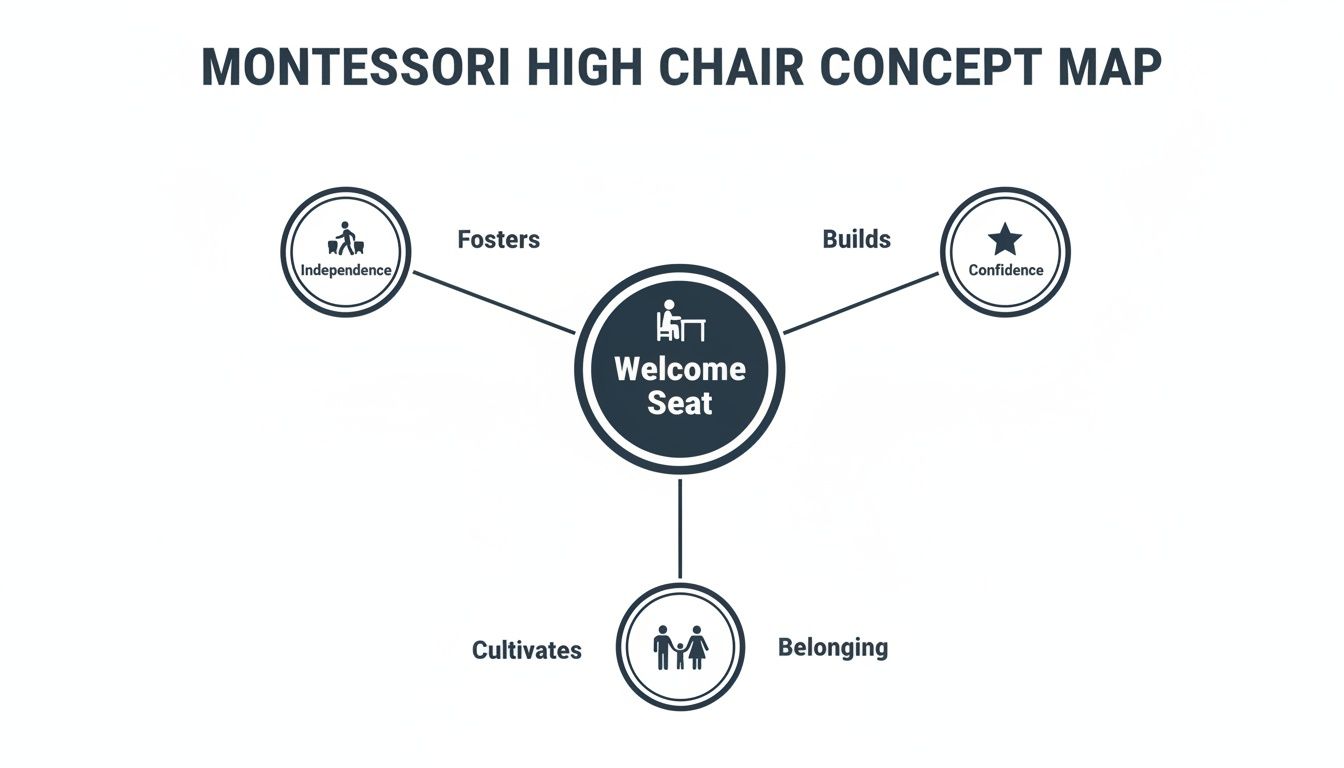
As the visual shows, a single piece of furniture can do so much to cultivate independence, boost confidence, and create a powerful sense of belonging in your daily family routines.
How Montessori Principles Shape Your Child's First Chair
A Montessori high chair isn't just a place for your child to sit; it's a tool designed from the ground up with a deep respect for their natural drive to explore and participate in family life. The design might look simple at first glance, but every curve and feature is intentional, serving a very specific, child-centered purpose.
Three core Montessori ideas are really at the heart of these chairs: freedom within limits, respect for the child, and the development of practical life skills. When you bring these together, you start to see mealtimes transform from a passive activity into a truly empowering experience for your little one.
Freedom Within Limits
One of the first things you'll notice about a Montessori high chair is how accessible it is. A toddler can actually climb in and out on their own, which is a perfect real-world example of "freedom within limits." The "freedom" part is their ability to control their own body and choose when they're ready to join the family at the table.
So, where are the "limits"? They're built right into the chair's safe, sturdy design. It has a low center of gravity and a wide, stable base, creating a secure space where your child can practice this new independence without unnecessary risk. This careful balance helps them feel capable, not just contained.
Respect for the Child
Providing furniture that actually fits a child's body is one of the most fundamental ways we can show them respect. A Montessori chair acknowledges that a toddler isn't just a mini-adult; they have their own unique ergonomic needs that deserve to be met.
By offering a chair that fits their body, we send a powerful message: "You are a valued member of this family, and your comfort and independence matter."
This respect is also about inclusion. By bringing your child right up to the family table, instead of isolating them with a separate tray, you're including them in the conversation and daily rituals. This reinforces their sense of belonging and self-worth in a simple but profound way.
Fostering Practical Life Skills
From a Montessori perspective, everyday routines are packed with learning opportunities. The design of a Montessori high chair is a direct invitation for your child to develop practical life skills. Because they can get in and out by themselves, they can start to take real ownership of their mealtime routine.
This might look like:
- Helping to set their place: They can carry their own unbreakable plate or cup to the table.
- Participating in cleanup: They can learn to wipe their own space with a small cloth after they're done eating.
- Developing motor skills: The simple act of climbing in and out strengthens their coordination and body awareness.
This kind of hands-on involvement is crucial for building real competence and confidence. In fact, research shows that chairs promoting low access and proper foot support can enhance motor skills by 20-30%. This is part of a larger movement, as the Montessori school market continues to grow—with the Asia-Pacific region showing the fastest growth—fueling demand for furniture that supports independence in modern homes. You can read more about the market growth and furniture trends here.
By bringing these principles into your home, a chair becomes so much more than just a seat. You can learn more about extending this philosophy in our guide to choosing a Montessori table and chair set.
The Real-World Developmental Benefits for Your Child
Choosing a Montessori-inspired high chair is about so much more than just finding a spot for your little one during meals. It's a genuine investment in their development, a thoughtfully designed tool that supports them physically, mentally, and emotionally every single day. When you give a child a chair that respects their growing capabilities, you're laying a foundation for confidence right at the family table.
The benefits quickly become obvious in daily life, turning regular mealtimes into powerful learning moments. Parents often find that children using these chairs are less fussy and more engaged. The reasons why are all about solid child development principles. Let’s break down exactly how this chair actively helps your child's journey.
Physical Stability and Motor Skills
Have you ever sat on a tall barstool with your feet dangling in the air? It’s awkward and uncomfortable. The same goes for our kids. A core feature of any good Montessori-style high chair is its adjustable footrest, which provides critical physical support.
When a child’s feet are planted firmly on a surface, their core is stable. This stability is the secret sauce for developing fine motor skills. Instead of wiggling around just to stay balanced, they can focus their energy on the tricky tasks of self-feeding: grasping a spoon, scooping up peas, and getting it all the way to their mouth.
- Improved Posture: Proper foot and back support naturally encourages a healthy, upright sitting position.
- Enhanced Coordination: With a stable base, it's much easier to master the hand-eye coordination needed for using utensils.
- Body Awareness: The simple act of climbing in and out of the chair builds gross motor skills and spatial understanding.
Cognitive Growth and Concentration
The independence a Montessori high chair offers is a huge boost for cognitive development. From a young age, it presents them with a simple problem to solve: "How do I get into my seat?" This little challenge encourages planning, coordination, and a big dose of confidence once they figure it out.
Once they're seated, the ergonomic design helps them concentrate for longer. A child who isn't constantly shifting to get comfortable is a child who can better focus on the meal itself—the tastes, textures, and family conversation. This engagement makes them more open to trying new foods and being part of the action.
A child who feels in control of their own body is better equipped to focus their mind. The chair becomes a tool for building not just independence, but also attention and problem-solving skills.
Emotional Security and Social Inclusion
This might be the most powerful benefit of all. By bringing your child right up to the table at eye level, a Montessori high chair sends a clear message: you belong here. They aren't just being fed; they are an active, respected participant in a family ritual.
This sense of belonging is essential for building self-esteem. It transforms mealtimes from something that can be stressful into a positive social event where they can watch, learn, and connect with the people they love most. For families looking for more ways to nurture this self-reliance, our guide on encouraging independence in toddlers is full of practical tips.
This daily reinforcement of their place in the family cultivates a deep sense of security and confidence that will follow them far beyond the dinner table.
Key Features to Look For When Choosing Your Chair
Picking the right Montessori high chair can feel like a huge decision, but it gets a lot easier once you know what really matters. Think of it less like buying a piece of furniture and more like choosing a key developmental tool that will be part of your family for years. The best chairs blend safety, smart function, and a simple design all into one.
When you're getting ready for a new baby, making a list of the essentials is a big deal. A great chair is a core piece of that puzzle, so understanding its features is vital. For a little more guidance on what you'll need, our guide to the best baby registry items can help you sort through the options for your growing family.
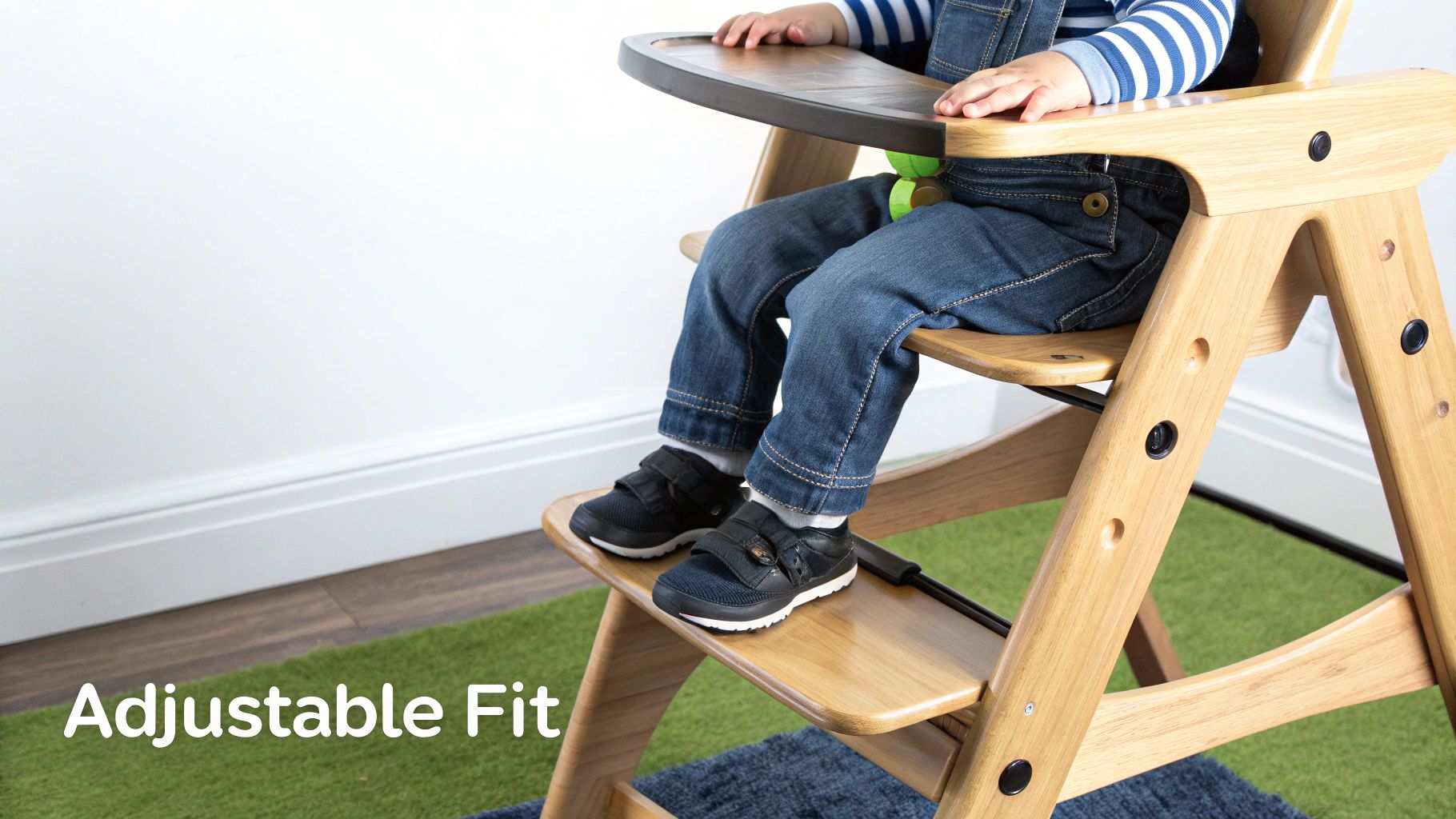
Uncompromising Adjustability
If there’s one non-negotiable feature in a true Montessori high chair, it’s adjustability. This isn't just a "nice-to-have"—it's the heart of the whole design. A chair that grows with your child offers the right ergonomic support at every single stage, from six months old to six years and beyond.
You’ll want to look for a chair with both an adjustable seat and an adjustable footrest.
- Seat Depth and Height: The seat needs to slide in and out and move up and down. This lets your child sit with their back fully supported while their knees bend comfortably at the edge of the seat, positioning them perfectly at the dinner table.
- Footrest Height: The footrest is just as crucial. It has to move to meet their feet, creating a solid base so they can focus on eating and chatting instead of wiggling around to find balance. The goal is that perfect 90-degree angle at their knees.
This long-term use is what really separates a Montessori chair from a traditional high chair that your child will outgrow in a flash.
Superior Materials and Craftsmanship
The materials your child's chair is made from are in direct contact with them every single day, so quality is everything. Solid wood is the gold standard for good reason. It’s tough, a breeze to clean, and has the weight needed for a stable base that won’t tip over.
Look for hardwoods like beech or birch, which are famous for their strength. The finish is equally important. Make sure the chair is treated with non-toxic, child-safe paints and lacquers. This protects your little one from nasty chemicals and fits right in with the Montessori ideal of using natural, beautiful materials in a child’s space.
The move toward natural wood is part of a much bigger trend. The preschool furniture market is expected to grow from $0.2 billion in 2025 to $0.38 billion by 2035, and the total baby high chair market is set to hit $2.4 billion in 2024. It’s clear that parents are choosing durable, safe materials they can feel good about.
Essential Safety by Design
In a Montessori chair, safety comes from smart design, not just a bunch of straps. While some models come with a removable safety bar for the littlest eaters, the real safety features are built right into the chair's structure.
A well-designed chair is all about proactive safety. Its stability and proper ergonomics are what truly keep a child secure, giving them the confidence to learn their own physical limits in a safe environment.
When you're checking out a chair, keep an eye out for these critical safety points:
- A Wide, Stable Base: Look for splayed legs or an anti-tip design that gives the chair a low center of gravity.
- Rounded Edges: Every corner and edge should be smooth and rounded off to prevent bumps and scrapes.
- Sturdy Construction: Give it a little shake. The chair should feel solid, with no wobbling or loose parts. High-quality screws and joints are a must.
By focusing on these three areas—adjustability, materials, and safety—you can confidently pick a Montessori high chair that will become a well-loved and functional part of your family’s daily routine.
Integrating the Chair into Your Daily Family Routine
Bringing a new piece of furniture into your home is one thing, but the real magic happens when it fits right into the rhythm of your family life. A Montessori high chair isn't just a different place for your child to eat. It's an invitation for them to move from being a passive observer to an active participant in the day-to-day.
The key is making this transition feel natural and positive. You’re celebrating their new independence with every successful climb. A Montessori high chair can blend right into your family’s schedule, just like other parts of your home life run smoother with a good plan. For more on that, these daily schedule tips for stay-at-home moms offer some great ideas.
Teaching Your Child to Use Their New Chair
Think of this as a gentle, low-pressure learning experience. The goal is to empower your child to master it at their own speed, always with you nearby.
-
Show, Don't Just Tell: Get down on their level. Sit on the floor and slowly show them how to climb in and out. Make your movements obvious, pointing out where to put hands and feet.
-
Guide and Support: For the first few tries, offer a helping hand. Keep the chair steady and guide their feet to the first step. Let them do as much as they can, just giving enough support so they feel safe and proud.
-
Use Positive Reinforcement: When they make it, cheer them on! A simple, "Wow, you did it all by yourself!" makes a huge difference and builds the confidence they need to try again.
-
Establish Clear Expectations: Gently explain that this is their special chair for sitting at the table. If they start to stand up, calmly guide them back to a seated position. Being consistent is the best way to help them understand its purpose.
The move from a traditional high chair is all about building trust—trust in the chair's design, and more importantly, trust in what your child is capable of.
More Than Just a Mealtime Seat
One of the best things about a Montessori chair is how versatile it is. It's not just for breakfast, lunch, and dinner. It becomes a go-to spot for all kinds of family activities.
- An Art Station: Pull the chair right up to the kitchen table for coloring, painting, or play-doh. It lets them work right next to you or older siblings, creating a wonderful sense of teamwork.
- A Kitchen Helper: While it's not a full kitchen tower, the chair can bring your toddler to a safe height to help with simple tasks, like stirring ingredients in a bowl on the table.
- A Reading Nook: Placed at a low coffee table, it becomes the perfect spot for them to flip through their favorite picture books on their own.
By weaving the chair into different parts of your day, you're constantly reinforcing that they are an important and capable member of the family. This one piece of furniture quickly becomes a launchpad for learning, connection, and countless shared memories.
Common Questions About Montessori High Chairs
Jumping into the world of Montessori-aligned gear can feel a little different from grabbing the usual baby stuff off the shelf. It makes sense to have questions, especially when you're looking at something as central as a high chair. It’s an investment in your little one’s growing independence, after all.
We've heard all the common questions from parents just like you, so we’ve put together some straightforward answers. Our goal is to help you feel totally confident that you’re choosing a tool that won’t just make mealtimes easier, but will actually support your child's growth for years.
At What Age Can My Child Start Using a Montessori High Chair?
These chairs are typically ready for your little one as soon as they can sit up on their own, steady and strong. This usually happens somewhere around 6 to 9 months old. The real sign isn't a date on the calendar, but their developmental readiness.
What should you look for? Solid head and neck control and the ability to sit without toppling over. The brilliant thing about these chairs is that the adjustable seat and footrest are made to give them perfect ergonomic support from day one, adapting as they sprout up through their toddler years.
Are These Chairs Safe Without a Five-Point Harness?
This is easily one of the most common—and most important—questions we get. The safety here comes from smart design, not from strapping them in tightly. The chair’s low center of gravity and wide, sturdy base are engineered to prevent tipping, giving your child a secure foundation.
When a child's feet are flat on a footrest and their body is properly supported, they can balance themselves naturally. This kind of setup encourages them to become aware of their own body and move intentionally, all while you're right there supervising.
It’s a philosophy centered on building body awareness in a safe space, rather than simple confinement. A child who learns to understand and respect physical boundaries develops a much deeper sense of self-trust and competence.
Many designs, including ours at Ocodile, do come with a simple, removable safety bar or a basic strap for the earliest sitters. This provides a bit of extra security while they’re still getting the hang of climbing in and out on their own.
Is a Montessori High Chair Worth the Investment?
It’s true, the upfront cost can be more than a standard plastic high chair. But think of it as a long-term investment in both your child and your home. Unlike traditional high chairs that get stored in the attic after a year or two, these are built to grow.
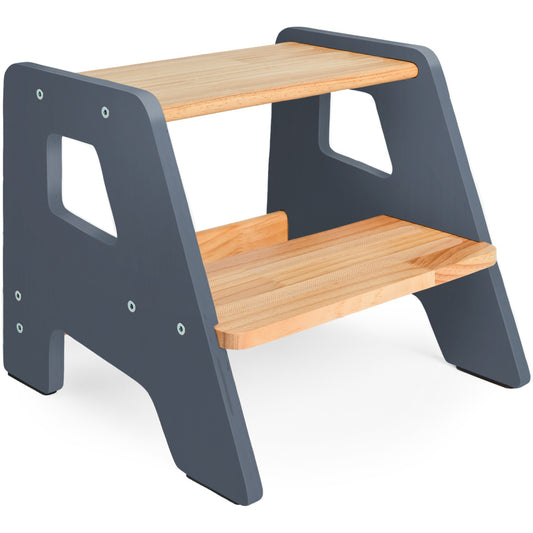
Most can easily convert into a toddler chair and later a youth stool that can be used at a desk. When you combine that incredible versatility with durable, solid wood construction, the value over time is fantastic. But even more than that, you’re investing in your child’s independence, their confidence, and a more peaceful, positive connection to family meals. Those benefits are priceless.
How Does This Chair Help with Picky Eating?
A Montessori chair can be a secret weapon against mealtime battles. It gets to the root of so many power struggles by handing over bodily autonomy to your child—they decide when to get in and out. By giving them a real seat at the table, just like everyone else, the whole dynamic shifts from a battle of wills to a shared experience.
Plus, the posture makes a huge difference. Having their feet planted firmly on a footrest is proven to help a child feel more comfortable and focused. A comfortable kid is a more engaged eater, and that often makes them more willing to try new things. When a child feels included and respected, a lot of that mealtime anxiety just melts away.
Ready to transform mealtimes and foster your child’s independence? Explore Ocodile’s thoughtfully designed furniture that brings Montessori principles to life in your home. Discover a safer, more engaging way for your child to join the family table by visiting https://ocodile.com.