



Montessori Kitchen Helper Tower: Safety & Buying Guide
Dinner starts at the counter, but your toddler starts at your knee. You rinse vegetables, turn to grab a bowl, and there they are, reaching up, asking to see, wanting to help, or refusing to be left out. Most parents know this moment well. You want to include them, but balancing a child on one hip while cooking isn't safe, and a regular chair often feels wobbly and far too easy to climb.
That's where a Montessori kitchen helper tower can make everyday life feel calmer. Used well, it gives a young child a secure place to stand at counter height so they can wash produce, stir batter, watch you cook, or be near you without hanging off your leg. It's not magic, and it isn't a substitute for supervision. But it can turn a stressful kitchen hour into shared work.
What matters most is not just buying any tower. It's choosing one that fits your child's stage, your kitchen layout, and the way your family lives. A tower for a child who only wants to rinse fruit needs to support a different routine than one used every morning at the sink and every evening during dinner prep. That's the lens I use as both an educator and a parent. A tower should support independence safely, not just look nice in the corner.
Welcome to the Counter Your New Sous Chef
You are chopping vegetables, and your child is already there. One hand is on your leg, the other is reaching for the counter, and their whole body is saying, "Let me help."

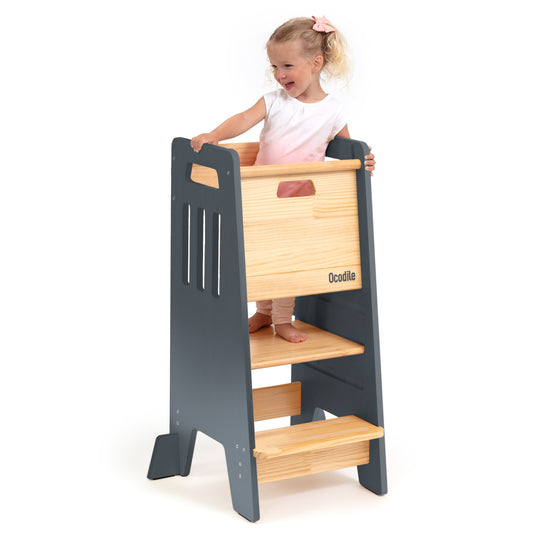
A Montessori kitchen helper tower gives that interest a safer place to go. It is a raised, enclosed platform that brings a young child to counter height so they can take part in everyday kitchen work with you. For many families, that changes the mood of the room. A child who was tugging, climbing, or asking to be held now has a clear job and a clear place to stand.
In practice, the moments are small. Your toddler rinses strawberries. They pass you a measuring cup. They spread softened butter on toast with a child-sized knife. These are simple tasks, but they do important work inside a young child. Repetition builds skill. Participation builds confidence. Shared routines build connection.
The tower itself is only part of the decision.
A good choice depends on how your family uses the kitchen. If your child joins you for ten minutes to wash produce, you may value a compact footprint and easy entry. If they spend part of every morning at the counter while you pack lunches, adjustability may matter more because the tower needs to keep fitting as their body and abilities change. If your child is still learning how to climb up, stable side rails and a steady base deserve extra attention. The best tower is not the one with the longest feature list. It is the one whose design matches your child's stage and your daily rhythm.
That is part of the Montessori mindset at home. Children do better when the environment supports what they are ready to do. If you want a broader look at how that works in everyday family routines, this guide to Montessori education at home gives helpful context.
Why parents warm to a tower so quickly
Families often notice the same changes once a tower becomes part of the kitchen routine.
- Less carrying, more participation: Your child can stay close without needing to be on your hip.
- A defined workspace: Clear boundaries help many toddlers understand where to stand and what their job is.
- More useful independence: Instead of watching from below, your child can practice real tasks that fit their abilities.
- A better long-term fit: A well-designed tower supports growth over time, which makes it feel more like an investment in independence than just another piece of furniture.
A tower works a bit like setting out the right-sized tools for a beginner gardener. The child is still learning. You are still supervising. But the setup makes success more likely.
That is why so many parents come to see the tower as part of the routine, not extra equipment. It gives a young child a place at the counter and gives the adult a more workable way to include them.
Beyond the Stool The Montessori Philosophy at Work
A regular stool helps a child reach something. A Montessori kitchen helper tower does something deeper. It gives a child access to meaningful work at their level, in a space prepared for them.
Montessori practice puts a lot of value on independence, practical life skills, and a home environment that lets children participate instead of just observe. That's why so many Montessori families use a tower. The furniture is simple, but the idea behind it is powerful. Children learn best when they can do real things with real people.
For parents who want a fuller picture of this approach at home, Montessori education at home is a helpful starting point.
What a prepared environment looks like
In Montessori thinking, the environment should meet the child where they are. In the kitchen, that means your child needs a way to access the counter safely, a task they can understand, and materials they can handle.
A tower supports that by creating a defined workspace. Instead of being lifted up and down at random, your child has a consistent place to stand. That predictability helps concentration. It also helps you, because you're not constantly managing a shifting body while trying to work.
Practical life is not pretend play
Children don't need every task to be turned into a game. They often prefer real work. Washing a pepper, tearing lettuce, wiping a spill, or carrying napkins to the table all meet a toddler's need to contribute.
Here's what children often practice in a tower without us even realizing it:
- Balance and body control: Standing, turning, reaching, and shifting weight in a safe boundary.
- Attention: Staying with one task long enough to finish it.
- Sequencing: First wash hands, then place the bowl, then stir.
- Belonging: “I help in this family.”
Practical insight: A child who helps badly at first is still learning well. Spilled flour and crooked banana slices are often signs of growth, not failure.
Why a stool isn't the same thing
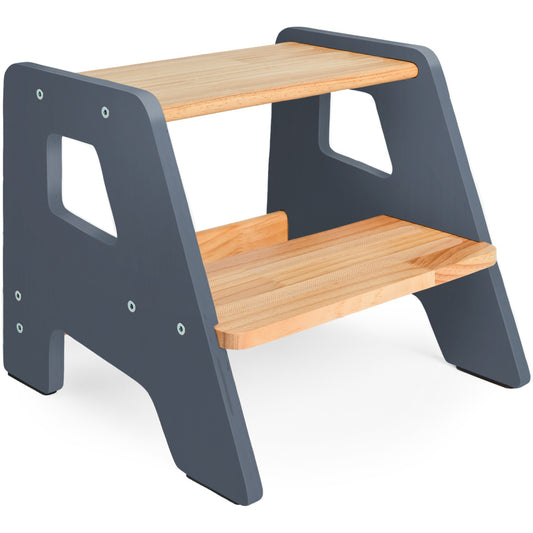
A step stool can be useful for brief tasks. But Montessori families often prefer towers for longer counter work because a tower is built around containment and participation, not just elevation.
That's an important distinction. The goal isn't solely getting taller. The goal is giving a young child a safer, more stable way to stay involved long enough to learn.
Ette Tete's guide notes that helper towers are generally used from around 18 months, and readiness depends on development. Consumer Reports also notes that manufacturers often recommend about 18 months and up, with readiness based more on development than calendar age (Ette Tete guide to Montessori learning towers). That timing fits a major developmental shift. Children move from watching household routines to wanting a role in them.
Is Your Child Ready Safety Standards and Suitability
Age matters, but it isn't the whole story. I've met children who were eager long before they were steady enough, and others who were physically ready but still impulsive in ways that made kitchen work hard. Readiness is about the whole child.

Consumer Reports reported that in testing 16 popular toddler towers in 2025, 13 of 16 failed the stability test, and it also noted 16 safety incidents reported to SaferProducts.gov between 2011 and 2024, most involving children aged 1 or 2 (Consumer Reports review of toddler tower stability and incidents). For parents, the message is clear. A tower only helps if its design resists tipping and if the child using it is ready.
Signs your child may be ready
I look for a cluster of abilities rather than one birthday.
- Stable standing: Your child can stand well without wobbling into everything.
- Confident walking: They can move through space with basic control.
- Simple listening: They can respond, at least some of the time, to short directions like “feet stay here.”
- Interest in watching and helping: Curiosity helps children tolerate the limits that come with safe participation.
For everyday kitchen guidance that supports those routines, kitchen safety for toddlers can help parents think through the wider setup.
What often confuses parents
Many parents ask whether an early walker is automatically tower-ready. Not always. Standing steadily and walking are important, but so is the ability to pause, stay within a boundary, and accept help climbing in and out if needed.
A child may also be physically ready for handwashing in a tower but not ready for food prep near busy cooking. Readiness can vary by task.
If your child treats every elevated surface like a climbing challenge, slow down. Readiness for height is different from readiness for participation.
A quick readiness check
| Question | Why it matters |
|---|---|
| Can my child stand and shift weight steadily? | Reaching and turning happen constantly at the counter. |
| Can they follow one-step directions? | Safety depends on simple boundaries. |
| Will I be fully present while they use it? | A tower is for supervised independence. |
| Is the task calm and appropriate? | Not every kitchen activity fits tower use. |
If you answer “not yet” to more than one of these, waiting is often the wiser choice. There's no prize for starting early. A few more weeks or months can make the experience much safer and much more enjoyable.
The Ultimate Buying Guide for Your Kitchen Helper Tower
Parents often get overwhelmed because many towers look similar at first glance. But small design differences change daily use a lot. Therefore, it's wise to think less like a shopper and more like someone selecting a long-term tool for family routines.

Start with stability, not style
The first thing I care about is the base. A proper tower should look grounded. Expert guidance describes a good tower as a secure, four-sided platform with a top safety rail above the child's belly button, a wide anti-tip base with feet that splay outward, and recessed or covered hardware, along with solid wood construction and smooth, rounded edges (Ocodile guide to toddler tower design features).
That “belly button” guideline is useful because parents can picture it. If the rail is too low, a leaning child may pivot forward too easily. If the base is narrow, reaching sideways can shift the whole structure.
Why adjustability matters
A tower that fits a younger toddler may not fit the same child later unless the platform can move. One commercially published design measures 17.5 inches wide and deep and offers platform heights of 12.5, 15.5, and 18.5 inches. The same design uses those adjustments to help keep the safety rail above the child's center of gravity as they grow (Sprout Kids Sous Chef tower dimensions and platform heights).
That matters in real life because height changes safety. A child standing too low may strain upward and lean. A child standing too high may have the rail in the wrong place. A tower should adapt without becoming tippy.
Match the tower to your kitchen routine
Some families use a tower once a day for handwashing. Others keep it at the counter through breakfast, lunch prep, and dinner. Your routine should shape your choice.
Consider these everyday questions:
- Do you leave it out all day? A compact footprint may matter more than a folding feature.
- Do you move it between sink and counter? Weight and grip on the floor matter.
- Do you have a tight galley kitchen or an island? Measure first. Room Sketch 3D kitchen dimensions can help you think through counter and island space before you buy.
- Will one child use it across several years? Adjustability becomes more important.
Materials and finishing details
Parents sometimes focus on color and miss the build. I'd rather have plain and sturdy than trendy and awkward.
Here's a practical comparison:
| Material or feature | What to think about |
|---|---|
| Solid wood | Often preferred for durability and a sturdy feel. |
| Plywood | Can work well if the construction is solid and edges are finished smoothly. |
| Plastic | May be lighter to move, but parents should still check overall stability and containment. |
| Rounded edges | Helps reduce bumps and snags during climbing and turning. |
| Covered hardware | Lowers pinch, scrape, and snag risks. |
One option in this category is Ocodile's best learning tower guide, which discusses adjustable kitchen tower designs and foldable formats. What matters most is whether the tower's structure supports your child's body safely in the way your family will use it.
Buying rule: If a tower saves space but makes you nervous every time your child leans, it isn't a good fit for your home.
Bringing the Tower Home Setup and Safe Daily Use
A safe design still needs safe habits. Most tower problems happen in the routine around the product, not just in the product itself. Placement, supervision, and clear rules matter every single day.
Where the tower should go
Keep the tower flush against the counter or sink area on a flat surface. That placement reduces movement and gives your child a clear work zone. Avoid setting it in the middle of the kitchen or anywhere close to the stove, hot pans, sharp tools, or a crowded prep area.
Task fit matters here too. If you're handling raw meat, active frying, or a rush-hour dinner with lots of hot items moving around, that may not be the right moment for tower involvement. Parents who want a simple kitchen refresher can use resources like how to ensure safe meal prep to think through food handling alongside child participation.
House rules that protect everyone
Children do better when the rules are short, concrete, and repeated the same way each time. I'd keep them simple.
- Feet stay on the platform: No climbing the sides or stepping onto the counter.
- Hands help with the work: Stir, wash, hold, or watch. Don't grab for unsafe items.
- An adult stays close: Tower time only happens when a grown-up is right there.
- We get in and out the safe way: Use the tower as intended, not as a play structure.
Stand close enough that you can reach your child quickly, especially during the first weeks of use.
Use it as supervised independence
This is the heart of safe tower use. A tower is not a babysitter. It doesn't remove the need for adult attention. It creates a safer way for a child to participate while you supervise.
Expert guidance emphasizes that the safety value comes from the tower's containment geometry, not just from being taller. The secure, four-sided platform, wide anti-tip base, and recessed hardware are meant to reduce tipping when a child leans or reaches. But those design features work best when an adult is present and the activity is appropriate for the moment.
If your child starts climbing out, sitting on the rail, or treating the tower like gym equipment, pause its use. Calmly remove them, end the activity, and try again later. Consistency usually teaches more than long explanations.
Inspiring Independence Activities and Routines
The best part of a Montessori kitchen helper tower isn't the furniture itself. It's what begins to happen around it. Children who once cried to be picked up start arriving at the counter ready to wash berries, peel a banana, or watch pancake batter come together.

One of my favorite morning routines is the “small helper start.” A toddler climbs up, washes hands, and helps place fruit into a bowl. That may be the whole activity. It doesn't need to be elaborate to be meaningful. Repetition builds skill.
Early routines that work well
For younger toddlers, think slow, sensory, and forgiving.
- Rinsing produce: Let them wash apples, cucumbers, or potatoes in a bowl or under a gentle stream.
- Transfer work: Move cut fruit from one bowl to another with hands or a spoon.
- Wiping: Hand them a small cloth for drips around the sink.
- Herb pulling: Remove leaves from soft herbs with you nearby.
These tasks give children real participation without rushing them.
As skills grow
Older toddlers and preschoolers often want more responsibility. That's a good time to expand the routine rather than jump straight to complicated cooking.
You might invite them to:
- tear lettuce for salad
- stir yogurt and fruit
- mash banana
- pour pre-measured ingredients into a mixing bowl
- spread soft toppings on toast
If you want a cheerful baking idea to make the activity feel special, these colorful UAE kids' sweet buns can inspire simple topping, shaping, or color-naming conversations with children.

A short video can also help parents visualize the flow of tower-based kitchen participation in everyday life.
Children usually don't need more excitement. They need a clear task, a calm adult, and enough time to repeat it.
Build routines, not one-off activities
What makes tower use successful is consistency. A child who helps wash produce every evening often becomes calmer, more capable, and more cooperative than a child who is invited only for occasional “special” cooking projects.
Think in rhythms:
| Time of day | Simple tower activity |
|---|---|
| Morning | Wash hands and help with fruit or toast setup |
| Snack time | Peel banana, transfer crackers, pour water with help |
| Dinner prep | Rinse vegetables, tear herbs, stir cool ingredients |
That's how independence grows. Not through big projects, but through ordinary family life repeated with care.
FAQs Maintenance Troubleshooting and Alternatives
A kitchen helper tower works best when it fits your real life. The right choice depends less on trends and more on your child's stage, your kitchen habits, and how often you want your child involved in everyday tasks.
How do I clean a wooden tower?
Clean it the way you would care for a wooden high chair. Wipe spills soon with a damp cloth, then dry the surface so moisture does not sit in the wood. For sticky spots, use a mild soap and a soft cloth rather than harsh cleaners that can wear down the finish.
A quick weekly check helps too. Run your hand along the rails, platform, and joints. If anything feels rough, loose, or wobbly, pause use and tighten or repair it before the next kitchen session.
What if my child keeps trying to climb out?
Treat that behavior as a message, not defiance. Children often try to climb when they are tired, excited, frustrated, or asked to stay too long at the counter.
End the activity calmly. Then adjust one variable next time. Offer a shorter task, choose a quieter moment of day, or stay closer with your hand near the rail. If the pattern continues, the tower may still be too much freedom for that stage, and floor-level participation may be a better match for now.
Is a tower always better than a step stool?
Task fit matters more than category. As The Bump's guide to learning towers explains, parents need to judge when a tower is the right tool and when a stool or floor setup is more practical.
A tower usually suits younger children, longer activities, and routines where steady boundaries help them stay focused. A stool can work for an older child who has solid balance and just needs brief access, such as a quick handwash. The question is not which item is better in general. The better choice is the one that matches the task, the child, and the pace of your kitchen.
When should I skip the tower and work at floor level instead?
Use a low table or floor tray when the kitchen is busy or the task carries more risk. If you are draining pasta, carrying hot cookware, chopping with sharp knives, or rushing to finish dinner, counter height can ask too much of both parent and child at once.
Floor-level work often gives a child more room to practice calmly. Washing produce in a bowl, peeling eggs, or transferring ingredients can still build independence without adding pressure to a hectic moment.
What kind of family gets the most from a tower?
Families who include children in ordinary kitchen rhythms tend to get the most value from a tower. If your child joins breakfast prep, snack setup, or dinner washing most days, a stable design with an adjustable platform and child-safe materials usually serves you better than improvised seating.
That is the larger idea behind choosing one. You are not only buying a piece of furniture. You are setting up a daily work space that can grow with your child and make independence easier to practice, safely and often.
If you're looking for a thoughtfully designed option for everyday family routines, explore Ocodile. Their child-focused furniture includes kitchen tower designs made to support supervised independence at home, with attention to safety, function, and practical daily use.