



8 Tips for Kitchen Safety for Toddlers in 2026
Share
You're at the stove, pasta water is boiling, and your toddler is determined to help right when you need both hands. That moment is why kitchen safety has to work in real family life, not just in theory. The kitchen holds heat, blades, glass, cleaning products, cords, and slippery spots. It is also where children naturally want to join us.
A lot of toddler safety advice treats the kitchen like a room to block off completely. Sometimes that is the right call, especially during busy cooking windows. But for many families, full exclusion does not hold up for long. Toddlers watch what we do, copy it, and look for a place in the routine. A better approach is to prepare the environment so your child can participate in small, safe ways while the true hazards stay controlled.
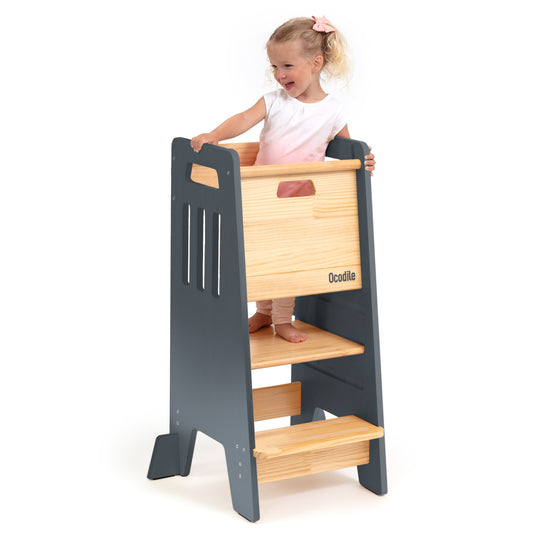
That shift matters. A well-set-up kitchen usually leads to fewer power struggles than a kitchen full of “no” zones. In Montessori-style homes, that often means creating clear boundaries, keeping dangerous items secured, and giving toddlers one defined place to stand and one safe job to do, such as rinsing produce, transferring ingredients, or wiping a low table. Tools like a standing tower can help, but only when the rest of the kitchen is arranged with supervision and risk reduction in mind.
If you are working through a broader childproofing plan for your home, the kitchen deserves its own strategy. It changes by the hour. Breakfast prep, dishwasher unloading, baking, and dinner cleanup all create different risks, so the safest setup is one that supports both protection and participation.
The same planning mindset used for planning a nursery layout helps here too. Clear zones, predictable storage, and furniture that lets you supervise without constant scrambling make the kitchen feel calmer for everyone.
1. Secure Cabinets and Drawers with Safety Locks
The moment that usually changes a parent's mind is simple: you turn to the sink for ten seconds, and your toddler is already pulling open the drawer with the peeler or reaching for the cabinet under the sink. In a kitchen built for adults, low storage often holds the highest-risk items. Locks fix that fast, and they do it without asking a two-year-old to have better judgment than is realistic for them.
That matters even more if your goal is a prepared environment, not a fully off-limits room. Toddlers can help in the kitchen, but only after the dangerous storage is reliably controlled. A standing tower, a snack station, or a toddler-safe drawer works better when the nearby hazards are secured first.
Lock the risky storage, then create one safe place to explore
A good setup is selective. Lock the cabinets and drawers that hold sharp, heavy, breakable, toxic, or swallowable items. Leave one low drawer or cabinet available for things your child is allowed to handle, such as silicone spatulas, nesting bowls, clean dishcloths, or measuring cups.
That balance lowers curiosity pressure. If every drawer is forbidden, toddlers keep testing boundaries. If one space is clearly theirs, many children stop fighting for access to the rest.
Start with the areas that cause the most harm in real kitchens:
- Drawers with blades or points: knives, peelers, kitchen shears, box graters, skewers, and food processor parts
- Lower cabinets with chemicals: dishwasher pods, spray cleaners, detergents, and any medicines that ended up in the kitchen
- Storage with heavy items: cast iron pans, glass mixing bowls, and small appliances that can fall when tugged
Practical rule: If opening a drawer could expose something sharp, caustic, heavy, or easy to swallow, add a lock.
Choose the lock that fits how your kitchen actually works
Magnetic locks keep the outside of the cabinets looking clean, which many families prefer. They are a good fit if you want low visibility and your toddler has started figuring out simpler latch styles. Adhesive strap locks are faster to install and often work well for renters. Spring latches can be effective too, but some adults find them annoying on high-use drawers.
Trade-offs matter here. The best lock is the one every adult in the house will use correctly, every single time.
If you are comparing options, this guide to baby gates and childproofing barriers for family homes can help you think through how locks, gates, and supervised access work together in one kitchen plan. If you're updating your wider setup, this guide to childproof your home room by room fits well with a kitchen-first approach.
A few setup details make a big difference
Install locks on the highest-risk drawers first, even if you do nothing else that day. Then test them from a toddler's height. Kneel down, tug hard, and check what is still visible or reachable when the drawer cracks open an inch.
I also recommend rechecking the system every few weeks. Adhesive can loosen with heat and humidity, especially near the dishwasher or oven. Toddlers also get stronger quickly, and older siblings sometimes forget to relock a cabinet after unloading groceries or putting dishes away.
The goal is not to turn the kitchen into a sealed box. It is to make the dangerous storage boring and inaccessible, so your child can focus on the parts of kitchen life that are suitable for them.
Here's a quick visual walkthrough before you install or adjust your setup:
2. Install Safety Gates to Control Kitchen Access
A safety gate sounds like an exclusion tool, but used well, it's really a supervision tool. The goal isn't “you may never enter.” The goal is “you may not enter unsupervised.”
That distinction changes how families use the kitchen. A gate lets you keep your toddler nearby while you finish draining pasta, unload groceries, or deal with the oven. In open-plan homes, it can define a boundary without cutting off visual contact, which is often enough to stop the sprint toward the stove.
Choose the gate for the space, not the trend
Pressure-mounted gates are popular for flexibility, but hardware-mounted gates usually feel more solid in high-traffic areas. If your kitchen entrance is near stairs or gets a lot of pushing and leaning, sturdiness matters more than convenience.
What works in real homes:
- Use a gate as a pause point: It gives you a second to set down a hot dish or move a knife before bringing your child in.
- Pick one-hand operation: You need to open it while carrying groceries, a baby, or a bowl.
- Make the boundary predictable: Toddlers do better when the rule is consistent. Gate closed means wait for an adult.
Some families keep the gate shut during active cooking and open it during lower-risk moments like rinsing produce or setting napkins on the table. That rhythm makes more sense than an all-day hard ban.
A gate works best when it separates “adult cooking time” from “supervised helping time.”
If you're comparing styles, this roundup of baby gates for family spaces is useful for thinking about layout, traffic flow, and how much flexibility you need. The best gate is the one you'll latch every time.
3. Keep Hot Surfaces and Appliances Out of Reach with Stove Guards
Dinner is on the stove, you turn to drain pasta, and your toddler reaches for the front edge because that is the closest interesting thing in the room. That is the moment stove guards are built for. They do not replace supervision, but they do create a buffer during the split second when real burns happen.
Pair the guard with better cooking habits
A good stove guard helps most with the risks toddlers can act on quickly: grabbing a pan handle, touching a hot surface, or leaning too close while you plate food. It works best when it is matched to your stove type and installed firmly enough that a child cannot pry it loose. If you use a gas range, check clearance carefully so the guard does not interfere with heat or ventilation. If you have an induction or smooth-top stove, pay attention to whether the surface stays hot after cooking, because toddlers do not care whether the burner is technically off.
Daily habits still matter more than any single product.
Turn pan handles inward. Use the back burners first. Keep appliance cords from hanging over the counter. Move hot dishes to the back of the counter before you call your child over to help with anything else. For fire basics, stick with established home-safety guidance such as this guide to non-slip outdoor tiles in Melbourne, and remember to keep a lid nearby for stovetop flare-ups and never throw water on a grease fire.
The bigger goal is a prepared kitchen, not a kitchen your toddler is banned from all day. Active cooking stays in the adult zone. Toddler participation happens at a separate prep spot with cold ingredients, washing, peeling, or stirring tasks that match their age. If you are setting that up, this guide to a Montessori learning tower in daily use is helpful for seeing how children can be included without standing near burners.
A few rules make stove guards more effective:
- Keep towers and stools out of the stove zone: Place them at the sink, island, or a cleared counter section instead.
- Create a visual boundary: Toddlers learn faster when the stove area always has the same rule. Adult space during cooking.
- Treat microwaves like burn risks too: Steam and overheated bowls can scald just as easily as a pan on the stove.
- Repeat simple language: “Hot. Stop.” works better than long explanations in the moment.
This is one of those places where the trade-off is clear. Full exclusion is simpler, but guided participation is more sustainable for many families. A stove guard helps you protect the highest-risk area while still letting your child be part of kitchen life in the safer parts of the room.
4. Use Non-Slip Flooring and Mats to Prevent Falls
A common kitchen moment goes like this: you rinse fruit, a little water lands on the floor, your toddler twists to show you something important, and one fast step turns into a slip. Falls often happen during ordinary family routines, especially when children are excited and trying to help.
That matters even more in a kitchen set up for participation. If you want your toddler washing produce, transferring ingredients, or standing at a helper tower, the floor becomes part of the safety system. A sturdy tower on a slick surface is still unstable in real use.
The floor should support the routine
In a prepared environment, children need predictable footing. That usually means dry floors, grippy surfaces, and a work area that stays in the same place day after day. I would rather see a plain, well-placed stool on a stable surface than an expensive tower that shifts a little each time a child climbs up or down.
A few changes make a real difference:
- Place a non-slip mat at the toddler work zone: The best spots are in front of the sink or at a dedicated prep counter where splashes happen often.
- Avoid lightweight rugs: They bunch up, slide, and catch small feet.
- Clean spills as soon as they happen: Toddlers do not adjust their pace well when the floor changes under them.
- Check what is on their feet: Bare feet or grippy socks usually work better than smooth socks or footed pajamas.
- Test the setup yourself: Step on the mat, shift your weight, and make sure the stool or tower does not creep.
If you are comparing surface options, the same basic principle shows up in this guide to non-slip outdoor tiles in Melbourne. Wet areas need materials with better grip. Kitchens are no different.
The trade-off is simple. Soft cushioned mats can feel comfortable underfoot, but some slide more than you expect or create an uneven base for toddler stools. Choose grip and stability first. Comfort comes second.
The safest toddler stool still needs a dry, predictable floor.
5. Store Sharp Objects in Secure, Elevated Locations
Knives aren't the only problem. Pizza cutters, immersion blender blades, skewers, box graters, corn holders, kitchen shears, corkscrews, and mandoline slicers all deserve the same level of respect. Many parents lock the knife drawer and forget the rest.
A better system is to separate kitchen tools into three groups: adult-only sharp tools, supervised shared tools, and toddler-safe tools. Once you think that way, storage decisions get easier.
Build an adult zone and a toddler zone
Adult-only tools belong in locked drawers or high storage that remains out of reach even if your child climbs. High magnetic knife strips can work in some kitchens, but only if they're positioned well above climbing range and not above a toddler work area. Weighted knife blocks are better than loose drawer storage, but they still belong far back from edges.
Then create a low “yes” area. Wooden spoons, silicone whisks, pastry brushes, nesting bowls, and measuring cups give your toddler something real to handle.
- Move hidden sharps too: Graters and peelers are often stored low because adults use them often.
- Think climbing, not standing reach: If your child drags a chair, can they still get there?
- Don't store blades near the toddler station: Even temporarily.
This is also where furniture placement matters. If you use a helper tower or stool, don't park it under upper storage that contains anything hazardous. Children learn patterns quickly. If the tower always lives under the knife strip, they'll connect height with access.
6. Establish Rules About Hot Liquids and Educate Caregivers and Toddlers
A toddler can be helping wash strawberries in a standing tower one minute and reaching for your mug the next. That is why hot-liquid safety needs its own system. In a family kitchen built for participation, children should have ways to join in safely, while anything that can scald stays predictable and out of their path.
Clear rules work better than vague warnings. “Hot drinks stay on the back counter” gives adults a specific action. “Be careful” does not.
Set rules that fit real family routines
Choose a few short rules and keep the wording the same across parents, grandparents, babysitters, and older siblings. Toddlers learn patterns first. The goal is a prepared environment where everyone knows what belongs where, especially during the busy parts of the day.
Rules that hold up in real kitchens include:
- Hot drinks stay in one adult-only zone: Use a back counter that your child cannot reach from the floor, a chair, or a learning tower.
- Carry hot liquids on the far side of the counter: Avoid passing behind a toddler who is “helping.”
- Use lids when you can: A travel mug or lidded cup lowers spill risk during the breakfast rush.
- Keep toddlers out of the microwave handoff: Heated leftovers and bowls often look harmless but can burn quickly.
- No hot mugs on table edges, island corners, or low side tables: Those are common grab points.
- Pause before serving: Stir, test temperature, and let soups, oatmeal, and pasta cool before they reach child height.
One consistent rule matters more than ten clever ones.
House rule: If it can burn, it stays in the adult zone until it is safe to touch.
Toddlers can also learn a small safety vocabulary. Use short phrases tied to actions. “Hot. Wait.” “Hands on the tower.” “Cup stays with Mama.” “You may carry it when it is cool.” That language supports the Montessori-style goal here. We are not only blocking access. We are teaching safe participation with clear boundaries.
Adults need reminders too. I have found that the highest-risk moments are ordinary ones: morning coffee, draining pasta, reheating leftovers, and carrying soup while answering a question. Make the safe choice the easy one. Put mugs down in the same spot every time, turn your body away before moving something hot, and never set a hot bowl in the toddler workspace “just for a second.”
7. Use High Chairs and Booster Seats Properly for Safe Dining
Dinner can go sideways fast when a toddler is half-standing on a chair, reaching for the table, and chewing at the same time. A secure seat fixes several problems at once. It gives you a stable eating position, keeps supervision simpler, and separates mealtime from the more active kind of kitchen participation.
For toddlers, eating and helping work best as two different setups. A standing tower is for washing produce, stirring cold ingredients, or watching you work at the counter. A high chair or properly attached booster seat is for eating. That distinction matters because the body position is different, the expectations are different, and the risks are different.
Seat first, then serve
The routine should stay boring and consistent. Put your child in the seat first. Fasten the harness if the chair has one. Check that the booster is strapped tightly to the adult chair and that the chair itself will not tip or slide. Then bring the food.
A few habits do a lot of heavy lifting here:
- Use the safety straps every time: Even short snacks are enough time for a toddler to stand, slip, or push back from the table.
- Keep feet and posture supported: An upright, stable position helps toddlers focus on chewing and swallowing instead of wriggling for balance.
- Place the seat away from the stove, counters, and heavy tableware: Toddlers kick, grab placemats, and pull surprising things within reach.
- Serve manageable pieces and textures: Soft, bite-sized food is easier to handle than large, tough, round, or slippery pieces.
- Stay close during meals: Supervision works best when an adult is present, not checking in from the next room.
Booster seats are useful, but only when they are secure and your child can sit upright without twisting, kneeling, or climbing. I would rather keep a child in a high chair a bit longer than move too early to a setup that looks more grown-up but gives them too much freedom before they can handle it safely.
That trade-off comes up in a lot of homes. Parents want a child to join the family table, and that is a good goal. The safer version is a booster that fits well, straps correctly, and keeps your toddler at table height without wobbling. If the seat shifts, the chair rocks, or your child keeps trying to stand, the setup is not ready yet.
Keep the routine clear. We help in the prepared toddler workspace. We eat in a secure seat. Toddlers do better when the boundary is simple, repeated, and easy for every caregiver to follow.
8. Keep Electrical Cords and Appliances Away from Water Sources
Electrical hazards don't usually announce themselves. They build subtly through habits like leaving a blender plugged in, letting a cord dangle off the counter, or setting a kettle near the sink where splashes are common.
Toddlers are interested in anything that lights up, clicks, or hangs. To them, a toaster cord looks like something made to pull.
Remove the temptation and shorten the setup
The best electrical safety move is to leave less available to touch. Unplug appliances when you're done. Coil cords high and tight. Store the waffle maker instead of leaving it plugged in because you “might use it tomorrow.”
A safer kitchen setup usually includes:
- Keep cords off the edge: No dangling loops a toddler can grab.
- Separate appliances from the sink area: Water and electricity shouldn't share space.
- Use outlet covers where needed: Especially for low, exposed outlets.
- Inspect cords often: Frayed or twisted cords shouldn't stay in service.
This section also connects to your toddler participation area. Don't place a helper tower near the toaster, kettle, stand mixer, or coffee machine. Counter height should only be useful where the task is low-risk. Washing produce is one thing. Reaching a plugged-in appliance is another.
Some of the worst near-misses happen after the task is over, when adults mentally leave “cooking mode” but the cord, warm appliance, or outlet is still right there.
8-Point Toddler Kitchen Safety Comparison
| Item | 🔄 Implementation Complexity | ⚡ Resource Requirements | ⭐ Expected Outcomes | 📊 Ideal Use Cases | 💡 Key Advantages |
|---|---|---|---|---|---|
| Secure Cabinets and Drawers with Safety Locks | Moderate, simple to install; some models require drilling or adhesive | Low, inexpensive locks; occasional tools or professional install | High, effectively blocks access to chemicals, knives, and heavy items | Kitchens with low reachable storage; families wanting permanent childproofing | Physical barrier, aesthetic options, preserves normal cabinet use |
| Install Safety Gates to Control Kitchen Access | Low–Moderate, pressure-mounted quick, hardware-mounted requires drilling | Low–Moderate, varying cost; hardware for permanent mounts | High, reliably prevents unsupervised entry when properly installed | Open-plan kitchens, renters (pressure) or permanent separation (hardware) | Maintains supervision while restricting access; repositionable |
| Keep Hot Surfaces and Appliances Out of Reach with Stove Guards | Moderate, secure fitting and occasional adjustment needed | Low–Moderate, affordable guards, must match stove size | Very High for burn prevention, blocks direct contact with burners/doors | Homes that cook with toddlers nearby; paired with step stools | Allows continued cooking while preventing contact with hot surfaces |
| Use Non-Slip Flooring and Mats to Prevent Falls | Low (mats) to High (permanent flooring), installation varies | Low–High, mats inexpensive; flooring requires professional cost | High, reduces slips and cushions falls, improves standing comfort | Under step stools/standing towers, high-traffic kitchen zones | Reduces fall risk, easy-to-clean options, adds comfort and grip |
| Store Sharp Objects in Secure, Elevated Locations | Low–Moderate, reorganize storage; may need shelves or mounts | Low, mostly organizational; occasional shelving or mounting hardware | Very High, removes access to knives and sharp tools | Kitchens with accessible utensils; Montessori-prepared environments | Eliminates serious cut risk, keeps adult tools accessible yet out of reach |
| Establish Rules About Hot Liquids and Educate Caregivers and Toddlers | Low, policy, teaching, and consistent practice required | Minimal, time, communication, visual reminders | Moderate, effective if consistently enforced; behavior-dependent | Families and childcare settings aiming for long-term safety culture | Builds awareness and habits, flexible with no hardware needed |
| Use High Chairs and Booster Seats Properly for Safe Dining | Low, correct setup and habitual harness use | Low–Moderate, purchase required; needs space and maintenance | High for meal-time containment, reduces access to floor-level hazards | Meal times, supervised kitchen prep while toddler is seated | Secure containment during meals; supports family interaction |
| Keep Electrical Cords and Appliances Away from Water Sources | Low–Moderate, cord management plus possible outlet upgrades | Low–Moderate, clips, outlet covers; GFI installation cost | High, prevents electrocution and reduces fire risk when implemented | Kitchens with many small appliances or near sinks | Reduces electrical hazards, improves organization and safety |
Creating Your Family's Safe and Happy Kitchen
Good kitchen safety for toddlers doesn't come from one product or one rule. It comes from layers. Locks stop access to the worst hazards. Gates buy you supervision time. Stove guards reduce direct burn risk. Non-slip surfaces prevent the everyday falls people often shrug off until someone gets hurt. Seating, food prep, and cord management fill in the rest.
What I've seen work best is a prepared environment rather than a permanent ban. Children usually push hardest against spaces that feel exciting and forbidden. When you create one safe way to participate, a low drawer they may open, a standing tower at the prep counter, a wash station for vegetables, a seat where they always eat, the whole kitchen becomes calmer and more predictable.
That doesn't mean being casual about danger. It means being precise. The stove stays adult-only. Knives stay locked away. Hot drinks have a set zone. Floors stay dry. Meals happen seated and supervised. Those boundaries are clear enough for adults to remember and consistent enough for toddlers to learn.
There's also a family-life benefit. Shared kitchen routines give toddlers meaningful work. They can rinse produce, transfer chopped fruit to a bowl, stir cold batter, wipe the table, or carry napkins. Those small jobs build confidence without asking children to handle adult risks. The kitchen starts to feel less like a battleground and more like a place where everyone has a role.
If you're trying to balance inclusion with caution, it can help to think beyond safety gear alone and consider your whole home setup, including furniture choices for homes with kids and pets. Stable, easy-to-clean, well-placed furniture reduces friction everywhere, including meal prep areas.
For families who want a defined, supervised way to include a toddler at counter height, a standing tower can fit naturally into this approach. Ocodile is one example of a brand focused on children's furniture designed to support safe participation and independence when used with active supervision.
The goal isn't perfection. It's a kitchen where you can cook, your child can learn, and everyone can breathe a little easier.
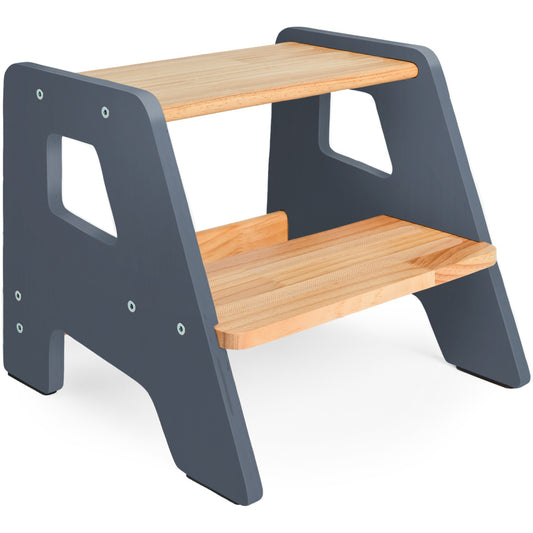
If you want to build a safer, more inclusive kitchen routine, take a look at Ocodile. Their child-focused furniture, including standing towers and step stools, is designed to help families create practical spaces where toddlers can participate safely alongside adults.