



Non Toxic Wood Finishes: A Parent's Guide for 2026
You're in a store or scrolling late at night, looking at a wooden crib, a toddler tower, or a set of stacking blocks. The photos look lovely. The product page says things like “natural,” “eco,” or “safe finish.” And then the parenting part of your brain kicks in: what happens if my child chews the rail, licks the edge, or spends every day touching this?
That question is smart.
Wood feels simple, but the finish on top of it is where many parents get stuck. Marketing language is often soft and reassuring. Real safety decisions are less fuzzy. They come down to what the finish is made of, how much it releases into the air while curing, and whether it can hold up to spills, teeth marks, sticky hands, and repeated cleaning.
A lot of families first start thinking about this during a nursery setup or a furniture refresh. If that's you, these pregnancy painting safety tips are a useful companion read because they explain the practical side of fumes, ventilation, and timing around home projects.
Choosing Safely in a World of Wooden Toys
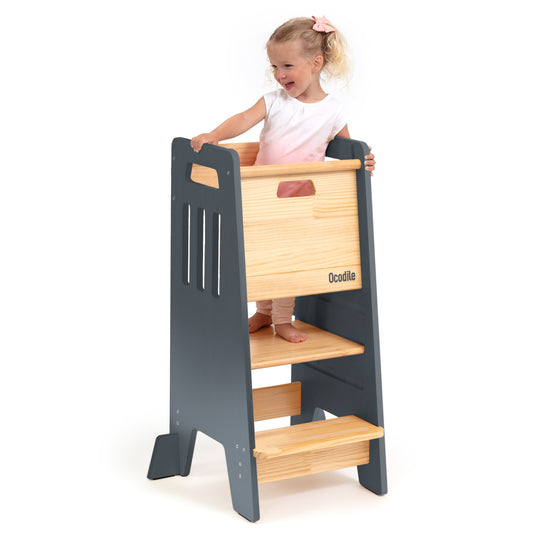
A parent buys a beautiful unfinished bookshelf for the playroom. Another chooses a wooden kitchen helper for a toddler who wants to “help” at the counter. Someone else inherits an older crib from family and starts wondering whether refinishing it makes it safer or riskier.
These are different situations, but they usually lead to the same confusion. One can says “non-toxic.” Another says “natural oil.” Another says “water-based.” A product listing promises a “child-friendly coating,” but doesn't explain what that means in real life.
Why parents feel stuck
Most parents aren't looking for a perfect chemistry lesson. They want a plain answer to a plain question: is this finish safe enough for my child's everyday world?
That world is messy and specific:
- Crib rails get chewed.
- Learning towers get splashed with water and food.
- Toy shelves get wiped down often.
- Wood blocks end up in mouths, even when they're not supposed to.
A finish that sounds healthy in marketing copy may still be a poor fit if it scratches easily, stays tacky, or needs constant reapplication. On the other hand, a durable finish may be a good choice once fully cured, even if the name sounds less “natural” than parents expect.
The safest choice isn't always the one with the greenest label. It's the one that matches how your child will actually use the item.
The question behind the question
When parents ask about non toxic wood finishes, they're often asking three separate things at once:
- What am I breathing in during and after application?
- What happens if my child touches or mouths the surface?
- Will this hold up without peeling, chipping, or wearing through quickly?
Those questions deserve clear answers. Safety isn't just about ingredients on day one. It's also about curing time, long-term wear, and whether the finish stays stable on real kids' furniture.
Decoding What Non Toxic Really Means
The term non-toxic sounds precise, but in product marketing it often isn't. That's why parents need to read past the front label and look for the details that matter.

What VOCs are in simple terms
VOCs are volatile organic compounds. The easiest way to think about them is this: they're the part of some finishes that evaporates into the air. If you've ever noticed that “new paint” or “new furniture” smell, that's the kind of thing people mean when they talk about off-gassing.
Some finishes release much more than others. Many standard polyurethane finishes can contain over 250 grams of VOCs per liter, while low-VOC and zero-VOC formulas can reduce that number to less than 50 g/L or even near zero, significantly improving indoor air quality according to the EPA's overview of VOCs and indoor air quality.
That's one reason families often prefer lower-emission options for nurseries, bedrooms, and play areas. If you're trying to understand how airborne irritants affect a home more broadly, these Precision Air Solutions IAQ services offer a helpful overview of indoor air quality concerns in plain language.
Why the label alone isn't enough
A can might say “eco-friendly” and still leave out the information you need most. Parents often get more clarity from the product data sheet than from the front of the package.
Look for signs that the company gives specifics, such as:
- VOC information: Is the product described as low-VOC or zero-VOC?
- Use instructions: Does it explain drying and curing clearly?
- Testing details: Does it mention toy safety, food contact, or emissions standards?
- Full finish type: Is it shellac, hardwax oil, water-based polyurethane, milk paint, or something else?
For a practical example of how parents evaluate safer home products, this guide to non-toxic children's furniture shows the kinds of questions worth asking beyond surface-level claims.
Food-safe and child-safe are not the same thing
Many shoppers often get tripped up.
A food-safe finish usually means the surface is considered appropriate for incidental food contact once fully cured. Think salad bowls, wooden utensils, or serving boards.
A child-safe finish is a different idea. Parents usually mean one of two things:
- the finish has been tested against standards relevant to children's products, or
- the finish is considered stable and low-risk for furniture a child will touch often and may occasionally mouth.
Those are related, but they aren't interchangeable. A finish can be suitable for one context and still not be the best fit for a teething rail, a painted toy, or a heavily used toddler stool.
Practical rule: If a brand only says “non-toxic” but gives no test standard, no curing guidance, and no finish type, treat that as incomplete information.
A Guide to Common Safe Wood Finishes
Parents usually don't need every possible wood finish. They need the short list that makes sense for family life. Below is a practical comparison of common options used when people want safer finishes for toys, furniture, and household wood items.
Quick comparison
| Finish Type | Safety Profile | Durability | Best For |
|---|---|---|---|
| Water-based polyurethane | Often chosen for lower odor and lower-emission options when fully cured | High | Toddler towers, kids' tables, shelves |
| Shellac | Commonly viewed as a simple finish that dries quickly and leaves a thin film | Moderate | Decorative items, lower-wear furniture |
| Pure tung oil | Plant-based penetrating oil, often preferred by people seeking a more natural finish once cured | Moderate | Wooden toys, smaller furniture, hand-touched pieces |
| Linseed oil | Traditional oil finish, best chosen carefully because formulas vary widely | Low to moderate | Low-wear wood items with regular maintenance |
| Hardwax oil blends | Combines oil penetration with a waxy protective layer | Moderate to high | Stools, benches, family furniture with touch-ups |
| Beeswax or carnauba wax | Simple surface treatment with a soft feel | Low | Baby blocks, display pieces, low-moisture use |
| Milk paint | Popular for color and a classic matte look, often paired with a topcoat for protection | Varies by topcoat | Painted toys, chairs, accent furniture |
Water-based polyurethane for busy family use
If you want one of the most practical options for children's furniture, water-based polyurethane is often the first finish parents should consider. It usually offers a stronger barrier against spills, repeated wiping, and abrasion than oils or waxes.
That matters on pieces like kitchen helpers, weaning tables, or step stools. These items don't just sit there. They get climbed on, splashed, dragged, and cleaned.
Its tradeoff is emotional, not functional. Some parents hear “polyurethane” and assume it can't fit into a safer home. In practice, what matters is choosing a lower-emission formula and allowing full cure before use.
Shellac and simple finishes
Shellac is a classic finish with a warm look. It dries quickly and can be easy to repair. It's a good option when you want a lighter-duty finish and don't expect constant wet messes.
It's less ideal for furniture that sees frequent water exposure or hard impact. A child's bedside shelf? Fine. A toddler tower beside the sink? Usually not the first pick.
Beeswax and carnauba wax feel appealing because they're straightforward and familiar. They can work well on items with light wear, especially where a parent wants a very simple finish system. The downside is durability. Wax can wear off, mark easily, and need refreshing.
For surfaces that get water, snack residue, and constant scrubbing, softness can become its own safety issue. A worn finish exposes wood unevenly and can become harder to keep clean.
Oil finishes and what parents should know
Pure tung oil is popular with families who want a penetrating oil rather than a film-building topcoat. It can bring out the wood grain nicely and, once cured, leave a more natural-feeling surface than thicker coatings.
That said, “natural-feeling” doesn't mean maintenance-free. Oils usually need patience and often more upkeep than a tougher topcoat.
Linseed oil deserves extra caution at the shopping stage. The category is broad, and formulas vary. Some products are simple and traditional. Others include additives that change how they behave. If a parent is considering linseed oil, the label details matter a lot.
Hardwax oil blends sit in the middle. They aim to combine the warmth of oil with more surface protection. Many parents like them for furniture that should feel less plasticky than a full film finish, but still hold up better than straight oil or wax.
If you're comparing surface options for larger household wood projects too, this roundup of eco-friendly hardwood floor finish options can help you understand how finish categories behave under heavier wear.
Painted finishes for kids' spaces
Milk paint is a good example of a finish system rather than a one-step answer. It gives color and a soft, classic look, but the final performance depends on whether it's sealed and with what.
For painted toy chests, chairs, or shelving, parents should think beyond the paint itself. Ask what topcoat goes over it, how it cures, and whether it's appropriate for a child's room.
Matching the finish to the object
A simple way to choose among non toxic wood finishes is to ask what the object has to survive.
- For heavy use: Water-based polyurethane or a durable hardwax oil
- For light use and easy repairs: Shellac
- For a natural feel on small items: Pure tung oil
- For occasional touch-ups and a soft finish: Wax
- For colorful furniture: Milk paint plus a suitable topcoat
The best finish for baby blocks is not always the best finish for a kitchen helper. That isn't inconsistency. It's good product matching.
How to Read Labels and Understand Certifications
The front label gets attention. The fine print is where parents get answers.
Start with the product data sheet
If a finish matters enough to go on a child's furniture, it matters enough to read the technical page. You don't need to understand every chemistry term. You only need to spot the pieces that affect your home.
Check for:
- VOC wording: “Zero-VOC” and “low-VOC” are not identical claims.
- Recommended use: Some finishes are meant for cabinets, some for floors, some for decorative craft work.
- Dry time versus cure time: These are rarely the same.
- Cleanup and solvent language: This helps you understand how the product behaves during application.
If a company hides the details or only gives soft lifestyle language, that's a warning sign.
What certifications can tell you
Third-party certifications don't mean a product is magical. They do mean someone outside the brand has evaluated a specific claim.
Parents often come across these names:
- GreenGuard Gold: Commonly used for low chemical emissions in indoor spaces.
- EN 71-3: A European toy safety standard often referenced for migration of certain elements in toy materials and coatings.
- FDA 21 CFR 175.300: Often mentioned for resinous coatings associated with food-contact contexts.
Each one answers a different question. One focuses on emissions. Another is relevant to toy-related safety testing. Another is tied to food-contact surfaces. None should be treated as a blanket replacement for reading the actual finish information.
For a parent-friendly explanation of why low-emission certifications matter in family spaces, this overview of GreenGuard Gold certified products is a helpful reference.
A better way to judge a label
Instead of asking, “Does this sound safe?” ask:
- What exact finish is this?
- What claim is being made?
- Who verified it, if anyone?
- What does the brand say about curing before use?
The strongest labels are boring. They give specifics, not mood words.
That's good news for parents. You don't have to fall for packaging language. You can look for concrete signs that a finish was chosen thoughtfully.
Why Curing Time Is the Most Important Safety Step
A finish can feel dry and still not be ready for a child's room.

That single misunderstanding causes a lot of trouble. Parents touch a dresser drawer, feel that it isn't wet, and assume it's safe to move into the nursery. But dry and cured are different stages.
Dry is surface-level, cured is complete
Drying usually means the surface no longer feels wet because some of the liquid portion has evaporated. Curing means the finish has completed the deeper chemical change that makes it hard, stable, and ready for real use.
That matters because the period after application is often when a finish is still settling, hardening, and releasing odor. If a toddler mouths a rail too early, the issue may not be the finish category itself. It may be that the finish wasn't fully cured yet.
Why parents should care more about cure than brand language
A beautifully labeled “eco” finish can still be the wrong choice if it's rushed into use. A more durable finish with careful cure time can be the safer real-world outcome.
This is especially important for:
- Crib rails: direct mouth contact is likely
- Learning towers: hands grip the same edges daily
- Tables and stools: kids touch, spill on, and rub these surfaces constantly
- Toy storage: younger children may mouth corners and rims
Simple ways to judge readiness
Parents don't need a lab. They need patience and a few common-sense checks.
- Smell test: If the piece still has a strong finish smell, it likely needs more time.
- Fingernail test: Press lightly in an inconspicuous area. If it dents, drags, or feels soft, it isn't ready.
- Feel test: A fully cured surface usually feels stable, not tacky or rubbery.
- Manufacturer instructions: Always use the cure guidance from the product, not just the “dry in a few hours” note.
Parent shortcut: If you're debating whether it's cured, wait longer.
Different finishes cure at different speeds
Waxes are often ready sooner, but they're less protective. Oils can take much longer to fully stabilize. Film finishes like water-based polyurethane may dry relatively fast on the surface but still need additional time before they should face heavy kid use.
That's why curing is the most important safety step. It turns a finish from “recently applied” into “ready for family life.”
Practical Finishing Advice for Kids Furniture
Choosing among non toxic wood finishes gets easier when you stop thinking in product categories alone and start with the furniture itself.

For crib rails, baby toys, and mouth-level surfaces
If the item is likely to be chewed, licked, or handled very closely, simplicity matters. Parents often prefer finishes with a straightforward ingredient story or coatings specifically intended for children's products, provided they are fully cured and clearly documented.
Good fits often include:
- Simple wax finishes for low-wear items
- Carefully chosen oil finishes where a natural feel is preferred
- Toy-appropriate painted systems with clear safety information
The tradeoff is durability. A softer finish may feel reassuring, but it may also wear faster. That means more maintenance and more frequent checking for rough spots, dryness, or uneven wear.
For toddler towers, tables, and step stools
These pieces need to survive real abuse. Water drips from washed hands. Yogurt smears into corners. Shoes scrape rungs. A finish that can't tolerate cleaning won't stay looking or feeling good for long.
For that reason, many families do best with a durable, fully cured water-based polyurethane or a hardwax oil chosen specifically for furniture use. These options usually create a better balance between day-to-day practicality and a lower-fume experience than older heavy-solvent finishes.
A natural wood bed for a young child is a good example of an item that benefits from this balance. This guide to a natural wood toddler bed shows why families often care about both the surface feel and the finish's long-term behavior in a sleep space.
Maintenance matters more than parents expect
The finish you choose is only part of the safety story. The condition of the finish matters too.
Check children's furniture regularly for:
- Worn edges: especially where hands grip or mouths reach
- Chips or flakes: more relevant on painted surfaces
- Raised grain or rough spots: often caused by moisture or wear
- Sticky patches: a sign the finish may not have cured well or is breaking down
A short visual check during cleaning goes a long way.
Here's a visual walkthrough that helps make the decision process feel less abstract:
The best answer is usually a balanced one
Parents sometimes feel pushed to pick between “most natural” and “most durable.” For children's furniture, the smarter goal is usually appropriate durability with clear safety information and full cure time.
That means the best finish for a toy chest may not be the best one for a teether-style wooden toy. The right answer changes with contact level, cleaning needs, and wear.
Your Final Checklist for a Safe Wood Finish
When you're comparing finishes or shopping for wooden kids' furniture, keep the decision simple.
Use this four-part check
-
Start with the object
Ask how your child will use it. Will they mouth it, climb it, spill on it, or just touch it occasionally? High-contact items need a different finish strategy than decorative pieces.
-
Choose for real life
Soft waxes and oils can make sense for some items. Tougher topcoats often make more sense for towers, stools, and tables that get cleaned often and handled hard.
-
Read beyond the front label
Look for the actual finish type, any certification language, and clear instructions. Marketing words like “natural” and “eco” don't tell you enough by themselves.
-
Respect curing time
This is the step parents are most tempted to rush. Don't. A finish that's still soft, smelly, or tacky isn't ready for a child's space.
You don't need to memorize every wood finish on the market. You only need to ask better questions than the label answers.
That's what confident parents do. They match the finish to the furniture, check for specifics, and wait until the piece is fully ready. Once you know how to judge non toxic wood finishes this way, the shopping process gets much less overwhelming.
If you're looking for thoughtfully designed children's furniture built for everyday family life, Ocodile offers practical pieces that support independence, safe exploration, and a warm home environment.