



Choosing the Best Organic Cotton Play Mat for Your Baby
When you bring your baby home, their whole world is the floor. It’s their playground, their classroom, their comfort zone. The surface they roll on, explore, and eventually crawl across is the stage for all their first big discoveries.
This is why choosing the right play mat matters so much.
Why an Organic Cotton Play Mat is a Safe Foundation
An organic cotton play mat is designed with this huge responsibility in mind. It's so much more than just a soft spot. Unlike synthetic mats made from PVC or EVA foam, which can release not-so-great chemicals like VOCs and contain additives like phthalates, organic cotton is just… pure, natural, and simple.
It’s a clean slate for your little one's adventures.
A Stage for Developmental Milestones
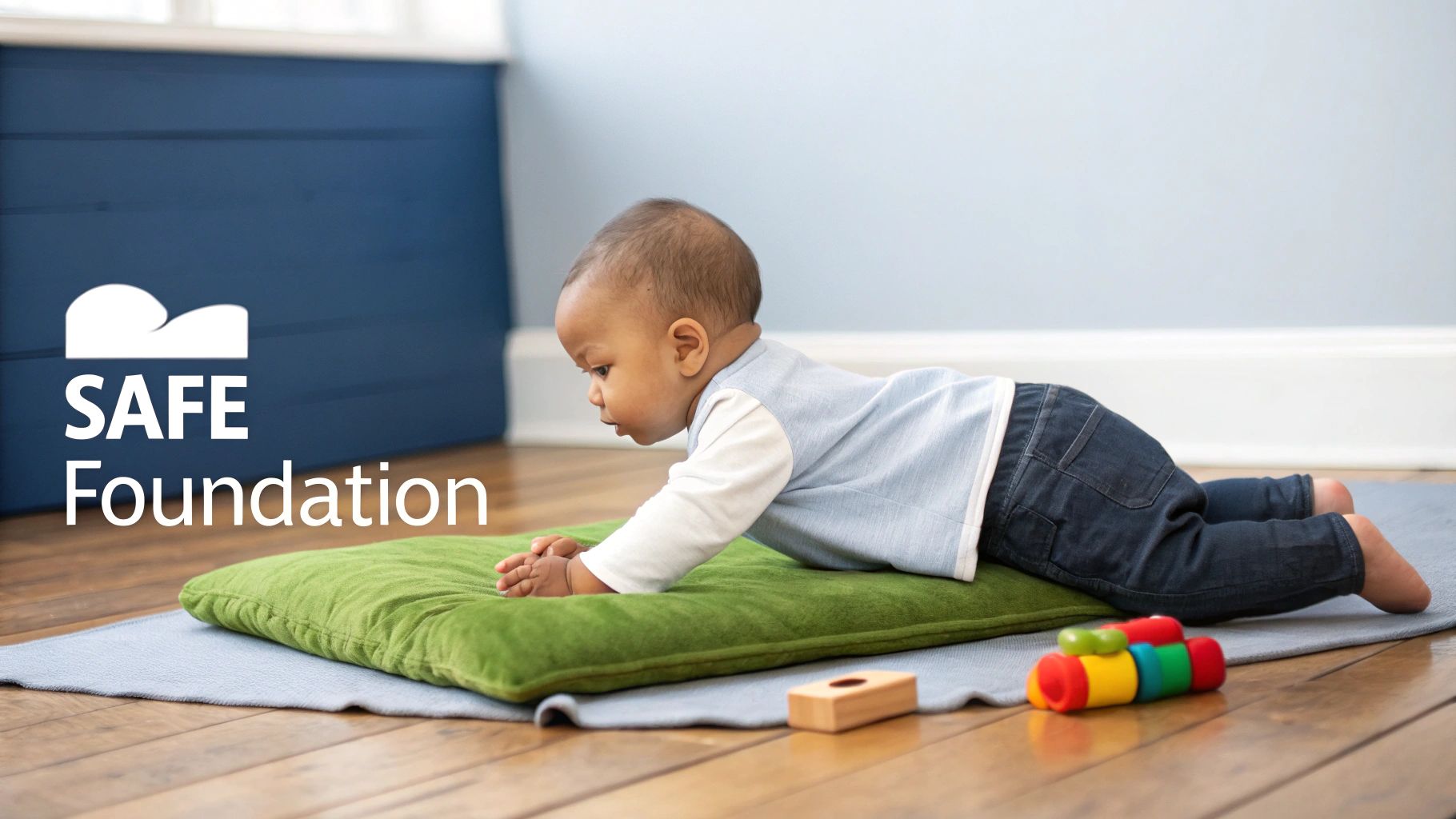
Think of a quality play mat as the main tool for your baby’s first "job," which is simply to grow and explore. It helps them hit those critical physical and sensory milestones in a few key ways:
- Tummy Time Support: The gentle-but-firm padding of an organic cotton mat gives babies the stability they need to start lifting their heads, strengthening all those important neck, shoulder, and back muscles.
- Sensory Exploration: The natural texture of cotton is soft and inviting for sensitive skin. It encourages them to touch and feel without the cold, slick feel of plastic.
- Freedom of Movement: It provides a safe cushion for all that rolling, scooting, and the first wobbly attempts at sitting up, protecting them from hard floors.
A thoughtfully chosen play mat does more than just cushion falls; it creates an intentional space that supports a child's natural curiosity and physical growth from day one.
Aligning with a Natural Philosophy
Choosing an organic cotton play mat also fits perfectly with parenting philosophies like Montessori, which favor calm, natural environments for children. These approaches lean into materials that are simple, beautiful, and connect a child to the natural world.
A mat with a minimalist design and soft, earthy tones creates a peaceful zone for focused play. It’s a welcome break from the overstimulation of bright, busy patterns common in so many baby products.
Of course, keeping this safe space clean is just as important. To maintain your mat's integrity, you might even consider professional organic carpet cleaning services that share your eco-conscious values. When you pick a mat made from pure, earth-friendly materials, you're not just buying another baby item—you're investing in a safe, healthy, and serene foundation for your child to thrive on.
Understanding Safety Certifications for Play Mats
Stepping into the world of baby products can feel like learning a new language. There's an alphabet soup of acronyms and official-looking seals on every tag, and it’s tough to know what really matters. But when you’re choosing an organic cotton play mat, these certifications are your best friend. They’re independent auditors that cut through the marketing fluff to verify that a product is genuinely safe and non-toxic.
Think of it like shopping at the grocery store. A "natural" label is nice, but the "USDA Organic" seal tells you it's met a clear, verifiable standard. Certifications for textiles—especially for something your baby will be rolling and napping on—serve the exact same purpose.
This is a big deal. Many conventional textiles are treated with chemicals you definitely don't want near your little one, like formaldehyde, heavy metals in dyes, or toxic flame retardants. A legitimate certification is the simplest way to confirm a mat is free from that whole list of worries.
The Gold Standard: GOTS Certification
If you see only one certification on a play mat, make it the Global Organic Textile Standard (GOTS). This is hands-down the highest standard for organic fibers in the world, and its guarantee goes way beyond just the raw cotton.
GOTS offers a true "farm-to-nursery" promise. It doesn't just check the finished product; it audits the entire journey. This means:
- Farming Practices: The cotton must be grown without GMOs, synthetic pesticides, or nasty fertilizers.
- Processing and Manufacturing: Harmful chemicals like chlorine bleach, toxic heavy metals, and formaldehyde are banned during production.
- Social Responsibility: The standard demands fair labor practices, safe working conditions, and absolutely no child labor.
- Environmental Impact: It mandates wastewater treatment and other eco-friendly production methods.
When a play mat is GOTS certified, you can trust that every single thread, dye, and manufacturing step has met the strictest criteria out there. It’s a holistic seal of approval that guarantees both purity and ethical production.
A GOTS label isn't just a sticker. It's proof that the product you're bringing home is safe for your baby, kind to the planet, and fair to the people who made it.
Other Important Labels to Know
While GOTS is the top dog for anything organic, you might see other labels that also signal a commitment to safety. Knowing what they mean helps you get the full picture.
OEKO-TEX Standard 100
This is another globally recognized certification you'll see often. Unlike GOTS, OEKO-TEX isn't about whether the fibers are organic. Instead, its one job is to test the finished product for a long list of harmful substances. If a product has the STANDARD 100 by OEKO-TEX label, it means every single component—from the thread to the zipper—has been tested and found free from chemicals known to harm human health. It’s an excellent safety check.
GREENGUARD Gold
This certification tackles safety from a different, but equally important, angle: indoor air quality. GREENGUARD Gold tests products for chemical emissions, specifically volatile organic compounds (VOCs), which can off-gas into the air. Products with this seal are certified to have very low VOC emissions, ensuring they don’t pollute the air your baby is breathing. For a deeper dive, check out our full guide on what it means to be GREENGUARD Gold certified.
By looking for products with these trusted certifications, you can confidently create a clean, safe, and truly non-toxic space for your little one to play.
Comparing Play Mat Materials for Conscious Parents
Choosing the right play mat can feel like a huge decision, and honestly, it is. This is the surface where your baby will spend countless hours exploring, learning, and growing. The material you pick has a direct impact on their safety, comfort, and even their sensory experience. While an organic cotton play mat is a clear winner for us, understanding how it stacks up against other common options is the key to feeling totally confident in your choice.
Let's break down the most popular materials side-by-side. Think of it like comparing different foundations for a house—some are built with natural, breathable materials designed to last, while others might look okay on the surface but hide potential problems down the line.
This simple chart highlights the key differences between two of the most trusted certifications: GOTS for organic integrity and OEKO-TEX for substance safety.
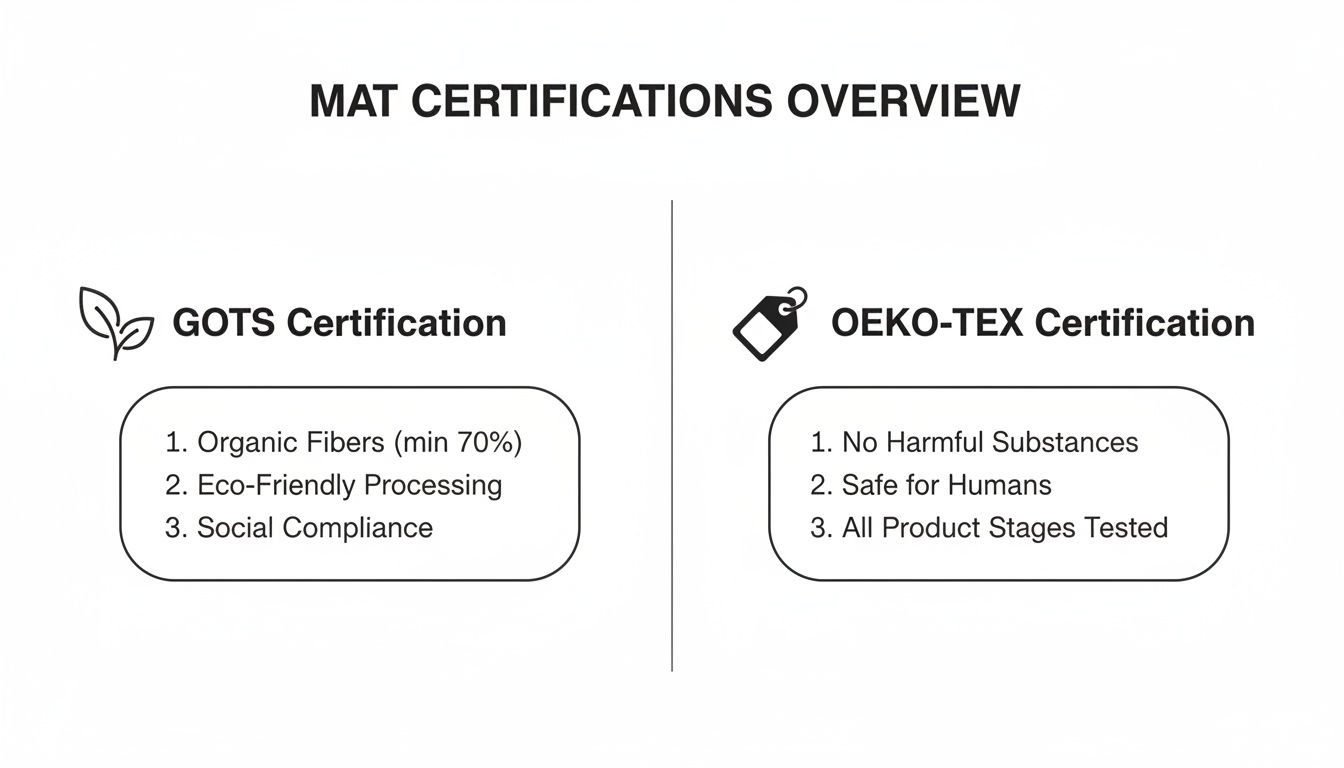
As you can see, GOTS provides a full farm-to-final-product guarantee of organic and ethical practices, while OEKO-TEX focuses specifically on making sure the finished item is free from a long list of harmful chemicals.
The Organic Cotton Advantage
There's a reason organic cotton is the gold standard. It gives your baby a soft, non-toxic, and breathable surface that’s perfect for their sensitive skin. The natural fibers allow air to flow freely, which helps regulate their temperature and keeps them from getting sweaty and uncomfortable during long tummy time sessions. Unlike synthetic materials that can trap heat and feel sticky, cotton feels gentle and inviting.
From a sensory standpoint, the natural texture of organic cotton is a playground for tiny hands. This is so important for early development, as babies learn so much about their world through touch. The fabric’s gentle grip also gives just the right amount of stability for little ones learning to push up, roll over, and crawl.
Foam Mats: The Popular Alternative
Foam mats, usually made from EVA (ethylene-vinyl acetate) or PVC (polyvinyl chloride), are absolutely everywhere. People love them because they’re easy to wipe clean and offer thick cushioning. But that convenience can come with hidden costs to your child’s health and the environment.
PVC is widely known as one of the most toxic plastics, often containing phthalates, lead, and other nasty additives that can release fumes into your home’s air. While EVA foam is considered a safer alternative to PVC, it’s still a synthetic, petroleum-based product. It just doesn’t have the breathability or natural feel of cotton. You can get a much deeper look in our guide on the safety of foam play mats.
The core difference really comes down to where the material comes from. Organic cotton is grown from the earth and is minimally processed. Foam is a synthetic creation that can introduce a whole host of unnecessary chemicals into your baby’s immediate environment.
What About Conventional Cotton and Wool?
So, what about other natural fibers? Conventional cotton and wool are also out there, but they come with their own set of things to consider.
-
Conventional Cotton: It shares the same great breathability as its organic cousin, but conventional cotton is one of the most pesticide-heavy crops in the world. Those harsh chemicals can leave residues in the final product—a big concern for a surface your baby will have direct skin contact with for hours a day.
-
Wool: Wool is wonderfully natural, breathable, and even has some flame-resistant qualities. The downsides? It can be much harder to clean, may trigger allergies in some babies, and often comes with a much higher price tag.
A Clear Comparison for Your Family
To make this decision as straightforward as possible, let's put these materials head-to-head on the factors that matter most to parents.
Play Mat Material Comparison
Here's a quick side-by-side look to help you see the pros and cons of each material at a glance.
| Feature | Organic Cotton | EVA/PVC Foam | Conventional Cotton |
|---|---|---|---|
| Safety | Excellent (non-toxic, hypoallergenic, chemical-free) | Poor to Fair (potential for VOCs, phthalates, lead) | Fair (risk of pesticide and chemical residues) |
| Breathability | Excellent (natural airflow prevents overheating) | Poor (traps heat and moisture) | Excellent (similar to organic cotton) |
| Durability | Good (machine washable, holds up well) | Good (can puncture but is resilient) | Good (similar durability to organic) |
| Cleaning | Easy (machine washable for deep cleans) | Easy (wipes clean for surface spills) | Easy (machine washable) |
| Eco-Impact | Excellent (sustainable farming, biodegradable) | Poor (petroleum-based, not biodegradable) | Poor (high pesticide and water usage) |
When it comes down to it, choosing an organic cotton play mat means you're prioritizing a pure, safe, and nurturing environment for your little one. It's an investment in a product that truly supports your baby’s healthy development without asking you to compromise on your family’s values or the planet’s well-being.
How to Choose the Right Size, Thickness, and Design
Picking out the perfect organic cotton play mat is about so much more than just finding a pattern you like. Think of it as the foundation for your child's little world—a dedicated space for discovery. Getting the size, thickness, and design right is key to creating a spot that’s not just safe and functional, but a genuinely calming and beautiful part of your home.
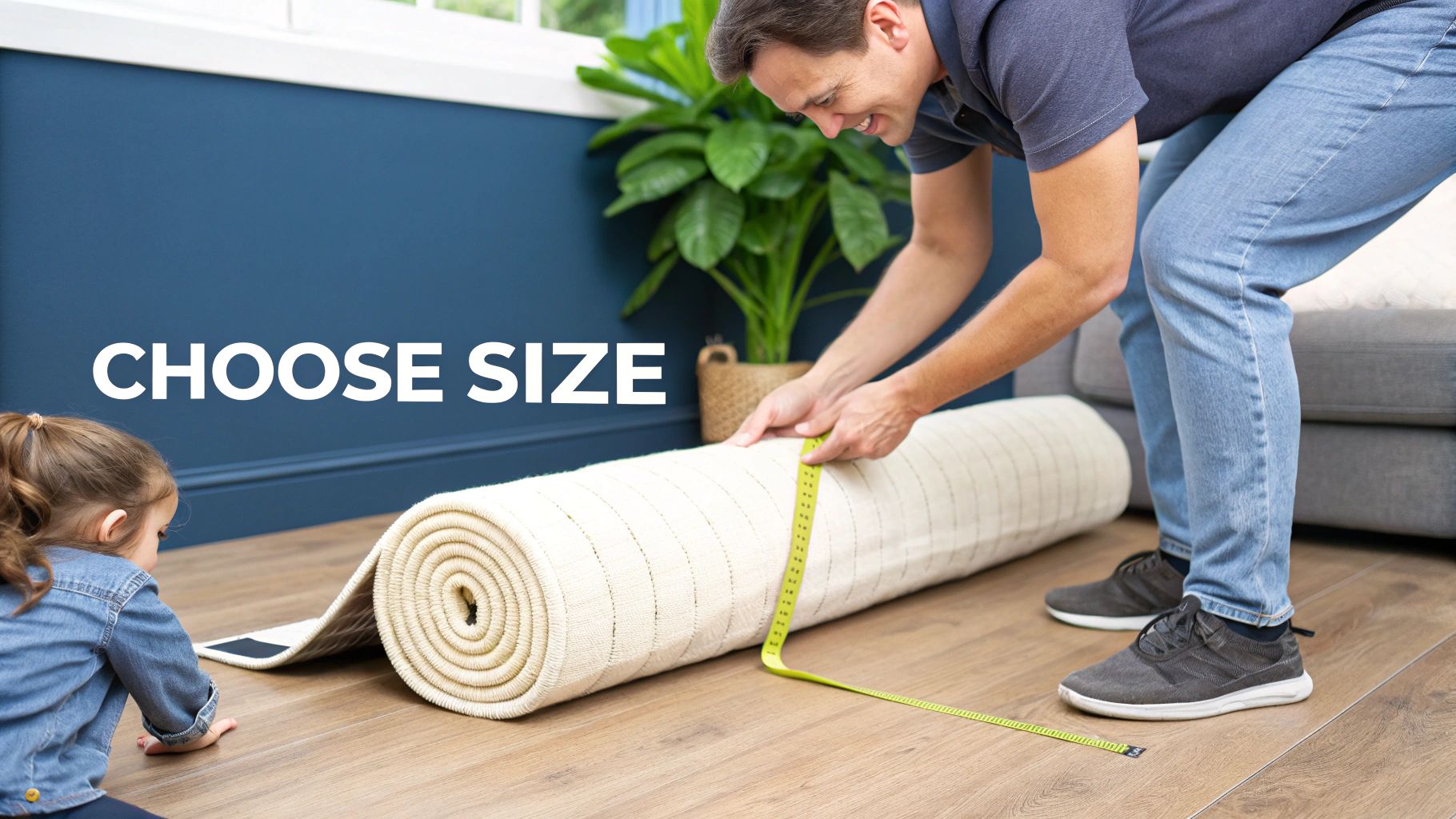
Let's walk through how to make each decision, so the whole process feels simple and intentional.
Mapping Out Your Space
Before you get attached to a particular mat, it's time to grab a tape measure. First things first: you need to understand the actual footprint of your play area. A mat that’s too small will feel limiting, but one that’s too big can completely take over a room.
Here’s a simple way to figure it out:
- Stake Your Claim: Pinpoint exactly where the main play zone will be. Is it a cozy corner in the nursery? A central spot in the living room?
- Mind the Furniture: Measure the open floor space, making sure to account for things like cribs, sofas, or bookshelves. A great trick is to use painter's tape to outline the mat's dimensions on the floor. This gives you a real feel for how it will fit.
- Think Ahead: A smaller mat (around 40x40 inches) is perfect for creating an intimate spot for an infant. But if you’re planning for a toddler, siblings, or playdates, a roomier mat (50x70 inches or more) can anchor the entire play area.
The goal here is to create a clear "yes" space, a defined area where your child knows they have the freedom to move, explore, and play safely.
Finding the Sweet Spot for Thickness
Thickness is a delicate balance. On one hand, you want enough cushion to soften the inevitable tumbles that come with learning to roll, sit, and crawl. On the other hand, a mat that’s too squishy can actually get in the way of motor skill development.
This is where Montessori principles really shine. The philosophy favors surfaces that provide stability. An overly plush or memory-foam-like surface makes it tough for a baby to get the firm feedback they need to push up during tummy time or find their footing when learning to stand.
A well-designed organic cotton play mat hits that "just right" density. It should be firm enough to support active movement while being soft enough to cushion landings—a surface that’s both safe and developmentally supportive.
Look for a mat with a dense, natural filling. This gives your child a secure foundation to build strength and coordination, turning their play space into an effective tool for growth.
Choosing a Design That Nurtures Calm
In a world full of bright, loud, and frankly, over-the-top baby products, the design of a play mat can have a bigger impact on a child's focus than you might think. While flashy colors and busy patterns seem engaging, they can often lead to overstimulation.
A thoughtfully designed organic cotton play mat usually embraces a calmer approach:
- Minimalist Patterns: Simple, clean designs that don’t distract from what the space is really for—play and exploration.
- Nature-Inspired Colors: Think soft, earthy tones like muted greens, gentle blues, and warm neutrals. These colors help create a serene and peaceful environment.
- Reversible Options: Many modern mats, like those from Ocodile, are dual-sided. This gives you the flexibility to switch between a subtle pattern and a solid color to refresh the space or better match your decor.
This isn't just about aesthetics. This intentional approach helps create a calm atmosphere that encourages longer, more focused periods of independent play. By choosing a mat that complements your home instead of clashing with it, you’re building a beautiful, harmonious environment where everyone can feel at ease.
How to Care for Your Organic Cotton Play Mat
An organic cotton play mat is a wonderful, safe space for your little one's first big adventures. The great news is that keeping it fresh, soft, and clean through all the tummy time, tumbles, and spit-up is much easier than you might think.
Unlike synthetic mats where you're stuck just wiping the surface, the real beauty of a high-quality organic cotton play mat is that you can actually wash it. For parents, this is a total game-changer. Spit-up, drool, and the occasional diaper leak are just part of the baby territory, and being able to give the mat a proper clean means you can be confident it's free from lingering germs.
Washing Your Play Mat
Proper washing is key to making your mat last. The first step is always to check the manufacturer's care label, but most organic cotton mats have similar needs.
Start with a gentle, plant-based detergent. Harsh chemical cleaners can leave behind residues that might irritate your baby's sensitive skin, and they can also wear down the mat's natural fibers over time.
Next, it's all about the machine settings. The magic word here is gentle.
- Water Temperature: Stick to cold water, always. Hot water can make the natural cotton fibers shrink up and can cause any beautiful colors to fade.
- Cycle Setting: Choose a delicate or gentle cycle. This minimizes any pulling or stress on the fabric and stitching, keeping your mat in great shape.
- Load Size: It's best to wash the mat by itself or with just a few other similar items. Overcrowding the machine means it won't get as clean or rinse as well.
Handling Spills and Stains
For those little messes that don't quite need a full wash, spot-treating is your best friend. The quicker you can get to a spill, the less chance it has to set in and become a permanent stain.
Mix up a simple, natural cleaning solution with a little bit of your gentle detergent and some cold water. Dab it onto the stain with a clean cloth—and I mean dab, not rub! Rubbing can actually push the stain deeper into the fibers. For more general upkeep, a good resource like this DIY guide to cleaning area rugs at home offers some really practical tips that work for these mats, too.
Pro-Tip: Dealing with tougher organic stains like milk or food? Try making a paste from baking soda and water. Apply it to the spot, let it sit for 15-20 minutes, then gently wipe it away before you toss it in the wash.
Drying for Lasting Softness
How you dry the mat is just as important as how you wash it. Your goal is to keep that plush, soft feel and make sure it holds its shape.
Air-drying is the absolute best and gentlest method. Lay the mat flat on a clean surface or hang it over a drying rack. Just try to keep it out of direct, harsh sunlight, which can fade the colors. It helps to flip it over every so often so it dries nice and evenly.
If you're in a pinch and need to use a machine, be sure to select the lowest heat setting or a tumble-dry low cycle. High heat is the number one enemy of soft cotton—it causes shrinkage and can make the mat feel rough. A little trick is to toss in a few wool dryer balls; they'll help fluff up the fibers and can even speed up the drying time a bit. A little care goes a long way in making sure your mat stays a cozy haven for years to come.
Creating the Ideal Foundation for Childhood Play
When you’re putting together your child's first play area, it’s about so much more than just filling a room. You’re creating a safe, intentional, and beautiful space where they can really thrive. An organic cotton play mat is the literal foundation for this world, tying together safety, design, and durability in one thoughtful piece. It becomes the cornerstone for your child's development, one little milestone at a time.
Think of the play mat as the anchor in a Montessori-inspired room. It carves out a calm, dedicated zone for exploration and gives other developmental furniture a secure base. A floor bed instantly feels cozier, and a standing tower has a soft, stable surface beneath it. Everything in the room just works together.
More Than Just a Soft Surface
A high-quality play mat does more than just cushion the occasional tumble. It actively supports your child’s natural curiosity and physical growth.
The non-toxic materials mean you have a pure environment for their sensitive skin. The thoughtful thickness gives them the perfect balance of comfort and stability as they learn to roll and crawl. And the durable construction promises years of joyful, independent learning.
This is the kind of design that turns a simple mat into an essential developmental tool. For example, the firm-yet-gentle surface is perfect for the crucial work of tummy time, giving little ones the support they need to build strength. If you're looking for new ways to make this time engaging, check out our guide on fun and effective tummy time activities.
By selecting the right foundational piece, you set the stage for a calm, focused, and inviting play space. This simple choice reinforces a child’s ability to engage in deep, uninterrupted play, which is the very heart of early learning.
A Growing Shift in a Big Industry
Parents are catching on, and it’s creating a major shift in the baby products market. As awareness about early childhood development grows, the global baby play mat industry is expanding—fast.
Projections show the market growing from USD 1,458.91 million in 2026 to USD 3,025.1 million by 2035. What’s driving this? A huge demand for safe, developmentally appropriate play spaces. Organic cotton is leading the charge, with parents actively choosing breathable, non-toxic fabrics over materials like PVC. You can discover more insights about this growing market for baby play mats.
Ultimately, investing in a premium organic cotton play mat is an investment in your child's well-being and your own peace of mind. Companies like Ocodile are built on this philosophy, creating products that are safe, functional, and stylish. By choosing a mat that is pure, beautiful, and built to last, you’re creating the perfect foundation for a childhood filled with wonder, discovery, and joyful play.
Frequently Asked Questions About Organic Cotton Play Mats
Stepping into the world of baby gear can feel like navigating a maze. We get it. Here are some clear, straightforward answers to the questions we hear most often about organic cotton play mats, so you can feel completely confident in your choice.
Are Organic Cotton Mats Firm Enough for Tummy Time?
Absolutely. A high-quality organic cotton play mat is designed with a dense, natural filling for a reason. It creates a surface that’s soft enough to cushion the inevitable tumbles but firm enough to give babies the stable support they need to push up, roll over, and build those crucial core muscles.
Unlike some overly squishy foam mats that can actually make it harder for little ones to move, a well-made organic cotton mat offers a safe and effective foundation for every developmental stage—from the earliest days of tummy time to their first wobbly steps.
What Is the Difference Between Organic and 100 Percent Cotton?
This is a really important distinction, and it's one we get asked about a lot. When you see a label that says "100% cotton," it's only telling you about the fiber itself. That cotton was likely grown using synthetic pesticides and processed with harsh chemicals like formaldehyde or chlorine bleach, which can leave residues in the final product.
On the other hand, an "organic cotton" play mat, especially one with a GOTS certification, meets a much higher standard. This seal of approval guarantees the cotton was grown without toxic pesticides and processed without any of those harmful chemicals, making it a fundamentally safer and healthier choice for your baby's delicate skin.
Can I Use an Organic Cotton Play Mat on Hardwood Floors?
Yes, they're a fantastic solution for hardwood, tile, or laminate floors. Most are designed with plenty of padding to create a comfortable, insulated play area that protects your little one from that cold, hard surface. It instantly makes any room a baby-friendly zone.
Many modern organic cotton play mats also have thoughtful features to keep them from sliding around. Look for things like a non-slip backing or a textured weave, which help make sure the mat stays put, even when your child starts crawling and exploring.
At Ocodile, we believe a play mat is the foundation for childhood exploration. That’s why we create products that are safe, functional, and thoughtfully designed. Explore our collection to find the ideal play mat that supports your child's development and fits right into your home. Visit https://ocodile.com to see more.