



Choosing Toddler Outdoor Furniture That Lasts
When you think of toddler outdoor furniture, don't just picture a shrunken-down patio set. It's so much more than that. This is a dedicated space, built specifically to support your little one's development, safety, and budding independence in the great outdoors. These pieces are ergonomically scaled for small bodies, which is key to encouraging confident play and a real connection with the natural world.
Why Your Toddler Needs a Space of Their Own Outside
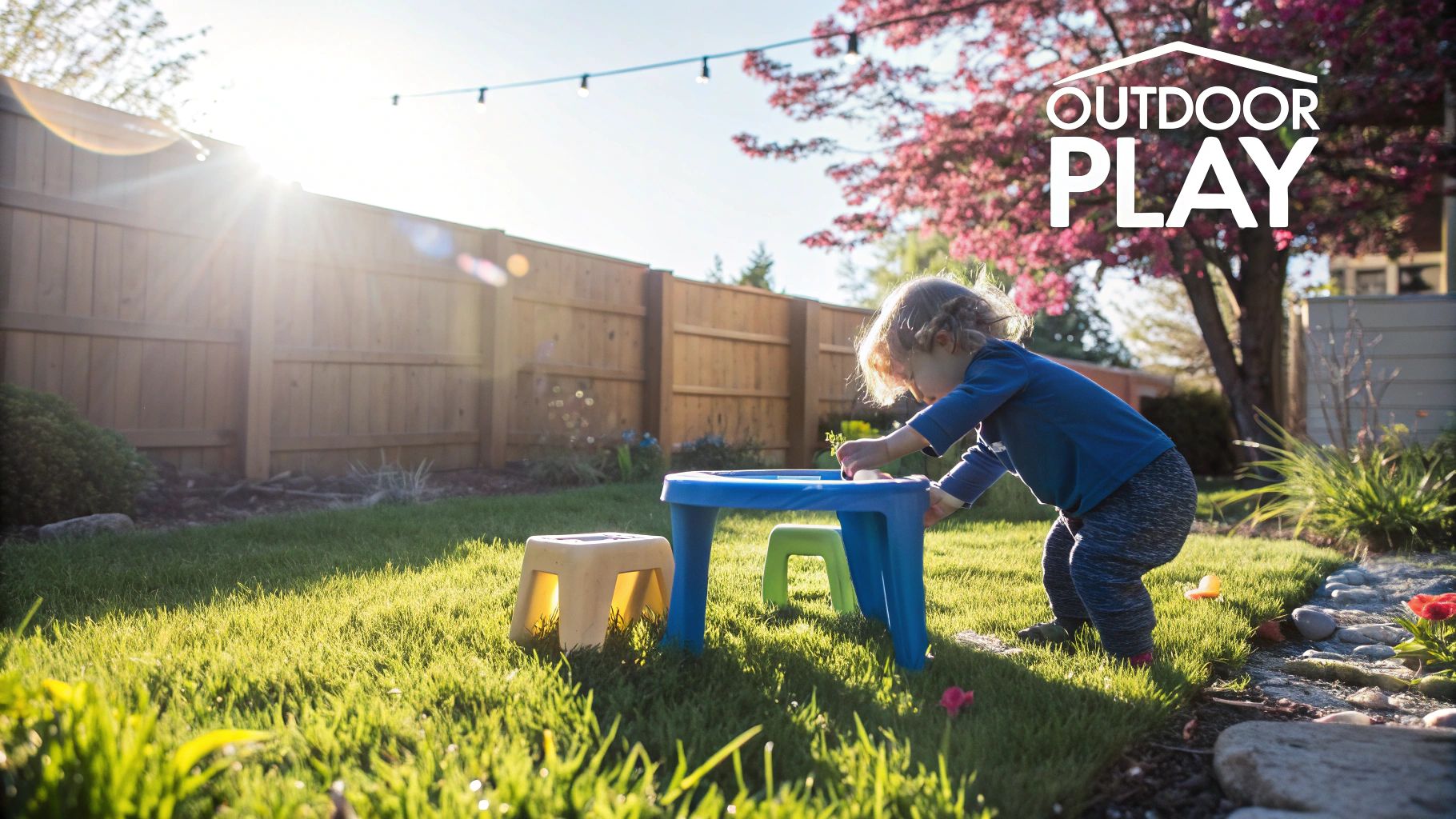
Ever tried to eat dinner at a giant’s table, with your feet dangling miles from the floor? It’s awkward, uncomfortable, and definitely not inviting. That’s pretty much how toddlers feel trying to use our adult-sized outdoor furniture. Giving them their own set isn't just a cute touch for the backyard—it’s a powerful tool for their growth.
When a child has a table and chairs built just for them, it sends a powerful message: "This space is yours." That feeling of ownership is crucial for building confidence and encouraging them to do things on their own. Instead of struggling to climb onto a big bench, they can easily sit down and stand up, mastering basic motor skills in a safe, frustration-free way.
Fostering Independence and Imagination
Their own little furniture set quickly becomes a home base for all backyard adventures. It’s the central hub for everything from enjoying a snack and making a mess with art projects to having a quiet moment with a picture book. This personal zone empowers them to make choices and lead their own play, which is a cornerstone of healthy development.
This simple setup has a way of turning your yard into a natural extension of their playroom. A little picnic table can become anything they imagine:
- A bustling bistro for serving up the finest mud pies and leaf salads.
- A scientist's lab for closely examining interesting rocks, bugs, and flowers.
- An artist's studio for painting, drawing, and crafting with sticks and petals.
By providing the right tools—in this case, kid-sized furniture—you’re setting the stage for hours of creative, unstructured play. That freedom is exactly what they need to build problem-solving skills and a rich imagination.
A Growing Trend in Child Development
More and more parents are catching on to the huge value of outdoor play, and you can see it in the market. The global demand for kids' outdoor furniture is on the rise as families prioritize creating engaging and beneficial spaces outside. In 2024, the market size hit about USD 1.5 billion globally. It’s projected to climb all the way to USD 2.5 billion by 2033, which really shows how much parents value products that support healthy development. You can even read the full research about kids' outdoor furniture market trends.
Giving a child their own furniture is like giving them their own little world. It's a place where they are in charge, where things are their size, and where they can safely explore the boundaries of their growing independence.
Ultimately, investing in toddler outdoor furniture is an investment in your child’s well-being. It encourages them to spend more time in nature, builds their physical confidence, and creates the perfect backdrop for making those cherished family memories under an open sky. It’s all about making the great outdoors feel just like home.
A Parent's Guide to Safe Materials
When you're picking out outdoor furniture for your toddler, what it's made of goes way beyond looks—it's a massive safety decision. Think about it: your little one will be touching, leaning on, and probably even trying to taste their new table and chairs.
It’s just like choosing a car seat. You don’t just grab one because you like the color, right? You dig into the safety ratings, check for solid construction, and make sure the fabrics are non-toxic. That same careful eye is needed here. Every piece of outdoor furniture should be built from materials that are as tough as they are harmless.
Having their own special outdoor spot can make a huge difference in how they play and grow.
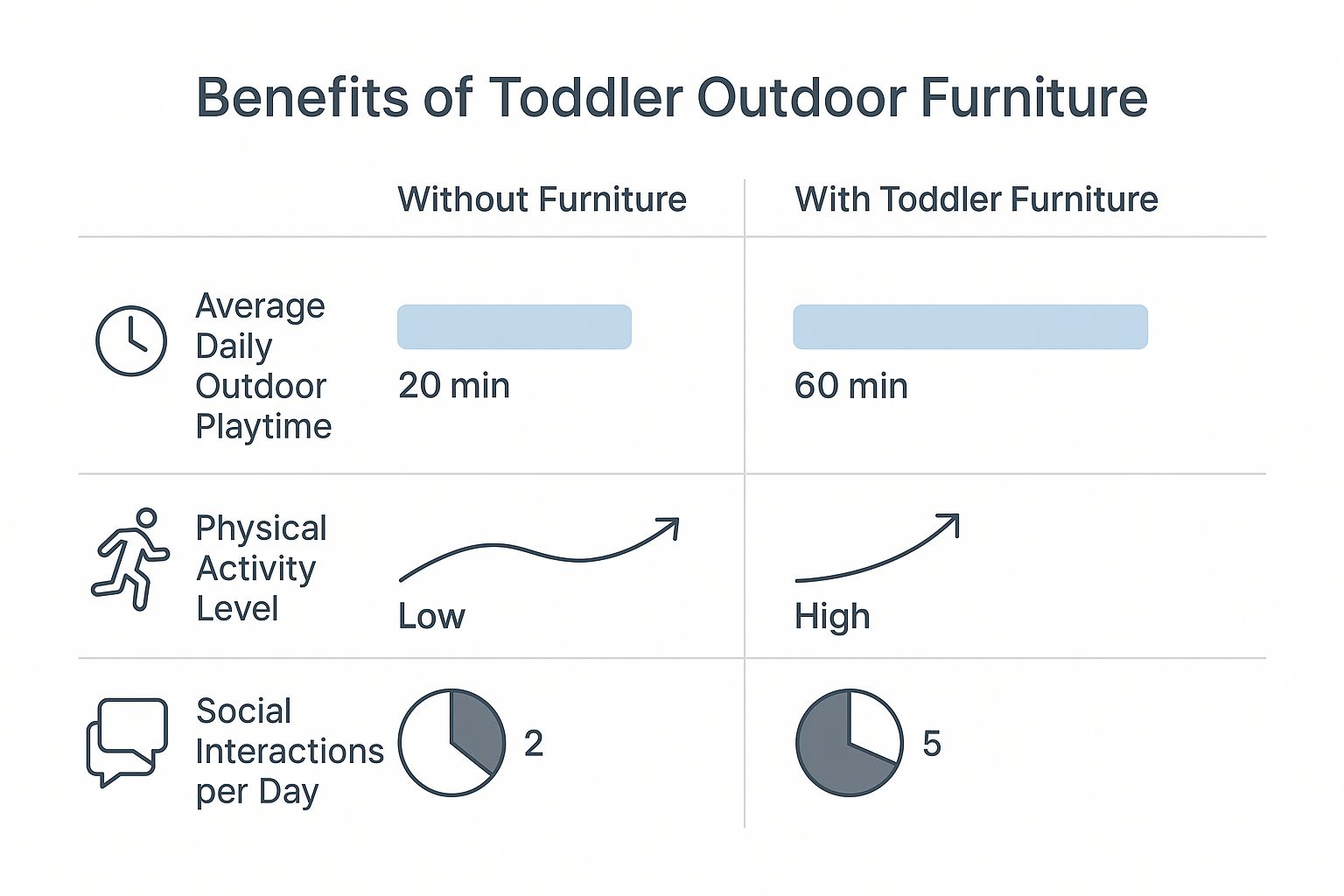
A kid-friendly setup isn't just about decorating your yard; it's about actively encouraging a healthier, more social lifestyle right from the start.
Decoding Furniture Materials
Let's walk through the most common materials you'll find for toddler outdoor furniture, looking at the good and the bad from a parent’s point of view.
Before we dive into the details, here's a quick comparison of the most popular materials to help you see how they stack up against each other.
Comparing Toddler Outdoor Furniture Materials
| Material | Safety Profile | Durability & Weather Resistance | Maintenance Level | Best For |
|---|---|---|---|---|
| Wood | Excellent when untreated or finished with non-toxic sealants. Watch for splinters. | Good, but requires sealing to prevent rot and weather damage. | Medium to High | Families who love a natural look and don't mind seasonal upkeep. |
| Plastic (HDPE) | High, especially if BPA-free and phthalate-free. No splintering risk. | Excellent. Resists fading, cracking, and moisture. | Low | Busy parents who need a durable, easy-to-clean, and worry-free option. |
| Metal | Good, but check for sharp edges and rust-proof coatings. Can get hot in the sun. | Very high, especially with a quality powder coat to prevent rust. | Low | Durability in milder climates, but requires shade to avoid hot surfaces. |
Each material brings something different to the table, but high-quality, non-toxic plastic often hits that sweet spot of safety, durability, and low maintenance that makes life just a little bit easier.
What’s It Made Of? A Closer Look
Wood
Natural woods like cedar or cypress are timeless choices. They have a built-in resistance to rot and bugs, which means they don’t always need harsh chemical treatments. The key is to make sure the wood is sanded perfectly smooth and sealed with a non-toxic, child-safe sealant to keep splinters and chemicals away.
Plastic (HDPE)
High-density polyethylene (HDPE) is a real winner for modern kids' furniture. It's tough, lightweight, and often made from recycled materials like milk jugs. Always look for BPA-free and phthalate-free plastic. It's a breeze to clean, it will never splinter, and it comes in fun colors that won’t fade. For busy families, it’s a fantastic, worry-free choice.
Metal
You won't see as many toddler sets made from metal, but options like powder-coated aluminum are definitely durable. The coating is everything—it needs to be thick and tough to stop rust and chipping. Just make sure any metal furniture is light enough that it won't tip easily and has no sharp edges.
The Non-Negotiable Safety Checklist
Putting materials aside for a second, some design features are absolute must-haves. Keep this checklist handy when you're shopping.
- Rounded Corners and Edges: Sharp corners and wobbly toddlers are a terrible mix. Every edge should be smooth and curved to prevent bumps and scrapes during playtime.
- Sturdy, Tip-Over Resistant Design: The furniture needs a low center of gravity and a wide base. Give it a little push—if it wobbles, walk away.
- No Small, Detachable Parts: Look for any little caps, nuts, or bolts that a curious kid could twist off and pop in their mouth. Everything should be securely attached for good.
- Pinch-Free Joints: If you're looking at folding chairs or tables, check the moving parts to make sure they won't trap tiny fingers.
A truly safe piece of furniture is one you don't have to think about. It should be so well-designed that it fades into the background, allowing your child's play to take center stage without you constantly worrying about "what if."
Understanding Safety Certifications and Finishes
Certifications are your shortcut to peace of mind. They prove a product has been tested by an independent group and meets specific safety rules, taking the guesswork out of your decision.
Keep an eye out for labels that mention:
- ASTM International: This group sets technical standards for all sorts of products. ASTM F2613, for example, is a safety standard specifically for children's chairs.
- CPSC (Consumer Product Safety Commission): The CPSC enforces federal safety rules, including strict limits on lead and phthalates in kids' products. A CPSC-compliant label is a very good sign.
The finish is just as crucial as the material underneath. Any paints, stains, or sealants must be non-toxic and free of lead, phthalates, and VOCs (volatile organic compounds). These chemicals can be harmful if your child inhales or ingests them. For a deeper dive, check out our guide on non-toxic kids' furniture. Choosing furniture with a certified non-toxic finish is the best way to ensure their play space is as healthy as it is fun.
Finding the Perfect Fit for Healthy Growth
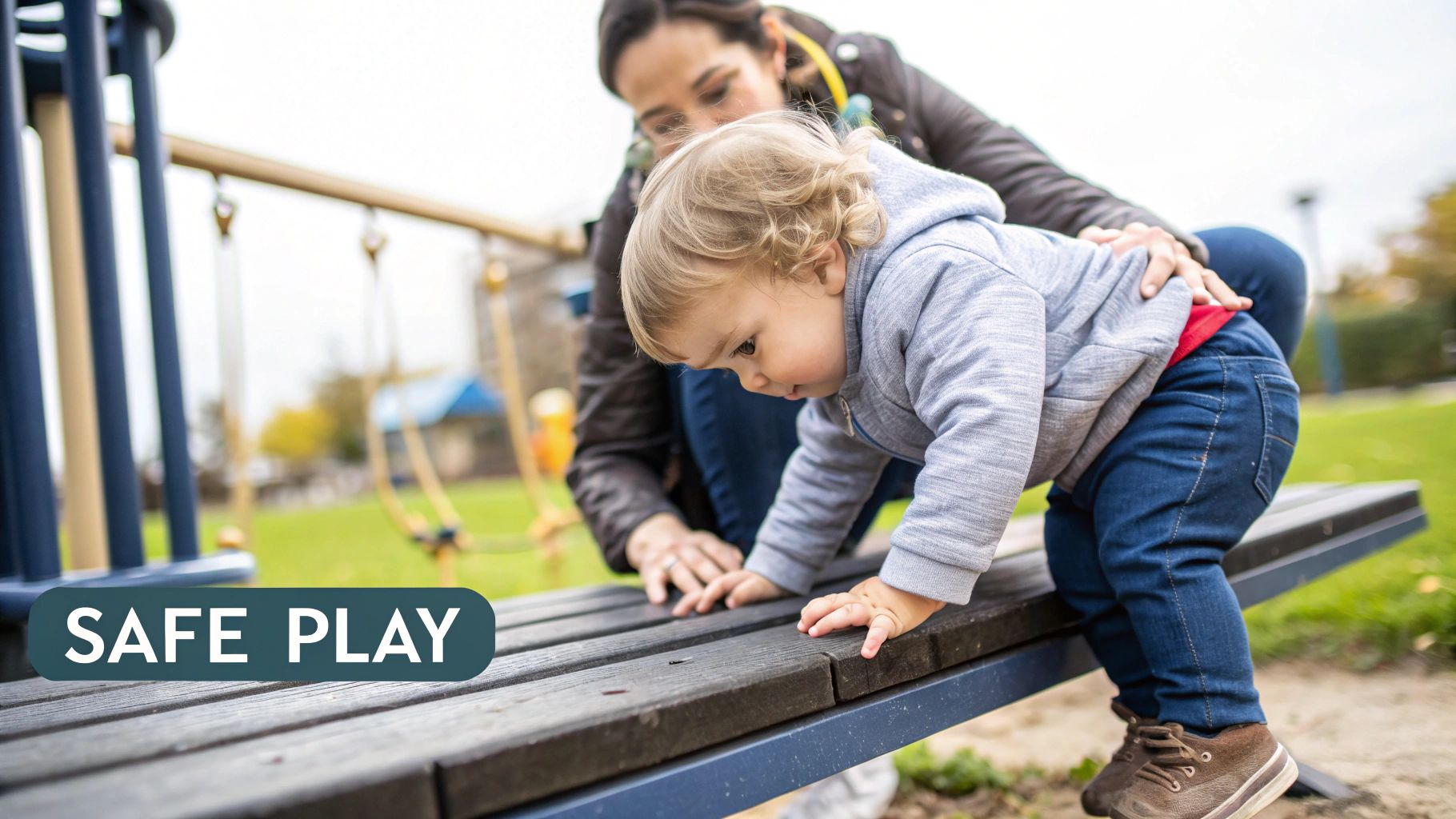
Picking out toddler furniture based on a generic "ages 2-4" label is a bit like buying shoes without knowing the size. You might get lucky, but it's far more likely the fit will be off. And for a growing child, a good fit isn’t just about being comfy—it’s crucial for supporting healthy physical development and encouraging good habits right from the start.
Think of it as their very first lesson in ergonomics. We adults invest in office chairs that support our posture and reduce strain. A well-sized toddler outdoor furniture set does the exact same thing, just for a much smaller body. It lets them sit, play, and eat without having to slump, slouch, or strain awkwardly.
This focus on proper sizing and ergonomics is a big deal in the children's furniture world. The global kids' furniture market was valued at USD 36.9 billion in 2025 and is expected to climb to USD 55.1 billion by 2035. That growth is largely driven by parents who understand the importance of child development and ergonomic design.
The Goldilocks Principle for Toddler Seating
Finding that "just right" fit really comes down to a few simple checks. When your little one sits down, their body should naturally fall into a healthy, supported posture.
Here’s what to look for:
- Feet Flat on the Floor: This is the big one. When their feet can rest firmly on the ground, it gives them stability and support. No more dangling legs, which often leads to fidgeting and poor posture.
- Knees at a 90-Degree Angle: Their thighs should be more or less parallel to the ground. This simple position takes a surprising amount of pressure off their lower back and legs, making sitting feel much more natural.
- Supportive Backrest: The back of the chair should give their spine gentle support, encouraging them to sit upright instead of hunching forward over their snacks or coloring book.
Getting the Table Height Right
The table is just as important as the chair. If it's too high, your toddler will have to shrug their shoulders and lift their arms uncomfortably just to draw. If it’s too low, they’ll be hunched over, putting a real strain on their neck and back.
The ideal table height allows your child to rest their forearms on the surface with their elbows bent at a relaxed 90-degree angle. This creates the perfect setup for everything from crafting masterpieces to enjoying an afternoon snack. For a deeper dive into choosing the perfect set, our guide on the best toddler table and chairs has even more detailed advice.
Proper sizing does more than just prevent discomfort. It builds physical confidence. A child who can easily get in and out of their own chair feels capable and in control, which is a massive boost for their budding independence.
Fixed Size vs. Grow-With-Me Designs
When you start shopping, you'll mainly see two approaches to sizing: fixed and adjustable. Each has its pros and cons, and the best choice really boils down to your family’s needs.
Fixed-Size Furniture:
- Pro: These pieces are often more stable and have a clean, simple look. Plus, there are no moving parts to fuss with.
- Con: Your child will outgrow it, usually within a couple of years.
Adjustable "Grow-With-Me" Furniture:
- Pro: It offers a much longer lifespan by adapting to your child's growth spurts. This can make it a smarter investment in the long run.
- Con: Assembly can be a bit more complex, and you’ll need to check the moving parts for safety every so often.
Ultimately, whether you choose a perfectly sized fixed set or a versatile adjustable one, the goal is the same: to create a safe, comfortable, and empowering space that supports your child's healthy growth, one sunny afternoon at a time.
Creating an Inviting Outdoor Play Zone
Getting a set of toddler outdoor furniture is a great first step. But the real fun begins when you turn that simple table and chairs into the heart of your child’s outdoor world. It’s not just about placing furniture; it’s about creating an experience that sparks imagination and learning.
Think of it like setting up an indoor playroom. You wouldn't just dump toys in a corner. You'd create zones—a reading nook here, a craft station there. The same idea works wonders in the backyard. With a bit of strategic thinking, a small patch of grass can become your toddler’s favorite place to be.
Strategic Placement for Maximum Fun
Where you put the furniture makes all the difference in how much it gets used. If it’s tucked away in a forgotten corner, it’ll probably just collect dust and leaves. Instead, put it right in the middle of the action, where your child naturally plays.
Here are a few things to keep in mind:
- Shade is Your Best Friend: This one is non-negotiable. Toddlers have sensitive skin, so a shady spot under a big tree, a patio umbrella, or a covered porch is essential for safe and comfortable playtime.
- Visibility is Key: Set the furniture up where you can easily see it from a kitchen window or your own patio chair. This gives your little one a sense of independence while you can keep a watchful eye without hovering.
- Proximity to Nature: Placing the table near a flower bed or vegetable patch can be magical. It becomes a little observation deck for watching butterflies or a workstation for "helping" with the gardening.
Building a World of Imagination with Themes
A simple theme can turn a basic furniture set into a launchpad for adventure. Just by adding a few props, you give your toddler a starting point for their make-believe games. And the best part? The theme can change as quickly as their interests do.
A child’s play space is the canvas for their imagination. The right props and setting are the colors they use to paint their worlds, turning a simple picnic table into a pirate ship, a castle, or a bustling cafe.
Here are a few easy themes to get you started:
The Little Bistro
Turn their table into a charming outdoor cafe. All you need is a toy tea set, some play food, and a small pitcher of water. It's a fantastic way to encourage role-playing and practice social skills.
The Artist's Outdoor Studio
Designate their furniture as the official spot for messy art projects. Stock a basket with chunky chalk, washable paints, and big sheets of paper. Even a small bucket of water and a paintbrush can provide hours of "water painting" fun on a warm day.
The Budding Gardener's Bench
If you placed their furniture near the garden, lean into it! Turn it into a little potting station with a small trowel, some kid-safe pots, and soil. They can plant their own seeds or just enjoy the sensory fun of digging in the dirt. For more involved setups, you could even create an outdoor kids kitchen to expand on these ideas.
Accessorizing for a Magical Atmosphere
The final touches are all about the accessories. These little details add comfort, personality, and that extra dose of fun that makes the space feel truly special and just for them.
- Comfortable Cushions: A few colorful, weather-resistant cushions make the chairs cozier for long snack times or play sessions.
- A Child-Sized Umbrella: A small, bright umbrella not only provides more shade but also makes their table feel like a V.I.P. spot.
- Nearby Planters: Pop a few pots with fragrant, kid-safe plants like lavender or mint nearby. It’s a simple way to add a lovely sensory element to their play zone.
- Magical Lighting: A strand of solar-powered string lights hung over their little area can make early evenings feel absolutely enchanting.
Keeping Your Toddler's Furniture Like New
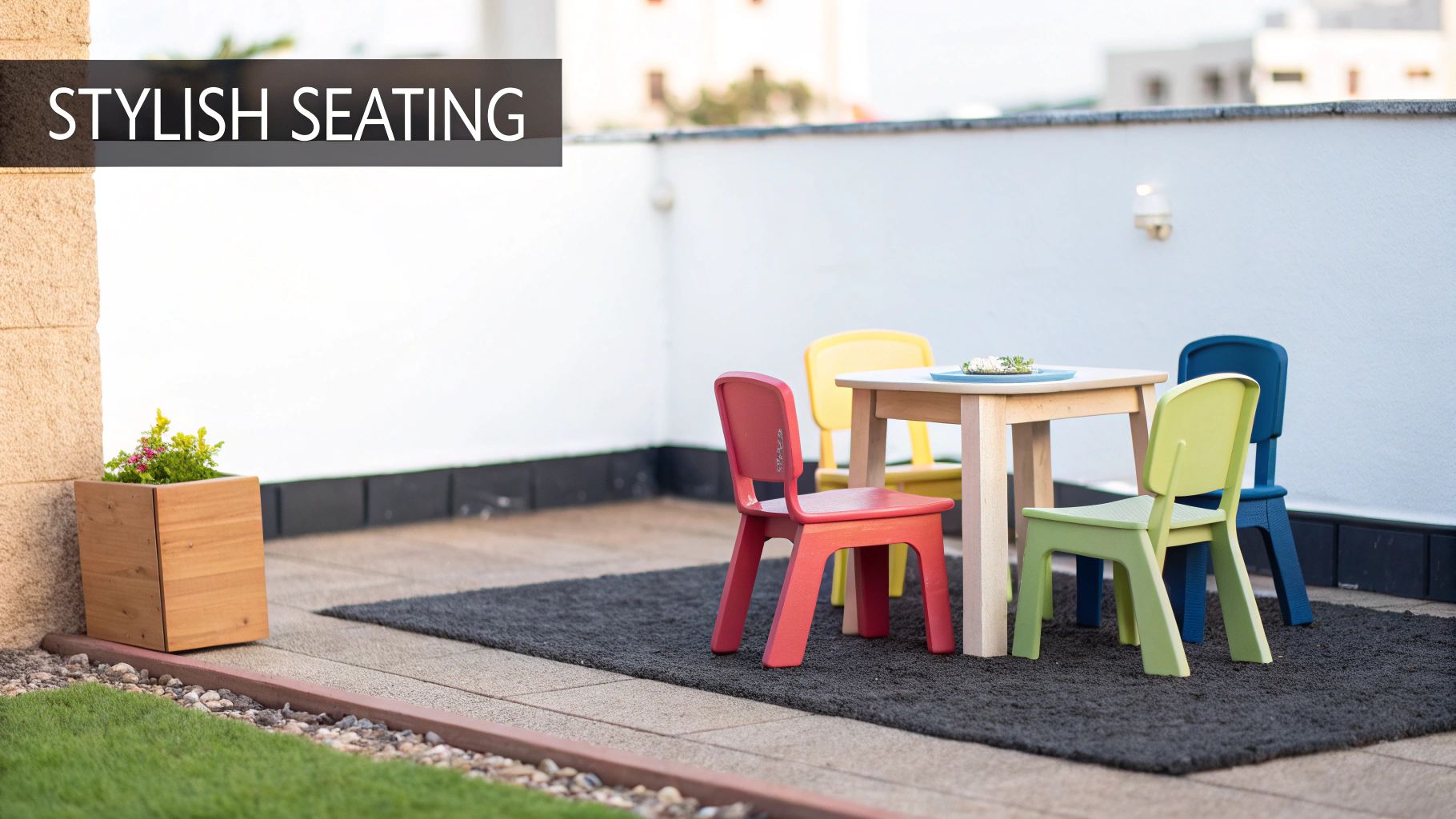
Your little one's outdoor furniture is where the magic happens—mud pies, juice spills, and sunny afternoon stories. To keep it looking great and, more importantly, safe for all those adventures, a little bit of care goes a very long way.
Think of it this way: you wouldn't send your kid out on a bike with a rusty chain. A quick, regular check-up on their toddler outdoor furniture prevents tiny issues from turning into big headaches, ensuring it's always ready for play.
Material-Specific Cleaning Routines
Different materials have different needs when facing the great outdoors. A cleaning routine that works for plastic won't do much for wood, so it's best to tailor your approach.
-
For Wood: Wood's biggest enemy is moisture. A regular wipe-down with mild soap and water, followed by a thorough dry, is key. Once a year, take a look at the sealant and reapply a non-toxic, child-safe finish to keep it weather-ready.
-
For Plastic (HDPE): This is as low-maintenance as it gets. A damp cloth or a quick scrub with soap and water will handle almost any mess. Because it's non-porous, stains and moisture just don't stick around.
-
For Metal: Rust is the main concern here. Clean it with a soft cloth and gentle detergent. If you notice any chips in the powder coating, touch them up right away with rust-proof paint to stop corrosion before it starts.
The Essential Safety Inspection Checklist
Before your toddler heads out to play, take literally 60 seconds for a quick safety scan. This simple habit is your best tool for catching potential hazards before they become a problem.
A safe play environment is one where you've eliminated the "what ifs." A routine inspection turns worry into reassurance, ensuring the only surprises are the imaginative games your child creates.
Add this to your weekly to-do list:
- Check for Stability: Give the table and chairs a little push. Any wobbling means it's time to tighten things up.
- Inspect All Hardware: Scan for any loose screws, bolts, or nuts. Grab a screwdriver and make sure everything is snug.
- Scan for Splinters or Sharp Edges: Run your hand over wooden surfaces and along metal edges. If you find any rough spots, sand them down immediately.
- Look for Cracks or Damage: Give the furniture a once-over for any stress marks, like cracks in the plastic or deep splits in the wood, that could weaken the structure.
Smart Seasonal Storage Solutions
When the weather turns, proper storage is your best defense. Before stashing the furniture for the winter, give every piece a good cleaning and let it dry completely to avoid any moldy surprises in the spring.
If you have space, a garage or basement is the perfect spot. If not, invest in some quality waterproof covers that fit well. This will shield your toddler outdoor furniture from snow and ice, so it's in perfect shape for that first warm, sunny day.
Answering Your Top Furniture Questions
Stepping into the world of toddler gear can feel like you're learning a whole new language. When it comes to toddler outdoor furniture, I've found that parents circle around the same few questions as they try to pick the right pieces for their little ones. Let's clear up those common sticking points so you can feel great about your choice.
Think of this as your friendly cheat sheet. We'll get into the practical details—when, where, and how much—that turn a good purchase into a truly great one.
When Is the Right Time to Buy Toddler Outdoor Furniture?
The sweet spot is usually right around 18 to 24 months, once your child is a confident walker and starts getting curious about independent play. At this age, they’ve got the coordination to safely handle a small chair and are just starting to love having their own little spot for snacks or drawing.
But remember, age is just a number. Your child's own development is the real clue. If your 15-month-old is already steady on their feet and trying to copy everything you do, a sturdy, low-to-the-ground set could be a wonderful addition to their world. The key is finding furniture that’s exceptionally stable to support those early adventures.
A really well-chosen set will grow with them for years, going from a snack table for a two-year-old to a dedicated craft station for a five-year-old. That kind of longevity makes it a smart investment in their childhood.
Can Toddler Outdoor Furniture Be Used Indoors?
Absolutely! This is one of my favorite parenting hacks. High-quality toddler outdoor furniture, especially pieces made from tough stuff like HDPE plastic, are perfect for pulling double duty. They're a breeze to clean and light enough to move, making them ideal for playrooms, art corners, or as the "kids' table" during family get-togethers.
Think of it as a two-for-one deal. In the summer, it's the heart of their backyard play zone. When the weather turns, just bring it inside. Now you have a dedicated space for sensory bins, play-doh, or painting, and you don't have to stress about messing up your nice indoor furniture.
"A great piece of children's furniture should adapt to the family's needs, not the other way around. The ability to move from the patio to the playroom seamlessly adds immense value and extends its usefulness well beyond a single season."
This flexibility means you’ll get so much more use out of it year-round, which is a huge win for any family, especially if you're working with limited space.
How Much Should I Expect to Spend on a Quality Set?
You’ll see a pretty big price range for toddler outdoor furniture, but it helps to think about long-term value, not just the number on the price tag. You can find basic plastic sets for under $50, while premium, eco-friendly wood or HDPE sets might run you anywhere from $150 to $400 or more.
It’s tempting to go for the lower price, but that often means less durable materials that just won't hold up to a few seasons of sun, rain, and toddler energy. Investing a bit more in a set made from weather-resistant, non-toxic materials with smart safety features (like rounded corners and a stable base) really does pay off. You’re not just buying for safety; you’re buying a piece of furniture that will last long enough to be passed down to the next sibling.
This shift toward quality is happening everywhere. The broader kids' furniture market hit a value of USD 52.8 billion in 2024 and is expected to soar to USD 187.4 billion by 2033. That huge jump shows that parents are increasingly choosing products that are durable, safe, and good for their child's development. If you're curious, you can dig into more kids' furniture market growth and trends on imarcgroup.com.
What Is the Most Durable Material for Outdoor Toddler Furniture?
When you want something that's both tough and ridiculously easy to care for, high-density polyethylene (HDPE) is the hands-down winner. This is a robust, eco-friendly plastic that’s basically engineered to handle whatever your toddler—and mother nature—can dish out.
Here’s why HDPE is such a great choice:
- It's Weatherproof: Unlike wood, it won’t rot, splinter, or crack. Unlike metal, it won’t rust. It can handle sun, rain, and snow without fading or falling apart.
- It's Super Safe: HDPE is non-toxic and often BPA-free. There are no sharp edges or splinters to worry about, which is exactly what you want for little hands and feet.
- It's Effortless to Clean: Muddy handprints? Spilled juice? A quick wipe with soap and water makes it look brand new. No fuss.
While classic wood has a certain charm, it needs regular sealing and maintenance to keep it from weathering. HDPE gives you that "set it and forget it" convenience that every busy parent can appreciate, keeping the furniture safe and looking great for years.
At Ocodile, we believe in creating spaces where children can thrive safely and independently. Our thoughtfully designed furniture is crafted to support your child's growth, turning everyday moments into cherished memories.