



Your Guide to Toys Organizer Storage Solutions
When you’re staring at a mountain of toys, it’s easy to think the solution is just to buy more bins. But real toys organizer storage is so much more than that. It’s about creating a system that actually works for your family—one that helps your kids become more independent, cuts down on your stress, and brings a sense of calm back into your home.
Beyond the Bins: A New Approach to Toy Clutter
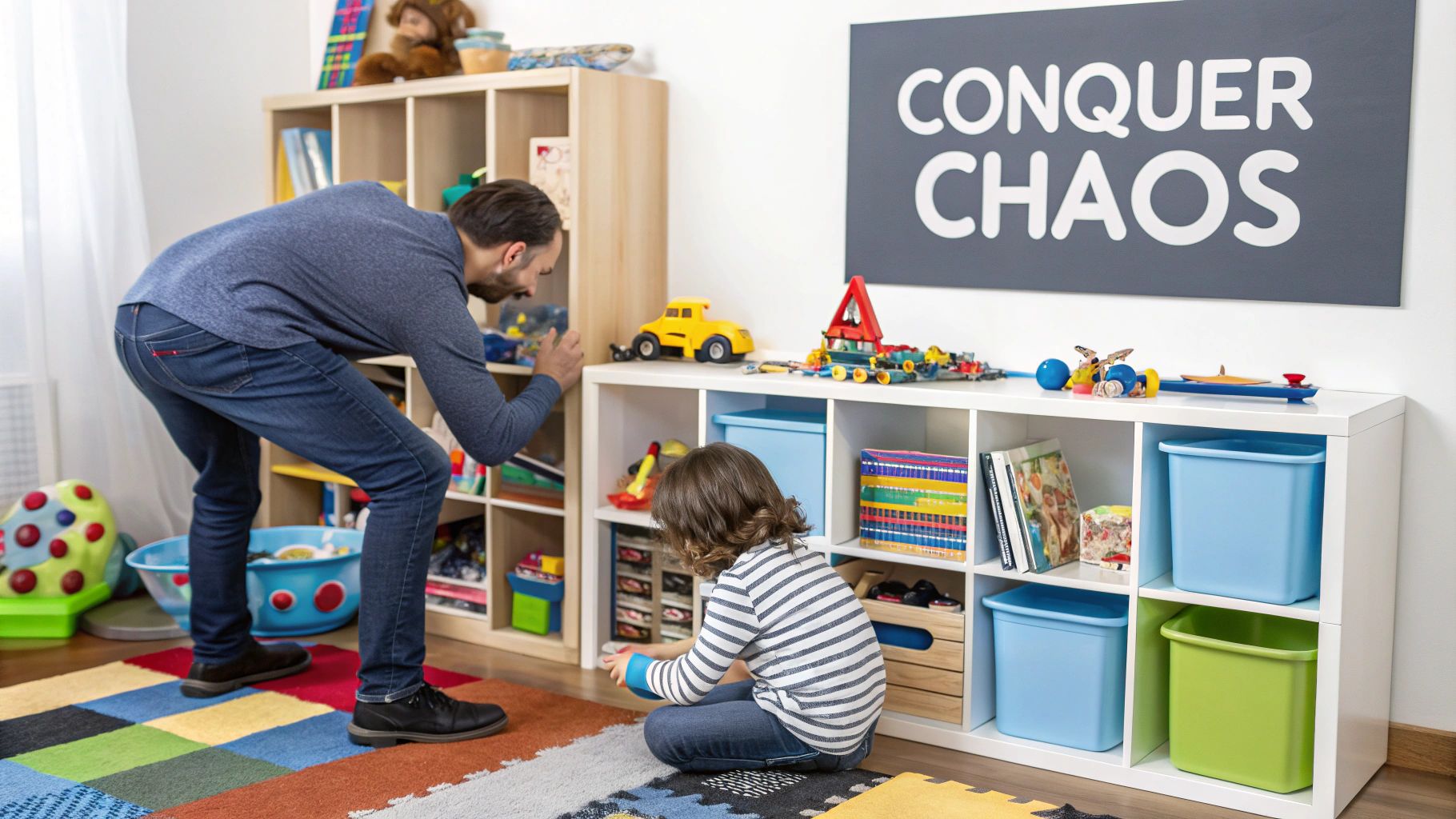
Let's be honest. Tossing everything into a giant toy chest doesn't really solve the problem, does it? It just creates a chaotic jumble where the good stuff gets lost at the bottom, leading to frustration for everyone. The real goal is to stop seeing organization as a chore and start seeing it as a way to make life easier for you and empower your kids.
A thoughtful system does more than just hide the mess. It creates a space where kids can easily see and grab what they want to play with. More importantly, they know exactly where everything goes when they're done. This simple change helps build responsibility and independence right from the start.
The Philosophy of Intentional Toy Storage
Instead of just reacting to the chaos, let's build a "toy organization philosophy" that fits your family's life. This means looking past the trendy containers and focusing on what will actually be functional and sustainable for you.
A system that works in the real world considers a few key things:
- Accessibility: Can your child actually reach their favorite toys without needing your help every time?
- Visibility: Are toys stored so kids can see their options? If they can't see it, they'll just dump everything out to find it.
- Simplicity: Is the cleanup process simple enough for a toddler to manage? It has to be.
The mother who takes pains to endow her children with good habits secures for herself smooth and easy days; while she who lets their habits take care of themselves has a weary life of endless friction with the children.
This is all about creating order that actually sticks. If you're someone who loves a clean, natural look, exploring options like wooden toy storage can be a fantastic starting point for a system that's both beautiful and built to last.
Ultimately, the right toys organizer storage isn't just about a tidy room. It's about reducing that constant mental load of tidying up and giving you back precious time to actually enjoy your family. This guide is your first step to conquering the clutter for good.
Defining Your Family's Toy Storage Blueprint
Jumping straight into buying a toys organizer storage system without a plan is a classic mistake. It's like going grocery shopping when you're starving—you'll end up with a cart full of stuff you don't actually need. A truly effective system, one that actually works for your family, starts with a quick assessment of your real-life situation.
Think of it as creating a "storage blueprint." This simple first step ensures the solution you choose will actually fit your home and your life.
Analyze Your Toy Collection
First, get a handle on what you've actually got. This isn't just about counting toys; it's about understanding the categories you're dealing with. Do you have a mountain of LEGOs that need deep bins? Or are you drowning in puzzles with tiny, easily lost pieces?
Consider the physical shapes and sizes of your most common toys. Bulky items like dump trucks and dollhouses have very different storage needs than a sprawling train set or a collection of delicate figurines. Grouping them helps you visualize the kinds and sizes of containers you'll need.
For instance, a family with mostly large, plush animals might just need a big open basket or a cool toy hammock. On the flip side, a home overflowing with art supplies requires a system with lots of small, separate compartments to keep beads, crayons, and paper from becoming one giant mess. If you're looking for inspiration, these 7 genius nursery organization ideas can help you think about creating a calmer, more organized space.
The chart below gives you a good idea of how toy collections often break down.
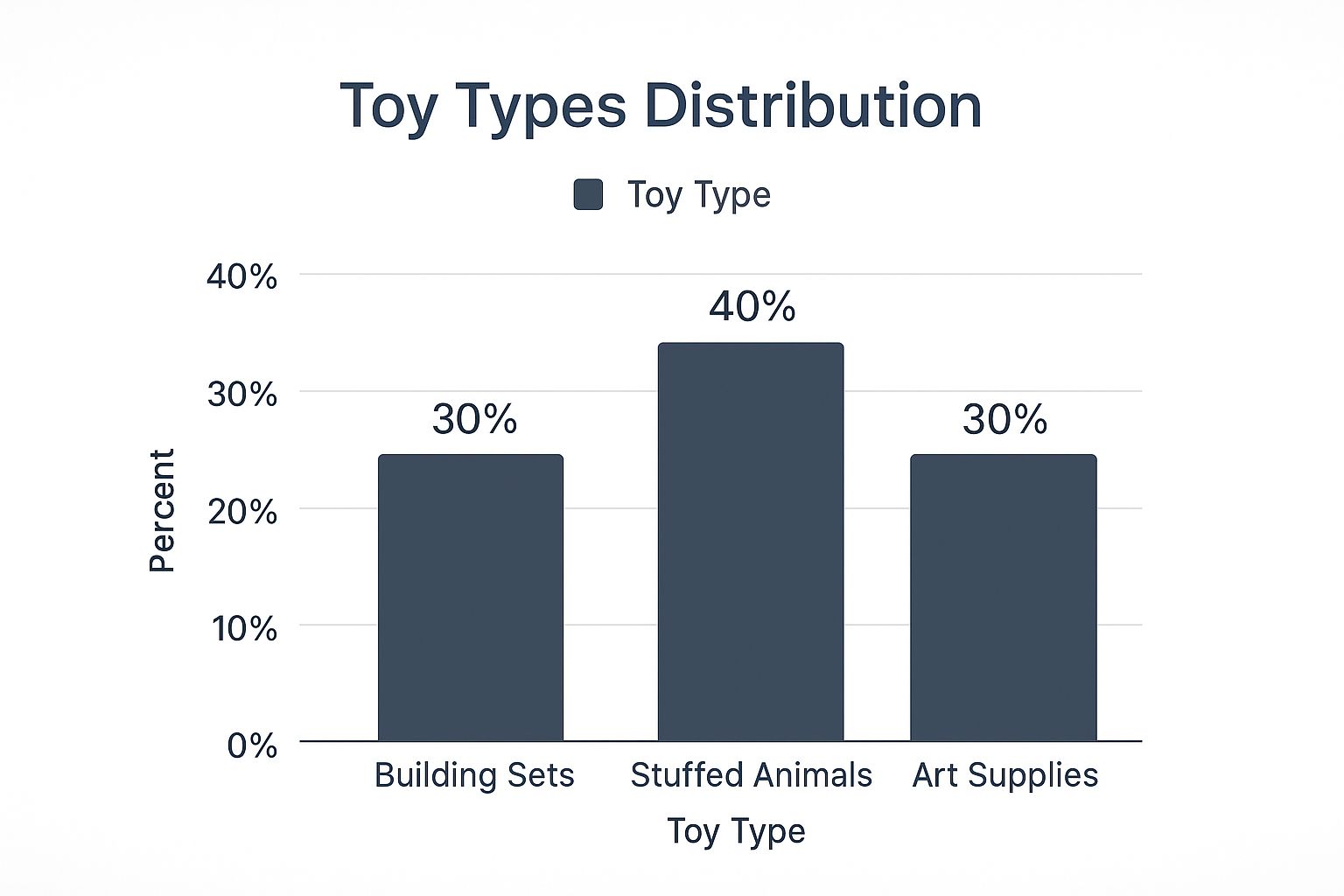
As you can see, certain categories, like stuffed animals, often dominate and demand their own unique solutions compared to more compact building sets.
Consider Your Child's Age and Play Style
A toddler's needs are worlds apart from an eight-year-old's. For the little ones, accessibility is key. Think open, low-to-the-ground shelving and clear bins. These empower them to grab toys themselves and—most importantly—put them away without your help. A fantastic trick for pre-readers is using labels with pictures instead of words.
Older kids have hobbies that get more complex. They might need dedicated zones for things like building models or detailed art projects. A mobile cart for art supplies is an amazing solution here; it lets creativity happen at the kitchen table and then gets neatly wheeled away. For more on this, check out our guide to art supply storage for kids.
“The more we empower children to take responsibility in the home, the more we develop their sense of ownership in the home and role within the family.”
Don't forget to involve your kids in this blueprinting stage! It’s crucial. Ask them what toys they love most and which ones are always hard to find. Their answers give you direct clues about what’s working and what isn’t, making them partners in creating a tidier home.
Map Out Your Physical Space
Finally, take a hard, honest look at your home's layout. You don't need a massive, dedicated playroom to have great toy organization.
- Small apartments: Think vertically. Wall-mounted shelves and hanging organizers are your best friends for saving precious floor space.
- Multi-use rooms: Go for storage that blends in. An ottoman with a hidden compartment or a stylish cube unit that matches your living room decor works wonders.
- Dedicated playrooms: If you have the space, you've got more freedom. You can create specific play zones for building, reading, and imaginative play.
Measure your available space before you even start browsing for products. Seriously, don't skip this step. It prevents the all-too-common frustration of buying the "perfect" shelf only to discover it doesn't fit. With that done, your blueprint is complete, and you're ready to find the ideal storage solution.
Finding the Perfect Toys Organizer Storage System
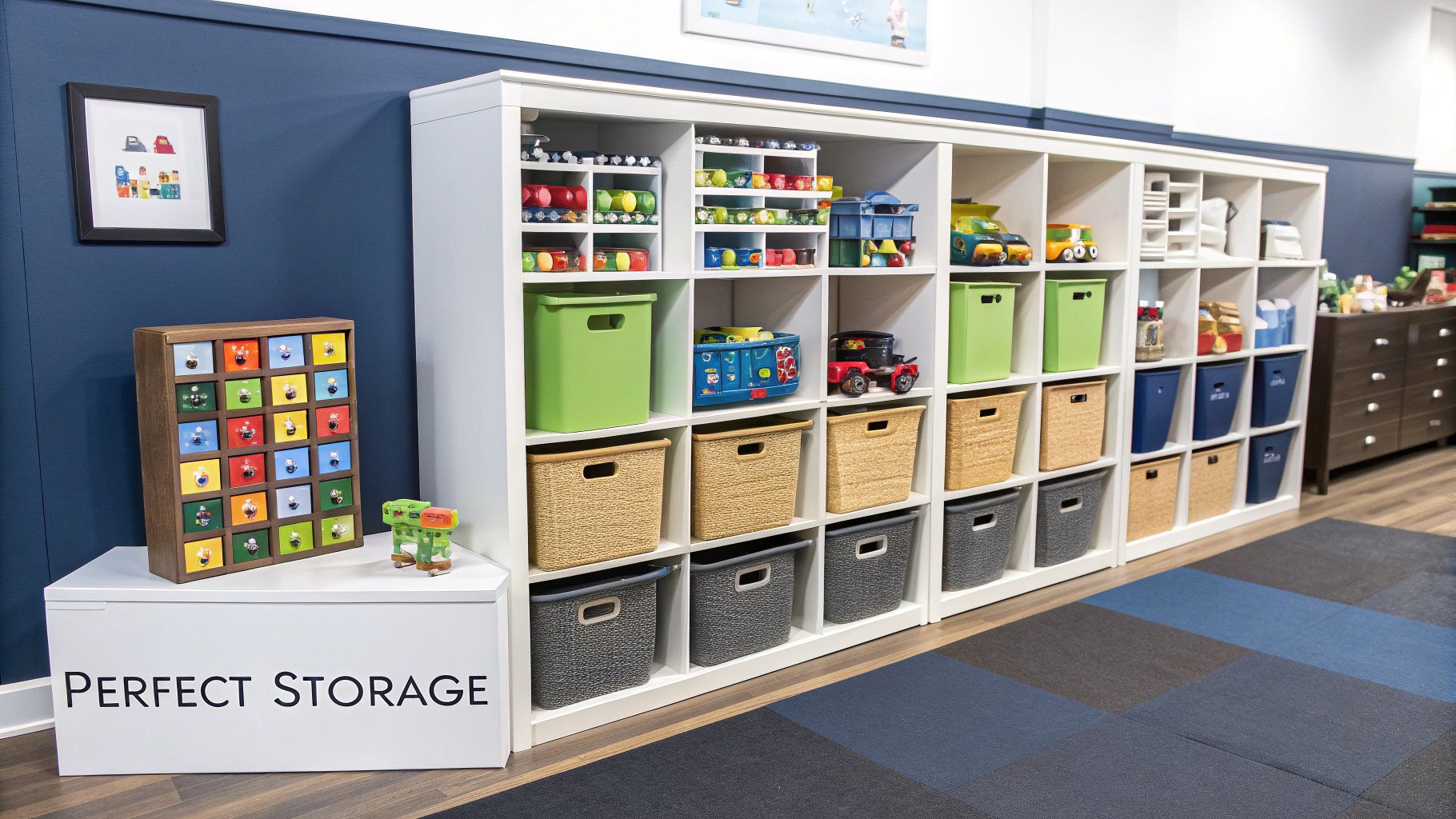
Alright, you've figured out what you need to store and where. Now for the fun part: picking out the actual organizers. The world of toys organizer storage can feel overwhelming, but don't worry. Moving beyond the classic "one-size-fits-all" toy box is the secret to a system that actually works—one that encourages kids to play and makes cleanup less of a battle.
You’re not alone in this quest for an organized home. The global toy storage market was valued at around USD 10.26 billion in 2025 and is expected to nearly double by 2035. That just shows how many of us are searching for better ways to manage the joyful chaos of toys.
Exploring Popular Organizer Types
Different storage styles solve different problems. The best systems usually mix and match a few types to handle everything from tiny LEGOs to giant stuffed animals. Let's walk through the most popular options.
-
Cubby Systems: These are the real workhorses of any playroom. You can use them with fabric bins to hide messier collections or leave the cubes open to display specific toys. Their grid design makes it incredibly easy for kids to see what they have and grab what they want. They're perfect for blocks, dolls, cars, you name it.
-
Classic Toy Chests: Toy chests get a bad rap for being "toy black holes," but a modern one can be a game-changer. Look for options with built-in dividers or shallow trays to keep things from getting lost at the bottom. And always, always choose one with a soft-close safety hinge to keep little fingers safe.
-
Mobile Carts: Got an artist in the house? A rolling cart is your best friend. Load it up with art supplies or a small building project, and it can follow the creativity from the playroom to the kitchen table. When playtime is over, just roll it away.
-
Wall Shelves and Ledges: When you're short on floor space, the only way to go is up. Wall-mounted shelves are fantastic for showing off finished LEGO creations, keeping puzzle boxes organized, or getting toys with tiny pieces safely out of a toddler's reach.
The best storage solutions are the ones that empower kids to manage their own stuff. If they can easily see their toys and put them back, they're far more likely to help clean up without a fuss.
Comparing Popular Toy Organizer Storage Solutions
Choosing the right storage often comes down to balancing durability, cost, and style. This quick comparison should help you decide which types will work best for your family's needs and space.
| Storage Type | Best For | Pros | Cons | Avg. Cost |
|---|---|---|---|---|
| Cubby System | Versatile storage for various toy types, especially with bins. | Highly customizable, promotes easy access, great for sorting. | Can look cluttered without bins, assembly required. | $50 - $250 |
| Toy Chest | Bulky items like stuffed animals, balls, or large vehicles. | Hides clutter quickly, simple for young kids to use. | Can become a jumbled mess, items at the bottom get lost. | $75 - $300 |
| Mobile Cart | Art supplies, small building sets, or project-based toys. | Portable, flexible, keeps supplies contained in one spot. | Limited capacity, may not be sturdy enough for heavy items. | $30 - $100 |
| Wall Shelves | Displaying creations, storing puzzles, or keeping small items safe. | Saves floor space, great for decor and organization. | Limited weight capacity, requires installation. | $20 - $150 |
Ultimately, a mix of these options usually creates the most functional and visually appealing space.
Choosing the Right Materials
The material of your organizer plays a huge role in its durability, safety, and overall look. A sturdy wooden bookshelf might be perfect for the main playroom, while lightweight plastic bins are great for inside a closet.
For a cool, modern look that's also super durable, you might even consider a locker for kids. It combines the strength of metal with a playful design that kids love, perfect for tucking things away neatly.
If you're looking for more specific product examples and layouts, checking out some diverse toy storage ideas can provide a ton of inspiration for putting it all together.
Putting Your New Toy Organization Plan into Action
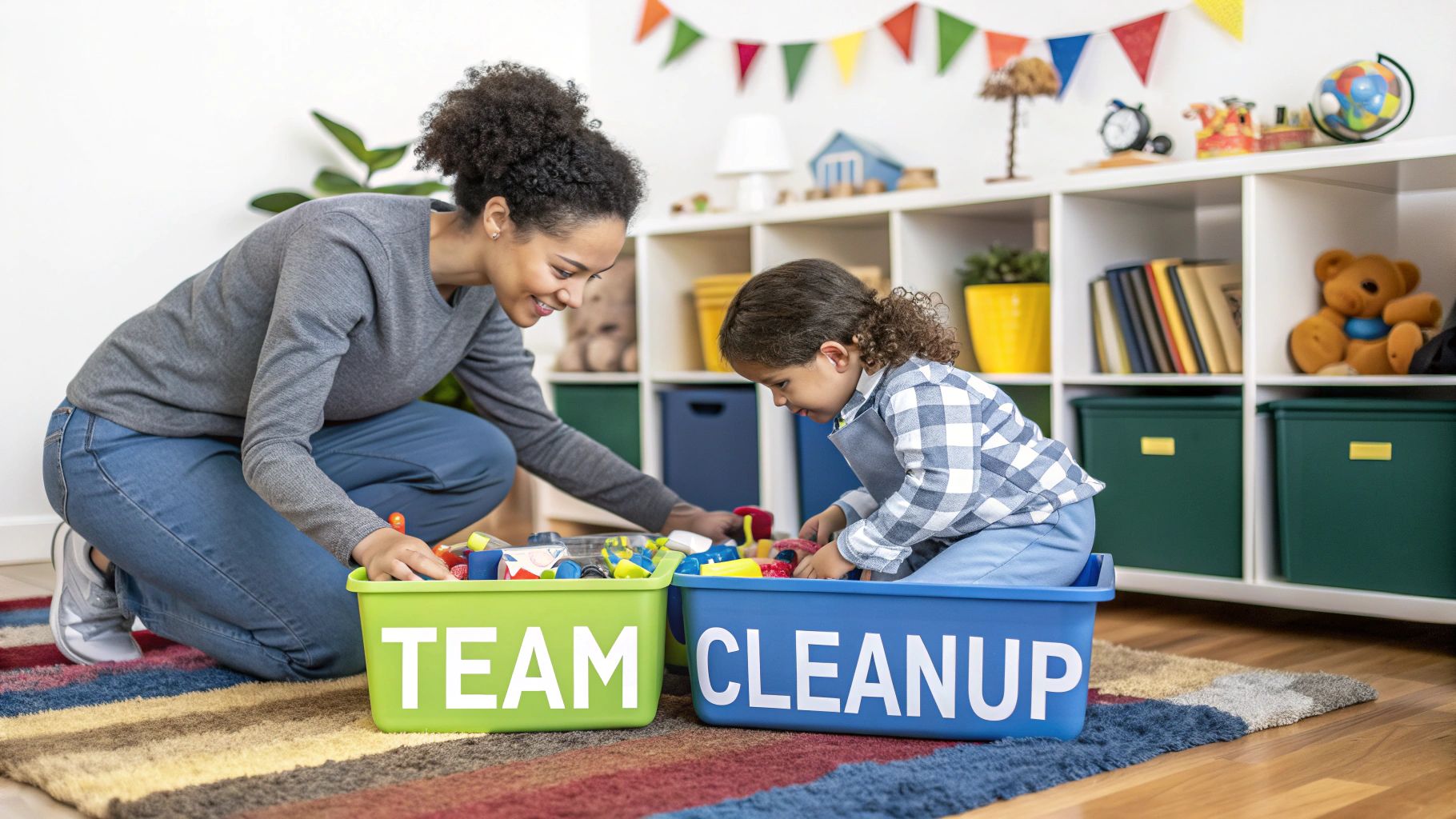
Alright, this is where the blueprint becomes reality. You've picked out the perfect toys organizer storage, and now it's time to roll up your sleeves and transition from planning to doing.
This is about so much more than just filling new shelves. You're setting up a system that your kids can actually use and—dare I say—maintain themselves.
The Sort, Purge, and Categorize Method
First things first: you have to declutter. Before a single new bin gets filled, you need to sort through everything you already own. This isn't just a quick tidy-up; it's about curating a collection of toys your kids genuinely love and play with.
To get started, pull everything out. And yes, I mean everything. Seeing the entire mountain of toys in one place can be a real eye-opener, but it's the only way to really get a handle on it. Create three distinct piles: Keep, Donate/Sell, and Trash.
- Keep Pile: This is for the MVPs—toys that are loved, played with regularly, and still in good shape.
- Donate/Sell Pile: Here’s where you put toys that are perfectly fine but have been outgrown or just aren't favorites anymore.
- Trash Pile: Reserve this for the truly broken, beyond-repair toys or anything with essential pieces missing.
Once you have your "Keep" pile, it's time to categorize. Group all the similar items together. All the building blocks go in one spot, dolls and their accessories in another, and art supplies in a third. This simple grouping makes it so much easier to find a logical home for everything in your new storage setup.
Getting Your Kids on Board
Bringing your kids into the organization process is probably the most powerful thing you can do. It flips the script from a parental chore to a family project, teaching them priceless skills about ownership and letting go.
When they have a say in where their treasures live, they're far more invested in actually keeping the space tidy.
A common mistake is to do all the organizing while the kids are asleep or at school. The intention is noble, but you miss a massive opportunity to build good habits and a sense of responsibility.
Ask for their input. Simple questions like, "Which cars are your absolute favorites?" or "Do you still have fun with these puzzles?" empower them to make decisions. This collaborative spirit makes them partners in maintaining the very system you’re creating together.
Setting Up for Long-Term Success
With your decluttered and categorized toys ready to go, it's time to fill your new organizers. The key here is to make the system logical from a child's point of view, not just an adult's.
Think about how your kids play. Their most-used items should be where they are easiest to reach. Everyday favorites like LEGOs or dolls belong on lower, open shelves. Craft supplies or board games with a million tiny pieces? Those might be better suited for higher shelves or bins with lids, requiring your help to access. It creates a natural boundary and cuts down on the constant mess.
The demand for smarter home solutions is exploding. In fact, the market for kids’ storage furniture is projected to hit USD 47.62 billion by 2030, all driven by families looking for better ways to optimize their space. You can learn more about the growth of the toy storage market on dataintelo.com. It just goes to show how many of us are on the hunt for these kinds of practical solutions.
For pre-readers, visual labels are an absolute game-changer. Just take a photo of the contents (a picture of LEGOs, for instance), print it out, and tape it to the front of the bin. This simple visual cue turns cleanup into a matching game that even a toddler can master, making your new toys organizer storage a truly independent system.
You did it. You sorted, purged, and set up a beautiful new toys organizer storage system. The playroom has never looked so good! But here comes the real test: keeping it that way.
An organization system isn't something you set and forget. It's a living thing that has to grow and change right along with your kids and their ever-evolving interests. A static system is pretty much doomed from the start.
Those giant Duplo blocks your two-year-old adored will eventually give way to thousands of tiny, intricate LEGO pieces. To keep the peace (and your sanity), you need to be proactive, not reactive. This just means building a few simple, sustainable habits into your family's rhythm.
The Quarterly Toy Audit
One of the best habits you can build is the quarterly toy audit. It sounds a bit corporate, I know, but it’s really just a scheduled check-in every three months. This is your moment to take a quick look at what’s actually getting played with and what’s just taking up valuable real estate.
This regular refresh stops that slow, creeping clutter in its tracks—the kind that happens when old toys are forgotten but never actually leave the house. Get your kids in on the action. Ask them to pick out a few things they haven’t touched in a while to pass on to a friend or donate. It makes room for new passions and teaches a great lesson about mindful consumption.
Adopting the One In, One Out Rule
Birthdays and holidays are the ultimate stress test for any organization system. To keep the incoming flood of gifts from undoing all your hard work, introduce the "one in, one out" rule. It’s simple: for every new toy that comes through the door, one old toy has to head out.
This isn’t about being stingy or restrictive; it’s about teaching a valuable life skill about managing what you own.
The goal isn't just to have a clean room, but to raise children who understand how to create and maintain their own organized spaces. This sense of ownership is crucial for long-term success.
This little rule helps kids think more critically about what they truly value. When they have to choose what to give away to make room for a new treasure, they start to understand that their space and belongings have limits. It's a surprisingly powerful, practical lesson in living intentionally.
Adapting Storage as Toys Change
Just as your kids outgrow their clothes, they'll outgrow their storage systems. What works for a toddler is going to be a disaster for a grade-schooler. You have to be ready to adapt.
- From Toddler to Preschooler: This is when you'll likely shift from large, open bins for chunky toys to more divided storage. Think smaller containers for things like little figurines, play food, and all those puzzle pieces.
- Entering the LEGO and Craft Era: As kids get older, their toys get smaller and come with way more pieces. This is your cue to bring in drawer units with dividers, tackle boxes for beads and LEGOs, or even a rolling cart for art supplies that can be moved from room to room.
Thinking ahead like this ensures your toys organizer storage system stays useful. By making these small adjustments every few months, you avoid the need for a massive, overwhelming overhaul and manage to keep the chaos from taking over for good.
Still Have Questions About Toy Storage?
Even after you've mapped out the perfect system, a few questions always seem to pop up once you start putting things into practice. Let's tackle some of the most common ones to make sure your new toys organizer storage is a lasting success.
What’s the Best Material for Toy Storage Bins?
This is probably the number one question I hear. While classic wood looks beautiful and fabric bins are soft and flexible, plastic often takes the cake for sheer, real-world practicality.
It's no surprise that the plastic toy storage market was valued at around USD 4.51 billion in 2025 and is only expected to grow. Plastic is tough, a breeze to wipe clean (a non-negotiable for parents), and light enough for little hands to manage. It’s also generally the most budget-friendly option. You can dig into the numbers and trends on the plastic toy storage market at coherentmarketinsights.com.
How Do I Handle Toys with All Those Tiny Pieces?
Ah, the ultimate parenting challenge. LEGOs, beads, puzzle pieces... they seem to multiply and vanish on their own. The secret here isn't a bigger bin; it's smart containment. Tossing them all into one giant tub is a recipe for frustration and lost parts.
Instead, think about dedicated homes for these little guys:
- Shallow, divided trays: A lifesaver for LEGOs. Kids can sift through them to find that one specific piece without having to dump the entire collection on the floor.
- Clear tackle boxes: Perfect for craft supplies. Think beads, googly eyes, sequins, and all those other tiny bits and bobs.
- Zippered pouches: An amazing trick for board games and puzzles. Ditch the bulky, torn boxes and keep all the pieces securely zipped up together.
Giving these tiny collections their own specific place makes cleanup infinitely easier and playtime way more enjoyable.
The best toy storage systems are the ones designed for your child to use independently. If they can get their toys out and put them away without your help, you’ve won.
What About the Never-Ending Flood of New Toys?
Birthdays, holidays, a random Tuesday... it can feel like you take one step forward with organizing, only to be pushed two steps back by new arrivals. The best way to handle this is to have a plan before the new stuff comes in the door.
The "one in, one out" rule is your best friend here. It's simple: when a new toy comes into the house, your child helps pick an old one to donate or pass on. This small habit keeps the toy population under control and, just as importantly, teaches a great lesson about mindfulness and not needing to keep everything forever. It’s the key to preventing that slow, creeping clutter from undoing all your hard work.
At Ocodile, we create furniture that grows with your family, combining safety, style, and practicality to make your home more joyful and organized. Discover our thoughtful solutions for children's spaces at https://ocodile.com.