



Wooden Toy Storage Ideas for a Tidy Home
Choosing wooden toy storage is about so much more than just getting toys off the floor. It’s a real investment in sustainable style and lasting quality. You're moving beyond those disposable plastic bins and bringing in beautiful, durable furniture that actually grows with your family. The result? A safer, more natural play space for your kids.
Why Wooden Toy Storage is the Right Choice Now
In a world overflowing with bright, noisy plastic, many of us are consciously choosing to bring more natural materials into our homes. This isn't just a fleeting trend. It’s a genuine desire for sustainability, durability, and a calmer feel in our living spaces. Wooden toy storage is at the heart of this shift, offering a solution that’s as practical as it is beautiful.
Unlike their plastic counterparts that crack, warp, or just look plain messy, a well-made wooden piece is built to last. Think of it as actual furniture for the playroom, not just a temporary fix. A solid wooden chest or shelving unit can stand up to years of enthusiastic play. Later on, it can easily transition to storing blankets or books as your child gets older. That kind of longevity makes it a smart, long-term investment.
Durability Meets Thoughtful Design
The appeal of wooden toy storage goes way beyond its solid build. These days, manufacturers are putting child safety first with features like rounded corners and soft-close lids to protect tiny fingers. The materials themselves have become a major selling point.
- Eco-Friendly Materials: Many pieces are crafted from sustainably sourced wood like pine, birch, or oak.
- Non-Toxic Finishes: Child-safe, non-toxic paints and finishes are now the standard, which means a healthier indoor environment for everyone.
- Timeless Aesthetic: The natural grain and warmth of wood blend right into any decor, whether it’s in the living room or a bedroom.
The move toward wooden toy storage is part of a bigger picture. It’s about choosing products that are made to last and have a lighter environmental footprint. It’s a commitment to quality over disposability.
This infographic really brings to life how sustainable materials and stylish design come together in modern playrooms.

The image highlights how one well-chosen wooden piece can do double duty—providing great storage while making the whole room look better.
A Growing Market for Natural Play
This preference for natural materials isn't just something we're noticing; the numbers back it up. The global wooden toys market, which goes hand-in-hand with storage, was valued at around USD 28.5 billion in 2024 and is expected to keep growing.
This surge is almost entirely driven by parents looking for sustainable and eco-friendly products for their kids. You can learn more about the growth of the wooden toys market and get even more insights. It’s solid proof that choosing wood is part of a larger, conscious decision to bring healthier, more enduring items into our family’s life.
Choosing the Right Wooden Storage for Your Family
Picking out the perfect wooden toy storage can feel like a huge commitment, but it really just comes down to finding a piece that fits your family’s unique rhythm. The goal isn't just to hide clutter. It's about finding a solution that gives your kids a sense of ownership, looks great in your home, and makes cleanup feel less like a battle.
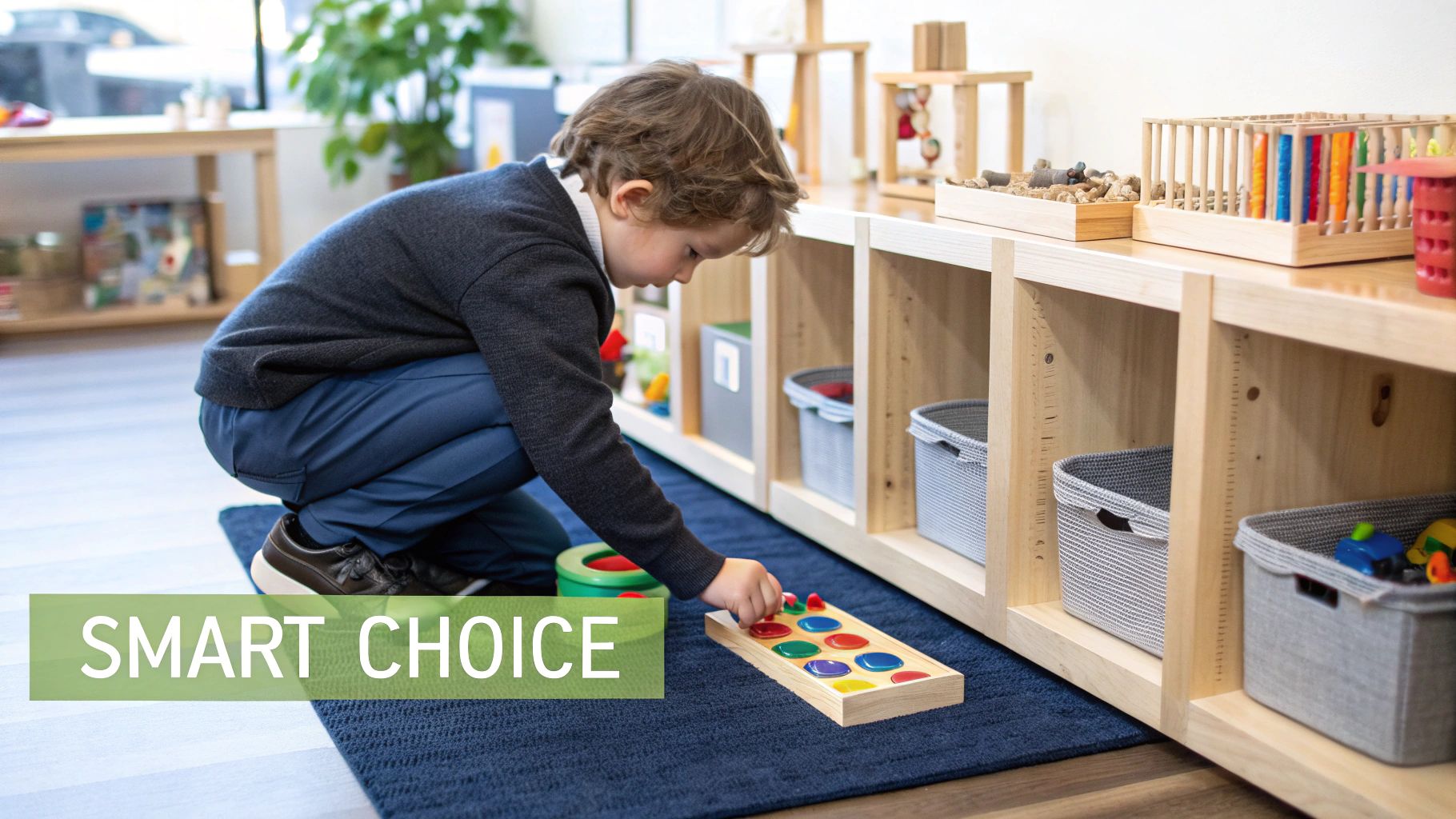
From classic toy chests to modern open-concept shelves, every style serves a different purpose. Your best bet will depend on the kinds of toys you have, your kids' ages, and where this new piece of furniture will live.
Matching Storage Style to Your Needs
Take a minute to think about your daily life. Do you need a quick-and-dirty way to stash bulky toys in the living room before company arrives? A beautiful wooden toy chest with a soft-close lid is a fantastic choice. It can even pull double duty as a bench for extra seating while keeping the mess completely out of sight.
If, on the other hand, you’re leaning into a Montessori-style setup, low, open shelving is your best friend. This approach lets toddlers and young children see all their toys, make their own choices, and—most importantly—learn to put things back where they belong. It builds responsibility and cuts down on the chaos of a single, giant toy dump.
The best storage solution simplifies life for both you and your child. For a toddler, that might mean low shelves they can manage themselves. For a shared family space, it could be a stylish bench that discreetly hides everything at the end of the day.
A Quick Look at Wooden Toy Storage Options
To make the decision a little easier, here's a quick comparison of some of the most popular wooden storage types.
| Storage Type | Best For | Age Group | Pros | Cons |
|---|---|---|---|---|
| Toy Chest | Quick cleanups, hiding bulky toys, shared spaces | 3+ years | Hides mess completely, doubles as seating | Can become a jumbled mess inside, safety lid is crucial |
| Open Shelving | Montessori-inspired play, fostering independence | 1-5 years | Toys are visible and accessible, encourages organization | Doesn't hide clutter, can look messy if not maintained |
| Cubby Units | Organizing smaller toys, creating designated spots | 2+ years | Very versatile, can use with or without bins | Bins can add to the cost, small cubbies don't fit large toys |
| Bookcase/Display | Storing books and showcasing special toys | All ages | Great for vertical space, transitions as child grows | Not ideal for bulky or awkwardly shaped toys |
Each of these has its place, and the right one for you really depends on what you're trying to achieve in your space.
Material and Safety Considerations
Once you have a style in mind, it’s time to get into the nitty-gritty. The type of wood and the built-in safety features are what separate a good piece of furniture from a great one.
Here’s what to look for:
- Wood Type: Pine is a common, budget-friendly option, but as a softwood, it’s prone to dents and dings. Hardwoods like oak, maple, or birch are much more durable and will hold up better to years of enthusiastic play.
- Safety Features: For any lidded chest, a soft-close safety hinge is absolutely non-negotiable to protect little fingers from getting pinched. Also, check for rounded corners and a wide, sturdy base that won’t tip over.
- Finishes: Make sure any paint or varnish is certified non-toxic and low-VOC. This is a big deal for keeping your home’s air healthy for your little ones. For a deeper dive, checking out resources on non-toxic kids' furniture can give you more confidence in your choices.
As you bring any new furniture into your home, it's a good time for a quick safety audit. A solid guide on how to childproof your home effectively can walk you through a room-by-room checklist to make sure your whole space is a safe haven.
At the end of the day, the right wooden toy storage is a piece that works just as hard as you do. It should be tough enough for the daily grind, safe for curious kids, and stylish enough that you’re happy to look at it for years. If you keep your family’s specific needs front and center, you’ll find the perfect solution to bring a little more calm and order to your home.
Styling Toy Storage to Match Your Decor
Let's be real—the ultimate goal is a chic, adult-friendly home that still feels warm and welcoming for the kids. Finding that perfect balance can be tricky, but integrating wooden toy storage is one of the best ways to get there. It’s all about turning practical pieces into stylish parts of your home's design.
The right unit doesn't just hide the mess; it actually enhances your decor.
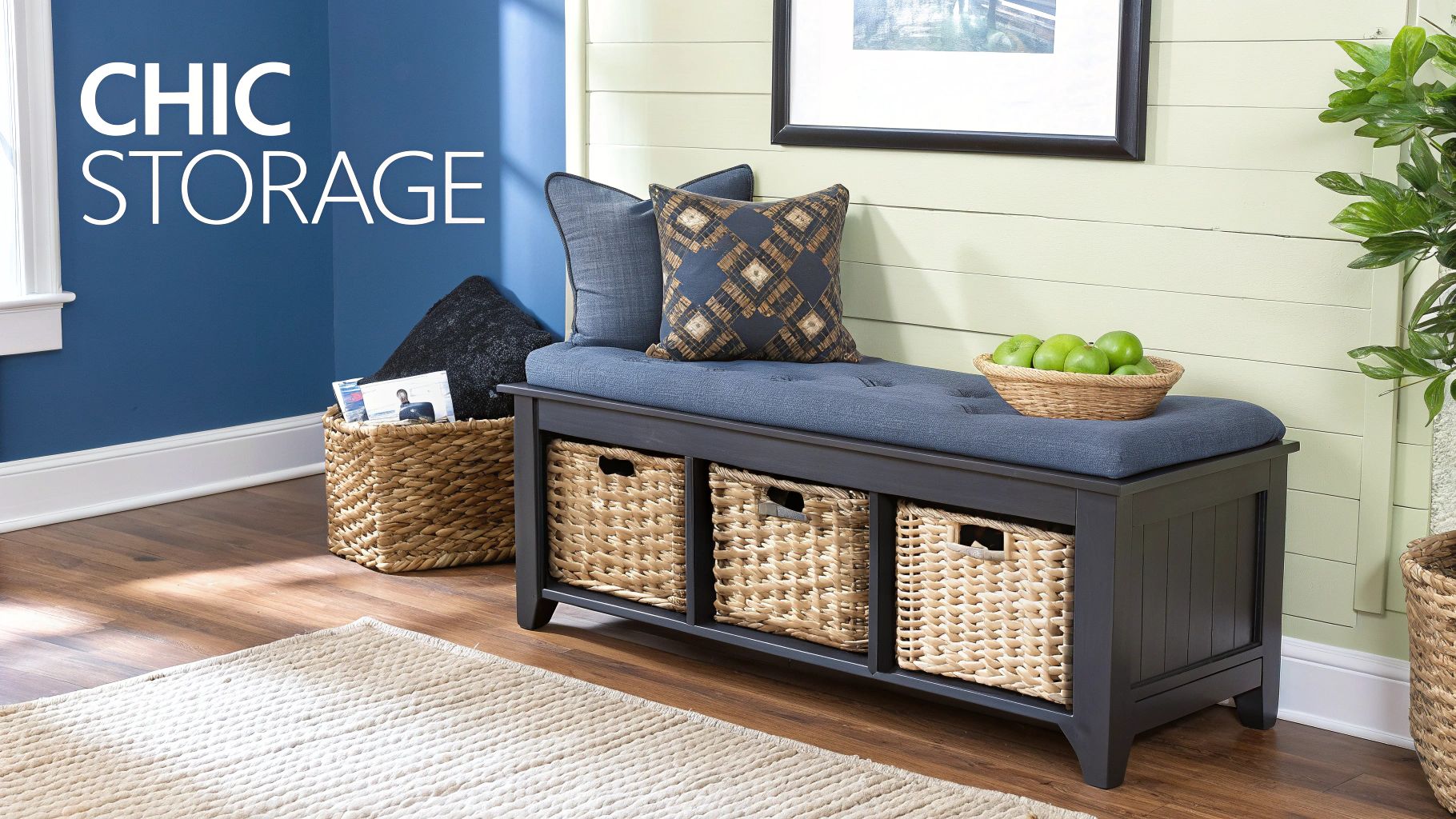
The secret? Stop thinking of it as "toy storage" and start seeing it as furniture. A sleek wooden bench with a lid in your living room, for example, offers a perfect spot for guests to sit. Meanwhile, it’s discreetly holding an impressive amount of building blocks and train sets. It's a design-forward solution that serves two functions beautifully.
Make Storage a Seamless Part of the Room
To make your storage unit feel intentional, coordinate it with the furniture you already own. Try matching the wood tone to your coffee table or media console for a cohesive look. If you have oak furniture, an oak toy chest will feel like a natural extension of your living room set, not just some playroom piece that wandered in.
You can also use storage to define specific zones, which is a lifesaver in open-concept spaces. Place a low, long shelving unit behind your sofa to create a subtle boundary for a designated play area. This keeps the toys contained to one section of the room without visually closing it off.
The most successful designs treat toy storage with the same importance as any other piece of furniture. It shouldn't be an outlier; it should complement the room’s flow, color palette, and overall style.
This mindset is catching on. The global market for kids' storage furniture, valued at USD 14.65 billion in 2024, is booming precisely because families want versatile, long-lasting pieces that serve more than one purpose. As homes, especially in urban areas, become more compact, furniture that works hard and looks great is in high demand.
Elevate the Details for a Polished Look
Once your main storage piece is in place, it’s the finishing touches that really make all the difference. Instead of using brightly colored plastic bins that scream "kids' stuff," opt for natural materials that add texture and warmth.
- Woven Baskets: Seagrass, rattan, or felt baskets look sophisticated and are perfect for corralling smaller items like figurines or craft supplies.
- Coordinated Containers: Using matching canvas or fabric bins creates a clean, uniform appearance on open shelves.
- Strategic Styling: Don't be afraid to style the top of your storage unit! A stylish lamp, a stack of art books, or a potted plant on top of a chest or cubby unit will integrate it fully into your adult decor.
This same idea of using attractive containers applies to smaller collections, too. For all those ever-present crayons and markers, finding the right art supply storage for kids can transform a cluttered corner into a neat and inspiring creative station.
Ultimately, the right accessories don't just improve organization—they elevate the entire aesthetic of your space, proving once and for all that a family home can be both functional and beautiful.
Toy Organization Systems That Actually Work
Having beautiful wooden toy storage is a great first step, but the real magic happens when you pair it with an organization system your kids can actually follow. The goal isn't just a clean room; it's making cleanup a simple, predictable routine instead of a constant power struggle.
A well-organized space does more than just look nice. It empowers children to find what they want to play with and, just as importantly, put it away themselves.
One of the most powerful strategies I’ve seen work time and time again is toy rotation. Instead of letting every single toy overwhelm the playroom, keep a curated selection out and store the rest away. Every few weeks or so, do a swap. This simple trick keeps playtime feeling fresh, cuts down on overstimulation, and makes cleanup so much less daunting for everyone.
Creating a Kid-Friendly System
The secret to a system that sticks is making it totally intuitive from a child's point of view. For little ones who can't read yet, this means leaning heavily on visual labels. A simple picture of blocks on the block bin or a photo of a car on the vehicle basket is a crystal-clear guide that even toddlers can understand and use.
Think about categorizing toys in a way that makes sense to them, not just you. I've found that simple, broad categories work best.
- Building Toys: A home for all the blocks, magnetic tiles, and construction sets.
- Small Worlds: This is where figurines, animal sets, and dollhouse furniture can live together.
- Things That Go: Cars, trains, and planes get their own dedicated parking spot.
This approach subtly teaches them early organizational skills, like sorting and classifying. For more inspiration on creating these kinds of tidy, functional spaces, you can find some fantastic smart kids' bedroom organization ideas that work perfectly with wooden storage.
The Five-Minute Toy Reset
Instead of letting the mess build until it feels like a disaster zone, try introducing a "toy reset." This is just a quick, five-minute tidy-up that happens at predictable times, like right before dinner or as part of the bedtime routine.
Crank up some music, set a timer, and make it a fun, low-pressure family race.
The goal isn't perfection; it's participation. By turning cleanup into a short, positive, and collaborative habit, you teach your children to take pride in their space and contribute to the family's daily rhythm.
This consistent routine reinforces where everything belongs and stops the playroom from ever getting too out of control. It becomes less of a chore and more of a satisfying way to wrap up a good play session.
By using these straightforward methods, you can turn your wooden toy storage from a simple set of containers into a living system that encourages independent play and builds good habits for life. If you're looking for more specific setups, our guide on effective toys storage organizers is packed with more practical tips.
Keeping Your Wooden Toy Storage Looking Its Best
When you choose high-quality wooden toy storage, you're not just buying a bin—you're investing in a real piece of furniture. These pieces are built to handle years of enthusiastic play and to grow right alongside your family. A little bit of care goes a long way in keeping them beautiful, safe, and ready for whatever comes next.
It's no surprise that families are leaning into durable, non-toxic options. The global toy storage market, which was valued at around USD 10.26 billion in 2025, reflects this shift. More and more of us are picking long-lasting materials like wood, which makes knowing how to care for them even more important. You can dig deeper into this growing preference for quality toy storage and see more details on market projections.
A Simple Cleaning Routine Is All You Need
Forget harsh chemicals or a ton of elbow grease. Keeping your wooden storage in top shape is surprisingly simple.
A quick weekly dusting with a soft, dry microfiber cloth is your first line of defense. It stops that layer of dust from building up and dulling the wood's natural finish. For those inevitable sticky fingerprints or mystery smudges, just dampen a cloth with a little water and a drop of mild, pH-neutral soap. Always wipe with the grain, then immediately follow up with a dry cloth to soak up any leftover moisture.
A friendly piece of advice: Steer clear of all-purpose sprays, anything with ammonia, or abrasive sponges. They’re way too harsh and can strip the protective finish, dry out the wood, and leave you with permanent damage.
Tackling Those Inevitable Kid-Created Messes
Life with kids means that sometimes, furniture becomes a canvas. Crayon masterpieces, a sticker collection on the side of a shelf—it happens! The good news is, these creative moments are usually easy to clean up without ruining the finish.
Got a stubborn crayon mark? This gentle trick works like a charm:
- Put a small dab of non-gel toothpaste or a paste made from baking soda and water onto a soft cloth.
- Rub the mark gently in a small circle, using very light pressure.
- Wipe the spot clean with a fresh, damp cloth to get rid of any residue.
- Dry it completely with another clean, soft cloth.
This little hack lifts the wax right off without scratching the wood. If you're dealing with sticky sticker goo, a bit of olive oil or mineral oil on a cloth will help dissolve the adhesive so you can wipe it away.
Quick Fixes and Regular Upkeep
Over time, you might notice a wobbly leg or a loose hinge from all the daily action. Spending a few minutes on quick upkeep can stop these little things from turning into bigger headaches. It's a good idea to keep a screwdriver nearby and just tighten up any hardware on your wooden toy storage every few months.
If a small scratch appears, don't panic. You can often make it disappear with a touch-up marker or a wax furniture crayon that matches your wood's finish. By staying on top of these minor fixes, you’ll keep your storage sturdy and beautiful, ensuring it remains a well-loved part of your home for years to come.
Common Questions About Wooden Toy Storage
Even when you're sold on the benefits, it's totally normal to have a few lingering questions before you invest in wooden toy storage. It’s a real piece of furniture, after all, and you want to feel confident it’s the right move for your family’s budget, your home, and your day-to-day life.
Let's walk through some of the most common questions we hear from parents.
Are Toy Chests Actually Safe These Days?
This is probably the biggest concern, especially for those of us who remember the old-school, heavy-lidded toy chests. Are they truly safe for curious little ones? The short answer is a resounding yes—as long as you choose a modern, well-designed piece.
Reputable makers now build critical safety features right into their designs. The absolute must-have is a soft-close safety hinge. This single feature is a game-changer, preventing the lid from ever slamming shut on tiny fingers. You should also look for ventilation cutouts and make sure the chest itself is sturdy and won't tip over easily.
Is It Worth the Higher Price Tag?
It’s no secret that a solid wood storage unit has a higher upfront cost than a stack of plastic bins. But it’s helpful to shift your thinking from a simple expense to a long-term investment. Wooden furniture is built to last for years, standing up to enthusiastic play and adapting right alongside your growing child.
That toy chest can easily become a blanket box at the end of a bed. A shelving unit can transition from holding blocks and puzzles to displaying books and trophies. This durability and versatility mean you aren't buying replacements every few years, which often saves money in the long run.
Wooden toy storage is furniture designed to grow with your family. Its value comes from its longevity, timeless style, and ability to serve new purposes long after the toys have been packed away.
What’s the Best Type of Wood to Choose?
Another great question. For a piece that’s going to live in a playroom and see a lot of action, hardwoods are your best bet.
- Hardwoods (Oak, Maple, Birch): These are incredibly durable. They resist dents and scratches far better, which is ideal for high-traffic areas and, let's be honest, less-than-gentle play.
- Softwoods (Pine): Pine is often more budget-friendly and has a lovely, rustic charm. Just know that it's much softer and will inevitably show dings and wear more easily.
If durability is your top priority, spending a bit more on a hardwood piece is definitely the way to go.
Isn't Wooden Storage Hard to Clean?
You'd be surprised! It’s actually quite simple to maintain. Most of the time, a quick dusting with a soft cloth is all it needs. For stickier messes, a wipe-down with a slightly damp cloth does the trick.
Even for the occasional scuff or stray crayon mark, gentle, natural cleaning methods are usually very effective without harming the finish. With just a tiny bit of care, you can keep your wooden toy storage looking beautiful for years, making it a truly practical and elegant choice for any home.
Discover beautiful, safe, and long-lasting furniture that grows with your child at Ocodile. Explore our collection of thoughtfully designed pieces and bring sustainable style to your home today at https://ocodile.com.