



The Ultimate Guide to Choosing a Locker for Kids
A locker for kids isn't just a mini-version of what you see in high schools; it's so much more than a simple storage spot. Think of it as your child’s very first piece of real estate—a private zone all their own for treasures, sports gear, and school projects.
Why a Locker for Kids Is a Smart Investment
Let's look past the colorful metal door for a second. A personal locker is actually an incredible tool for your child's development. It makes the idea of "ownership" real and tangible.
All of a sudden, their prized possessions have a specific, secure home. The responsibility for keeping them safe subtly shifts from you to them. It's a simple piece of furniture that quietly teaches some of the biggest life skills.
Giving a child their own locker builds a real sense of independence. It becomes their personal headquarters, a space that they are completely in charge of. This gets them thinking about how to organize—what goes on the shelf, what hangs on the hook, and what gets tucked away at the bottom. This little bit of daily practice builds habits that will follow them far beyond their bedroom door.
Fostering Responsibility and Organization
When kids learn to manage their own space, they're really learning to manage their responsibilities. A locker acts as a physical reminder for everything from school projects and soccer cleats to library books that need to be returned. This cuts down on that frantic morning chaos of "Has anyone seen my...?" and helps build a solid routine.
By creating a designated spot for important belongings, you empower your child to take control. This simple act of putting things away in their proper place is a building block for self-discipline and accountability.
This whole process isn't just about being tidy; it’s about laying the groundwork for future success. The organizational skills a child picks up by managing a small locker are the very same ones they'll use later to manage homework, schedules, and eventually, their own careers. It’s a low-stakes training ground for essential life skills. And to really boost this journey, adding in some dedicated toys storage organizers can work wonders alongside a locker.
The Growing Importance of Personal Storage
This idea of giving kids dedicated, secure storage isn't just a passing trend. The global market for lockers, which includes those designed for kids in homes and schools, is absolutely booming.
In 2025, the market is estimated to be worth USD 5.11 billion, and it's projected to skyrocket to USD 19.64 billion by 2032. If you look at recent industry reports on the locker market, you'll see this incredible growth yourself. It just goes to show a wider understanding of how vital organized spaces are for both security and a child’s personal development.
How to Choose the Right Locker Material
Choosing the right material for a kid's locker is a lot like picking out the right pair of shoes for an activity—what works for a muddy hike isn't going to be ideal for a dance class. The material you choose will define the locker's look, but more importantly, its durability, safety, and how easy it is to clean up those unavoidable messes.
Think of it as finding the perfect balance between strength, style, and everyday practicality. Each option has its own unique perks, so it's all about matching the material to what your family really needs. Let's break down the most common choices to find the perfect fit.
Classic Steel Strength
There's a reason steel is the classic, go-to material for lockers. It's incredibly durable and built to withstand the rough-and-tumble reality of being owned by a kid. This is the rugged, all-terrain vehicle of the locker world, ready for just about anything.
A steel locker gives you top-notch security for those special treasures and is surprisingly easy to make their own. The metal surface is a perfect canvas for magnets, decals, or even a fresh coat of paint, letting your child put their own personal stamp on their space. Just be sure to look for models with rounded corners to keep things safe for younger kids.
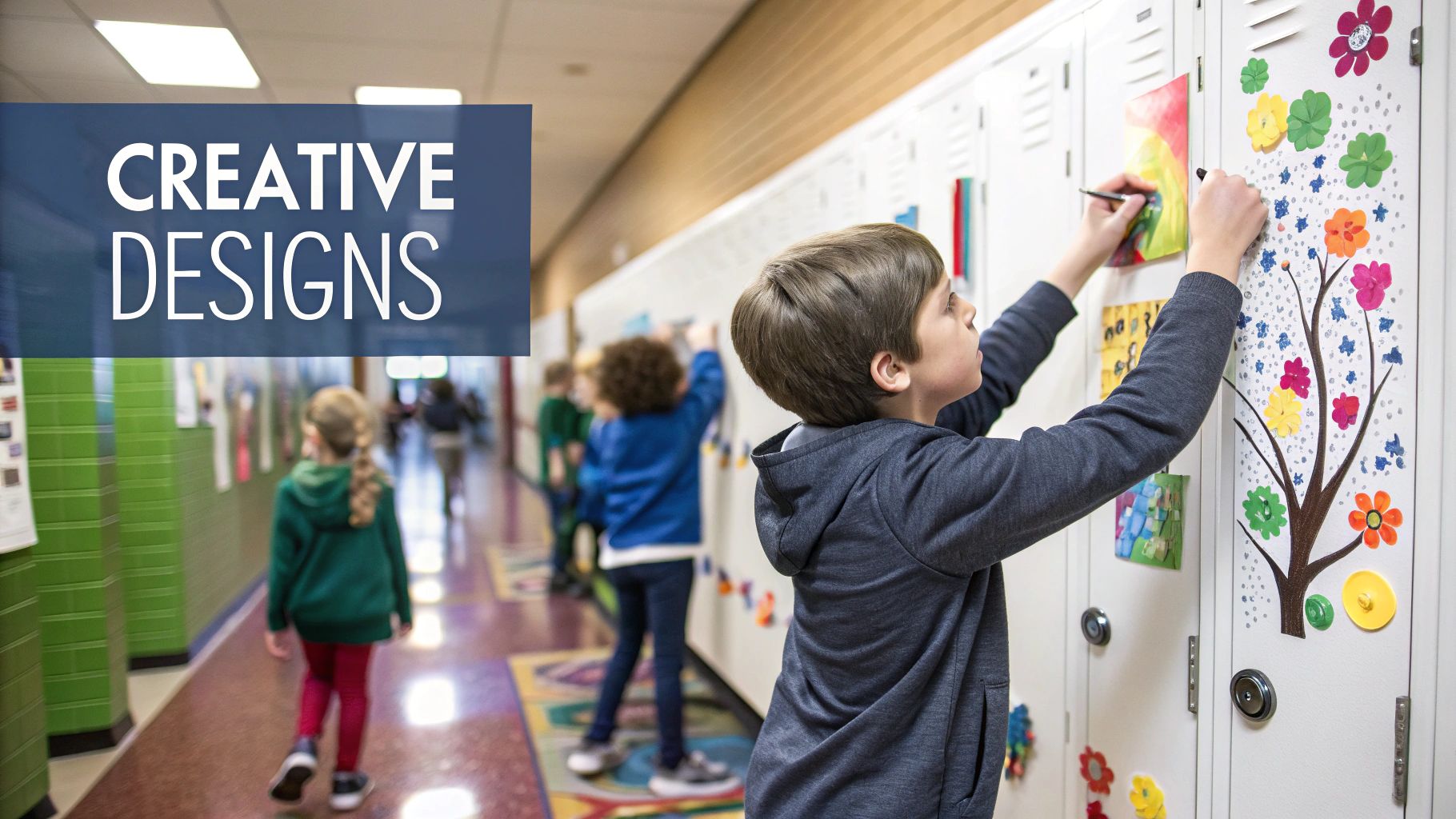
The image below shows just how much a dedicated space, like a locker, can simplify a child's daily routine at school.
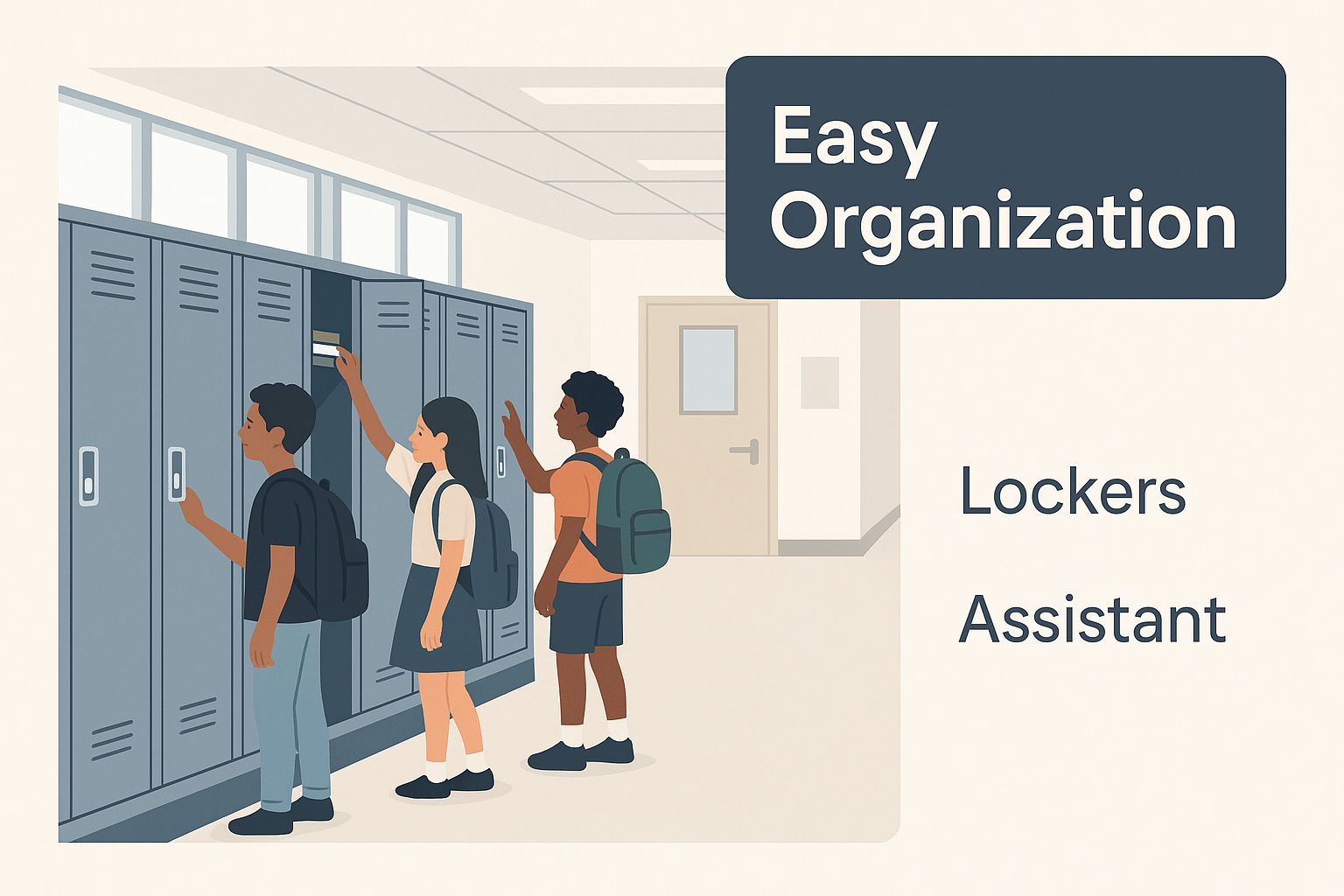
It’s a simple visual reminder that giving kids a designated spot for their belongings is a fantastic way to teach them organization from a young age.
Warm and Stylish Wood
If you're looking for a locker for kids that feels like a natural part of your home decor, wood or MDF (medium-density fiberboard) is a fantastic choice. These materials bring a warmer, more furniture-like feel compared to their metal cousins. They’re the stylish sedans of the locker family—perfectly functional, but with a real focus on aesthetics.
They blend beautifully into bedrooms and playrooms, often with softer, more inviting designs. While maybe not as resistant to dings and scratches as steel, a high-quality wood locker is still plenty sturdy. It's the ideal pick for creating a cozy, organized corner that doesn't scream "storage unit."
The right material can transform a simple storage unit into a cherished piece of furniture. Wood lockers often double as accent pieces, enhancing the room's overall feel while still serving a practical purpose.
This choice is especially popular in places like schools, where durability and organization are non-negotiable. It's a huge market—in North America alone, the locker industry was valued at around USD 3.22 billion in 2024, largely because of how many are used in schools and rec centers. You can explore more data on the locker market to see just how widespread this trend is.
Playful and Practical Plastic
For the younger crowd, plastic lockers are a wonderful, worry-free option. They're lightweight, completely rust-proof, and an absolute breeze to clean, which is a massive plus for any parent. Spills, crayon masterpieces, and sticky fingerprints wipe away without a fight.
Plastic lockers usually come in a whole rainbow of bright, fun colors that can instantly liven up a playroom. Their rounded edges and lighter build also make them one of the safest options out there. They might not have the classic look of steel or wood, but their sheer practicality and kid-friendly design make them a top contender for any space dedicated to early childhood.
Comparing Locker Materials for Your Child
Deciding between steel, wood, and plastic can feel tricky. Each material brings something different to the table, so think about where the locker will live and how your child will use it. Here’s a quick side-by-side look to help you weigh the pros and cons.
| Material | Pros | Cons | Best For |
|---|---|---|---|
| Steel | Incredibly durable, highly secure, easy to personalize with magnets. | Can have sharp corners, may look industrial, potential for rust. | Garages, mudrooms, older kids who need robust, long-lasting storage. |
| Wood | Blends with home decor, warm and stylish appearance, sturdy. | Can be heavier, susceptible to scratches and water damage. | Bedrooms and playrooms where aesthetics are as important as function. |
| Plastic | Lightweight, easy to clean, rust-proof, often has rounded edges. | Less durable than steel or wood, can look less "premium." | Young children's rooms, play areas, and anywhere messes are likely. |
Ultimately, the best locker is one that fits your child’s needs and your home’s style. A sturdy steel locker might be perfect for sports gear in the garage, while a colorful plastic one is ideal for toys in the playroom. It's all about finding that perfect match.
Critical Safety Features Every Parent Should Check
When you bring a locker for kids into your home, its number one job is to be a safe, helpful part of their space. Fun colors and cool designs are great, but a few key safety features are completely non-negotiable. Think of it as the essential safety inspection you’d do for any piece of furniture meant for your child—it’s all about peace of mind.
The single most important thing to look for is stability. Kids are natural-born explorers and climbers, which means any tall furniture, lockers included, can become a tipping hazard if it’s not secured. This isn't a minor detail; it's a critical step in preventing serious accidents.
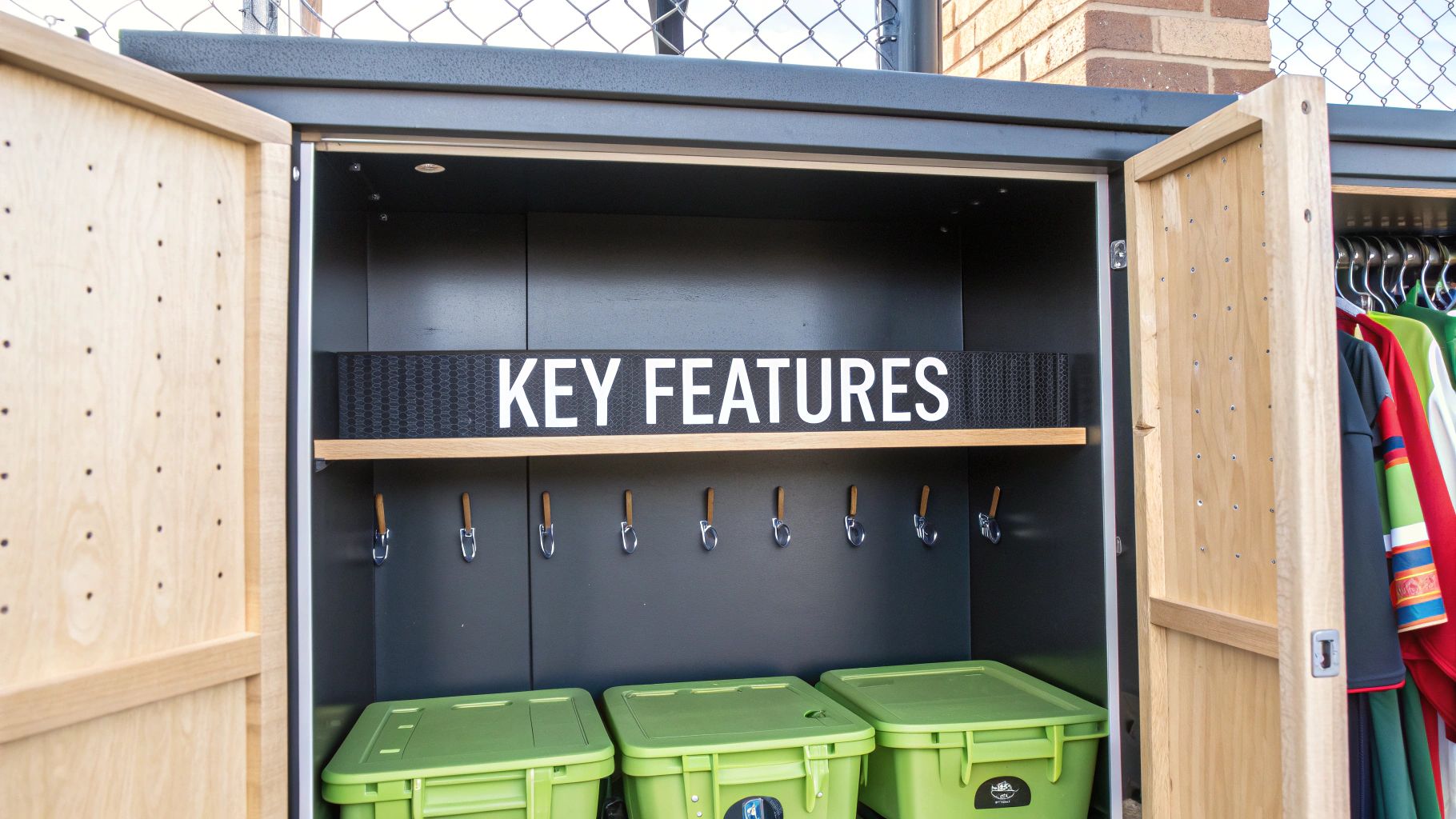
Prioritizing Stability and Structural Integrity
Always, always look for a locker that comes with an anti-tip mechanism or a wall anchoring kit. These simple kits let you fasten the locker securely to the wall, making it almost impossible for a curious kid to pull it over. It’s a small step that makes a world of difference, much like how the best learning tower designs focus on a super-stable base so kids can safely help out in the kitchen.
Beyond just anchoring it, take a close look at the locker's overall construction. You want to spot the features that will protect little hands and bodies from the bumps and scrapes of daily use.
- Rounded Corners: Sharp, 90-degree metal corners are just asking for trouble. A good design will have smooth, rounded edges to soften any accidental bumps.
- Pinch-Free Hinges: Little fingers have a knack for finding their way into closing doors. High-quality lockers often use recessed or guarded hinges that create a much safer closing action.
- Proper Ventilation: If the locker is going to hold gym clothes, soccer gear, or even a damp raincoat, it needs to breathe. Look for vents or louvers on the door to keep air circulating. This prevents musty smells and mold, keeping everything inside fresh.
A truly safe product is one that anticipates how a child will actually use it. From anchoring the unit to the wall to smoothing out its corners, these features are designed to protect kids from their own endless curiosity and energy.
Choosing an Age-Appropriate Lock
Finally, think about the lock. The real goal here is to strike a balance between security and accessibility. You want your child to feel empowered by their locker, not frustrated by it. If the lock is too tricky, they’ll just give up on using it.
For the younger crowd (ages 4-7), a simple magnetic latch or a twist-handle with no lock is usually the best bet. It gives them that satisfying sense of ownership without the headache of keys or codes. As they get a bit older (ages 8 and up), you can introduce traditional options like a key lock or a simple combination dial. These are great for teaching responsibility, but just make sure the mechanism is smooth and easy enough for them to manage on their own. For a personal locker for kids at home, there's no need to overcomplicate things.
Finding the Perfect Size and Style for Their Space
The best locker for kids is one that feels like a natural part of their world—not just a box for stuff, but a piece of furniture that genuinely supports their growing independence. Think of it less as a storage unit and more as a personal headquarters for your little one.
Before you do anything else, grab a tape measure. It's crucial to know the exact space you're working with, but don't just measure the floor footprint. Think about the height. A locker is only helpful if your child can actually reach what's inside.
Here’s a simple trick: get your child involved! Have them stand in the spot where the locker will go and reach up comfortably. This little test is the best way to figure out the maximum height for shelves and hooks, ensuring they can manage their own things without calling for backup.
Matching the Locker to Your Child’s Needs
So, what exactly will this locker be holding? The answer to that question will guide you to the perfect design. Different styles serve very different purposes.
- Tall, Single-Door Lockers: These are a fantastic choice for mudrooms or entryways. They’re perfect for hanging up coats, stashing backpacks, and corralling sports gear all in one spot.
- Smaller, Stackable Cubes: These are brilliant for bedrooms and playrooms. You can use them to organize toys, art supplies, or books, and simply add more cubes as their collection (inevitably) grows.
A locker should grow with your child, not just hold their stuff. Choosing a versatile style means it can transition from a toy cubby to a school supply station as they get older.
This kind of adaptability is what turns a good purchase into a great one. When a locker fits neatly alongside their other furniture, like a Montessori table and chair, it helps create a cohesive little zone that’s all their own. It sends a quiet message that their space is organized, respected, and set up for them to succeed.
Blending Style with Your Home Decor
Let's be honest, the days of the drab, battleship-gray school locker are long gone. Today's options for a locker for kids come in a whole rainbow of colors and styles, ready to match any home's vibe.
If you’re decorating a high-energy playroom, why not go for a locker in a bright, cheerful primary color? For a bedroom, a locker with a cool, retro-industrial feel in a more muted tone can add a touch of personality without overwhelming the space.
And if you’re playing the long game? A sleek, minimalist design in a simple white or a soft neutral will look just as good in their room when they're a teen as it does when they're a toddler. It's a smart and stylish investment that will truly grow with them.
Understanding Smart Lockers for Home Use
Technology is pretty much everywhere these days, and believe it or not, even the humble locker is getting a high-tech upgrade. A smart locker for kids ditches the old-school keys and tricky combination dials for something much simpler, bringing a new level of convenience and security that can be a real lifesaver for busy families.
Think of it as a personal, secure "digital vault" for your child’s stuff. Instead of a key they’ll definitely lose or a combination they’re bound to forget, these modern lockers use access methods that are way more intuitive. It’s a small change that can cut out a surprising amount of daily frustration.
Beyond Keys and Combinations
So, what exactly makes a smart locker "smart"? It all comes down to how you open it. These tech-forward options are built to be incredibly easy to use, especially for younger kids who are still getting the hang of fine motor skills or remembering sequences.
Here are a few of the most common ways they work:
- Electronic Keypads: A simple number code is often way easier for a child to remember than turning a dial left, right, then left again.
- RFID or NFC Access: Lots of smart lockers use key fobs, wristbands, or cards. Your child just taps it on the locker, and it pops open. Super simple.
- Biometric Scanners: You don't see these as often for home use, but some higher-end models use fingerprint readers for top-notch security.
- App-Based Control: This is where the real magic happens for parents. You can usually grant or revoke access, check if the locker is locked, and even see an activity log right from your phone.
A smart locker isn’t just about fancy features; it’s about making access effortless for your child while giving you total peace of mind through easy parental oversight.
A Practical Choice for Modern Families
This kind of tech is popping up more and more in public spaces, which just shows how much people want secure, smart storage. Take the smart luggage locker market, which uses similar technology—it was valued at about USD 1.38 billion in 2024 and is expected to jump to USD 3.34 billion by 2033. This boom is all about the demand for things like easy-to-use keypads and remote management, which keep belongings safe while allowing parents or staff to stay in control. You can dig deeper into the smart luggage locker market trends to see how this tech is taking off.
For your home, this means a locker for kids can really streamline your daily routines. Picture your child getting home from soccer practice. Instead of fumbling for a key with muddy hands, they just tap their wristband to open their locker and toss their gear inside. It’s a tiny, seamless moment that removes one more point of friction from their day and makes staying organized feel less like a chore.
Still Have Questions About Kids Lockers?
Even after you've nailed down the material, size, and safety features you're looking for, a few questions might still be bouncing around in your head. A locker for kids isn't exactly a typical piece of furniture, so it's smart to cover all your bases before you bring one home.
We've pulled together the most common questions we hear from parents. Think of this as the final checklist to make sure you're picking a locker that’s a perfect fit for your child, your space, and your family's daily hustle from day one.
What Is the Best Age for a Child to Get a Locker?
Honestly, there’s no single "right" age. It really comes down to your child's developmental stage and what you need it for.
You'd be surprised how much kids as young as 5 or 6 can get out of a simple locker. It becomes their special spot for stashing toys, art supplies, and favorite books. It’s a great, low-pressure way to introduce the idea of tidying up their own stuff.
For school-aged kids, usually between 7 and 12, a locker becomes a seriously powerful organizational tool. It's the perfect home base for homework, sports gear, and that backpack that always seems to end up in the middle of the entryway. At this age, a locker helps build a real sense of responsibility.
The secret is to match the locker's features to your child's age. A simple magnetic door is perfect for younger kids, while an older child will feel a huge sense of pride mastering a classic combination lock.
How Do I Make Sure the Locker Will Not Tip Over?
This is, hands down, the most critical safety question for any locker for kids. The absolute best way to prevent a tip-over accident is to use the anti-tip hardware kit that should come included with the locker. This kit lets you anchor the unit securely to a stud in the wall.
Never, ever leave a tall, freestanding locker in a child's room without anchoring it. Kids are naturally curious and often see furniture as their own personal climbing frame, which can be a serious hazard. For extra stability, try placing the locker in a corner where you can anchor it to two walls.
What Are the Best Ways to Organize Inside a Kids Locker?
Making the inside of the locker work is just as important as how it looks on the outside. You want to create a system so easy to use that your child actually enjoys keeping things tidy.
Here are a few simple ideas to get the most out of the space:
- Add Small Shelves: Use stackable wire or plastic shelves to create different compartments. This is perfect for separating books from art supplies or shoes from sports gear.
- Use Magnetic Accessories: If you went with a metal locker, magnetic accessories are a total game-changer. Small bins for pens, hooks for keys, and clips for notes can stick right to the door.
- Label Everything: For younger kids, picture labels are your best friend. A picture of a soccer ball on a bin makes it crystal clear where the shin guards are supposed to go.
How Can I Customize a Metal Locker for My Child?
Personalizing a locker is a fantastic weekend project to do with your child. It gives them a real sense of ownership and turns a simple piece of furniture into something that’s all theirs.
Removable wallpaper or vinyl decals are great non-permanent options. They come in every pattern and theme imaginable, from superheroes to cool geometric designs. If you're feeling more ambitious and want to paint it, just remember to lightly sand and prime the metal surface first for a smooth, lasting finish. Getting your child involved in picking the colors or decals is the best way to make their new locker for kids feel like their own special space.
Ready to give your child the perfect space to organize their world? Explore the beautifully designed, safe, and practical furniture at Ocodile and find the ideal solution for your family. Visit https://ocodile.com to see our collection.