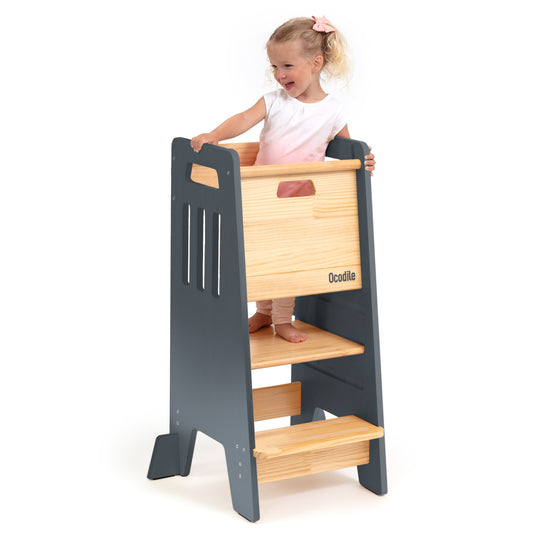


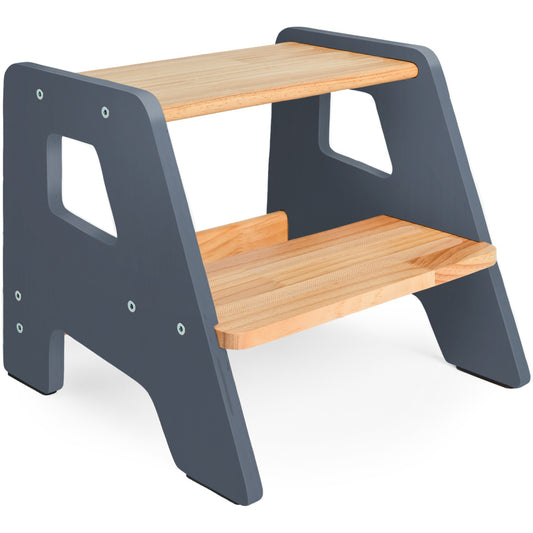


Weaning Table Montessori: Fostering Independence at Mealtimes
A Montessori weaning table is simply a child-sized table and chair set. But don't let its simplicity fool you. It's designed to give toddlers a sense of autonomy during mealtimes. This is more than just small furniture; it’s a dedicated space where your little one can sit down, eat, and get up all on their own, encouraging independence right from their first bites of solid food.
What Is a Montessori Weaning Table and Why Does It Matter
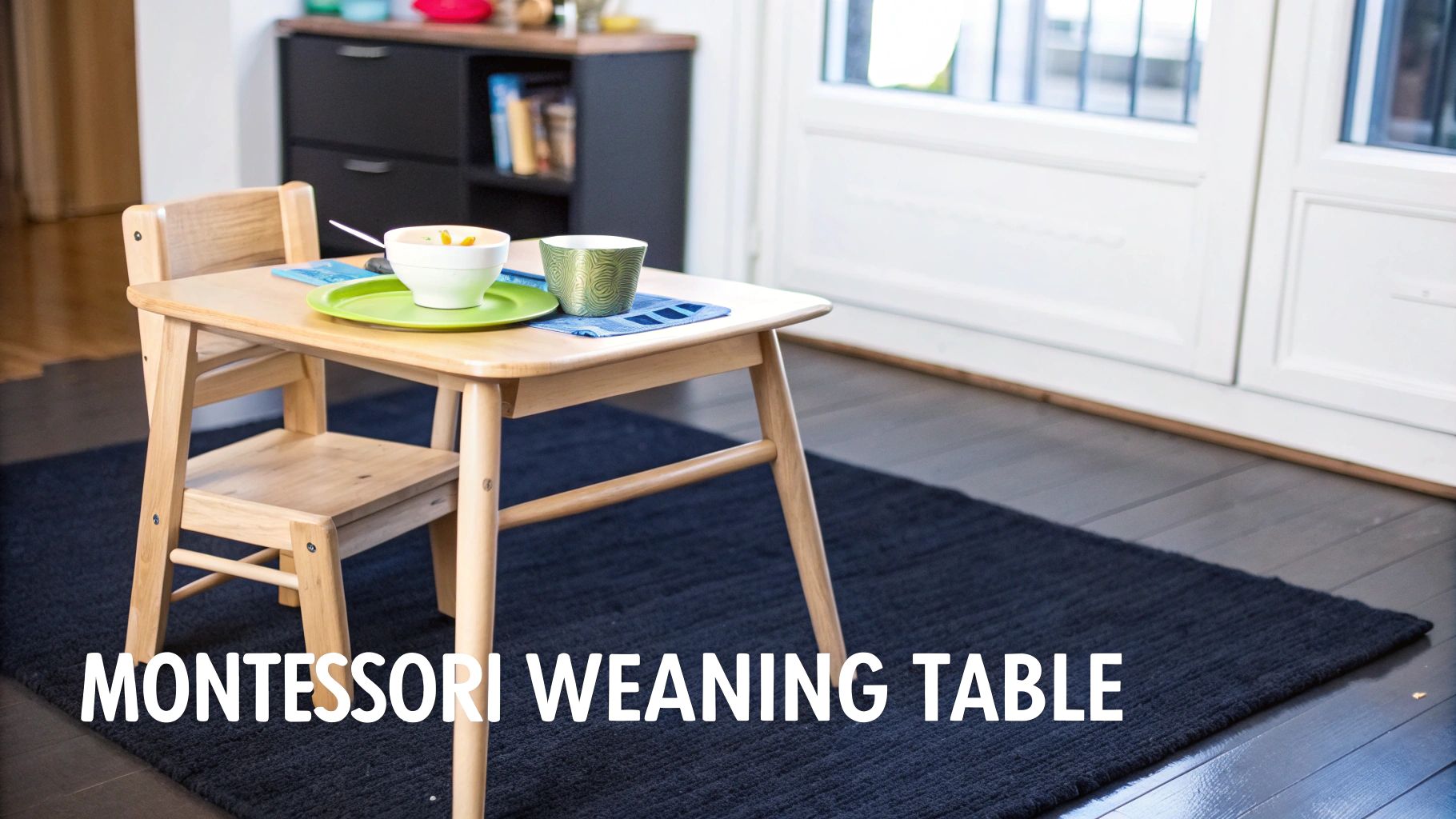
Picture your own dining room table, but perfectly scaled down for a one-year-old. That’s the basic idea. A Montessori weaning table isn’t just a place to eat; it's a tool designed to respect and nurture a child's natural drive to do things for themselves. Every single day, this simple piece of furniture sends a message of trust and capability to your child.
It’s a world away from a high chair, which straps a child in and restricts their movement. With a weaning table, your child is an active participant in the meal, not just a passive recipient of food. This one fundamental shift can change their entire relationship with food and family dining right from the start.
The Philosophy of Freedom and Respect
This isn't some new trend. The concept comes directly from Maria Montessori’s observations of toddlers in Rome way back in the early 20th century. She noticed that children between 12 and 18 months old had a powerful desire to sit on their own and join family meals instead of being stuck in a high chair.
By the 1930s, low, child-sized tables were standard in Montessori classrooms, and it's a practice now found in over 60,000 schools worldwide. You can learn more about the global rise of Montessori furniture on APOResearch.com.
At its heart, a weaning table is an invitation. It tells a child, "You are a capable member of this family. Your needs are seen, and your desire for independence is respected."
This environment is intentionally set up to support them on their developmental journey. The focus shifts from just feeding a child to helping them learn how to feed themselves.
More Than Just a Mealtime Spot
The purpose of a weaning table goes far beyond eating. It's a foundational piece in a Montessori-inspired home that supports your child’s all-around development. This dedicated little space helps nurture so much more:
- Gross Motor Skills: The simple act of getting in and out of the chair builds strength, coordination, and body awareness.
- Fine Motor Skills: Using child-sized utensils and cups on a stable surface is great practice for those precise hand movements.
- Concentration: Having a personal, distraction-free space helps them focus on the task at hand, whether it's eating or playing.
- Confidence: Successfully managing their own space builds a powerful sense of competence and self-esteem.
By providing this accessible, child-first environment, you're laying the groundwork for a self-assured, independent person. It’s a small change in your home that can have a huge impact on their growth.
How a Weaning Table Transforms Your Child's Development

A weaning table montessori setup is so much more than a cute piece of miniature furniture. It's actually a powerful tool for your child's growth. When you give them a space that is entirely their own, you empower them to take a hands-on role in their daily routines, building a strong foundation for confidence and skills that last a lifetime.
The first thing you’ll notice is a huge leap in independence. A high chair makes a child a passive participant in mealtime, but a weaning table lets them get in and out of their own seat. This simple freedom teaches them to listen to their body’s cues for hunger and fullness. It turns mealtime from a one-way command into a two-way conversation.
This newfound freedom of movement is a game-changer for physical development, too. Every single time your child sits down, gets up, or carries their cup to the table, they are sharpening their gross motor skills—those big movements involving their arms, legs, and torso. It’s practical, real-world exercise woven right into their day.
Nurturing Precision and Coordination
Beyond those big movements, the weaning table is the perfect training ground for more delicate actions. A Montessori weaning table is designed to encourage self-reliance, which directly supports the development of crucial fine motor skills needed for self-feeding. The stable, low surface is the ideal platform for practicing with utensils.
Think about all the coordination it takes to:
- Grasp a spoon: Developing that pincer grasp and hand strength.
- Scoop up food: Practicing hand-eye coordination and spatial awareness.
- Lift a cup: Learning how to control their wrist to keep from spilling.
- Wipe up a spill: Using a small cloth builds practical life skills right from the start.
These aren't just messy moments; they're critical developmental exercises. Every attempt, whether it’s a success or not, strengthens the neural pathways that control precise hand and finger movements. This foundation is essential for everything that comes later, from buttoning a shirt to learning to write.
Building Psychological Strength and Trust
Maybe the most profound impact of a weaning table is psychological. When you provide your child with tools and a space scaled to their size, you send a powerful, unspoken message: "I trust you. I respect you. You are capable." This validation is the very bedrock of self-esteem.
A child’s dedicated space isn't just about physical access; it's about emotional access to independence and self-worth. It quietly communicates that they are a valued and competent member of the family unit.
This sense of ownership helps build a positive relationship with food and mealtimes. The table becomes a safe, predictable space where they can explore tastes and textures without any pressure. Instead of a power struggle, mealtime becomes an opportunity for discovery and connection, setting the stage for healthy eating habits that can last a lifetime.
Creating the Perfect Weaning Table Environment
Getting a weaning table montessori setup right is about more than just the furniture. It’s about the whole environment you build around it. When you prepare the space thoughtfully, you're not just setting a table; you're inviting your child to participate. This turns mealtimes into joyful learning instead of a battle of wills. The idea is to create a "yes space" where your child feels capable and respected from the very start.
This all begins with location, location, location. Tucking the weaning table into a corner of the kitchen or dining area helps your child feel like they’re truly part of the family’s daily rhythm. They get a front-row seat to watch you prepare food, soaking up the social atmosphere of your home's central hub.
This simple act of inclusion is huge. It fosters a positive relationship with both food and family meals, sending a clear message: you belong here, and what you do matters.
Selecting the Right Size and Tools
Okay, let's talk about the most critical detail: getting the size right. For this whole setup to work, your child’s feet must rest flat on the floor when they’re seated. This is non-negotiable. It gives them the stability and core support they need to focus on the tricky business of eating, handling utensils, and drinking from a cup.
If the chair is too high or too low, they'll be wiggling and uncomfortable, which completely undermines the goal of independence. The table should also be at a comfortable height, allowing their elbows to bend at roughly a 90-degree angle when their hands are resting on it.
Once you’ve got the furniture sorted, it's time for the fun part: the accessories. These tools should be just as child-friendly as the table and chair.
- Child-Sized Utensils: Think small, lightweight forks and spoons that little hands can actually control.
- A Small Pitcher: A tiny pitcher with just a splash of water or milk is perfect for practicing pouring—a classic Montessori practical life skill.
- Unbreakable Dishes: Small, sturdy bowls and plates are a must. If you opt for clear glass, they can see the contents, which adds another layer to the learning experience.
- A Cleaning Cloth: Keep a small, accessible cloth or sponge nearby. This empowers them to take part in cleaning up their own spills.
The goal is to remove obstacles. By providing tools they can actually manage, you empower your child to succeed with minimal frustration and intervention.
Fostering Independence Through Order
This entire setup is a beautiful cornerstone of a Montessori-inspired home. If you're looking for more ways to bring these ideas into your space, our guide on essential Montessori materials for home is packed with inspiration. The same principles of order and accessibility that make the weaning table work so well can be applied to every part of your child’s life.
Going beyond just mealtime, a true Montessori environment often uses smart strategies for organizing children's play areas to boost independence. When you create a world that is predictable and accessible, you give your child the confidence to explore, learn, and master their surroundings, one small, successful step at a time.
Weaning Table Versus High Chair: A Developmental Comparison
When you're setting up for your little one's first meals, the choice between a weaning table montessori style and a classic high chair goes beyond just picking out furniture. It's really a choice between two different philosophies for mealtime.
A high chair is all about containment and making things a bit easier for the caregiver. A weaning table, on the other hand, puts the child's budding autonomy and skill-building front and center. The two options highlight a pretty big difference in how we see a child's role at the dinner table.
Think about it: a high chair often makes a child a passive observer. They get lifted in, strapped down, and then they wait for food to arrive. This setup can, without us even realizing it, teach dependence. The child has zero control over when they sit down or when they can get up. This physical restriction also limits their chance to naturally develop core strength and balance.
A weaning table is the complete opposite—it's an open invitation to join in. By giving your child a chair they can get into and out of all by themselves, you're empowering them to listen to their own body's cues. This freedom of movement is a huge part of the Montessori philosophy, helping to build independence, self-regulation, and physical confidence right from the start.
Core Philosophy and Physical Freedom
The biggest difference really boils down to who is in control. A high chair puts the adult firmly in charge. It's designed to keep a child in one spot, which definitely helps make feeding cleaner and more manageable for parents. But this often leaves a child's legs dangling, which offers terrible postural support and makes it tougher for them to focus on the tricky business of learning to eat.
A weaning table, however, is built around the child’s developmental needs. With their feet flat on the floor, they can get into a stable, ergonomic position that actually helps with concentration and fine motor skills. This stability is so important for learning to use utensils and building the core strength they need for healthy physical growth.
Simply put, a high chair contains, while a weaning table liberates. You can dive deeper into how different seating options affect development in our detailed guide on the Montessori high chair.
The diagram below shows all the key pieces that come together to create a great weaning table environment, from its location in the home to the furniture and tools involved.
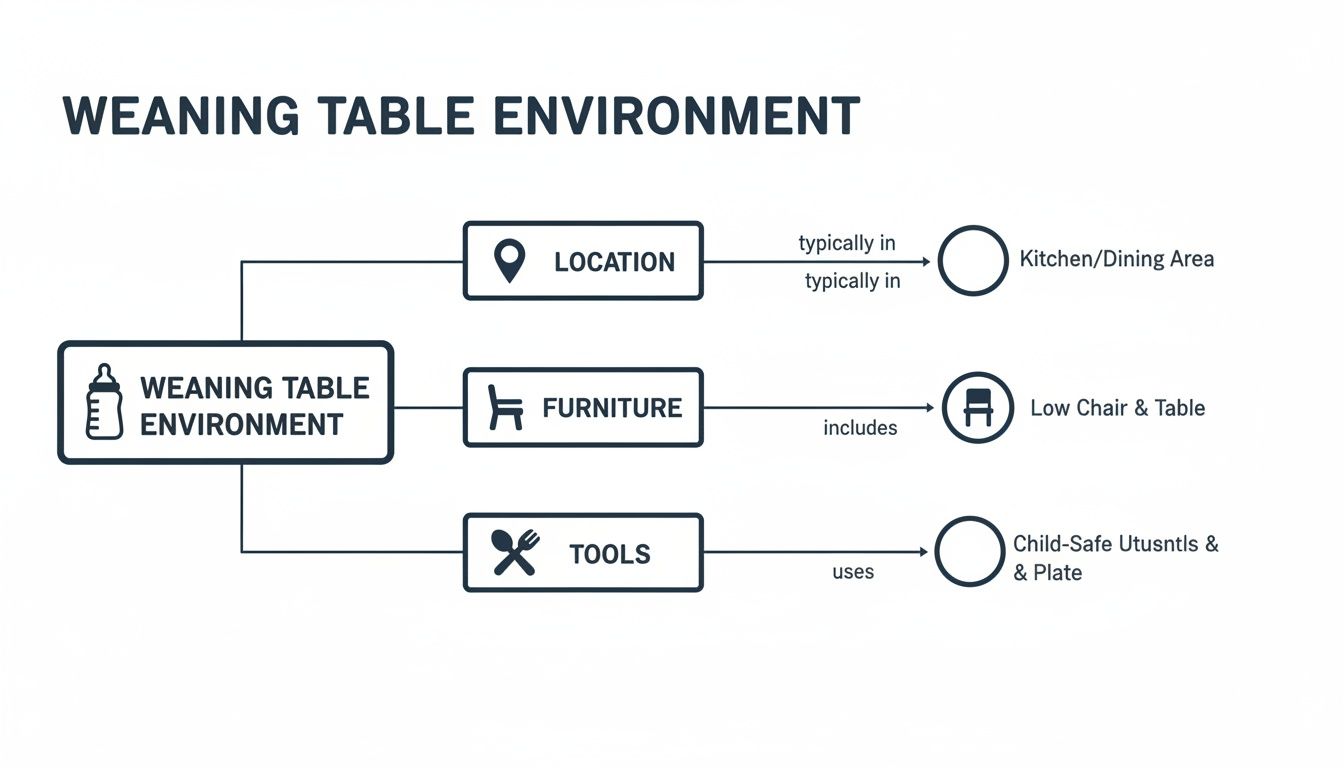
As you can see, a successful setup is a thoughtful mix of the right place, the right furniture, and easy-to-reach tools, all working together to help your child become more independent.
A Head-to-Head Comparison
To make the choice a bit clearer, let's break down the main differences side-by-side. This comparison really shows how each option serves a different purpose during these important early years.
Feature Comparison Weaning Table vs High Chair
| Feature | Montessori Weaning Table | Traditional High Chair |
|---|---|---|
| Independence | High: Child can sit and leave on their own. | Low: Child needs help to get in and out. |
| Movement | Encourages freedom and body awareness. | Restricts movement with straps and trays. |
| Posture | Promotes stability with feet flat on the floor. | Often leaves legs dangling, offering poor support. |
| Skill Building | Fosters fine motor skills and practical life tasks. | Focuses solely on containment during feeding. |
| Parent Role | Guide and observer. | Director and server. |
Ultimately, the choice comes down to your family’s goals. If your priority is to nurture self-reliance and include your child in family life as a capable little person, the weaning table montessori approach offers a clear and empowering path forward.
How to Choose the Right Weaning Table for Your Home
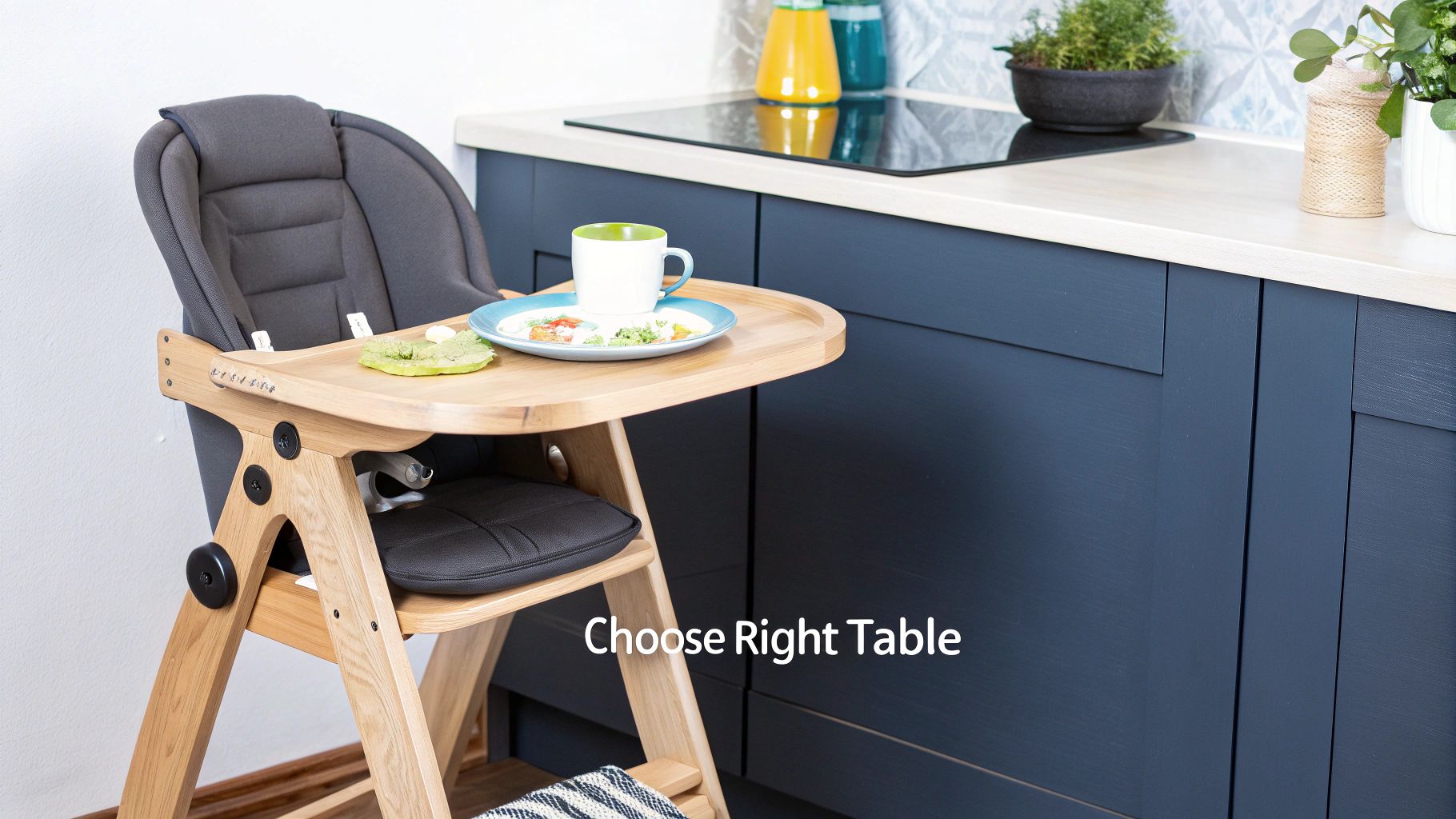
Picking out a weaning table montessori style is a real investment in your little one’s growing independence. Think of it as more than just another piece of furniture; it's a dedicated tool designed just for their development. To make sure you bring home a piece that’s safe, functional, and fits beautifully into your space, there are a few key things to keep in mind.
First and foremost, stability is completely non-negotiable. A good table needs a wide, sturdy base that won’t tip over when your child starts pulling up or leaning on it. You’ll want to look for solid wood construction and smooth, rounded edges to keep bumps and scrapes to a minimum during their daily adventures.
This deep commitment to safety and quality is really the heart of our design philosophy at Ocodile. We believe furniture made for children should meet the same tough standards as everything else in your home. By using durable, child-safe materials and thoughtful engineering, we build products you can rely on as your child grows.
Material and Finish Safety
When you're looking at different weaning tables, take a close look at the materials and finishes. Little ones explore the world with their mouths, so it's absolutely crucial that the table has a non-toxic, child-safe finish. Look for brands that are transparent about their paints and lacquers or have safety certifications. Natural wood is often the top choice for its durability and classic look.
At Ocodile, we’re all about using materials that are both beautiful and completely safe for our most sensitive users. Our designs fall right in line with Montessori principles by offering a simple, natural, and functional space where children can really thrive. We’re not making temporary accessories, but dependable and attractive furniture that becomes a part of your home.
This shift toward quality and safety is part of a bigger trend. The market for dedicated Montessori weaning tables has already hit around USD 315 million and is expected to keep growing. It's a sign that design-focused brands are stepping up to meet the needs of parents who are passionate about fostering independence from an early age.
A well-chosen weaning table sends a clear message to your child: "Your space is important, your safety is prioritized, and your independence is valued." It becomes a trusted foundation for countless meals and activities.
Ergonomics and Proper Sizing
The single most important detail for a successful weaning table setup is proper sizing. For the chair to be truly ergonomic and supportive, your child’s feet have to be able to rest flat on the floor while they’re seated. This is what gives them the core stability they need to focus on the tricky business of eating and handling utensils.
Here’s a quick checklist to get that perfect ergonomic fit:
- Feet Flat: Make sure the chair height lets their feet plant firmly on the ground. No dangling!
- Knees at 90 Degrees: Their knees should bend comfortably at about a right angle.
- Elbows Rest Comfortably: The table should be at a height where their elbows can rest easily on top without them having to hunch over or reach up.
Getting the size just right is what promotes healthy posture and makes mealtime a comfortable, positive experience. For more tips on getting the furniture just right, check out our detailed article on the ideal Montessori table and chair. An Ocodile weaning table is specifically engineered to give this exact ergonomic support, creating an environment where your child can truly flourish.
Common Questions About Montessori Weaning Tables
Switching from a traditional high chair to a weaning table montessori setup is a big step, so it’s completely natural to have questions. It’s a different way of thinking about mealtime, after all. We've gathered some of the most common concerns parents have to help you feel confident as you get started.
Think of this as your guide to making mealtimes a more positive and empowering experience for everyone involved.
At What Age Should I Introduce a Weaning Table?
You can bring a Montessori weaning table into your home as soon as your child can sit up on their own with good, stable control. For most little ones, this happens somewhere between 6 and 9 months old. The key isn't a specific birthday but their physical readiness.
You might start with just short sessions—a quick snack or a simple sensory activity. As they get more comfortable and their focus grows, it will naturally become their go-to spot for meals, building that sense of independence right from their first bites of solid food.
How Do I Manage Mess Without Discouraging My Child?
Here's a little secret: mess is part of the learning process! The goal of the Montessori approach isn't to prevent every spill, but to prepare the environment so cleanup is simple and stress-free. This shift in mindset makes all the difference.
A few practical tips can help:
- Use a Splat Mat: An easy-to-clean mat under the table and chair will save your floors and your sanity.
- Provide Child-Sized Tools: Keep a small cloth or sponge nearby where your child can easily reach it.
- Model the Behavior: When a spill happens, don't panic. Just calmly show your child how to wipe it up. Treat it as a normal part of eating, not a mistake.
When you frame cleanup as just another task, you teach practical life skills without making your child feel bad for exploring their food.
In the Montessori world, a "mess" isn't a problem—it's a chance to learn about grace and responsibility. It shows children how to care for their space and take ownership of their actions.
What if My Toddler Won't Stay Seated at the Table?
This is a super common challenge, and it's exactly where a weaning table really shines. The whole idea is to respect a child’s natural need for movement. If your toddler gets up, it’s usually their way of saying, "I'm done."
Trying to force them to sit back down almost always turns into a power struggle. Instead, just calmly state what you see: "It looks like you are all done with your meal." Then, clear their plate. It’s a gentle, natural consequence—when you leave the table, the meal is over. Be consistent, and your child will quickly learn to stay seated as long as they are hungry. Keeping mealtimes short and sweet also helps!
Can the Weaning Table Be Used for Other Activities?
Absolutely! A weaning table is so much more than a place to eat; it’s one of the most versatile pieces of furniture you can have for your child.
Think of it as their personal little workspace, perfectly sized for them. It’s the ideal spot for:
- Art projects like drawing, painting, or playing with clay
- Working on puzzles and other fine motor toys
- Sensory play with dough or sand
- Having a quiet moment to look at books
Having a table that is just their size encourages focused, independent play. This flexibility is what makes the weaning table montessori style such a great long-term investment for your child’s development.
Ready to create a space that nurtures your child’s independence? The thoughtfully designed furniture from Ocodile aligns perfectly with Montessori principles, offering the safety, durability, and ergonomic support your child needs to thrive. Explore our collection at https://ocodile.com and find the perfect pieces to begin your journey.