



What Is Open Ended Play and Why It Matters for Your Child
At its heart, open-ended play is simply play without a rulebook. It’s child-led exploration without a list of instructions, a set of rules, or a specific, predetermined goal.
Think about the difference between a jigsaw puzzle and a set of building blocks. The puzzle has one right answer—a single, finished picture. The blocks, on the other hand, hold infinite creative possibilities. They can become anything your child dreams up.
The Heart of Child-Led Exploration

Here's another way to look at it: imagine giving your child a box of fresh ingredients versus a pre-made meal kit. The meal kit has a rigid recipe and only one outcome. But that box of ingredients? It’s an invitation for endless culinary creation—it becomes whatever the little chef imagines.
Open-ended play is that box of ingredients for a child's mind. And that freedom is its superpower. In this kind of play, your child is the architect of their own world, making all the important decisions:
- What to play: They get to choose the theme, the story, and all the characters.
- How to use materials: A simple wooden block can be a car one minute and a slice of cake the next.
- How the play evolves: The story isn't set in stone; it shifts and turns with every new idea.
- How long the play lasts: It keeps going as long as their curiosity is sparked.
Creativity Over Rules
This approach is the complete opposite of closed-ended activities, which are all about reaching a "correct" answer or a finished product. To see the difference, a side-by-side comparison can be really helpful.
Open Ended Play vs Closed Ended Play at a Glance
| Characteristic | Open-Ended Play (e.g., Building Blocks) | Closed-Ended Play (e.g., Puzzle) |
|---|---|---|
| Goal | The process is the goal; focuses on exploration. | Has a specific, predetermined outcome or solution. |
| Rules | No set rules; child-led and imaginative. | Follows a clear set of instructions or steps. |
| Creativity | Unlimited creative potential. | Limited to a single correct result. |
| Materials | Versatile items like blocks, sand, art supplies. | Specific items designed for one purpose. |
| Learning Focus | Problem-solving, imagination, social skills. | Following directions, memory, specific skill mastery. |
This table shows just how different these two types of play are. While both have their place, open-ended play is where a child's creativity and independence truly get to stretch their legs.
Unlike toys tied to specific movie characters or TV shows, versatile materials like blocks or even simple pebbles encourage kids to see a world of possibility. That block becomes a car, a phone, or a chair for a doll, nurturing the kind of flexible thinking and resilience they'll need for life. For a deeper dive, you can discover more insights about how this fosters flexible thinking and resilience.
The core idea is simple but incredibly powerful: open-ended play values the process of discovery over the product of creation. It’s not about what a child makes, but what they learn, feel, and imagine along the way.
This distinction is what really matters. When kids are free from the pressure to get it "right," they build genuine confidence and a sense of ownership over their learning. They aren't just playing with pre-packaged fun; they become active creators, problem-solvers, and storytellers.
This shift—from following instructions to inventing possibilities—is where the deepest learning takes root, laying the foundation for a lifetime of curiosity and innovation.
The Developmental Benefits of Open Ended Play

Think of open-ended play as the ultimate brain-building workout for your child. It’s so much more than just a way to keep them busy; it's a foundational process that wires their brain for future learning and success. This special kind of play nurtures development across four critical areas, laying the groundwork for skills they'll use for a lifetime.
And this isn't just a hunch parents have. The United Nations actually recognizes play as a universal right for every child, a position strongly backed by the American Academy of Pediatrics. Why? Because research highlights its critical role during the rapid brain development that happens from birth through age five. This is when synapses are forming the connections for social, emotional, physical, and cognitive abilities. You can read more about these vital early development findings to see just how profound the impact is.
Building a Thinking Mind
Cognitive growth really blossoms when there are no instructions. When a child stacks blocks, they aren't just building a tower—they're running a mini physics experiment. With every wobble and crash, they’re learning about balance, gravity, and cause and effect.
This kind of hands-on exploration fuels essential thinking skills:
- Problem-Solving: Figuring out how to make a bridge from two blocks and a piece of cardboard takes trial and error, which is the heart of logical thinking.
- Critical Thinking: Kids naturally make predictions ("Will this stay up?") and test their ideas, changing their plans based on what happens.
- Symbolic Thought: A simple stick can become a magic wand, a horse, or a fishing pole. This ability to let one thing represent another is a huge step toward understanding abstract concepts like letters and numbers.
Open-ended play is where a child learns how to think, not just what to think. It cultivates a curious mind that sees possibilities instead of limitations.
Nurturing Social and Emotional Skills
When kids jump into imaginative play together, they're practicing vital social skills without even realizing it. Building a shared imaginary world—like running a pretend store or taking care of stuffed animals—requires a surprising amount of teamwork.
This is where they learn to:
- Negotiate and Compromise: Deciding who gets to be the doctor and who is the patient teaches kids how to listen to each other's ideas and find a solution that works for everyone.
- Develop Empathy: Taking on different roles lets a child see the world from another person's perspective, building a foundation for compassion.
- Regulate Emotions: Play is a safe space to explore big feelings. A child might act out a frustrating moment with their dolls, helping them process the emotion without getting overwhelmed.
These experiences build emotional intelligence, a skill every bit as important as academics for navigating life.
Strengthening Physical Abilities
From big, clumsy movements to the tiniest hand gestures, open-ended play is a physical powerhouse. It naturally encourages the development of both gross and fine motor skills in a way that just feels like fun.
Think about these simple activities:
- Molding playdough or squeezing sensory sand strengthens the small muscles in the hands and fingers. This builds the fine motor control they'll need for writing or buttoning a shirt.
- Building with large blocks or carrying buckets of water in the backyard develops gross motor skills, improving their balance, coordination, and overall confidence.
- Dancing with scarves or chasing bubbles enhances body awareness as they learn how their bodies move through space.
Many of these activities naturally support the same goals addressed in fields like occupational therapy, improving skills needed for daily living.
Igniting a Creative Spark
And of course, open-ended play is where creativity and innovation live. With no right or wrong answers, children are free to experiment, invent, and express their unique ideas without any fear of failure.
A simple box of art supplies—crayons, paper, glue, and recycled materials—can become an invention lab. A pile of blankets turns into a secret fort. This isn't just about making art; it’s about fostering a resourceful, ingenious mindset that will serve them for the rest of their lives. It's in this boundless space that a child's confidence takes root.
Open-Ended Activities for Every Age Group

Knowing the theory behind open-ended play is great, but bringing it to life in your own home is where the real magic happens. The best part? You don't need a house full of expensive, battery-operated toys. More often than not, the best tools for imaginative play are already sitting in your cupboards.
Let’s get practical. Here are some simple, age-appropriate ideas that use everyday items to spark your child's creativity at every stage.
For Infants: 0 to 12 Months
At this age, it’s all about sensory exploration. Babies are tiny scientists, learning about their world by touching, tasting, seeing, and hearing everything they can get their little hands on. Your job is to provide a rich, safe sensory diet.
A treasure basket is the perfect place to start. It’s just a shallow, sturdy basket filled with a handful of safe, interesting household items that your baby can explore while you supervise closely.
- What to Include: A smooth wooden spoon, a clean (and soft-bristled) dish brush, a large seashell, a piece of silk, or even a metal whisk. Think varied textures.
- What to Avoid: Steer clear of anything small enough to be a choking hazard, items with sharp edges, or toys with tiny parts that could break off.
- The Benefit: This simple activity fires up all their senses. They learn about weight, texture, sound, and temperature, all while making their very first independent choices.
For Toddlers: 1 to 3 Years
Toddlers are masters of make-believe. This is when a plain cardboard box is never just a box—it’s a rocket ship, a secret hideout, or a cozy den for their stuffed animal friends.
Your role is to lean into this imaginative whirlwind by offering simple materials that can be anything and everything. Big, simple items are usually the biggest hits.
A large cardboard box is a blank canvas for a toddler's imagination. It has no instructions, no buttons, and no prescribed purpose, making it one of the purest forms of open-ended material available.
Here are a few classic ideas that toddlers love:
- Kitchen Band: Hand over some pots, pans, and wooden spoons. It’s a fantastic way for them to explore cause and effect (“When I hit this, it makes a sound!”) and burn off some of that incredible toddler energy.
- Water Play: Set up a shallow tub of water on a towel (to contain the splashes!) and add some cups, funnels, and sponges. They’ll be learning about volume and gravity without even realizing it.
- Nature Explorer: A walk around the block can turn into a treasure hunt for leaves, smooth stones, and pinecones. These finds can be sorted, stacked, and examined back home, creating a lovely connection to the natural world. For more ways to play with nature, check out our guide to natural play ideas.
For Preschoolers: 3 to 5 Years
By this age, preschoolers are ready for more complex imaginative play. Their fine motor skills are getting stronger, their attention spans are longer, and they can really dive deep into building and creating. This is the perfect time to introduce loose parts play.
Loose parts are just collections of small, versatile objects that kids can move, combine, redesign, and take apart in endless ways.
Examples of Loose Parts Collections:
- Natural Materials: Shells, pebbles, sticks, acorns, and seed pods.
- Recycled Items: Bottle caps, cardboard tubes, yogurt cups, and fabric scraps.
- Hardware Store Finds: Large nuts and bolts, smooth tiles, and PVC pipe connectors.
With a tray of loose parts, a preschooler can create mosaics, build intricate cities, or design elaborate small worlds for their figurines. To take it a step further, many hands-on learning activities naturally fit with loose parts, turning a simple collection of items into a fun, dynamic learning experience.
By offering these simple, age-appropriate materials, you're not just keeping your child busy. You're giving them the raw materials to become thinkers, creators, and problem-solvers—skills they’ll carry with them for life.
How to Create an Inspiring Play Environment

Your home is the first and most important stage for your child's development. How you set it up can either spark their natural curiosity or unintentionally hold it back. Creating an inspiring space for open-ended play isn’t about having a Pinterest-perfect playroom or the trendiest toys. It’s about thoughtfully designing a space that sees your child as a capable, curious little explorer.
The goal is to build what many of us call a 'yes space'. This is a safe, accessible area where your child is free to touch, explore, and create without you constantly having to say, "No, don't touch that!" A well-designed play environment becomes a silent partner in your child's learning, encouraging independence at every turn.
Designing a 'Yes Space' for Exploration
A successful 'yes space' is built on two simple ideas: accessibility and simplicity. The environment should feel calm and uncluttered, letting your child focus without being overwhelmed by a mountain of choices. When a space is prepared with a child’s perspective in mind, it sends a powerful message: "You belong here, and what you do is important."
Here are the key principles for setting up an area that supports independent, open-ended play:
- Low, Open Shelving: Use shelves that are right at your child's eye level. This simple change allows them to see their options and make their own choices, which is a huge confidence booster. It also makes cleanup a shared and much more manageable task.
- Organized and Uncluttered: Store materials in small, open containers or trays. A basket holding a few wooden blocks is far more inviting than a giant toy box overflowing with a jumble of plastic.
- Comfort and Safety: Make sure the area is childproofed and comfortable. A soft rug, good lighting, and enough room to move freely are all essential. The space needs to feel secure to empower them to explore with confidence.
When you create a space that is both safe and accessible, you naturally reduce the need for constant supervision and correction. This little shift allows you to become an observer and connect with them in their world, rather than just policing their every move.
The Power of Toy Rotation and Versatility
One of the most effective strategies for keeping your child engaged is toy rotation. Instead of having every toy out at once, keep a small, curated selection on the shelves and store the rest away. Every few weeks, swap some items out. This simple trick makes old toys feel brand new again, sparking fresh interest and creativity.
When a child has fewer, more carefully chosen options, they are more likely to engage in deeper, more imaginative play. An overstimulating environment can lead to decision fatigue, causing them to flit from one toy to another without truly exploring any of them.
This approach also encourages you to prioritize quality over quantity. Focus on versatile, open-ended materials instead of single-purpose gadgets. Think about it: a set of plain wooden blocks offers infinitely more play potential than a plastic toy that just sings one song. For a deeper look into this philosophy, check out our guide on setting up a Montessori play shelf, which follows these same principles.
Integrating Play into Daily Life with Thoughtful Furniture
An inspiring play environment doesn’t have to be confined to a playroom. By integrating child-friendly furniture throughout your home, you invite your little one to become an active participant in daily family life. This is where thoughtfully designed pieces can make a huge difference, turning everyday routines into moments for learning and connection.
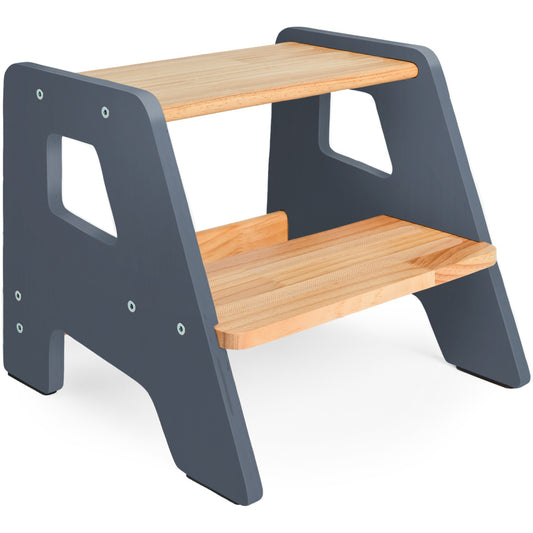
Since 2021, we've been crafting child-safe furniture like step stools and floor beds in Transylvania, designed to let children safely climb, reach, and explore the kitchen or their bedroom right alongside you. This kind of furniture helps reduce accidents—which account for a huge portion of toddler injuries at home—while enabling 100% open-ended engagement. A step stool can be a tower one minute and a bridge the next.
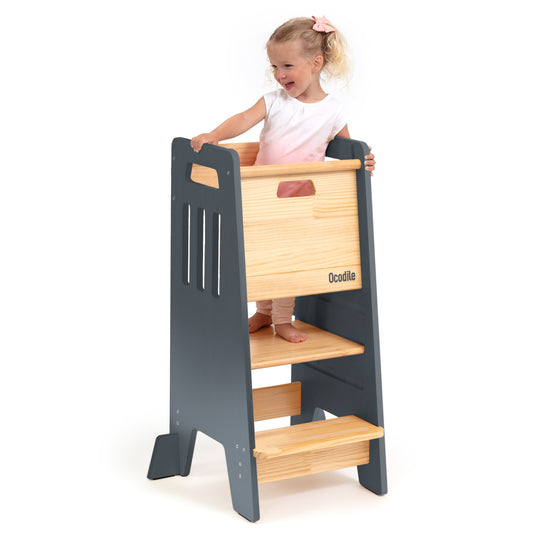
A learning tower, for example, transforms the kitchen counter from a mysterious, out-of-reach surface into an inclusive learning lab. Your child can stand safely at your level, helping to stir ingredients, wash vegetables, or simply watch what you’re doing. This practical involvement builds real confidence and life skills.
In the same way, a floor bed promotes autonomy from a very young age. It allows a child to get in and out of bed on their own, respecting their growing need for freedom and movement. By choosing furniture that empowers them, you're creating a home that supports your child's development in every room.
Your Role as a Play Facilitator, Not a Director
One of the biggest shifts for parents embracing open-ended play is learning to take a step back. It’s totally natural to want to jump in and show your child the "right" way to build with blocks or to suggest what their dolls should do next.
But in these precious moments, your most powerful role isn't as a director. It's as a quiet, supportive facilitator. This means your main job is to create an environment where play can happen on its own, not to lead the action. Your warm presence is the best tool you have.
The Art of Quiet Observation
Before you say or do anything, just watch. It’s an incredible tool. When you observe quietly, you start to see the world from their perspective. You’ll notice the little gears turning in their head—the way they test a block for balance or arrange their toys in an order that has a secret meaning only they understand.
Watching helps you learn what they're truly curious about, what challenges them, and how they figure things out on their own. When you resist the urge to intervene, you send them a powerful message: "I trust you as a capable and creative thinker." That uninterrupted focus is where the magic of deep learning really happens.
This supportive, hands-off approach is a key part of what’s known as scaffolding. You can dive deeper into how to provide just the right amount of support in our guide on scaffolding in child development.
Asking Curiosity-Driven Questions
When you do decide to engage, the words you choose make a huge difference. Instead of asking closed-ended questions with a right or wrong answer (like, "Is that a house?"), try asking gentle, open-ended questions that spark their imagination.
This technique, sometimes called "wondering aloud," invites your child to share their thoughts without feeling like they’re being tested. It keeps them in the driver’s seat.
Here’s a simple switch in language:
-
Instead of: "Why don't you use the blue block for the roof?"
-
Try: "I wonder what would happen if you put that block on top."
-
Instead of: "Are you making a garage for your car?"
-
Try: "You're spending a lot of time with that car. I'm curious about where it's going."
These subtle shifts open up a conversation instead of ending one. They validate your child's ideas and let them be the expert of their own world.
Finding a Balance with Mess and Safety
Let's be real: open-ended play can get messy. For many of us, this is a big hurdle. The trick is to find a comfortable middle ground by setting up a few simple boundaries before the play begins.
Strategies for Managing the Fun:
- Define the Space: Use a play tray or lay down a designated mat for messy activities like sensory play with rice or water. This creates a clear physical boundary that helps contain the chaos.
- Involve Them in Cleanup: Make tidying up just another part of the activity. You can frame it as "putting our toys to bed" or "caring for our things" instead of a chore. This teaches them responsibility from the start.
- Prioritize Safety First: Make sure the play area is childproofed and that all the materials are age-appropriate and non-toxic. When you know the space is safe, you can relax and observe, confident that they are free to explore without risk.
Ultimately, your job is to be a warm, steady presence. By facilitating rather than directing, you’re giving your child the space they need to grow into a resilient, creative, and confident little person.
Common Questions About Open Ended Play
Stepping into the world of open-ended play can feel a little strange at first, especially if you’re used to more structured activities. It's completely normal to have questions and wonder if you're "doing it right."
Think of this section as a friendly chat, answering the most common worries parents have. We’ll tackle real-world challenges, from managing a child's fleeting attention to making it all work in a small apartment. Let's get into it.
My Child Gets Bored Easily What Am I Doing Wrong
This is probably the number one concern I hear, and let me reassure you: you’re not doing anything wrong. When a child seems bored, it’s not a failure on your part or a flaw in the toys. It's usually just a sign that the environment needs a small tweak.
First, think about toy rotation. When a child can see and access everything they own at once, it can feel overwhelming. It’s like being at a buffet and not knowing where to start. By putting some toys away and bringing them out a few weeks later, they feel brand new and exciting all over again.
Also, take a look at the play space itself. A room packed with stuff can make it tough for a child to really focus and sink into deep, imaginative play. Sometimes, a handful of versatile items is far more inviting than a mountain of toys.
A friendly piece of advice: try modeling curiosity without directing the play. Sit down with a few blocks and just stack them, or feel their texture. Your quiet presence can be the gentle invitation your child needs to see those materials in a new light.
How Can I Encourage Open Ended Play in a Small Apartment
Living in a small space doesn't mean you have to squash big imaginations. Not at all. The secret is focusing on materials and furniture that are versatile and can wear many hats. It’s about the quality and potential of each item, not the square footage of your home.
- Embrace Multi-Use Materials: A simple set of play silks is a perfect example. They can be a superhero cape, a flowing river, a tent roof, or a blanket for a doll. They take up almost no space but offer endless possibilities.
- Choose Smart Furniture: A sturdy piece like an Ocodile standing tower isn't just for helping in the kitchen. It can easily become a puppet theater, a castle turret, or the counter for a pretend store.
- Utilize Vertical Storage: Low, open shelves keep a few chosen items accessible without cluttering up precious floor space. You could even create a "creation station" with recycled materials in a single bin that slides right under the bed.
When you prioritize things that can be used in countless ways, you create a rich play environment that works with your living space, not against it.
Is Screen Time the Opposite of Open Ended Play
This is a great question, and the answer has some nuance. While not all screen time is created equal, most digital games are, by their very nature, closed-ended. They have rules, goals, and a specific "win" condition set by the developer, not the child.
Open-ended, physical play puts your child in the driver’s seat. It engages all their senses, builds essential motor skills, and sparks the kind of creative problem-solving that screens just can’t replicate. The goal isn't necessarily to eliminate screens, but to find a healthy balance.
Think of hands-on, child-led play as the foundation. This is where kids build resilience, critical thinking, and the social skills they need to navigate their world—both on and off a screen.
What Are the Best Open Ended Materials That Are Not Toys
You know, some of the very best tools for open-ended play are probably sitting in your home or backyard right now. Everyday items are fantastic because they don’t come with any instructions or expectations, leaving their purpose entirely up to your child.
The classic example is the humble cardboard box. Is it a car? A rocket ship? A secret fort? Yes, and so much more. Its potential is truly limitless.
But don’t stop there!
- From the Kitchen: Wooden spoons, metal bowls, and measuring cups can become a fantastic drum set, a potion-making lab, or tools for a sensory bin.
- From Nature: A handful of sticks, stones, leaves, and pinecones gathered on a walk can inspire hours of sorting, building, and creating tiny, intricate worlds.
- From the Recycling Bin: Cardboard tubes, yogurt cups, and fabric scraps are the perfect raw materials for inventions, sculptures, and whatever else their imagination cooks up.
These "non-toys" are often the most powerful sparks for creativity because they invite children to find the extraordinary hiding in the ordinary.
Ready to create an inspiring play environment that grows with your child? The Ocodile collection of standing towers, floor beds, and step stools is designed to foster independence and integrate seamlessly into your family’s life. Discover how our thoughtfully crafted furniture can transform everyday moments into opportunities for connection and discovery at ocodile.com.