



Elevate Your Space with a bookcase for kids room: A Guide
Picking the right bookcase for a kid's room is about so much more than just finding a place to stash books. It's about sending an open invitation into a world of imagination and learning. The perfect bookcase is the start of a personal reading nook, a place that encourages independence and sparks a lifelong love for stories. You're not just buying furniture; you're investing in your child's curiosity.
Turning a Simple Shelf into a World of Adventure
A bookcase isn't just a piece of wood—it’s the heart of your child's personal library, a launchpad for countless adventures. When you choose thoughtfully, it can turn a simple corner into a sanctuary for their imagination. This guide will walk you through everything you need to think about, making sure the bookcase you pick is safe, easy for them to use, and a perfect fit for their growing mind.
Think of it like you're building a tiny, personal universe. The bookcase is the galaxy, and the books are all the stars and planets just waiting to be explored. Our goal is to make this universe totally inviting and simple to navigate for its most important resident: your child.
Why the Right Bookcase Matters
Getting this choice right goes way beyond just keeping things tidy. It has a real impact on your child's daily habits and how they develop. A well-designed bookcase can:
- Foster Independence: When kids can actually see and reach their own books, they feel empowered to choose for themselves. That's a huge step in building confidence.
- Encourage Reading: An attractive, accessible display makes books look irresistible. It turns reading into a fun part of playtime instead of a chore.
- Promote Organization: It gives their literary treasures a designated home, teaching them the valuable life skill of tidiness from a young age.
A child’s bookcase is a quiet invitation to discovery. It’s where they first learn to choose their own adventures, one colorful cover at a time, building a foundation for a future filled with curiosity and learning.
Building Your Child's First Library
Of course, the bookcase is only half the story. The real magic of any reading nook is the books themselves. Figuring out how to build a great collection is key, as one guide on choosing children's books points out. Curating a mix of colorful picture books, early readers, and timeless classics ensures there's always a new world waiting for them.
When it comes down to it, by pairing a safe, functional bookcase with a thoughtful collection of stories, you're doing more than just decorating a room. You are creating a space that whispers, “Come explore, come learn, come dream.” And that's how a simple piece of furniture becomes an unforgettable part of a happy childhood.
The Non-Negotiable Guide to Bookcase Safety
When you're picking out a bookcase for a kids room, nothing—and I mean nothing—is more important than safety. Yes, you want it to look cute and hold all their books, but your child's well-being has to come first, always.
Let's walk through the absolute must-haves for safety, from anchoring the furniture down to making sure the materials are kid-friendly. Think of it like building a house: you need a rock-solid foundation before you can even think about paint colors.
The Critical Role of Anti-Tip Hardware
Kids are natural-born explorers. To them, a bookcase isn’t just for books; it's a ladder waiting to be climbed to reach that one special toy on the top shelf. That innocent curiosity can turn dangerous in a heartbeat if the furniture isn't secure.
This is exactly why anti-tip hardware isn't just a nice-to-have feature; it's a must. These simple straps or brackets anchor the bookcase to the wall, stopping it from tipping over. When installed right, they make the bookcase a stable, secure part of the room that can handle a bit of pushing, pulling, or even climbing.
A properly anchored bookcase transforms a potential hazard into a safe haven for books and toys. It’s all about peace of mind, knowing your child’s adventures won’t end in an accident.
For a great step-by-step guide, check out our post on how to properly secure furniture to the wall. It’ll make sure you get it done right.
Why Rounded Edges and Smooth Surfaces Matter
Sharp corners and active kids are a recipe for disaster. For toddlers and little ones who are always on the move (and occasionally taking a tumble), a bookcase with sharp 90-degree edges is a real hazard for bumps, scrapes, or worse.
Always look for a bookcase for a kids room designed with smooth, rounded corners. It’s a small detail that makes a huge difference in preventing injuries during playtime. It's also a good idea to run your hand over all the surfaces. You're checking for splinters, rough spots, or any screws sticking out that could snag clothes or scratch skin.
Choosing the right bookcase is the first step in creating a safe little reading corner your child will love.
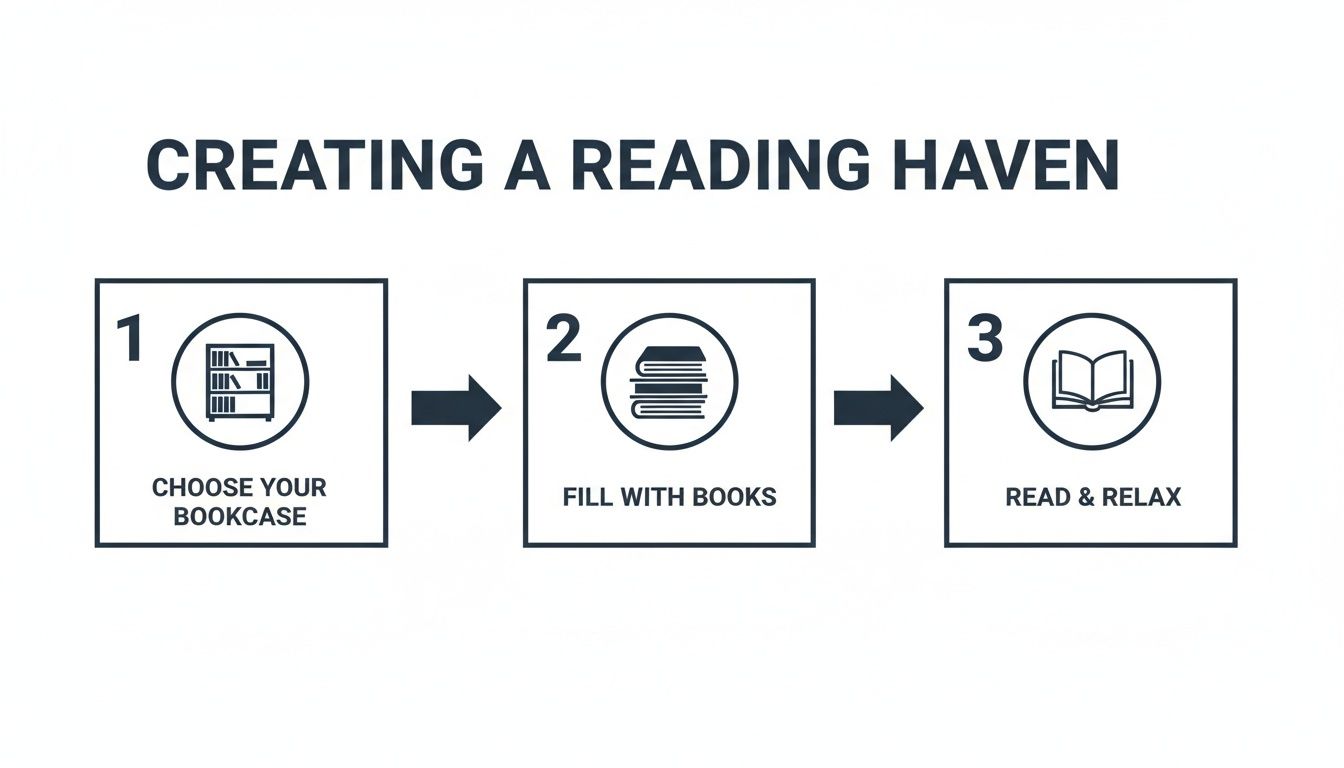
It really is that simple: a safe bookcase, a stack of fun books, and a little encouragement are all it takes to build a wonderful reading haven.
Decoding Materials and Finishes
What your child's bookcase is made of is just as important as how it's built. Little kids, especially toddlers, have a tendency to explore the world with their mouths. That means any paint or finish on their furniture could end up being tasted.
It’s crucial to pick bookcases made from non-toxic, child-safe materials. Here’s what to look for:
- Water-Based Paints and Finishes: These don't contain harmful VOCs (volatile organic compounds) or lead, which makes them a much safer bet for a child's room.
- Solid Wood or High-Quality MDF: If you go with a composite wood like MDF, make sure it’s a low-emission grade (like E0 or E1) to keep formaldehyde exposure to a minimum.
Parents are more focused on safety than ever. The children's furniture market, valued at USD 49.30 billion in 2024, is expected to hit USD 231 billion by 2034. Why? Because over 80% of parents prioritize safety features like anti-tip kits. Smartly designed bookcases, with rounded edges and a low center of gravity, can cut down on household accidents by as much as 40%.
To help you feel confident in your choice, here is a quick checklist you can use when you're shopping.
Essential Safety Checklist for Kids Bookcases
This table is a quick reference to make sure you're covering all your bases when evaluating a bookcase.
| Safety Feature | What to Look For | Why It Matters |
|---|---|---|
| Anchoring Kit | An included anti-tip kit (straps or brackets) to secure it to the wall. | Prevents dangerous tip-over accidents from climbing or pulling. |
| Rounded Edges | Smooth, curved corners and edges instead of sharp 90-degree angles. | Reduces the risk of bumps, bruises, and cuts during play. |
| Smooth Surfaces | No splinters, rough patches, or exposed hardware. | Protects little hands and prevents snagged clothing. |
| Non-Toxic Finish | Certification of lead-free, water-based paint or finish. | Ensures safety if a child mouths or chews on the furniture. |
| Low-VOC Materials | Solid wood or low-emission MDF (E0 or E1 grade). | Minimizes exposure to harmful chemicals for better indoor air quality. |
| Stability Test | A low center of gravity; doesn't wobble easily on a flat surface. | A sturdy base is less likely to become unstable, even before anchoring. |
| Safety Certification | A label indicating it meets standards like ASTM F2057. | Provides third-party verification that the product has passed rigorous safety tests. |
Checking these boxes will give you the peace of mind that you're bringing a truly safe piece of furniture into your home.
Understanding Safety Certifications
So, how can you really know if a product lives up to these safety claims? Look for official safety certifications. These aren't just marketing buzzwords; they're proof that the product has been independently tested to be safe for a home with children.
In the United States, the gold standard comes from ASTM (American Society for Testing and Materials). A certification like ASTM F2057, for instance, is specifically for furniture stability to prevent tip-overs. When you choose a bookcase that meets or exceeds these standards, you're getting an extra layer of confidence that it's been vetted from top to bottom.
How to Select the Right Materials and Size
Picking the right material and size for a bookcase for a kids room feels a lot like choosing the perfect pair of shoes for a toddler. You need something that fits them right now, is tough enough for all their adventures, and hopefully, won't be outgrown in just a few months. Get it right, and the bookcase becomes more than just storage—it becomes a lasting, functional part of their little world.
Think of the materials as the bookcase's core character. Solid wood is the dependable, sturdy friend you can always count on. It's got that classic look and feel. Then you have other options, like MDF or plastic, which bring their own thing to the table, usually focusing on being lighter or having more playful, colorful designs.
But when it comes to longevity and safety, solid wood is almost always the winner. It’s built to withstand years of use, from a wobbly toddler using it for support to a preteen with a rapidly growing book collection. Choosing solid wood is like saying, "this piece is here to stay."
Understanding Your Material Options
Every material has its own set of pros and cons. Let's break down what you'll typically find when you start your search for the perfect bookcase for a kids room.
- Solid Wood: We're talking oak, maple, or pine. This is the top-of-the-line option for durability. It’s heavy, stable, and can be sanded down and refinished years later. It’s a true "buy it once" kind of investment.
- MDF (Medium-Density Fiberboard): This is an engineered wood made from recycled fibers and resin. It’s got a smooth finish, is easy on the wallet, and paints well. But, it's heavier than it looks, not as durable as solid wood, and can get damaged by spills.
- Plastic: It's lightweight, comes in bright colors, and is a breeze to clean, which is why it's so popular for the little ones. While it's super practical for toddlers, it just doesn't have the durability or timeless style of wood and probably won't last as your child gets older.
It's no surprise that the global market for kids' furniture is on the rise, projected to jump from USD 52.8 billion in 2024 to a huge USD 187.4 billion by 2033. A huge reason for this is that parents are looking for sustainable, durable materials. Solid wood holds a whopping 59.45% of the market, mostly because over 40% of parents are making eco-friendly and long-lasting choices a priority. For a deeper dive, check out this market analysis on kids' furniture trends.
Getting the Size and Scale Just Right
Size isn't just about whether it fits in a corner. For a child, the right size is all about access and independence. A bookcase that’s too tall is not only intimidating, it’s a climbing hazard. One that’s too small will be stuffed to overflowing in no time.
First things first, grab a tape measure. Get the height, width, and depth of the wall space where the bookcase will go. This simple step will save you from the headache of buying a piece that either swallows the room whole or blocks a doorway.
Next, think about your child’s height. The best bookcase for a young kid is low enough for them to see and reach books on at least the bottom couple of shelves without any help. This one consideration makes a huge difference, fostering their independence and encouraging them to grab their own stories. For more ideas on kid-friendly storage, take a look at our guide on choosing the right shelves for kids.
A perfectly sized bookcase is one that meets your child at their level. It empowers them to say, "I can do it myself," turning book selection into a moment of proud independence.
The 'Grow-With-Me' Bookcase Concept
Kids grow. And as they grow, so do their collections of books, treasures, and toys. A "grow-with-me" bookcase is a clever solution that can adapt right alongside them. These are the designs built for the long haul.
Look for these adaptable features:
- Adjustable Shelves: This is a game-changer. It lets you change the height between shelves to fit everything from chunky board books to tall picture books and, down the road, thick chapter books.
- Modular Systems: These are bookcases made of separate cubes or units that you can stack and arrange however you like. You can start with just a few and add more as their library—and their height—grows.
Choosing a modular or adjustable bookcase is really an investment in versatility. It means the bookcase for a kids room you buy today will still be a useful and loved piece of furniture for years to come, evolving perfectly with your child.
Fostering Independence with Montessori Designs
A bookcase for a kids room can be so much more than just a place to stuff books. When you choose the right one, it becomes a powerful tool for building your child's independence, confidence, and a real-deal love for reading. This is where the magic of the Montessori method comes in, completely changing how kids see their books and their space.
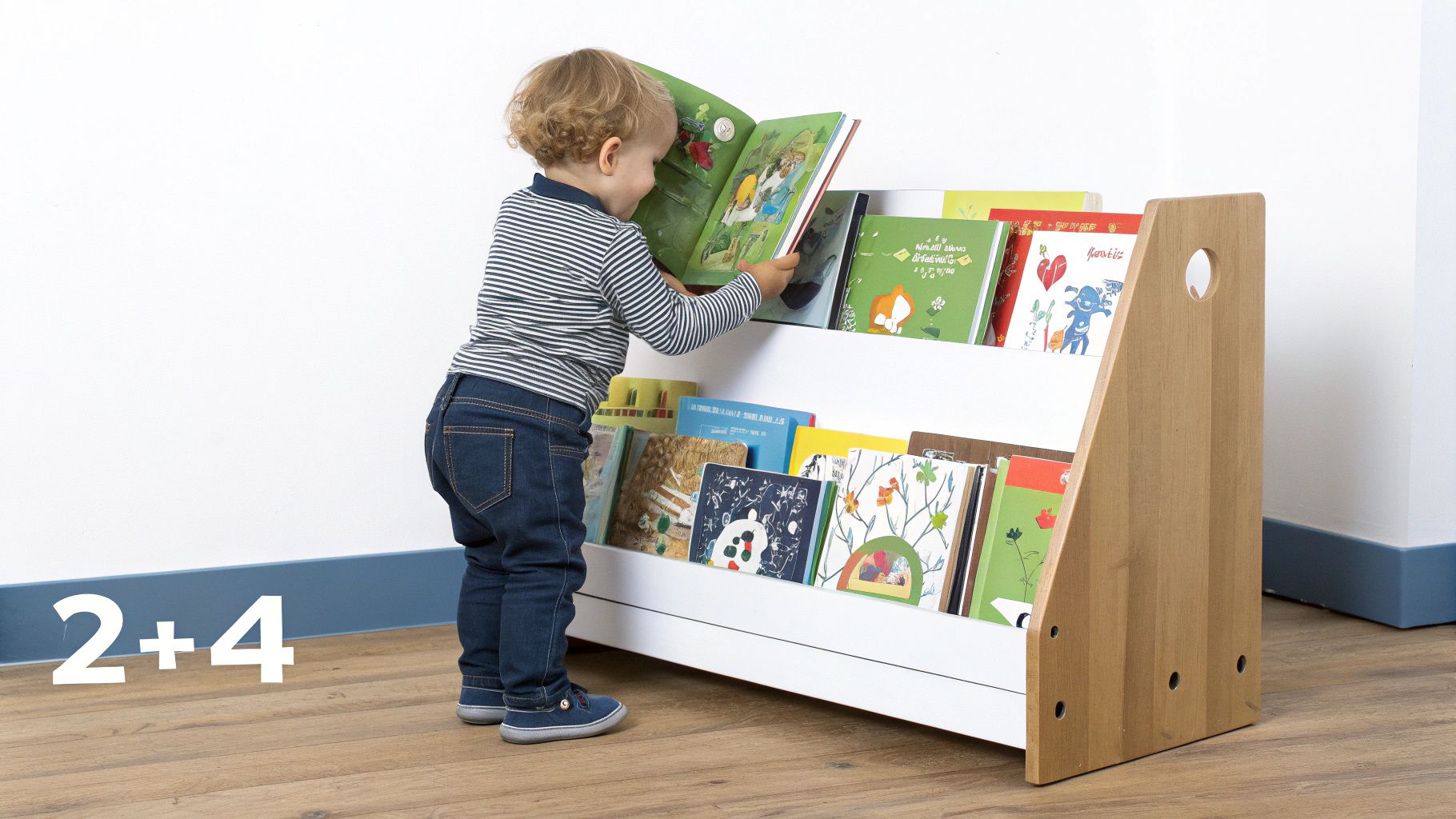
The whole idea behind Montessori is creating a "prepared environment." Think of it as a space designed just for them, where they can safely explore, learn, and do things on their own. For furniture, that means pieces that are child-sized, easy to get to, and make sense from their point of view. A Montessori-style bookcase is built for a child, empowering them to take charge of their own little learning journey.
The Power of a Front-Facing Bookshelf
The single biggest feature of a Montessori bookcase is its front-facing design. Most traditional shelves store books spine-out. That’s fine for adults who can read the titles, but for a little one who recognizes books by their bright, colorful covers? It’s like hiding all their favorite toys in identical gray boxes.
A front-facing display, on the other hand, is an open invitation. All of a sudden, your child can see the cool illustration of a dragon, the smiling face of a cartoon bear, or the promise of a big adventure. That visual appeal is a total game-changer for getting them interested in reading early.
A front-facing bookshelf respects a child’s natural way of seeing the world. It empowers them to say, "I want that story," fostering decision-making and turning the act of choosing a book into a joyful, independent experience.
This approach gives kids control over what they want to read. They don't have to pull every single book off the shelf to find the one they’re looking for, and they don’t have to ask a grown-up for help. They can see their options, make a choice, and grab the book all by themselves. It’s a small thing that builds a huge amount of confidence.
Creating a Child-Led Reading Environment
A Montessori-inspired bookcase for a kids room is always low to the ground, and that’s on purpose. This easy access is so important for toddlers and preschoolers, making sure they can safely reach every book without getting the dangerous idea to start climbing. It’s a simple design choice that boosts their autonomy and removes a common safety risk.
Here’s how this thoughtful design helps with their development:
- Encourages Decision-Making: When they can see a curated selection of books with their covers showing, you’re giving them a real chance to make meaningful choices—a super important skill.
- Promotes Organization: The limited space on these shelves naturally leads to a "less is more" setup. It's easier for your child to see what they have and helps them learn to put books back where they belong.
- Sparks Genuine Interest: When a child can freely pick and choose their books, reading becomes an activity they choose, not one that's pushed on them. This is how you build the foundation for a lifelong love of stories.
By bringing these elements into their room, you’re not just creating a tidy corner. You’re building an environment that shows you trust and respect your child's abilities. If you’re interested in using these ideas in other parts of their room, our guide to the Montessori play shelf has even more tips for creating an empowering space. At Ocodile, our furniture is designed with these principles baked right in, mixing safety, accessibility, and style to support your child as they grow more independent.
Smart Ways to Organize and Style Your Bookcase
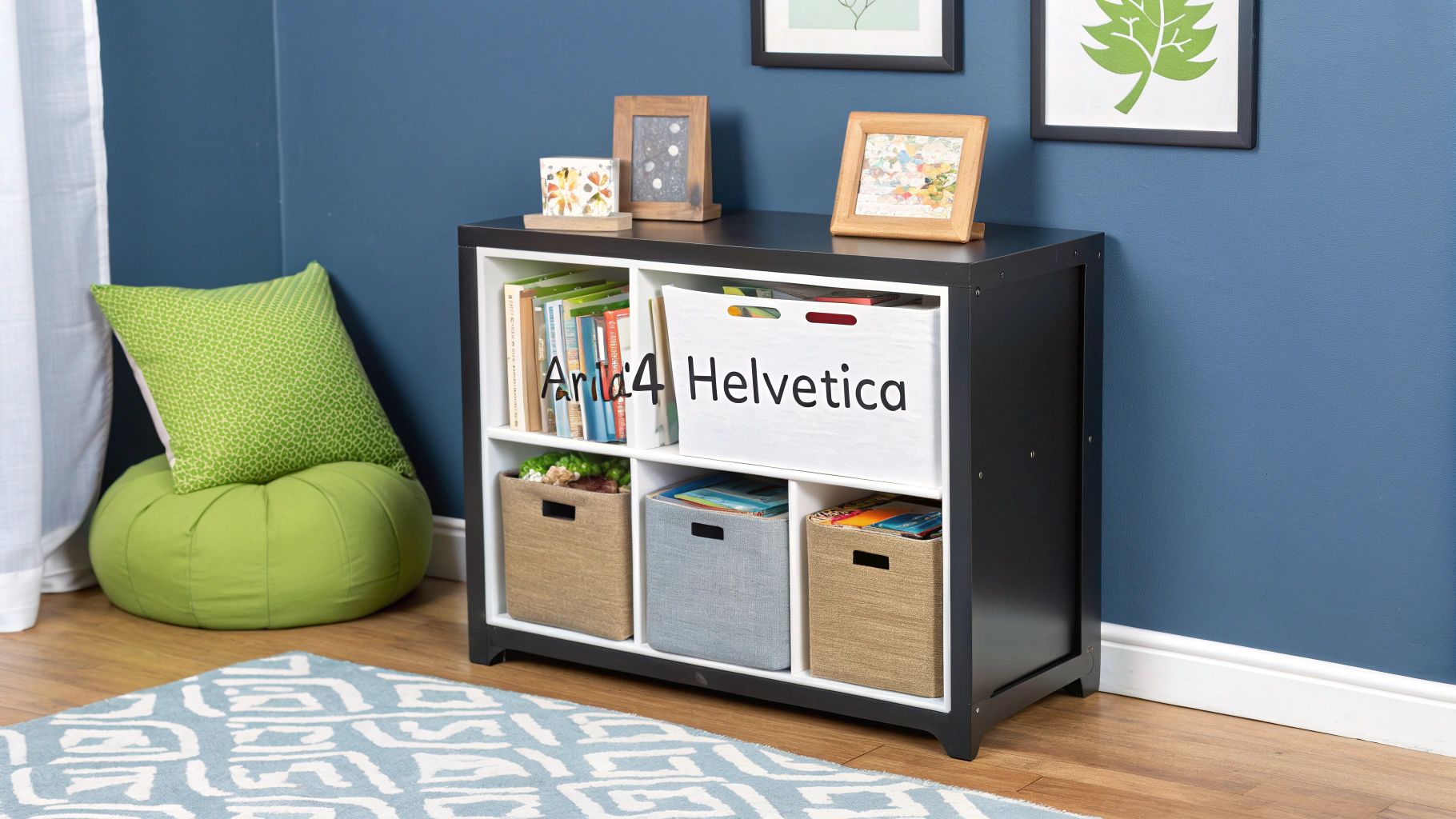
Alright, you've picked out the perfect bookcase for a kids room. Now the real fun begins—turning it from a simple piece of furniture into a hub of creativity and calm. The idea is to create a space that’s both beautiful and easy for your little one to actually use, transforming potential clutter into a charming, curated display.
When a bookcase is well-organized, it does more than just look nice. It’s an open invitation for your child to grab a book and get lost in a story. Think of it like you're the manager of their own personal little library. When their favorite books and toys are easy to see and reach, they're much more likely to play and read on their own.
This isn't just a hunch; it's a huge driver in the kids' furniture market, which was valued at USD 36.9 billion in 2025 and is expected to hit USD 55.1 billion by 2035. Storage is a massive deal, especially in homes, which make up over 60% of the demand. In fact, the kids' storage segment alone is projected to reach USD 47.62 billion by 2030 because parents everywhere know that good organization makes life easier. And the proof is in the numbers: 70% of parents say that having accessible storage leads to less mess and more reading time—a mission we really believe in at Ocodile. You can dive deeper into these market trends on factmr.com.
Creative Organization for Lasting Tidiness
Let's be real: keeping a child's bookshelf tidy can feel like a never-ending job. But with a few simple strategies, you can set up a system that your child can actually follow.
One of the best tricks is to start a book rotation. Instead of piling every single book onto the shelves, choose a small selection to display. Keep the rest stored away and swap them out every few weeks. This simple change keeps things feeling fresh and prevents the bookcase from looking overwhelmed.
Here are a few other ideas that really work:
- Utilize Bins and Baskets: Pop some colorful, sturdy bins on the lower shelves. They’re perfect for corralling smaller toys, art supplies, or those chunky board books. Cleanup becomes a super simple "toss it in" game for your kid.
- Group Like Items: Try organizing things by category. You could have one shelf for picture books, another for chapter books, and maybe a basket for puzzles. This creates a visual logic that helps kids learn where everything goes.
- Label Everything: For little ones who can't read yet, picture labels are a game-changer. A simple drawing of blocks on a bin shows them exactly where their building set belongs, empowering them to clean up all by themselves.
Styling Beyond the Books
A bookcase doesn't have to hold just books! By adding some personal flair, you can turn it into a beautiful display that truly reflects your child's personality. It’s about making a functional piece of furniture feel like a special part of their room.
Treat each shelf as a tiny canvas. By mixing books with art, photos, and treasured objects, you create a dynamic display that tells a story and celebrates your child's unique world.
Try placing small, meaningful items between the books. This could be a framed piece of their latest artwork, a beloved stuffed animal, or a special shell from a family vacation. These little touches break up the solid lines of book spines and add so much warmth and personality.
And don't forget you can give the whole bookcase a makeover. Techniques like upcycling furniture with a fresh coat of paint or some fun new hardware can completely change its look. By mixing smart organization with thoughtful style, the bookcase for a kids room becomes more than just storage—it becomes a central feature that invites your child to read, play, and dream.
Your Quick Guide to Making the Final Decision
Choosing the perfect bookcase for a kids room can feel like a massive decision, but it really doesn't have to be. Once you nail down a few core principles, you can pick a piece that's safe, works for your child, and looks great in their space. This is your final, simple guide to putting it all together.
Think of it like packing a school bag. You have to start with the essentials: a sturdy bag (that’s your safety and materials), the right books (that’s accessibility and organization), and maybe a cool keychain just for fun (that's the style). Get those basics right, and your child is all set for a great day of discovery.
Your Final Decision Checklist
Before you hit "buy," just run through this quick mental checklist. It’s a super simple recap of the most important things we've covered to make sure nothing gets missed.
- Is It Secure? First and foremost, does it come with an anti-tip kit? Are the corners rounded? Anchoring it to the wall is an absolute must-do to prevent serious tip-over accidents.
- What’s It Made Of? Solid wood is your best bet for a piece that will last for years. If you’re looking at MDF, double-check that it’s a low-emission grade and that any paint or finish is non-toxic and water-based.
- Can They Use It? Take a look at the height. The best bookcase is one your child can reach all by themselves. It’s a huge confidence booster and gets them excited about picking out their own books.
- Is It Empowering? For younger kids especially, a front-facing, Montessori-style design is a game-changer. Seeing the colourful covers is way more inviting than seeing the spines, encouraging them to grab a book on their own.
More Than Just Furniture
At the end of the day, the right bookcase for a kids room is so much more than storage; it's an investment in your child's growth. It becomes part of their little world, a piece that quietly encourages curiosity, independence, and a genuine love for stories. You're creating a safe and inspiring corner where their imagination can really take off.
The goal is to choose a bookcase that doesn't just hold books, but holds possibilities. It should be a quiet, constant invitation for your child to explore new worlds, learn about themselves, and build a foundation for a future filled with wonder.
This philosophy is exactly what drives our designs at Ocodile. We build furniture that marries rock-solid safety with practical, child-led function. By sticking to high-quality materials and thoughtful, accessible construction, our goal is to help you create that nurturing space where your child can truly thrive. Choosing the right bookcase is a small but powerful step in building that beautiful world for them.
Frequently Asked Questions
Shopping for your little one’s furniture always brings up a few questions. To help you feel completely confident about choosing the right bookcase for a kids room, we’ve put together answers to some of the most common things parents ask.
Here’s what you need to know.
What Is the Best Age for a Childs First Bookcase
You can bring in a small bookcase as soon as your child really starts to notice and interact with books, which is often around 6 to 12 months old. The perfect choice for this stage is a low, stable, front-facing Montessori-style shelf.
This kind of design lets them see the bright, colorful covers and start picking out books all on their own. It’s a wonderful way to spark that early love for stories. As they get bigger, you can move up to a larger—but still very accessible and securely anchored—bookcase.
How Do I Make Sure a Bookcase Will Not Tip Over
This one is non-negotiable: always use the anti-tip kit that comes with the bookcase. For the most secure installation, find a stud in the wall with a stud finder and attach the furniture strap directly to it. That's your gold standard for stability.
If you can't find a stud right where you need it, your next best option is a heavy-duty drywall anchor. Just make sure it's rated to hold much more than the weight of the bookcase and everything in it. Once it's installed, give the unit a good, firm tug to make sure it’s totally secure and doesn't wobble.
Securing your child's bookcase is a simple, five-minute task that provides lasting peace of mind. It transforms a potential hazard into a safe, reliable part of their room where they can explore their favorite stories without risk.
What Is the Real Benefit of a Montessori Bookshelf
The magic of a Montessori bookshelf is all in its child-first design. Traditional bookcases store books spine-out, which means nothing to a toddler. A Montessori shelf, on the other hand, displays them with the full cover facing forward.
For a young child who recognizes books by their pictures, this visual approach is so much more engaging. It empowers them to find and choose their own books, which builds independence, decision-making skills, and a real, personal connection to reading. It turns story time into an activity they can lead.
What Are Some Easy Tips for Keeping a Kids Bookcase Tidy
Keeping any part of a child's room tidy can feel like a tall order, but a few simple habits can make a world of difference.
- Practice 'Less is More': Try rotating the books. Keep a small, interesting selection on the shelves and store the rest away. Swapping them out every few weeks keeps things fresh and prevents the shelves from looking totally overloaded.
- Designate Specific Spots: Use the lower shelves for books and add a few sturdy, lightweight baskets for things like small toys or art supplies. This gives everything a home and creates a simple system your child can actually learn and follow.
- Make Tidying a Routine: Build a quick "put away" time into your daily schedule, maybe right before bed. If you make it a gentle and consistent activity you do together, it teaches them where things go and helps build great organizational habits for later on.
At Ocodile, we design every piece of furniture with your child's safety, independence, and joy in mind. Our bookcases are built to be secure, accessible, and beautiful, helping you create a nurturing space for your little one to grow and explore. Discover our collection at https://ocodile.com and find the perfect foundation for your child's reading adventures.