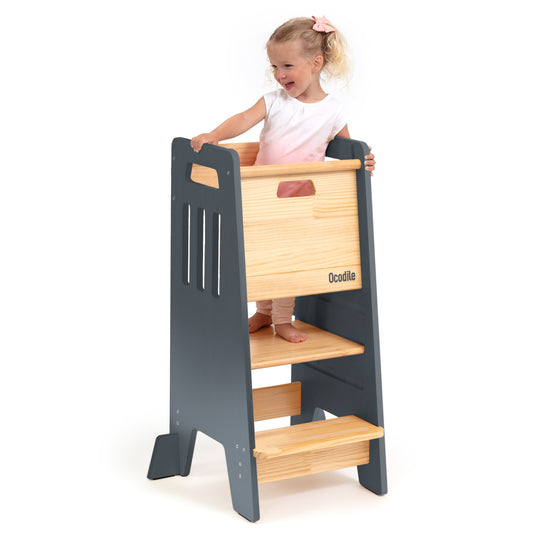


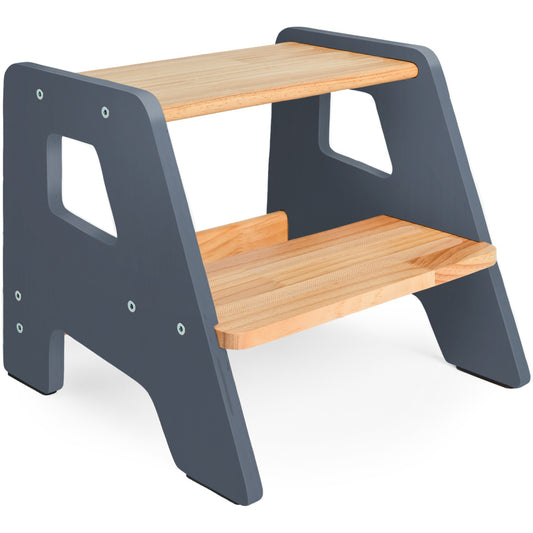


Choosing Shelves For Kids A Complete Guide
Picking out the right shelves for kids goes way beyond just finding a place to stash their stuff. It's really about creating a space that helps them become more independent, curious, and organized. The best shelves are safe, easy for them to access, and designed in a way that encourages them to actually grab their own books and toys—a first step in teaching them to be responsible for their things.
Why The Right Shelving Matters
Choosing shelves for your child's room is a pretty big deal when you're designing their little world. Don't think of it as just buying another piece of furniture. You're actually building a launchpad for their imagination and self-sufficiency. The right shelving unit becomes an interactive part of their room that shapes how they play, learn, and even how they (hopefully!) clean up.
This isn't just a small-scale decision, either. The global market for children's bookcases was valued at around USD 2.1 billion in 2023, and it's expected to keep growing. This trend really shows how much parents are focusing on creating organized, literacy-friendly spaces at home.
More Than Just Storage
Good shelving does so much more than just hold things; it plays a real part in your child’s development. An organized space can help cut down on that feeling of being overwhelmed by clutter, making cleanup feel a lot less like a huge chore. When kids can actually see and reach their own belongings, they feel empowered to make choices for themselves, which is a fantastic early lesson in independence.
Good shelving acts as a silent partner in your child's growth. It invites them to explore, empowers them to be responsible for their things, and provides a calm, orderly backdrop for their busy world of play.
Setting The Stage For Success
The real goal here is to create a space that’s functional and inspiring, one that can grow and change right along with your child. By putting safety and age-appropriate design first, you can turn a messy room into a true haven for creativity.
As you start thinking about what shelves to choose, it's a good idea to look at a general guide to safe baby products for newborns. The core principles of safety and using non-toxic materials are just as important for a bookshelf as they are for a crib. This will help you feel confident that you're picking shelves that not only look great but truly support your child's journey.
Exploring Different Types Of Kids Shelves
Choosing the right shelves for your kids is a bit like picking the perfect tool for a job—different designs serve entirely different purposes. And believe me, the options are endless. The market for kids' storage furniture is booming, valued at a whopping USD 14.65 billion in 2024, with bookshelves alone making up over 31% of that. If you're curious about the numbers, Grandview Research has some detailed insights. This growth is great news for us parents, because it means more choice.
So, let's break down the most popular types to see which one is the right fit for your family.
Classic Freestanding Bookcases
Think of the classic bookcase as the reliable family minivan. It’s sturdy, offers tons of storage, and is a familiar sight in most homes. These units usually have multiple deep shelves, making them perfect for hoarding a big collection of books, board games, and those awkwardly large toys.
But that height can be a double-edged sword. While they’re great for using vertical space, they must be anchored to the wall. I can't stress this enough. For a curious climber, an unsecured bookcase is a serious tipping hazard.
Space-Saving Wall-Mounted Shelves
Wall-mounted shelves are the compact cars of the storage world—ideal for smaller rooms where every inch of floor space is precious. They can be simple ledges, floating cubes, or more decorative designs, and they're fantastic for showing off special keepsakes, photos, or a small, curated collection of bedtime favorites.
The big win here is that they keep the floor completely clear for playtime. The trade-off? They usually can't hold as much weight as a freestanding unit, and you absolutely have to install them properly into wall studs to make sure they're secure.
This diagram breaks down the three core factors—Safety, Design, and Materials—that should guide your choice.
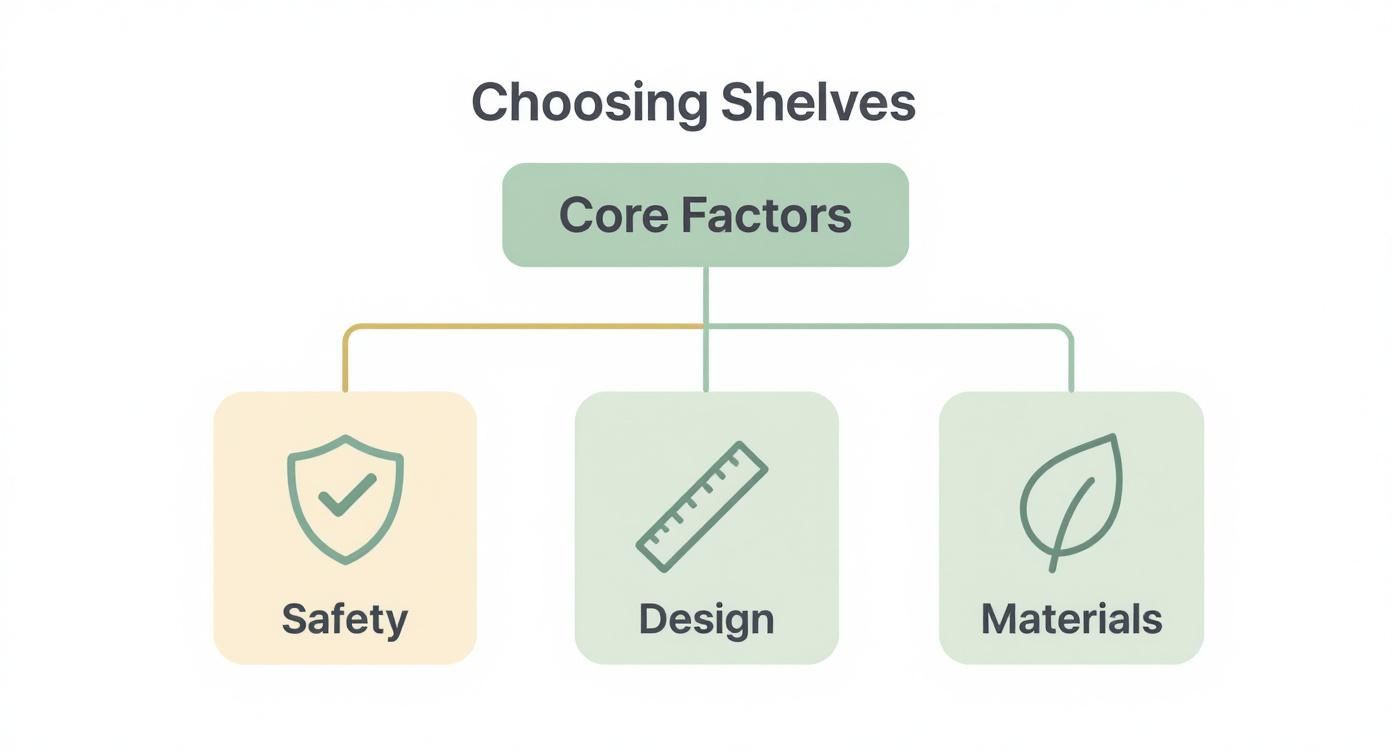
While looks and materials matter, this really drives home the point that safety should be the foundation of your decision.
Forward-Facing Bookshelves
These are designed specifically with early readers in mind. Instead of just showing the spine, they display books with the cover facing out. For a toddler who can't read yet, seeing that colorful cover art is like recognizing a friend’s face—it’s inviting and easy to grab.
By making books so visually accessible, forward-facing shelves really empower little ones to pick out their own stories. It’s a simple thing that can spark a genuine love for reading from a very young age.
These units are almost always low to the ground, putting them right at your child’s eye level and encouraging that wonderful sense of independence.
Versatile Cube Storage
If there’s one chameleon in the world of kids' furniture, it’s the cube storage system. These things are modular, adaptable, and can be arranged in countless ways. You can pop in fabric bins to hide the mess (a lifesaver!) or leave the cubes open to display toys and books.
Their flexibility is their superpower. A cube system that holds diapers and board books for a toddler can easily be repurposed for art supplies and chapter books for a school-aged kid. It's a smart investment that truly grows with them.
Here’s a quick comparison to help you choose the best shelf type based on your child's age, room size, and what you need to store.
Comparing Popular Shelf Styles For Kids
| Shelf Type | Best For | Age Group | Key Advantage |
|---|---|---|---|
| Freestanding Bookcase | Large collections of books, games, and toys | All ages (with proper anchoring) | Maximum storage capacity |
| Wall-Mounted Shelf | Small rooms, displaying treasures, curated books | 3+ years | Frees up valuable floor space |
| Forward-Facing Shelf | Encouraging early literacy and independence | Toddlers & Preschoolers (0-5 years) | Makes books visually appealing and accessible |
| Cube Storage | Evolving storage needs, organizing small items | All ages | Highly versatile and customizable |
Ultimately, the best choice depends on how you see your child using the space now and in the years to come.
Safety First: Your Guide To Secure Shelving
When you're picking out shelves for kids, safety isn’t just another box to tick—it's everything. It helps to think of a shelf less like a static piece of furniture and more like an interactive part of your child’s world. Because let's be honest, kids will climb, pull, and lean on just about anything, making it non-negotiable that every shelf is rock-solid and secure.
The absolute most critical step is anchoring any freestanding unit to the wall. A tall bookcase, in particular, can become a serious tipping hazard in the blink of an eye. Thankfully, many new shelving units come with anti-tip kits. If yours doesn't, you can grab one for cheap at any hardware store.
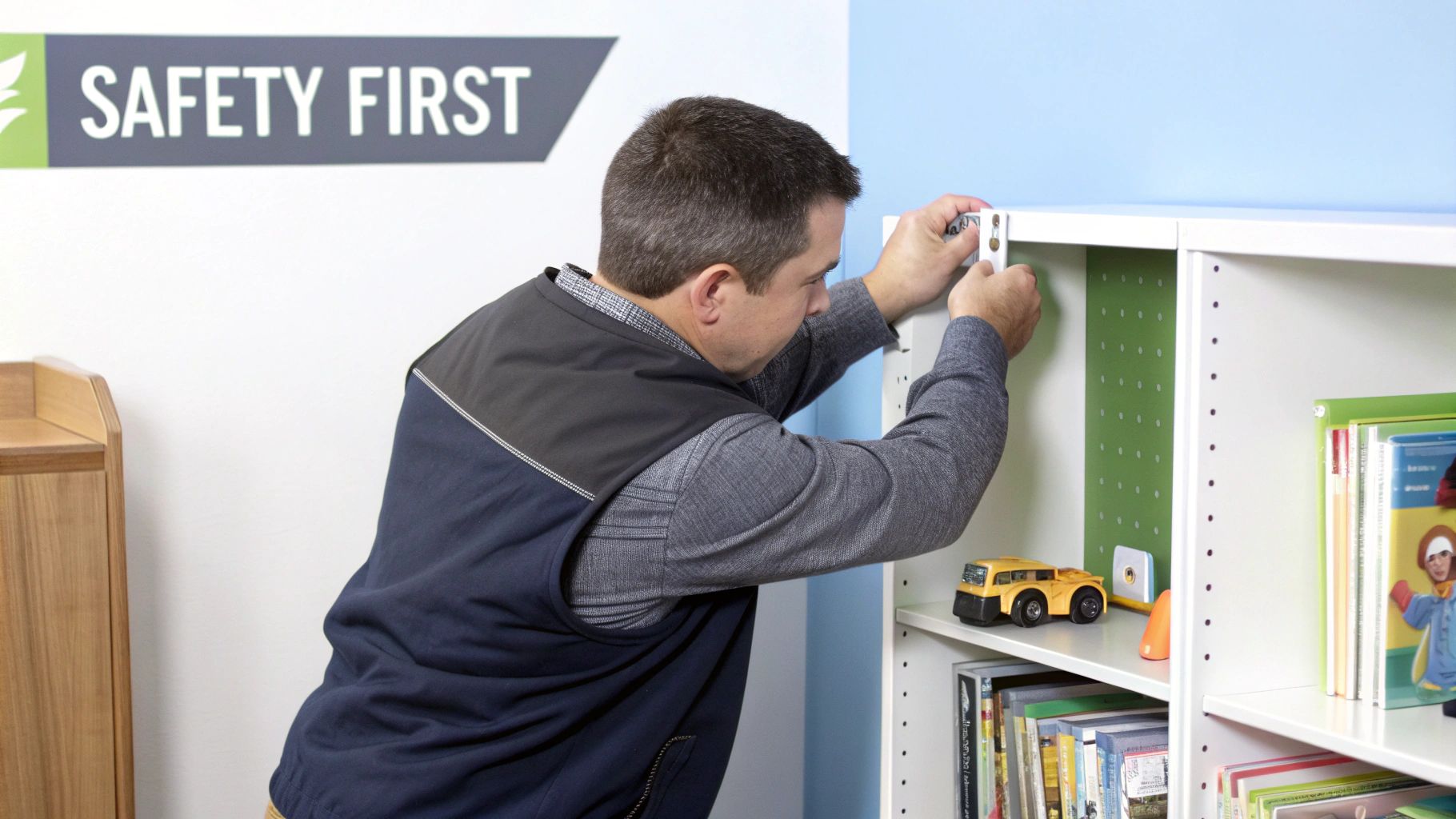
This single action is the most important thing you can do to prevent furniture-related accidents. If you need a walkthrough, our guide on how to secure furniture to the wall gives you clear, step-by-step instructions to get it done right.
Beyond Anchoring: Essential Safety Features
Once the anchor is in, there are a few other design details that make a world of difference. These are the little things that are easy to overlook but play a huge role in creating a truly child-friendly space where you can relax.
Always try to find shelves with rounded or softened corners. A sharp, 90-degree edge is just asking for trouble when a toddler is stumbling around or a big kid is lost in imaginative play. A rounded corner can be the difference between a little bump and a nasty cut.
Also, take a close look at the materials and finishes. Solid wood or high-quality engineered wood is great, but make sure it's certified as low-VOC (Volatile Organic Compounds).
Be sure that any paints or lacquers are clearly labeled as non-toxic and child-safe. Little ones explore with their hands and mouths, so it’s vital that any surface they can reach is free from nasty chemicals.
Your Pre- and Post-Installation Safety Audit
Before a shelf even makes it into your house, and again right after you set it up, it’s a good idea to run a quick safety check. This simple audit helps you spot potential problems before they happen, ensuring the shelves for kids you chose are truly ready for action.
Use this checklist to give any unit a once-over:
- Stability Test: Give it a good shake. Does it wobble? If it feels even a little unstable on the floor, it’s not safe for a child's room unless it's securely anchored.
- Hardware Check: Are there any small, detachable parts? Hunt for loose screws, decorative caps, or any little brackets that a curious kid could pry off and pop in their mouth.
- Edge Inspection: Run your hand along all the edges they can reach. Are they smooth and rounded, or are there sharp corners or splinters?
- Weight Limit Awareness: Check the manufacturer's recommended weight limit for each shelf. Overloading shelves is a common mistake that can cause them to sag or even collapse.
Making these little checks a habit will help you create a space that’s not just organized and cute, but more importantly, a secure environment for your child to play and grow.
Using Shelves To Support Montessori Principles
The Montessori method isn't just a philosophy for school; it’s a way of looking at your child's room as their "third teacher." Furniture, especially shelves for kids, stops being just a place to dump stuff and becomes a powerful tool for building independence, confidence, and a natural love for order. It’s all about creating what Maria Montessori called a "prepared environment."
Picture the classic overflowing toy box. It’s pure chaos. To find one specific toy, your child has to dump the entire thing on the floor, right? Montessori shelving is the exact opposite. It’s low, open, and intentionally sparse, offering a hand-picked selection of toys and books that are easy to see and grab.
This simple setup empowers your child to make their own choices, get lost in an activity, and—just as crucial—learn to put things back where they belong when they’re done.
Creating a Prepared Environment
The heart of a Montessori space is all about accessibility. Shelves are kept low to the ground, right at your child’s eye level. This sends a really powerful message: "This space is yours. You are capable and you are trusted." That small change encourages them to grab a toy or a book on their own, without having to ask for help.
Another game-changer is using open-faced or forward-facing bookshelves. Think about it: young kids can't read spines. Displaying the covers lets the vibrant art do the talking, acting as a visual cue so they can easily spot and pick out their favorite stories. This simple tweak can spark a love for reading long before they know their ABCs.
The Art of Curation and Rotation
One of the biggest mistakes we make is cramming shelves full of toys. A Montessori approach is all about quality over quantity. Too many choices can be overwhelming for a little mind, leading to them flitting from one thing to the next without ever really engaging.
By carefully selecting and arranging just a few items, you create an environment that encourages deep focus instead of distracted play. This purposeful setup is fantastic for building a child's concentration skills.
To keep things fresh and exciting, get into the habit of toy rotation. Pack some toys away and swap them out every week or two. This is a brilliant strategy for a few reasons:
- It keeps things interesting: Old toys feel brand new again, sparking fresh curiosity.
- It cuts down on clutter: The play space stays calm, organized, and much easier to tidy.
- It follows their development: You can introduce toys and puzzles that match your child's current skills and passions.
The need for smart, accessible storage is growing right alongside the boom in early reading materials. With the global children's publishing market expected to hit USD 9.86 billion, having shelves that properly display books is more important than ever. For a closer look at setting up the perfect play space, check out our guide on the ideal Montessori play shelf.
When you're choosing what to display, the quality of the books matters. A good guide to children's picture books can help you pick out stories and illustrations that will truly captivate your child, turning their room into a real hub for learning.
Styling And Organizing For Function And Fun
Once your shelves are securely on the wall, you get to the best part. Styling shelves for kids isn't about getting that perfect, magazine-worthy shot. It's about creating a space that feels like theirs—organized, personal, and genuinely fun to be around. You’re looking for that sweet spot between a tidy room and a display that actually makes them want to grab something and play.
Try thinking of each shelf as its own little world. Instead of just lining up books spine-to-spine, mix things up. Put a few favorite stories next to a little figurine of the main character. Or, pair a set of colorful building blocks with a picture book about amazing buildings. This kind of grouping is not only visually interesting, but it helps your child draw connections between their books and their toys.
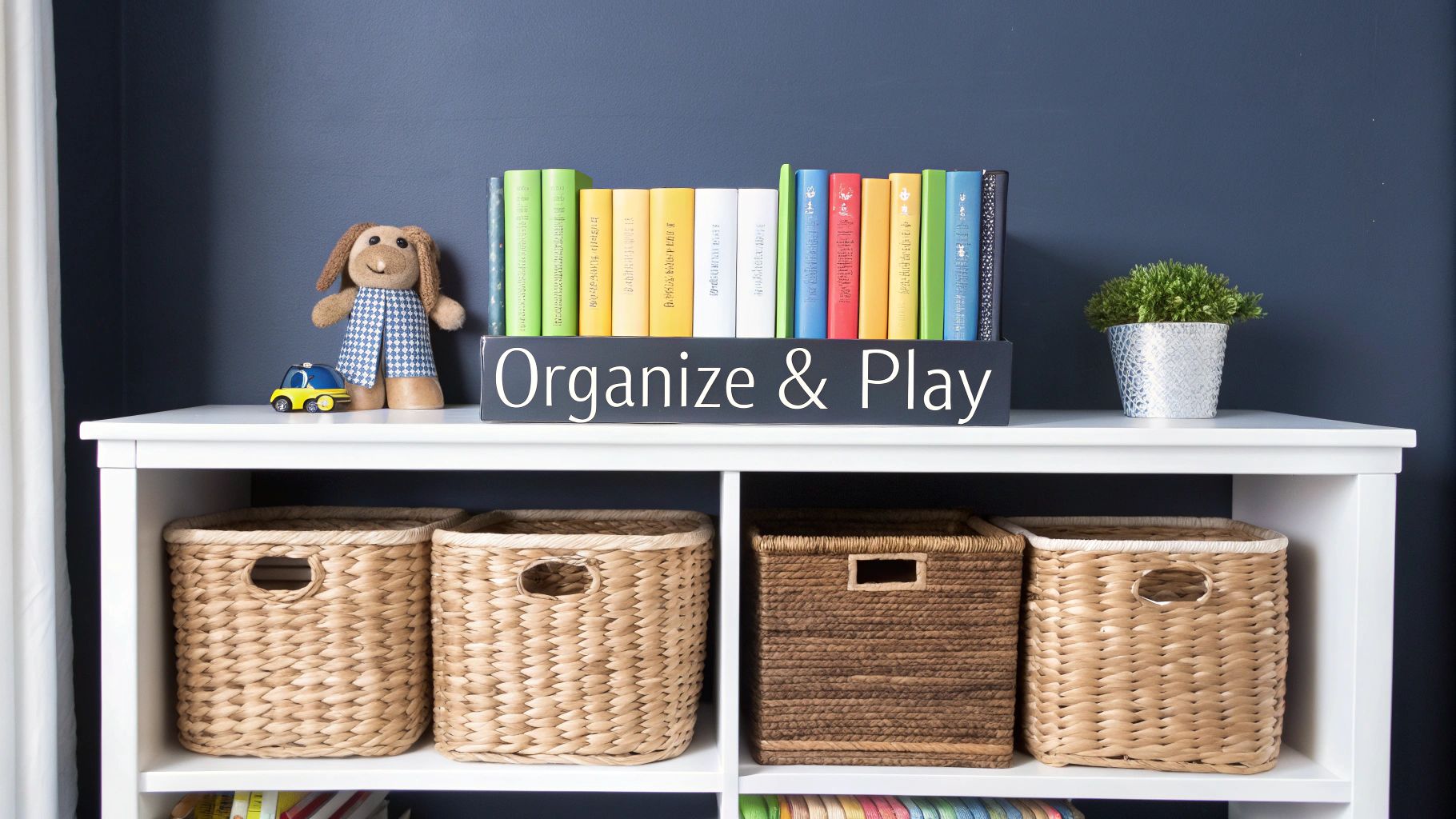
Taming The Clutter With Bins And Baskets
Let's be honest, baskets and bins are a parent's best friend in the endless battle against clutter. They are absolute lifesavers for corralling all those little bits and pieces—LEGOs, art supplies, or that ever-growing collection of tiny animal figures. Choosing soft fabric bins or woven baskets also adds a nice, warm texture to the room.
To make cleanup something your child can actually do, give each bin a job. You can use simple picture labels for little ones who aren't reading yet; a picture of a car goes on the car bin, a crayon on the art supply bin, and so on. This empowers them to tidy up all by themselves, turning a chore into a surprisingly fun matching game. If you're looking for more inspiration, you can explore all sorts of toys storage organizers that build on this idea.
A well-organized shelf with a clear "home" for everything doesn't just look better; it creates a sense of calm that helps kids focus. It quietly teaches them that everything has its place—a real foundational skill for life.
Creating Themed And Personalized Displays
One of the most charming ways to make shelves for kids feel special is to build little displays around what they're into right now. Is your child completely obsessed with dinosaurs? Dedicate a shelf to their dino figures, some books about the Jurassic period, and maybe even a toy volcano. When their passion shifts to space, you can easily swap everything out for rockets and planet books.
- Incorporate Artwork: Don't hide their masterpieces away! Framing a recent drawing or proudly placing a lumpy-but-loved clay sculpture on the shelf makes them feel seen and celebrated.
- Add Personal Touches: Little things make a big difference. Think framed family photos, a special souvenir from a trip, or their first initial as a decorative wooden letter.
- Leave Room to Grow: It’s tempting to fill every inch, but try to resist. Leaving some empty space makes the shelves feel less chaotic and, importantly, leaves room for new treasures they'll inevitably collect.
By taking the time to curate their shelves this way, you’re turning a simple piece of furniture into a living gallery of their personality—a space that truly grows and changes right along with them.
Your Go-To Checklist for Buying Kids Shelves
Alright, you've done the research, and now it's time to make a decision. With so many options out there, it can feel a little dizzying. Think of this as your final walkthrough before you pull out your wallet. Running through these questions will make sure you’ve covered all the important bases, from safety to style, and help you choose with confidence.
Answering these will guide you to a shelf that’s not just a pretty piece of furniture, but a safe, functional, and well-loved part of your child’s space.
Safety and Construction
First things first: safety is non-negotiable. Before you even think about color or style, give any potential shelf a thorough safety inspection. It needs to be ready for a world of curious hands and active play.
- Is it stable? Give it a little nudge. Does it feel solid, or is there a wobble? Any freestanding unit must come with anti-tip hardware so you can anchor it securely to the wall. This is a big one.
- What are the materials? Look for solid wood or high-quality, low-VOC engineered wood. Finishes and paints should always be certified non-toxic and child-safe.
- Are the corners rounded? Sharp, pointy corners are a recipe for bumps and tears. Smooth, rounded edges are always the safer bet for a room full of busy little people.
- Any small, detachable parts? Scan for decorative knobs, caps, or any other bits that a curious toddler might be able to pull off. These can quickly become a choking hazard.
A truly safe shelf is one you can install and then stop worrying about. That peace of mind comes from knowing it was designed for a child's world—sturdy, secure, and made from the right stuff.
Functionality and Design
Once you’re confident a shelf is safe, it's time to think about how it'll actually work for your family day-to-day. The best shelves for kids are the ones that are just as practical as they are good-looking.
- Is it the right height? Can your child see and reach what’s on the lower shelves without help? Fostering that independence is key.
- Does it fit your storage needs? Think about what you need to store. Is it a growing library of picture books, bulky stuffed animals, or tiny LEGOs that need to be corralled in bins?
- Will it grow with them? A rocket-ship-themed shelf might be a huge hit now, but will it still work in a few years? A more classic or modular design, like cube storage, often has a much longer lifespan in a child's room.
Of course. Here is the rewritten section, crafted to sound like a genuine human expert and align with the provided examples.
Your Top Questions About Kids' Shelves, Answered
Picking out furniture for your child's room always brings up a bunch of questions. When it comes to something as simple as shelves, we hear a lot of the same worries from parents about safety, function, and style. Let’s get you some clear, straightforward answers.
Getting these little details right is what transforms a room from just being organized into a space that truly helps your child grow, play, and feel independent—all while keeping them safe.
What’s the Best Height for Kids' Shelves?
The perfect height for your child’s shelves really depends on their age and, well, their height! For toddlers and preschoolers, the whole idea is to let them do things for themselves. Shelves should be low to the ground so they can see their toys, grab what they want, and—maybe, just maybe—put them back without needing a boost.
Once they get to school age, taller bookcases are great for handling bigger collections of books and treasures. Just remember, any piece of furniture tall enough to wobble must always be securely anchored to the wall. No exceptions. Safety first, always.
Are Forward-Facing Bookshelves Really That Much Better?
For little kids, the answer is a huge yes. Before they can read the words on a spine, toddlers and preschoolers pick books based on the pictures they know and love. A forward-facing bookshelf puts all that beautiful cover art on display.
It’s a simple switch, but it turns a boring row of spines into an exciting gallery of adventures just waiting to be picked. This one change sparks so much more interest in reading than a regular shelf ever could. It’s all about letting them be in charge of storytime.
What Are the Safest Materials to Look For?
When it comes to materials, you want two things: safe and sturdy. Your best bets are solid wood (think pine, maple, or birch) or a high-quality engineered wood that’s been certified as low-VOC, which is important for keeping your indoor air clean.
The finish is just as important. Any paint, stain, or clear coat should be clearly labeled as non-toxic and child-safe. And one last tip: run your hand along the edges. You want shelves with smooth, rounded corners, not sharp ones that can lead to bumps and scrapes when playtime gets a little wild.
How Can I Actually Keep These Shelves Organized?
Keeping kids' shelves tidy comes down to one thing: simplicity. First, don't cram them full. A giant pile of toys is overwhelming for a little one and just leads to a bigger mess. Baskets and bins, especially with picture labels, are your best friend for corralling all the small stuff like LEGOs or art supplies.
Try rotating toys—store some away and swap them out every few weeks. It keeps things feeling new and exciting. Most importantly, make tidying up a gentle, regular part of the day. It’s not about punishment; it’s about teaching them the simple, valuable skill of putting things back where they live.
At Ocodile, we’re all about creating furniture that supports your child's journey and gives you peace of mind. Take a look at our collection of thoughtfully designed, safe, and beautiful pieces perfect for your child's room. Visit us at https://ocodile.com to see more.