



A Guide to Child Development Stages by Age (2025 Update)
Understanding the incredible journey of growth from infancy to adolescence can feel like navigating a vast, unmapped territory. Each phase presents unique joys, challenges, and milestones that shape who a child becomes. This comprehensive guide is designed to serve as your practical roadmap, breaking down the essential child development stages by age into clear, manageable sections.
We move beyond generic advice to offer actionable strategies you can implement today. You will find a detailed exploration of developmental windows, from the first babble to complex problem-solving, helping you recognize progress and identify potential red flags. This listicle provides a structured look at each critical period, ensuring you have the insights needed to support your child’s evolving needs.
Furthermore, we will explore how to create a supportive physical environment that nurtures growth. This includes practical guidance on selecting and arranging child-friendly furniture to foster independence, safety, and a sense of competence, aligning with principles that empower children to explore their world confidently.
This guide will equip you with a deeper understanding of:
- Key Milestones: What to expect physically, cognitively, socially, and emotionally at each age.
- Supportive Activities: Concrete ideas to stimulate development and strengthen your bond.
- Environment Design: Tips for creating a home that encourages learning and autonomy.
- When to Seek Support: Clear indicators that may warrant a conversation with a pediatrician or specialist.
Whether you're celebrating a first step, navigating toddler tantrums, or preparing for the complexities of the teenage years, this resource provides the knowledge to support your child's healthy development every step of the way.
1. Infancy (0-12 Months)
The first year of life, infancy, is a period of explosive growth and foundational learning. This stage marks the transition from complete dependency to the first signs of individuality. An infant’s brain forms more than one million new neural connections every second, creating the blueprint for all future learning, behavior, and health. This period is defined by rapid physical growth, sensory exploration, and the crucial development of emotional bonds.

The primary developmental task during this stage is building trust and a secure attachment with caregivers, a concept championed by psychologist John Bowlby. When an infant's needs for food, comfort, and affection are met consistently, they learn that the world is a safe and reliable place. This secure base empowers them to explore their surroundings with confidence.
Key Milestones and Activities
During this crucial phase of the child development stages by age, infants progress from reflexive actions to purposeful movements. Key milestones include rolling over, sitting up, crawling, and eventually pulling to a stand.
- Promoting Physical Skills: Tummy time is essential for building neck, shoulder, and core strength. Create a "yes space" on the floor: a safe, baby-proofed area with a few simple, age-appropriate toys that encourages free movement and exploration.
- Sensory and Cognitive Growth: Infants learn through their senses. Provide objects with different textures, sounds, and safe-to-mouth materials. Narrating your day, singing songs, and reading simple board books are powerful ways to stimulate language pathways.
- Fostering Independence with Furniture: Introduce a low-weaning table and chair when the baby can sit unassisted. This Montessori-inspired setup allows them to practice self-feeding and participate in family mealtime, fostering independence and fine motor skills. A floor bed also provides freedom of movement once they are mobile.
Expert Insight: "The goal of care in the first year is not to 'teach' skills but to create a responsive, respectful, and stimulating environment where the infant can discover their own capabilities." - Inspired by Magda Gerber’s RIE philosophy.
For a comprehensive checklist of what to expect each month, you can learn more about childhood development milestones on ocodile.com. Prioritizing responsive caregiving and a thoughtfully prepared environment will give your baby the strongest possible start.
2. Toddlerhood (12-36 Months)
Welcome to toddlerhood, a dynamic and often whirlwind stage characterized by explosive growth in mobility, language, and a fierce drive for independence. This period marks the transition from infancy's total reliance on caregivers to a new world of "I do it myself." Toddlers are learning to navigate their environment, communicate their desires, and understand their place in the world, making this one of the most transformative child development stages by age.

The primary developmental task of this stage is achieving autonomy while navigating emotional dependency. This delicate balance, first described by psychologist Erik Erikson as "Autonomy vs. Shame and Doubt," is why toddlers can be determined one moment and seeking comfort the next. They are testing boundaries to understand cause and effect, which requires caregivers to provide a predictable yet flexible environment.
Key Milestones and Activities
During this phase, a child's vocabulary can grow from a handful of words to hundreds, and their physical skills advance from tentative steps to confident running, jumping, and climbing.
- Promoting Physical Skills: Gross motor development is a top priority. Provide ample opportunities for active play with climbing triangles, balance boards, and push-pull toys. During toddlerhood, children are often eager to explore movement and new activities. To foster physical development and social skills, you might explore various dance classes for toddlers.
- Cognitive and Language Growth: Nurture their burgeoning language skills by reading books together daily, narrating your activities, and speaking in simple, clear sentences. Offer choices within limits ("Would you like the red cup or the blue cup?") to empower their decision-making abilities and reduce power struggles.
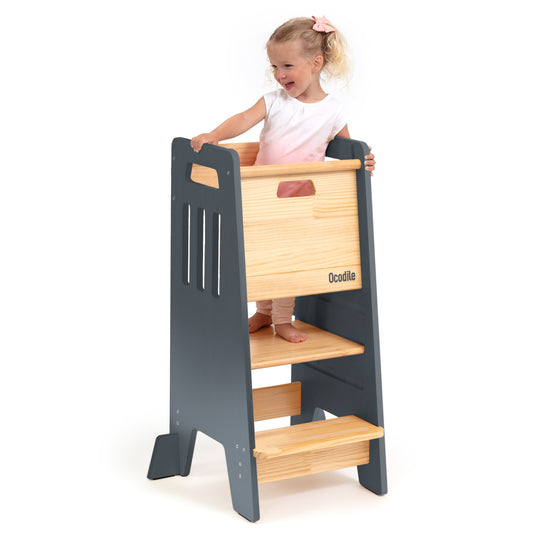
- Fostering Independence with Furniture: Introduce a child-sized table and chairs for art, snacks, and activities. A learning tower or kitchen helper allows them to safely participate in household tasks like washing vegetables or mixing dough, which builds confidence and practical life skills.
Expert Insight: "The toddler's work is to test the world and their place in it. Our role is to be a safe harbor, providing clear, consistent limits with unconditional love, so their exploration feels secure." - Inspired by Dr. Harvey Karp’s "Happiest Toddler" approach.
For parents navigating this exciting stage, it's crucial to balance freedom with firm, loving boundaries. You can find more strategies for this on ocodile.com, where you can learn about encouraging independence in toddlers. Creating a supportive environment helps toddlers develop a strong sense of self.
3. Early Childhood (3-5 Years)
The preschool years, spanning ages three to five, are a period of magical thinking, burgeoning independence, and incredible cognitive leaps. This stage is characterized by a shift from parallel play to more interactive, cooperative play with peers. As noted by theorists like Jean Piaget, a child’s thinking becomes more symbolic, allowing for rich imaginative worlds and the beginning of logical reasoning. This is a crucial time for developing social skills, emotional regulation, and the foundational concepts that pave the way for formal schooling.
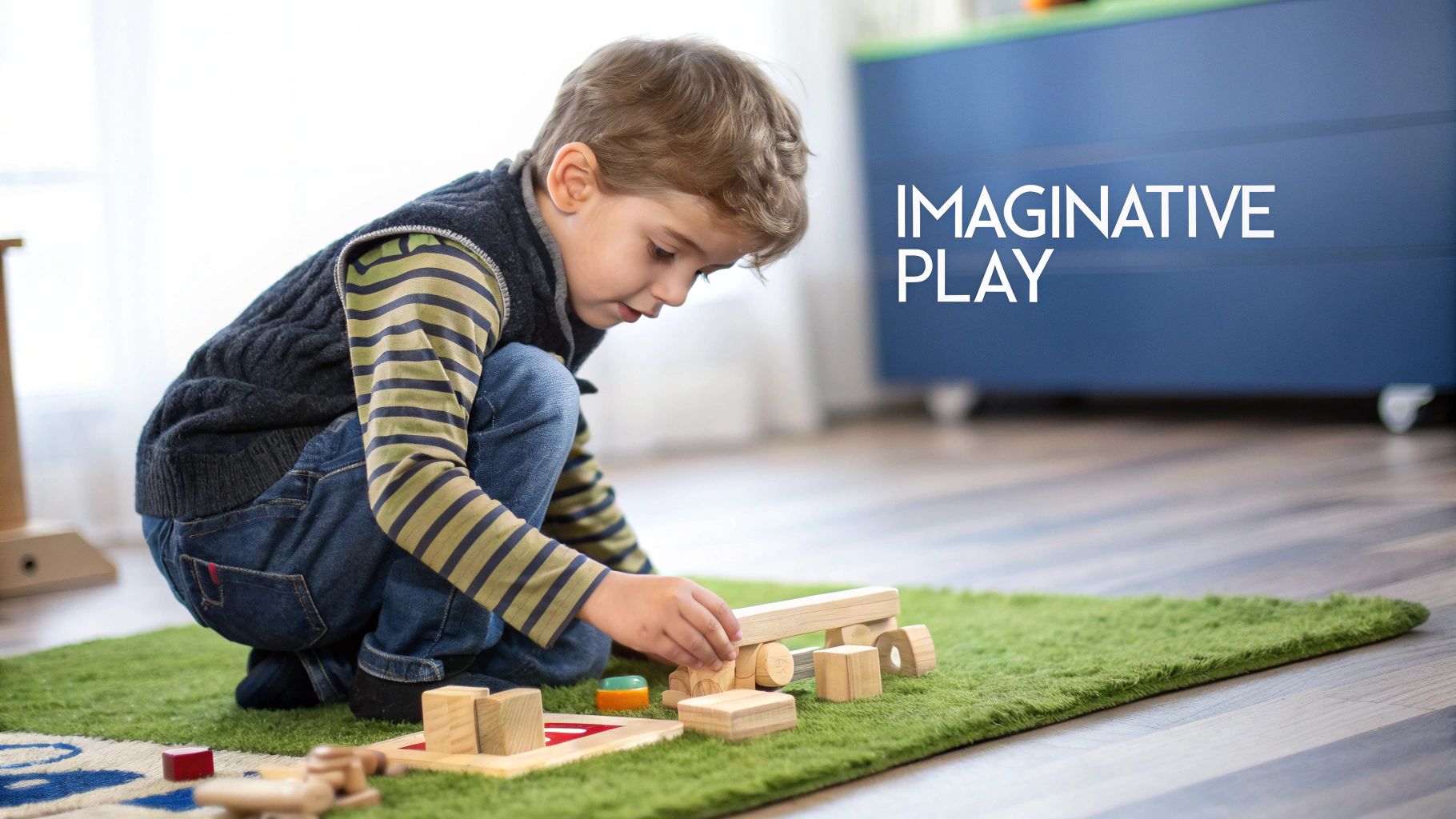
The primary developmental task during this stage is taking initiative. Children are eager to plan activities, invent games, and make up stories. Supporting this drive by providing opportunities for child-led exploration, as seen in Reggio Emilia or play-based preschool approaches, helps them develop a sense of purpose and confidence in their abilities. Consistent routines and clear boundaries provide the security they need to explore their growing independence safely.
Key Milestones and Activities
Throughout this important phase of the child development stages by age, preschoolers refine their motor skills, their language explodes, and their social world expands. Key milestones include drawing more complex shapes, speaking in full sentences, understanding rules, and showing empathy for others.
- Promoting Social and Cognitive Skills: Encourage elaborate pretend play with open-ended materials like blocks, dress-up clothes, and art supplies. Ask open-ended questions like, "What do you think will happen next?" during storytime to build critical thinking and literacy skills.
- Encouraging Problem-Solving: When a child faces a challenge, resist the urge to solve it for them. Instead, guide them by asking questions like, "What could you try?" or "How can we fix this?" This builds resilience and creative problem-solving abilities.
- Fostering Independence with Furniture: An accessible art easel or a child-sized table and chairs create a dedicated space for creative projects and focused work. Low, open shelving for toys and books empowers children to choose their own activities and, just as importantly, to put them away, fostering responsibility.
Expert Insight: "Play is the highest form of research." - Albert Einstein, whose sentiment is echoed in modern play-based learning philosophies.
Supporting a preschooler’s development means creating an environment rich with opportunities for exploration, social interaction, and creative expression. Balancing structured activities with plenty of free play allows them to build the social, emotional, and cognitive skills necessary for the next stage of their journey.
4. Middle Childhood (6-8 Years)
Entering formal schooling, middle childhood is a transformative period where the world expands dramatically beyond the family unit. This stage is characterized by significant cognitive leaps, the blossoming of social skills, and the development of a more concrete sense of self. Children's thinking becomes more logical and organized, allowing them to grasp complex academic concepts and navigate increasingly intricate social dynamics with their peers.
The primary developmental task during this stage is what psychologist Jean Piaget termed the "concrete operational stage." Children begin to think logically about concrete events but struggle with abstract concepts. They develop a stronger moral compass and a greater capacity for empathy, learning to see things from others' perspectives. Fostering a "growth mindset," as researched by Carol Dweck, becomes crucial, teaching children that abilities can be developed through dedication and hard work.
Key Milestones and Activities
During this pivotal phase of the child development stages by age, children refine both academic and social skills. They learn to read, write, and perform basic math, while friendships become a central part of their lives.
- Promoting Academic Skills: Create a dedicated, organized homework space with a well-fitting desk and chair. Support their learning by asking guiding questions rather than giving answers, helping them develop problem-solving abilities. Encourage reading for pleasure by providing access to a wide variety of books that match their interests.
- Social and Emotional Growth: Encourage participation in extracurricular activities like sports teams or clubs. These settings are excellent for building teamwork, confidence, and friendships. Coach them through peer conflicts, helping them brainstorm solutions instead of intervening directly.
- Fostering Independence with Furniture: An appropriately sized desk and an ergonomic chair support good posture and focus during homework. Using shelves and organizers they can reach empowers them to manage their own school supplies and books, building crucial organizational skills.
Expert Insight: "This is the age of industry versus inferiority. Children are focused on mastering academic and social tasks. Meaningful encouragement for their efforts, not just their achievements, builds the competence and self-assurance they need to succeed." - Inspired by Erik Erikson’s stages of psychosocial development.
Supporting your child’s growing independence while providing a stable, encouraging home base is key. This balance helps them build the confidence to tackle the academic and social challenges of school with resilience.
5. Late Childhood (9-11 Years)
Often called the "tween" years, late childhood is a significant bridge between the dependency of younger years and the burgeoning independence of adolescence. This stage is marked by increasingly sophisticated cognitive abilities, the formation of complex social hierarchies, and a deepening sense of self-identity. Children in this phase begin to think more abstractly, develop specialized interests, and may start to question authority as they form their own opinions.
The primary developmental task during this period is achieving a sense of competence and industry, as defined by Erik Erikson. Children strive to master academic and social skills, and success in these areas builds self-esteem. As noted by researchers like Dr. Rosalind Wiseman, peer relationships become paramount, and navigating social dynamics is a critical learning experience. This stage demands a shift in parenting from direct management to coaching and guidance.
Key Milestones and Activities
This crucial period in the child development stages by age sees children refining their physical, intellectual, and social skills. They develop unique talents and begin to think about their future place in the world.
- Promoting Intellectual Growth: Encourage participation in academic competitions, coding clubs, or science fairs. Provide access to a wider range of books, including non-fiction and complex chapter books. Support their research into topics that genuinely interest them, fostering a love for learning.
- Fostering Social and Emotional Skills: Stay engaged in their social lives without being intrusive. Discuss friendship challenges, peer pressure, and online interactions. Use open-ended questions to help them problem-solve social conflicts rather than solving issues for them. Sports teams and arts programs offer structured environments to practice collaboration.
- Supporting Independence with Their Environment: This is the ideal time to create a dedicated homework or study area. A well-designed desk and an ergonomic chair can help them focus and take ownership of their academic responsibilities. Respect their growing need for privacy by establishing clear boundaries for their personal space, like their bedroom.
Expert Insight: "This is a time of immense cognitive and social growth. The key is to provide both 'roots' and 'wings' - a stable, supportive home base from which they feel confident enough to explore their expanding world and growing independence." - Inspired by the work of Dr. Dan Siegel on the pre-adolescent brain.
Navigating these years successfully involves balancing support with autonomy. For a closer look at the cognitive leaps happening during this time, you can find valuable information on pre-teen brain development at raisingchildren.net.au. Listening actively and validating their emerging identity will strengthen your connection as they prepare for the teen years ahead.
6. Early Adolescence (12-14 Years)
Early adolescence is a period of intense and rapid transformation, serving as the bridge between childhood and the later teen years. This stage is characterized by the onset of puberty, bringing significant physical growth and hormonal shifts that impact everything from mood to sleep cycles. Cognitively, a major leap occurs as abstract thinking develops, allowing for deeper reasoning, hypothetical considerations, and a more complex understanding of the world.
The primary developmental task during this phase is the search for identity, which often shifts focus from the family unit to peer groups. As noted by researchers like Dr. Laurence Steinberg, the adolescent brain's reward centers develop faster than its prefrontal cortex (responsible for impulse control), explaining the increased risk-taking and heightened emotional responses typical of this age. Navigating this stage successfully means balancing a growing need for independence with the continued need for parental guidance and support.
Key Milestones and Activities
During this pivotal stage of the child development stages by age, early adolescents are figuring out who they are and where they fit in. They crave belonging and are highly influenced by their peers.
- Promoting Social and Identity Growth: Encourage participation in activities that align with their interests, such as middle school clubs, competitive sports leagues, or arts programs. These environments provide a sense of belonging and allow for safe identity exploration with like-minded peers.
- Cognitive and Emotional Support: Engage in conversations about complex topics, asking for their opinions without judgment. This validates their developing abstract thinking. Maintain open, honest communication about puberty, sexuality, and online safety to provide them with accurate information.
- Fostering Independence with clear Boundaries: As they seek more autonomy, it is crucial to provide guidance within a structured environment. Create a dedicated, organized study space with a proper desk and ergonomic chair to support academic responsibility. Setting clear rules around screen time, curfews, and social activities helps them manage their freedom while ensuring their safety.
Expert Insight: "Adolescence is not a period of being ‘crazy’ or ‘immature.’ It is a time of profound development in which the task of the brain is to leave the family and go out into the wider world." - Dr. Laurence Steinberg.
Maintaining a warm yet authoritative parenting style is key. Support your early adolescent’s journey by providing a stable home base from which they can confidently explore their expanding world.
7. Mid Adolescence (15-17 Years)
Mid adolescence is a period of significant cognitive advancement and identity consolidation. As teens move further from childhood, their thinking becomes more abstract and sophisticated, and they grapple more intensely with the question of "Who am I?" This stage is characterized by a drive for greater autonomy, the formation of deeper, more complex social bonds, and a more serious consideration of their future path in life.
This phase aligns with Erik Erikson's "Identity vs. Role Confusion" stage, where the primary developmental task is to forge a stable sense of self. Teens experiment with different roles, values, and beliefs, often influenced by peers, culture, and personal experiences. Supporting this exploration while providing a stable home base is critical for helping them build a confident and authentic identity.
Key Milestones and Activities
In this pivotal stage of the child development stages by age, teens refine their abstract thinking skills and begin to solidify their personal value systems. They seek out experiences that test their abilities and help define their place in the world, such as taking on leadership roles or pursuing part-time work.
- Promoting Intellectual Growth: Encourage participation in challenging academic programs like Advanced Placement (AP) courses or activities like debate club and Model UN. These experiences hone critical thinking, argumentation, and complex problem-solving skills, preparing them for higher education and future careers.
- Fostering Independence and Responsibility: Support their pursuit of a part-time job, internship, or significant volunteer commitment. This real-world experience teaches financial literacy, time management, and professional accountability. Discuss creating a budget for their earnings to practice responsible spending and saving.
- Supporting Identity with Dedicated Space: As teens solidify their identity, their personal space becomes a crucial form of self-expression. Providing them with a functional desk and comfortable chair for studying, along with the freedom to organize and decorate their room, respects their growing need for autonomy and personal territory. This environment supports both their academic focus and their individual identity.
Expert Insight: "Adolescent autonomy is not about rebellion but about renegotiating relationships. The goal is to move from a parent-child dynamic to a more balanced, adult-to-adult connection, which requires trust and open communication from both sides." - Inspired by Dr. Laurence Steinberg's research.
This stage is about balancing freedom with guidance. Maintaining open dialogue about challenges like peer pressure, online safety, and future aspirations will help your teen navigate these complex years with confidence.
8. Late Adolescence (18-21 Years)
Late adolescence marks the transition from teenage years to young adulthood, a period characterized by significant strides toward independence and personal responsibility. Physically mature, individuals in this stage focus on consolidating their identity, refining personal values, and setting long-term life goals. This is a time of major life decisions about career paths, higher education, and relationships, as the young adult begins to navigate the world with legal autonomy.
This phase is often defined by what sociologist Dr. Jeffrey Arnett terms "emerging adulthood," a distinct period of exploration and identity formation. The primary developmental task, as outlined by Erik Erikson, is navigating the challenge of "intimacy vs. isolation," where the individual seeks to form deep, meaningful relationships with others after having established a clearer sense of self. Successfully navigating this stage lays the groundwork for emotionally healthy adult relationships.
Key Milestones and Activities
This final phase of the child development stages by age is less about physical milestones and more about social, emotional, and cognitive achievements. Young adults are making consequential choices that will shape their future, whether that involves pursuing a university degree, entering the workforce, or joining the military.
- Promoting Independence and Responsibility: Respect their status as legal adults while remaining a supportive resource. Encourage them to take ownership of their finances, schedules, and decisions. Allowing them to experience the natural consequences of their choices is a powerful learning tool for adulthood.
- Supporting Career and Life Path Exploration: Maintain an open, non-judgmental dialogue about their aspirations. Whether they choose a traditional college route, a trade apprenticeship, or a gap year, support their exploration. Help them research options and connect with mentors in fields that interest them.
- Fostering an Adult-to-Adult Relationship: The parent-child dynamic must evolve. Shift from a directive role to that of a trusted advisor. Focus on mutual respect, active listening, and acknowledging their autonomy. This fosters a strong, lasting connection built on a new foundation.
Expert Insight: "Emerging adulthood is a time of life when many different directions remain possible, when little about the future has been decided for certain, when the scope of independent exploration of life's possibilities is greater for most people than it will be at any other period of the life course." - Jeffrey Jensen Arnett.
Guiding a late adolescent involves a delicate balance of letting go and staying connected. The goal is to provide a stable, supportive base from which they can confidently launch into their own lives.
9. Physical Development Across Childhood
Physical development is the continuous process of physical growth and motor skill acquisition that spans from birth through adolescence. It provides the framework for understanding how a child masters control over their body, from the first reflexive movements of an infant to the complex coordination required for sports. This area of development covers both gross motor skills (large movements like running and jumping) and fine motor skills (small, precise movements like writing and buttoning a shirt).
Pioneers like Dr. Arnold Gesell established developmental norms that help caregivers and pediatricians track a child's progress against predictable patterns. While every child develops at their own pace, these established milestones for physical growth in the child development stages by age offer a valuable guide for assessing health, identifying potential delays, and providing age-appropriate activities that support a child’s journey toward physical competence.
Key Milestones and Activities
Monitoring physical development involves observing a child's ability to navigate their environment with increasing skill and confidence. This progression is supported by providing opportunities for movement and practice.
- Tracking Growth and Motor Skills: Use age-appropriate growth charts from the CDC or WHO to monitor physical maturation. Observe for key motor milestones, such as a toddler learning to walk or a preschooler learning to skip, and discuss any significant delays with a healthcare provider.
- Encouraging Active Play: Limit screen time to encourage physical activity. Create safe indoor and outdoor spaces where children can run, climb, and take healthy risks. Activities like dance, swimming, or team sports are excellent for building motor competence and confidence.
- Supporting with the Right Environment: Ensure your home environment supports physical exploration. A sturdy learning tower in the kitchen allows a toddler to safely participate at counter height, building core strength and balance. Low, open shelving encourages children to move and select their own toys, promoting autonomy.
Expert Insight: "A child learns to move by being allowed to move. The role of the adult is to prepare a safe environment and then to trust in the child's innate ability to discover and master their own physical capabilities." - Inspired by Dr. Emmi Pikler’s philosophy on motor development.
By providing varied physical activities, adequate nutrition and sleep, and a supportive environment, you empower your child to build a strong, capable body and a lifelong love of movement.
10. Cognitive and Language Development Across Childhood
Cognitive and language development are not isolated events but an intricate, continuous process that unfolds throughout all child development stages by age. This area covers how children think, reason, solve problems, remember information, and use language to communicate. From a baby's first coos to a teen's complex debates, this progression is foundational to learning and social interaction.
Understanding this journey allows caregivers to provide appropriately stimulating experiences and recognize potential delays. This stage is less about a specific age and more about the interconnected growth of the mind and voice, which underpins every other developmental milestone. It is the framework through which children perceive, process, and shape their world.
Key Milestones and Activities
From infancy onward, cognitive and language skills build upon one another. An infant learning object permanence paves the way for a toddler's symbolic play, which in turn supports a preschooler's storytelling abilities.
- Create a Language-Rich Environment: The single most effective strategy is consistent exposure to rich language. Narrate your daily activities, ask open-ended questions like "What do you think will happen next?" instead of "Is that a dog?", and model correct grammar without overtly correcting the child. Reading together daily is paramount.
- Encourage Problem-Solving and Reasoning: Instead of solving every problem for them, offer scaffolding. If a block tower falls, ask, "What could we try differently this time to make it stronger?" This builds critical thinking skills and resilience.
- Support with Purposeful Toys and Furniture: A child-sized work table and chair create a dedicated space for focused activities like puzzles, drawing, or sorting, which are crucial for cognitive growth. Providing open-ended materials encourages symbolic thinking and creativity. You can learn more about how certain toys foster these skills by exploring learning STEM toys on ocodile.com.
Expert Insight: "Language is the tool of the mind. By nurturing a child's ability to communicate, we are giving them the essential tools to think, learn, and connect with the world in a meaningful way." - Inspired by the work of Lev Vygotsky.
Early intervention is critical if you notice a significant lag in language or cognitive milestones. Programs like reading interventions or, for non-verbal children, Augmentative and Alternative Communication (AAC), can provide essential support.
10-Stage Child Development Comparison
| Stage | 🔄 Implementation Complexity | ⚡ Resource Requirements | 📊 Expected Outcomes | 💡 Ideal Use Cases & Tips | ⭐ Key Advantages |
|---|---|---|---|---|---|
| Infancy (0–12 months) | Very high caregiver involvement; consistent routines required | Intensive time, responsive caregiving, basic health care | Foundation of attachment, rapid neural and motor gains | Responsive care, tummy time, talk/sing, limit screens | Peak brain plasticity; secure attachment formation |
| Toddlerhood (12–36 months) | Moderate — behavior management and safety focus | Supervision, safe play space, language-rich toys | Rapid language explosion, increased mobility, emerging autonomy | Clear boundaries, read daily, choices within limits | Fast skill acquisition; independence building |
| Early Childhood (3–5 years) | Moderate — balance of guided and free play | Preschool resources, open-ended materials, caregiver facilitation | Improved social skills, imaginative play, school readiness | Play-based learning, story discussion, problem-solving support | Strong gains in language, empathy, and self-regulation |
| Middle Childhood (6–8 years) | Moderate — academic support plus social guidance | School resources, extracurriculars, adult coaching | Concrete logical thinking, reading fluency, peer competence | Homework guidance, clubs/sports, social skills practice | Growing independence and academic competence |
| Late Childhood (9–11 years) | Moderate–high — social complexities and early puberty onset | Specialized programs, mentoring, puberty education | More abstract reasoning, interest specialization, complex friendships | Enrichment activities, privacy respect, digital citizenship | Skill refinement and identity exploration |
| Early Adolescence (12–14 years) | High — puberty, emotional volatility, identity shifts | Counseling access, clear boundaries, puberty education | Emergence of abstract thought, intense peer focus, identity exploration | Open communication, puberty guidance, healthy sleep routines | New capacity for hypothetical thinking and moral reasoning |
| Mid Adolescence (15–17 years) | High — autonomy push and risk management needed | College/career prep, mental health support, mentors | Consolidating identity, advanced reasoning, future orientation | Internships, leadership roles, balanced autonomy support | Mature abstract thinking and goal-directed behavior |
| Late Adolescence (18–21 years) | Moderate — transition to adult roles and responsibilities | Higher education/career resources, financial guidance | Consolidated identity, adult decision-making, emotional stability | University, apprenticeships, guided independence | Near-complete autonomy; sophisticated problem-solving |
| Physical Development Across Childhood | Moderate — ongoing monitoring and activity adaptation | Growth charts, PT, varied physical activities, nutrition | Predictable motor skill progression; early delay detection | Sports, movement classes, monitor growth and nutrition | Early identification of delays; promotes lifelong health |
| Cognitive & Language Development Across Childhood | Moderate — staged pedagogy and individualized supports | Language-rich environments, educators, intervention services | Sequential cognitive stages; progressive language complexity | Bilingual programs, reading interventions, open-ended questions | Helps identify both delays and giftedness; supports academic success |
Empowering Growth at Every Stage
Navigating the landscape of child development can often feel like following a complex, ever-changing map. This comprehensive guide has charted the key territories, from the rapid transformations of infancy and toddlerhood to the nuanced growth spurts of adolescence. We've explored the physical, cognitive, and social-emotional milestones that define each era, offering a framework to understand the incredible journey from a dependent newborn to a capable young adult. The purpose of this map isn't to rush the trip or compare your child's progress to others, but to appreciate the scenery at every turn and provide the right support for the path they are on.
Understanding the distinct child development stages by age is your first and most powerful tool. It allows you to anticipate needs, celebrate unique achievements, and create an environment that fosters natural growth. By recognizing that a toddler's "no" phase is an assertion of budding independence, or that a preteen's moodiness is part of their identity formation, you can respond with empathy and effective guidance rather than frustration.
Key Takeaways for Your Parenting Toolkit
The most significant insight to carry forward is that development is not a linear race but a holistic and deeply personal journey. Every child follows their own timeline, influenced by a unique blend of genetics, environment, and experience.
- Observation Over Comparison: Your primary role is to be a keen observer of your child. Notice their interests, their struggles, and the subtle cues they give you. This observational approach is far more valuable than comparing their milestones against a rigid checklist or another child's progress.
- The Power of a Prepared Environment: A child's surroundings are a powerful teacher. As we've discussed, thoughtfully chosen, child-friendly furniture and well-organized spaces do more than just ensure safety. They send a clear message: "You are capable. You are trusted. This space is for you." A low shelf for toys, a small table and chair for creative projects, and an accessible wardrobe all build competence and self-esteem.
- Play is the Work of Childhood: For a child, play is not just a pastime; it is the very mechanism through which they learn about the world, test theories, practice social skills, and process emotions. The activities suggested for each stage, from sensory bins for toddlers to strategic board games for older children, are designed to support this essential work.
Actionable Next Steps: From Knowledge to Practice
Armed with this knowledge, you can now move from understanding to implementation. Your next step is to look at your own home and routines through the lens of your child's current developmental stage.
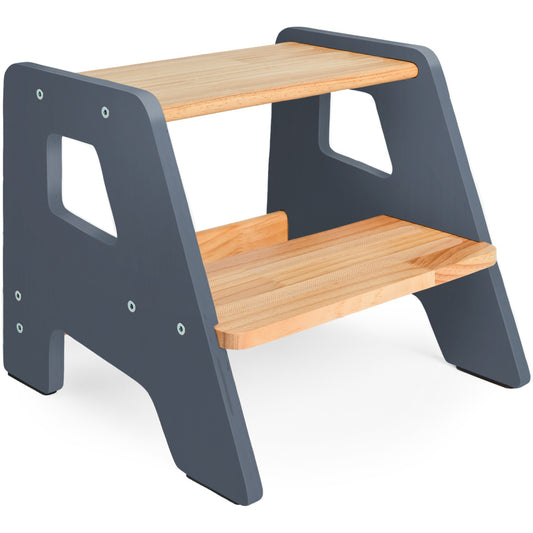
- Conduct an Environment Audit: Walk through your home from your child's perspective. Can they reach their own books? Is there a designated, uncluttered space for them to focus on a puzzle or build with blocks? Small adjustments, such as placing a step-stool in the bathroom or putting everyday dishes on a low shelf, can make a significant impact on their sense of independence.
- Integrate Stage-Appropriate Activities: Choose one or two new activities from the relevant section in this article to introduce this week. Remember, the goal isn't to over-schedule but to enrich their playtime with new challenges that align with their developing skills.
- Focus on Building Core Life Skills: Beyond academic or physical milestones, focus on nurturing the internal skills that will serve them for a lifetime. A key goal in child development is to empower children with strategies to build resilience and thrive, enabling them to navigate life's challenges effectively. This involves allowing them to experience and overcome minor frustrations, praising their effort rather than just the outcome, and modeling a positive, problem-solving mindset.
Ultimately, supporting the child development stages by age is an act of trust. It is about trusting the developmental process, trusting your parental instincts, and most importantly, trusting your child. By providing a foundation of safety, love, and respect, you are giving them the greatest gift of all: the confidence to grow into the remarkable person they are meant to be. Enjoy every moment of this extraordinary journey.
Ready to create a space that grows with your child? Explore the collection at Ocodile. Our thoughtfully designed, child-friendly furniture supports every stage of development, empowering your little one with the independence and safety they need to explore their world with confidence. Visit Ocodile to find the perfect pieces for your family.