



Creating Inclusive Learning Environments for Every Child
When we talk about creating inclusive learning environments, we're really talking about crafting spaces where every single child feels seen, valued, and emotionally secure enough to truly thrive. It’s so much more than just basic accessibility; it’s about intentionally fostering a genuine sense of belonging. This means being thoughtful about everything from the physical layout and sensory details to the cultural representation you bring into your materials.
What Makes a Learning Environment Truly Inclusive
At its core, an inclusive learning environment is built on a foundation of emotional and physical safety. It's a conscious practice where we recognize and celebrate the unique background, abilities, and identity of each child in our care. This isn’t just a passing trend—it's a critical response to a very real, global need.
The hard truth is that inclusive education is still a huge challenge. In 2020, a staggering 244 million children and youth across the globe were out of school. And for children with disabilities, the gap is even more profound—they are 2.5 times more likely to never attend school at all. These numbers from the World Bank really highlight the equity gap we're working to close.
Think of it like this: physical accessibility, emotional well-being, and cultural affirmation are all interconnected, and at the center of it all is a powerful sense of belonging.
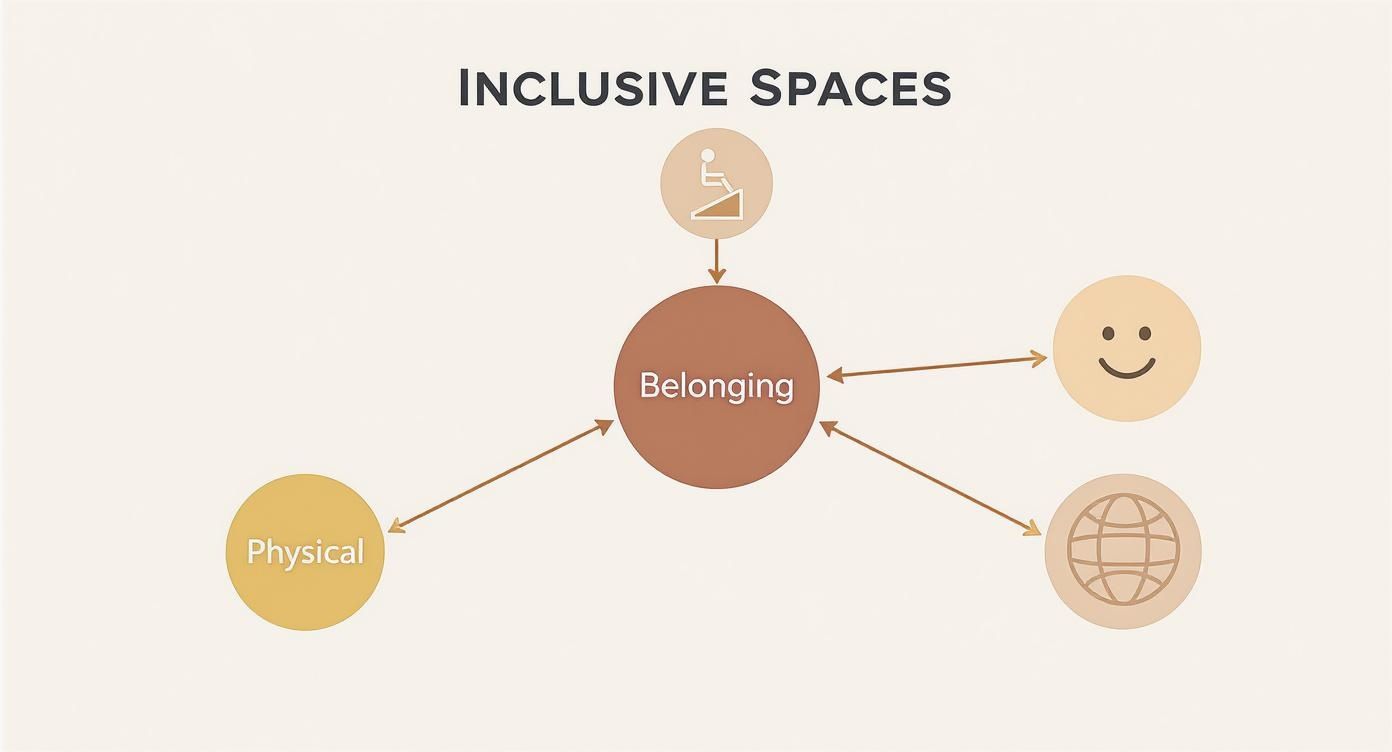
As the diagram shows, true inclusivity isn’t just one single thing. It’s the beautiful intersection of a welcoming physical design, a supportive emotional climate, and culturally affirming materials that all work together.
The Pillars of an Inclusive Space
An inclusive environment rests on a few key pillars. When you understand how they support each other, you can design a space that truly welcomes every learner.
- Emotional Safety: This is the absolute bedrock. A child has to feel safe enough to express themselves, make mistakes, and be vulnerable without any fear of judgment. This sense of security is built through consistent, positive, and nurturing interactions.
- Physical Accessibility: The space itself has to be easy for everyone to navigate, no matter their physical ability. This means thinking about clear pathways, adaptable furniture, and providing tools that empower children to be more independent. A lot of these ideas overlap with the principles of https://ocodile.com/blogs/the-little-space/montessori-education-at-home, which also puts a huge emphasis on creating an accessible setup.
- Cultural Representation: It’s so important for children to see themselves and their friends reflected in the books, art, and materials around them. This not only validates their own identity but also teaches them to respect and appreciate the diversity of others.
A truly inclusive space sends a clear message: "You belong here, exactly as you are." It's an environment where differences aren't just tolerated but are actively celebrated as strengths that make the whole community richer.
This guide is all about giving you practical, achievable ways to bring these pillars to life in your own space. For an even deeper dive into designing spaces that welcome all learners, you can find some great insights on creating accessible learning environments.
Designing a Physical Space for Independence
An empowering environment is one a child can navigate on their own terms. It’s about transforming a room from a set of limitations into a landscape of possibilities. When we design inclusive learning spaces, we start by arranging the room to say 'yes' to a child’s natural curiosity and drive to explore.
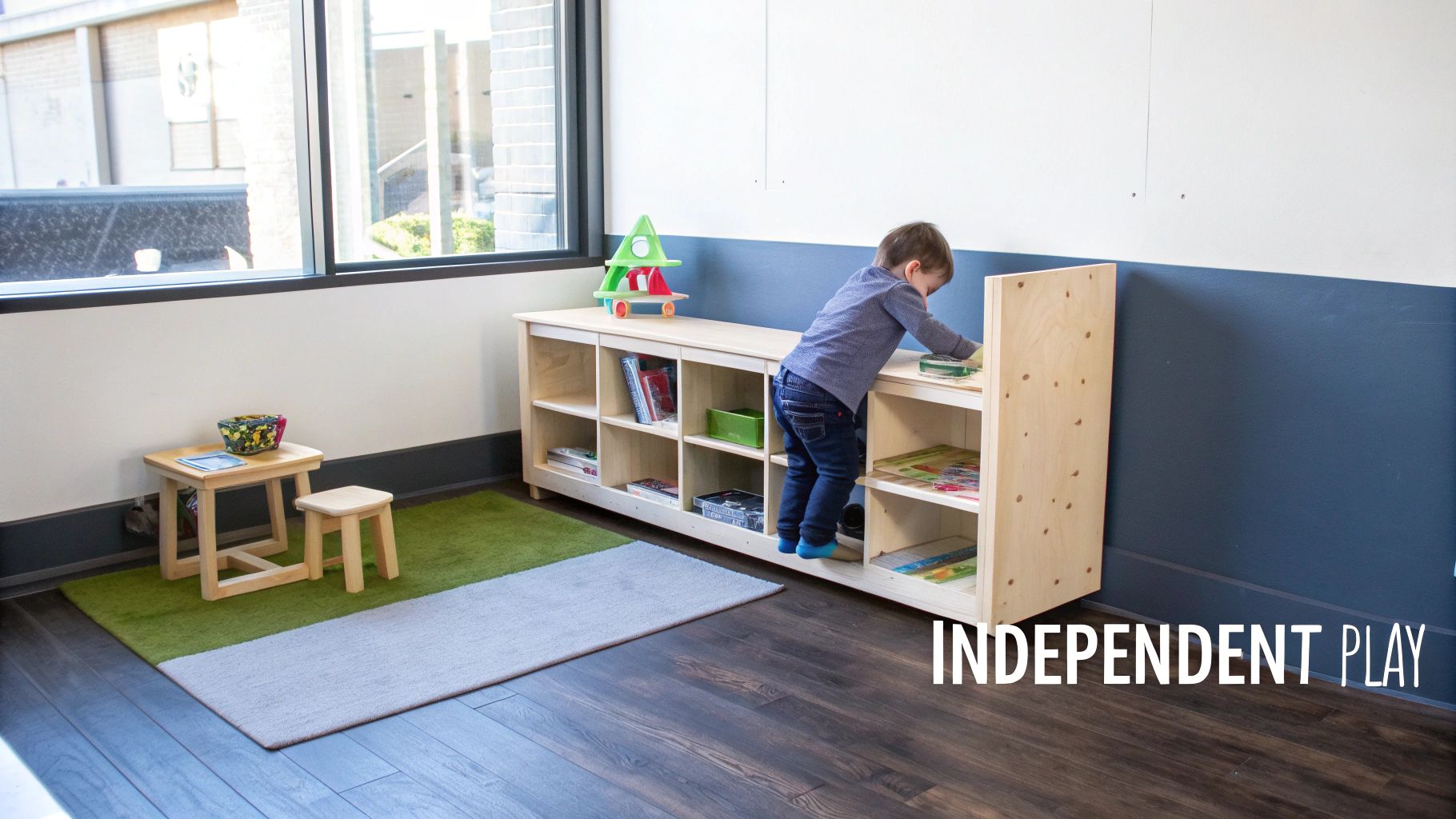
The first step? Create clear, unobstructed pathways. A toddler perfecting their balance or a child using a walker needs wide, open lanes to move freely without frustration. This simple act of decluttering goes beyond safety—it respects a child’s fundamental need for movement.
From there, you can create designated zones for different activities. You don't need a massive room for this; it’s all about intention. A soft rug with a few cushions in one corner becomes a cozy reading nook. A small, low table in another area can be the dedicated art station. These zones offer a predictable structure that helps children understand how to use each space, reducing overwhelm and supporting focused play.
Promoting Choice and Accessibility
A huge piece of the independence puzzle is making materials accessible. When toys, books, and art supplies are tucked away in closed bins or on high shelves, a child is forced to ask an adult for help. This creates a dynamic of dependence.
Instead, try using low, open shelving. This one simple change invites children to see their options, make their own choices, and—crucially—retrieve and return items themselves. This setup builds self-reliance and develops vital executive functioning skills like organization and decision-making. For a deeper dive into how the right furniture can completely change a space, you can explore more about Montessori classroom furniture.
An accessible space is a respectful space. It communicates to a child, "Your choices matter, and you are capable of acting on them."
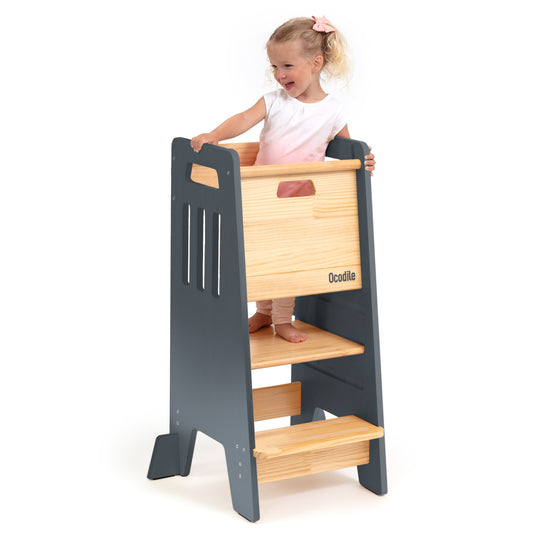
For example, a learning tower or a sturdy step stool in the kitchen can be a total game-changer. It safely brings a toddler up to counter height, letting them participate in real activities like mixing batter or washing vegetables. This isn't just about keeping them busy; it's about giving them a meaningful role in family routines, which builds incredible confidence and fine motor skills.
To help visualize how different pieces of furniture can support a child's growing independence, here’s a quick breakdown of some common items and what to look for.
Key Furniture for Fostering Independence
| Furniture Item | Primary Benefit | Example Use Case | Safety Checklist |
|---|---|---|---|
| Low, Open Shelving | Visual access & choice | A toddler selects a puzzle and returns it to the same spot. | Must be anchored to the wall to prevent tipping. |
| Learning Tower | Safe height access | A child helps wash fruit at the kitchen sink. | Sturdy base, safety rails on all sides, non-slip platform. |
| Child-Sized Table & Chairs | Body-appropriate workspace | A preschooler sits comfortably to draw or have a snack. | Rounded corners, durable materials, correct height for child. |
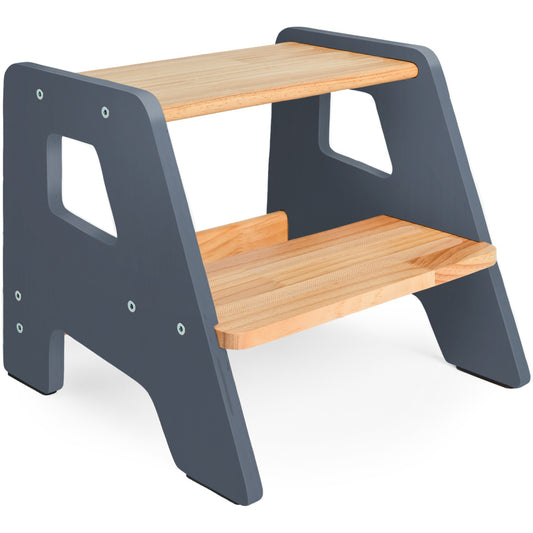
| Step Stool | Bathroom & sink access | A child washes their hands independently at the sink. | Wide, non-slip base; non-slip surface on the step. |
| Low "Floor" Bed | Freedom of movement | A toddler can get in and out of bed on their own. | No high frame to fall from; placed away from walls or with a soft rug. |
Choosing the right furniture isn’t just about aesthetics; it’s a practical way to show a child you trust their capabilities.
Safety as an Enabler of Freedom
True independence can only flourish when a child feels secure. That’s why designing for independence goes hand-in-hand with ensuring safety. This isn't about restricting exploration but about making that exploration safe.
Think through these practical steps:
- Anchor heavy furniture. Bookshelves, dressers, and storage units should always be securely anchored to the wall. This is non-negotiable.
- Use non-toxic materials. Make sure furniture, toys, and art supplies are made from child-safe, non-toxic materials.
- Soften sharp corners. Use corner guards on low tables and shelves to protect little heads from bumps and falls.
- Cover electrical outlets. Simple outlet covers are a must-have in any space where young children play.
By thoughtfully addressing these safety measures, you create a space where you can confidently step back. You’re giving your child the freedom to explore, interact, and learn on their own terms—a foundational piece of any truly inclusive environment.
Selecting Materials That Nurture and Represent
The things you place in a learning space are so much more than just toys. They’re the tools kids use to make sense of their world, and choosing them thoughtfully is one of the most powerful ways to show every single child that they matter. It's all about intentionally curating items that not only support different sensory needs but also reflect the beautiful, diverse world we live in.
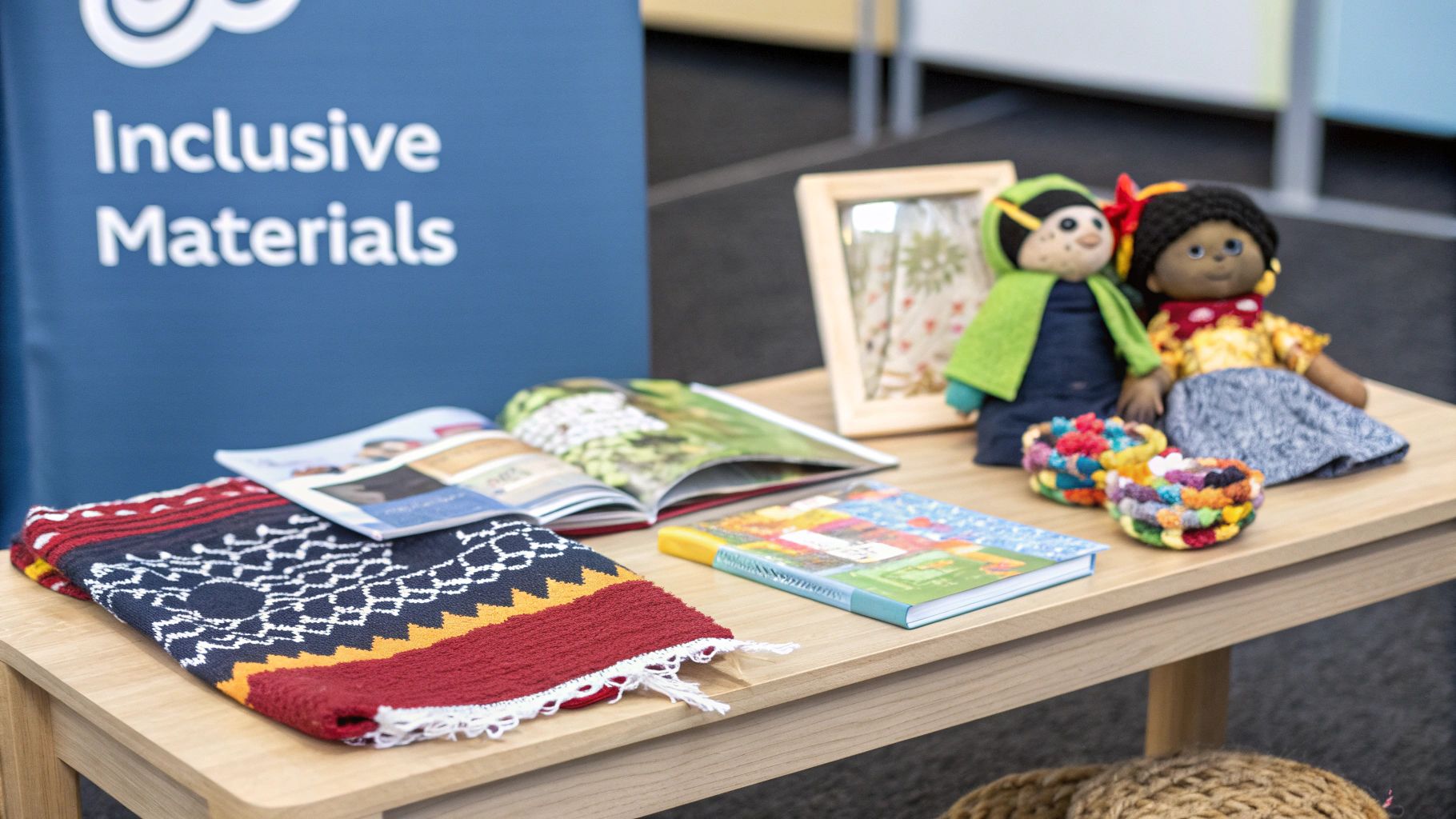
This idea isn't just a small-scale trend; it's a global movement. We're seeing huge organizations step up their game. UNICEF, for example, is aiming to reach 50 million more learners with disabilities by investing in teacher training and inclusive materials. Education Cannot Wait (ECW) now requires at least 5% of every programme budget to go toward disability-inclusive education. It's a clear signal that this matters, everywhere. You can read more about these global commitments to building inclusive education.
Curating for Sensory Diversity
Every child experiences the world differently through their senses. A good "sensory diet" isn't about food—it's about offering a mix of textures, sounds, and sights so kids can find what they need, whether that’s a bit of excitement or a moment of calm.
Think about creating a small, cozy 'calm-down corner.' This could be as simple as a nook with soft pillows, a weighted lap pad, or some noise-reducing headphones. These items offer gentle, grounding input for a child who’s feeling a little overwhelmed.
On the flip side, some kids need more sensory engagement to focus and feel regulated. For them, you could try:
- Tactile Bins: Fill a few containers with things like sand, water beads, or even dried pasta for some satisfying, hands-on exploration.
- Auditory Tools: Simple musical instruments like egg shakers or a small xylophone can provide just the right amount of auditory input.
- Visual Stimulation: Items like calming liquid motion bubblers, colorful scarves, or books with interesting patterns can be wonderfully engaging.
By offering this range, you’re giving children the power to self-regulate and meet their own unique sensory needs in a healthy, positive way.
An inclusive collection of materials acknowledges that there is no "one-size-fits-all" way to learn and play. It provides a toolkit that children can use to build their own just-right experience.
Fostering Representation and Belonging
Beyond sensory input, the materials in a space should serve as both mirrors and windows. Kids need to see themselves reflected in the stories and toys around them—those are the mirrors that validate their identity. They also need windows into the lives of others to build empathy and respect for differences.
So, when you're choosing materials, be intentional. Actively look for items that show a wide range of cultures, family types, abilities, and backgrounds.
Here’s a practical checklist for your next trip to the library or toy store:
- Books: Find stories with main characters of various ethnicities, family structures (single-parent, same-sex parents, multigenerational), and characters with disabilities. Just make sure the portrayals feel real and not stereotypical.
- Dolls and Figurines: Your collection should include dolls with different skin tones, hair textures, and physical traits. Look for dolls that use mobility aids like wheelchairs or wear glasses.
- Art Supplies: This one is so easy but so powerful. Offer a wide palette of skin-tone crayons, markers, and paints. It sends a clear message that every skin color is beautiful and deserves to be seen.
- Puzzles and Games: Pick puzzles and games that show people from all over the world just doing everyday things. It’s a great way to celebrate both our differences and our shared humanity.
Building a collection like this is a marathon, not a sprint. You can start small—maybe by choosing one new, representative book each month. If you need more ideas on picking purposeful items, this guide to Montessori materials for home has some great starting points. The ultimate goal is to create an environment where every child can look around and feel, without a doubt, that they belong.
Building Inclusive Routines and Interactions
A beautifully designed space is a great start, but it's only half the story. The real heart of an inclusive learning environment lies in the human element—the daily rhythms, the back-and-forth conversations, and the emotional culture you build day in and day out.
Think of predictable routines and positive communication as the invisible architecture that helps children feel secure, respected, and truly ready to learn.
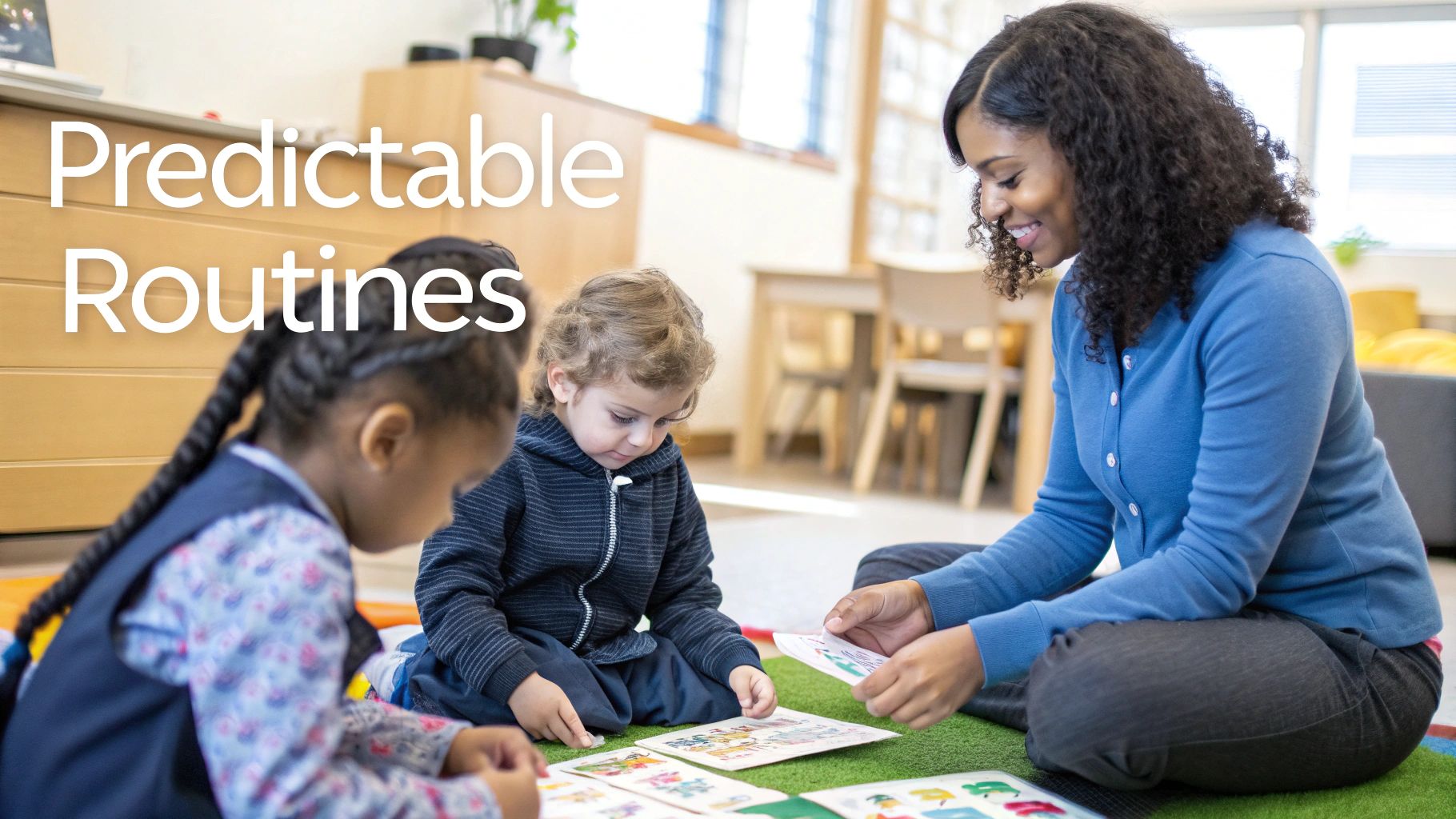
Predictability is an incredibly powerful tool for lowering anxiety, especially for neurodivergent children or any child navigating a new experience. When a child knows what's coming next, they can relax their nervous system and pour all that saved energy into exploring and connecting with others.
This doesn't mean you need a rigid, minute-by-minute schedule. It’s more about creating a consistent, gentle flow to the day.
Establishing Predictable Rhythms
One of the simplest ways to build this predictability is with a visual schedule. This could be a chart with pictures or symbols showing the different parts of the day, like snack time, outdoor play, and story circle. For a child with autism spectrum disorder (ASD), seeing the day laid out like this can dramatically calm their anxiety and make transitions so much smoother.
Here are a few ways I’ve seen visual supports work wonders:
- Picture Cards: Use simple, clear images for each major activity. A picture of a sandbox for outside time, a book for reading, or an apple for snack. Easy.
- First-Then Boards: This is a fantastic tool for getting through smaller transitions. It's just a board with two spots—"First, we'll put away the blocks," followed by "Then, we'll go outside." It makes the sequence concrete and much less overwhelming.
- Timers: Visual timers, like an old-school sand timer or a modern color-coded clock, help make the abstract concept of time more tangible for little learners.
An inclusive routine is one that communicates respect for a child’s need for structure. It says, "I see you, and I will help you understand your world so you can feel safe within it."
The best part? These tools aren't just for children with diagnosed needs. They benefit every child by fostering independence and cutting down on the need for constant verbal reminders. They empower kids to understand and anticipate their day, giving them a much-needed sense of control.
Fostering Respectful Communication
The way we talk with children shapes their entire experience. Truly inclusive communication is about shifting our language from commands to collaboration, and from making assumptions to showing genuine curiosity. It’s about modeling the same empathy and respect we hope they’ll show to others.
One powerful shift is to offer choices instead of directives. Instead of saying, "Put your coat on now," you might try, "Would you like to put on your coat or your shoes first?" This simple change respects the child’s autonomy while still getting the job done. It turns a potential power struggle into a moment of teamwork.
Similarly, adopting person-first language is non-negotiable. We say "a child with autism," not "an autistic child." This small but crucial phrasing difference emphasizes the child's identity before their diagnosis. It’s a constant reminder to everyone that they are a whole person, first and foremost.
Finally, we have to explicitly teach children how to express their needs and respect boundaries. When you hear a child say "stop," you can step in and validate it: "Leo said stop. We need to respect that and give him some space." These everyday moments are the most effective lessons in social connection, turning what could be a conflict into a powerful opportunity for building real empathy.
Adapting Your Inclusive Space Over Time
Creating an inclusive learning space isn’t a one-and-done project. It's a living, breathing process. Just as children grow and their needs change—seemingly overnight!—the environment around them has to evolve, too. This is a journey of constant observation, thoughtful tweaks, and a bit of creative problem-solving.
What sparks joy for a curious toddler won’t necessarily challenge a preschooler who’s busy navigating complex friendships. The real magic happens when you stay flexible and responsive, treating the environment as an active partner in a child's development.
Responding to Developmental Shifts
As kids get older, their need for independence, sensory input, and social interaction changes dramatically. A space that felt perfect last month can suddenly start to feel restrictive. This is where your powers of observation become your greatest tool.
For instance, a toddler who spent hours happily scooping rice in their sensory bin might now be ready for a more complex fine motor challenge. That's your cue to swap the rice for water beads and add some small tools for scooping and pouring. Or that quiet little reading nook, once a perfect solo escape, might need another cushion to invite a friend to share a story.
Your role is to be a keen observer of play. Watch how children use the space—where do they gravitate, where do they get frustrated? Their behavior is the best feedback you'll ever get on what needs to change.
The good news? These adjustments don't have to be massive, expensive overhauls. Often, the most powerful changes are the simplest.
- Rotate Materials: You don't need a mountain of toys out all at once. Keep a small selection available and store the rest. Swapping them out every few weeks keeps things fresh and exciting without costing a dime.
- Leverage Community Resources: Your local library is a goldmine for diverse books, music, and even cultural learning kits. It’s an incredible way to introduce new perspectives without stretching your budget.
- DIY Sensory Solutions: You can create amazing sensory experiences with everyday items. Think a bin of dried beans, a small tub of soapy water with sponges, or a collection of fabrics with different textures.
Navigating Broader Challenges
Beyond the walls of your home or classroom, larger societal factors can bring both challenges and opportunities. Technology, for example, offers incredible adaptive tools, but the digital divide is a real barrier for many families, limiting equal access to learning.
Being aware of these bigger-picture issues helps you become a better advocate for every child. You can find some great insights on these global trends shaping education on oecd.org.
Ultimately, adapting your inclusive space is about being a responsive and resourceful guide. By staying tuned in to the children in your care and getting creative with the resources you have, you ensure your learning environment is a place where every single child feels supported, challenged, and truly seen.
Common Questions About Inclusive Learning Spaces
As you start shaping a more inclusive learning space, a few practical questions are bound to pop up. It's totally normal for parents and caregivers to wonder about the budget, the real-world benefits, and where to even begin. Let’s get into some of the most common queries I hear and break them down with some clear, straightforward answers.
How Can I Create an Inclusive Space on a Tight Budget?
This is a big one, and the answer is reassuring: inclusivity is all about your mindset, not how much money you spend. You can create a huge impact without a big budget. It's really about focusing on thoughtful, affordable strategies that make every child feel like they belong.
Some of the most powerful, low-cost ideas are things you can do right now:
- Lean on your local library. Regularly rotating books is a completely free way to bring a diverse range of stories, characters, and cultures into your home.
- Whip up some DIY sensory bins. You probably have everything you need already. Household items like rice, dried beans, water, or sand make for incredible hands-on sensory play.
- Just rearrange the furniture. Seriously. Clearing pathways so a child can move more freely and independently costs nothing but can make a world of difference.
A friendly piece of advice: your most powerful tools for building an inclusive environment are free. Your time, your attention, and your willingness to see the world through a child's eyes are your greatest assets.
Why Is an Inclusive Environment Important for a Child Without a Disability?
This is a great question because it gets to the heart of what inclusivity is all about. An inclusive learning environment is a gift to every single child, no matter their individual abilities. It’s the training ground for crucial life skills like empathy, respect, and creative problem-solving—all learned naturally through day-to-day interactions.
When children play with diverse materials and learn alongside friends from different backgrounds and with different abilities, they develop a much richer, more accurate understanding of the world. This kind of early exposure is the best preparation for real life—which is beautifully diverse—and helps them grow into more adaptable and compassionate people.
What Is the Single Most Important Part of an Inclusive Environment?
While the physical setup, the books on the shelf, and the daily routines are all important pieces of the puzzle, the emotional atmosphere is, without a doubt, the foundation. Nothing matters more than a child's sense of belonging and psychological safety.
If I had to pick one thing, it’s you. Your interactions are the heart of it all. The way you listen with real curiosity, respond with patience, and model unconditional respect is what truly makes a space inclusive. A perfectly designed room means very little without a nurturing adult who makes every child feel seen, heard, and valued for exactly who they are. That emotional connection is what gives a child the security they need to explore, learn, and truly thrive.
At Ocodile, we believe every child deserves a space that champions their independence and growth. Our thoughtfully designed furniture, from our learning towers to our floor beds, helps you build a safe, empowering environment where your child can flourish. Take a look at our collection and find the perfect pieces for your own inclusive learning space. Discover Ocodile's child-friendly furniture today.