



A Parent's Guide to Infant Foam Floor Mats
That empty spot on your nursery floor? It's more than just a floor—it's your baby's very first playground. The right infant foam floor mat can transform that space from a hard, unwelcoming surface into a soft, cushioned world perfect for exploring and growing. And for you? It offers a huge dose of peace of mind.
Why a Foam Play Mat Is a Nursery Essential
Don't think of a foam mat as just another piece of baby gear. It's the foundation for your little one's earliest adventures. It creates a dedicated developmental zone, instantly turning any room with tile, hardwood, or laminate into a safe haven for discovery. This is where the magic happens—where your baby will start mastering those crucial early milestones.
A good mat provides a soft, forgiving surface that cushions the tumbles and topples that are an inevitable part of learning to roll, sit, and crawl. That gentle support builds confidence, encouraging them to test their limits without the fear of bumps and bruises. For parents, this is priceless.
This infographic gives you a great visual of how a foam mat creates the perfect environment for safe, engaging playtime.
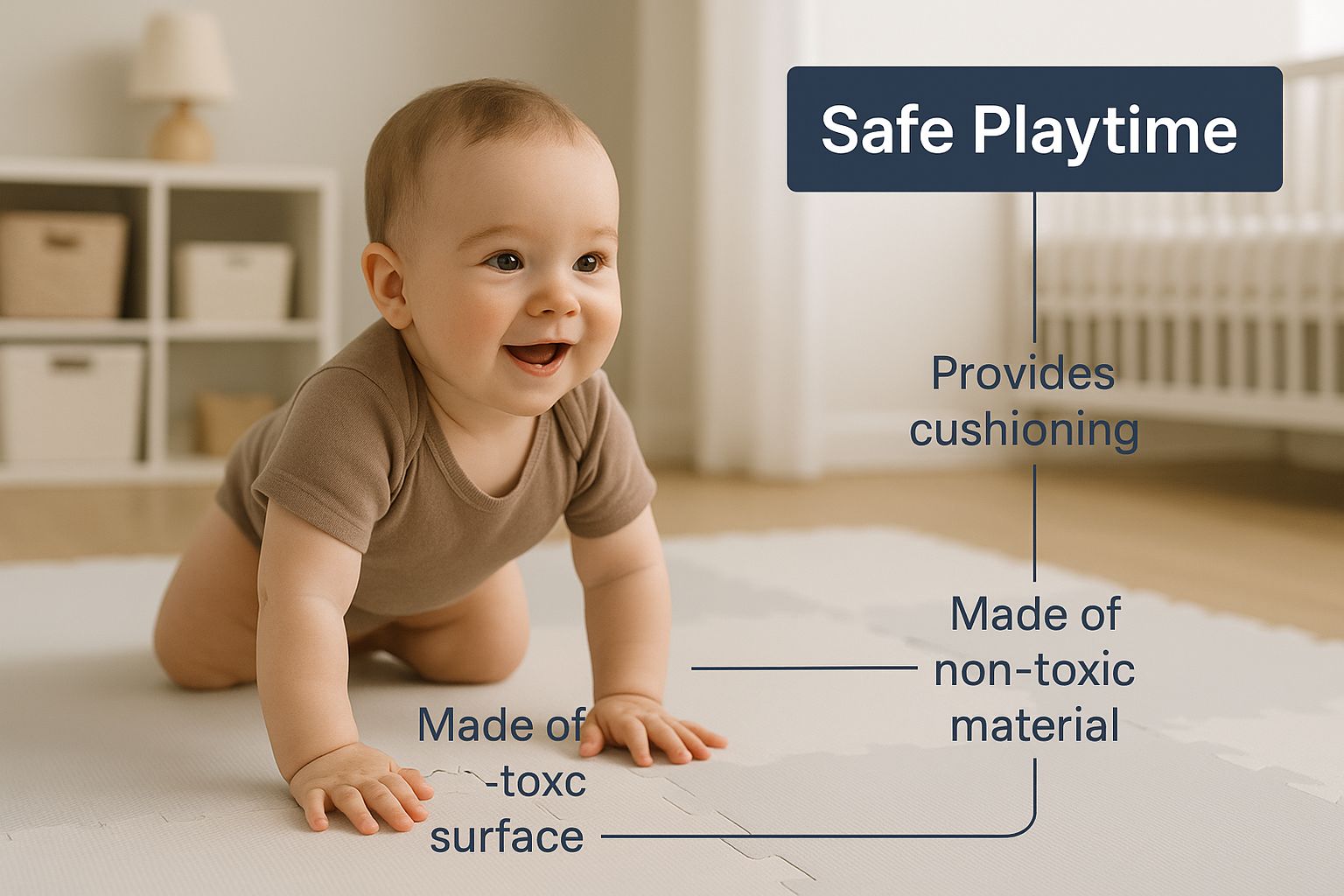
As you can see, the mat really does act as a protective barrier, making essential activities like tummy time more comfortable and, ultimately, more effective.
More Than Just a Soft Surface
But it’s not just about the cushioning. These mats play a surprisingly big role in your baby’s development, offering benefits that go far beyond physical safety. A great foam play mat is a true multi-tasker:
- Supports Motor Skill Development: It gives babies the non-slip grip and comfort they need to push up during tummy time, practice rolling over, and eventually figure out how to crawl.
- Stimulates Sensory Exploration: Many mats come with engaging colors, patterns, and even different textures. These little details are fantastic for capturing a baby’s attention and encouraging their visual and tactile development.
- Defines a Safe Play Area: A mat clearly marks out a "yes" space. It's a designated zone where your baby is free to move and explore on their own terms, without you having to hover over them every second.
A dedicated play mat is a critical tool for a baby's physical, cognitive, and sensory growth. By creating a secure and stimulating environment, you give your child the best start on their journey of exploration.
This guide will walk you through everything you need to know about choosing the right one—from decoding material labels to finding a mat that is safe, stimulating, and the perfect fit for your home.
Understanding What Your Baby Is Playing On
When you start shopping for an infant foam floor mat, the labels can feel like you're back in chemistry class. You'll see acronyms like 'EVA' and 'XPE' thrown around, and it's easy to feel a bit lost.
But getting to know what these terms mean is the key to picking a safe, durable surface for your baby's first tumbles and explorations. It's not just about a soft place to land—it’s about the very surface your baby will be touching, drooling on, and interacting with every single day.
Decoding the Most Common Foam Materials
You’ll mostly run into two types of foam: EVA and XPE. While they both do a great job of providing a cushion, they have some key differences that are important for parents to know.
EVA (Ethylene-Vinyl Acetate) is a super common choice, known for being soft and flexible with fantastic shock absorption. If you have a yoga mat or a pair of running shoes, you're already familiar with it. When it comes to baby mats, though, it's critical to make sure any EVA mat is certified formamide-free, as this chemical can sometimes be a mild skin irritant.
XPE (Cross-linked Polyethylene) is the more premium option you'll see. XPE foam is praised for being completely non-toxic, odorless, and incredibly durable. It has a denser structure that holds up better against scratches and tears. Plus, it’s waterproof, which makes cleaning up those inevitable spills a total breeze.
This shift toward safer materials isn't just a small trend. Market research shows that parents are actively seeking out eco-friendly and non-toxic play mats, specifically looking for materials like EVA while steering clear of PVC due to toxicity concerns. You can dive deeper into this growing demand for safer baby products over at Deep Market Insights.
What Do Safety Certifications Really Mean?
Beyond the type of foam, you'll see labels boasting various safety certifications. These aren't just marketing fluff; they're your proof that a mat has been tested and is free from specific nasty chemicals. Making sure materials are safe is a big deal, and you can learn more about creating a healthy home in our guide on non-toxic kids' furniture.
Here’s a quick rundown of the big ones to look for:
- BPA-Free: This means the mat doesn’t contain Bisphenol A, an industrial chemical linked to potential health effects.
- Phthalate-Free: Phthalates are chemicals used to make plastics more flexible, but some are tied to health concerns. A phthalate-free mat is a must.
- Lead-Free: This simply ensures no lead, a highly toxic metal, was used in the mat’s colors or materials.
Your takeaway is simple: always look for mats that are explicitly labeled as non-toxic and have been tested by a third party. This guarantees the surface your baby plays on is free from harmful chemicals.
Choosing the right material often comes down to balancing durability, safety, and your budget. To make it easier, here's a table comparing the most common options at a glance.
Foam Material Comparison for Infant Mats
| Material Type | Key Benefits | Safety Considerations | Average Cost |
|---|---|---|---|
| EVA Foam | Excellent cushioning, lightweight, affordable | Must be certified formamide-free | $-$$ |
| XPE Foam | Non-toxic, odorless, waterproof, highly durable | Can be more expensive than EVA | $$-$$$ |
| PVC Foam | Very durable and easy to clean | Often contains phthalates and other toxins | $-$$ |
Ultimately, whether you go with the budget-friendly cushion of EVA or the premium durability of XPE, the most important thing is to check for those safety certifications. They're your best guide to finding a mat you can feel good about.
How Play Mats Support Your Baby’s Development
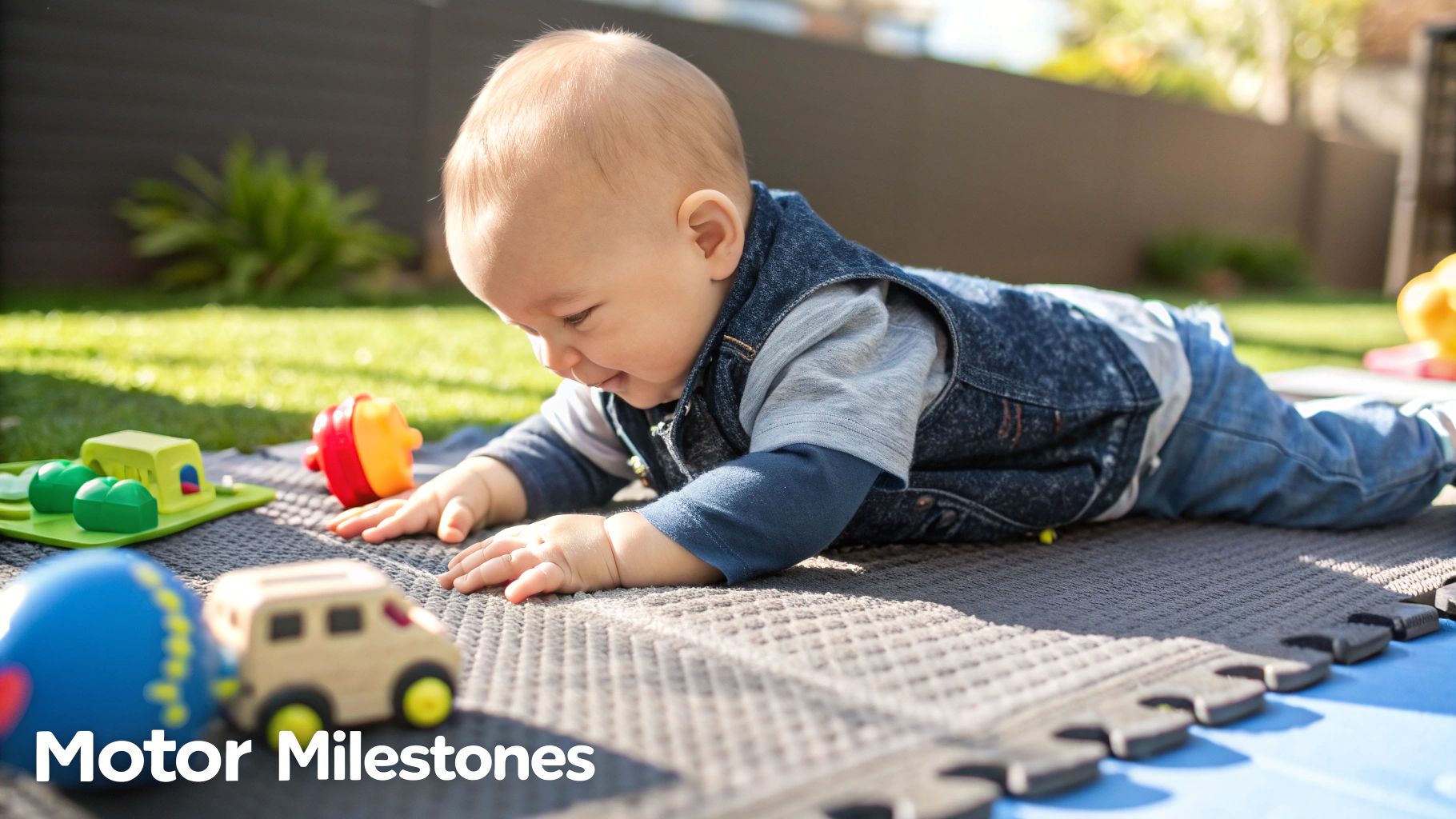
A quality infant foam floor mat is so much more than just a soft spot for your baby to hang out. It’s better to think of it as their first personal gym, sensory playground, and interactive learning space all rolled into one. It becomes an active partner in your little one’s journey through some of the biggest developmental milestones of their first year.
The most obvious win is the safe space it creates for physical exploration. A baby on a hard floor might think twice before pushing up during tummy time or attempting that first wobbly roll. The firm-yet-forgiving surface of a foam mat completely changes the game.
It gives them just the right amount of cushion to protect little heads and knees from bumps, which is a huge confidence booster. This newfound security encourages them to push their physical limits, strengthening those crucial core muscles needed for sitting, crawling, and eventually, taking those incredible first steps.
Boosting Gross Motor Skills
A play mat is basically a training ground for gross motor skills—those big movements using their arms, legs, and whole body. The mat’s surface offers just enough grip for tiny hands and feet to get a good hold, making their early efforts feel much more successful.
- Tummy Time Champion: The mat’s comfort makes tummy time less of a chore. Longer, happier sessions are key for building strength in their neck, shoulders, and back.
- Rolling and Sitting Support: When your baby starts to roll, the soft landing takes the shock out of it. As they learn to sit up, the mat gives them a stable base and cushions the inevitable topples.
- Crawling Launchpad: That non-slip surface is a game-changer when it comes to getting the traction they need to figure out crawling. For more tips on this big milestone, check out our guide on how to encourage crawling.
A quality foam mat isn’t just preventing bruises; it’s actively encouraging the next developmental leap. It provides the secure foundation babies need to feel brave enough to try new movements.
This supportive environment is exactly where your baby builds the strength and coordination that will serve them for years.
Igniting Sensory and Cognitive Growth
Beyond the physical stuff, foam floor mats are fantastic tools for sensory stimulation. A baby's brain is growing at an incredible rate, and it learns by taking in information from the world—what they see, touch, and feel.
Many mats are designed with exactly this in mind. High-contrast patterns in black and white are perfect for a newborn’s vision, grabbing their attention and helping their eyes learn to focus. As they get a bit older, mats with bright colors, different textures, or interlocking puzzle shapes spark their curiosity and invite them to explore.
Touching a bumpy texture or tracing a colorful line with their fingers provides valuable tactile input. This sensory feedback helps build new connections in the brain, laying the groundwork for more complex skills down the line, like problem-solving and spatial awareness. The simple act of exploring their mat becomes a foundational learning experience.
How to Choose the Perfect Mat for Your Space
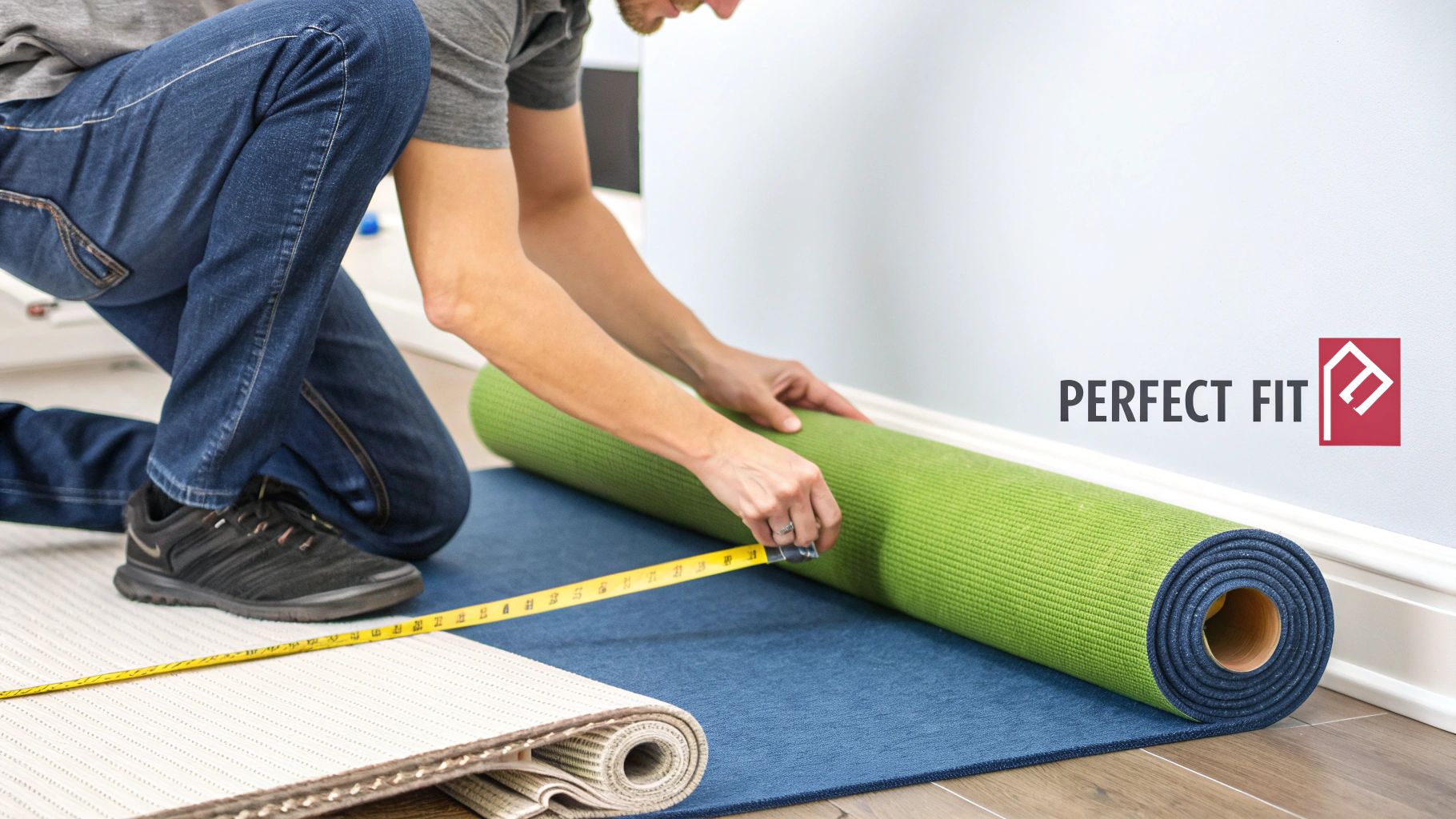
Alright, you’re sold on the benefits, and now it’s time for the fun part—picking out the perfect infant foam floor mat for your home. This is where practicality and your personal style get to meet. The goal is to find a mat that doesn't just look good, but truly fits your space and your family's day-to-day life.
Think about it like buying a new rug. You wouldn't just grab the first one you see. You’d measure, think about how much foot traffic it’ll get, and picture it in the room. Applying that same mindset here will help you land on a play mat you'll be happy with for a long time.
Measure Twice, Buy Once
Before you get carried away by a cute pattern, grab a tape measure. A mat that’s too small will feel restrictive, but one that’s too big can completely take over a room. Figure out exactly where you plan to put it—a corner of the living room, the nursery floor—and measure that dedicated space.
Think about how you'll actually use it. Do you want enough room for you to sit down and play with your baby? Does it need to fit neatly between the sofa and the coffee table? Knowing your exact dimensions is the fastest way to narrow down your choices and avoid the headache of a mat that just doesn't fit.
The demand for these mats has exploded recently. The global market was valued at around $1.8 billion in 2024 and is on track to hit $2.9 billion by 2033. This isn't just a trend; it's a reflection of how much parents are prioritizing child safety and early development. You can see more about what's driving this growth in this detailed industry analysis.
Finding the Right Thickness and Style
A mat’s thickness is one of its most important features, directly affecting both comfort and safety. A thicker mat means more cushioning, which is a lifesaver for babies learning to sit up who tend to topple over without warning.
- For Newborns (0-6 months): A standard thickness of about 0.4 inches (1 cm) is usually plenty for tummy time and gentle play.
- For Sitters and Crawlers (6+ months): This is when you'll want something a bit more robust. Look for mats that are 0.5 inches (1.2 cm) or thicker to provide better shock absorption for all those inevitable tumbles.
Next up is style. When it comes to foam mats, you generally have two main options to choose from.
Interlocking Tiles: Think of these as giant, soft puzzle pieces you can arrange to fit your space perfectly. They’re incredibly versatile—you can always buy more tiles to expand the play area later. As your little one grows, the tiles can be repurposed for building forts or even an indoor obstacle course for toddlers.
One-Piece Mats: These are large, seamless mats that roll out just like a rug. Their biggest selling point is how ridiculously easy they are to clean. With no cracks for crumbs or spills to get trapped in, a quick wipe is all you need. Many are also reversible, giving you two different designs in one.
So, what's the right choice? It really boils down to what you value most. If you love the idea of a customizable size and future play potential, tiles are a great bet. But if a seamless look and effortless cleaning are at the top of your list, a one-piece mat is probably the way to go.
Keeping Your Play Mat Clean and Safe
Let’s be real, a play mat is ground zero for drool, spit-up, and all sorts of mysteries your baby explores with their hands and mouth. A clean play surface is a safe play surface, so keeping it hygienic is non-negotiable. The great thing is, it’s surprisingly simple to keep these mats looking and feeling fresh with a basic routine.
Regular, gentle cleaning is your best defense against a buildup of germs and dirt. Not only does this keep your baby’s first playground a healthy space, but it also helps the mat last longer, protecting your investment.
Creating a Simple and Safe Cleaning Routine
The easiest way to tackle this is with a quick daily wipe-down and a more thorough clean once a week. For everyday messes, a damp cloth with a little baby-safe soap is usually all you need. This little bit of daily effort prevents small spills from turning into a sticky, grimy headache down the road.
For the weekly deep clean, a non-toxic solution is your best friend. You'll want to steer clear of harsh chemicals like bleach or abrasive cleaners. They can actually damage the foam's surface and leave behind nasty residues that could irritate your baby’s sensitive skin.
Here's a super simple, effective, and baby-safe cleaning mix you can whip up at home:
- Mix Your Solution: Grab a spray bottle and combine equal parts white vinegar and water. If you want a fresh scent, a few drops of lemon juice work wonders.
- Spray and Sit: Lightly mist the entire mat. Let the solution sit for a few minutes; this gives it time to break down any grime or bacteria.
- Wipe Clean: Use a soft, clean cloth to wipe down the whole surface. Don't forget to get into any textured grooves where gunk can hide.
- Rinse and Dry: Go over the mat one last time with a cloth dampened with just plain water to get rid of any vinegar smell or residue. Let it air dry completely before the next play session.
A key takeaway for parents is that you don't need harsh chemicals for a truly clean mat. A simple vinegar and water solution is an effective disinfectant that is completely safe for surfaces your baby will be in contact with.
Tackling Tougher Messes and Tile Maintenance
What about those interlocking tile mats? They're fantastic and so versatile, but those little seams can become crumb and dust magnets. To keep the tiles fitting snugly and looking fresh, it’s a good idea to pull them apart for a deep clean every few weeks.
This gives you a chance to clean not just the tops, but the interlocking edges and the floor underneath, too. Just wash each tile one by one with your baby-safe cleaning solution and let them dry completely before you put them back together. It’s a quick reset that ensures a tight fit and stops hidden dirt from building up between the pieces.
Answering Your Top Questions About Foam Mats
As you start piecing together the perfect play space, a few questions are bound to come up. It's a big decision, and you want to get every detail just right. We get it. We’ve gathered the most common questions we hear from parents and are here to give you clear, straightforward answers.
Think of this as your quick-reference guide. We’re covering the practical, everyday stuff—from newborn safety and cleaning hacks to how the family pet fits into the picture. Let's clear up any lingering doubts so you can get back to what matters: enjoying those precious playtime moments.
Are Foam Floor Mats Safe for Newborns?
This is usually the first question on every new parent’s mind. The short answer is a reassuring yes, as long as you know what to look for. Foam mats are a fantastic choice for newborns, giving them a clean, cushioned surface for those crucial first months of tummy time and gentle floor play.
The absolute key is choosing a mat that is certified non-toxic. Always check the label for clear statements like BPA-free, phthalate-free, and lead-free.
Firmness is also a big deal. While you want cushioning, an overly soft or squishy surface can be a hazard. A firm mat provides the stable support a newborn needs to start pushing up and building that all-important neck strength.
A safe newborn mat is a simple formula: non-toxic materials plus a firm, supportive surface. It’s all about creating a controlled environment where your baby can start exploring the world from the ground up.
Can I Use a Steam Cleaner on My Foam Mat?
It’s tempting to blast away germs with a steam cleaner, but this is one time you’ll want to skip it. High heat is the enemy of foam. A steam cleaner can warp or melt the mat, and it might even release chemicals that were safely bonded inside the material.
Instead, stick to the simple stuff. A quick wipe-down with a damp cloth and a bit of mild soap or a diluted vinegar solution does the trick. It’s effective enough for daily messes and deeper weekly cleans without damaging the mat’s structure or safety.
How Do I Stop Puzzle Mat Pieces from Coming Apart?
Ah, the drifting puzzle mat. It's a common frustration, especially when the pieces start separating in the middle of playtime. This usually happens when the mat is on a slightly uneven floor or laid over a plush carpet, which allows too much wiggle room.
Here are a few tricks to keep those tiles locked in tight:
- Build on a Solid Base: Always put your puzzle mat together on a hard, flat surface. Think hardwood, tile, or laminate flooring. This gives the pieces the stability they need to stay connected.
- Press Firmly: When you connect the pieces, give the entire seam a good press. You want to make sure they are interlocked tightly from corner to corner.
- Add a Non-Slip Pad: If your mat is still a bit shifty, a thin, non-slip rug pad underneath can be a game-changer. It adds extra grip and takes the stress off the connections, keeping your play area in one piece.
Are Foam Mats Safe for Pets to Be On?
While the non-toxic materials in an infant foam floor mat are generally safe for your furry family members, the real problem is durability. That soft foam surface can be an irresistible scratching post for cats or a fun chew toy for dogs.
Even tiny claw marks or scratches can create a bigger issue. A curious baby might pick at a torn spot, pulling off small pieces of foam that could become a choking hazard. It's best to teach pets that the play mat is a "no-go" zone. This protects both your mat and your baby, ensuring the surface stays safe and intact for your little one.
At Ocodile, we believe in creating spaces where children can explore safely and parents can relax with peace of mind. Our thoughtfully designed products support your child's development every step of the way. Discover how our child-friendly furniture can transform your home into a haven for learning and play by visiting us at https://ocodile.com.