



The Montessori Toddler Bed Guide for Modern Parents
So, what exactly is a Montessori toddler bed?
At its core, it's simply a mattress on the floor, or a very low frame, that gives your child the freedom to get in and out of bed all by themselves. It’s a complete shift away from the confines of a traditional crib. We're moving the focus to respect, autonomy, and trust in your child's innate ability to understand their own body and needs. This simple setup is the foundation of a Montessori-inspired sleep space.
What Is a Montessori Toddler Bed Anyway?
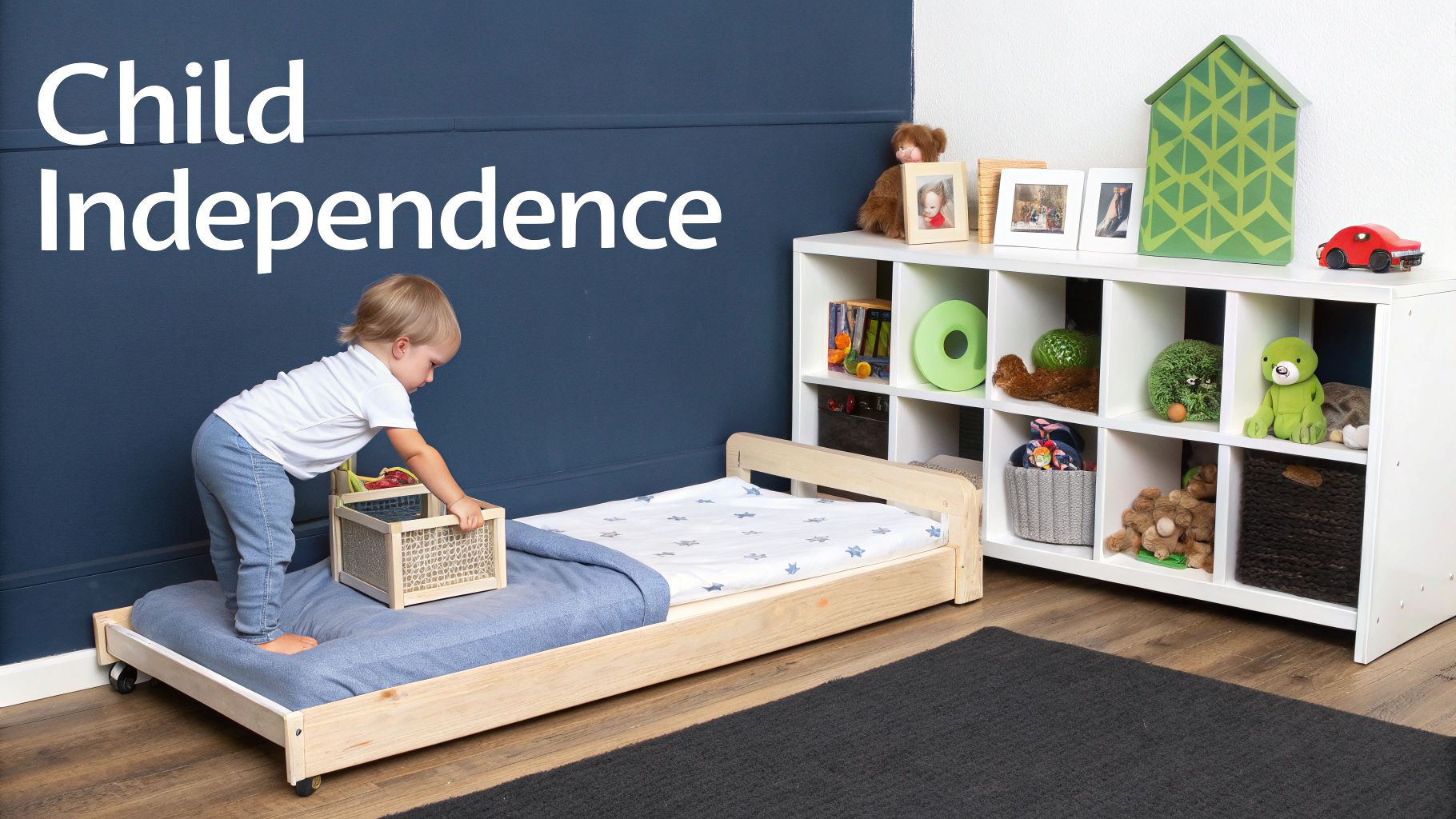
Let’s be clear: a Montessori toddler bed is so much more than just a mattress on the floor. It's a tool for independence and a physical representation of the trust you have in your child.
Think of it this way: a traditional crib is like a playpen. It contains and limits movement, requiring an adult’s help to get in or out. A floor bed, on the other hand, is like a cozy little reading nook—it invites them in, empowers them to move freely, and encourages them to listen to their body’s cues for rest and play.
This is the heart of the Montessori approach to sleep. It empowers a child to go to bed when they feel tired and get up when they are rested, all without needing to cry out for help.
Embracing Freedom and Fostering Independence
This change in perspective is really catching on with parents. The global market for Montessori floor beds is expected to hit $550 million by 2025, a huge jump fueled by a growing appreciation for Maria Montessori’s child-led principles. These ideas, first introduced in the early 1900s, champion a child's independence from as young as 18 months. You can see more data on this trend and its market growth on Archive Market Research.
Of course, all this newfound freedom brings up some very fair questions from parents. "Will they ever stay in bed?" and "How do I keep them safe if they decide to go exploring at midnight?" are completely valid concerns.
The goal of the Montessori bed is not to contain the child, but to create an environment so safe and engaging that the child learns to respect their own boundaries and sleep needs.
Don’t worry. Throughout this guide, we'll tackle these questions head-on. We'll give you practical, real-world solutions for creating a secure and nurturing sleep space that works for everyone in the family.
Montessori Toddler Bed vs Traditional Crib At a Glance
To really see the difference, it helps to put them side by side. Here’s a quick breakdown of how a Montessori bed stacks up against a traditional crib.
| Feature | Montessori Toddler Bed | Traditional Crib |
|---|---|---|
| Primary Goal | Fosters independence and autonomy. | Provides containment and safety. |
| Accessibility | Child can get in and out on their own. | Requires adult assistance to enter or exit. |
| Height | On the floor or a few inches off the ground. | Raised with high railings. |
| Freedom of Movement | Unrestricted; child can move freely in the room. | Restricted to the confines of the crib. |
| Child's Role | Active participant in their sleep routine. | Passive recipient of sleep routine. |
| Parental Approach | Based on trust and respect for the child's cues. | Based on control and a set schedule. |
As you can see, the philosophies are fundamentally different. One empowers the child to learn about their own needs, while the other is designed to keep the child in a specific place until a parent intervenes. Both aim for safety, but they achieve it in very different ways.
Why a Floor Bed Can Transform Your Toddler's Development
Making the switch from a crib to a Montessori toddler bed feels like more than just a furniture swap—it’s a huge step forward in your child’s growth. This simple change is a powerful way to support key developmental milestones by putting trust and freedom right at the heart of their sleep space.
Picture your toddler waking up. Instead of being stuck behind bars and needing to cry out for you, they can just swing their little legs over the side of the bed and start their day. That one small act is a massive leap toward independence.
By letting them get in and out of bed all on their own, a floor bed builds a real sense of self-confidence. They’re learning, "I can do this myself," which is a core belief for any curious, capable toddler. That freedom helps them build a positive, happy connection with their own room and their bed.
Fostering Self-Regulation and Body Awareness
When a toddler has the freedom to move, they start to tune into their body’s natural rhythms. A floor bed gives them the power to climb into bed when they feel tired and get up when they're truly rested, rather than waiting for a grown-up to decide for them.
This is self-regulation in action. They aren't just learning to follow a schedule; they're learning to listen to what their own body is telling them. It’s a crucial life skill that starts with something as simple as their bed.
A Montessori bed isn't just about sleeping. It's about respecting a child’s ability to understand their own needs, fostering an environment where they can practice making choices for themselves from a very early age.
This new freedom does wonders for their physical development, too. Learning to navigate their low-to-the-ground bed helps sharpen:
- Gross Motor Skills: They get tons of practice climbing in and out, rolling, and coordinating all those big movements.
- Spatial Awareness: They start to understand the boundaries of their bed and how their body fits into the space around it.
- Problem-Solving: They figure out the safest and easiest way to get from their bed down to the floor and back up again.
Cultivating a Peaceful and Independent Child
The benefits don’t stop at bedtime. So many parents notice that moving to a Montessori toddler bed makes the whole home feel a bit more peaceful. A child who feels respected and in charge of their own little space is often a calmer, more content kid.
Just think about the morning routine. Instead of waking up and immediately needing you, a toddler might wake up, climb out of bed, and quietly look at a book from a low shelf. That’s the Montessori philosophy in a nutshell: creating a prepared environment where a child can truly thrive on their own terms.
One parent shared that after they switched to a floor bed, their two-year-old completely stopped screaming during the bedtime routine. The room became a place of comfort and choice, not a cage. A simple furniture change turned a nightly battle into a peaceful ritual, empowering their child to feel capable, secure, and respected in their own little world.
Creating a Truly Safe Montessori Sleep Space
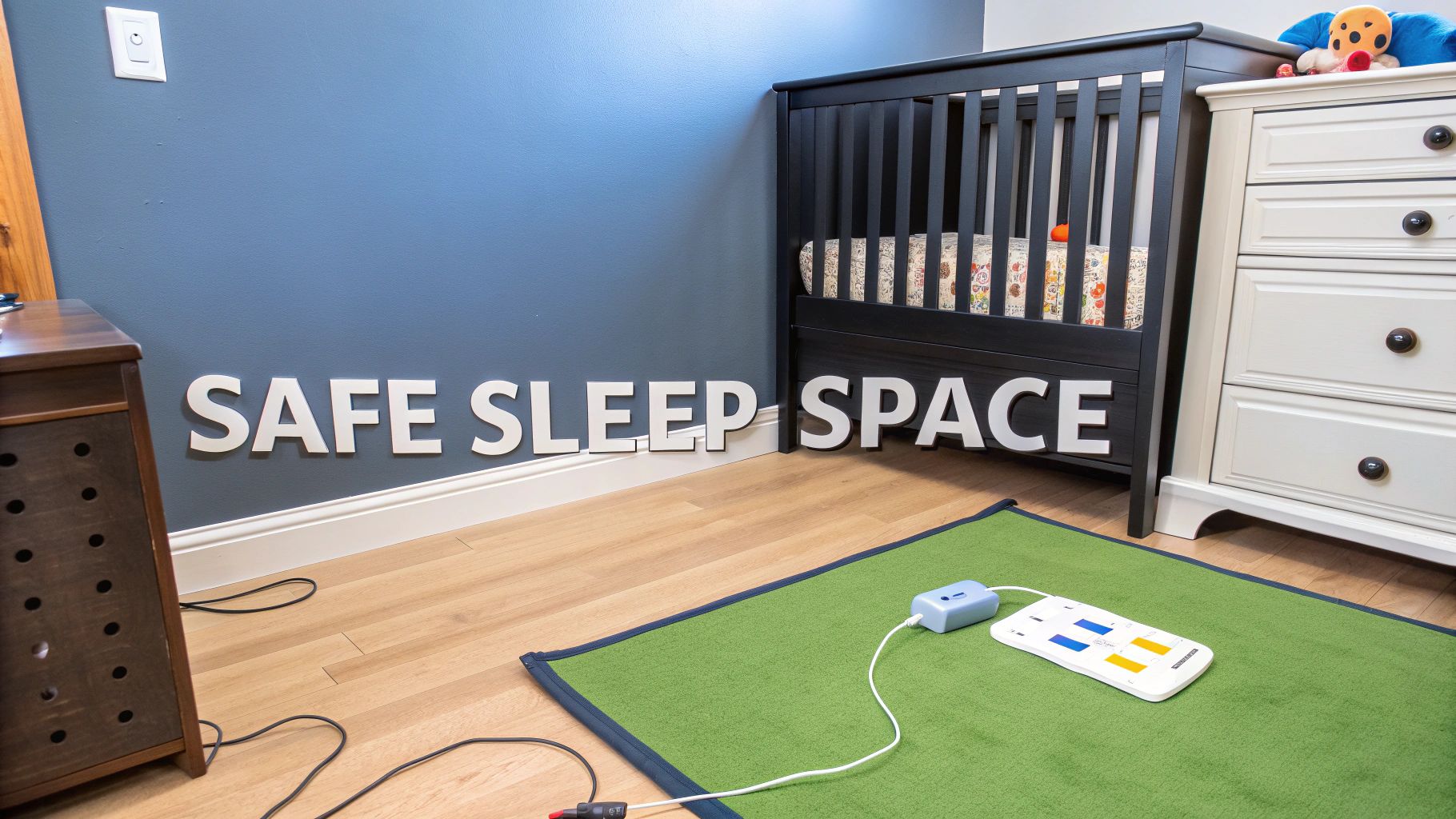
Without a doubt, the number one question parents ask about Montessori toddler beds is about safety. It makes sense. If your little one can just get up and wander around, how can you be sure they're completely secure?
The answer requires a bit of a mental shift. With a floor bed, the entire room becomes the crib.
This means every single corner of that room needs to be as safe as a traditional cot. You're aiming to create a "yes space"—an environment where your child is free to explore without you constantly saying "no" or worrying about what they're getting into. It’s all about designing a space that nurtures their independence while giving you total peace of mind.
This idea isn't just a niche trend anymore. We saw a huge shift after a 2018 AAP safe sleep guideline update, which indirectly made Montessori-style beds a more attractive alternative for many families. This led to a 50% increase in U.S. searches for floor beds between 2019 and 2024, showing just how many parents are embracing this philosophy.
Your Essential Room Safety Checklist
To truly turn the room into a safe haven, you have to see the world from your toddler’s perspective. Seriously—get down on your hands and knees and crawl around. You’ll be surprised what potential dangers you spot from down there.
Here’s a practical checklist to get you started:
- Anchor All Furniture: This is completely non-negotiable. Dressers, bookshelves, and toy chests have to be securely anchored to the wall. Toddlers are natural-born climbers, and tipping furniture is a massive risk.
- Cover Every Electrical Outlet: Use sliding outlet covers or tight-fitting plug protectors on every single outlet. If one is left exposed, you can bet their curious little fingers will find it.
- Secure All Cords: Blind cords, baby monitor wires, and lamp cables must be totally out of reach. Use cord shorteners or fasten them tightly against the wall to get rid of any potential hazards.
- Install a Baby Gate: A sturdy baby gate at the bedroom doorway is your best friend. It keeps your toddler safely in their room and prevents any unsupervised adventures through the house at night.
A truly safe Montessori room doesn't restrict the child; it liberates them. By removing hazards, you give them the freedom to explore, learn, and grow with confidence.
Creating a Hazard-Free Zone
Once the big items are checked off, it’s time to think about the smaller details that make the space truly secure. This means getting rid of any potential choking hazards, like tiny toy parts or loose pieces of decor. Double-check that there are no heavy items on shelves that could be pulled down.
Flooring is another thing to consider. With spills and potty-training accidents being a part of toddler life, having something durable and easy to clean is a lifesaver. This ultimate guide to buying waterproof flooring can be a fantastic resource if you're looking at options.
Finally, think about the bed's placement. Position the Montessori toddler bed away from windows, heaters, and any dangling cords. Make sure there are absolutely no gaps between the mattress and the wall where a child could potentially get trapped. For a deeper dive, check out our comprehensive guide on Montessori floor bed safety.
When you thoughtfully prepare the environment first, you build a foundation of safety that makes all the freedom of a floor bed possible.
Making a Smooth Transition to the Floor Bed
Moving your little one from the familiar, high walls of a crib to the open freedom of a Montessori toddler bed is a huge step. Like any big milestone, the key to a happy transition is watching for signs of readiness and introducing the change with a lot of patience and gentleness. This isn't about circling a date on the calendar; it's about spotting the developmental cues that tell you your toddler is ready for more independence.
The most obvious sign is often the most heart-stopping one for parents: climbing. If your toddler is trying to scale the crib walls, it's officially no longer a safe space for them. This is a crystal-clear signal that they need more freedom to move, and switching to a floor bed becomes a top safety priority to prevent a nasty fall. Other clues might be a little more subtle, like a big push for independence in other parts of their day or simply protesting every time they're placed in their crib.
Phasing in the New Bed
Instead of a sudden, overnight switch, a gradual introduction works wonders. It helps the new bed feel like an exciting new adventure rather than something strange or scary. A phased approach lets your child get comfortable on their own timeline, building a positive connection with their new sleeping spot.
Start by making the new montessori toddler bed a part of their daytime world, when the pressure is off.
- Naptime First: Try using the floor bed just for naps to begin with. Daytime sleep usually feels less intimidating for little ones, and it gives them a chance to get used to the bed in a low-stakes way.
- Create a Routine: A solid, calming bedtime routine that ends in the new bed can make all the difference. Think a favorite story, a soft lullaby, or some quiet cuddles. That predictability creates a powerful sense of security.
If you're looking for a more detailed timeline and extra tips on spotting that perfect moment, our guide on when to transition to a floor bed dives much deeper. Following a step-by-step process helps the whole move feel natural and empowering for everyone.
The goal is to present the bed as a wonderful new part of their room—a cozy spot that belongs entirely to them, not as a replacement for something they've lost.
Handling Nighttime Explorations with Consistency
Let's be real: your toddler is almost guaranteed to test out their newfound freedom by getting out of bed. This is completely normal and expected. How you handle it is what matters. When they start to wander, your job is to calmly and quietly guide them back to their bed with as little fuss or interaction as possible.
Try to avoid turning it into a chase or a late-night game. A simple, firm, "It's time for sleep now," is usually all you need to say. This consistent, gentle redirection teaches them that while yes, they can get up, nighttime is for resting in bed. With a bit of patience, the novelty will wear off, and they'll learn to stay put in their own cozy spot. It's a respectful approach that reinforces the bed as their special place for sleep.
How to Choose the Right Montessori Toddler Bed
Picking out a Montessori toddler bed can feel like a huge decision, but it's simpler than you might think. If you focus on a few key things, you'll find the perfect one for your little one. The goal is a safe, inviting space that champions their growing independence. Try to think of it less like buying furniture and more like creating a special corner of their world that's all their own.
The big three factors to weigh are materials, size, and design. Each one plays a part in building a sleep environment that's not just functional but also really nurturing for your child's development.
Materials Matter Most
When you're looking at materials, your two biggest priorities should be safety and durability. You really want to look for beds made from solid wood, like pine, beech, or birch. These are sturdy woods that are built to handle years of toddler life—and that’s saying something!
Just as important is the finish on the wood. Always, always choose a bed with non-toxic, low-VOC (volatile organic compound) paint or finishes. Toddlers have a very hands-on (and mouth-on) way of exploring their world, so making sure the materials are completely child-safe is a must. Solid wood beds with natural, non-toxic finishes give you peace of mind and help create a healthier room for your child to sleep and play in.
Choosing the Right Size and Mattress
The size of the bed frame and mattress really comes down to your space and how long you want the bed to be in use. Common choices are crib-size, twin, or even full-size mattresses, either right on the floor or nestled in a low frame.
A helpful guide to single mattress sizes can give you a better sense of the dimensions you're working with. A bigger mattress often means more longevity, as it can easily grow with your child well beyond their toddler years.
No matter the size you pick, the mattress itself is a critical piece of the puzzle. We have a detailed article that walks you through finding the best mattress for a toddler bed, but the short version is this: a firm, breathable mattress is non-negotiable for safe sleep.
This chart breaks down the simple steps for introducing the new bed, starting with figuring out if your child is ready.
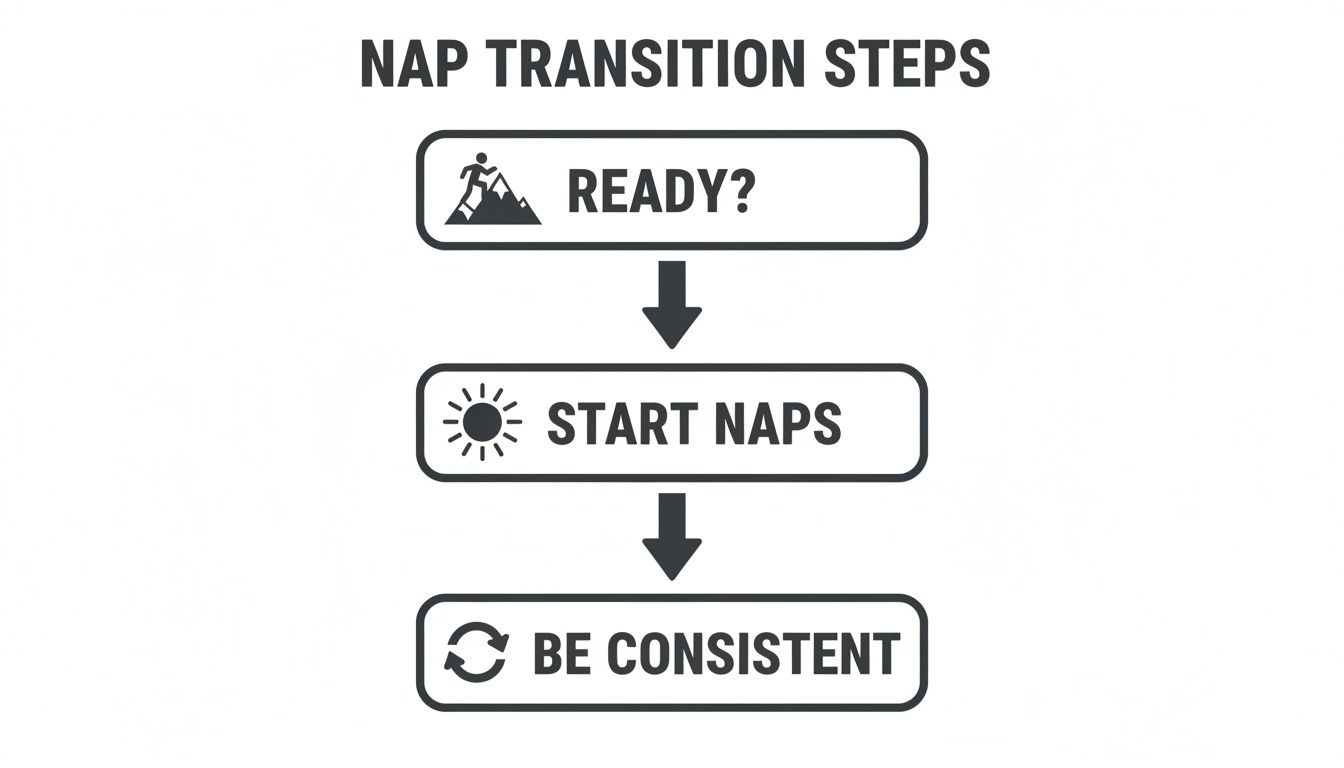
As you can see, a successful switch depends just as much on timing and consistency as it does on the bed itself.
Finding a Design That Fits Your Family
Montessori bed frames come in all sorts of styles, from super simple platforms to adorable, whimsical house frames. The best design for you really depends on what you're hoping to achieve and what fits your child’s personality.
- Simple Platform: This is usually a low wooden frame that lifts the mattress just slightly off the floor. It’s a great design for promoting air circulation (which prevents mildew) and clearly defines the sleeping space without being restrictive.
- House Frame: These have become incredibly popular because they create a cozy, den-like feel that kids absolutely love. They offer a sense of a secure, defined space while staying totally open and accessible.
To help you sort through the options, this table breaks down the pros and cons of common materials and styles.
Montessori Bed Material and Style Comparison
| Feature | Solid Wood (e.g., Pine, Beech) | Plywood/MDF | House Frame Style | Simple Platform |
|---|---|---|---|---|
| Durability | High; very sturdy and long-lasting. | Varies; high-quality plywood is strong, MDF can be less durable. | Sturdy if made from solid wood. | Very stable due to low profile. |
| Safety | Excellent when finished with non-toxic, low-VOC paints. | Check for formaldehyde-free options and child-safe finishes. | Open design is safe; no entrapment risks. | Lifts mattress for airflow, preventing mould. |
| Aesthetics | Natural, classic look that fits many decor styles. | Can be painted or laminated for a modern look. | Whimsical and playful; creates a "room within a room" feel. | Minimalist and clean; defines the sleep area simply. |
| Cost | Generally higher price point due to material quality. | More budget-friendly. | Tends to be more expensive due to complex design. | Often the most affordable frame option. |
| Child Appeal | Timeless appeal. | Simple and functional. | High appeal; feels like a personal den or playhouse. | Neutral; focuses on function over form. |
Ultimately, choosing between a playful house frame or a minimalist platform comes down to personal preference and your child's temperament. Both are fantastic choices that align with Montessori principles.
The best Montessori toddler bed is one that's safe, built from quality materials, and fosters a space where your child feels secure, capable, and independent.
Your Top Montessori Bed Questions, Answered
Deciding to switch up your child's sleep setup is a big deal, and it's totally normal to have questions. Even when you see all the benefits, those "what if" moments can creep in. That’s perfectly okay!
We've been there. So, we’ve gathered the most common questions and concerns parents have about making the move to a Montessori toddler bed. Think of this as a friendly chat to clear up any lingering doubts and help you feel 100% confident about this exciting step.
What’s the Best Age for a Montessori Toddler Bed?
There’s no magic number here, but most families find the sweet spot is somewhere between 12 and 18 months. The real signal isn't their age, but their developmental stage. Is your little one on the move, trying to crawl or walk? Are they showing a clear desire to do things on their own?
Safety is the biggest factor. If your toddler has started attempting jailbreaks from their crib, it’s officially no longer a safe space. A floor bed instantly becomes the safer option, eliminating the risk of a dangerous fall. The right time is really about your child's unique pace and your commitment to creating a completely toddler-proofed room.
How Do I Keep My Toddler from Leaving Their Bed All Night?
This is the number one question we hear, and it’s a good one! Let's be real: your toddler will absolutely test their newfound freedom. It's new, it's exciting, and it's a completely normal part of the learning process. The trick is to be gentle, firm, and incredibly consistent.
Start by creating a solid, peaceful bedtime routine that clearly signals it’s time to wind down. When they inevitably get out of bed, calmly and quietly guide them back. Keep the interaction minimal—no big reactions, no fun games. A simple, "It's time for sleep," is all you need.
The Montessori approach is built on trust. It trusts that with patient guidance, children will learn to listen to their bodies and develop self-discipline. It takes time, but most toddlers figure out the new boundary within a few weeks.
By staying consistent, you reinforce that their bed is their cozy spot for sleep, and bedtime doesn't turn into a nightly battle of wills.
How Do I Make the Room Safe for a Roaming Toddler?
When you switch to a Montessori bed, you have to start thinking of the entire room as one big, safe crib. This isn't just a suggestion—it's the most important part of the whole setup. This preparation is what gives your child the freedom to explore safely.
Here are the absolute must-dos:
- Anchor All Heavy Furniture: Dressers, bookshelves, and toy chests are tipping hazards. They must be securely anchored to the walls.
- Cover Every Electrical Outlet: Use sliding covers or snug-fitting protectors on every single outlet. Don't miss any!
- Secure All Cords: Wires from lamps, baby monitors, and especially window blinds need to be completely out of reach.
- Install a Baby Gate: A sturdy gate at the bedroom door is non-negotiable. It keeps them from wandering the house while you're asleep.
Our best tip? Get down on your hands and knees and see the room from their perspective. You’ll be surprised what potential hazards you spot from down there.
Do I Need a Special Mattress for a Floor Bed?
You don't need a mattress with a "Montessori" label, but you definitely need one that's safe for a young child. The single most important feature is firmness. Just like in a crib, a firm, flat surface is critical for safe toddler sleep.
If you’re using a frame with your floor bed, make sure the mattress fits perfectly, with no gaps around the edges where a little one could get trapped. Breathability is another great feature to look for. Whether you go with a crib or twin-size mattress, always double-check that it meets current safety standards for children's products.
For young toddlers, steer clear of soft mattress toppers, fluffy comforters, and a pile of pillows. A simple, clear sleep space is always the safest (and most comfortable) way to go.
At Ocodile, we design every piece of furniture with your child's safety and growing independence at the forefront. Our Montessori floor beds are crafted from high-quality, non-toxic materials, creating a secure and inviting space for sleep that will grow right alongside your family.
Explore our collection and find the perfect foundation for your child's journey toward confident, independent sleep at https://ocodile.com.