



Montessori Versus Traditional A Parent's Guide to Choosing Right
When you start comparing Montessori and traditional education, it really boils down to one key difference: Montessori is a child-led, hands-on approach that champions independence. Traditional education, on the other hand, follows a teacher-led, structured curriculum aimed at hitting standardized academic goals.
The right choice for your family really depends on what you value more—individualized, self-paced discovery or a more uniform, guided learning path.
Understanding the Core Educational Philosophies
Choosing an educational path for your child is about so much more than just what the classroom looks like. It’s about digging into the fundamental beliefs that shape each approach. Montessori and traditional methods are built on very different ideas about how kids learn, what sparks their curiosity, and what the real goal of education is. These philosophies are the foundation for everything, from daily routines to long-term development.

Traditional Education: A Structured Path
Traditional education runs on a teacher-centric model. Think of it as a clear, defined road map. The curriculum is standardized, with specific academic milestones set for each age group. In this setting, the teacher is the main source of knowledge, delivering lessons to the whole class at once and guiding them through a set sequence of subjects.
This approach really leans into:
- Uniformity: All students cover the same material at roughly the same pace.
- Direct Instruction: The teacher transfers knowledge directly to the students.
- Standardized Assessment: Progress is typically tracked with tests and grades.
This structure is designed to efficiently prepare kids for the next grade level, with a strong focus on core knowledge and a shared classroom experience.
Montessori Education: A Child-Centered World
The Montessori method flips that model on its head. It’s fundamentally child-centered, built on the belief that children are born with a natural curiosity and are more than capable of directing their own learning. The teacher here is more of a guide or a facilitator. They carefully prepare the environment and observe each child, stepping in to offer support when needed.
If you’re new to the concept, you can get a great overview by exploring the Montessori method of teaching in our detailed guide.
The goal of early childhood education should be to activate the child's own natural desire to learn. – Maria Montessori
This philosophy creates a classroom where children are free to choose their own activities from a curated selection of hands-on materials. Learning is self-paced and driven by their own inner motivation, not by grades or external pressures.
And it seems to work. A 2023 meta-analysis of 32 studies found that Montessori education showed a statistically significant advantage, with an effect size of 0.26 for general academic ability. To put that in perspective, that’s roughly a full school year of learning advantage by the 6th grade.
Core Differences At a Glance
To make it even clearer, here’s a quick breakdown of how these two philosophies stack up side-by-side.
| Aspect | Montessori Approach | Traditional Approach |
|---|---|---|
| Learning Focus | Child-centered, individualized pace | Teacher-led, group-paced curriculum |
| Teacher's Role | Guide and facilitator | Instructor and authority |
| Motivation Source | Intrinsic curiosity and interest | External rewards (grades, praise) |
| Classroom Setup | Prepared, accessible environment | Structured, teacher-centric layout |
While this table gives you a snapshot, the real differences come to life in the day-to-day experiences of the children. Next, we'll dive into what that actually looks like.
Comparing the Daily Learning Environment
The philosophy behind any school is just an idea until you see how it plays out day-to-day in the classroom. When you put Montessori and traditional schools side-by-side, the differences in the physical space, social vibes, and daily schedules are night and day. Picturing your child in each of these settings is really the key to figuring out which one feels right.
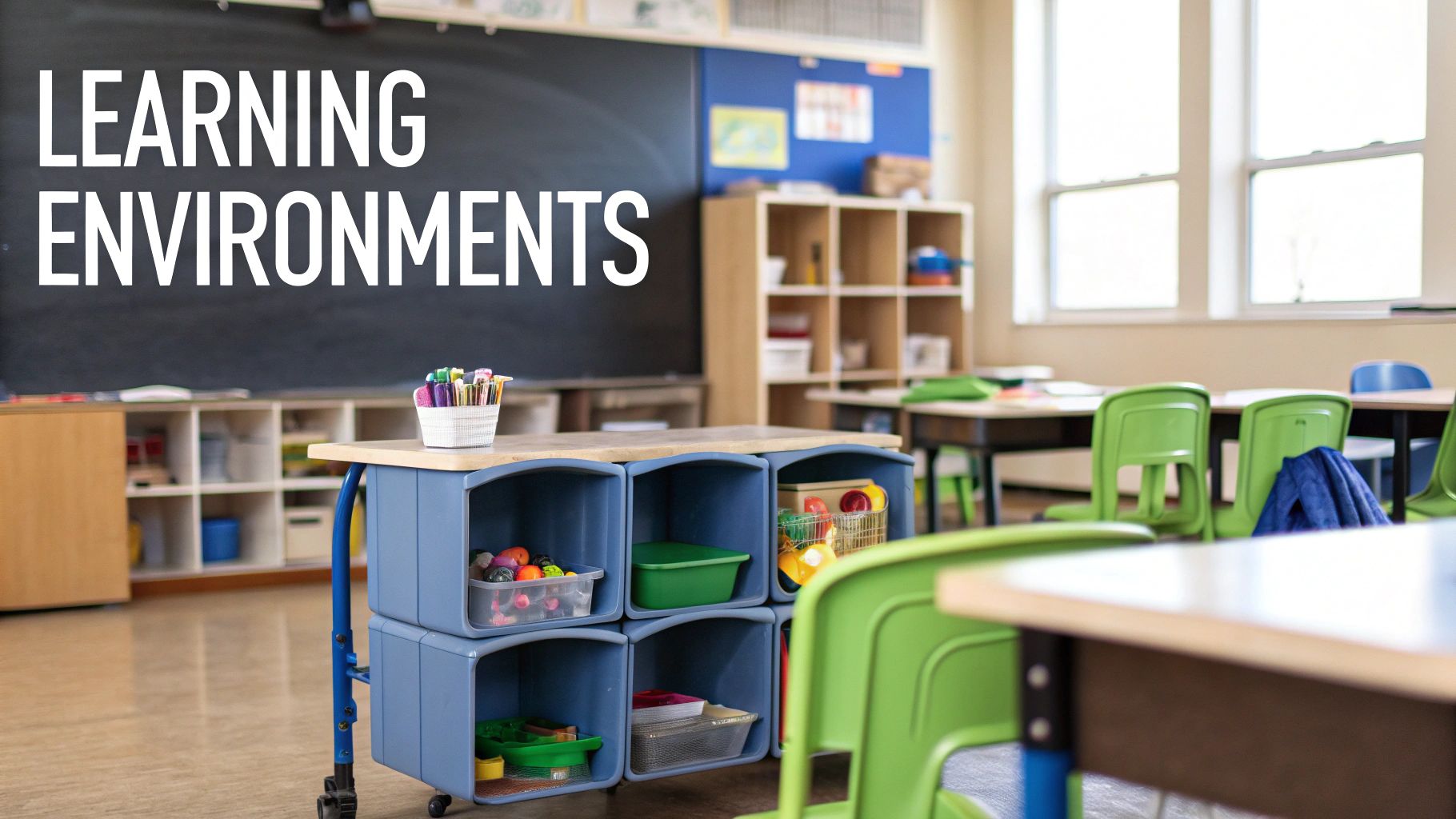
Most of us can easily picture a traditional classroom. Desks are usually in neat rows, all facing the teacher and a whiteboard. This setup is all about efficiency, designed for a teacher to deliver information to the whole group at once.
Classroom Design and Physical Space
In this teacher-led model, the room is structured for order and managing the group. Kids usually have assigned seats and can't move around much without asking. The day is chopped up into specific subjects—reading, math, art—with the teacher directing everyone from one activity to the next.
A Montessori classroom, what they call the "prepared environment," has a totally different feel. The entire space is designed for the child, with low shelves, kid-sized furniture, and materials carefully organized into learning areas. You won't find a big teacher's desk at the front; instead, the guide moves around the room, checking in with kids one-on-one or in small groups.
In a Montessori environment, the classroom itself is a teacher. Every single item is chosen and placed to spark curiosity, build independence, and create a sense of order the child can absorb.
This design is what makes a core Montessori principle possible: freedom of movement and choice. Children are encouraged to pick their own "work" from the shelves and can decide whether to do it at a table or on a mat on the floor—wherever they feel most comfortable.
Learning Materials and Daily Activities
The actual tools for learning are another huge point of contrast. Traditional schools often use standardized things like textbooks, worksheets, and resources the teacher creates. The goal is to deliver the same curriculum to everyone at the same pace.
Montessori classrooms, on the other hand, are filled with specialized, hands-on materials that are often self-correcting. This is a game-changer. It means a child can spot their own mistake without a teacher having to point it out. Think of a puzzle where each piece only fits in one specific spot—the child learns through their own trial and error.
The daily schedule really highlights these different approaches:
- Traditional Day: A fixed schedule with set times for every subject, plus recess and lunch. Most activities are done as a whole class.
- Montessori Day: The cornerstone is a long, uninterrupted work cycle, which can last 2-3 hours. Kids choose their tasks, work at their own speed, and aren't interrupted, which helps them develop deep concentration.
This difference in structure is huge. The traditional method is great for teaching kids to follow a schedule and switch between tasks. The Montessori work cycle, however, is all about cultivating focus, self-discipline, and time management from within.
The Social Dynamics of Learning
How kids interact socially is also shaped very differently. Traditional classrooms are almost always grouped by age. All the five-year-olds are together, all the six-year-olds are together, and so on. Collaboration usually happens in structured group projects that the teacher assigns.
Montessori classrooms, however, use mixed-age groups, typically with a three-year span (like ages 3-6). This creates a really cool social ecosystem. The older kids naturally step into mentor roles, reinforcing what they know by teaching the younger ones. The little ones, in turn, look up to and learn from their older peers.
Conflict resolution is another major differentiator. In a traditional classroom, a teacher usually steps in to mediate. But Montessori education puts a big emphasis on teaching "grace and courtesy," giving children the words and skills to solve their own disagreements respectfully. This peer-to-peer learning builds a strong sense of community and social responsibility, even in very young children. Ultimately, choosing between these environments comes down to what skills and experiences you want to prioritize for your child each day.
How Each Approach Shapes Child Development
It’s easy to get caught up in the classroom setup or the learning materials, but the real heart of the Montessori versus traditional debate is how each one shapes your child's growing mind. These aren't just different ways to learn the ABCs; they cultivate entirely different sets of skills, from how kids think to how they interact with others. Figuring out which developmental outcomes match your hopes for your child is the key to making the right choice.
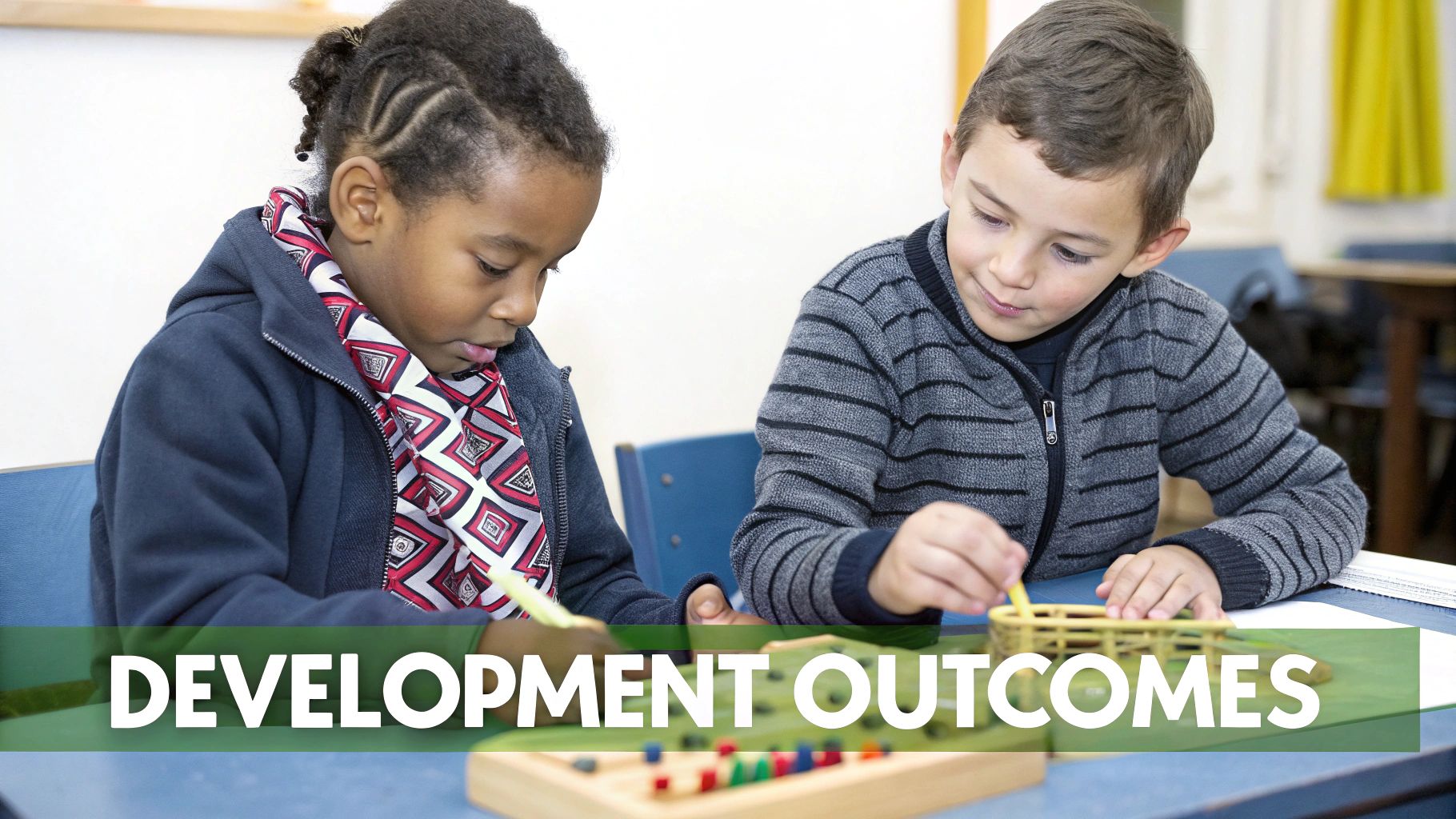
While academics are important, the effects of these philosophies run much deeper. They influence how a child solves problems, gets along with friends, and manages their own emotions, laying a foundation that will support them for years to come.
Fostering Executive Functions and Self-Regulation
If you’ve heard people talk about executive functions, they mean those crucial mental skills like memory, flexible thinking, and self-control. This is an area where Montessori really shines. The long, uninterrupted work period—a signature of the Montessori day—is intentionally designed to build deep focus and a love for learning that comes from within.
When children get to choose their own activities and work without being rushed, they learn to manage their time, make decisions, and finish what they start. That freedom, offered within a carefully prepared environment, is a powerful way to build self-regulation.
Traditional schooling, on the other hand, is excellent at teaching children to follow directions, stick to a tight schedule, and meet deadlines set by others. The teacher-led structure gives kids a clear roadmap, and they learn to switch gears between subjects when asked. These are incredibly practical skills for navigating the more conventional school and work environments they’ll likely encounter later.
In a Montessori classroom, the big developmental win is an internal sense of discipline. In a traditional school, it’s learning how to operate successfully within external rules and expectations.
So, the question for you is this: Do you want your child to become skilled at creating their own structure, or do you want them to be an expert at thriving within one that’s already been set?
Cognitive Growth and Academic Performance
Both approaches want kids to succeed academically, but they take very different roads to get there. Traditional education relies on direct instruction—think teachers at the front of the class and repetition—to build a strong base in subjects like reading and math. It’s a very effective method for getting students ready for standardized tests because it ensures everyone covers the same material.
The Montessori method builds cognitive skills through hands-on materials that are often self-correcting. Instead of a worksheet, a child might learn about numbers by physically arranging bead bars. This tangible, sensory-based learning often leads to a much deeper, more intuitive understanding of complex ideas. If you're curious about how these skills develop over time, our guide on child development stages by age is a great resource.
Research backs this up. One study found that the longer kids were in a Montessori program, the greater their academic advantage. By the time they reached upper elementary, Montessori students were scoring significantly higher in math and science.
Social and Emotional Intelligence
When it comes to social skills, the differences between Montessori and traditional classrooms are night and day. The mixed-age groups in Montessori schools create a family-like atmosphere. You’ll see older kids naturally helping the younger ones, which builds leadership, empathy, and a whole lot of patience.
"Grace and courtesy" are taught as actual lessons, giving children the words and actions to resolve their own conflicts peacefully. It’s all about building a strong community where everyone feels a sense of responsibility for one another.
Traditional classrooms, where kids are grouped with peers of the same age, teach social skills through things like structured group projects and teacher-led conflict resolution. This environment is great for teaching children how to work with their immediate peer group and follow the social rules set by an adult. For parents navigating unique learning paths, resources on supporting children with learning differences can provide extra guidance.
Here's the rewritten section, designed to sound completely human-written and natural, following all your requirements.
Bringing Educational Principles into Your Home
The whole Montessori versus traditional education debate doesn’t just belong in the classroom. The very same principles that shape these learning environments can be fantastic tools for creating a supportive, enriching atmosphere right at home. It doesn't matter if your child is in a Montessori school, a traditional one, or even if you're just curious about the ideas—you can weave these concepts into your everyday family life.
When you consciously shape your home to reflect an educational philosophy, you're doing more than just decorating. You're reinforcing what your child is learning, boosting their confidence, and honestly, just making your daily routines feel smoother and more connected.
Creating a Montessori-Inspired Prepared Environment
The heart of bringing Montessori home is creating a prepared environment. This is simply a space that’s intentionally designed for a child's independence. It’s not about buying a bunch of expensive materials. It’s about a mental shift—learning to see the world from their height and through their eyes. The ultimate goal is to create a "yes space" where they can explore safely and feel like a capable, contributing member of the family.
This approach is so powerful because it helps kids take ownership of their surroundings and builds real, practical life skills. You’d be surprised how a few simple changes can dramatically boost their sense of competence.
Here are a few ways to get started:
- Accessible Belongings: Think low, open shelves for toys, books, and clothes. Use small, open baskets to sort everything. This way, your child can easily see their options and—the best part—put things away themselves.
- Child-Sized Tools: Get them a small pitcher to pour their own water, a little broom for sweeping up crumbs, and some child-safe knives to help with meal prep. Suddenly, daily chores become fun learning activities.
- Foster Independence: Encourage your child to dress themselves by laying out just two outfit choices. A floor bed can give them autonomy over when they wake up and get out of bed in the morning.
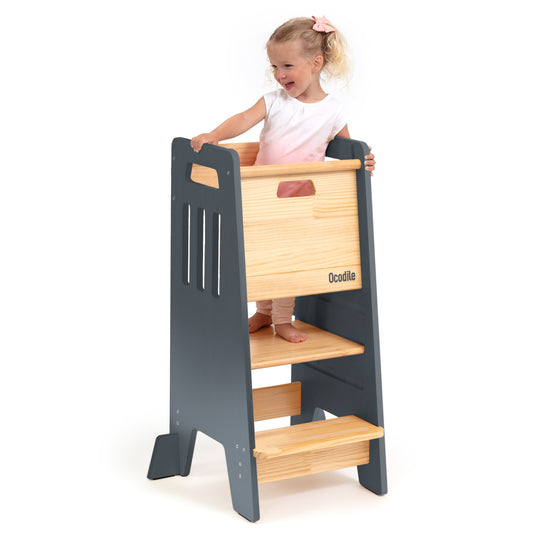
An Ocodile standing tower is the perfect example of this philosophy in action. It safely brings your child right up to counter height, letting them wash vegetables, help mix ingredients, or just watch you cook. This one simple tool can turn a daily routine into a collaborative, hands-on experience.
Reinforcing a Traditional Approach at Home
If your family leans more traditional or your child is in a conventional school, creating a supportive home environment is all about reinforcing structure, routine, and focused learning. The idea is to create a predictable, organized space that complements what they’re doing at school.
Having that structure helps children understand expectations, manage their time, and develop the kind of discipline they’ll need in a more guided learning setting. When home and school are in sync, it can be a huge boost for their success.
A well-structured home routine acts as a bridge to the classroom, providing the consistency and predictability that helps a child feel secure and ready to learn. It builds the foundational habits necessary for academic achievement.
To put this into practice at home, try these strategies:
- Establish Clear Routines: A visual schedule for morning and evening routines works wonders. When a child knows what comes next—breakfast, get dressed, brush teeth—it cuts down on the daily battles and builds their time-management skills.
- Create a Dedicated Learning Space: Set up a quiet, organized corner just for homework or educational activities. Keep it stocked with pencils, paper, and crayons so they can focus on the task at hand without getting distracted.
- Incorporate Structured Learning Play: Set aside specific times for activities that build on what they’re learning in school. This could be reading together every night, practicing sight words with flashcards, or playing with fun educational apps and games.
When you’re thinking about how to support their development, choosing the right educational gifts for toddlers that spark learning can be a great way to reinforce concepts from school without it feeling like a chore.
Ultimately, whether you're trying to decide between Montessori versus traditional ideas for your home, the best approach is always the one that feels right for your family. You can absolutely blend elements from both to create a unique environment that supports your child’s specific needs. If you want to go deeper, our guide on implementing Montessori education at home has even more practical tips. The key is just to be intentional about creating a home that doesn't just house your family, but also nurtures your child's incredible potential.
How to Choose the Right Path for Your Child
Trying to decide between Montessori and traditional education can feel like a monumental task. I get it. But instead of getting lost searching for the one "best" answer, the real goal is to find the best fit for your family. It’s about looking at your child, your home life, and what you want for the future.
Let’s break it down. By asking a few key questions, you can move from a confusing comparison to a decision that feels right for you and your little one.
Assessing Your Child’s Unique Personality
Every child is wired differently. The best learning environment isn't one that forces them into a box, but one that celebrates their natural way of being.
Think about where your child lands on these spectrums:
- Structure vs. Independence: Does your kid thrive on a predictable, adult-led routine? Or do they come alive when they have the freedom to choose their own activities and figure things out for themselves?
- Learning Style: Is your child a hands-on explorer who needs to touch, feel, and move things to understand them? Or do they learn well by listening to explanations and watching others in a group?
- Social Interaction: Do they love playing with kids their own age, or do they light up in a mixed-age group where they can learn from older kids and help younger ones?
A curious, self-motivated child might just soar in a Montessori setting. On the other hand, a child who feels safer and more confident with clear, external guidance might feel more at home in a traditional environment.
The best path isn't about making your child adapt to a system. It's about finding a system built to adapt to your child, honoring their curiosity and letting them grow at their own pace.
Aligning with Your Family’s Values and Goals
This choice also says a lot about your family's core values. What are the big-picture skills you hope your child develops? Thinking about the end goal can make the immediate choice much clearer.
Ask yourselves:
- What does success look like for us? Are we aiming for top grades and test scores, or do we value creativity, real-world problem-solving, and a genuine love for learning?
- What skills matter most for their future? Do we prioritize things like self-discipline, collaboration, and internal motivation, or the ability to follow directions and excel in a structured setting?
Your answers will naturally point you toward one philosophy or the other. There’s no right or wrong here—only what feels right for your family.
This decision tree gives you a quick visual of how these philosophies might play out at home.
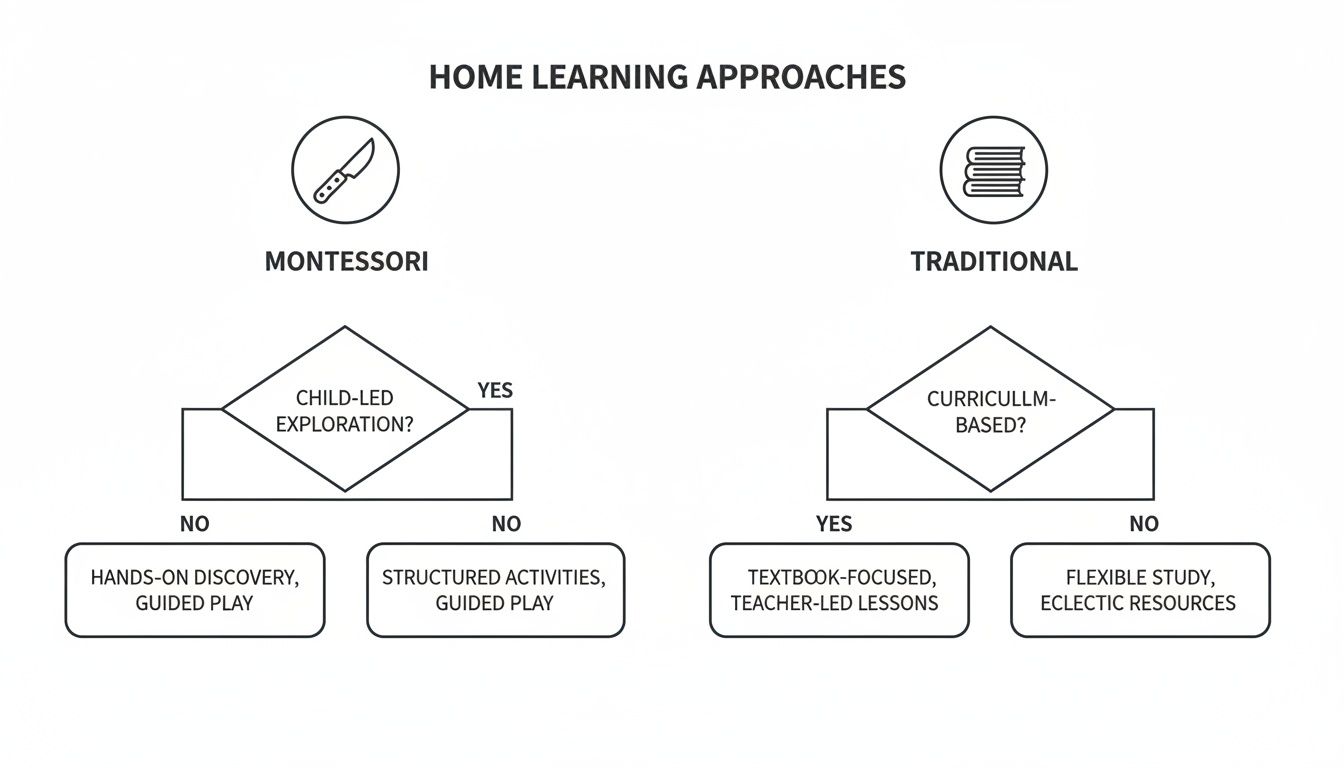
As you can see, a Montessori-inspired home is all about practical life skills and independence, while a traditional approach often focuses on reinforcing structured academic learning.
Considering Practical Realities
Finally, you have to be realistic. Things like budget, your location, and what’s even available near you are huge factors. Montessori schools are often private and can be pricey, though more public options are popping up. Traditional public schools are free and everywhere, but class sizes might be larger.
Look at your options with clear eyes. If you can, tour different schools—both Montessori and traditional. Walk into the classrooms, talk to the teachers, and just get a feel for the place. Does it seem calm and inspiring? Do the kids look happy and engaged?
In the end, this is your call. By taking a good look at your child's personality, your family’s values, and the practical side of things, you can make a choice that sets your child up to thrive. Trust your gut—you know your child better than anyone.
A Few Common Questions on Your Mind
Choosing an educational path for your child always brings up some practical, real-world questions. It's totally normal to wonder about the day-to-day details and long-term outcomes as you compare Montessori with traditional schools. Let's tackle some of the most common questions we hear from parents, so you can feel confident in your decision.
These are the things that keep us up at night, and getting clear answers is the best way to feel secure about the path you choose.
Can My Child Move From a Montessori School to a Traditional One Later?
Absolutely. This happens all the time, and most kids handle the change surprisingly well. Montessori children often build incredible executive function skills—think adaptability, self-motivation, and a genuine love of learning. These are superpowers in any school environment.
The biggest adjustment is usually getting used to a more structured, teacher-directed classroom and the introduction of standardized tests. You can make the transition much smoother by simply talking with your child about the new school's routines and what to expect before they start.
Is Montessori Right for Children with Special Needs?
The self-paced, individualized approach of Montessori can be a fantastic fit for many children with special needs. It gives them the space to work with materials at their own speed, without the pressure of keeping up with a rigid group curriculum.
That said, it really comes down to the child's specific needs and the school's resources. Does the school have teachers with specialized training? For a child who thrives on more direct, repetitive instruction, a traditional special education program might be a better match. The key is having an in-depth conversation with any school you're considering.
The core Montessori idea of "follow the child" can be a game-changer for accommodating different learning styles. But for it to work for every child, you need a well-equipped classroom and expertly trained guides.
How Can I Bring Montessori Home Without Breaking the Bank?
Here’s the secret: applying Montessori principles at home is much more about your mindset than your wallet. You can start small by just setting up low, accessible shelves for toys and creating a safe "yes space" where your little one can explore without hearing "no" all the time.
Involve your child in real, everyday tasks. Let them help pour their own water or wash vegetables for dinner while standing securely on an Ocodile standing tower. The goal is to build their independence and respect their natural ability to focus, and that costs next to nothing.
Are Traditional Schools a Better Bet for Getting into College?
Both paths can lead to a successful future, they just get there differently. Traditional schools are often great at preparing students for the deadlines, structure, and standardized tests that are a big part of most college programs. It builds a certain kind of resilience for meeting external expectations.
On the flip side, Montessori is fantastic at nurturing creativity, collaboration, and critical thinking—all skills that are gold in today's universities and workplaces. Research even shows that Montessori grads often have stronger executive functions and problem-solving skills. The "better" choice really depends on what skills your family values most for long-term success.
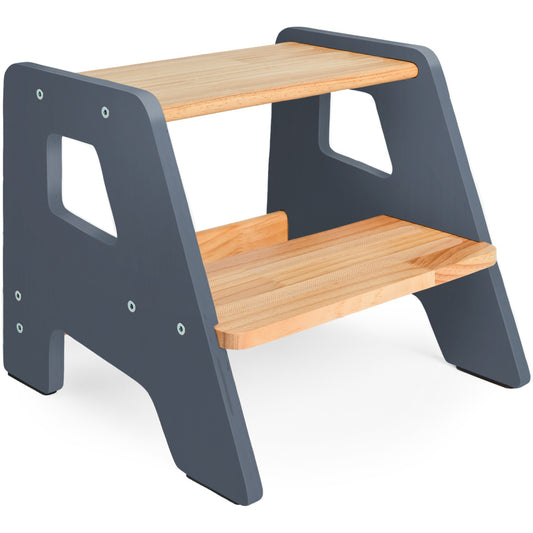
Ready to bring a bit of this independent spirit home? The Ocodile collection of standing towers, floor beds, and step stools is designed to help you create a safe, supportive space that encourages your child’s natural desire to do things for themselves. Check out our products and start building a home where your little one can truly shine.