



Montessori vs Traditional A Parent's Guide to Choosing the Right Path
The big question of Montessori vs traditional school really comes down to one thing: philosophy. Do you envision a learning environment that’s child-led and hands-on, built around fostering independence? Or does a teacher-led, structured system with a clear, standardized path for the whole group feel like a better fit?
Your choice hinges on whether you value individualized, self-paced growth over a uniform, curriculum-driven education.
Choosing Your Child's Educational Path
Deciding on your child's first school is a huge milestone, and really getting to grips with these two major educational models is the first step. It can feel like a complicated decision, but it often boils down to which environment and approach will click with your child's unique personality and your family’s values.
It’s a big decision, similar to when parents later find themselves comparing different educational systems like IB vs A Levels.
A Quick Comparison
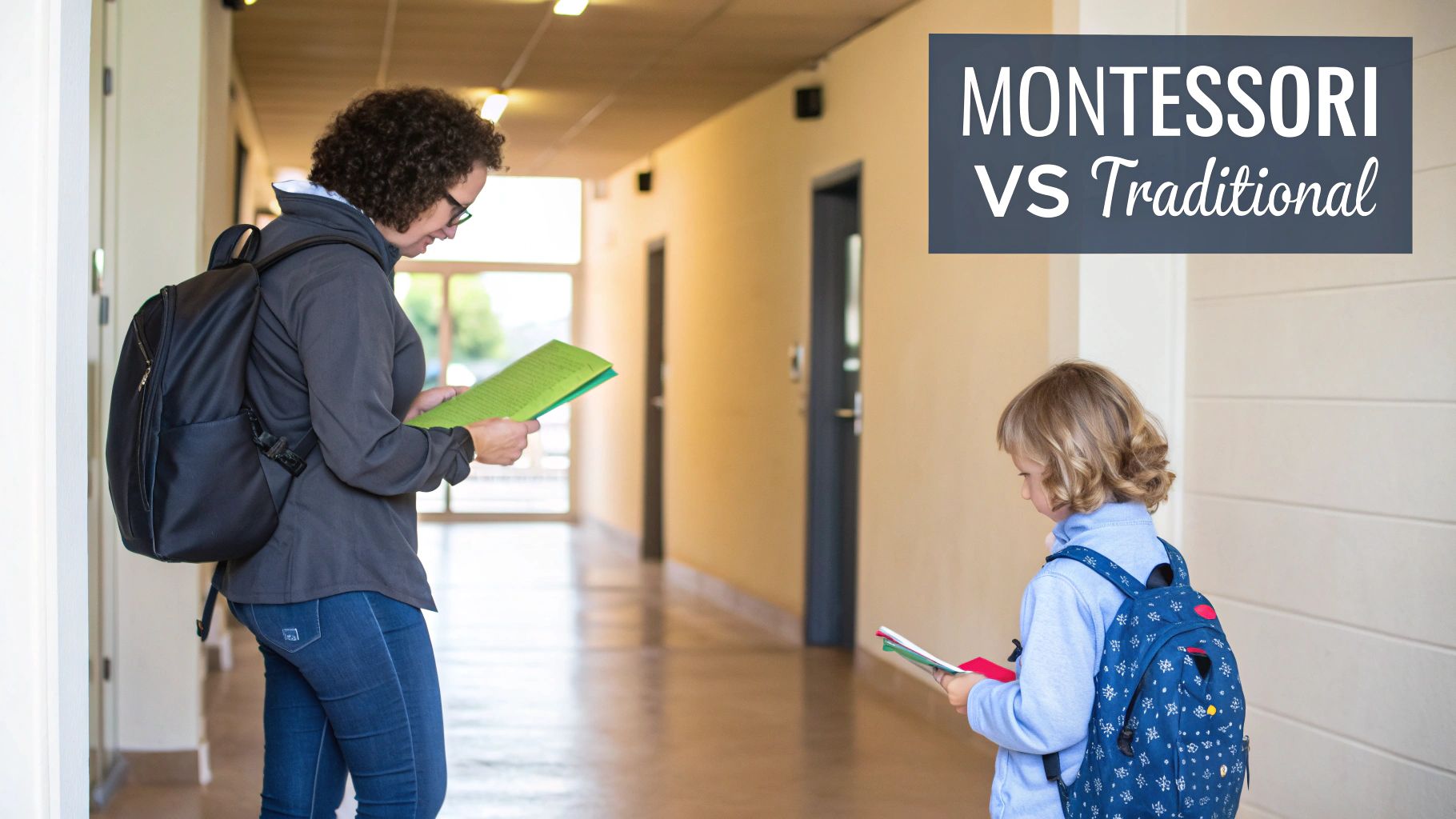
To make this a little easier, let's look at the core differences side-by-side. I find a simple table really helps clarify things at a glance.
Key Differences in Educational Approaches
This table breaks down the key characteristics of each approach, giving you a straightforward view of how they differ in practice.
| Characteristic | Montessori Approach | Traditional Approach |
|---|---|---|
| Learning Pace | Child-led and individualized | Teacher-led and standardized for the group |
| Classroom Structure | Mixed-age groups (e.g., 3-6 years) | Same-age peer groups |
| Teacher's Role | A guide or facilitator who observes | An instructor who directs the lesson |
| Learning Materials | Hands-on, self-correcting materials | Textbooks, worksheets, and lectures |
| Assessment | Observation and portfolios; no grades | Standardized tests and letter grades |
| Child's Freedom | Freedom of movement and choice of work | Structured schedule with limited movement |
These aren't just philosophical ideals; real-world research backs up the different outcomes. A major 2023 meta-analysis looked at 32 different high-quality studies and found that Montessori students consistently outperformed their peers in both academic and nonacademic skills.
The numbers showed a positive effect size of 0.26 for general academic ability. Even more impressive was the effect on "soft skills"—a 0.33 positive effect for things like social competence, executive function, and creativity.
Key Takeaway: The Montessori method is all about nurturing the whole child. It focuses on sparking curiosity, building self-discipline, and fostering a genuine love for learning through hands-on exploration. Traditional schooling, on the other hand, prioritizes transferring academic knowledge within a more structured, predictable system.
At the end of the day, neither system is automatically "better" for every single child. A kid who thrives on self-direction and loves to discover things for themselves might just flourish in a Montessori environment. On the flip side, a child who feels safer and more confident with clear, teacher-led instructions and a predictable daily routine might find a traditional classroom to be a perfect fit.
The best choice is always the one that aligns with your child's unique temperament and how they learn best.
Understanding the Core Educational Philosophies
To really get what makes Montessori and traditional education so different, you have to look at what they’re built on. These aren't just high-level ideas; they shape every single part of a child's day, from how the classroom is set up to what the teacher actually does.
Traditional education, for the most part, came out of an industrial-age need for standardization. The main goal was to teach a specific set of facts to a lot of students at once, getting them ready for a structured world. This “one-size-fits-all” approach is based on the idea that an expert teacher should pass down information to students in a straight, predictable line.
Montessori, on the other hand, grew out of the scientific observations of Dr. Maria Montessori. She saw that children are born learners, wired with a natural curiosity to figure out their world. Her entire philosophy is built on respecting the child as a unique person with their own developmental clock.
The Child as an Active Builder of Knowledge
The biggest split in philosophy is how each system sees the child. Traditional schooling often views a child as a passive bucket to be filled with information—facts and figures poured in by the teacher.
In stark contrast, Montessori sees the child as the one actively building their own mind. This idea lines up with many modern educational theories; it's interesting to see how frameworks like constructivist learning principles also put the child in the driver's seat. This shift completely changes the dynamic of the classroom.
"Follow the child" is the guiding mantra of Montessori education. It trusts that children will seek out the knowledge and skills they are developmentally ready for, rather than imposing a rigid curriculum on them.
This core belief is backed up by a few key concepts:
- The Absorbent Mind: Dr. Montessori noticed that children from birth to age six have an incredible ability to just soak up information from their surroundings, kind of like a sponge.
- Sensitive Periods: These are windows of time when a child is especially tuned in to learning a specific skill, whether it’s language, a sense of order, or movement.
- The Prepared Environment: The classroom itself is designed to be a teacher. Every single material has a purpose and is placed to encourage independent discovery.
Teacher as Guide Versus Teacher as Director
The role of the adult in the room is another major point where the two paths diverge. In a traditional classroom, the teacher is the center of attention. They lead lessons, manage the flow of the day, and test every student against the same benchmark. Their job is to deliver the curriculum to the group.
The Montessori teacher, often called a "guide," plays a totally different part. They are trained observers whose main job is to set up the learning environment and connect each child with the right materials for their stage of development. They might show a lesson to one child or a small group, but then they step back. They let the child take over.
This is a huge distinction for parents to get their heads around. A Montessori guide facilitates learning by watching and gently steering, while a traditional teacher directs learning by instructing and leading from the front. If you want to go a bit deeper on these ideas, you can explore more about what the Montessori method of teaching truly entails and see how it builds independence right from the start.
At the end of the day, the traditional philosophy is all about mastering a curriculum and making sure everyone learns the same thing at roughly the same time. Montessori prioritizes the whole child, trusting their inner drive and focusing on building skills like concentration, self-discipline, and a genuine love for learning that lasts a lifetime.
A Day in a Montessori vs a Traditional Classroom
To really get to the heart of the Montessori vs traditional debate, it helps to put the theory aside and imagine what a day actually feels like for a child in each environment. The rhythm of the day, the look of the classroom, and the way kids interact with their teachers and each other are worlds apart. Let's walk through a typical morning to see these philosophies come to life.
The Montessori Morning Work Cycle
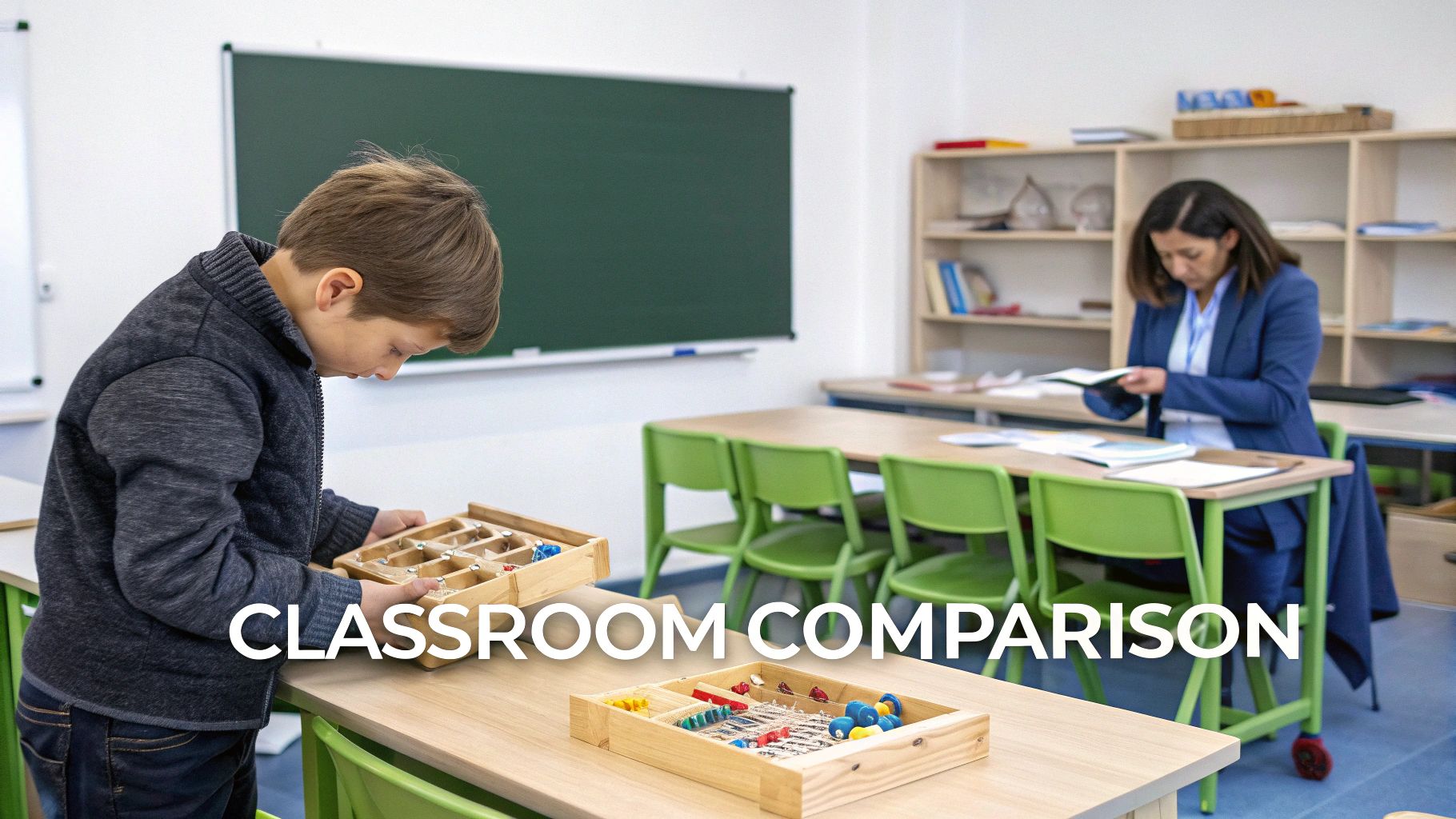
A Montessori morning doesn't start with a bell. It starts with a quiet, busy hum. Children arrive and immediately dive into their uninterrupted work cycle, a core part of the day that can last up to three hours. You won't see a teacher standing at the front of the room leading the whole class.
Instead, one child might head to the math shelves, choose the golden beads to practice addition, and find a small rug to work on by themselves. Another might be tracing sandpaper letters, connecting the physical feel of writing with the symbol. They pick their own "work" from carefully prepared options, deciding what they want to learn and for how long.
This "freedom within limits" is what it's all about. The teacher, or "guide," moves quietly through the room, observing. She might sit with a student to introduce a new material, offer a soft word of encouragement, or just watch to better understand where a child is in their development.
Key Insight: The Montessori work cycle is built to protect a child’s concentration. By letting them stick with an activity for as long as it holds their interest, it naturally builds focus and a love for learning.
The classroom itself is a mix of ages—three, four, and five-year-olds are all learning in the same space. It's common to see an older child helping a younger one with a tricky puzzle, which reinforces their own knowledge while building a sense of leadership. This kind of collaboration is just a normal part of the day.
The Traditional Classroom Schedule
In a traditional classroom, the day is much more structured. The morning usually kicks off with a group activity like "circle time," where the teacher leads everyone in a song, story, or calendar lesson. The schedule is set by the teacher, moving all students through the same subjects at the same time.
After circle time, it might be the "reading block." Every child gets the same worksheet or opens the same textbook page. The teacher stands at the front, explaining the task and making sure everyone is following along. The focus is on whole-group instruction, where the entire class learns as one unit.
Peer interaction is also handled differently. Kids are grouped by age, so they only work with others at their exact same developmental stage. Any collaboration is usually part of a specific, teacher-assigned project rather than something that happens naturally.
Comparing Core Daily Experiences
So, what are the practical differences you'd actually see during a typical day? Let’s break it down.
| Daily Experience | Montessori Approach | Traditional Approach |
|---|---|---|
| Starting the Day | Kids choose their own work from prepared shelves during a long, uninterrupted cycle. | The teacher starts with a group lesson, and all students follow a set schedule. |
| Learning Materials | Hands-on, self-correcting materials like wooden blocks, beads, and puzzles. | Textbooks, worksheets, and digital screens are the main tools for learning. |
| Teacher's Role | A guide who observes and gives individual or small-group lessons as needed. | An instructor who leads lessons from the front for the entire class. |
| Peer Interaction | Spontaneous collaboration happens naturally in multi-age groups. | Group work is structured, teacher-directed, and happens with same-age peers. |
This contrast in daily life makes a real difference. Research has shown that the Montessori method often leads to better outcomes in key areas. For example, a detailed study of 500 primary students found significant advantages for kids in Montessori programs when it came to cognitive development and social skills. The study noted they excelled in processing speed and working memory and also showed more advanced social competence and self-control. You can read the full research on how these educational approaches affect student development.
Ultimately, picturing these two different days makes it much clearer which environment might be the right fit for your child. One is a calm, bustling workshop where kids discover things on their own, while the other is a structured, unified classroom focused on learning together.
How Do Long-Term Learning Outcomes and Development Stack Up?
When you’re weighing Montessori vs traditional education, what you really want to know is what happens down the road. It’s not just about the day-to-day classroom experience; it’s about how these different approaches shape your child's skills, mindset, and readiness for the future. Looking at the long-term outcomes, both academic and personal, is where the biggest differences really come to light.
Traditional education has long been measured by a clear set of metrics: standardized test scores, grades, and academic benchmarks. This system is designed to prepare students for highly structured academic settings where success means following instructions, memorizing information, and acing tests. It creates a pretty straightforward, predictable path toward higher education.
Montessori, on the other hand, is playing a different game. While academics are definitely part of the picture, the main goal is to develop the whole child. This means nurturing the kind of "soft skills" that are becoming absolutely essential in the modern world.
Fostering Self-Motivation and Executive Function
One of the most telling differences is how each approach handles motivation. Traditional classrooms often lean on extrinsic motivators—think grades, gold stars, and praise—to get kids to learn. This can work in the short term, but there’s a risk it teaches children to work for the reward, not for the pure joy of learning.
The Montessori method flips this script by working to build intrinsic motivation. By giving children the freedom to choose their own activities and follow their curiosity, the process of learning becomes its own reward. This self-directed style is a powerhouse for building executive function skills—the mental toolkit that lets us plan, focus, remember instructions, and juggle multiple tasks.
Montessori education is built on the belief that a child's natural curiosity is the most powerful engine for learning. The goal isn't just to teach facts, but to cultivate a lifelong love of discovery.
This internal drive pays dividends for years to come. Kids who are intrinsically motivated tend to be more resilient, adaptable, and persistent when they hit a roadblock later in life. Getting a handle on the foundational child development stages by age can really help you see how this approach lines up with a child's natural growth.
A Quick Look at the Research
While soft skills are a Montessori signature, the research also points to strong academic results, especially over the long haul. The cumulative effect of hands-on, self-paced learning seems to build a really solid foundation, particularly in more complex subjects.
For example, a key 2015 study by Mallett and Schroeder followed students in both Montessori and non-Montessori public schools. They found that Montessori students showed progressively higher academic achievement the longer they were in the program, with especially strong gains in math and science. It suggests that the benefits of the Montessori approach really do compound over time. You can read the full research about these academic findings to dig into the data yourself.
Getting Ready for College and the Modern Workforce
So, how does all this translate to life after graduation? Both systems prepare kids for what’s next, just in different ways.
- Traditional Graduates: These students often shine in structured settings like universities and established corporate jobs. They’re used to meeting deadlines, studying for exams, and following a clear syllabus.
- Montessori Graduates: These individuals are frequently recognized for their creativity, collaborative spirit, and self-direction. They tend to be natural problem-solvers who are comfortable taking the lead—qualities that are highly sought after in innovative fields and entrepreneurial ventures.
It’s not a simple case of one being better. A student from a traditional background might feel more at home in the lecture-and-exam format of many college courses. On the flip side, a Montessori alum could be better equipped to manage a long-term research project or thrive in a workplace that demands fresh ideas and teamwork. The best fit really depends on the path your child seems most likely to follow.
How to Create a Montessori-Inspired Home Environment
Whether you’ve settled on a Montessori school or a more traditional route, you can still bring the core principles of Montessori right into your home. And here’s the good news: it doesn’t require a massive, expensive overhaul. The whole idea is to create what’s called a “prepared environment”—a space where your child can safely explore, build their independence, and feel like a valued part of the family.
This is less about interior design and more about a shift in perspective. Once you start seeing your home through your child’s eyes, you’ll find simple, powerful ways to encourage their concentration, confidence, and natural love for learning. This home-based approach works beautifully with any school choice, bridging the gap in the montessori vs traditional debate by putting your child’s needs front and center.
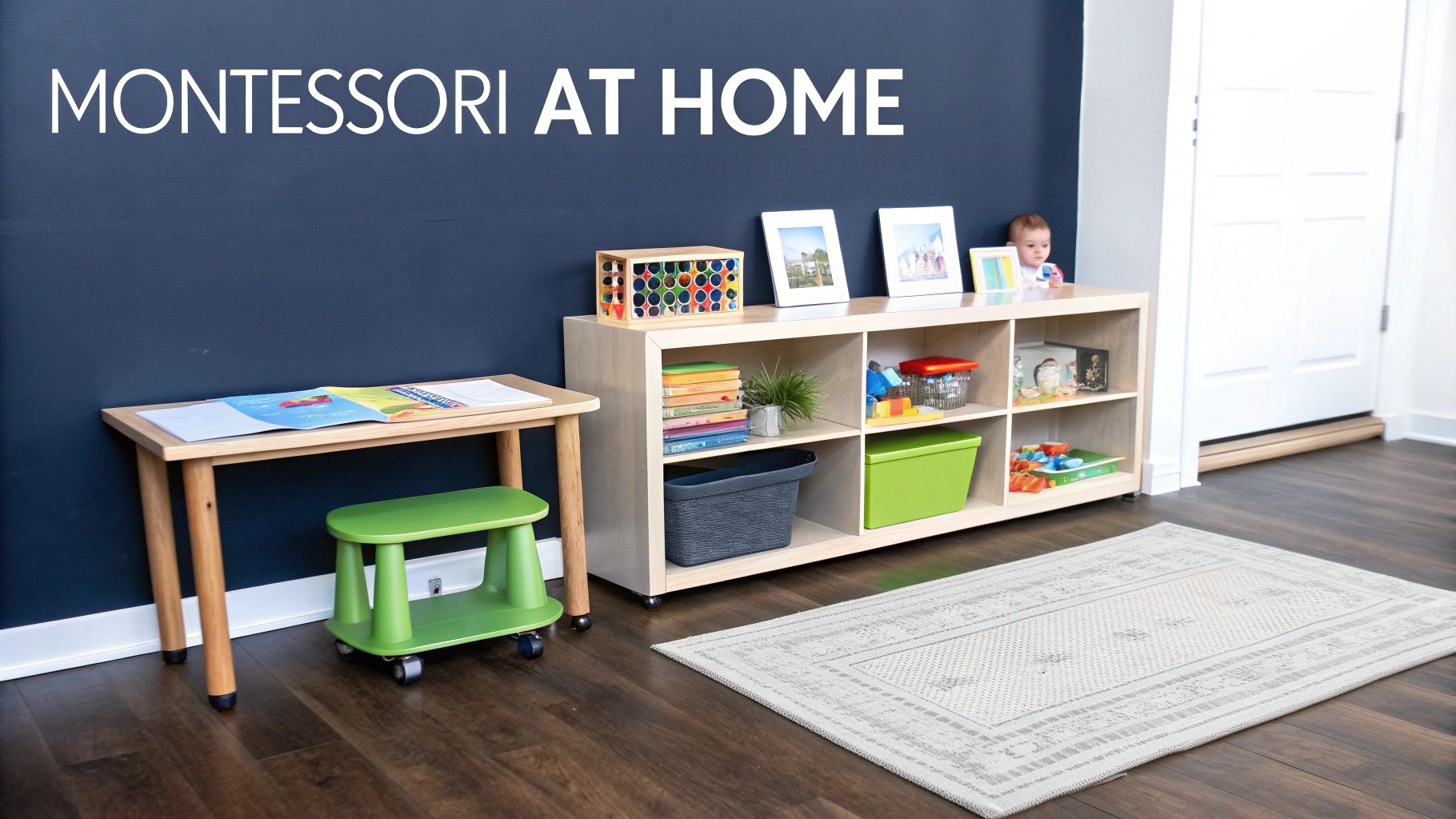
Setting Up Accessible Spaces
The first step is bringing their world down to their level. When a child can easily reach their own toys, books, and self-care items, they learn to make choices and take ownership of their belongings. It’s a simple change that builds a solid foundation for organization and independence.
Take a look around your child's main play areas. Are their toys crammed into a deep bin they have to dump out to find anything? Or are a few select items arranged neatly on low, open shelves? Accessibility makes all the difference.
- Low Shelving: Use open, low-to-the-ground shelves for toys and activities. This lets your child clearly see their options and choose what genuinely interests them.
- Small Furniture: A child-sized table and chairs gives them a proper workspace for drawing, puzzles, or enjoying a snack on their own terms.
- Accessible Baskets: Use small baskets or trays to hold all the pieces for a single activity. This inherently teaches order and makes cleanup much less overwhelming.
The goal is to create an environment of "freedom within limits." By thoughtfully arranging their space, you empower them to make independent choices while ensuring everything is safe and developmentally appropriate.
This simple approach can turn moments of frustration into empowerment. Instead of constantly asking for help, a child learns they can do it themselves—and that’s a huge confidence boost. For more specific ideas, it’s worth exploring different Montessori materials for home that are designed to support this kind of self-directed play.
Promoting Practical Life Skills
Practical life activities are the heart and soul of a Montessori home. Think of these not as chores, but as meaningful tasks that help children develop coordination, concentration, and a real sense of purpose. Involving them in the day-to-day work of the family is one of the best ways to teach these skills.
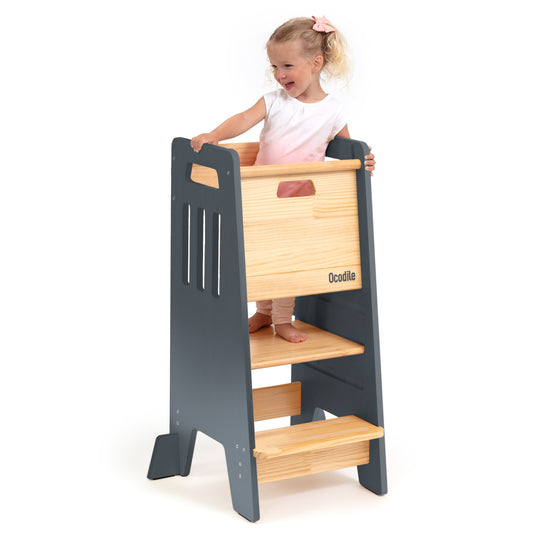
The kitchen is the perfect place to start. Instead of being stuck on the sidelines, children can become active participants with the right tools. A sturdy learning tower, for instance, safely brings a toddler up to counter height, letting them wash vegetables, stir batter, or just watch you cook. This single piece of furniture transforms what could be a chaotic time into a moment of connection and learning.
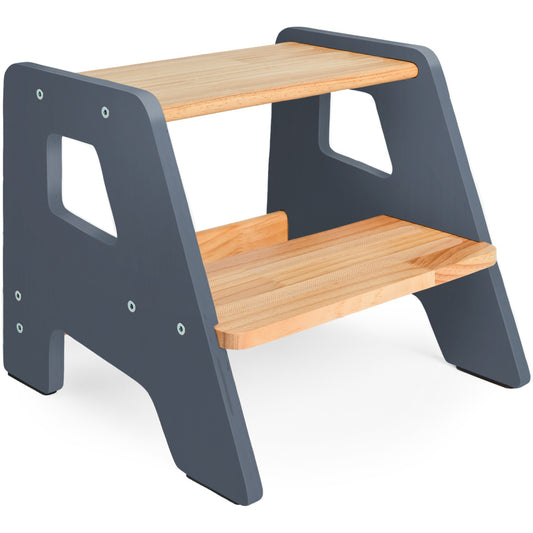
In the same way, a small step stool in the bathroom empowers a child to wash their own hands and brush their teeth at the sink. This builds self-care routines and makes them less reliant on you for basic needs. These little acts of independence add up, creating a capable, self-assured child.
Designing a Space for Autonomy
A child's bedroom is their personal sanctuary. Designing it with Montessori principles in mind can foster autonomy from a very young age, and this is where functional furniture really shines.
Take their bed, for example. A traditional crib restricts a child's movement, making them totally dependent on an adult to get in or out. A floor bed, on the other hand, gives them control over their own sleep space. When they wake up, they can safely get out of bed and find a quiet book or toy, learning to manage their own rest and wake cycles.
Here’s a quick look at how these key pieces of furniture support the Montessori philosophy:
| Furniture Item | Montessori Principle Supported | Practical Benefit |
|---|---|---|
| Learning Tower | Practical Life Participation: Lets children engage in real kitchen tasks alongside you. | Builds motor skills, creates connection, and teaches life skills like cooking. |
| Floor Bed | Freedom of Movement: Gives a child autonomy over their own sleep and wake environment. | Promotes independence, self-regulation, and respects the child's natural rhythms. |
| Step Stool | Independence in Self-Care: Provides access to sinks, toilets, and shelves without help. | Encourages personal hygiene routines and builds a powerful sense of capability. |
When you thoughtfully choose furniture that empowers rather than restricts, you’re creating a home environment that communicates trust and respect for your child's abilities. This practical application of Montessori ideas helps nurture a competent, independent person, no matter what their formal schooling looks like.
Making the Right Choice for Your Child and Family
Choosing between Montessori and traditional education isn’t about finding a universal "best" option. It's about finding the right path for your child’s unique personality, your family’s core values, and the practical realities you live with every day, like your budget and location. This is less about finding a perfect system and more about discovering the perfect fit.
The best place to start is by simply observing your child. Do they get completely lost in activities they've chosen for themselves? A Montessori classroom, which is all about self-directed learning and letting that inner curiosity lead the way, could be an amazing match.
On the other hand, some kids really shine with a bit more structure. If your child feels safest and most confident with a clear routine and direct guidance from a teacher, a traditional school might be a more comfortable space for them. That predictable framework can ease anxiety and help them focus.
Key Factors to Consider
Beyond your child's learning style, a few other big-picture factors will come into play. It's important to look at the whole situation to make a choice that feels right for the long haul.
- Financial Investment: Montessori schools are often private, and tuition can be a significant cost. Take a hard look at your family's budget to figure out what’s realistic.
- School Availability: Your options might be limited depending on where you live. Do some research on local schools, book a few tours, and try to get a real feel for the culture at each place.
- Family Values: Does your family place a high value on independence and self-discovery? Or is structure and standardized achievement more of a priority? When your child’s school aligns with your home life, everything feels more consistent.
The best educational environment is one that feels like a true partnership between the school and the family. Your decision should support not just your child's learning style, but also your household's overall philosophy.
And finally, remember this decision isn't set in stone. Kids are incredibly adaptable. What works wonders for your three-year-old might need a second look when they turn eight. The most important thing is to choose a place where your child feels safe, seen, and genuinely excited to learn.
Frequently Asked Questions
When you’re weighing Montessori vs traditional education, the big-picture philosophies are important, but it’s the practical questions that often keep you up at night. Let's get into some of the most common concerns parents have, so you can feel confident about the path you choose.
Is Montessori the Right Fit for My Child?
One of the first questions I hear is whether Montessori works for every single child. While its child-led approach is a huge benefit for many, it really shines for kids who are naturally curious, self-motivated, and love their independence. If your child thrives on exploring and figuring things out on their own, they’ll likely flourish.
On the other hand, some children feel more comfortable and secure with a highly predictable schedule and direct guidance from a teacher. For them, a traditional classroom might be a better fit, at least to start.
This decision tree gives you a simple way to think about where your child’s learning preferences might land.
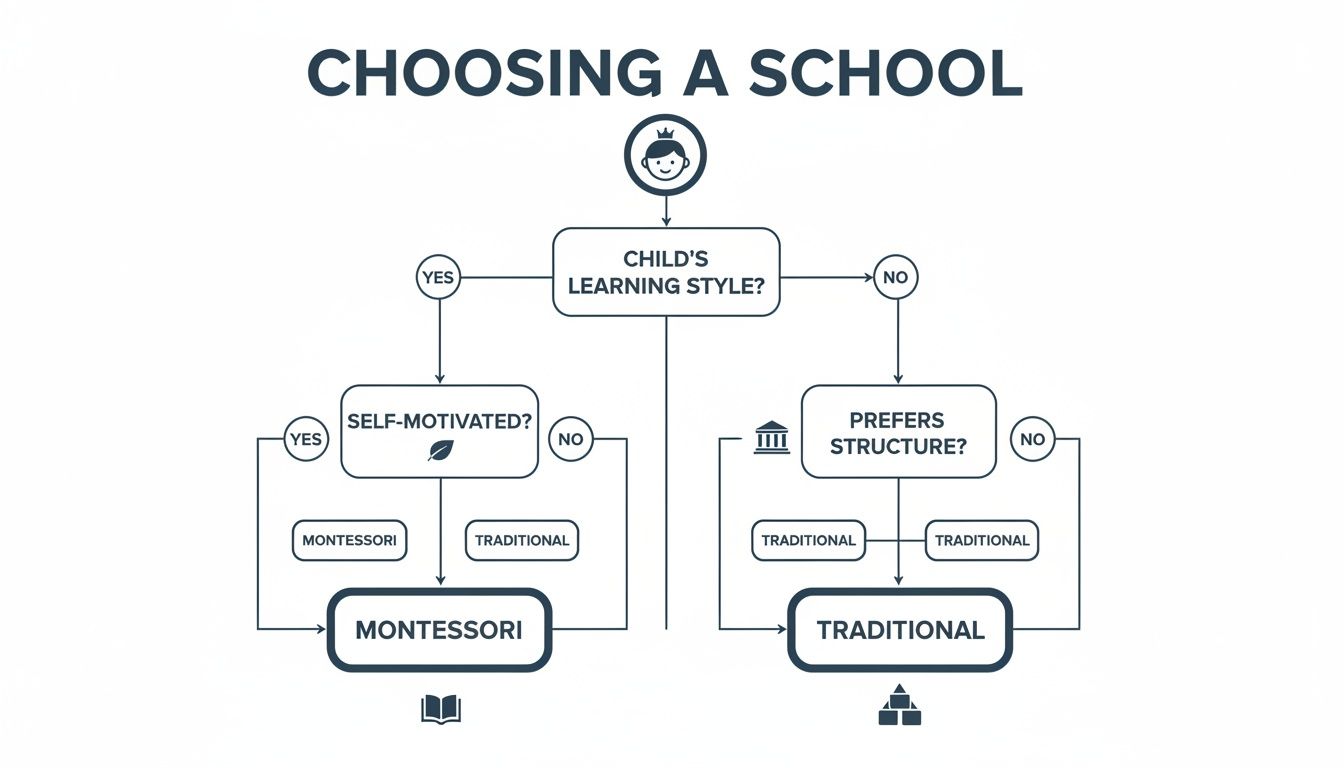
The flowchart helps visualize how your child’s natural tendencies—whether they lean toward self-direction or prefer more structure—line up with each educational style.
What About Transitioning to a Traditional School Later?
This is another huge concern for parents. What happens when a child goes from a Montessori primary school to a traditional high school? The good news is that Montessori kids usually develop fantastic executive function skills, adaptability, and a genuine love for learning that serves them well anywhere.
They’re often masters at managing long-term projects and thinking critically. That said, there might be a brief adjustment period as they get used to more rigid schedules and teachers lecturing at the front of the room.
You don't have to go all-in on one philosophy. Many families find a beautiful balance by blending Montessori principles at home with a traditional school education. This creates a supportive environment that nurtures both independence and structure.
For example, you can set up a "prepared environment" at home with accessible toys and child-sized furniture to encourage autonomy, even if your child spends their days in a traditional school. This blended approach truly can offer the best of both worlds.
Creating a home that encourages independence and practical life skills is easier than you think. Ocodile designs beautiful, safe, and functional furniture like learning towers and floor beds that empower your child to explore their world with confidence. See how our products can support your child's journey at Ocodile.