



A Parent's Guide to Sustainable Wood Toys
Sustainable wood toys are so much more than a nostalgic nod to the past; they’re a conscious choice for your child’s development and the health of our planet. These are toys made from responsibly sourced, renewable materials and finished with non-toxic substances, making them a safe, durable, and frankly, beautiful alternative to plastic.
Why Choose Sustainable Wood Toys
In a world buzzing with flashing lights and battery-operated distractions, the quiet simplicity of a wooden toy feels like a breath of fresh air. For so many parents, making the switch isn't just about aesthetics—it’s a deliberate investment in their child's future and the well-being of the environment.
These toys aren't designed for a single purpose. They are tools for creativity, not just temporary gadgets.
This shift in preference isn't a small movement, either. The market for sustainable toys is growing fast, with wooden toys leading the charge. Valued at USD 22.2 billion in 2023, the industry is on track to hit an incredible USD 64.1 billion by 2032. This surge is fueled by parents like you who are actively looking for non-toxic, renewable playthings that truly align with their values.
The Foundation of Conscious Play
Choosing sustainable wood toys means you’re prioritizing a few key values that extend far beyond the playroom. It’s about understanding the whole story of an object, from the forest it came from to your child's hands.
The core principles behind this choice boil down to a few key things:
- Child Safety First: It’s about making sure toys are free from the harmful chemicals, lead, and phthalates often found in plastics. Finishes are typically simple and safe, like water-based paints or natural oils.
- Thoughtful Design: These toys are all about promoting open-ended play that sparks a child's imagination. Unlike an electronic toy with only one function, a simple set of wooden blocks can become a castle, a spaceship, a city—anything a child can dream up.
- Long-Term Value: This is an investment in durability. Well-made wooden toys can be passed down through generations, which not only reduces waste but also creates cherished family heirlooms.
More Than Just a Toy
At the end of the day, these toys connect children to the natural world. The unique texture, the satisfying weight, and even the subtle scent of wood provide a rich sensory experience that plastic just can't replicate. This tactile connection is fundamental to learning and helps ground a child's play in reality.
By choosing toys made from natural materials, we offer children a tangible link to the environment. This simple act nurtures an early appreciation for nature and lays the groundwork for a lifetime of conscious consumption.
This approach encourages children to engage more deeply, building their concentration and problem-solving skills. If you're looking to cultivate this kind of focused, imaginative environment at home, exploring natural play ideas for kids can offer wonderful inspiration.
What Makes a Wooden Toy Truly Sustainable
The word "sustainable" gets thrown around a lot these days, but when it comes to wooden toys, it's more than just a buzzword—it’s a promise. We’re talking about the toy’s entire journey, from a tiny seedling in a forest all the way to your child’s playroom. It’s a real commitment to the environment, ethical practices, and your child’s safety that goes much deeper than just the material.
Think of it like a farm-to-table meal. You don't just care that the chicken is chicken; you want to know how it was raised, if the farm was responsible, and how the chef prepared it. The same story applies to a genuinely sustainable wooden toy. It’s a holistic view that takes every single step into account.
This concept map really brings to life the pillars of a sustainable wood toy: how it nurtures child development, its unwavering safety, and its role in building a healthier planet for our kids.
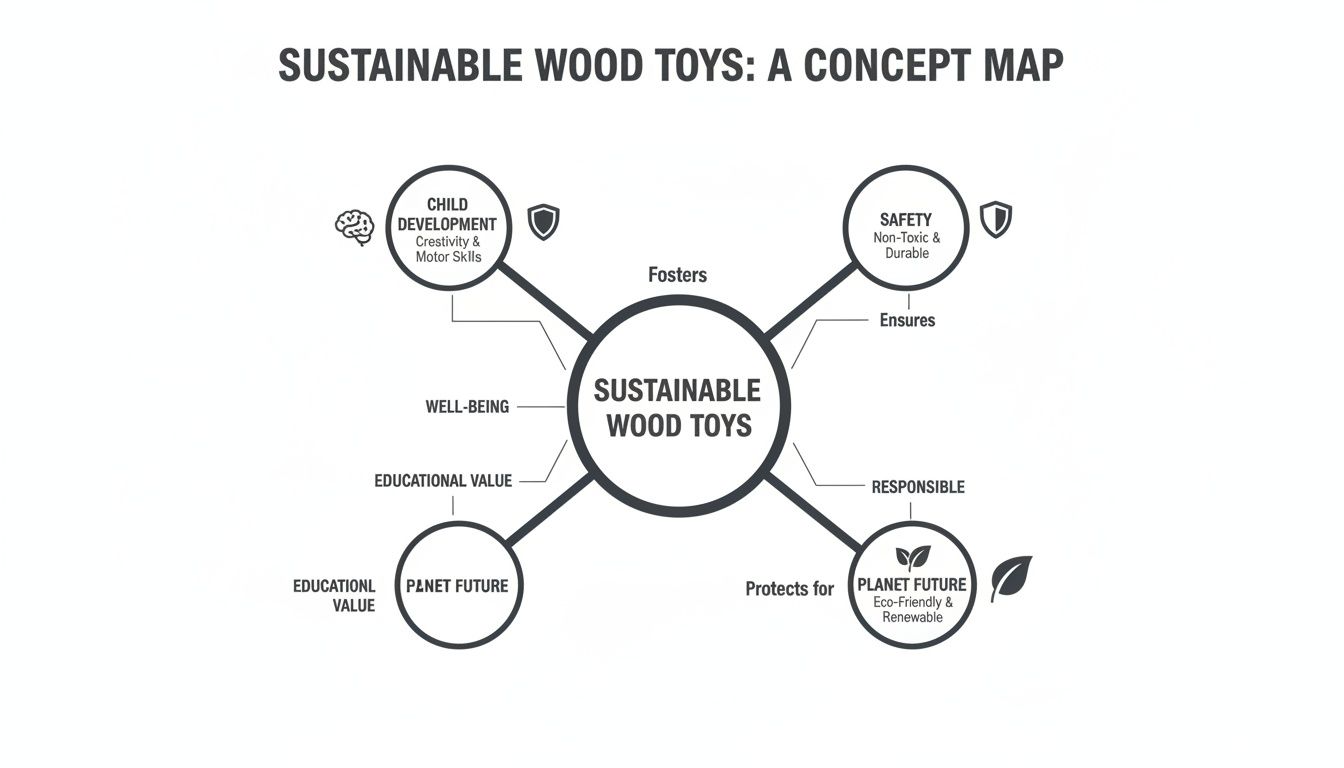
As you can see, these three ideas are all connected. They work together to create a product that is wholesome, safe, and truly good for a child's growth.
The Roots of Responsibility Sourced Wood
The story always begins in the forest. It’s not enough for a toy to simply be made of wood; where that wood comes from is a huge piece of the puzzle. Responsibly sourced wood comes from forests managed to preserve biodiversity, protect ecosystems, and support the local communities who depend on them.
This is where certifications become your best friend. The most well-known standard is the Forest Stewardship Council (FSC). When you see that FSC logo, it’s a guarantee the wood was harvested in a way that doesn't contribute to deforestation. This isn't just a niche concern—over 70% of premium brands are now choosing certified wood.
This simple choice stands in stark contrast to the massive plastic waste problem, with plastic plaguing 80% of our oceans. By opting for renewable, biodegradable materials, parents are making a powerful statement. You can dig deeper into the growing wooden toy market in this comprehensive industry report.
Safe Finishes and Non-Toxic Materials
Once the right wood is selected, the next make-or-break step is how it's finished. This is where many conventional toys—both plastic and wood—can hide nasty chemicals. A truly sustainable toy puts your child's health first, using materials that are completely safe, even for curious babies who love to explore with their mouths.
Here's what to look for:
- Non-toxic, water-based paints: These are free from nasty stuff like volatile organic compounds (VOCs) and heavy metals like lead.
- Natural oil finishes: Things like beeswax or linseed oil are fantastic for sealing and protecting the wood. They bring out its natural beauty without adding any toxins.
- Solid wood construction: High-quality sustainable toys are usually made from solid hardwood (like maple or beech). They avoid composite woods like MDF or particleboard, which can contain formaldehyde-based glues.
The essence of a sustainable toy is purity. It’s about stripping away unnecessary and potentially harmful additives to let the natural quality of the material and the creativity of the child shine through.
This meticulous attention to detail means the toy is not only safe for your little one but also for the artisans who craft it and for the planet when it eventually comes to the end of its long, well-loved life.
Ethical Manufacturing and a Low-Impact Footprint
The final piece of the sustainability puzzle is the manufacturing process itself. How was the toy made? What are the values of the company that made it? Truly sustainable brands are open about their production methods and are committed to doing things the right way.
This covers a few key areas:
- Low-Impact Production: This might mean using renewable energy in workshops, minimizing water use, or designing products to reduce waste during cutting and shaping.
- Fair Labor Practices: Ethical manufacturing ensures workers are treated with respect, paid a living wage, and have safe working conditions. The human side of things is a non-negotiable part of sustainability.
- Minimalist Packaging: Sustainable companies often use recycled or recyclable packaging. They skip the excessive plastic, which further reduces the toy's overall environmental footprint.
Choosing a sustainable wood toy is an investment in a whole system that values people and the planet at every turn. It’s a conscious choice to support a cleaner, safer, and more thoughtful way to play.
Sustainable Wood Toys vs Conventional Plastic Toys
To make it even clearer, let's break down the key differences between a thoughtfully made wooden toy and a typical mass-produced plastic one.
| Feature | Sustainable Wood Toys | Conventional Plastic Toys |
|---|---|---|
| Material Source | Renewable, from FSC-certified forests. | Fossil fuels (non-renewable), often with a significant carbon footprint. |
| Durability | Extremely durable and long-lasting; often passed down through generations. | Prone to breaking, cracking, and fading. |
| Child Safety | Finished with non-toxic, water-based paints and natural oils. Free of harmful glues. | May contain BPA, phthalates, lead, or other toxins, especially in older toys. |
| Environmental Impact | Biodegradable and sourced responsibly to protect ecosystems. | Contributes to plastic pollution in landfills and oceans; takes centuries to degrade. |
| Developmental Value | Open-ended, encouraging creativity, problem-solving, and sensory exploration. | Often single-purpose and battery-operated, limiting imaginative play. |
| Ethical Production | Often made by companies committed to fair labor and safe working conditions. | Manufacturing practices can be opaque, with concerns over labor conditions. |
Ultimately, the choice reflects a difference in values. One path prioritizes longevity, safety, and a healthy planet, while the other often prioritizes low cost and disposability.
How Wooden Toys Nurture Child Development
Sure, sustainable wood toys are great for the planet, but the magic really happens when you see what they do for a child's growing mind. Unlike electronic gadgets that often tell a child how to play, the beautiful simplicity of a wooden toy opens up an entire universe of possibilities. This is where the real foundation for creativity, critical thinking, and problem-solving is built.
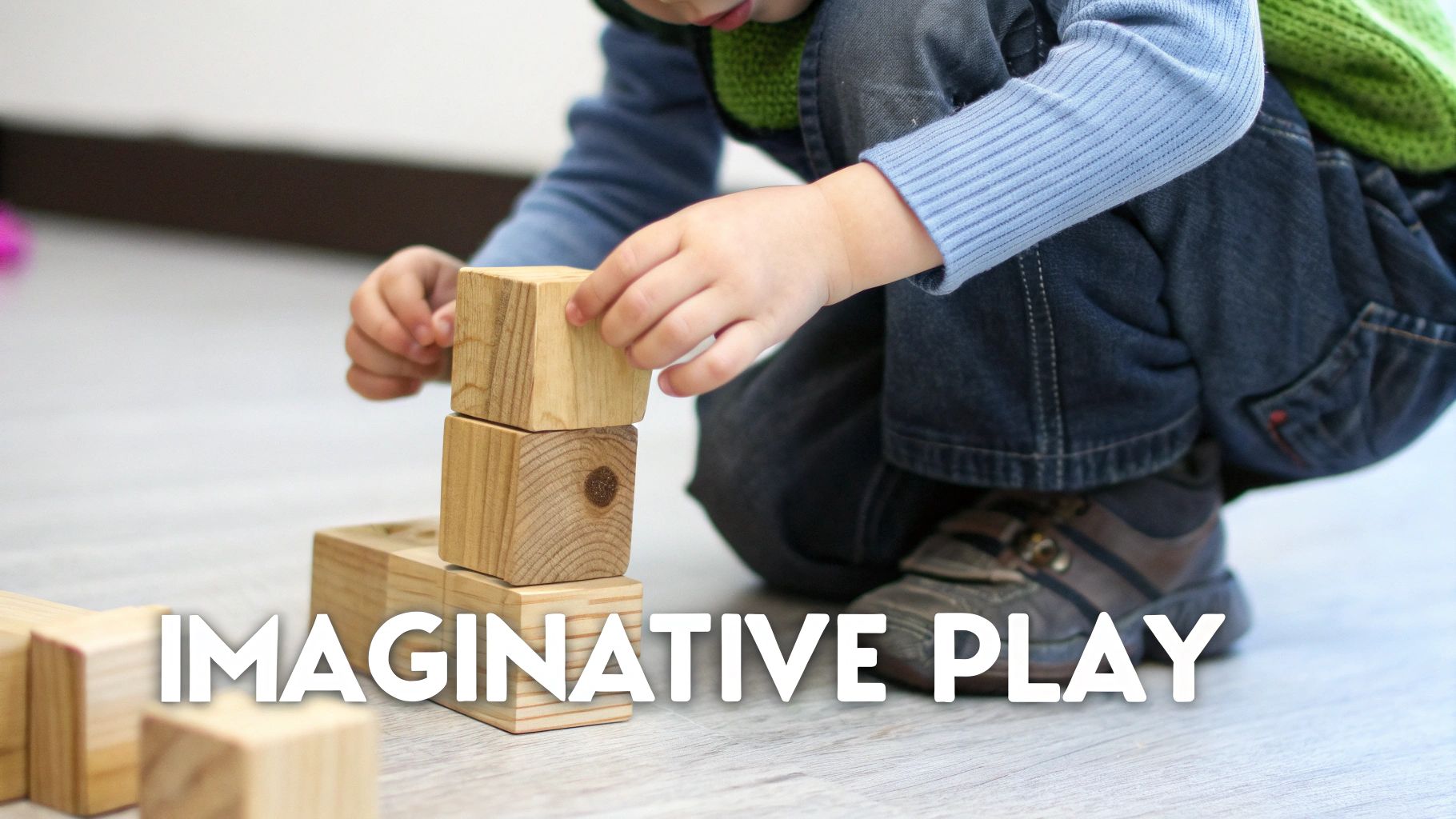
This hands-on, self-directed approach is the heart of educational philosophies like Montessori. It's all about letting the child lead the way. The natural feel of wood—its weight, texture, and warmth—offers a rich sensory experience that cold, uniform plastic just can't replicate. This isn't just about fun; it’s fundamental to how little ones make sense of the world.
Igniting Imagination and Open-Ended Play
The single greatest benefit of wooden toys is their open-ended nature. A set of simple wooden blocks doesn’t come with buttons to press or a pre-programmed story. It’s a blank canvas that invites a child to become the creator, the director, and the engineer.
This lack of a defined purpose is actually its biggest strength. In a child's hands, a wooden arch can be a bridge for a car, a cradle for a doll, or a rainbow in the sky. It’s this kind of imaginative play that builds cognitive skills for life.
Think about what's happening in these moments:
- Encourages Critical Thinking: Kids have to figure out how to balance blocks to build a tower or which shape fits where in a puzzle. They're learning about cause and effect in real-time.
- Sparks Unstructured Creativity: With no "right" way to play, children are free to experiment and bring their own ideas to life without any fear of getting it wrong.
- Develops Problem-Solving Skills: When that block tower inevitably tumbles, the child learns to figure out what went wrong and try a new approach. This builds resilience and analytical thinking.
Open-ended play with sustainable wood toys doesn't just entertain; it teaches children how to think. It nurtures the imaginative spark that is essential for innovation and adaptability later in life.
A Rich Sensory Experience for Growing Minds
From the moment a baby can grasp an object, they are learning through touch, sight, and sound. Wooden toys provide a uniquely rich sensory diet that is crucial for brain development.
The different weights, the smooth or grained textures, and the natural warmth of wood offer complex tactile feedback. This helps children build a more nuanced understanding of physical properties like weight, density, and temperature. For families interested in how natural materials support key milestones, resources on Montessori toys for early learning can offer some fantastic insights.
Fostering Focus and Independence
In a world buzzing with digital noise, the quiet simplicity of wooden toys is a powerful thing. Free from flashing lights and distracting sounds, they allow a child to sink into a state of deep, focused play.
This is where the real learning happens. Uninterrupted concentration allows children to work at their own pace, exploring concepts and mastering skills all on their own. It’s a huge boost for their self-confidence and gives them a genuine sense of accomplishment.
Because these toys are so effective at building these foundational skills, it helps to know what makes each one special. If you're curious to learn more about how different designs support growth, exploring the world of educational wooden toys can shed more light on their specific advantages. This self-directed engagement is truly what makes sustainable wood toys a priceless investment in your child's development.
Understanding Toy Safety Standards and Certifications
As a parent, you love that a wooden toy is sustainable, but its safety? That’s completely non-negotiable. When you hand a toy to your child, you need to feel certain it's free from any hidden dangers. But navigating the alphabet soup of safety labels and certifications can feel like a full-time job.
Don't worry, it's simpler than it looks. These certifications aren't just flimsy recommendations; they are strict legal requirements that toys have to pass before they ever reach a store shelf. Think of them as a pre-purchase safety inspection, performed by experts, giving you the peace of mind you deserve.
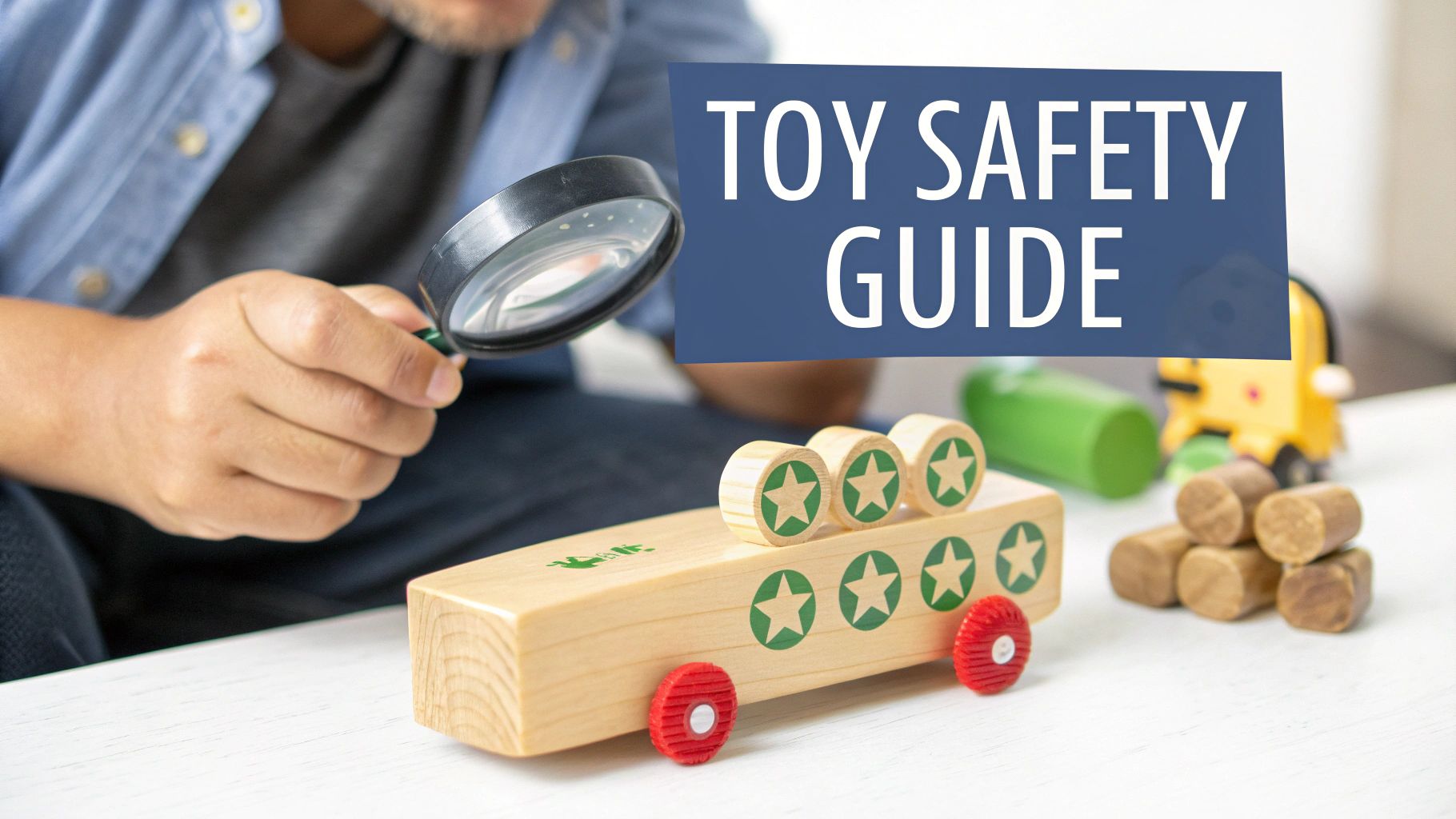
Decoding the Most Important Safety Labels
Different parts of the world have their own gold-standard safety regulations. For wooden toys, you'll generally come across two main certifications. Getting to know them helps you cut through marketing claims and see what really matters.
These are the two big ones you'll want to look for:
- ASTM F963 (USA): This is the mandatory standard for any toy sold in the United States. It’s incredibly thorough, covering everything from physical hazards like sharp points and small parts to chemical testing for nasty stuff like lead and phthalates.
- EN-71 (Europe): This is the European equivalent, and it’s just as comprehensive. It’s broken down into multiple parts, each zeroing in on a specific safety concern—think flammability, chemical composition, and physical strength.
When a brand goes through the trouble and expense of getting these certifications, it speaks volumes. It’s a clear sign that they’ve put their products through rigorous third-party testing to prove that every single component, from the wood to the paint, meets the highest safety criteria.
What These Certifications Actually Test For
Seeing a label on a box is one thing, but understanding what it truly protects your child from is another. These standards aren't just a quick visual check. They put toys through a wringer of tests designed to simulate how a child really plays—including all the dropping, pulling, and chewing you’d expect.
Here’s a peek into what’s being tested:
- Chemical Safety: This is a big one for parents. These tests screen for a whole list of harmful substances like lead, mercury, and arsenic in any paints, glues, or finishes. It means that even if the toy ends up in your little one's mouth, they won't be exposed to toxins.
- Choking Hazards: The standards get super specific here. They use a special "small parts cylinder" to test any toy component. If a piece can fit inside, it’s considered a choking hazard for children under three and the toy fails.
- Physical and Mechanical Safety: This covers the structural side of things. Testers look for sharp edges, points that could poke an eye, and overall durability. The toy has to be strong enough to not shatter into dangerous pieces if it's dropped from a high chair.
A safety certification is more than a sticker on a box; it's a documented promise from the manufacturer that the toy has been rigorously evaluated to protect your child from both visible and invisible dangers.
While we're talking about wood, the core ideas of safety and sustainability are universal for all toys. For more info, this guide offers great insights into evaluating toy safety standards and sustainable materials in toys.
Your Role as the Final Safety Inspector
Even with all the official certifications, you are the final line of defense. Before you hand over a new toy, take a minute to do your own inspection. Run your fingers along all the surfaces—are there any splinters or rough patches?
Give it a gentle tug. Do any small parts feel loose or like they could come off with some determined toddler-level effort? For babies and toddlers, double-check that the toy is solid and that no part could possibly become a choking hazard. This quick, personal check adds that last layer of security, ensuring playtime is as safe as it is fun.
Your Smart Shopper's Checklist for Buying Wood Toys
Navigating the world of children's toys can feel like a maze, but figuring out how to choose a great wooden toy doesn't have to be complicated. This checklist is your simple, go-to guide for picking toys that are beautiful, engaging, and genuinely safe and eco-friendly.
Think of it as your own little quality-check process. Whether you're in a store or browsing online, asking a few key questions will help you see if a toy really fits with your family's values. You're not alone in this—the global wooden toy market hit an impressive USD 28.5 billion in 2024 and is expected to jump to USD 44.1 billion by 2034. That growth is all thanks to parents like you who are choosing quality over quantity. You can find out more about this expanding market and what it means for conscious consumers.
Materials and Sourcing
The story of every toy starts with the wood itself. Your first step is to make sure you're getting high-quality, responsibly sourced wood that’s built to last.
- Is it solid wood? Look for hardwoods like maple or beech. They're incredibly durable and even have natural anti-bacterial properties. Steer clear of composites like MDF, which often contain formaldehyde-based glues.
- Does it have an FSC logo? The Forest Stewardship Council (FSC) certification is your proof that the wood came from a responsibly managed forest. It’s a simple way to know you aren’t contributing to deforestation.
Safety and Finishes
When it comes to our kids, safety is everything. Certifications and the quality of the finish are the clearest signs that a company has put your child's well-being first.
- Are the paints and finishes non-toxic? Check the label for phrases like "water-based paints" or "natural oil finishes." This is especially important for babies and toddlers who love to explore with their mouths!
- Is it safety certified? Keep an eye out for key certifications like ASTM F963 (USA) or EN-71 (Europe). These aren't just fancy acronyms; they mean the toy has been tested for everything from choking hazards to harmful chemicals.
A safety certification isn’t just a sticker; it's a documented promise that the toy has passed rigorous third-party tests for both physical and chemical dangers, giving you complete peace of mind.
Play Value and Brand Integrity
A truly great toy does more than just keep a child busy—it helps them grow. This is where you look at how a toy will actually benefit your child's development and whether the brand behind it is one you can trust.
Does it spark open-ended, imaginative play? For instance, well-designed wooden climbing toys support gross motor skill development by giving children the freedom to explore movement on their own terms.
Finally, take a look at the company itself. How transparent are they? Do they openly share details about their manufacturing and ethics? A brand that’s truly proud of its sustainable practices will have that information front and center. This last check makes sure your purchase supports a company that cares about a healthier planet as much as you do.
The Sustainable Wood Toy Buyer's Checklist
Here’s a quick-reference guide to help you feel confident in your choices. Use this checklist to evaluate toys before you buy, ensuring they're safe, sustainable, and perfect for your little one.
| Checklist Item | What to Look For | Why It Matters |
|---|---|---|
| Wood Type | Solid hardwoods like maple, beech, or birch. | These are durable, naturally safe, and won't easily splinter. Avoid MDF. |
| Sourcing Certification | The FSC (Forest Stewardship Council) logo on the packaging. | Guarantees the wood is from a responsibly managed forest, protecting ecosystems. |
| Finishes & Paints | Labels specifying "non-toxic," "water-based paints," or "natural oils." | Ensures the toy is safe for mouthing and free from harmful chemicals. |
| Safety Standards | ASTM F963 (USA) or EN-71 (Europe) certification marks. | Confirms the toy has been independently tested for choking hazards, sharp edges, and toxins. |
| Play Style | Open-ended designs (blocks, climbers, simple figures) that invite imagination. | Fosters creativity, problem-solving, and cognitive development. |
| Brand Transparency | Easy-to-find information on the brand's website about their mission and practices. | Shows the company is accountable and committed to its sustainability claims. |
By keeping these points in mind, you can easily sift through the options and find beautiful, lasting toys that you and your child will love for years to come.
Frequently Asked Questions About Wooden Toys
Even after seeing all the benefits, it's totally normal to have a few more questions before going all-in on sustainable wood toys. Making thoughtful choices for your family means getting clear, honest answers. We'll tackle the most common questions right here to help you feel great about your decision.
We’ve pulled together the top things parents wonder about when making the switch, from cost and cleaning to safety and those sometimes-confusing sustainability claims. Let’s clear things up.
Are All Wooden Toys Automatically Eco-Friendly?
This is a really common assumption, but the short answer is no. Just because a toy is made of wood doesn’t automatically make it a win for the environment. A toy's real eco-friendliness is all about its entire journey—from the forest it came from right to your playroom.
Think about it like this: a beautiful wooden table made from an illegally logged, endangered tree is the opposite of sustainable. The same principle applies to toys. For a wooden toy to be truly eco-friendly, you need to spot a few key signs.
- FSC-Certified Wood: This is the gold standard. It’s your best proof that the wood was harvested from a responsibly managed forest that looks after biodiversity and actively prevents deforestation.
- Non-Toxic Finishes: A toy isn't very eco-friendly if it’s covered in chemical-heavy paints. Look for simple, safe finishes like water-based paints or natural oils.
- Ethical Manufacturing: A brand's commitment to low-impact production and fair wages for its workers is another huge piece of the puzzle.
Why Do Sustainable Wood Toys Cost More Than Plastic Ones?
That higher price tag on a well-made wooden toy can definitely make you pause for a second. But it’s a reflection of a deep commitment to quality, safety, and ethical practices. You're not just buying a toy; you're investing in an object with a whole different value system behind its creation.
The price difference really comes down to a few key things:
- Superior Materials: Responsibly sourced solid hardwood and certified non-toxic finishes just cost more to procure than mass-produced plastic pellets and cheap chemical paints.
- Skilled Craftsmanship: It takes more time, skill, and attention to detail to create a smooth, durable, and perfectly safe wooden toy than it does to simply inject plastic into a pre-made mold.
- Longevity and Durability: This is a big one. You might buy one set of high-quality wooden blocks that your kids—and maybe even your grandkids—will play with. A cheaper plastic version might break and need to be replaced several times over.
The price of a sustainable wood toy is a direct reflection of its true cost—one that includes fair wages, environmental stewardship, and your child's long-term safety. It's an investment in durability over disposability.
What Is the Best Way to Clean Wooden Toys?
Keeping wooden toys clean is refreshingly simple, but the key is a gentle touch. The number one rule is to never soak wooden toys in water. Submerging them can cause the wood to swell, warp, and crack, which will ruin the toy for good.
Instead, just follow these easy steps:
- Mix up a very mild cleaning solution—a little bit of gentle soap and water, or a splash of white vinegar diluted in water works perfectly.
- Lightly dampen a soft cloth with your solution. You want it damp, not soaking wet.
- Wipe down the surface of the toy.
- Let the toy air dry completely before it goes back into the playroom.
Steer clear of harsh chemical cleaners or disinfectant wipes. They can strip the natural finish and might leave behind residues that aren't safe for little ones who love to explore everything with their mouths.
Are Wooden Toys Safe for Babies Who Chew Everything?
Yes, they absolutely can be—as long as you choose the right ones. In fact, wood is often a fantastic material for teething babies because it's natural and firm. Some hardwoods, like maple, even have natural anti-bacterial qualities.
To make sure a wooden toy is totally safe for a mouthing baby, keep an eye out for these features:
- Age-Appropriate Design: The toy must be too big to be a choking hazard and have absolutely no small parts that could come loose.
- Safe Finishes: Go for toys that are either unfinished (just raw wood) or sealed with a non-toxic, food-grade finish like beeswax or linseed oil.
- Solid Construction: Make sure the toy is carved from a single, solid piece of wood, with no glued-on bits that could pop off over time.
- Safety Certifications: Seeing a certification like ASTM F963 or EN-71 gives you that extra peace of mind that the toy has passed strict safety tests designed for young children.
At Ocodile, we believe that the best products for children are those that blend safety, thoughtful design, and sustainability into every detail. We are committed to creating beautiful, practical pieces that support your child's independence and transform everyday family moments into cherished memories. Discover how our child-focused furniture can bring more joy and connection into your home by visiting us at https://ocodile.com.