



Educational wooden toys: Boost Learning with educational wooden toys
When you hear "educational wooden toys," you might picture something classic, maybe even a bit old-fashioned. But these simple, beautiful objects are so much more than just a nod to the past. They’re thoughtfully designed, open-ended tools that can unlock a child's development in profound ways. Unlike a toy that does one thing, a humble set of wooden blocks holds nearly endless possibilities for a growing mind.
The Enduring Appeal of Wooden Toys in Modern Play
In a world buzzing with screens and battery-operated gadgets, many of us are looking for a return to something more tangible and real for our kids. The draw of educational wooden toys isn't just about nostalgia; it’s a conscious choice for parents who value sustainable, safe, and truly engaging play.
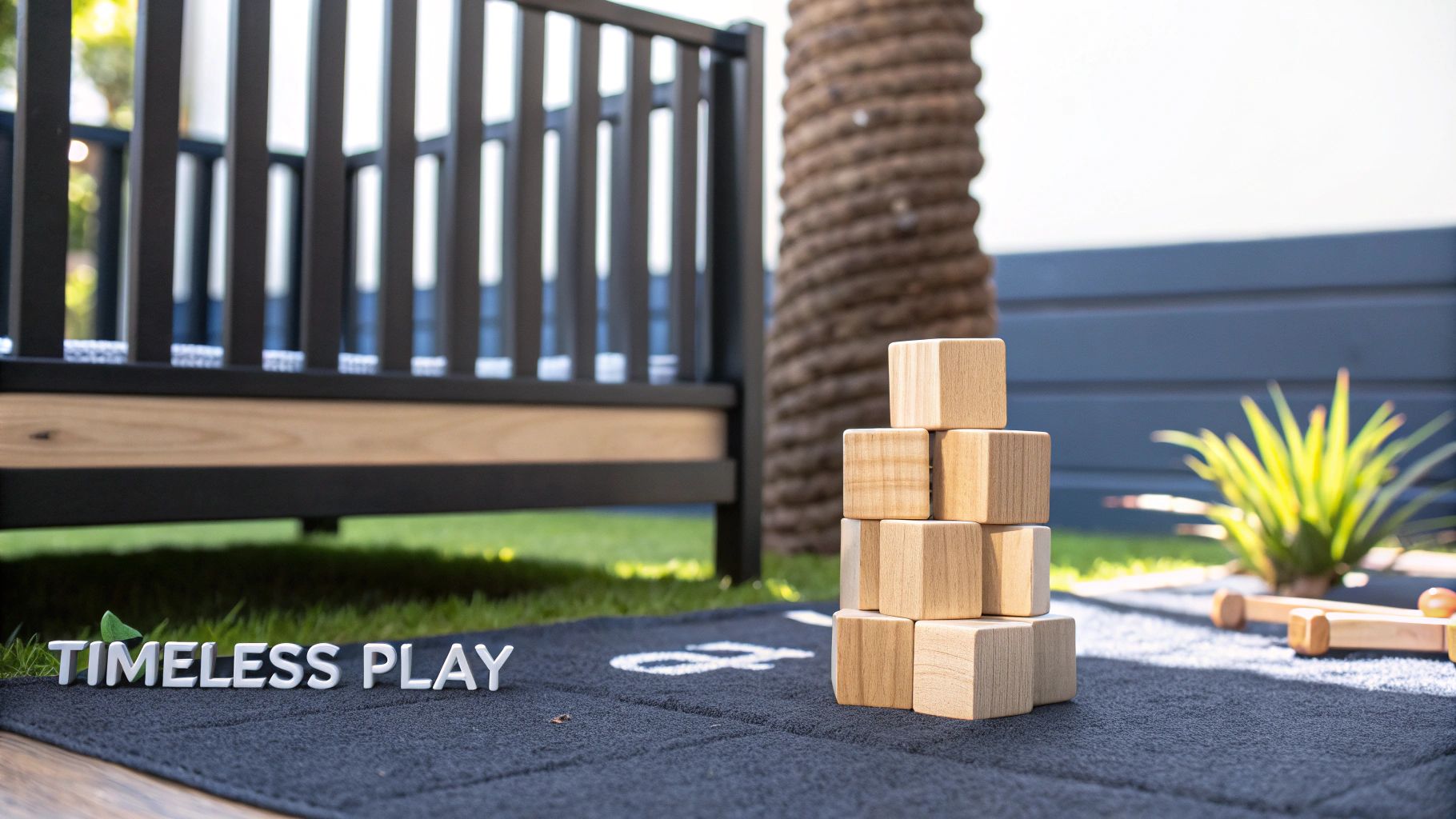
Think of a simple wooden toy as a developmental key. A flashy plastic toy might hold a child's attention with its programmed lights and sounds, but a set of plain wooden blocks invites them to create their own sounds, stories, and worlds. That small difference is huge—it shifts a child from being a passive watcher to an active creator.
Why Simplicity Sparks Creativity
The real magic of these toys is in their simplicity. They don’t come with a script or a set of rules, which means a child’s imagination gets to be the director of the show. This open-ended quality is what helps build foundational life skills.
- Problem-Solving: How tall can I make this tower before it wobbles? How can I build a bridge that won’t collapse?
- Imagination: This little block isn't just wood. It’s a car, a piece of cake for a doll, or even a spaceship blasting off to the moon.
- Sensory Development: The solid weight, the smooth texture, and the natural scent of wood all provide a rich sensory experience that plastic just can't replicate.
Modern parents are looking for toys that are not just fun, but also safe and eco-conscious. It can feel overwhelming, but there are some fantastic resources out there that break down trusted non-toxic toy brands to help you make choices you can feel good about.
The toys you choose are part of the environment you create. A playroom filled with durable, beautiful items like wooden climbing toys and simple block sets naturally encourages purposeful, creative play. This guide is here to walk you through it all, offering practical advice to help you choose toys that will truly support your child’s growth and spark a lifelong love for learning.
What Makes a Wooden Toy Genuinely Educational
The word “educational” gets thrown around a lot, often bringing to mind flashcards or noisy toys that shout out the alphabet. While those have their place, a truly educational wooden toy works on a much deeper, more fundamental level. It’s less about teaching a single, specific lesson and more about giving a child the raw materials to build their own understanding of the world.
Think of it this way: a toy that recites the ABCs is like a pre-recorded song. It’s a passive experience. But a simple set of wooden blocks? That’s like a musical instrument. It invites your child to become an active creator, composing their own unique melodies of play and learning.
From Simple Stacking to Foundational Skills
When your toddler carefully places one block on another, they're not just building a tower. They’re a tiny physicist experimenting with gravity and balance. They’re a miniature architect discovering the basics of structural integrity and spatial awareness. This hands-on, trial-and-error process is where real learning sinks in, long before they ever step into a classroom.
This kind of open-ended play is the bedrock of critical thinking. The toy doesn't dictate the outcome, so the child has to solve problems. How do I make the base wider so my tower doesn't fall? How can I build an arch for my little wooden car to drive through? Every question they puzzle through is a powerful cognitive workout.
The core of a great educational toy isn’t what it does, but what it allows a child to do. It should be 90% child and 10% toy, sparking active engagement rather than passive watching.
This philosophy of child-led discovery is a cornerstone of many early learning approaches. You can dive deeper into this concept in our guide on using Montessori materials for home learning setups.
Active Engagement vs. Passive Entertainment
Understanding the difference between active and passive play is crucial. An educational wooden toy demands a child’s full participation—their imagination, their hands, and their mind. Many electronic gadgets, on the other hand, are designed for passive entertainment, delivering stimulation without requiring much thought or creativity from the child.
This distinction has a direct impact on skill development. The preschool years are an incredible window for growth, and parents and educators are increasingly seeking out tools that support it. With preschool enrollment for 3- to 4-year-olds climbing from 40% to 47% between 2021 and 2022, the turn towards proven, effective toys like wooden ones makes perfect sense.
To really see what we mean, let's compare the developmental impact side-by-side.
Active Engagement vs Passive Entertainment in Toys
The table below breaks down how a simple wooden toy fosters active engagement, while a typical electronic toy often leads to passive entertainment.
| Developmental Area | Educational Wooden Toys (Active Engagement) | Typical Electronic Toys (Passive Entertainment) |
|---|---|---|
| Problem-Solving | The child must figure out how to balance, sort, or build, fostering critical thinking. | The toy solves problems for the child with pre-programmed sounds and actions. |
| Imagination | A simple block can become a car, a phone, or food, driven by the child's creativity. | The toy has a defined function, limiting imaginative possibilities. |
| Sensory Experience | Natural textures, varied weights, and the smell of wood provide rich sensory input. | Smooth plastic and repetitive electronic sounds offer a limited sensory range. |
| Fine Motor Skills | Stacking, threading, and manipulating pieces build dexterity and hand-eye coordination. | Pushing a button requires minimal and repetitive motor skill engagement. |
Ultimately, a genuinely educational wooden toy is empowering. It trusts in a child’s innate curiosity and gives them the freedom to explore, invent, and learn at their own pace. It turns simple playtime into a powerful engine for growth.
How Wooden Toys Unlock Developmental Milestones
An educational wooden toy is far more than just something to keep a child busy; it’s a powerful tool that actively shapes their growing mind and body. Unlike a lot of modern toys that tell a child how to play, a simple wooden toy is a blank canvas. This open-ended nature invites kids to become the architects of their own learning, laying down the neural pathways for skills they'll use for the rest of their lives.
From the first clumsy grasp of a wooden block to the careful stacking of a rainbow arch, every single interaction is a mini-lesson in how the world works. These toys don't just entertain; they are catalysts for development across the board, strengthening everything from physical coordination to emotional smarts. They meet a child exactly where they are, offering just the right amount of challenge and opportunity at each stage of their journey.
Building Strong Bodies and Agile Hands
One of the most obvious benefits of playing with wooden toys is physical development. The different weights, shapes, and sizes of these objects naturally encourage children to use and strengthen their muscles in all sorts of ways. This process builds both the large and small motor skills that form the foundation for everything from walking to writing.
Gross motor skills, which involve the large muscles in the arms, legs, and torso, get a fantastic workout. A child pushing a wooden walker, pulling a little cart full of blocks, or lifting a heavy piece of a puzzle is building core strength, balance, and coordination. These are the big, confident movements that help them navigate their physical world.
On the other hand, fine motor skills involve the small, precise movements of the hands and fingers. This is where many educational wooden toys really shine. The simple act of picking up a small block requires a child to develop the pincer grasp—that delicate coordination between the thumb and forefinger that’s essential for holding a pencil or buttoning a coat down the road.
Threading wooden beads, fitting shapes into a sorter, or manipulating puzzle pieces all require huge concentration and dexterity. These activities are pure, targeted practice for hand-eye coordination and manual agility. For parents looking to support this crucial area, exploring a variety of fine motor skills development activities can provide a wealth of ideas for purposeful play.
Nurturing a Problem-Solving Mind
Beyond the physical, wooden toys are incredible for a child's cognitive development. Because they don’t have instructions or batteries, they require a child to think, plan, and execute their own ideas. This process is basically a playground for the developing brain.
A set of simple wooden blocks is the perfect example. To build a tall tower, a child has to learn about cause and effect, balance, and gravity. When that tower eventually tumbles, it’s not a failure; it’s a data point. This hands-on experimentation teaches foundational principles of physics and engineering in the most intuitive way possible.
Other key cognitive skills that flourish with wooden toys include:
- Spatial Reasoning: Figuring out how objects fit together in three-dimensional space, a skill sharpened by puzzles and building blocks.
- Pattern Recognition: Creating and identifying sequences with colored rings or stacking blocks, which is a precursor to mathematical thinking.
- Memory: Remembering where a specific puzzle piece goes or recalling the steps to build a favorite structure.
Wooden toys challenge children to think for themselves. They foster an "I wonder what will happen if..." mindset, which is the very essence of curiosity, innovation, and scientific discovery.
This type of play also encourages persistence and resilience. When a structure collapses or a puzzle piece doesn't fit, the child is motivated to try again from a different angle. They learn to adapt their strategy and overcome challenges, building a robust problem-solving toolkit that will be invaluable in school and in life.
Fostering Language and Social Skills
Play is a child’s first language, and wooden toys provide a rich vocabulary. They become props in elaborate stories, helping children connect words to objects and actions. A simple wooden animal isn't just a figure; it's a character in a farmyard adventure, complete with sounds and dialogue created entirely by the child.
This imaginative play is a vital space for language development. As children narrate what they're doing—"The blue block goes on top!"—they are practicing sentence structure and expanding their vocabulary. When they play with others, they have to negotiate, share ideas, and explain their plans, all of which are critical social skills.
Role-playing with toys like a wooden play kitchen or a dollhouse allows children to make sense of the world around them. They act out scenarios they've seen in real life, from making dinner to putting a baby doll to bed. This helps them understand social roles, practice empathy, and navigate complex emotional situations in a safe, controlled environment. Through this collaborative storytelling, children learn to listen, take turns, and see things from another person's perspective—laying the groundwork for strong and healthy relationships.
Choosing the Right Wooden Toys for Every Age
Picking out the perfect educational wooden toy feels a bit like being a matchmaker. You’re trying to connect the right toy to the right child at just the right time. Every developmental stage is a new world waiting to be explored, and the right toy is the perfect tool for that adventure.
It’s all about finding that sweet spot. A toy that’s too simple will lead to boredom, but one that’s too tricky just causes frustration. The goal is to offer a gentle challenge that keeps them engaged and curious, turning simple playtime into a powerful moment of growth.
This is how educational wooden toys lay the groundwork for a child's core skills—cognitive, motor, and social.
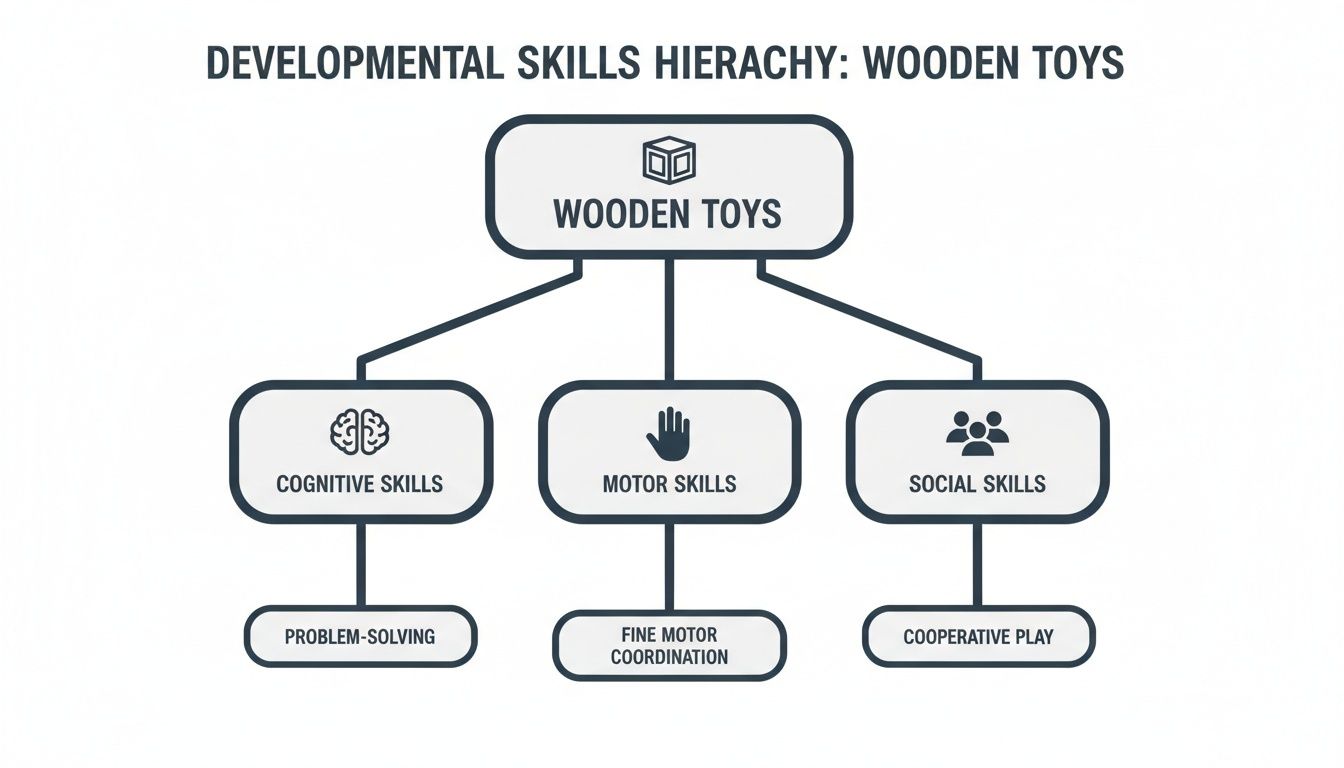
What’s great is that a single wooden toy can strengthen multiple skills at once, making it an incredibly efficient tool for well-rounded development.
Wooden Toys for Infants (0 to 12 Months)
In their first year, babies are little sensory detectives, learning about the world entirely through touch, sight, and sound. Their main mission is to get a handle on basic motor skills. For this stage, simple, high-contrast toys are perfect.
Think about toys an infant can easily grab, hold, and, inevitably, bring to their mouth. Wooden rattles that make a gentle sound, simple grasping rings, and interlocking discs are ideal for building hand strength and coordination. These toys encourage babies to track with their eyes and start understanding cause and effect—"Hey, when I shake this, it makes a noise!"
Safety is everything here. Make sure any toy is made from solid, splinter-free wood and finished with certified non-toxic, water-based paints. Since it's guaranteed to be chewed on, the materials have to be completely safe.
Guiding Toddlers (1 to 3 Years)
The toddler years are a whirlwind of movement, new words, and a fierce desire for independence. They’re walking, talking, and desperate to figure out how everything works. Their play becomes more purposeful, moving beyond just feeling things to actively solving problems.
This is the golden age for toys that challenge their fine motor skills and introduce basic concepts. Shape sorters, simple puzzles with big chunky knobs, and stacking rings are classics for a reason. They teach toddlers about shapes, sizes, and how things fit together, all while demanding precise little hand movements.
Building blocks also become a go-to, inviting open-ended creativity and the first tiny steps into engineering. Once they master a simple stack, they start building more complex things, letting their imagination run wild. For more ideas, guides on the best educational toys for 1-year-olds can offer some fantastic starting points.
Engaging Preschoolers (3 to 5 Years)
Preschoolers are becoming sophisticated little thinkers and storytellers. Their play is now deeply imaginative, filled with complex role-playing scenarios and detailed construction projects. They're ready for toys that offer more complexity and creative freedom.
More intricate building sets with different shapes and connectors let them build elaborate castles, cities, and bridges. Lacing beads and beginner threading toys are fantastic for honing the fine motor control they’ll soon need for writing.
This is also the perfect age for imaginative play sets.
- Wooden Kitchens and Food: These toys inspire role-playing, which builds social skills, empathy, and vocabulary as kids act out real-world scenarios.
- Dollhouses and Figurines: Creating stories with characters helps children process their emotions, understand social situations, and develop their storytelling skills.
- Pattern Blocks and Tangrams: These introduce more advanced ideas about geometry and pattern recognition in a fun, hands-on way.
Montessori principles really shine at this stage. By giving them toys that encourage independence and practical life skills, you’re empowering your child to become a confident, self-directed learner.
Choosing the right wooden toy isn’t about ticking boxes on a checklist. It's about watching your child, understanding where they are in their unique journey, and providing them with beautiful, simple tools that let them learn and grow through the joyful work of play.
Integrating Toys and Furniture for Purposeful Play
The real magic of educational wooden toys happens when you place them in an environment built for a child’s curiosity. A great play space is more than just a room filled with toys; it's a little ecosystem where the furniture and the playthings work in tandem to encourage independence, spark creativity, and make every interaction meaningful. This is how you turn your home into a dynamic learning landscape.
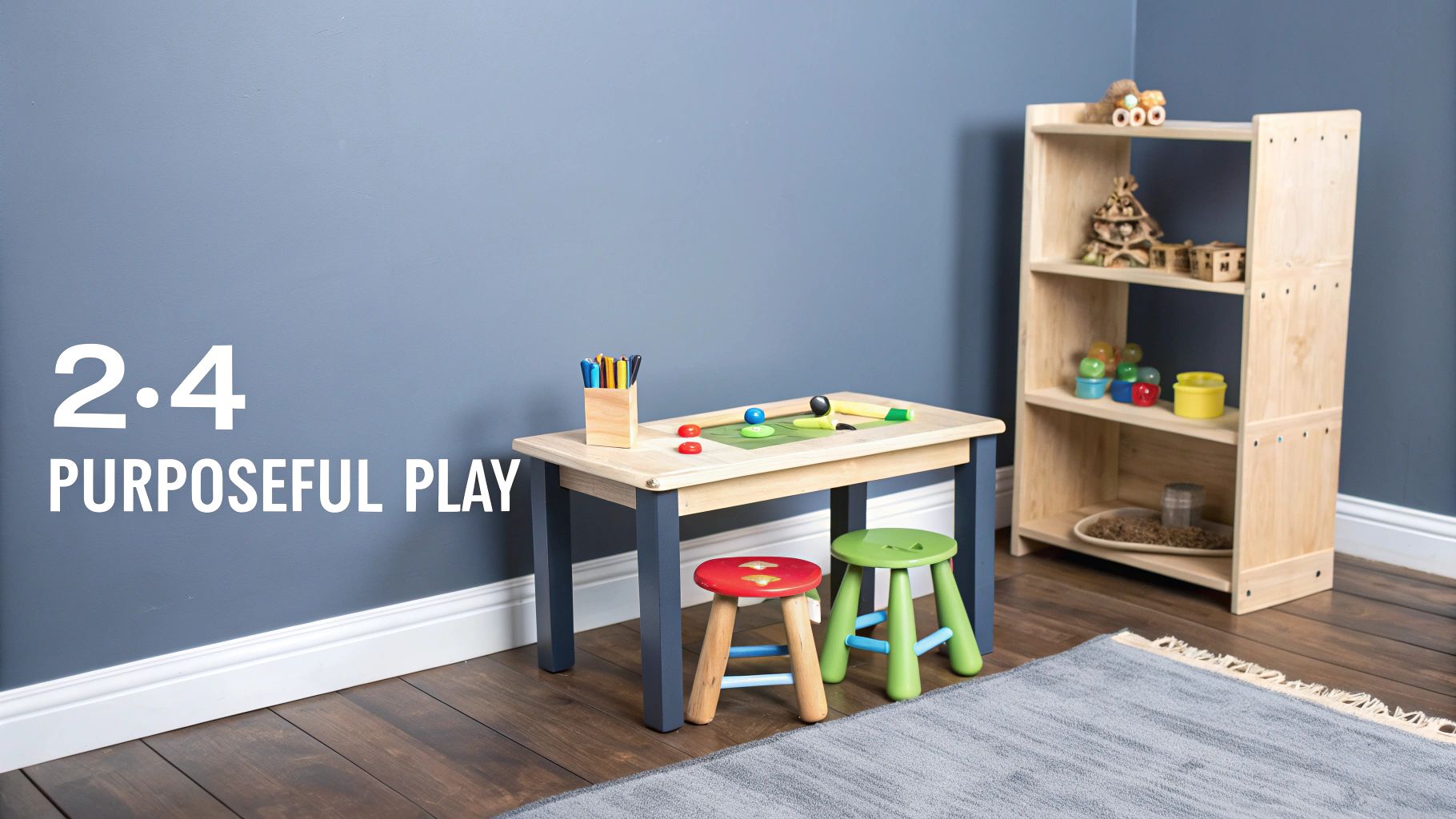
Picture your child not just playing on the floor but being an active, hands-on participant in family life. This is where child-centric furniture makes all the difference. When you thoughtfully pair toys and furniture, everyday routines suddenly become rich opportunities to learn.
Creating Zones for Independent Play
Setting up a play area is a bit like setting the stage for a great performance. By creating designated "invitations to play," you guide your child's focus and empower them to take the lead. It’s a shift away from the chaotic toy box and toward an organized, accessible space where every item has its place and purpose.
A child’s world should be built at their level. This one principle is the key to unlocking their autonomy.
- Floor Beds and Low Shelving: A floor bed area can easily double as an accessible play zone. With low shelves nearby holding a curated selection of wooden blocks and puzzles, a child can wake up and dive right into quiet, creative play without needing an adult’s help.
- Child-Sized Tables and Chairs: A small table becomes their personal station for puzzles, wooden lacing beads, or art projects. This gives them a sense of ownership over their workspace and helps them develop real focus.
An environment that supports independence sends a powerful message to a child: "You are capable. Your work is important." It builds their confidence by trusting them to direct their own play and learning.
This intentional setup doesn't just cut down on clutter; it respects a child's deep-seated need for order and control over their own surroundings.
Bridging Play and Practical Life
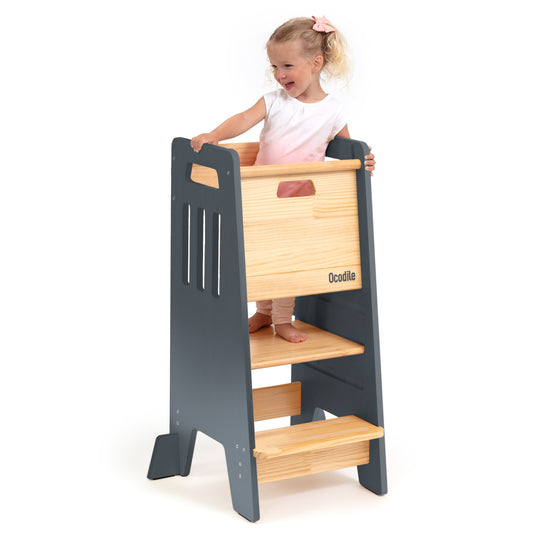
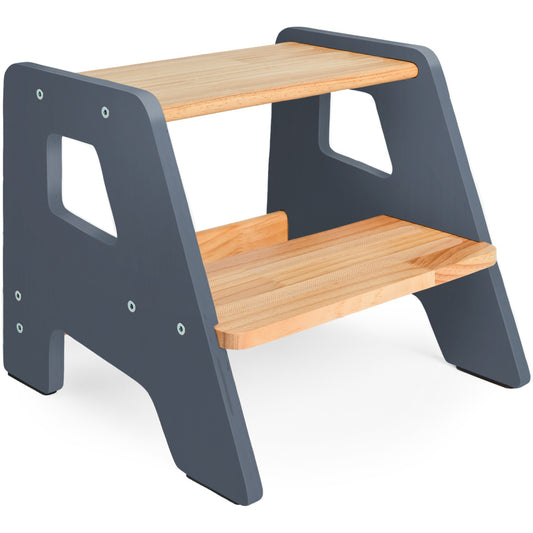
Some of the most powerful learning moments happen when children can safely join in on real-world activities. This is where the partnership between educational toys and functional furniture, like Ocodile’s standing towers and step stools, truly shines.
Take a simple kitchen scenario. A child in a standing tower at the counter, "chopping" a wooden vegetable with a toy knife while you make dinner, is doing so much more than just playing. They are:
- Developing Practical Life Skills: They’re mimicking your actions, learning about sequences, and understanding the "why" behind daily tasks.
- Enhancing Fine Motor Control: The simple act of holding the toy food and using the wooden knife builds hand strength and coordination.
- Building Vocabulary: You can name the vegetables, describe actions like "chop," "stir," and "wash," and have a natural, flowing conversation.
This integration makes learning a seamless part of life, not some separate, scheduled activity. A step stool in the bathroom lets a child wash their hands all by themselves—a crucial life skill—turning a mundane task into a moment of pure achievement.
The global appreciation for high-quality, sustainable playthings just keeps growing. A huge part of this demand comes from the Asia-Pacific region, which holds a majority share of the worldwide wooden toys market, thanks to rising incomes and eco-awareness. North America is right behind as the second-largest market, where parents consistently put safety and sustainability first. You can see more details in this in-depth market analysis from gminsights.com.
By pairing these beloved toys with supportive furniture, you create a cohesive environment that honors this investment, allowing children to safely explore, create, and learn right alongside you.
When you pick out a toy for your child, it’s easy to think in the short term. Will they love it this week? Will it last until their next birthday? But choosing a high-quality educational wooden toy is a totally different game. It's less of a purchase and more of an investment—one that pays off for years, and sometimes even for generations.
Let's be honest, a lot of plastic toys just don't last. They break, the colors fade, and they quickly become yesterday's news. Wooden toys are built for the long haul. Their solid, classic designs can handle the enthusiastic stacking, crashing, and imagining that comes with being a kid. This durability means you get real long-term value. A single, well-made wooden toy can easily outlast a dozen plastic ones that just end up in the bin.
This move toward durable, meaningful toys isn't just a passing phase. It’s part of a much bigger shift in how we think about what we buy for our kids. The global market for wooden toys has grown massively, hitting a value between $27.5 billion and $28.5 billion. And it's not slowing down. Experts expect it to keep growing as more parents look for sustainable and educational options. You can dig into the numbers in this comprehensive market report from GlobeNewswire.
From Playroom to Heirloom
Here’s where it gets really special: wooden toys have the potential to become family heirlooms. That set of wooden blocks your child adored can be tucked away and brought out again for their own kids someday. Every little dent and worn edge tells a story, connecting your family through the simple joy of play.
It's a powerful contrast to the throwaway culture of so many modern toys. Opting for wood is a conscious choice for less waste and more thoughtful buying. It’s a quiet way to teach your kids that some things are meant to be treasured, looked after, and passed on.
Simple Care for Decades of Play
The best part is that keeping these toys in great shape is incredibly simple. A little bit of care will preserve their beauty and safety, making them ready for the next generation of little hands.
- Gentle Cleaning: Whatever you do, don't soak wooden toys in water. It can make the wood swell, crack, or warp. A quick wipe-down is all they need.
- Mild Solution: Just use a damp cloth with a bit of water and a splash of white vinegar or a drop of gentle, non-toxic soap.
- Air Dry Completely: After you've wiped them down, let the toys air dry completely before putting them back on the shelf.
When you choose well-crafted wooden toys, you're investing in more than just an object. You're investing in durability, sustainability, and the start of a family tradition that can last for decades.
This easy routine ensures your investment remains a safe, beautiful, and loved part of your family’s story. It turns these toys from simple learning tools into timeless pieces of a happy childhood.
Common Questions About Educational Wooden Toys
Even with all the benefits laid out, it's completely normal to have a few more questions pop into your head. Choosing things for your child is a big deal, and sometimes you just need a straight answer to a practical problem. Let’s tackle some of the most common things parents ask when they’re thinking about bringing wooden toys into their home.
This section is all about clearing up those final "what ifs" so you can feel confident in your decision.
Are Wooden Toys Really Safer Than Plastic Toys?
The safety of any toy really comes down to how well it’s made, no matter the material. That said, high-quality wooden toys do have a natural edge. They’re usually made from solid wood and finished with non-toxic, child-safe paints. This means you don’t have to worry about some of the chemicals occasionally found in plastics, like BPA or phthalates.
Plus, their durability is a huge safety feature in itself. A well-made wooden toy is far less likely to snap into small, sharp pieces that could become a choking hazard. Just be sure that any toy you buy, wooden or otherwise, meets the current safety standards for your region.
What Should I Do If My Child Gets Bored?
This is where the magic of educational wooden toys really shines. That open-ended design is their greatest strength, even when a child seems to have lost interest. Think of boredom as a little nudge for a fresh idea.
If you see playtime winding down, try one of these simple tricks:
- Combine Sets: Use blocks to build a garage for wooden cars. Make colorful patterns with stacking rings. Mixing and matching different toy sets can kickstart entirely new ways to play.
- Rotate Toys: Put some toys away for a few weeks. When you bring them back out, they often feel brand new and exciting all over again.
This teaches kids that one object can be used in many different ways—a fantastic lesson in creative thinking.
How Do I Clean Wooden Toys Properly?
Taking good care of your wooden toys means they’ll last for years, and thankfully, it’s super simple. The number one rule is to never soak wooden toys in water. Soaking can make the wood swell, crack, and warp.
The best way to clean them is just to wipe them down with a damp cloth. For stickier messes, you can use a mild mix of water and a little white vinegar or a gentle, non-toxic soap. After wiping, just let them air dry completely before putting them away. This quick routine keeps them clean and in great shape.
Are Expensive Wooden Toys Worth the Investment?
It’s true that a quality wooden toy can cost more upfront, but it's an incredible long-term investment. They are so durable that they often last for years—sometimes even becoming family heirlooms. That’s a stark contrast to many plastic toys that break and end up in a landfill.
The real value, though, is what they do for your child's development. A single set of wooden blocks can inspire more creativity, problem-solving, and motor skills than a dozen single-function toys.
You’re not just buying a toy; you're investing in a powerful tool for play. It’s about choosing a few high-impact pieces over a pile of short-lived distractions, which brings lasting value to your child's growth and your family.
At Ocodile, we believe in creating spaces that nurture a child's natural curiosity and independence. Our thoughtfully designed furniture works perfectly with educational toys to turn your home into a place of discovery and joyful learning. Explore our collection of standing towers, floor beds, and step stools at https://ocodile.com and create a space where your child can truly thrive.