



What Is Solid Wood Furniture? a Complete Guide
Solid wood furniture is made from lumber cut directly from trees rather than thin slices glued onto a different base material. Think of it like a freshly baked loaf of bread versus a pre-sliced sandwich loaf — the whole piece feels more substantial, smells of timber, and ages far more gracefully over time.
What Makes Solid Wood Different
Every piece starts as boards milled from a single log, or from joined boards of the same species. That gives each item a continuous grain pattern, natural warmth, and a kind of tactile weight you notice the moment you pull open a drawer or lift a chair.
For parents and caregivers, solid wood holds up in three practical ways:
- It handles knocks, climbing, and years of daily life when built properly.
- Scratches and dents can be sanded out and refinished rather than throwing the piece away.
- When finished with low-VOC or water-based sealants, it keeps indoor air healthier — something that matters a lot in nurseries and bedrooms.
A Simple Way to Picture It
When you're comparing materials in a showroom, it helps to think of them like this:
- Solid wood is a single, sturdy plank.
- Engineered wood is like a layered lasagna — it can delaminate if moisture gets in.
- Veneer is essentially a sticker-like top layer that chips off under stress.
That mental picture explains why solid wood responds differently to humidity and heavy use compared to the alternatives.
Families gravitate toward solid wood because it tends to become a household heirloom — something that grows with the children rather than something you replace every few years.
Of course, there are trade-offs worth knowing:
- Solid wood is heavier and typically costs more at the point of purchase.
- It moves with humidity changes; keeping indoor levels around 40–50% prevents cracking or warping.
- Joinery matters enormously. Mortise-and-tenon or dovetail construction will outlast simple screws or glue every time.
Quick sensory checklist when shopping:
- Look for grain that flows continuously across joints, a natural wood scent, and a weight that feels real in your hands.
- Ask about the finish — water-based lacquer or hard wax oil tend to have lower VOCs.
- For pieces meant to live in kids' spaces, rounded edges and splinter-resistant sanding are non-negotiable.
Quick Comparison
| Feature | Why It Matters |
|---|---|
| Durability | Survives play, can be repaired |
| Safety | Low-VOC finishes reduce fumes |
| Cost | Higher upfront, lower lifetime cost |
| Maintenance | Needs humidity control and occasional refinishing |
Understanding what solid wood furniture actually is helps families invest in pieces that are safe, lasting, and practical for the chaos of everyday life at home.
Solid Wood vs Engineered Wood vs Veneer
Walk into any furniture store and you'll find solid wood, engineered wood, and veneer all lumped into the same category. But once your kids start climbing on everything and spilling juice on every surface, these materials couldn't behave more differently. Picture solid plank as a single sheet of dense cardboard, plywood as a layered lasagna, and veneer as a decorative sticker glued over something else entirely. That image alone explains why your choice matters when you're buying for little ones who treat every piece of furniture like a jungle gym.

This chart breaks down construction, durability, and repairability across all three types so you can see the differences at a glance. Notice how a solid board holds up through decades of rough use while veneer tends to fail right at the edges and engineered layers can swell when moisture sneaks in.
How Each Material Is Built
Solid wood starts as boards cut straight from a tree and joined together when you need a wider piece. That gives you continuous grain, real heft, and the ability to sand out scratches and dents down the road.
Engineered wood covers plywood, MDF, and particleboard — all made by bonding layers or fibers with glue. It can fake the look of wood grain, but it doesn't respond to the world the way real lumber does.
Veneer takes a razor-thin slice of wood and glues it over something like MDF underneath. The face looks convincing, but the core material is doing all the structural work.
Here's the bottom line: solid wood can be repaired and refinished over and over; once veneer chips, you're pretty much stuck with it.
- Solid wood: sand it down and refinish it; it moves slightly with humidity changes but bounces back.
- Engineered wood: decent durability until it gets wet, then you might see swelling or layers separating.
- Veneer: not repairable in any real sense; corners and edges are the first things to go.
Why This Matters For Child-Focused Furniture
Kids don't just use furniture — they climb it, bang it, draw on it, and spill on it. Solid wood shrugs off dents and can be freshened up with sanding whenever things get rough. Engineered pieces tend to give out at stress points, and veneer starts peeling once sticky fingers and crayons enter the picture.
Take a floor bed made from solid oak. It'll handle years of jumping, dragging, and roughhousing, and you can sand it smooth if things get out of hand. A veneered nightstand, on the other hand, might show edge peeling within a few months in a busy kid's room.
Solid Wood vs Engineered Wood vs Veneer
Below is a side-by-side look at how these materials stack up for families, covering everything from construction to whether they're worth the investment for a child's space.
| Material Type | How It's Built | Durability | Best For |
|---|---|---|---|
| Solid Wood | Single lumber boards joined together | High, refinishable | Heirloom kids furniture, climbing-safe pieces |
| Engineered Wood | Bonded layers or fibers (plywood, MDF) | Moderate, moisture sensitive | Budget furniture, flat surfaces |
| Veneer | Thin wood layer over substrate | Low, prone to chipping | Decorative surfaces with light use |
As you can see, solid wood pulls ahead when longevity and repairability matter most — especially in rooms where kids are active. Engineered and veneer options have their place, but they come with trade-offs worth knowing upfront.
If you want to dig deeper into engineered wood specifically, Groen's Fine Furniture engineered wood offers a solid breakdown. And for a closer look at how engineered and solid options compare head-to-head, check out our guide on Engineered Wood vs Solid Wood.
Common Wood Species Used in Children's Furniture

When you're shopping for solid wood furniture for your little one, the species matters more than most people realize. Different woods bring different personalities to the table—some are tough enough to survive years of climbing and jumping, while others offer that soft, warm look without breaking the bank.
Oak is the workhorse of children's furniture. It's heavy, carries a beautiful pronounced grain, and comes in warm honey tones that suit just about any nursery or playroom. What makes oak so popular with parents is its ability to take a beating—knocks, bumps, and scratches from enthusiastic playdates can be sanded out and refinished. If you're buying something your child will genuinely use hard, oak is a safe bet.
Maple sits at the opposite end of the spectrum visually—smooth, pale, and dense with a tight grain that resists staining. It takes finishes evenly, which is why you'll find it on tabletops and changing stations alike. For toddlers, the big draw is that it's hard and splinter-resistant, even after years of curious little hands running across it.
Beech often gets overlooked, but carpenters love it. It has an even grain, a light pinkish hue, and a nice weight that feels substantial without being unwieldy. Because it machines cleanly and resists chipping, it's a natural fit for chairs and play furniture—anywhere rounded edges and gentle surfaces matter.
Birch is the practical choice for parents who want solid wood without the solid-wood price tag. It's fairly hard, carries a fine grain and creamy color, and stands up well to shelves and beds. It also takes paint and low-VOC finishes beautifully, so if you're matching a specific nursery color scheme, birch makes that easy.
Pine is softer, lighter in weight, and carries a pale yellow tone that feels cozy and inviting. The trade-off is that it dents more readily—so while it's affordable and charming, it's going to show its history faster than the hardwoods. That's not necessarily a bad thing, but it's worth knowing before you commit.
Rubberwood has become a popular choice for eco-conscious families. It's a byproduct of the latex industry, so choosing rubberwood means you're supporting waste reduction rather than harvesting trees purely for furniture. It has a medium density and straight grain, sands smooth, and balances price with safety nicely.
How Ocodile Chooses Wood
- The species selected always balances strength with smooth, splinter-resistant surfaces that can handle toddler life.
- Woods that take low-VOC finishes are preferred to keep nursery air quality where it should be.
- Joinery and sanding quality matter just as much as the species itself.
Choosing the right wood is about matching personality to purpose: an active climber needs oak or maple, while a decorative shelf might be birch or pine.
Quick comparison table
| Wood | Feel | Child-Friendly Traits |
|---|---|---|
| Oak | Heavy, pronounced grain | Very durable, refinishable |
| Maple | Dense, smooth | Hard, splinter-resistant |
| Beech | Even, light | Smooth edges, durable |
| Birch | Fine, creamy | Affordable, paint-friendly |
| Pine | Soft, light | Cozy, shows wear |
| Rubberwood | Medium, straight | Sustainable, smooth |
A few things worth keeping in mind: reach for hardwoods when the piece will see heavy use, always check that finishes are low-VOC, and run your hands over edges and surfaces—fine sanding and rounded corners make a real difference with toddlers in the house.
How Solid Wood Furniture Is Built and Finished

Solid wood furniture starts with boards cut from a single log, then craftsmen join those boards using techniques that often matter more than the species of wood itself. When parents ask "what is solid wood furniture," the real answer lies just as much in how the pieces are joined together as in what they're made from.
Mortise and tenon joints, dovetails, and other traditional joinery methods lock parts together like puzzle pieces. They create strength that doesn't depend on glue alone. Dowels and screws add reinforcement where movement is expected—think of a standing tower or a floor bed that takes daily abuse from a busy toddler.
Joinery Methods Explained
- Mortise and Tenon: A peg fits snugly into a slot for a nearly invisible, long-lasting joint.
- Dovetail: Those interlocking trapezoids you see in drawers? They resist pulling apart, even when a kid yanks on them.
- Dowels and Screws: Simpler and quicker to produce, and they work well when combined with good glue and a precise fit.
Solid joinery is the difference between a piece that survives a toddler's experiments and one that falls apart at the joints.
Glued joints can be remarkably strong with the right adhesive and tight fits. But stapled or nailed assemblies usually mean the piece won't last as long. That's why construction quality often tells you more about how furniture will hold up in a busy home than the type of wood ever could.
Finishes and Safety
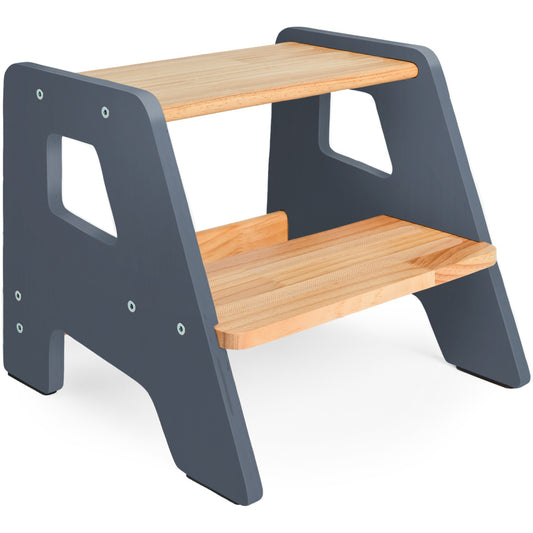
Finishes do double duty—they protect the wood and determine how safe a piece is for a child's room. Water-based lacquers dry fast and release low VOC emissions, which makes them a smart choice for nurseries. Hard wax oils soak into the wood and leave a surface you can actually touch and feel, plus they're easy to spot-repair after scratches. Food-safe oils matter most for pieces kids handle constantly, like play tables or step stools.
- Low-VOC finishes mean fewer fumes, faster room re-entry, and better indoor air quality for little lungs.
- Hard wax oil gives you easy repairs and a natural look, though it needs reapplication now and then.
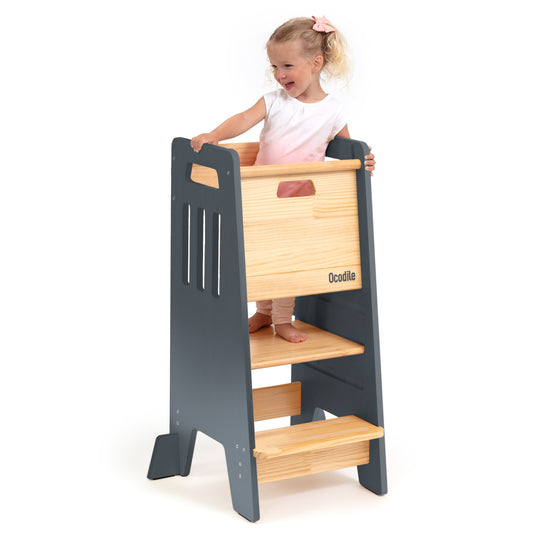
Here's a practical example. Take an Ocodile standing tower: the base uses mortise-and-tenon joinery for rock-solid stability, the steps attach with screws and dowels so they're replaceable, and the rounded edges get a hard wax oil finish that resists splinters. Built this way, the tower handles climbing, spills, and everyday wear without complaint.
Read also: Learn more about non-toxic finishes in our guide on non-toxic wood finishes
Quick Checklist for Parents Buying Solid Wood Furniture
- Inspect the joinery—look for tight, clean fits.
- Ask about the finish and its VOC levels.
- Choose repairable finishes like hard wax oil or water-based lacquers.
Benefits and Honest Drawbacks for Families
Solid wood furniture has a way of grounding a room. For parents, that sense of stability matters from the very first day—and it only grows as kids get bigger and more adventurous.
The real magic? Longevity. A well-made crib, bed, or step stool doesn't just serve one child. It sticks around for siblings, gets passed down to cousins, or finds a new home with another family entirely.
Repairability is another quiet win. When life happens—and with kids, it always does—scratches and dents don't mean the end of the road. A quick sanding and fresh finish can bring a piece back to life, which saves serious money over the years.
Timeless style plays a role too. Neutral grains and classic shapes don't fight with a child's evolving taste. That means the bed they loved at four still works at fourteen, and resale or gifting stays simple.
Key insight Families tend to rank quality, practicality, and health protection at the top of their list—and solid wood checks those boxes more often than not.
Durability and Everyday Use
Hardwoods like oak and maple take a beating better than softer options or veneered pieces. A floor bed or climbing tower made from solid wood handles active play without falling apart at the joints.
But here's the catch: weight. These pieces are heavy. That heft keeps them stable and reduces tip-over risk, which is exactly what you want with a toddler in the house. On the other hand, rearranging the nursery or moving to a new home takes some serious planning.
- Heavier builds mean better stability and lower tip-over risk for kids.
- That same weight makes room rearranges and moving day more complicated.
Costs and Maintenance
Yes, solid wood costs more upfront. Nobody's pretending otherwise. But the math changes when you think in decades instead of years. A higher initial spend often translates to a piece that outlasts cheaper alternatives by a wide margin.
- Budget for delivery and assembly—these pieces aren't light, and getting them inside takes effort.
- Factor in occasional maintenance like sanding and reapplying oil down the line.
Humidity Sensitivity and Wear
Solid wood breathes with the seasons. It reacts to humidity changes more than engineered board does, which means a little attention goes a long way. Keeping indoor humidity around 40–50% helps prevent cracking, warping, and stress on the joints.
- In dry or humid climates, a simple hygrometer paired with a humidifier or dehumidifier does the trick.
- Some movement at joints is normal over time, but quality joinery keeps it from becoming a real problem.
Safety and Health Considerations
When finished with low-VOC water-based lacquers or hard wax oils, solid wood supports cleaner indoor air—something that matters even more with infants and toddlers. Rounded edges and smooth sanding cut down on splinter risks during those grabby toddler years.
That said, scratches and dents are part of the deal. Some woods show wear faster than others, and parents need to weigh how much maintenance feels realistic alongside budget and aesthetic preferences.
Practical Buying Tips for Parents
- Look for solid joinery like mortise-and-tenon or dovetail construction—these hold up over time.
- Ask about finish type and VOC levels before committing.
- Go with hardwoods for high-use pieces and save softer woods for items where charm matters more than endurance.
Solid wood is an investment in the long game. It suits families who value longevity, repairability, and healthier indoor spaces over quick, disposable fixes.
Sustainability, Certifications, and Smart Buying Tips
When forests are managed responsibly, solid wood is a renewable material that can eventually return to the earth. A well-sourced bed or chair doesn't have to end up as landfill — it can genuinely form part of a healthier cycle.
Forest certifications give parents a solid, practical way to check that sourcing is real. Keep an eye out for FSC or PEFC labels — they tell you someone independent has verified how the wood was grown and tracked it through the supply chain.
What Those Labels Mean In Practice
- FSC means the timber came from forests that meet real social and environmental standards, not just a nice-sounding claim on the box.
- PEFC focuses on sustainable forest management and is widely recognised across Europe and beyond.
- Both certifications work to reduce illegal logging and help support the communities living near those forests.
Choosing certified wood lowers the chance your purchase contributed to deforestation or harmful forestry practices.
Spotting Real Solid Wood In Store
When you're standing in front of a piece, trust your senses and a few quick checks. Run your hand along the edges to feel for continuous grain, lift a drawer to notice the real weight, and peek inside drawers or underneath for consistent timber rather than particleboard.
- Ask what species it is and whether the boards are solid or veneered over a core.
- Look for grain that flows across joints — a break usually means you're looking at veneer.
- Open backs and undersides tell you more honestly about construction than the finished face ever will.
Questions To Ask Manufacturers
- What species is this made from, and is it solid or veneered?
- Are the joinery methods mortise-and-tenon, dovetail, or just screws and staples?
- What finish is used, and does it meet Greenguard Gold or low-VOC standards?
Tip: Learn more about Greenguard Gold certified finishes in our article on non-toxic indoor furniture — Greenguard Gold Certified Guide
Watch out for thin edge banding that's already peeling, identical repeating grain patterns (a sign of printed veneer), and claims of "solid" when the core is actually plywood or MDF.
Buying Tips For Parents And Gift Buyers
- Go for hardwoods and strong joinery on pieces that will face climbing, jumping, and heavy daily use.
- For Montessori-style rooms, look for modular, lightweight-but-stable solid wood items like step stools or low shelves.
- Think about lifetime cost: spending more upfront on something durable and repairable often beats replacing cheaper alternatives every couple of years.
Numbered Checklist For Families
- Verify the certification and species.
- Inspect the joinery and underside construction.
- Confirm low-VOC or food-safe finishes.
These steps help you buy solid wood furniture that's safer for kids, kinder to the planet, and built to last across growing families.
Caring for Solid Wood Furniture in a Family Home
Caring for solid wood furniture is a lot like tending a garden—small, regular actions prevent bigger problems later. Quick habits make a huge difference: wipe spills within seconds, use coasters for cups, and keep pieces out of direct sunlight.
Try to keep indoor humidity steady between 40–50% to reduce cracking and warping. A simple hygrometer gives you actionable readings, and a humidifier or dehumidifier fixes swings quickly.
Practical Daily Habits
- Wipe spills with a soft cloth and mild soap immediately to prevent stains and finish damage.
- Use felt pads under toys and furniture feet to stop scuffs when kids drag things around.
- Rotate cushions and rugs periodically so wear spreads evenly across surfaces.
Small routines preserve decades of use and save parents time and money down the line.
For crayon marks and sticky fingerprints, try a gentle erase with a slightly damp microfiber cloth and a touch of dish soap. For tougher marks, test a bit of mineral oil on an inconspicuous spot before treating the whole area.
Handling Dents and Scratches
- Light scratches: rub with fine abrasive pads or a matching-colour wax stick.
- Small dents: use a damp cloth and a warm iron briefly to raise compressed fibres, then let dry.
- Bigger damage: sanding and reapplying a water-based lacquer or hard wax oil restores appearance and safety.
Parents should keep repair kits handy; a ten-minute fix after playtime often prevents a costly refinish later.
Seasonal Care Routine
- Spring and autumn check (under 10 minutes): inspect joints, tighten visible screws, wipe surfaces, and apply a thin coat of hard wax oil to high-use areas.
- Keep an eye on room placement and move pieces away from heaters or humidifier vents.
When planning a move, it's essential to know how to properly protect your investment, especially solid wood pieces; see this practical guide on how to protect furniture when moving.
Child-Focused Design Notes
Ocodile designs emphasize rounded edges, splinter-resistant sanding, and finishes that are easy to spot-clean. That means less stress for busy parents and furniture that actually survives the chaos of childhood.
Final takeaway: keep care simple, regular, and family-friendly—those minutes each season add up to decades of safe, beautiful use.
Frequently Asked Questions About Solid Wood Furniture
What Exactly Is Solid Wood Furniture, and How Can I Tell If It's Real?
Think of solid wood furniture as the real deal—pieces crafted from lumber cut directly from trees, then shaped and joined into a complete item. It's the furniture equivalent of a whole food diet: nothing hidden, nothing layered over a cheaper core.
So how do you spot it? Run your hand across the surface. You'll notice the grain flows continuously from one edge to the next, without any abrupt breaks or repeating patterns. Pick up a drawer front or a chair leg—it should feel substantial, not hollow. Flip a piece over or peek inside a drawer; if the wood on the underside matches what's on the outside, you're likely looking at solid stock. Sellers who hide cores behind thick edge banding or refuse to show you the insides might be working with veneer or engineered boards instead.
Is Solid Wood Safe for Babies and Toddlers?
Yes, absolutely—provided it's finished with low-VOC sealants and built with rounded edges and thorough sanding. Solid wood has a natural advantage here: it breathes and resists off-gassing far better than many composite materials. That makes it a smarter choice for nurseries, as long as the finishes are certified or fully disclosed. You want to know exactly what's touching the air your little one breathes.
How Does Solid Wood Compare Cost-Wise?
Let's be honest: the upfront price tag stings a bit. But here's where the math gets interesting. A well-made oak or maple dresser can easily outlast decades of use, while cheaper engineered pieces often need replacing every few years. Factor in repairability—a scratch on solid wood can be sanded out, a loose joint can be tightened—and the lifetime value starts to make sense. For busy families, that durability translates into fewer trips to the furniture store and less waste heading to the landfill.
Is Solid Wood Worth It for Growing Families?
If you're after furniture that can handle the chaos of daily life, solid wood delivers. It's tough, easy to repair, and contributes to cleaner indoor air. But it's not a set-it-and-forget-it solution. You'll need to manage indoor humidity—aim for 40–50% to prevent cracking or warping—and budget for occasional maintenance like oiling or waxing. The weight is another consideration; that sturdy bookshelf isn't going anywhere without a bit of effort.
Quick Buying Checklist for Parents
Before you commit, run through these points:
- Ask for the specific wood species and confirm whether the boards are solid or veneered.
- Check the joinery—dovetail and mortise-and-tenon joints signal quality construction.
- Request the finish's VOC level or look for a recognized certification.
Choose solid wood when longevity, repairability, and child-safe finishes matter most.
For safe, family-focused solid wood designs, visit Ocodile at https://ocodile.com