



Engineered Wood vs Solid Wood for Kids' Furniture
You're standing in a nursery or scrolling through product pages late at night, comparing two wooden pieces that look almost the same. One says solid wood. The other says engineered wood. The photos are warm and beautiful, the price tags aren't, and the product descriptions don't answer the questions that matter when you have a young child at home.
Will it hold up to climbing, kicking, dragging, and the occasional bite mark? Will it be easy to wipe down after snack time or an art project gone sideways? Will it bring unwanted chemical odors into a room where your child sleeps, plays, and spends hours every day?
Those are the right questions. For children's furniture, the engineered wood vs solid wood conversation isn't really about impressing a contractor or sounding knowledgeable in a showroom. It's about choosing a learning tower, floor bed, bookshelf, or step stool that feels safe, sturdy, and sensible for real family life.

Parents often come into this decision thinking solid wood must automatically be better because it sounds more natural and durable. Sometimes that's true. Sometimes it isn't. A well-made engineered piece can be the more practical choice in a home with changing humidity, a tighter budget, or a design that depends on dimensional stability.
If you're still learning how to spot quality beyond a product label, this guide on how to choose quality furniture is a useful companion. The label matters, but construction, finish, hardware, and intended use matter just as much.
Choosing Furniture for Your Child's World
Before getting technical, it helps to compare the two materials in the way parents shop: by use case.
| What parents usually care about | Solid wood | Engineered wood |
|---|---|---|
| What it is | A single piece of wood throughout | A real wood top layer over a layered core |
| Stability in changing indoor conditions | Can react more to moisture and temperature shifts | Usually more stable because of layered construction |
| Deep repairability | Better for sanding and refinishing over time | Depends heavily on veneer thickness |
| Budget fit | Usually costs more | Usually costs less |
| Best match for | Heirloom-minded buyers, long-term use, repairability | Families prioritizing stability, finish consistency, or cost control |
| What to inspect carefully | Finish, joinery, edge details, maintenance needs | Finish, adhesives, certifications, veneer thickness |
A parent buying a floor bed may care most about clean edges, finish safety, and longevity. A parent choosing a learning tower may care more about stability, easy cleaning, and everyday toughness. A childcare provider furnishing a reading corner may need pieces that look calm and cohesive but still make sense financially.
Furniture for children lives a harder life than adult furniture. It gets climbed on, shoved, spilled on, and cleaned often.
That's why the better material isn't universal. The better material is the one that matches your child's age, your home conditions, and how long you want the piece to serve your family.
What Are Solid and Engineered Wood Really
The basic difference starts with structure.
Solid wood is exactly what it sounds like. It's milled from a single piece of lumber. One industry source notes that solid hardwood is often about 3/4 inch thick and can usually be refinished about four or five times, while engineered wood uses a real wood veneer over multiple plywood layers. The same source explains that high-quality engineered wood with a 3/32 inch or 1/8 inch veneer may allow several refinishes, while a thinner 1/16-inch veneer may allow only light sanding or none at all, as described by Bruce's explanation of engineered and solid wood construction.
Think of the structure, not just the label
A simple way to picture it is this:
- Solid wood is like a full block. The grain, color, and material run through the piece.
- Engineered wood is more like a layered build. The visible top is real wood, but underneath it sits a stable core made from multiple layers.
That layered core isn't a shortcut by definition. It's a design choice. Layers can reduce expansion and contraction, which is why engineered products are often chosen where humidity and temperature vary.
For children's furniture, that matters more than many parents realize. A bookshelf near a radiator, a toddler table in a bright kitchen, or a bed frame in a room that gets dry in winter and humid in summer may behave differently depending on how the wood is built.
Why furniture makers use both
Solid wood has a straightforward appeal. It feels traditional because it is. Many parents also like that it has a familiar, natural identity.
Engineered wood is often chosen for consistency. Panels stay flatter, broad surfaces can be easier to control, and certain designs are more practical to build this way. If you want a broader look at how wood options are discussed in renovation contexts, Flacks Flooring hardwood choices in Cumming give a useful overview of how material choice connects to space conditions and long-term use.
Neither label tells you enough on its own. For kids' furniture, the smarter question is, “How was this piece built, finished, and intended to be used?”
Passing The Toddler Test Strength and Durability
A toddler doesn't care what the spec sheet says. They test furniture the honest way. They climb the rail, bang toys against the side, push a stool across the floor, and spill water where it shouldn't go.
That's why raw strength and day-to-day stability aren't always the same thing.
What holds steady in a busy home
Engineered wood typically uses a hardwood veneer over a cross-laminated plywood or fiberboard core, while solid wood is a single-species plank throughout. That layered construction gives engineered wood greater dimensional stability and better resistance to humidity-driven movement, which is why it is commonly specified for moisture-prone or below-grade settings, according to Resawn Timber Co. on engineered vs solid wood.
For children's furniture, dimensional stability can be a real advantage. A panel that stays flatter is helpful in:
- Side rails and broad panels on floor beds
- Shelves and side walls on toy storage
- Platform surfaces on step stools and helper towers
Solid wood still brings a lot to the table. It has substance, and many parents appreciate the reassuring feel of a thicker natural material. But in homes with noticeable seasonal shifts, movement is something to plan for.
Practical rule: If the furniture design relies on wide panels staying square and stable, engineered construction can work in your favor.
What durability actually looks like with kids
Durability in a family home isn't just about surviving impact. It's also about staying safe and usable after months of ordinary abuse.
Look for these signs of good durability regardless of material:
- Steady joints: The frame shouldn't wobble when gently rocked by an adult.
- Rounded edges: Sharp corners are a poor match for early walkers.
- Protected surfaces: A durable topcoat matters when sticky hands and constant wiping are part of daily life.
- Thoughtful placement: Even a durable piece lasts longer when it isn't kept in a damp corner or against a leaking wall.
If you're placing wooden furniture in an older home or on a lower level, it's also worth reading expert advice on termite prevention from The Green Advantage. Material choice matters, but the condition of the home matters too.
A Parent's Priority Health and Safety
For most parents, this is the deciding issue.
The concern isn't just whether a piece is wood. It's what else is in it. Children spend time close to furniture surfaces. They touch them constantly. Babies mouth edges. Toddlers press their faces against rails and shelves. That makes finish chemistry and material composition much more than a technical detail.
Where VOC concerns usually come from
In practical terms, the biggest safety question with engineered wood is often the adhesive system used to bond layers together. With solid wood, the concern is usually less about the wood itself and more about the finish, stain, paint, or sealant applied to it.
That's why “solid wood” shouldn't automatically end your evaluation, and “engineered wood” shouldn't automatically disqualify a product either.
Parents should check for:
- Low-emission certifications: Look for product information that speaks clearly about emissions and testing.
- Finish details: Water-based and other low-odor finishes are often easier to live with in children's rooms.
- Clear manufacturer language: If a brand won't tell you what finish or board composition it uses, that's a warning sign.
- Ventilation after setup: Even low-odor furniture benefits from fresh air during the first days in your home.
This visual checklist can help when you're comparing options.

What to ask before you buy
A safe shopping conversation should sound simple. Ask direct questions.
-
What is the core material?
If it's engineered, ask whether it uses plywood, fiberboard, or another core. -
What finish is used?
Ask for the exact finish type, not just “non-toxic” as a marketing phrase. -
What certifications support the claim?
Terms like GREENGUARD Gold, FSC, CARB Phase 2, and similar standards help you separate substance from packaging language. -
Does the furniture arrive with a strong odor?
A strong chemical smell doesn't always mean a product is unsafe, but it does justify more questions and more airing out.
Parents don't need to memorize chemistry. They need enough information to avoid vague materials and vague promises.
If you want a deeper look at safer material choices for children's rooms, this guide to non-toxic children's furniture is a good place to continue.
Once furniture is in your home, cleaning choices matter too. Harsh cleaners can leave residues on surfaces children touch every day, so I often point parents toward practical advice on non-toxic home cleaning solutions from Shiny Go Clean Madison.
Living With It Maintenance and Repairability
The first month with a new piece of children's furniture is rarely the hard part. The hard part is year two, when the surface has seen juice cups, marker streaks, toy collisions, and constant wiping.
That's where repairability separates a piece that can age gracefully from one that starts looking tired too soon.
What happens after scratches and dents
Benchmarked flooring guidance gives a useful reference point for repair potential. 3/4-inch solid hardwood can usually be refinished about 4 to 6 times and may last 80 to 100+ years, while engineered wood longevity is commonly cited around 25 to 50 years and often supports only 0 to 2 refinishing cycles depending on veneer thickness. The same guidance notes that thicker engineered wear layers such as 3/32 inch or 1/8 inch improve sanding potential, while thin 1/16-inch veneers may allow only light sanding or none at all, according to Robbins on solid vs engineered hardwood longevity.
Furniture isn't flooring, but the principle carries over well. If a children's piece is likely to get years of rough use and you want the option to restore it later, solid wood usually gives you more room to recover from wear.
Cleaning in real family conditions
For ordinary cleanup, both materials depend heavily on the finish, not just the wood category.
A practical cleaning routine looks like this:
- Use a soft damp cloth first: Most daily messes don't need aggressive products.
- Dry surfaces after wiping: Standing moisture is hard on any wood furniture.
- Treat crayon and sticky spots gently: Scrubbing too hard can dull the finish before the child outgrows the piece.
- Check edges and corners: Damage often starts where finish coverage is weakest.
Which ownership model fits your family
Some families want furniture that can be restored, repainted, or refinished after years of use. Others want a piece that looks good through one child's early years and don't expect to rebuild it later.
If you're comparing long-term value, it also helps to think beyond materials and look at support policies. An extended coverage option can matter when a piece is used heavily every day, so it's worth reviewing extended warranty options alongside the material itself.
A repairable piece often costs more upfront. It can still be the cheaper choice if you plan to keep it through multiple stages of childhood.
The Balance of Aesthetics Cost and Lifespan
The reason this decision feels difficult is that all three factors pull on each other.
Parents want furniture that looks calm and beautiful in a child's room. They also want to stay inside a budget. And they want confidence that the piece won't feel disposable after a short stretch of use.
How the two materials usually differ on cost
Cost has long been one of the biggest distinctions between the two categories. Typical U.S. price ranges often cited are about $3 to $10 per square foot for engineered wood versus $5 to $15 per square foot for solid wood, depending on species and location, as summarized in Stikwood's comparison of engineered wood and solid wood. That price gap reflects the fact that engineered products use less expensive core materials beneath a thin hardwood surface, while solid wood uses hardwood throughout.
Those figures come from flooring comparisons, not nursery furniture price tags. Still, the underlying cost logic applies. A furniture maker using more solid hardwood usually carries higher material cost than one building around a veneered panel structure.
What parents usually notice visually
Solid wood often wins on character. Grain variation, natural depth, and small differences from board to board give it a warm, less uniform appearance.
Engineered wood often wins on consistency. If you want a very even finish across broad surfaces, or a cleaner modern look, that can be an advantage rather than a compromise.
This side-by-side visual captures the trade-off well.

Lifespan means different things for different families
For heirloom-minded buyers, solid wood has a clear appeal. It can age, be repaired, and stay useful for a very long time.
But children's furniture has its own reality. A floor bed, helper tower, or low shelf doesn't need to survive a century to be a good purchase. It needs to be safe, practical, and still functioning well through the stage of life you bought it for.
That's why value isn't just lifespan in the abstract. It's fit. A high-quality engineered piece may be the smarter buy for a family that needs stability, a specific finish, and a more accessible price point. A solid wood piece may be the better fit for a family that expects to reuse it, refinish it, or pass it along.
Making the Right Choice for Your Family
A parent buying a floor bed or toddler tower usually is not choosing between two abstract materials. You are choosing what will handle yogurt hands, hard knocks, frequent wiping, and a child who will outgrow the piece faster than you expect.
For family furniture, the right answer starts with your actual use case.
Choose solid wood if you want a piece you may keep through multiple children, repair after dents or scratches, and maintain over time. It suits parents who do not mind a higher upfront cost because they want the option to sand, refinish, and extend the life of the furniture later.
Choose high-quality engineered wood if you want predictable performance day to day, easier budget control, and a finish that stays consistent across large panels. In children's furniture, that can be a sensible choice for shelves, beds, and helper towers that need to stay stable, clean up easily, and work well for a defined stage of childhood.
Choose solid wood if these sound like you
- You plan to keep the piece for years: Repairing wear matters more to you than lowering the initial price.
- You are comfortable with natural variation: Changes in grain, tone, and small marks feel acceptable.
- You want flexibility later: Refinishing or handing the piece down is part of the plan.
Choose engineered wood if these sound more familiar
- You want function at a more accessible price: The piece needs to do its job well without pushing the budget too far.
- You prefer a cleaner, more uniform look: Consistency across visible surfaces matters in the room.
- You are buying for a specific stage: The furniture needs to stay safe and useful through the toddler and preschool years, not serve as a lifetime piece.

The better question is often, "Was this product designed well for children?" Material matters, but so do rounded edges, stable joinery, easy-clean surfaces, and clear information about finishes and emissions.
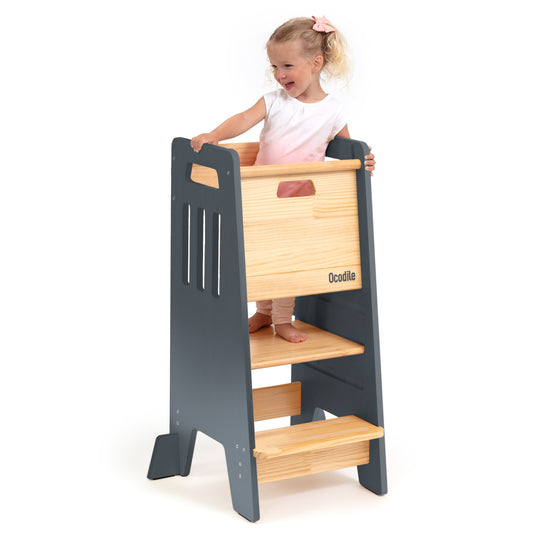
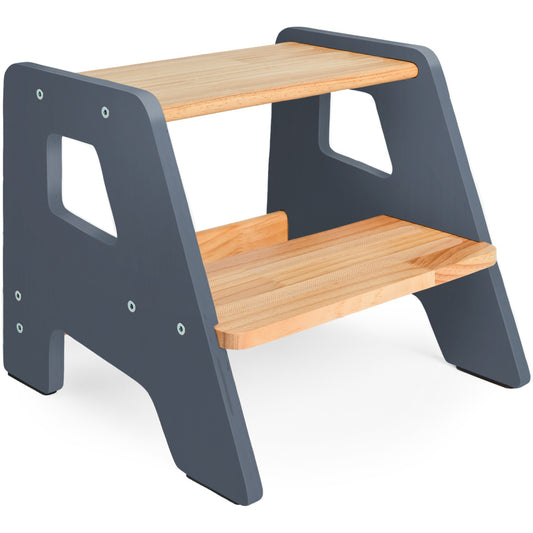
Ocodile is one example of a company focused on child-specific furniture such as standing towers, floor beds, and step stools, with attention to safety, function, and everyday family use.
Buy for the child you have now, and for the size, habits, and independence level they are likely to have next year.
Frequently Asked Questions for Parents
Is solid wood always safer for kids?
Not automatically. Solid wood may feel like the simpler material choice, but safety also depends on the finish, paint, sealant, and overall construction. A poorly finished solid wood piece can be less desirable than a well-made engineered piece with clear low-emission information.
Is engineered wood okay for Montessori-style furniture?
It can be. Montessori furniture needs to be child-accessible, stable, and practical. If an engineered wood piece is well built, properly finished, and designed with child safety in mind, it can work well in a Montessori-inspired room. The philosophy doesn't require one wood category over the other.
Which is better for a learning tower or step stool?
For those products, I'd focus on stability, cleanable surfaces, anti-wobble construction, and edge quality before I focus on the label alone. Kids use these actively. The way the piece is engineered matters as much as whether the wood is solid or layered.
Should I worry about furniture weight?
Weight can help a piece feel grounded, but more weight isn't automatically better. A very heavy item can be harder to move for cleaning and awkward to reposition safely. What matters more is whether the design resists tipping and sits firmly on the floor.
What certifications should I look for?
Look for certifications and testing language related to emissions and responsible sourcing. GREENGUARD Gold and FSC are commonly discussed by parents for good reason. More important than memorizing labels is making sure the brand gives you specific, checkable information.
Which one is easier to live with day to day?
That depends on the piece. If you want maximum repair potential, solid wood has an edge. If you want better stability in changing indoor conditions and a potentially lower entry cost, engineered wood can be easier to live with. For most families, the winner is the one that matches their routines, budget, and tolerance for maintenance.
If you're choosing furniture for a child's room and want pieces designed around daily family use, take a look at Ocodile. Their collection focuses on practical children's furniture such as standing towers, floor beds, and step stools built to support safe independence at home.