



How to Choose Quality Furniture: A Child's Home Guide
You're probably looking at a room that needs to work harder than it does now. Maybe the toy shelf is always overflowing, the chair your child uses is awkwardly tall, or you're comparing two dressers online that look nearly identical until you zoom in and notice the hardware, the finish, and the way the drawers are built.
That's where quality becomes more than a style preference.
When parents ask how to choose quality furniture, they're often really asking three things at once. Is it safe? Will it last? Will it help my child use the space more independently instead of needing an adult for every little task? In a child's room, those questions matter more than trend, color, or whether a piece looks expensive.
Good children's furniture should feel calm, sturdy, and easy to live with. It should support the way a child moves, reaches, climbs, sits, and plays. It should also survive real life: sticky hands, repeated wiping, dragged stools, slammed drawers, and daily use that's far less gentle than showroom handling.
The Foundation of Quality What to Check First
For children's furniture, quality starts with safety and material health. A piece can look beautiful and still be poorly made. It can feel heavy and still use questionable finishes, weak hardware, or flimsy joinery hidden under a polished surface.
That's why I don't start with style boards. I start by asking what the child will touch every day. Hands on the rail. Face near the finish. Feet on the stool rung. Toys stored in the drawer. If a piece lives that close to a child, the basics need to be solid.

Start with material health
One of the most overlooked parts of furniture quality is chemical safety. According to this buyer's guide to spotting quality furniture, U.S. federal rules restrict lead in children's products to 100 ppm and restrict certain phthalates. The same source also notes that California's Proposition 65 includes warnings tied to flame retardants and other chemicals found in furniture. That matters because quality isn't only about whether a piece wobbles. It's also about whether it's appropriate for daily child contact.
Marketing language can make this harder than it should be. “Natural,” “eco,” and “kid-friendly” sound reassuring, but they don't tell you much on their own. What you want is evidence of lower-emission materials, clear finish information, and straightforward answers about adhesives, foams, and coatings. If you're comparing options, this guide to non-toxic kids furniture is a useful reference point for the kinds of material questions worth asking before you buy.
Practical rule: If a brand is vague about finishes, adhesives, or compliance, treat that vagueness as useful information.
A strong chemical odor is another warning sign. New furniture can have a scent from packaging or fresh finish, but a harsh smell that lingers usually tells me to slow down and ask more questions.
Then inspect the structure
After material health, look at how the piece is physically put together. Construction tells you whether furniture will stay safe after months of climbing, pulling, and repeated use.
Consumer Reports notes that in wood furniture, dovetail joints are strongest, while butt joints are cheaper and better suited to lighter-duty use. The same source also points out that solid wood is not automatically the best choice, and that wood veneer can be a durable, more affordable option for larger pieces when it's well made, as explained in this Consumer Reports guide to finding quality furniture.
That's an important trade-off for parents. “Solid wood” has become a shortcut phrase, but it's not a complete buying standard. I'd rather see a thoughtfully constructed piece with stable panels, clean joinery, and good hardware than a poorly assembled solid-wood item that racks, splits, or loosens.
What to look for right away
A quick first-pass check can eliminate a lot of weak furniture before you waste time on details:
- Stable frame: Push lightly from different angles. The piece shouldn't shift or rock.
- Clean joinery: Look for tight seams, reinforced corners, and no visible gaps.
- Smooth finish: Run your hand along edges and corners. They should feel sanded, sealed, and splinter-free.
- Recessed or secure hardware: Knobs, bolts, and brackets shouldn't snag clothing or scratch skin.
- Appropriate weight for the function: A step stool should feel planted. A child chair should be easy enough to move without becoming flimsy.
A quality children's piece doesn't need to be fancy. It needs to be dependable, easy to maintain, and safe to live with every day.
Designed for a Child Sizing Ergonomics and Independence
A lot of adult furniture is miniaturized for kids. That's not the same as being designed for children.
Montessori spaces work because they respect the child's point of view. A low shelf invites choice. A reachable hook invites participation. A chair that fits the child's body makes sitting feel natural instead of effortful. Good sizing reduces frustration and helps a child do more without constant lifting, repositioning, or correction from an adult.

Fit the room before you fall in love with the piece
Scale mistakes are expensive and annoying. A low shelf that blocks a doorway, a floor bed that crowds the walking path, or a learning tower that can't tuck neatly into the kitchen all create friction in daily life.
Brown Interiors recommends measuring the room, doorways, and traffic paths, then marking the furniture footprint on the floor with tape before buying in this furniture selection guide. That simple step catches two common problems early: furniture that overwhelms the room and furniture that can't be delivered through the home.
I like tape on the floor because it turns an abstract product page into a real-life test. Can your child still move freely? Can you open drawers and doors? Does the stool sit where it's needed without becoming a trip hazard?
Ergonomics matter more than people think
Children notice bad fit immediately, even if they can't explain it. They slide forward on seats that are too deep. They hunch over tables that are too high. They brace their feet awkwardly when there's no stable support below them.
If you want a better sense of what proper seated alignment looks like, this physio guide for sitting posture is a helpful companion when evaluating kids' chairs and work surfaces. The principles are simple: stable support, balanced posture, and a setup that doesn't force the body to compensate.
For practical shopping, I look for these signs:
- Feet can rest with stability: dangling legs usually mean the seat is too high.
- The tabletop meets the child, not the reverse: the child shouldn't need to raise the shoulders to work.
- The child can get in and out alone: independence is part of function.
- The seat depth suits the body: too deep and the child collapses backward or perches at the edge.
A useful reference for comparing proportions is this guide to chair seat height. It helps translate “child-sized” from a vague promise into something you can assess.
A well-sized piece often looks surprisingly low and simple to adults. That's usually a sign it was designed from the child's perspective, not ours.
Independence is a quality marker
This is the part generic furniture guides miss. In a child's room, quality includes whether the furniture supports capability.
A low bookshelf is quality if it lets a child choose one book and return it neatly. A floor bed is quality if the child can get in and out safely. A stool is quality if it allows handwashing or kitchen participation without making the parent nervous every time it's used.
That's why sizing isn't decorative. It shapes behavior. The right scale says, “You can do this yourself.”
Investing in Furniture That Grows with Your Child
A piece that fits beautifully at age two can become dead weight by age four. Parents usually notice this after buying something adorable, well-made, and almost immediately too limited for the next stage of daily life.

Durability and adaptability solve different problems
Strong construction matters, but long-term value comes from useful design. I look for furniture that still works as a child's skills change, not just furniture that can survive years of use.
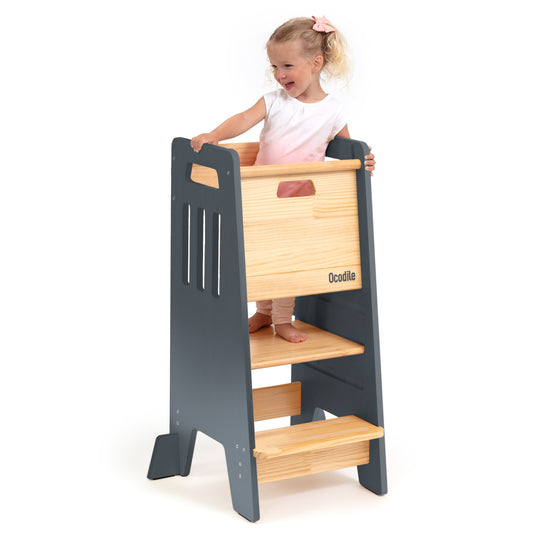
That standard fits Montessori homes especially well. The goal is not to keep buying the next “stage” item. The goal is to choose pieces that continue supporting independence as the child gets taller, steadier, and more capable. A helper tower with an adjustable platform usually lasts longer than one fixed at a single height. A low shelf can begin with a few toys and later hold books, puzzles, or school supplies without losing its purpose.
Materials still matter, but they need context. The Forest Stewardship Council guide to furniture labels and material claims is a useful reminder that wood products vary widely, and that veneers and engineered components are not automatically low quality. For many families, a well-built piece with a stable core, durable surface, and replaceable hardware is a better buy than a heavier piece marketed as premium but poorly suited to a child's actual use.
Look for furniture with a second job
The best children's furniture rarely has only one season of usefulness.
These features tend to earn their place for longer:
- Adjustability: platforms, shelves, or seat heights that can change with the child
- Transferable use: pieces that can move from bedroom to bathroom, playroom, or kitchen
- Simple styling: forms that still look at home after the toddler years
- Repairable parts: standard fasteners and hardware you can tighten, replace, or reorder
- Real daily function: storage, access, seating, or step support that the child uses repeatedly
I also ask a blunt question in the store. Will this still be useful when my child can do more on their own? If the answer is no, the lower price often stops looking like savings.
Another practical test is whether the piece is worth packing for your next house. Furniture that survives family life usually also survives relocation. If you plan to keep it for years, this guide on how to move furniture like a pro is worth bookmarking for protecting legs, corners, and finishes.
Buy for the routine, not the phase
Children do not need a room full of tiny furniture. They need a few pieces that match real habits. Sleeping, getting dressed, reaching books, washing hands, helping in the kitchen, sitting down to work. Those are the functions that stay relevant, even as the exact form changes.
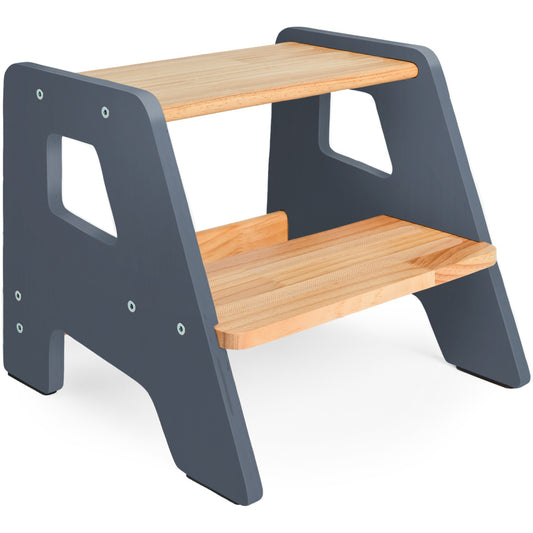
That is why I would rather buy one well-proportioned stool that supports safe bathroom and kitchen use than two novelty items tied to a narrow age band. The calmer Montessori rooms tend to be the ones where each piece has a clear role and the child can use it without constant adult intervention.
Ocodile makes children's furniture such as standing towers, floor beds, and step stools built around family use and child access. That keeps the brand relevant in this category. If you want examples of kids modern furniture designed for long-term use, that collection is a helpful reference point for comparing adaptable pieces with more short-lived themed options.
Good value comes from repeated, useful years in a child's routine. Not from a low price on a piece they will outgrow in practice.
The Hands-On Inspection Red Flags to Spot Instantly
Online photos hide a lot. They hide wobble, rough edges, drawer resistance, weak fasteners, and that sharp synthetic smell some finishes give off the moment you open the box.
If you're in a showroom, use your hands. If the piece has already been delivered, inspect it before you fully commit to placement and setup. The goal isn't to nitpick. It's to catch the clues that separate sturdy furniture from furniture that only looks sturdy.

Use the wiggle test first
One of the simplest checks is still one of the best. Room for Tuesday recommends a hands-on inspection protocol: test for wobble, twist, and creaking; sit on pieces to check for sagging; and inspect the frame, joinery, and finish in this furniture quality guide. Those checks target the defects that usually show up early in low-grade furniture.
Try the piece from more than one angle. Push lightly on the top corner of a shelf. Grip the back of a chair and move it side to side. Sit on upholstered furniture and shift your weight. You're listening for movement that shouldn't be there and feeling whether the structure recovers cleanly.
What your eyes and nose should catch
Furniture tells on itself if you slow down enough to look.
Red flags I'd walk away from include:
- Visible gaps at joints: these often widen with use.
- Glue smears or exposed fasteners in obvious places: a sign of careless assembly.
- Uneven finish or peeling paint: especially concerning on children's furniture that gets touched constantly.
- Splinters, rough spots, or sharp edges: these are immediate no's.
- Strong chemical odor: not proof by itself, but enough to ask harder questions.
- Drawer drag: drawers should glide, not scrape, catch, or tilt.
Here's a useful contrast:
| Red flag | Better sign |
|---|---|
| Chair rocks on a flat floor | Chair feels planted and quiet |
| Drawer sticks halfway | Drawer moves smoothly and closes evenly |
| Finish looks blotchy | Finish is even and consistent |
| Corners feel sharp | Edges are rounded or softened |
| Piece creaks when lifted | Frame stays quiet under light stress |
If a floor model already feels tired, the boxed version won't age better at home.
Upholstery needs its own check
For upholstered pieces in family spaces, sit longer than you think you need to. Cushions shouldn't collapse immediately or feel hollow. Fabric should feel attached and properly tensioned, not loose and rippled. Look underneath when possible.
Pay attention to support. If seating feels saggy in the middle or you can sense weak structure underneath, that usually gets worse, not better. Children climb on sofas, kneel on cushions, and lean on arms. Weak upholstery gets exposed fast.
The strongest inspection habit is simple: don't let appearance overrule evidence. A nice finish color and a good product photo can't compensate for poor stability.
The Ultimate Childrens Furniture Buying Checklist
When you're shopping in person or comparing product pages late at night, it helps to have one filter that keeps you from getting distracted by color, branding, or styling. This is mine.
The broad strategy is sound. Quality is the top priority for 81% of furniture buyers, according to the Statista figure cited by Civil Space, and the same source notes that for upholstered furniture, a kiln-dried hardwood frame with eight-way hand-tied springs is considered the top-tier standard, while webbing support can stretch over time, as summarized in this furniture statistics and quality overview. In children's spaces, that same mindset applies across categories. Start with what lasts and what's safe, then consider looks.
Keep this checklist open while you shop
Some items are deal-breakers. Others are judgment calls based on your home, your child's age, and how intensely the piece will be used. The table below is designed to be screenshot-worthy and practical.
| Category | What to Check | Why It Matters (Safety & Montessori) |
|---|---|---|
| Safety | Rounded or softened edges | Reduces bumps and cuts during daily movement and play |
| Safety | Stable base that doesn't wobble on a flat floor | Children pull, lean, and climb. Stability is non-negotiable |
| Safety | Secure hardware and no snag points | Prevents scratches, pinched fingers, and loose parts |
| Safety | Anti-tip approach for tall storage | Supports safer self-service in bedrooms and playrooms |
| Materials | Clear information on finishes, adhesives, and coatings | Quality includes what a child touches and breathes near every day |
| Materials | Low-odor piece on arrival | Harsh odor can signal materials worth questioning further |
| Materials | Smooth sanded surfaces with no splinters | Safer for hands and easier to clean |
| Construction | Tight joinery with no visible gaps | Better long-term durability under repeated use |
| Construction | Reinforced corners and well-fitted parts | Reduces loosening over time |
| Construction | Drawers that glide smoothly and close evenly | A quick sign of better build quality |
| Construction | Upholstered seating with supportive feel, not sagging | Better comfort and more resilient structure |
| Ergonomics | Child can climb in, sit, stand, or reach without strain | Encourages independence instead of adult dependence |
| Ergonomics | Seat height fits the child's body | Supports steadier posture and easier concentration |
| Ergonomics | Shelf and storage height match real use | Lets the child choose and return items independently |
| Space planning | Footprint tested in the room before purchase | Prevents crowding and keeps movement paths open |
| Adaptability | Adjustable or multi-stage design where useful | Extends function across developmental stages |
| Adaptability | Neutral design that can move to another room later | Improves long-term value and reduces waste |
| Maintenance | Finish can handle wiping and daily cleaning | Children's furniture must survive real messes |
| Maintenance | Replacement parts or fixable hardware if needed | Helps the piece stay in service longer |
A few final shopping questions
If two pieces seem evenly matched, ask yourself:
- Will my child be able to use this independently?
- Does this solve a daily need or just fill visual space?
- Would I still choose this if it came in a plain finish?
- Can I clean it without fuss?
- Does it feel like something I'll keep, not just tolerate?
For sleep surfaces, don't treat the bed frame as the whole decision. Mattress choice affects support, comfort, and daily use just as much. If you're pairing a child bed with a new mattress, this mattress buying advice from Miller Waldrop is a helpful companion resource.
What works in real homes
The furniture that tends to work best isn't always the most expensive and rarely the most decorative. It's the piece that still feels right after the novelty wears off.
That usually means a shelf a child can use. A stool that feels planted under small feet. A chair that doesn't make the child slump or fidget. A bed that makes getting in and out feel safe. A dresser that opens smoothly every day instead of becoming another thing adults have to manage.
If you want one sentence to remember while shopping, make it this:
Choose the piece that supports safe use and independent use at the same time.
Creating a Space for Childhood to Flourish
The rooms children use most become the backdrop for hundreds of small moments. Pulling on shoes by themselves. Reaching for a book. Helping stir pancake batter from a steady tower. Climbing into bed without being lifted. Putting blocks back on a shelf they can reach.
That's why learning how to choose quality furniture matters. You're not just buying wood, hardware, and fabric. You're shaping how daily life feels in your home.
The most successful children's spaces rarely look overdone. They feel settled. The furniture fits the child, the room, and the routine. It supports safety without making the room feel clinical. It supports independence without expecting too much too soon. And it gives parents a little more peace because the environment is working with them, not against them.
You don't need a perfect Montessori room or a magazine-ready nursery to get this right. You need a few well-chosen pieces that are healthy, sturdy, appropriately sized, and built for real family life. Start there, and the room becomes easier to live in.
That's the true standard for quality. Not whether a piece photographs well on delivery day, but whether it still serves your child beautifully through ordinary mornings, busy afternoons, and tired evenings.
If you're looking for children's furniture that's built around safe exploration, everyday practicality, and independent use, Ocodile offers product options designed for family life, including standing towers, floor beds, and step stools.