

What Makes a Foldable Kitchen Tower Easy to Clean?
There’s oatmeal on the platform, banana smeared along a rail and flour tucked beside a hinge. You want a kitchen helper foldable enough to put away after breakfast, but not one that turns every snack into a scrubbing job.
An easy-to-clean foldable kitchen tower has smooth, sealed surfaces, reachable corners and folding hardware you can clean around without taking the tower apart. Just as important, its care instructions should clearly explain which cleaners and methods the finish can tolerate. Folding saves space; thoughtful construction saves cleanup time.
Start with the mess your toddler actually makes
Think about how your child will use the tower most often. Helping rinse fruit creates a different cleanup job than mixing muffin batter or spreading yogurt across every reachable surface.
For food preparation, inspect the platform, rails and joints where sticky residue can collect. For sink routines, pay particular attention to exposed edges, hardware and places where water might linger. A tower that wipes down quickly still needs to dry before storage.
The goal is not a piece of furniture that always looks spotless. It is a setup you can reasonably reset after your child helps, without repeatedly removing hardware or digging food out of inaccessible gaps. That makes it easier to say yes the next time your toddler wants to join you.
What makes a foldable kitchen tower without creating crumb traps?
Folding designs need moving joints, which add places to inspect during cleanup. That does not automatically make them harder to maintain. What matters is whether you can reach the surfaces around those joints while the tower is securely positioned according to its instructions.
Look at the tower open as well as folded. A compact folded profile tells you little about whether a cloth can reach behind a rail or around a platform support.
Smooth, sealed surfaces and edges
A smooth, intact finish gives you a surface to wipe rather than exposed grain that can absorb a spill. Check the edges and undersides too, not just the broad panels shown in product photos.
For a wooden tower, sealed platform edges are particularly worth examining because drips often travel over the side before anyone notices them. Ask the seller how those surfaces should be cleaned and dried.
Solid wood does not automatically mean easy to clean, and a child-safe coating is not the same as a waterproof finish. The material, coating and care directions all matter. Do not assume that a finish can tolerate soaking, steam or a disinfectant simply because it is intended for children’s furniture.
Corners you can reach with an ordinary cloth
Imagine wiping dried batter from the spot where the platform meets the frame. Can your hand reach it? Is there room for a soft brush to lift out crumbs without scraping the coating?
Decorative cutouts, recessed screw heads and closely spaced supports can add cleaning work. They are not necessarily reasons to reject a tower, but they deserve a closer look if your child regularly cooks alongside you.
For a foldable kitchen helper, useful cleaning access means reaching everyday messes without loosening structural fasteners. Routine wiping should not require dismantling the frame.
A platform that balances grip with manageable upkeep
A standing platform needs appropriate footing, so the smoothest-looking surface is not automatically the best choice. Texture can provide grip while also requiring more attention when food gets into its grooves.
If a design includes a mat or removable platform, check whether the manufacturer actually permits removal for cleaning. Confirm how it must be dried and secured afterward. Never assume that a detachable-looking part is dishwasher-safe.
| Detail to inspect | Why it matters for cleanup | What to verify |
|---|---|---|
| Surface finish | An intact, sealed surface is generally easier to wipe than exposed, absorbent areas | Approved cleaning method and products |
| Platform edges | Spills can run down the sides and underneath | Whether edges are sealed and reachable |
| Corners and joints | Food can collect where components meet | Access with a cloth or soft brush |
| Folding hardware | Crumbs and residue may collect nearby | How to clean without interfering with the mechanism |
| Textured or removable parts | Grooves and seams may need extra attention | Removal, drying and reassembly instructions |
A practical cleanup routine after meals and cooking
A short routine after a messy activity is usually more manageable than letting several meals’ worth of residue dry in place. Follow the tower’s care instructions first, especially if they differ from general wooden-furniture guidance.
Keep your child off the tower during cleaning and folding. Position it as the manufacturer directs so you are not wiping around an unsecured moving frame.
- Remove loose food first. Lift away larger pieces and collect dry crumbs with a soft cloth or brush. Avoid pushing them into hinges, screw recesses or platform supports.
- Wipe sticky areas using the approved method. If the care instructions allow mild soap and water, use a soft, well-wrung cloth rather than saturating the surface. Put cleaning liquid on the cloth instead of spraying it into joints.
- Work around the contact points. Check the rails your child grips, the standing platform, the climbing step and the edges beneath a spill. These spots can be easy to miss during a quick top-down wipe.
- Remove any cleaner residue as directed. Follow the furniture-care instructions and the cleaning product’s label. Use only the moisture needed for the task.
- Dry before folding or reuse. Wipe accessible surfaces dry and allow any remaining dampness to dissipate. Make sure the platform, feet and surrounding floor are clean and dry before your child climbs back on.
If dried food does not lift easily, repeat the approved gentle cleaning method rather than reaching immediately for an abrasive pad. A scratched or damaged coating can create a more difficult maintenance problem than the original spill.

Do not fold away trapped moisture
A foldable kitchen helper may bring surfaces close together when it closes. Check that those contact areas are dry before putting it away, especially after water play or handwashing.
Store it in the location and position recommended by the manufacturer, away from leaks and damp cleaning supplies. Our guide to storing a foldable learning tower between uses covers the broader storage routine.
Cleaning should not compromise the tower’s safety
A clean platform is only part of the reset. Before the next use, check that the tower opens fully and that its locking mechanism engages as described in the manual. If food or residue interferes with a moving part, keep the tower out of use until the problem is resolved.
Do not lubricate hinges, remove guards or loosen structural hardware to make cleaning easier unless the manufacturer specifically instructs you to do so. After removing any part designed for routine cleaning, reinstall and secure it exactly as directed.
Also inspect for peeling finish, splinters, cracks or loose hardware. Cleaning is a useful opportunity to notice wear, but it cannot fix structural damage. Stop using a damaged tower and contact the manufacturer for guidance.
Around the sink, wipe up water on the floor as well as on the tower. For families using it mainly for handwashing, these safer sink routines with a kitchen helping stool address placement and supervision alongside cleanup.
What to check before buying online
For an easy-clean foldable kitchen helper, a detailed care guide is more useful than a broad “wipe-clean” claim. Look for instructions covering the finish, hardware and any removable components. If those details are missing, ask before ordering.
Useful questions include: Which cleaners are permitted? Are all wooden edges sealed? Can the platform be removed for cleaning? Does it need to remain open while drying? What should you do if food gets into the folding mechanism?
Look beyond the styled kitchen photo
A polished product page can help you picture a tower in your home, but it cannot demonstrate how easily dried oatmeal releases from a corner. Presentation is a separate discipline, illustrated by the work of branding agency Boil. For cleaning decisions, prioritize care instructions, close-up construction photos and specific answers from the seller.
Reviews can help identify practical questions too. Comments about crumbs collecting in a particular joint or difficulty drying a removable part are more informative than “looks great.” Treat individual experiences as clues to investigate, not proof that every household will have the same result.
Frequently asked questions
Is a foldable kitchen helper harder to clean than a fixed tower? Not necessarily. Folding adds moving joints, but accessible hardware and well-sealed surfaces can make routine wiping manageable. Compare the actual construction and care instructions rather than assuming either design is easier.
Can I use disinfecting wipes on a wooden toddler tower? Only if both the tower’s care instructions and the wipe label permit that use. Some cleaners may damage a finish. If disinfection is needed, ask the manufacturer which products and methods are compatible rather than guessing.
How often should I clean it? Remove food and spills after messy use, then check other surfaces as needed. Pay extra attention after raw-food contact, illness or other contamination, following appropriate cleaning guidance and the manufacturer’s care limits.
Can I rinse the whole tower or leave it wet to soak? Do not assume so. Unless the manufacturer expressly permits rinsing or soaking, use the approved wiping method. Excess moisture can reach wood edges, joints and hardware, including areas that are difficult to dry.
Compare the cleanup routine, not just the folding feature
The right tower should fit both your kitchen and the work you are willing to do after your toddler helps. Picture wiping the platform, reaching the corners, checking the lock and storing it dry.
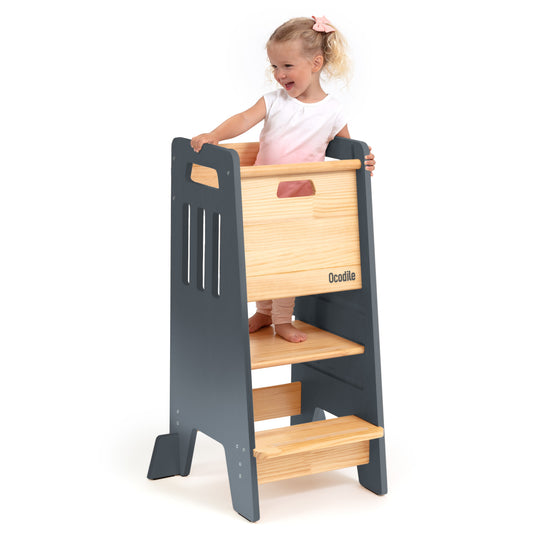
If you need height adjustment and folding storage, Ocodile’s Adjustable Foldable Kitchen Tower is an option to include in your comparison. Review its current product details and care guidance against this checklist, and ask about any cleaning requirements that are unclear before deciding.