



Safer Sink Routines With a Kitchen Helping Stool
You know the moment: your toddler wants to wash their hands, rinse a spoon or “help” with dishes, but they cannot quite reach the sink. You either lift them again, balance them on your hip while turning on the faucet or watch them drag over a dining chair that was never meant for climbing.
A kitchen helping stool can make sink routines safer and easier when it is sturdy, the right height, placed on a dry flat floor and used with close adult supervision. It gives your child a more secure place to stand than a chair, helps reduce lifting for you and turns handwashing or simple food prep into a repeatable routine instead of a daily scramble.
The goal is not to let a toddler do everything alone. The goal is to give them a safer setup so they can reach the sink, practice real tasks and stay within clear boundaries while you stay nearby.
What a Kitchen Helping Stool Does at the Sink
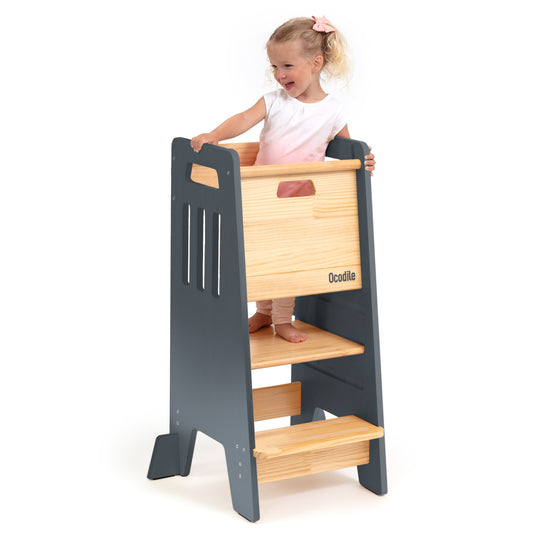
A kitchen helping stool, often called a toddler tower or learning tower, is a child-sized standing platform designed to help young children reach counter or sink height. Unlike a regular stool, many helping stools include side panels, rails or a more enclosed standing area that helps a child stay centered while they work.
At the sink, that can mean your toddler can:
- Wash hands before meals without being lifted every time
- Brush teeth with less leaning or tiptoeing
- Rinse fruit with help from an adult
- Help wash a few plastic bowls or spoons
- Reach soap and a towel placed at child height
For many families, the biggest change is practical. Instead of improvising with chairs, laundry baskets or your own tired arms, the sink has a predictable setup. Your child knows where to stand, where their feet go and what the routine looks like.
That predictability matters. Toddlers are still learning body awareness and impulse control. A dedicated kitchen helping stool can give them a defined place to climb, stand and climb down, which is much easier to teach than “stand carefully on this random chair for a minute.” If you are currently using a dining chair near the sink, Ocodile’s guide on why chairs are not a safe child’s kitchen stool substitute explains the difference in more detail.
Kitchen Helping Stool vs. Step Stool at the Sink
Parents often wonder whether they need a kitchen helping stool or if a simple step stool is enough. The answer depends on the child, the task and the sink setup.
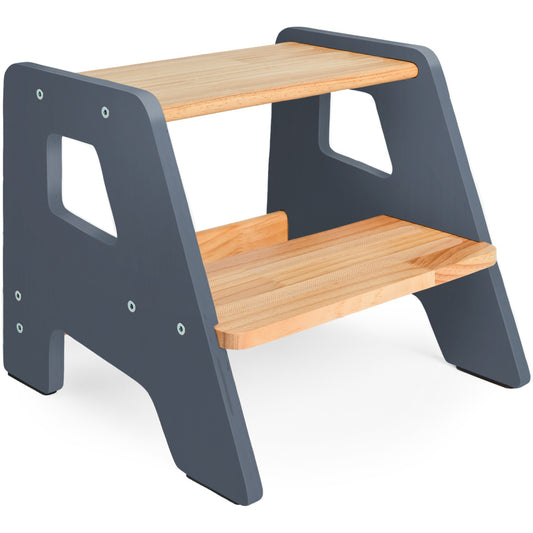
A short step stool can work well for quick bathroom routines, especially for an older preschooler who can step up, wash hands and step down calmly. A kitchen helping stool is usually a better fit for longer sink routines, younger toddlers or children who tend to shift their weight, reach sideways or get excited when water is involved.
| Option | Best for | Watchouts |
|---|---|---|
| Dining chair | Not recommended as a toddler climbing solution | Tall, movable and not designed for sink use |
| Basic step stool | Quick handwashing, brushing teeth or toilet training routines | Less side support, child may lean or turn around |
| Kitchen helping stool | Longer sink tasks, kitchen counter help and younger toddlers | Needs floor space and active supervision |
| Adjustable step stool | Growing children and different sink heights | Must be set to a safe height for the task |
A kitchen helping stool is not automatically safer just because it has rails. The design, height, placement and the way your child uses it all matter. Think of it as one part of a safer routine, not a replacement for supervision.
Safety Features That Matter Most for Sink Routines
When water is involved, children get wiggly. They lean toward the faucet, reach for bubbles, twist toward a parent and sometimes bounce because washing hands suddenly feels like play. The best sink setup accounts for that movement.
Look for a kitchen helping stool that feels sturdy and stable when your child shifts weight. A wider base can help the stool feel steadier during normal movement, while a solid frame reduces wobble. If a stool rocks when an adult gently presses on it, it may feel even less secure once a toddler climbs in.
The standing surface matters too. A platform should give your child enough foot space to stand naturally, not with toes hanging off the edge. A surface with grip or texture can help reduce slipping when socks, water drops or bathroom floors are involved.
Side support is helpful for younger toddlers. Rails or side panels encourage your child to stay in the standing area instead of stepping sideways. They also give you a clear teaching point: feet stay on the platform, hands stay near the sink and climbing happens only from the intended side.
Height is another major safety factor. If the stool is too low, your child will lean forward and stretch. If it is too high, their body may sit above the counter in a way that makes reaching awkward. The right height lets your child reach the faucet or sink basin without standing on tiptoe or leaning their chest across the counter.
Set Up the Sink Before Your Child Climbs
A safer sink routine starts before your toddler steps onto the kitchen helping stool. Take thirty seconds to prepare the area so your child is not waiting, reaching or trying to solve the problem by themselves.
Place the stool on a flat, dry floor. Avoid thick rugs or mats that can bunch underneath. If the sink area has spilled water, wipe it first. Toddlers do not always notice slippery spots, especially when they are focused on soap, bubbles or helping.
Move breakable, sharp or tempting items out of reach. This includes knives near a kitchen sink, glass cups, heavy soap dispensers, cleaning sprays and anything with a cord. Put the soap where your child can reach it without leaning sideways. Keep a towel close enough that drying hands is part of the routine, not a reason to climb down wet.
If a caregiver comes home from a job where clothing gets dusty, greasy or messy, changing before food prep and sink play is a simple hygiene habit. The same practical thinking is why many professionals use dedicated workwear for hands-on jobs, then keep that gear separate from family cooking, washing and eating areas.
Water temperature needs adult control. Toddlers can turn handles too far or react slowly if water gets too warm. Start with cool to warm water, test it yourself and teach your child that the faucet is a grown-up job until they can manage it safely with you right there.

Teach a Simple Sink Routine They Can Repeat
The safer a routine feels, the easier it is for a toddler to follow. Instead of giving new instructions every time, use the same short script.
Try something like: “Climb in. Feet flat. Hands on the sink. Soap, scrub, rinse, towel. Climb down.”
That may sound overly simple, but toddlers do well with clear repeated phrases. You are giving them a sequence they can remember. The CDC recommends scrubbing hands with soap for at least 20 seconds, so you can make that concrete by singing a short song or counting slowly together.
Keep your expectations realistic. A two-year-old may love pumping soap ten times. A three-year-old may want to wash the same spoon for five minutes. A preschooler may be ready to rinse berries but still need help remembering not to splash water onto the floor.
The kitchen helping stool gives you a place to practice, but you still set the boundaries. If your child climbs on the rails, jumps, reaches for unsafe items or refuses to climb down, the routine pauses. Calmly help them down and try again later. Consistency teaches that the stool is for helping, not rough play.
Choose the Right Height for Your Child and Sink
The safest height is the one that lets your child participate without stretching, leaning or climbing onto the counter. For a sink routine, your child should be able to place their hands near the basin while keeping both feet flat on the platform.
A quick home test can help. Stand your child next to the sink and notice where the counter hits their body. If the counter is near their chest, they may need a lower standing height than you expect. If the counter is near their shoulders, they may lean forward too much unless the stool raises them safely.
Adjustable designs can be helpful because toddlers grow quickly. A stool that fits a two-year-old may feel awkward six months later. If you want more guidance on measuring for different ages and household tasks, Ocodile’s step stool height guide for kids walks through practical ways to check fit at home.
Do not choose height based only on age. Two children the same age can have very different torso length, balance and comfort with climbing. Watch how your child actually stands at the sink. If they are leaning their belly into the counter, rising onto toes or stepping to the side to reach soap, the setup needs adjusting.
Small Rules That Make Sink Time Smoother
Rules work best when they are few, visible and connected to what your child is doing. Instead of a long safety lecture, choose simple rules you repeat every time.
Good sink rules might sound like this:
- Feet stay on the platform
- Hands stay near the sink
- Water is a grown-up job
- Soap stays in hands, not on the floor
- We climb down when we are done
You can add a visual cue if your child needs it. A small towel hook at their level, a child-safe soap pump or a stool stored in the same place can make the routine feel familiar. The fewer things your child has to search for, the less likely they are to climb, reach or drag furniture across the room.
For children who want to help in the kitchen beyond handwashing, set a clear “yes space.” They can rinse lettuce, stir pancake batter away from heat or place spoons in a bowl. They cannot touch knives, hot pans, the garbage disposal, raw meat or cleaning products. The kitchen helping stool brings them closer to the action, so the boundaries need to be clear before the task starts.
Common Sink Setup Mistakes to Avoid
The most common mistake is using whatever furniture is nearby. A dining chair seems convenient, but it is usually too high, easy to move and not shaped for a toddler standing at a sink. Children may turn around, step off the side or climb onto the seat back.
Another mistake is placing the stool too far from the sink. If there is a gap, your child may lean forward or step toward the counter edge. Position the stool so your child can reach comfortably while staying centered on the platform.
Parents also underestimate how slippery sink routines can get. A few drops of water on tile can change the whole feel of the setup. Keep a towel nearby and wipe the floor as soon as you notice drips.
Finally, avoid letting the kitchen helping stool become an all-purpose climbing tool. Store it where your child cannot freely move it to unsafe places, especially near stovetops, high shelves, medicine cabinets or windows.
If you are still comparing designs, ages and use cases, the Toddler Tower Guide can help you decide whether a tower-style kitchen helping stool makes sense for your home.
Connecting Sink Routines With the Rest of the Home
Once children get used to doing small tasks at the sink, many parents start noticing other places where the home can be set up for safer practice. That might be a low hook for towels, a small basket for washcloths, a step stool for potty training or an accessible bed that lets a child climb in without being lifted.
The same idea applies at bedtime. If your child is moving out of a crib, a floor-level bed can make the routine feel less like a transfer and more like something they participate in. Ocodile’s Twin Size Montessori-Inspired Floor Bed with Safety Guardrails for Kids includes full guardrails, rounded edges on posts, two easy entries on one long side and 14 slats designed to support airflow and stability.
Families who want more sleeping space can also compare the Full-Size Montessori Floor Bed with Strong Slatted Frame, which is built with 14 slats, rounded post edges and full guardrails with two easy entries on one long side. A sink stool and an accessible bed solve different problems, but both can reduce daily lifting and give your child more chances to practice everyday routines with you nearby.
When a Kitchen Helping Stool May Not Be the Right Fit Yet
A kitchen helping stool is helpful for many toddlers, but timing matters. If your child constantly climbs over rails, jumps from furniture or cannot follow a simple “feet stay on the platform” rule even with you next to them, it may be worth waiting or using a lower step stool only for very short supervised tasks.
Also consider your space. A small bathroom may not fit a tower safely, especially if the stool blocks a door or sits partly on a bath mat. In that case, a compact step stool for handwashing and a larger kitchen helping stool for counter tasks may be a better combination.
Your child’s temperament matters too. Some toddlers become calmer when they have a defined standing space. Others see every piece of furniture as a climbing challenge. Start with short routines, stay close and adjust based on what you see.
Frequently Asked Questions
What age can a child use a kitchen helping stool at the sink? Many families start using a kitchen helping stool during the toddler years, but readiness depends more on balance, climbing ability and rule-following than age alone. Your child should be able to stand steadily, follow simple directions and use the stool only with adult supervision.
Is a kitchen helping stool safer than a regular step stool? A kitchen helping stool can be a safer choice for longer sink or counter routines because it often provides more side support and a defined standing space. A basic step stool may be enough for quick handwashing if the child is steady and the stool is the right height.
Can I use a kitchen helping stool in the bathroom? Sometimes, but check the space first. The stool needs to sit flat on a dry floor without blocking doors or resting on thick mats. In very small bathrooms, a compact step stool may fit better than a tower-style helping stool.
Should my toddler be allowed to turn the faucet on alone? For most toddlers, faucet control should stay with an adult. Water can become too hot or run too strongly. You can gradually teach faucet skills by guiding their hand and keeping the water cool to warm while you supervise.
How do I stop my child from climbing on the kitchen helping stool outside sink time? Store it where your child cannot freely drag it to unsafe areas. Use the same rule every time: the stool is for helping with a grown-up. If climbing becomes rough or unsafe, end the activity calmly and try again later.
Make Sink Routines Safer, Calmer and Easier to Repeat
A kitchen helping stool works best when it is part of a complete routine: the right height, a clear space, dry floors, safe water temperature and simple rules your child hears every time. That setup can mean less lifting for you, fewer improvised chairs near the sink and more chances for your child to wash, rinse, dry and help with real family tasks.
If you are choosing furniture for daily routines, look for pieces that feel sturdy, stable, well made and practical for your home. Ocodile designs child-friendly furniture for everyday independence, including toddler kitchen towers, adjustable step stools, floor beds and bunk beds, with free US shipping, 60-day returns and a 5-year warranty.